On air · 2 of 3 networks
NUMA
- numaoxygen.com
- Medical Practices
- GB
- 6 employees
NUMA’s ads on LinkedIn, Meta and Google, recorded by adsrunning. Browse the latest here for free. Sign up free to see all 22. Watch NUMA on any plan to get each new one in your feed.
Watchlist included in every plan
| Network | Status | Live ads | Nov 2025LinkedIn activity · 52 weeksNov 2026 | Checked | Next step |
|---|---|---|---|---|---|
| None recorded | 0 | Checked 3 Nov 2026 | See all 22 ads → | ||
| Meta | Running | 6 | Active ads on the Meta Ad Library, all countries | Checked 31 Oct 2026 | Collect them with the API → |
| Running | 12 | Ads on the Google Ads Transparency Center | Checked 5 Nov 2026 | Collect them with the API → |
NUMA has no live LinkedIn ads. Its Facebook page had 6 active ads on 31 Oct 2026, and we recorded 12 Google ads on 5 Nov 2026.
Latest ads
- LINKEDIN · VIDEOSince 14 Oct 2026
A concussion is often labelled "mild." For many patients, the aftermath is anything but. Months or even years after traumatic brain injury, people continue to struggle with headaches, brain fog, fatigue, sensory sensitivity, disrupted sleep, and new onset neuropsychiatric symptoms. Yet standard imaging may appear entirely normal. This disconnect between how patients feel and what scans show is one of the most important challenges in TBI care. Hyperbaric Oxygen Therapy is an established medical intervention with growing evidence in TBI recovery. But how does it actually work? In the acute phase, it increases dissolved oxygen delivery to ischaemic brain tissue, restoring metabolism, reducing neuroinflammation, and protecting the blood brain barrier. In the chronic phase, it shifts from protection to repair, driving neurogenesis, remyelination, and mitochondrial restoration, while upregulating BDNF to support cognitive recovery. Underpinning both is vascular remodelling. HBOT induces angiogenesis and resolves cerebral hypoperfusion, restoring the conditions long term recovery depends on. Explore the science behind HBOT and its potential role in traumatic brain injury recovery in this article: https://lnkd.in/eYXHkhDu Have questions about HBOT and its potential role in brain injury recovery? Explore www.NHBOT.ai to learn more, or contact NUMA to discuss HBOT and whether it may be appropriate for your individual needs. #HBOT #TraumaticBrainInjury #TBI #Concussion #BrainHealth #Neurorehabilitation #PostConcussionSyndrome #Neuroscience #Neurology #Neurosurgery #Neuropsychiatry
- LINKEDIN · IMAGESince 12 Sept 2026
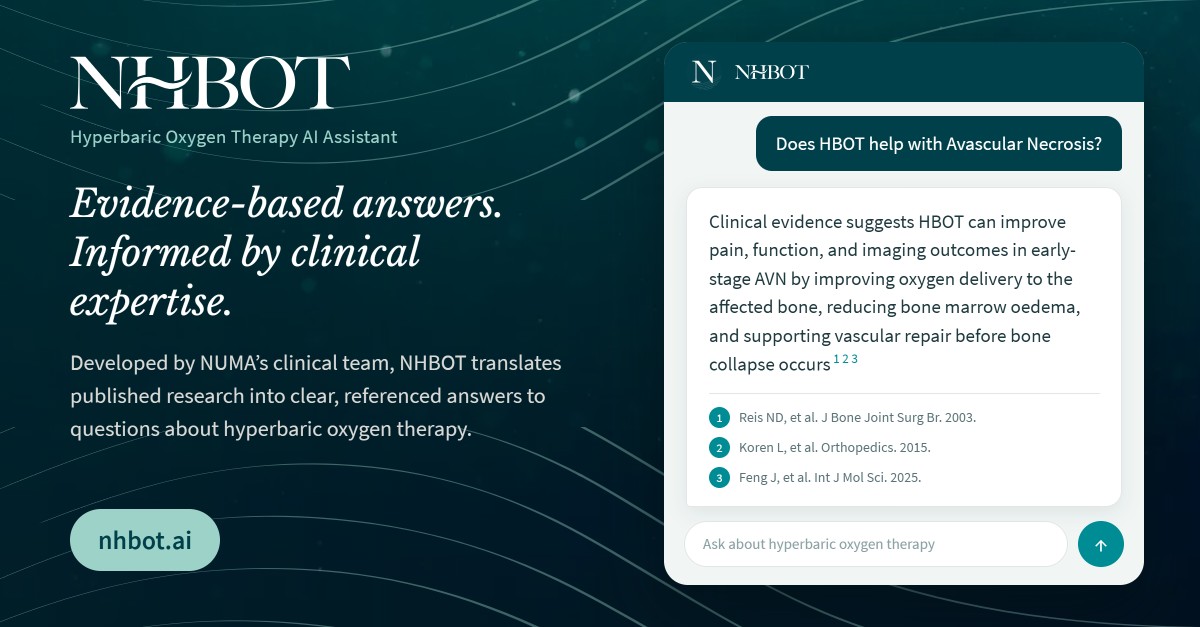
For years, one of the greatest barriers in hyperbaric medicine has been access to reliable, evidence-based information. 𝗧𝗼𝗱𝗮𝘆, 𝘄𝗲’𝗿𝗲 𝗰𝗵𝗮𝗻𝗴𝗶𝗻𝗴 𝘁𝗵𝗮𝘁. I’m delighted to introduce 𝗡𝗛𝗕𝗢𝗧, 𝗮𝗻 𝗔𝗜-𝗽𝗼𝘄𝗲𝗿𝗲𝗱 𝗸𝗻𝗼𝘄𝗹𝗲𝗱𝗴𝗲 𝗮𝘀𝘀𝗶𝘀𝘁𝗮𝗻𝘁 𝗱𝗲𝘀𝗶𝗴𝗻𝗲𝗱 𝘁𝗼 𝗺𝗮𝗸𝗲 𝘁𝗿𝘂𝘀𝘁𝗲𝗱, 𝗲𝘃𝗶𝗱𝗲𝗻𝗰𝗲-𝗯𝗮𝘀𝗲𝗱 𝗶𝗻𝗳𝗼𝗿𝗺𝗮𝘁𝗶𝗼𝗻 𝗮𝗯𝗼𝘂𝘁 Hyperbaric Oxygen Therapy (HBOT) accessible to everyone. Whether you’re a patient, family member or healthcare professional, NHBOT can help answer questions such as: • 𝗖𝗼𝘂𝗹𝗱 𝗛𝗕𝗢𝗧 𝗵𝗲𝗹𝗽 𝗺𝘆 𝗰𝗼𝗻𝗱𝗶𝘁𝗶𝗼𝗻? • 𝗪𝗵𝗮𝘁 𝗱𝗼𝗲𝘀 𝘁𝗵𝗲 𝗲𝘃𝗶𝗱𝗲𝗻𝗰𝗲 𝘀𝗵𝗼𝘄? • 𝗪𝗵𝗮𝘁 𝗮𝗿𝗲 𝘁𝗵𝗲 𝗯𝗲𝗻𝗲𝗳𝗶𝘁𝘀, 𝗿𝗶𝘀𝗸𝘀 𝗮𝗻𝗱 𝗹𝗶𝗺𝗶𝘁𝗮𝘁𝗶𝗼𝗻𝘀? • 𝗪𝗵𝗮𝘁 𝗱𝗼𝗲𝘀 𝘁𝗵𝗲 𝗹𝗮𝘁𝗲𝘀𝘁 𝗿𝗲𝘀𝗲𝗮𝗿𝗰𝗵 𝘀𝗮𝘆? Importantly, where the evidence is strong, NHBOT reflects that. Where research is limited or uncertain, it says so clearly. Since founding NUMA, we have been guided by one belief: 𝗲𝘃𝗲𝗿𝘆 𝗽𝗮𝘁𝗶𝗲𝗻𝘁 𝗱𝗲𝘀𝗲𝗿𝘃𝗲𝘀 𝗮𝗰𝗰𝗲𝘀𝘀 𝘁𝗼 𝘁𝗵𝗲 𝗵𝗶𝗴𝗵𝗲𝘀𝘁 𝘀𝘁𝗮𝗻𝗱𝗮𝗿𝗱𝘀 𝗼𝗳 𝗰𝗮𝗿𝗲, 𝘀𝘂𝗽𝗽𝗼𝗿𝘁𝗲𝗱 𝗯𝘆 𝘁𝗵𝗲 𝗯𝗲𝘀𝘁 𝗮𝘃𝗮𝗶𝗹𝗮𝗯𝗹𝗲 𝗲𝘃𝗶𝗱𝗲𝗻𝗰𝗲. NHBOT is an extension of that mission. Our aspiration is simple: to help patients find answers, help healthcare professionals access reliable information, and contribute to a better understanding of hyperbaric medicine in the UK and around the world. I’d be delighted for you to explore NHBOT, share it with anyone who may benefit, and 𝗜 𝗹𝗼𝗼𝗸 𝗳𝗼𝗿𝘄𝗮𝗿𝗱 𝘁𝗼 𝗵𝗲𝗮𝗿𝗶𝗻𝗴 𝘆𝗼𝘂𝗿 𝗳𝗲𝗲𝗱𝗯𝗮𝗰𝗸. 𝗘𝘅𝗽𝗹𝗼𝗿𝗲 𝗡𝗛𝗕𝗢𝗧.𝗮𝗶 𝘂𝘀𝗶𝗻𝗴 𝘁𝗵𝗲 𝗹𝗶𝗻𝗸 𝗯𝗲𝗹𝗼𝘄 https://nhbot.ai/ #NHBOT #HBOT #HyperbaricMedicine #HyperbaricOxygenTherapy #EvidenceBasedMedicine #DigitalHealth
- LINKEDIN · IMAGESince 31 Mar 2026
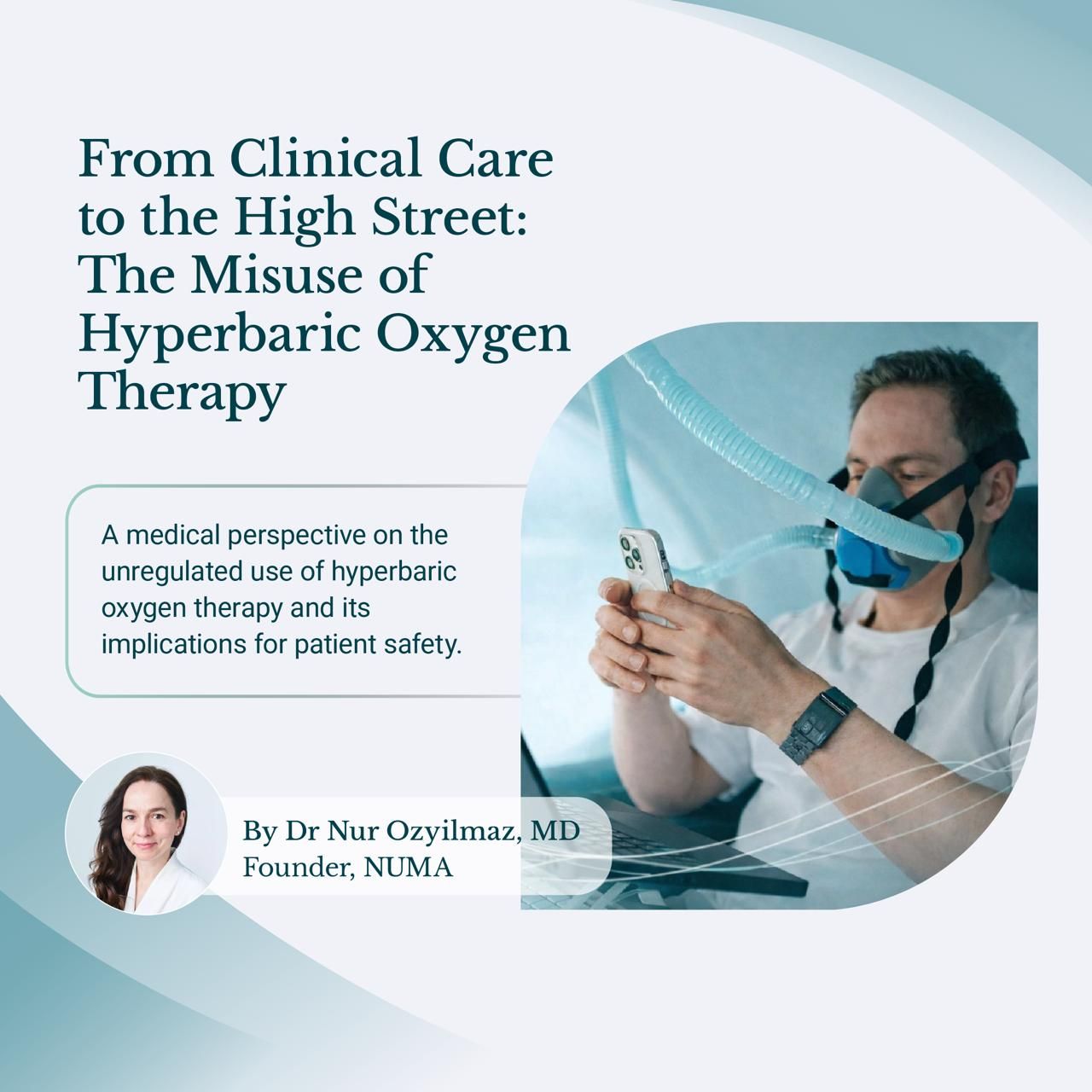
I wrote this piece because there isn’t a day that passes where I’m not concerned about patient safety. Hyperbaric oxygen therapy is receiving increasing attention, which in many ways is encouraging. Greater awareness and improved access matter. However, much of what is currently being offered does not reflect hyperbaric medicine as it is practised in a clinical setting. I am increasingly seeing HBOT delivered in unregulated environments, often without doctors present, and without appropriate consultation, clinical assessment, or screening for contraindications. Basic safety protocols are frequently overlooked. Patients are treated without appropriate medical supervision, with prolonged sessions and absence of air breaks, in environments that include electronics or battery-powered devices that would not be permitted in medical facilities. In many cases, I do not believe there is any malicious intent. Instead, there appears to be a profound lack of knowledge and experience, even among some healthcare providers operating in wellness settings. In established medical settings, serious incidents are extremely rare when appropriate protocols, equipment, and supervision are in place. As these principles are disregarded, the risk of harm inevitably increases. HBOT is not a panacea, nor is it a consumer wellness intervention. It is a treatment with defined physiological effects, risks, and limitations, requiring individualised assessment and delivery within a controlled medical environment. What concerns me most is not only the potential physical risk, but the erosion of trust. Patients may believe they are receiving medical care when the level of assessment and oversight does not meet that standard. At the same time, poor practice risks discrediting a therapy that has a clear and important role in modern medicine. This is not about dismissing HBOT, but about maintaining the standards that make it safe and effective. We may not be able to resolve the regulatory gaps overnight, but we can continue to raise awareness and support good clinical practice. Patients deserve care that is safe, ethical, and grounded in evidence. Read more here: https://lnkd.in/ebdxsrh9 Grateful for the ongoing work and perspectives of colleagues including Helen Gelly Daphne W. Denham Caroline Fife, MD John Peters Alan A. Katz, MD, FUHM Costantino Balestra Anders Kjellberg #HyperbaricOxygenTherapy #HBOT #PatientSafety #HyperbaricMedicine #ClinicalStandards #MedicalGovernance #HealthcareQuality #EvidenceBasedMedicine #SafetyInHealthcare #HealthcareProfessionals #ClinicalPractice #RegulationMatters
- LINKEDIN · IMAGERecorded 27 Sept 2026
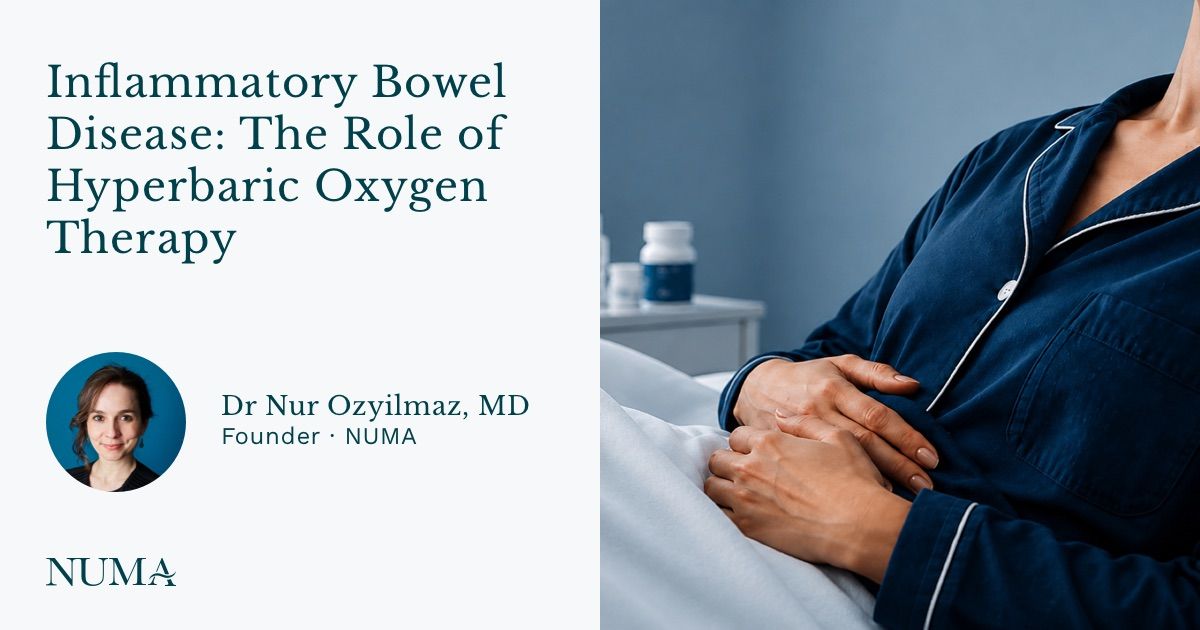
Could hyperbaric oxygen therapy play a role in the future of IBD care? Inflammatory Bowel Disease (IBD), including Crohn’s disease and ulcerative colitis, can be particularly challenging when inflammation persists despite conventional treatment or when patients develop complex complications. One adjunctive approach receiving increasing clinical attention is Hyperbaric Oxygen Therapy (HBOT). Why HBOT? Active intestinal inflammation increases oxygen demand, while oedema and impaired microcirculation can reduce oxygen delivery to affected tissue, contributing to areas of relative tissue hypoxia. HBOT addresses this through a different biological pathway. By substantially increasing oxygen availability to tissues, it may support improved microcirculation, modulation of inflammatory signalling, intestinal barrier repair, angiogenesis and wound healing. What does the clinical evidence show? Hospitalised ulcerative colitis In a randomised controlled trial of patients with moderate-to-severe ulcerative colitis, 50% of patients receiving HBOT alongside intravenous steroids achieved clinical remission by day five, compared with none receiving steroids plus sham treatment. Fewer patients in the HBOT group also required escalation to second-line therapy. Refractory perianal Crohn’s disease In the HOT-TOPIC study, patients with Crohn’s-related perianal fistulas that had not responded to conventional treatment received a course of HBOT. At 16 weeks, 60% achieved a clinical response, with improvements largely maintained at one year. Evidence across IBD A systematic review and meta-analysis of 19 studies involving 809 patients reported encouraging clinical remission rates across different forms of IBD, while also highlighting the need for larger controlled trials. Where could HBOT fit? The rationale is compelling: improving oxygen delivery to inflamed and poorly perfused tissue may help create a biological environment more supportive of controlling inflammation, tissue repair and healing. HBOT is not a replacement for established gastroenterology care. Its potential value is as an adjunct, particularly for carefully selected patients with refractory disease, impaired healing or persistent complications. For gastroenterologists, colorectal surgeons, IBD nurses and other clinicians involved in the care of patients with Crohn’s disease or ulcerative colitis, HBOT may represent an additional therapeutic option worth considering in appropriate cases. At NUMA, we welcome referrals and multidisciplinary clinical discussions to assess whether HBOT may be appropriate for individual patients. Read the full clinical overview: https://lnkd.in/egJTEyMX https://lnkd.in/eMw-98bn #HBOT #HyperbaricOxygenTherapy #IBD #InflammatoryBowelDisease #CrohnsDisease #UlcerativeColitis #Gastroenterology #ColorectalSurgery
- LINKEDIN · IMAGERecorded 27 Sept 2026
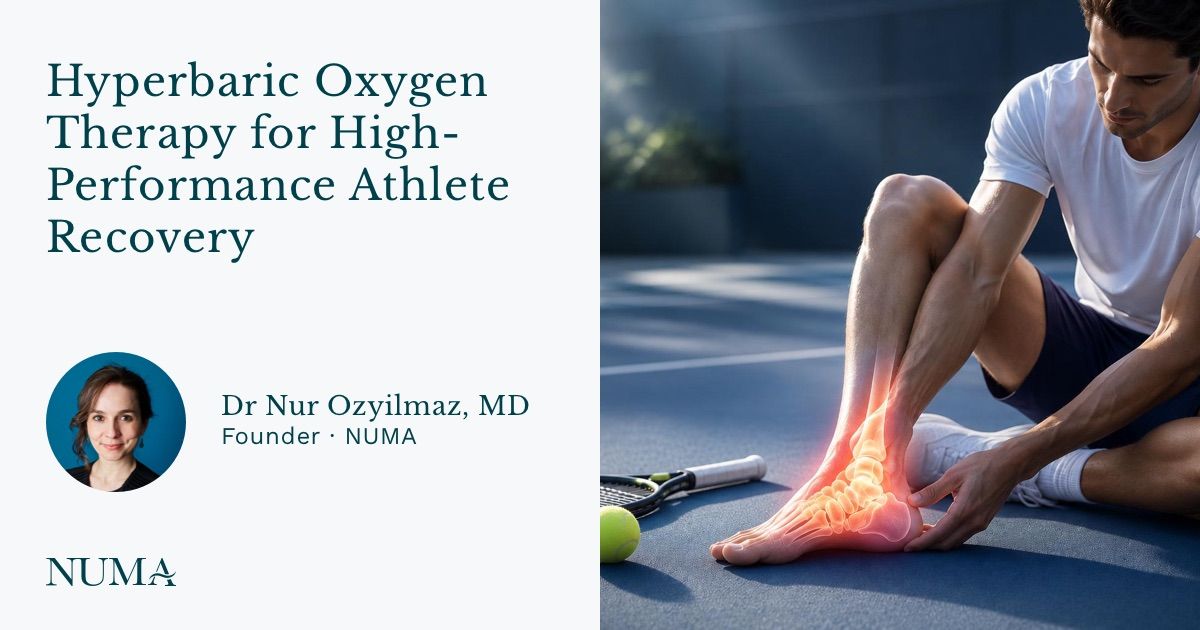
Sports injuries are an inevitable part of athletic participation, affecting everyone from elite competitors to recreational athletes. Although rehabilitation remains central to recovery, there is increasing interest in therapies that may enhance the biological environment for healing. Emerging evidence suggests HBOT may offer value as an adjunctive treatment in selected musculoskeletal injuries, particularly where tissue hypoxia, oedema, delayed recovery, or graft healing are important factors. I recently reviewed the current evidence for hyperbaric oxygen therapy in sports and musculoskeletal rehabilitation, including: ✔ Ligament and tendon injuries ✔ MCL sprains ✔ ACL reconstruction and graft healing ✔ Muscle injuries and recovery ✔ Bone marrow oedema ✔ Early-stage avascular necrosis The evidence continues to evolve, but some of the most encouraging findings have been reported in selected ligament injuries, early ACL graft maturation, bone marrow oedema, and pre-collapse avascular necrosis. While HBOT is not a replacement for established rehabilitation or medical management, a growing body of evidence suggests it may provide meaningful clinical benefit in selected musculoskeletal injuries when incorporated into a comprehensive treatment and recovery strategy. I've summarised the current evidence, proposed mechanisms, clinical applications, and limitations in the article below. 📖 https://lnkd.in/eJqJzFrZ #HBOT #SportsMedicine #AthleteRecovery #SportsInjuries #Orthopaedics #Rehabilitation #HyperbaricMedicine #EvidenceBasedMedicine #Physiotherapy #SportsPhysiotherapy.
- LINKEDIN · IMAGERecorded 27 Sept 2026
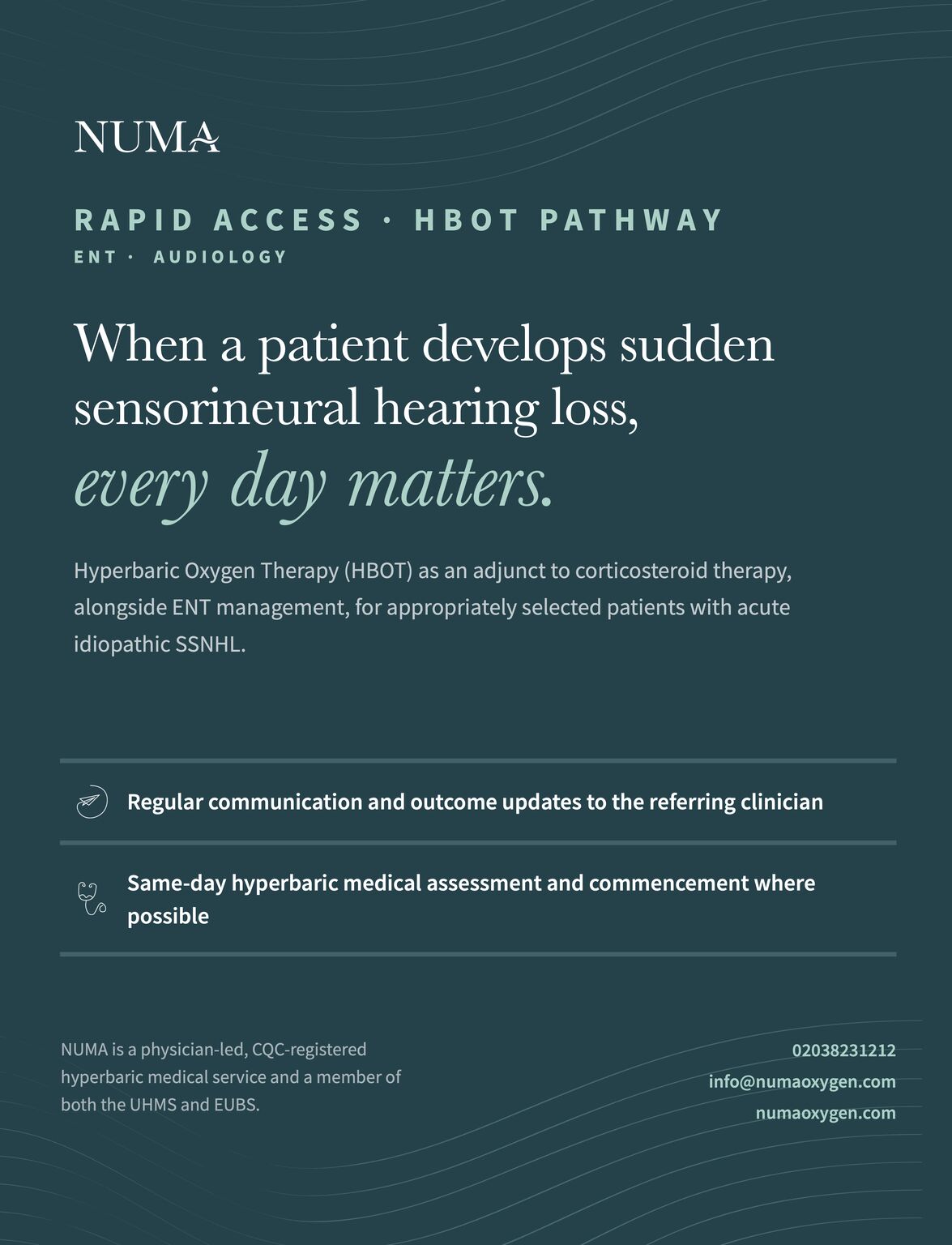
When a patient develops sudden sensorineural hearing loss, every day matters. Sudden sensorineural hearing loss (SSNHL) is an ENT emergency where early treatment can make a meaningful difference to hearing recovery. At NUMA, we've developed a rapid-access Hyperbaric Oxygen Therapy (HBOT) pathway to support ENT consultants and audiology teams by providing HBOT as an adjunct to standard corticosteroid therapy in appropriately selected patients. Our role is simple: • Rapid hyperbaric medical assessment, with same-day treatment where possible • HBOT delivered alongside the patient's existing ENT management • Regular communication and outcome updates to the referring clinician While referral is encouraged as early as possible, ideally within the first 72 hours of symptom onset, the American Academy of Otolaryngology–Head and Neck Surgery guidelines support consideration of HBOT for up to 14 days as initial therapy and up to one month as salvage therapy in appropriate patients. NUMA is a physician-led, CQC-registered hyperbaric medical service, and a member of both the UHMS and EUBS. We work collaboratively with referring clinicians and do not alter the patient's overall treatment plan. Our focus is solely on providing safe, evidence-based hyperbaric medicine. If you're an ENT consultant, audiologist, emergency physician, GP, or work with patients presenting with sudden sensorineural hearing loss, I'd be delighted to discuss our pathway or answer any questions. You can also read more about the evidence behind HBOT for SSNHL here: https://lnkd.in/eac5NQuf #ENT #Audiology #HyperbaricMedicine #HBOT #SSNHL #HearingLoss #EmergencyMedicine #Healthcare #EvidenceBasedMedicine
6 of 22 adsSign up to see every NUMA ad, filter by format and date, and get alerts on new ones.
See all 22 adsWatch the companies you care about.
Filter every ad by industry, country, format and network, and get alerts when a company you watch starts running new ads.