0 new LinkedIn ads in 30 days · 3 of 3 networks checked

Norling Law Limited ads
- norlinglaw.co.nz
- Law Practice
- NZ
- 21 employees
Norling Law Limited’s ads on LinkedIn, Meta and Google, recorded by adsrunning. Browse the latest here for free. Sign up free to browse our full recording. Watch Norling Law Limited on any plan to get each new one in your feed.
Watchlist included in every plan
What Norling Law Limited runs
- Single image · LinkedIn
- 4
- Video · LinkedIn
- 2
- Google ads on 4 Nov 2026
- 31
- active Meta ads on 7 Nov 2026
- 18
- Meta placements
- 3
| Network | Status | Last 30 days | Total ads found | Ad activity | Checked | Next step |
|---|---|---|---|---|---|---|
| None recorded | 0 | 39+ | 11/10/2026 | View ads → | ||
| Meta | Ads recorded | 3 | 18 | 11/07/2026 | View ads → | |
| Ads recorded | — | — | 11/04/2026 | View ads → |
Norling Law Limited has no new LinkedIn ads in the last 30 days. Its Facebook page had 18 active ads on 7 Nov 2026, and we recorded 31 Google ads on 4 Nov 2026.
Latest ads
- LINKEDIN · VIDEORecorded 27 Sept 2026
If another company owes you $$$, know this: you don't have the full picture of what is happening in that debtor company. Usually, if they owe $$$ to a creditor, they owe $$$ to other creditors (and quite probably, the IRD). Fun fact: Debtors usually lie. When they get desperate, they also make up disputes. If you are owed $$$, follow this strategy. Its tried and tested and it works. If you need assistance or just want to soundboard options, reach out for a chat.
- LINKEDIN · VIDEORecorded 27 Sept 2026
Here is a case study of what is possible when you are proactive in negotiating with the IRD and you implement a proven process for HOW you negotiate. Often, its not just about the number, its about understanding the needs and framework the other party needs to operate within and to meet those needs. In this case, our client employed a number of staff in NZ but they were impacted during Covid-19. As a result, the business reduced staff, the business owners took as substantial hit when revenue dropped. But ultimately, the business could not pay IRD what was owing. Our client owed almost $600,000 in over due tax. Ultimately, we deployed our proven process and we achieved a write off of $280,000 and we obtained 3 years for our client to pay. If you have overdue tax: 1. Be proactive; 2. Engage an expert to assist in communicating/negotiating with the IRD. Don't wait until you receive liquidation proceedings to get help. But either way, reach out for a no obligation discussion to see what is possible in your situation.
- LINKEDIN · IMAGERecorded 27 Sept 2026
The third in this series of patterns I see from business owners who call me needing insolvency advice: One customer grows to become too much of the business. Then they leave. The owner thought they had a business. They had a contract. Key customer dependency can be a double-edged sword. While its going well, its great. But it does pose a risk to a business that has grown and scaled all its resources, its team, its assets to deliver to this customer. Early in conversations with owners, it can be important to understand what percentage of revenue comes from your biggest customer and then what happens if they leave tomorrow? In my experience, there often isn't a clear plan. The pattern is often the same. One customer grows. Becomes the biggest. Becomes 30%, then 40% or 70%. I've seen some that are 100%. The owner knows they're exposed. They've always known. But the customer is good, the work is steady, the relationship is solid. Until it isn't. The customer renegotiates terms. Or delays payment. Or goes under themselves. Or just decides to bring the work in-house. Whatever the trigger, the same thing happens next: the business is carrying the overheads it built to service that customer, without the revenue that paid for them. In the case of the 100% I referred to, the point of contact left and a new point of contact replaced with new preferred relationships. The contract came to an end, as did my clients business. By the time they call me, they've usually burned through cash trying to bridge it (TIP: diversification in good times is a good thing. In these times its a necessary thing). The maths is unforgiving. If one customer is 30% of your revenue and you lose them, you don't lose 30% of your profit. You usually lose most of it. Sometimes all of it. Your overheads were sized for the whole book of work. The remaining 70% of revenue now has to carry 100% of the cost base. That gap is where businesses end up on my desk. So what should you actually be doing? Know your numbers. What percentage is each of your top five customers? Set a concentration limit, or at least a trigger point that forces a plan. I get it. There are some advantages to having some big anchor customers. But there still is a risk, and one I probably see a disproportionate amount of times given my area of expertise. So... Diversify deliberately, not reactively. The time to find your next major customer is when you don't need them, not when you do. Have the honest conversation with yourself early. If a single customer is your whole business, you don't own a business. You own a contract. And contracts end. The owners who survive a major customer loss aren't lucky. They saw the risk years earlier and did something about it while they still had time. Next in the series: why owners treat the IRD like a bank, and what happens next.
- LINKEDIN · IMAGERecorded 27 Sept 2026
The sixth in this series of patterns I see from business owners who call me needing insolvency advice: directors sign personal guarantees without full understanding. The company fails. They then discover the limits of "limited liability". In theory, incorporating a company gives you limited liability. In practice, many do not operate on that basis. Landlords want a PG. Banks want a PG. Equipment finance wants a PG. Trade suppliers above a credit limit want a PG. Each one, signed alone, feels manageable. Years later, when the company fails, all those guarantees crystallise at once. Worse yet, they sign terms that include it without reading and understanding the full extent of guarantees. I have sat with directors who genuinely thought they had limited liability. They often cant give me a list of PG's signed. The total personal exposure was often a multiple of their net wealth. The maths can be brutal. A five-year commercial lease PG can be hundreds of thousands. A bank PG is often unlimited. And the family home is usually in the firing line, sometimes with proper spousal consent, sometimes (TIP: get advice on this) without. I get it. Refusing to sign a PG can cost you the deal. Landlords won't lease, banks won't lend, suppliers won't extend credit. In the early years, signing them is often the only way to operate. Another issue is PG's are signed, they then resign as director (or are removed) and the company continues to trade for years without control over the company and then a demand follows from the creditor. Quite the surprise! So what should you actually be doing? Read what you are signing. The amount, the duration, the trigger, and what assets are exposed. Negotiate caps and sunsets. Many PGs can be capped at a dollar amount, limited to a term, or released when the company hits a financial threshold. Many directors never ask. Keep a register. Every PG you sign, with counterparty, amount, and trigger. If you resign as director, seek to deal with PG's and remove them and/or renegotiate them to those who remain. The directors I never see in distress aren't the ones who refused to sign. They are the ones who signed knowing exactly what they were on the hook for, and managed the exposure deliberately. Next in the series: the cash flow forecast that would have saved half my clients.
- LINKEDIN · IMAGERecorded 27 Sept 2026
As stated, here is the first in a series of posts around the patterns I see from those business owners who call me in a distressed situation: I’ve seen plenty of growing businesses run out of cash and fail. Even those with profit on their P&L. I hope this helps someone. Many people think businesses fail because they stop making money. In my experience, it's the opposite. The business owners that end up booking a free consultation with me are usually growing. New customers. Bigger contracts. Hiring. Sometimes record revenue in the month they go under. That's not a paradox. It's the problem. Growth can eat cash. We have labelled it "growing broke". Every new customer is more stock, more wages, more receivables sitting at 60 days while you've already paid your suppliers at 20 (TIP: have a process and follow it to get those average AR days down low). Every new hire is three months of salary before they're contributing (TIP: consider your own cash conversion cycle - measure it and shorten it). Every bigger contract is bigger working capital pressure; you fund the job, then wait to get paid. If you're profitable on paper but need cash to fund next month's growth, many either keep selling or borrow (usually from fast business lenders - see a previous post of mine and/or the lender of last resort: the IRD). By the time they call me, the balance sheet is a mess. Here's the pattern I see again and again: Year one: small, scrappy, profitable. Owner runs it tight because they have to. Year two: big contract lands. Hires made to deliver it. Margins still fine. Year three: more growth. Debtor days creep out. Owner stops watching weekly because monthly looks OK. Year four: a key customer pays late. Then another. PAYE arrears start. "We'll catch up next quarter." Year five: the call booked with me. The cruel maths of growth is that it accelerates everything including the things that were broken when you were small. A 10% margin with sloppy debtor management is annoying at $1M revenue. It's terminal at $10M. The growth didn't break the business. It exposed what was already broken. So what should you actually be watching? Revenue? Profit? Watch the gap between when you pay cash out and when cash comes back in. That gap is the working capital cycle, and it's a critical number in a growing business. If that gap is widening, debtor days are going up, supplier terms shortening, stock sitting longer and you are growing into a wall. The businesses I never get a call from aren't the most profitable ones. They're the ones who know, on any given Tuesday, exactly how much cash they have, exactly when the next chunk is coming in, and exactly what they owe in the next quarter (at least). They have great cashflow management and forecasting. That discipline is unglamorous. But it's the difference between a growing business and a growing problem. Next in the series: the single customer who becomes 30% of your revenue, and then leaves.
- LINKEDIN · IMAGERecorded 27 Sept 2026
We get around 40 calls a week from business owners in trouble. Forty. Every week. For years. Some are quiet. Some are panicked. A few are angry, usually at someone else. But the ones that stay with me are the tired ones. The voice of someone who's been losing sleep for months, who's run out of ways to tell themselves it's fine, and who's finally said the thing out loud: "I think I've left this too long." By the time someone picks up the phone to an insolvency lawyer, they already know. They've known for months. Sometimes years. The call is just the moment they stop pretending. And here's the part that bothers me. After 15 years of this work, the patterns are consistent. Same handful of mistakes. Same blind spots. Same "we'll deal with it later" decisions, made three, four, five years before the call. By the time I pick up the phone, the options have collapsed. What could have been a strategic pivot two years ago is now much more limited and dire options. What could have been a hard conversation with a co-founder is now litigation. What could have been a payment plan with the IRD is now a liquidation. The cruel part: most of these businesses didn't need to be there. Not unlucky. Not in dying industries. Not run by stupid people; most of my clients are smart, hard-working operators. They just made a series of small, reasonable decisions that compounded into something they couldn't get out of. And nobody told them, five years earlier, what those decisions looked like. So I'm going to. Over the next few months I'll write a series on exactly that. The patterns I see. The mistakes that keep showing up. The decisions that look small at the time and turn out to be the whole game. Things like: – Why growing businesses fail more often than shrinking ones. – The customer who becomes your whole business, and then leaves. – Why owners treat the IRD like a bank. – The co-founder relationship nobody papers until it's too late. – Personal guarantees, and what directors are actually on the hook for. – The cash flow forecast that would have saved half my clients. Some of it will be uncomfortable to read. Good. If you recognise yourself in a post, that's the point; that's it doing its job five years before you'd otherwise be calling me. My job is satisfying when I get to fix things early. It's more satisfying for you too. Early, you still have options. Late, you have a series of hard choices to minimise the fallout. The best outcome of this series is that maybe someone will need to call me. The first will be why the most dangerous businesses I see aren't the ones shrinking; they're the ones growing. Already in this territory? We offer a free 30-minute consult. Earlier is always better.



6 of 39+ adsSign up to see every Norling Law Limited ad, filter by format and date, and get alerts on new ones.
See all 39+ adsOn Facebook and Instagram
Facebook page Norling Law Limited · 18 active ads, checked 7 Nov 2026 · 18 recorded
- All 18
- Image 8
- Video 8
 Video previewMETA · VIDEOSince 2 Nov 2026
Active on Facebook, Instagram, Threads. Let our team of experts guide you through complex commercial issues. Book your consult now.
 Video previewMETA · VIDEOSince 2 Nov 2026
Active on Facebook, Instagram, Threads. Insolvency can become personal risk for directors once it’s foreseeable and the business keeps trading without a plan. If you’re unsure where you stand, Norling Law can help you assess exposure. Book a consultation.
 Video previewMETA · VIDEOSince 2 Nov 2026
Active on Facebook, Instagram, Threads. Insolvency rarely happens overnight. It usually starts with delayed tax, stretched creditors, and reactive cashflow decisions. If this feels familiar, Norling Law can help you understand your options.
 Video previewMETA · VIDEOSince 29 Oct 2026
Active on Facebook, Instagram, Threads. If you have received a Statutory Demand, it is crucial to act quickly. The first step is to determine whether you owe the money. If not, you should proactively communicate with the creditor, outline any disputes, and request the withdrawal of the demand. Failure to do so could lead the creditor to seek liquidation of your company through the High Court. However, if you do owe the money, the advice remains similar: communicate openly. If payment is difficult, request additional time and provide clear information about your situation to buy time and avoid liquidation proceedings. In either case, seeking specialist insolvency advice is essential. You only have 15 working days to resolve the issue before the creditor may apply for liquidation, after which you have limited options.
 META · IMAGESince 11 Oct 2026
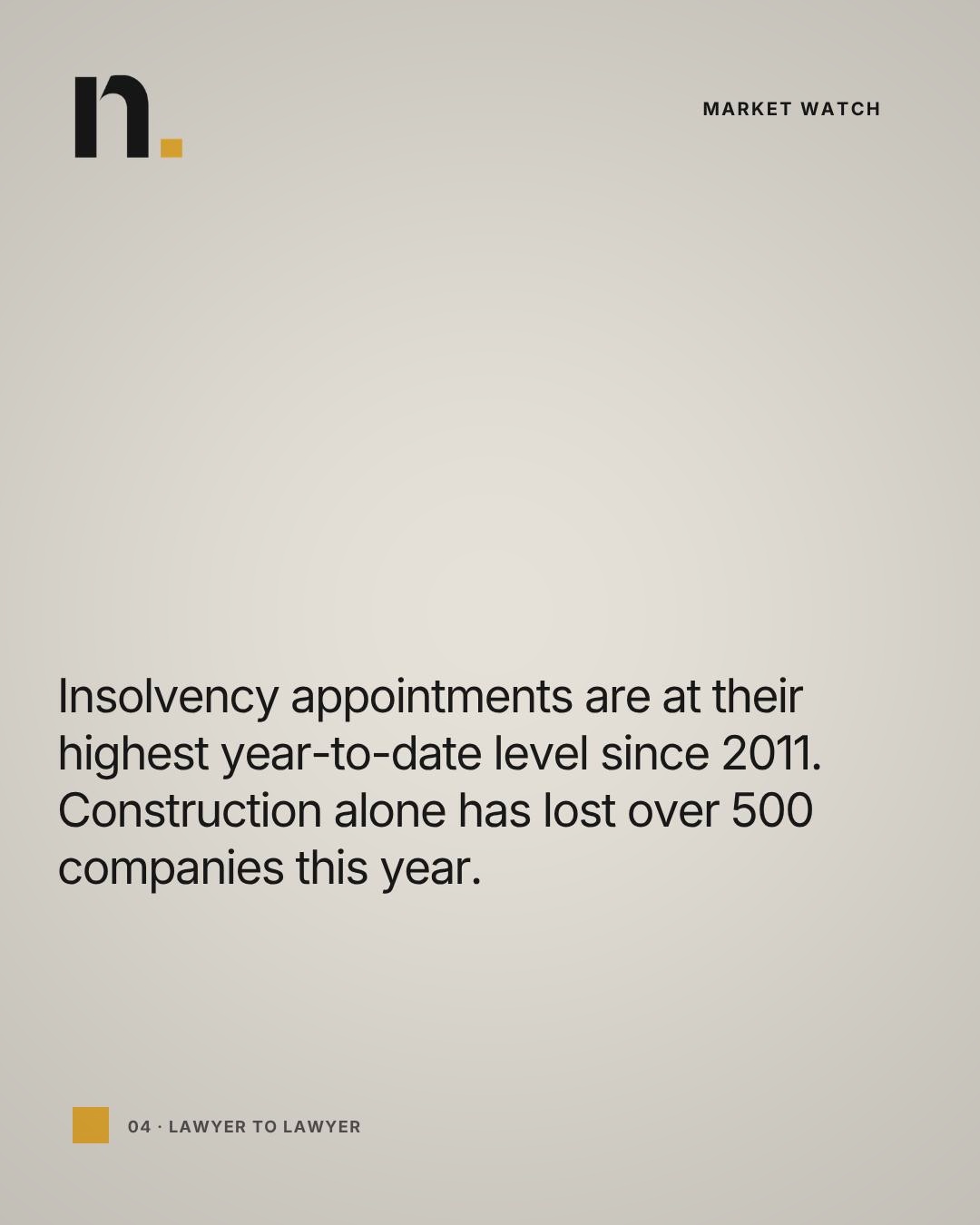
Active on Facebook, Instagram, Threads. Company liquidations just hit a 16-year high. Not a blip, a trend confirmed by three months of data. July alone had 299 formal insolvency appointments, and over 80% were liquidations, not rescues. That split tells you something: businesses are reaching the decision point later than they should, after the options have already narrowed. Easing inflation and better job numbers won't undo two years of drained reserves overnight, and insolvency data lags behind confidence data. If you're watching this from a place of uncertainty, have the conversation now, while you still have options.
 META · IMAGESince 5 Oct 2026
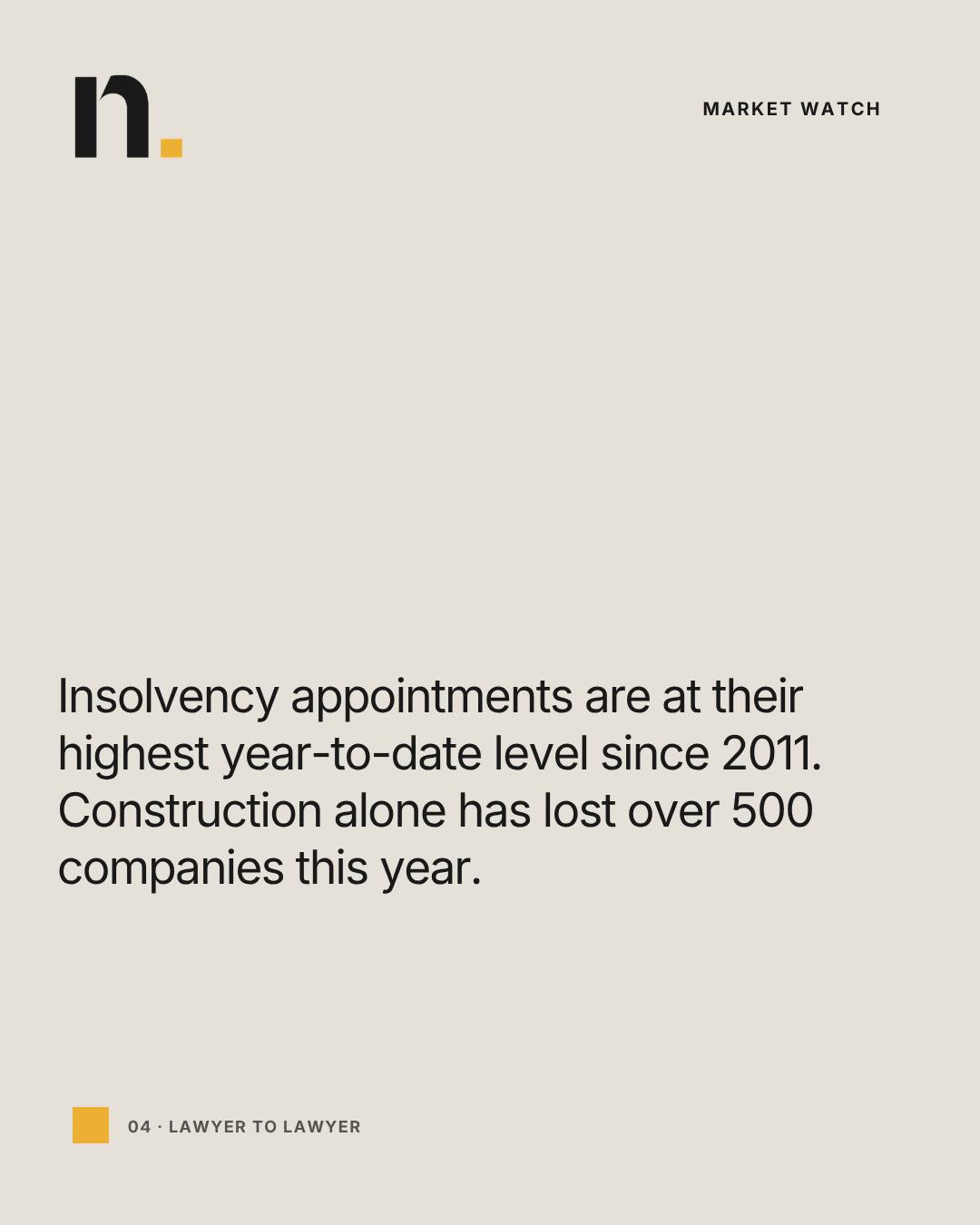
Active on Facebook, Instagram, Threads. Company liquidations just hit a 16-year high. Not a blip, a trend confirmed by three months of data. July alone had 299 formal insolvency appointments, and over 80% were liquidations, not rescues. That split tells you something: businesses are reaching the decision point later than they should, after the options have already narrowed. Easing inflation and better job numbers won't undo two years of drained reserves overnight, and insolvency data lags behind confidence data. If you're watching this from a place of uncertainty, have the conversation now, while you still have options.
Show 12 more Meta ads
 META · IMAGESince 4 Oct 2026
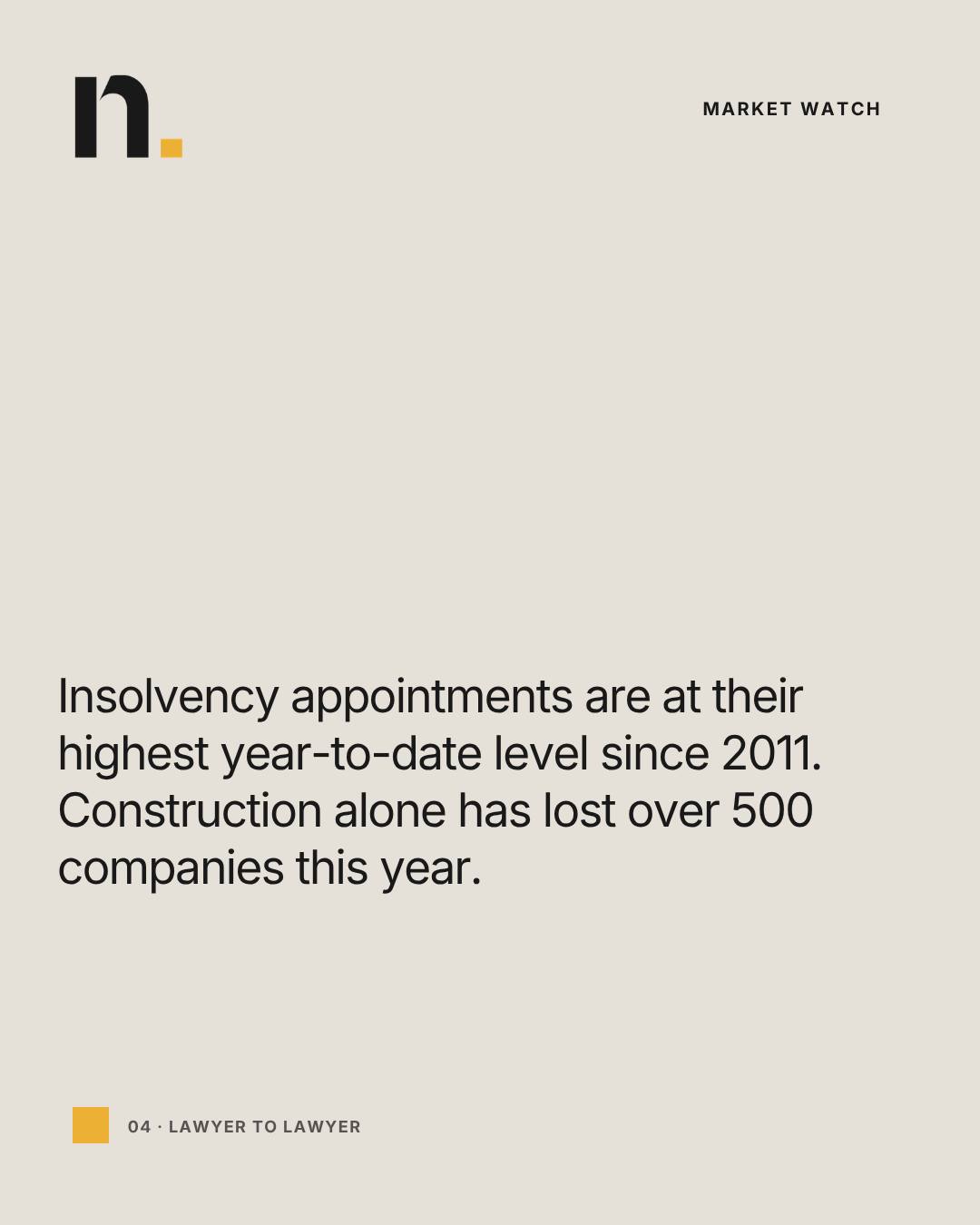
Active on Facebook, Instagram, Threads. Company liquidations just hit a 16-year high. Not a blip, a trend confirmed by three months of data. July alone had 299 formal insolvency appointments, and over 80% were liquidations, not rescues. That split tells you something: businesses are reaching the decision point later than they should, after the options have already narrowed. Easing inflation and better job numbers won't undo two years of drained reserves overnight, and insolvency data lags behind confidence data. If you're watching this from a place of uncertainty, have the conversation now, while you still have options.
 META · IMAGESince 4 Oct 2026
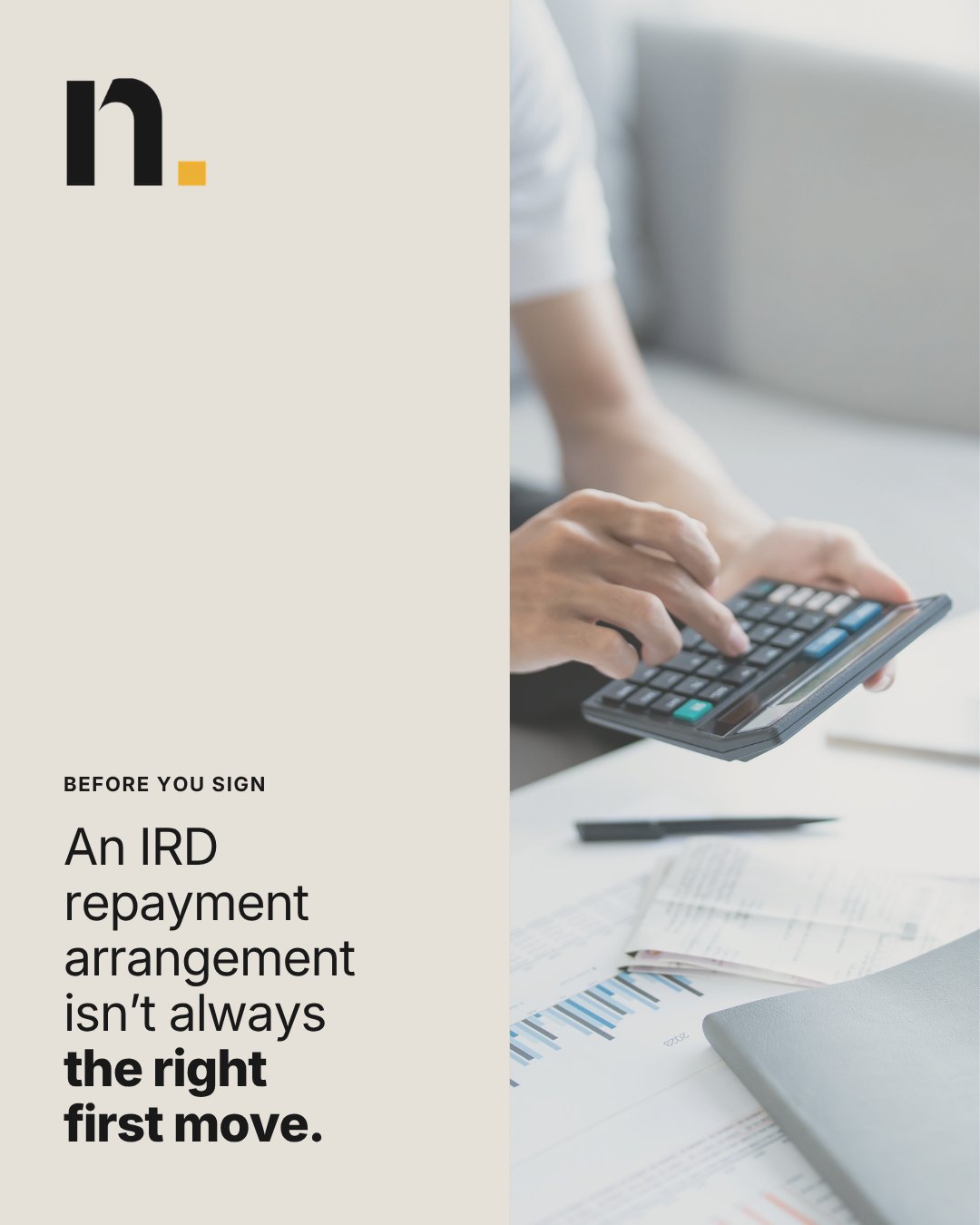
Active on Facebook, Instagram, Threads. If your business owes IRD money, a repayment arrangement isn't always the right first move. Getting it wrong can make things harder, not easier. IRD can decline an arrangement it considers unrealistic. A missed payment can void it and trigger immediate enforcement. And agreeing to one doesn't resolve the penalties and interest already accrued. With IRD now funded to pursue debt more actively in 2026, the window to negotiate on favourable terms is narrower than it was. The directors who handle this best get specialist legal advice before agreeing to anything, not after. If you have outstanding IRD debt and aren't sure of the right approach, get in touch today.
 META · IMAGESince 3 Oct 2026
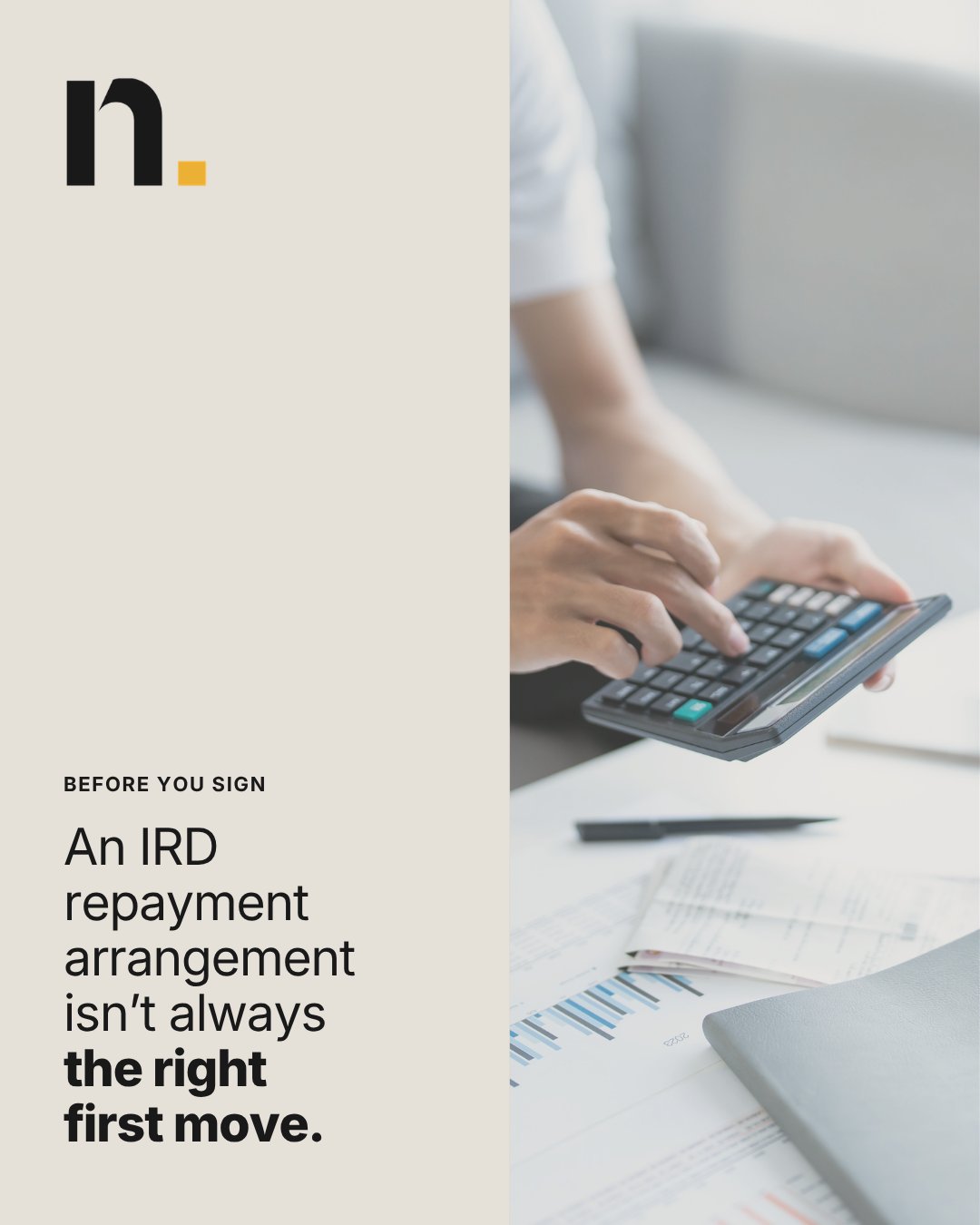
Active on Facebook, Instagram, Threads. If your business owes IRD money, a repayment arrangement isn't always the right first move. Getting it wrong can make things harder, not easier. IRD can decline an arrangement it considers unrealistic. A missed payment can void it and trigger immediate enforcement. And agreeing to one doesn't resolve the penalties and interest already accrued. With IRD now funded to pursue debt more actively in 2026, the window to negotiate on favourable terms is narrower than it was. The directors who handle this best get specialist legal advice before agreeing to anything, not after. If you have outstanding IRD debt and aren't sure of the right approach, get in touch today.
 Video previewMETA · VIDEOSince 29 Sept 2026
Active on Facebook, Instagram, Threads. Avoiding insolvency is critical for the long-term success of your business. Key strategies include closely monitoring financial indicators, particularly cash flow, and managing debt levels. Businesses that fail often lack basic financial tools, such as budgets and cash flow forecasting. It is important to work with accountants who specialise in these areas, rather than relying solely on compliance-focused professionals. Additionally, diversifying revenue streams, maintaining strong relationships with creditors, and hiring or developing necessary financial management skills are crucial to navigating tough times.
 META · IMAGESince 23 Sept 2026
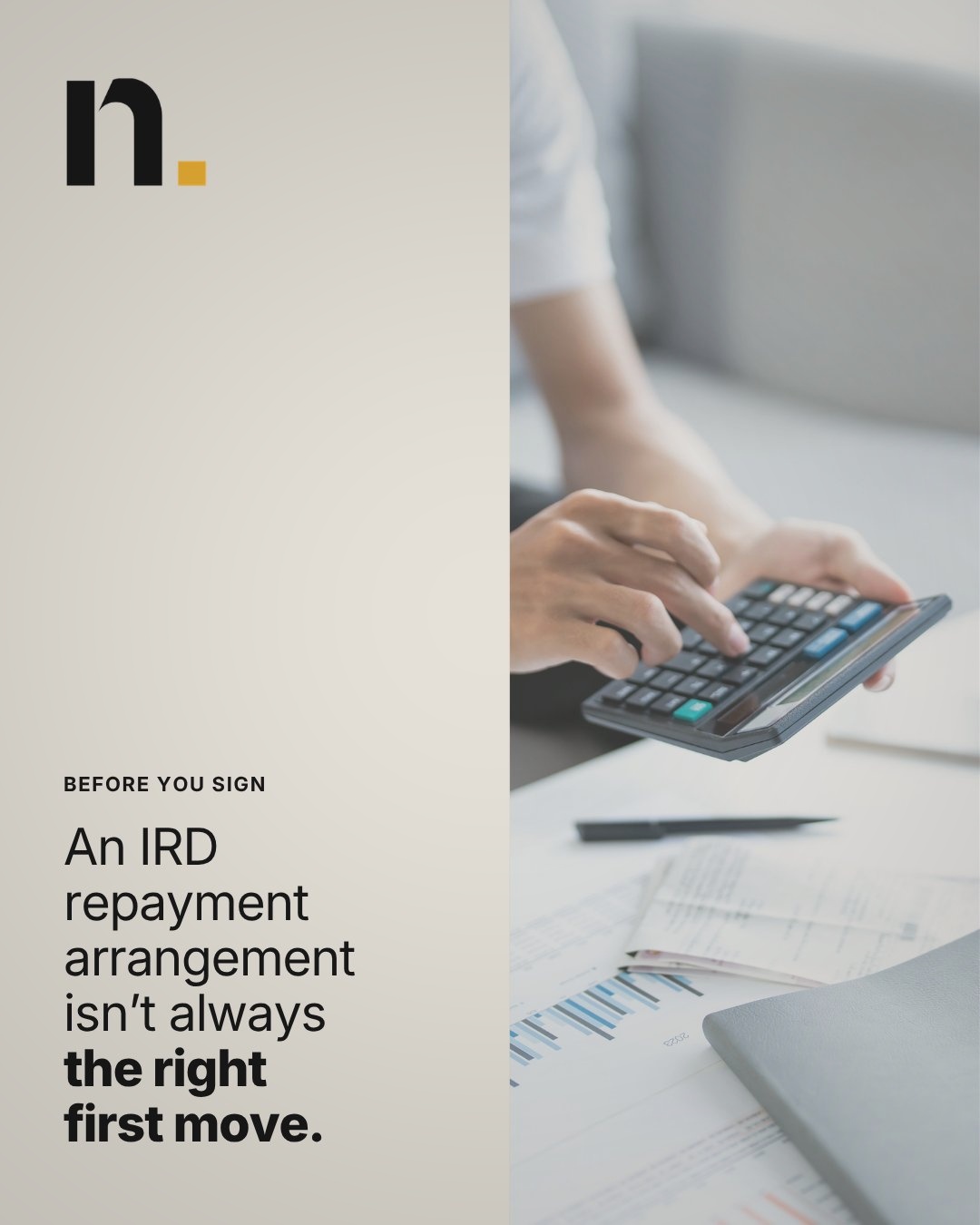
Active on Facebook, Instagram, Threads. If your business owes IRD money, a repayment arrangement isn't always the right first move. Getting it wrong can make things harder, not easier. IRD can decline an arrangement it considers unrealistic. A missed payment can void it and trigger immediate enforcement. And agreeing to one doesn't resolve the penalties and interest already accrued. With IRD now funded to pursue debt more actively in 2026, the window to negotiate on favourable terms is narrower than it was. The directors who handle this best get specialist legal advice before agreeing to anything, not after. If you have outstanding IRD debt and aren't sure of the right approach, get in touch today.
 Video previewMETA · VIDEOSince 16 Sept 2026
Active on Facebook, Instagram, Threads. If your business is facing insolvency, it is critical to act decisively and ensure you have the right information at hand. Effective management during these challenging times can make all the difference between recovery and dissolution. The first step is to make sure your financial records are up-to-date and comprehensive. This includes accurate cash flow projections, understanding your liabilities, and having a full picture of your creditors. Without this, the advice you receive may be limited and could lead you to make misinformed decisions. Once your information is in order, seek guidance from an insolvency specialist—not a liquidator—who can provide advice not biased by their potential gain from the situation. You should also consider negotiating compromises with creditors. Whether it is through a formal Companies Act Compromise or informal negotiations, taking proactive measures can help you manage debts while maintaining relationships with key stakeholders. Remember, avoiding the issue will only make it worse. Communicate with creditors and explore ways to increase revenue or reduce expenses. Whether renegotiating rental agreements or identifying new revenue streams, there are often ways to alleviate financial pressure. In some cases, restructuring the business into a new entity might be a viable option, though this should only be considered if the underlying problems are resolved. Lastly, be mindful of your duties as a director to avoid personal liability.
 META · UNKNOWNSince 16 Sept 2026
Active on Facebook, Instagram, Threads. When a company goes into liquidation and the director sets up a new business with a similar name, it can be frustrating for creditors who remain unpaid while the business continues operating. Legally, directors of failed companies are generally prohibited from establishing new companies with similar names unless they meet certain exceptions, such as purchasing the assets from the liquidator or the new company having traded for over twelve months. While it is important to note the challenges creditors face, including potential frustration, there are ways for them to seek redress. Creditors should examine their terms of trade, secure personal guarantees, and explore whether directors have breached their duties. By working with a liquidator, they may still recover owed funds. This approach ensures that creditors remain protected even when a phoenix company emerges. If you are a creditor affected by a similar situation, contact our team of experts today for a 30-minute consultation to discuss your options and potential recovery strategies. https://norlinglaw.co.nz/book-a-consultation/ Norling Law is a specialist Litigation and Dispute Resolution Law firm with a core focus on Insolvency and Restructuring. #NorlingLaw #InsolvencyandDebtRecovery #legal #lawyers #litigation #lawfirm #newzealand #nzbusiness #advice
 Video previewMETA · VIDEOSince 16 Sept 2026
Active on Facebook, Instagram, Threads. As a shareholder, particularly if you hold a minority stake, you may find yourself in a difficult position where you lack control over the company. In some cases, company boards may act in ways that are prejudicial to minority shareholders, such as favouring family interests or using company resources for personal benefit. However, it is a common misconception that minority shareholders are powerless in such situations. Legal avenues exist that can help protect your interests and hold the board accountable for improper conduct. Understanding your rights is crucial in safeguarding your investment and ensuring fairness within the company.
 Video previewMETA · VIDEOSince 16 Sept 2026
Active on Facebook, Instagram, Threads. If you have received a Statutory Demand, it is crucial to act quickly. The first step is to determine whether you owe the money. If not, you should proactively communicate with the creditor, outline any disputes, and request the withdrawal of the demand. Failure to do so could lead the creditor to seek liquidation of your company through the High Court. However, if you do owe the money, the advice remains similar: communicate openly. If payment is difficult, request additional time and provide clear information about your situation to buy time and avoid liquidation proceedings. In either case, seeking specialist insolvency advice is essential. You only have 15 working days to resolve the issue before the creditor may apply for liquidation, after which you have limited options.
 META · UNKNOWNSince 16 Sept 2026
Active on Facebook, Instagram, Threads. Avoiding insolvency is critical for the long-term success of your business. Key strategies include closely monitoring financial indicators, particularly cash flow, and managing debt levels. Businesses that fail often lack basic financial tools, such as budgets and cash flow forecasting. It is important to work with accountants who specialise in these areas, rather than relying solely on compliance-focused professionals. Additionally, diversifying revenue streams, maintaining strong relationships with creditors, and hiring or developing necessary financial management skills are crucial to navigating tough times. Book a 30-minute consultation with our expert team to ensure your business continues to thrive, even during challenging times. https://norlinglaw.co.nz/book-a-consultation/ Norling Law is a specialist Litigation and Dispute Resolution Law firm with a core focus on Insolvency and Restructuring. #NorlingLaw #InsolvencyandDebtRecovery #legal #lawyers #litigation #lawfirm #newzealand #nzbusiness #advice
 META · IMAGESince 14 Sept 2026
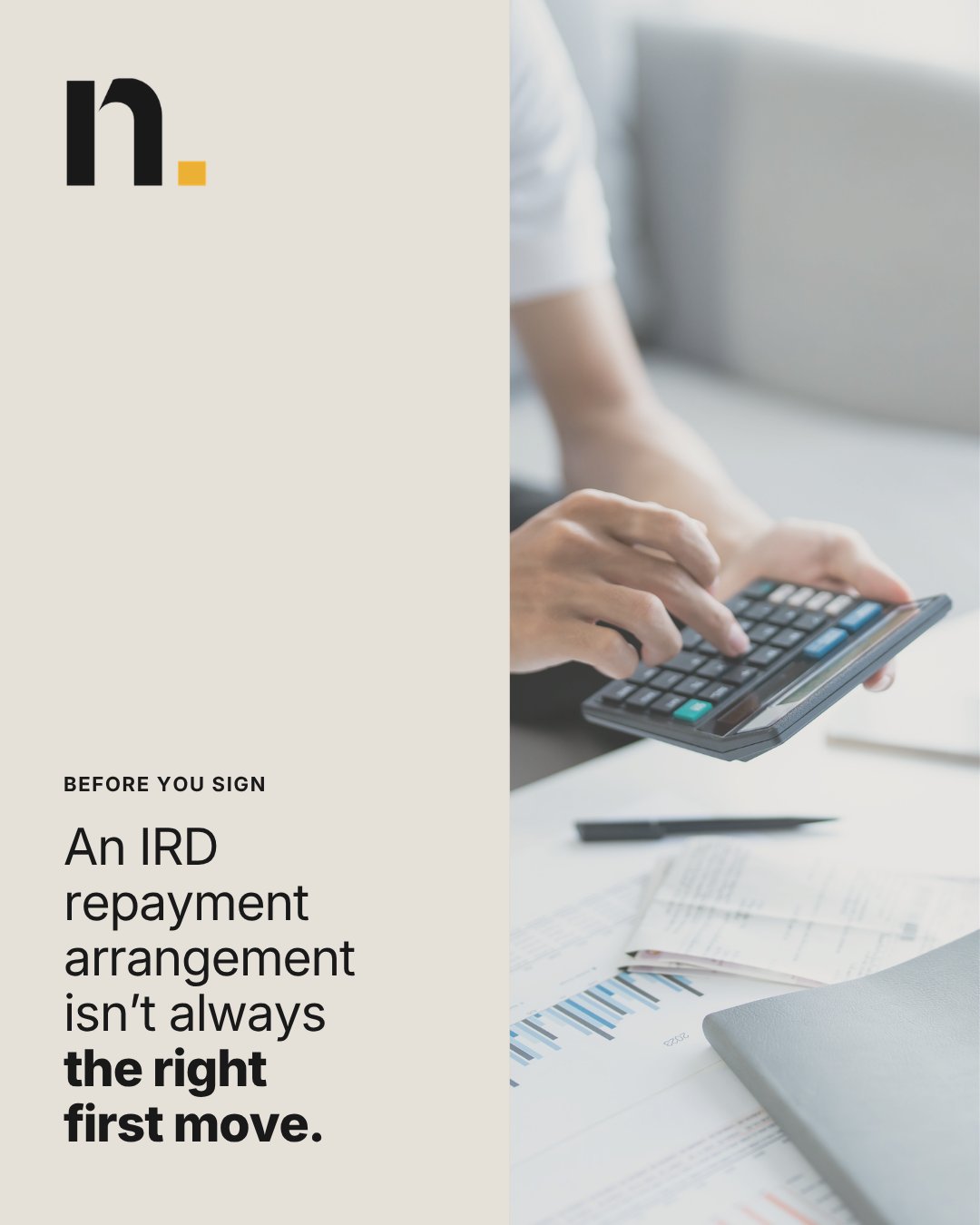
Active on Facebook, Instagram, Threads. If your business owes IRD money, a repayment arrangement isn't always the right first move. Getting it wrong can make things harder, not easier. IRD can decline an arrangement it considers unrealistic. A missed payment can void it and trigger immediate enforcement. And agreeing to one doesn't resolve the penalties and interest already accrued. With IRD now funded to pursue debt more actively in 2026, the window to negotiate on favourable terms is narrower than it was. The directors who handle this best get specialist legal advice before agreeing to anything, not after. If you have outstanding IRD debt and aren't sure of the right approach, get in touch today.
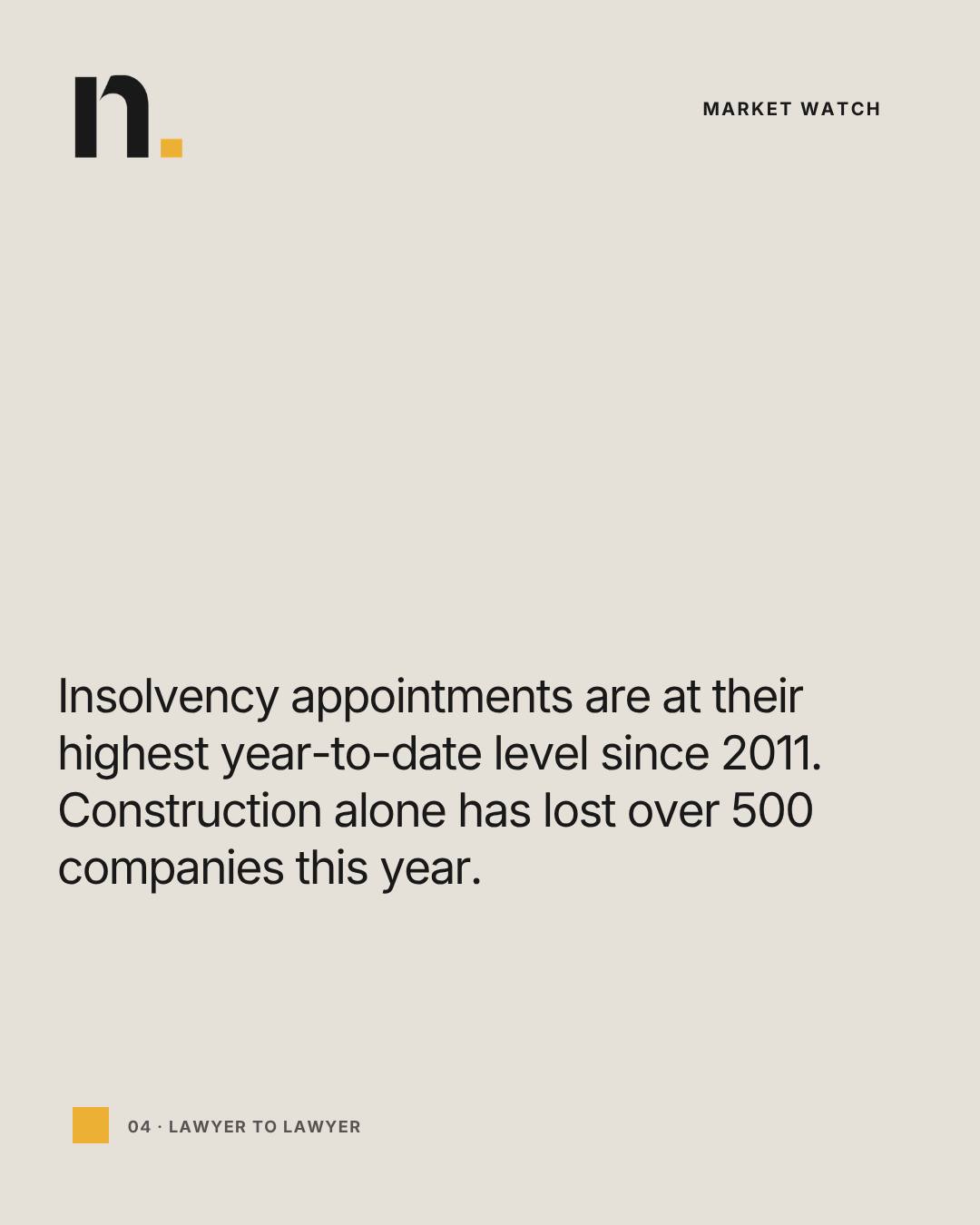 META · IMAGESince 14 Sept 2026
Active on Facebook, Instagram, Threads. Company liquidations just hit a 16-year high. Not a blip, a trend confirmed by three months of data. July alone had 299 formal insolvency appointments, and over 80% were liquidations, not rescues. That split tells you something: businesses are reaching the decision point later than they should, after the options have already narrowed. Easing inflation and better job numbers won't undo two years of drained reserves overnight, and insolvency data lags behind confidence data. If you're watching this from a place of uncertainty, have the conversation now, while you still have options.
Questions about Norling Law Limited’s ads
Does Norling Law Limited have new LinkedIn ads?
We found no new LinkedIn ads for Norling Law Limited in the 30 days to 11 Nov 2026.
How many LinkedIn ads has Norling Law Limited run?
LinkedIn’s ad library lists 39 ads for Norling Law Limited. We recorded 39 LinkedIn ads for Norling Law Limited, first recorded on 27 Sept 2026 and last recorded on 9 Oct 2026.
Does Norling Law Limited advertise on Facebook and Instagram?
Yes. Norling Law Limited’s Facebook page had 18 active ads in Meta’s Ad Library, last recorded on 7 Nov 2026.
Does Norling Law Limited run Google ads?
Yes. We recorded 31 Google ads for the domain norlinglaw.co.nz on 4 Nov 2026.
Which ad formats does Norling Law Limited use?
The 6 LinkedIn ads on this page include 4 image ads and 2 video ads.
Watch the companies you care about.
Filter every ad by industry, country, format and network, and get alerts when a company you watch starts running new ads.