Not on air · 2 of 3 networks checked

N-SIDE ads
- n-side.com
- Software Development
- BE
- 210 employees
N-SIDE’s ads on LinkedIn, Meta and Google, recorded by adsrunning. Browse the latest here for free. Sign up free to see all 25. Watch N-SIDE on any plan to get each new one in your feed.
Watchlist included in every plan
What N-SIDE runs
- Single image · LinkedIn
- 6
| Network | Status | Live ads | Nov 2025LinkedIn activity · 52 weeksNov 2026 | Checked | Next step |
|---|---|---|---|---|---|
| None recorded | 0 | Checked 7 Nov 2026 | See all 25 ads → | ||
| Meta | Not checked | — | |||
| None recorded | 0 | No ads found on the Google Ads Transparency Center | Checked 4 Nov 2026 | Collect them with the API → |
N-SIDE has no live LinkedIn ads. We recorded no Google ads on 4 Nov 2026.
Latest ads
- LINKEDIN · IMAGESince 27 Jul 2026
One small spreadsheet error can create a lot of noise. A deleted cell. A formula copied one row too far. A hidden tab that no one wants to touch. A manual update that doesn’t make it into the final file. Most clinical supply teams have seen some version of this. The bigger issue isn’t just the error itself. It’s the time spent checking, fixing, reconciling, and explaining the forecast before anyone can confidently act on it. That time could be spent on higher-value work: 👉 understanding supply risks 👉 comparing scenarios 👉 planning supply strategies 👉 preparing for enrollment changes Clinical supply experts shouldn’t have to spend so much of their time maintaining spreadsheet logic. A centralized forecasting approach like N-SIDE helps teams focus less on fixing the file and more on managing the trial. Stop chasing broken formulas. Start forecasting with confidence.
- LINKEDIN · IMAGESince 27 Jul 2026
Clinical trials have changed a lot. Adaptive designs. Titration dosing. Direct-to-patient models. Short shelf lives. More countries, more depots, more moving parts. Forecasting has to reflect all of that. But in many teams, the process still depends on bigger and bigger spreadsheets. More tabs. More formulas. More manual checks. More work every time the protocol or assumptions change. At some point, the spreadsheet becomes the bottleneck. Not because the team isn’t capable. Because the tool wasn’t built for that level of clinical supply complexity. Modern trials need forecasting that can handle complexity without forcing teams to rebuild the logic every time something changes. That’s the shift: from heavy spreadsheets to purpose-built clinical supply forecasting that can handle real trial complexity. N-SIDE can help you move forward!
- LINKEDIN · IMAGESince 27 Jul 2026
Manual forecasting often feels manageable... at first. When you are managing a Phase I trial with a handful of sites and a predictable patient enrollment curve, a well-built spreadsheet gets the job done. But what happens when that drug moves to Phase III? Suddenly, you aren't managing 5 sites but 150 across 12 countries. You have dynamic titration, complex IRT/RTSM data feeds, and global depots with varying release times. The tools that worked at one stage can become difficult to manage at the next. Files get heavier. Manual updates take longer. Scenario planning slows down. The risk of using outdated assumptions increases. That’s usually when teams start asking whether their forecasting process can scale with the pipeline. N-SIDE clinical supply solutions help teams move from manual models to a connected, scalable way of planning across trial phases and complexity levels. Is your current forecasting process ready for the next phase?
- LINKEDIN · IMAGESince 27 Jul 2026
How many versions of your clinical supply forecast are floating around your inbox right now? v2? v7_Final? v14_Final_ACTUAL_DO_NOT_EDIT? If you work in clinical supply, you probably know the feeling. You spend hours gathering the data, update the forecasts, check the formulas, send it around … and then something changes. A site opens later than expected. Enrolment shifts Someone updates a different version. The “latest” file suddenly isn’t so latest anymore. Spreadsheets are useful. But for clinical supply forecasting, they can quickly become hard to control. Especially when you’re dealing with: ➡️ enrolment changes ➡️ protocol amendments ➡️ country and site-specific constraints ➡️ IRT/RTSM updates At some point, the question becomes less “Can we make the spreadsheet work?” and more “Is this still the right way to manage supply decisions?”. Moving away from manual forecasting isn’t about replacing Excel for the sake of it. It’s about giving teams a shared, clearer, more reliable way to plan. N-SIDE can help you move from spreadsheet forecasting to supply confidence! How does your team manage forecast version control today?
- LINKEDIN · IMAGESince 27 Jul 2026
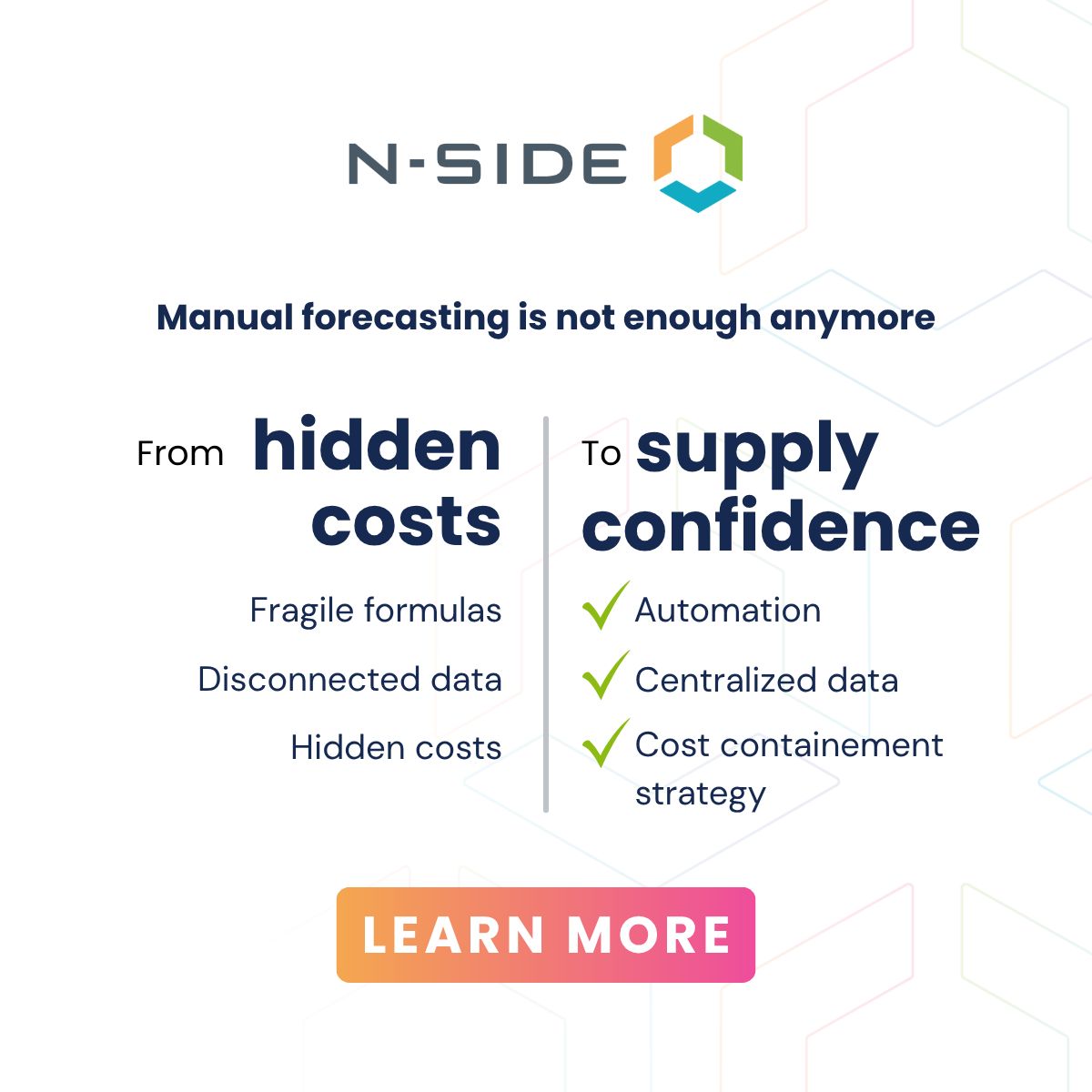
Spreadsheets may be low-cost, but manual forecasting usually isn’t. The cost just shows up somewhere else. ➡️ In emergency shipments ➡️ In excess inventory ➡️ In expired stock ➡️ In rushed packaging decisions ➡️ In hours spent reconciling files before a decision can be made For clinical supply teams, the real cost of manual forecasting is often hidden inside day-to-day operations. And when trial complexity increases, those hidden costs become harder to ignore. Moving away from spreadsheet-heavy forecasting is not only about efficiency. It’s about giving teams shared visibility, stronger control, and more data-driven decisions across cost, waste, risk, and patient service. So the question isn’t just “What does our forecasting tool cost?” It’s also: “What is our current process costing us?” N-SIDE can help you avoid unnecessary costs and build stronger, easier forecast.
- LINKEDIN · IMAGESince 27 Jul 2026
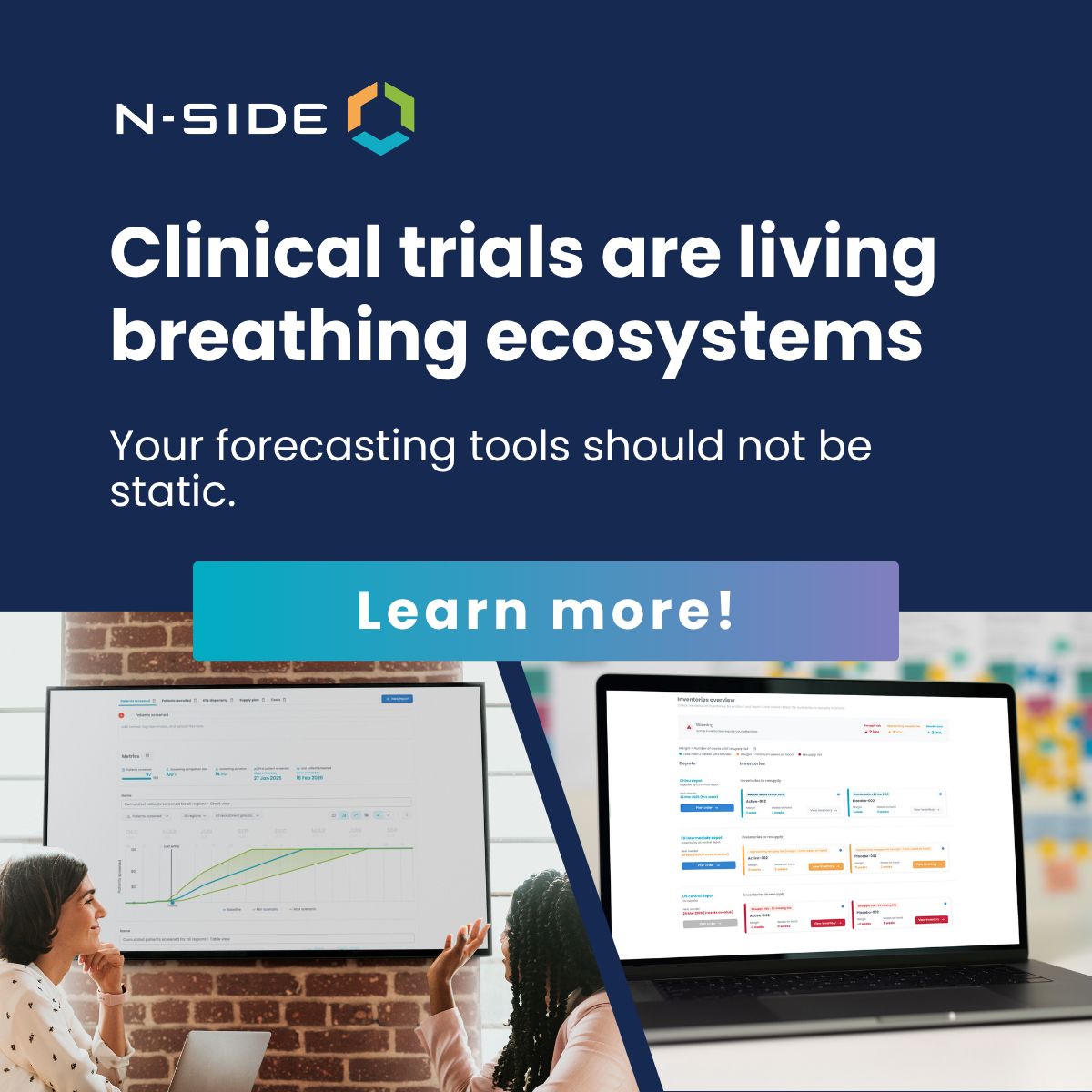
Clinical trials are inherently uncertain and dynamic. Spreadsheets don’t always keep up. Every single day, the reality of your trial shifts. A site is activated later than planned. Enrollment accelerates in one region and slows in another. A cohort is added. A patient drops out. Supply assumptions that made sense last week suddenly need to be revisited. That’s normal trial reality. The challenge is that many forecasting processes are still built around static files and manual updates. By the time a spreadsheet is updated, reviewed, shared, and approved, the trial may already have moved again. That disconnect matters. Because clinical supply teams are not just forecasting demand. They’re making decisions about manufacturing, packaging, distribution, and those impact patient continuity. A more connected forecasting approach helps teams work with the trial as it changes, instead of constantly trying to catch up to it. To achieve true supply confidence, your forecasting tools need to match the pulse of your trial. They need to be connected, automated, and just as dynamic as the clinical realities they are trying to model. N-SIDE helps clinical supply teams work from connected, up-to-date inputs, so forecasts can move with the trial instead of lagging behind it.




6 of 25 adsSign up to see every N-SIDE ad, filter by format and date, and get alerts on new ones.
See all 25 adsQuestions about N-SIDE’s ads
Is N-SIDE running LinkedIn ads?
We recorded no live LinkedIn ads for N-SIDE on 8 Nov 2026.
How many LinkedIn ads has N-SIDE run?
LinkedIn’s ad library lists 25 ads for N-SIDE. We recorded 25 LinkedIn ads for N-SIDE, first recorded on 26 Sept 2026 and last recorded on 26 Sept 2026.
Does N-SIDE run Google ads?
We recorded no Google ads for the domain n-side.com on 4 Nov 2026.
Which ad formats does N-SIDE use?
The 6 LinkedIn ads on this page include 6 image ads.
Watch the companies you care about.
Filter every ad by industry, country, format and network, and get alerts when a company you watch starts running new ads.