Not on air · 2 of 3 networks checked

Mikros Technologies ads
- mikrostechnologies.com
- Computer Hardware Manufacturing
- US
- 90 employees
Mikros Technologies’s ads on LinkedIn, Meta and Google, recorded by adsrunning. Browse the latest here for free. Sign up free to see all 23. Watch Mikros Technologies on any plan to get each new one in your feed.
Watchlist included in every plan
What Mikros Technologies runs
- Single image · LinkedIn
- 5
- Video · LinkedIn
- 1
| Network | Status | Live ads | Nov 2025LinkedIn activity · 52 weeksNov 2026 | Checked | Next step |
|---|---|---|---|---|---|
| None recorded | 0 | Checked 7 Nov 2026 | See all 23 ads → | ||
| Meta | Not checked | — | |||
| None recorded | 0 | No ads found on the Google Ads Transparency Center | Checked 30 Oct 2026 | Collect them with the API → |
Mikros Technologies has no live LinkedIn ads. We recorded no Google ads on 30 Oct 2026.
Latest ads
- LINKEDIN · IMAGESince 29 Oct 2026
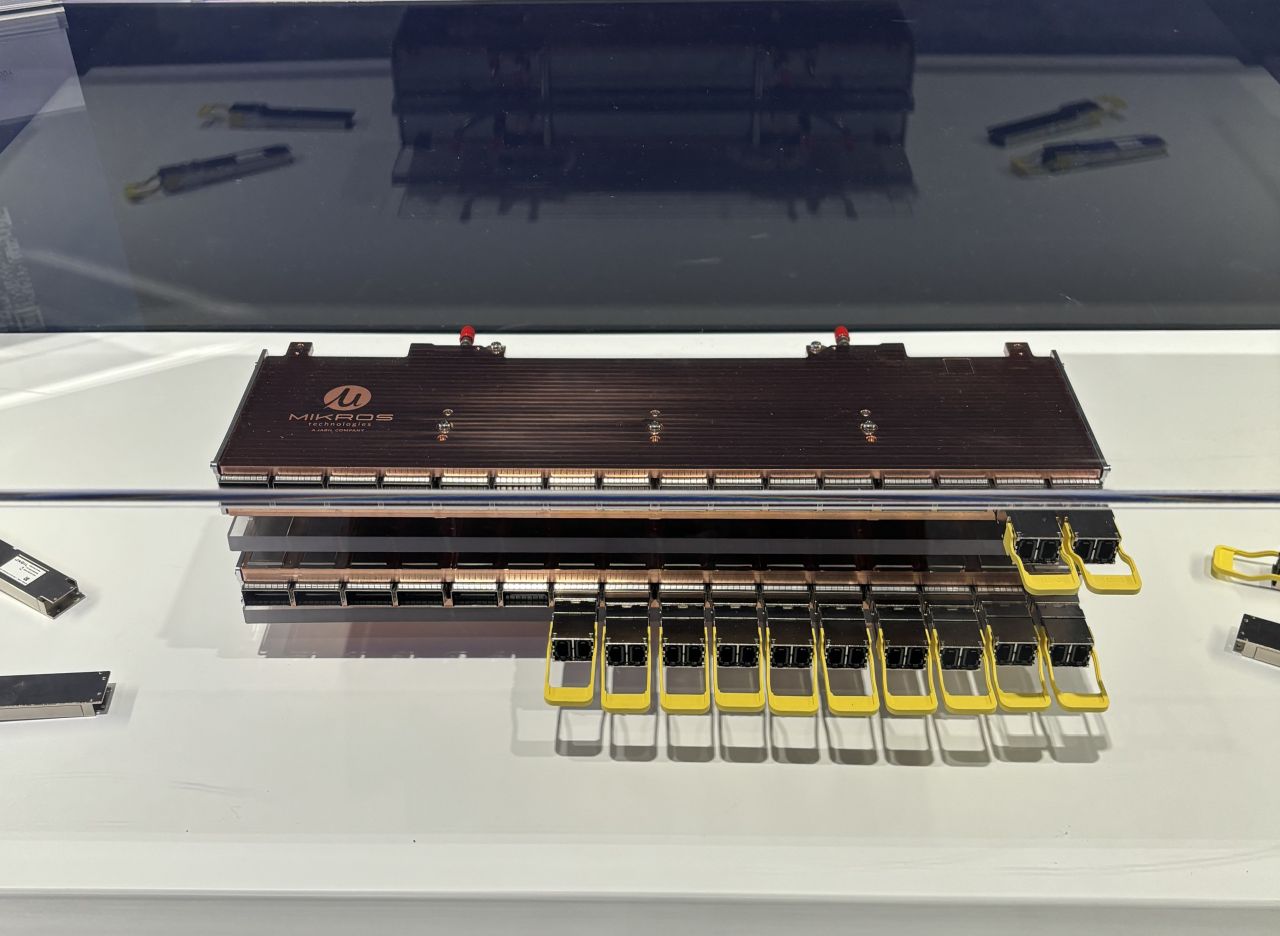
If you missed the Open Compute Project Foundation's Global Summit in San Jose, or were one of the 3,000 people on the waitlist, here's a look at one of the thermal innovations helping shape the future of #AI networking. At OCP, Mikros Technologies, a Jabil company, introduced its advanced OSFP cold plate platform, designed to address one of the biggest challenges facing next-generation AI infrastructure: cooling high-speed optical networking. Demonstrated as part of Jabil's fully integrated rack solution featuring Arista Networks' switches at the show, Mikros Technologies' liquid-cooled platform is MSA-compliant and supports both 800G and emerging 1.6T optical transceivers, enabling plug-and-play interoperability and faster deployment of next-generation AI networking infrastructure. The platform delivers targeted liquid cooling to as many as 64 optical transceivers (each dissipating 40 W), providing a total cooling capacity of 2,560 W within a compact 2U, 19-inch rack footprint. Optimized for high-density data centers, the solution enables operators to efficiently manage thermal loads and maintain optimal #networking performance at scale. Developed through collaborative engineering, the platform utilizes a copper cold-plate architecture with PG25 coolant (25% propylene glycol). Operating at a 43°C inlet temperature and 0.75 LPM flow rate, the system achieves a pressure drop of only 6 kPa (0.9 psi), maximizing heat transfer efficiency while minimizing impact on the overall cooling loop. Learn more about working with us: https://lnkd.in/ebc-q9G6. #Engineering #DesignEngineers #LiquidCooling #OCPSummit26
- LINKEDIN · IMAGESince 1 Oct 2026
Powering Broadcom's Tomahawk 6 takes more than breakthrough silicon. It demands breakthrough cooling. At the 2026 Open Compute Project Foundation Summit in San Jose, Mikros Technologies, a Jabil company, is showcasing its advanced liquid cooling solution engineered specifically for Broadcom's Tomahawk 6. This custom cold plate is tailored to the chip's heat map, delivers a heat flux of 350 W/cm², and supports over 1,700 W of TDP within a compact 1U form factor. This chip-level liquid cooling design maintains a pressure drop of just 20 kPa (2.9 psi) at a flow rate of 1.5 lpm, supports coolant temperatures up to 55°C, and delivers exceptional thermal performance while minimizing pumping and cooling power requirements. You’ll find the Tomahawk 6 cold plate in Jabil’s OCP booth (B33) on October 13-15. This solution represents the joint invention between Broadcom’s industry-leading silicon expertise and Mikros Technologies’ advanced thermal engineering capabilities. Together, we are enabling the next generation of AI infrastructure by increasing compute density at scale while reducing cooling costs per watt. Learn more about the importance of collaborative engineering: https://lnkd.in/eRhrrzJZ. #DataCenter #LiquidCooling #OCP2026 #D2C
- LINKEDIN · IMAGESince 8 Sept 2026
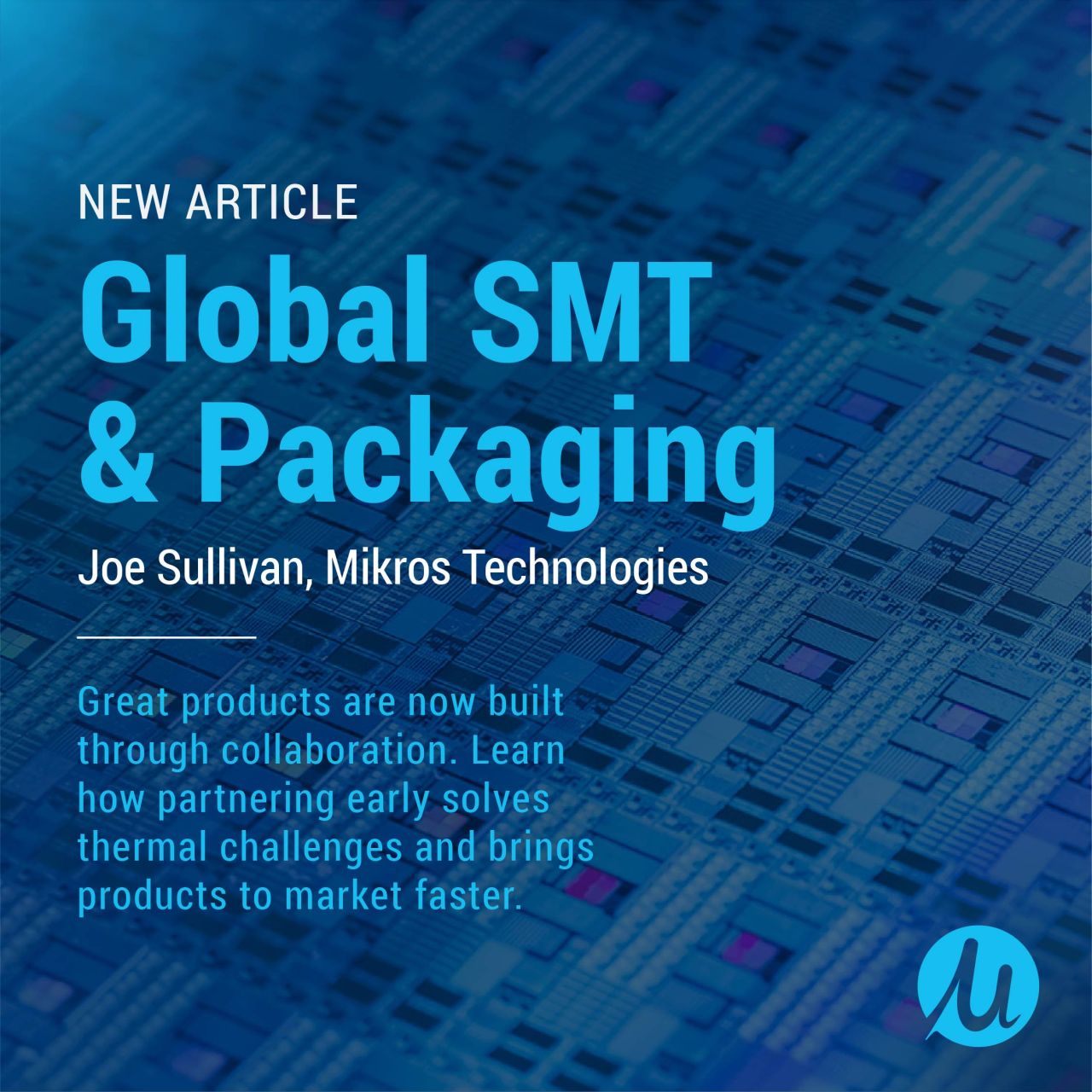
Check out this month's issue of Global SMT & Packaging magazine! In this publication, Joe Sullivan, Senior Engineering and Product Development Manager at Mikros Technologies, discusses the power of collaborative engineering and how close partnerships between OEMs and engineering teams can accelerate innovation, overcome complex thermal management challenges, and bring products to market faster. Learn more: https://lnkd.in/esusbezk.
- LINKEDIN · IMAGESince 29 Jul 2026
AI cooling headlines this year focused on coolant temperature. Engineers know that's only part of the story, and the future of liquid cooling depends on optimizing the entire thermal system, not just one metric. The thermal management implications of next-generation AI infrastructure came into focus at CES 2026 when NVIDIA CEO Jensen Huang revealed that the Vera Rubin AI platform can operate at 45°C (113°F) inlet coolant temperatures. To many on Wall Street and outside the industry, the idea of cooling AI supercomputers with "hot water" seemed revolutionary. For #Thermal #Engineers, however, elevated coolant temperatures have long been recognized as a powerful lever for improving data center efficiency, reducing reliance on chillers, and enabling more sustainable liquid-cooling architectures. While coolant inlet temperature has emerged as a highly visible metric, it is only one variable in a much larger thermal management equation. The effectiveness of a direct liquid cooling system is determined by the interactions among thermal resistance, flow distribution, heat transfer efficiency, pressure drop, and cold plate design. Raising inlet temperatures is only possible when these parameters are optimized together. Poor flow distribution, excessive pressure drop, or high thermal resistance can quickly limit performance, regardless of coolant temperature. The thermal performance envelope of a direct liquid cooling (#DLC) system is governed by the coupled interactions among thermal resistance, coolant flow distribution, convective heat transfer coefficients, hydraulic pressure drop, and the cold plate microchannel architecture. The ability to operate at elevated coolant inlet temperatures depends on optimizing these parameters as an integrated system rather than in isolation. Non-uniform flow distribution can create localized hot spots. Excessive pressure drop increases pumping power requirements and limits flow rate. Elevated thermal resistance reduces heat extraction efficiency at the silicon interface. As a result, system performance is constrained by the weakest element in the thermal-hydraulic design, regardless of coolant temperature. Learn how Mikros Technologies is advancing next-generation cooling through innovations in thermal-hydraulic design, heat transfer, and scalable manufacturing. Read more: https://lnkd.in/e4HmCmsy. #ThermalManagement #LiquidCooling #AIInfrastructure #DataCenters
- LINKEDIN · VIDEOSince 7 Jul 2026
As chip power densities continue to rise, driven by AI, high-performance computing, and next-generation digital infrastructure, the debate over single-phase versus two-phase liquid cooling continues to intensify. While many industry experts, including us, view two-phase cooling as a critical long-term technology, today's reality is more nuanced. Advanced single-phase cooling solutions, particularly those leveraging innovative microchannel architectures, deliver thermal performance far beyond conventional liquid cooling approaches and extend the practical limits of single-phase technology before two-phase solutions become necessary. Mikros Technologies' proprietary microchannel architecture delivers: ✔️ Ultra-low thermal resistance (<0.02 °C·cm²/W) ✔️ Heat flux dissipation exceeding 1 kW/cm² ✔️ Consistently high heat transfer performance across a broad range of flow rates ✔️ System inlet temperature of 45°C and above. ✔️ Up to 4x greater heat transfer performance than other single-phase cooling designs By maximizing heat transfer efficiency at the chip level, these advancements enable higher compute density and greater scalability for today's most demanding AI and high-performance computing applications. This is why advanced single-phase microchannel technology remains highly relevant today and for next-gen applications. Two-phase cooling is a key long-term enabling technology, but today's thermal challenges can generally be addressed with single-phase solutions from Mikros Technologies. Single-phase continues to redefine performance limits, making it the right choice today. Interested in discussing your next project? Contact us: https://lnkd.in/eDAgSD_e #ThermalManagement #ThermalEngineer #AI #LiquidCooling
- LINKEDIN · IMAGESince 27 May 2026
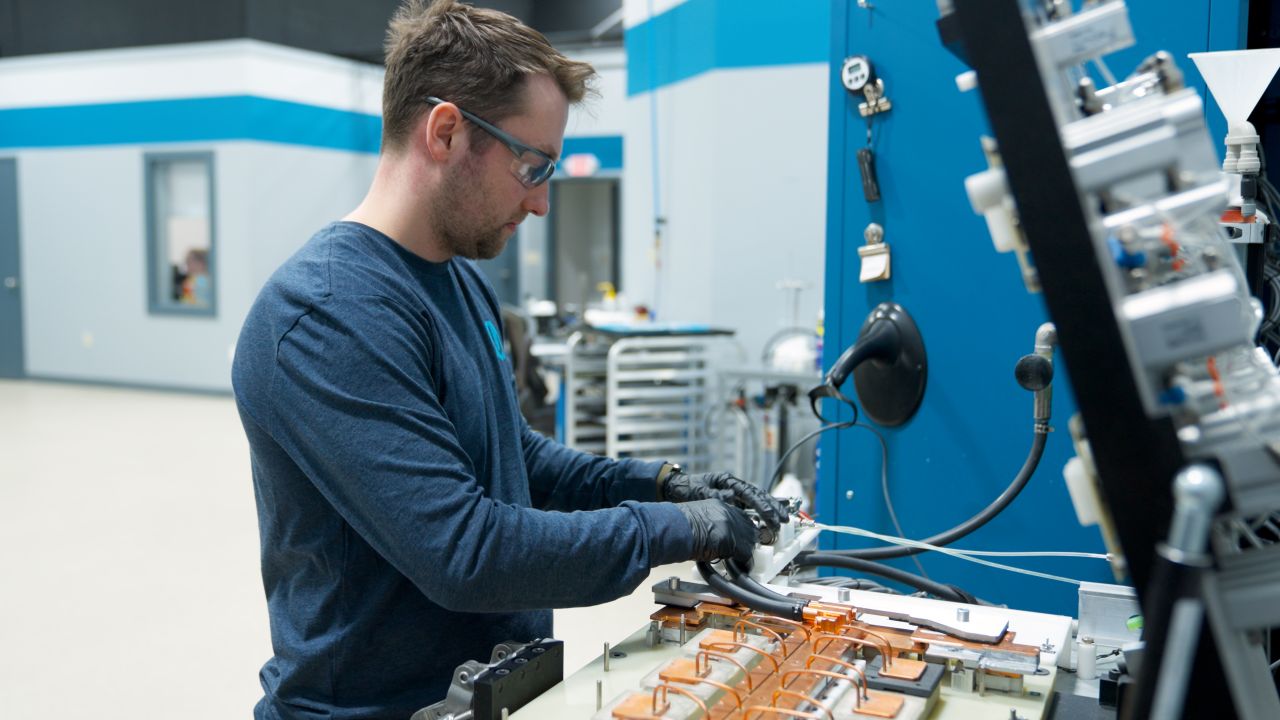
From NASA research labs to next-generation AI data centers—this is the engineering journey behind Mikros Technologies. In our latest blog, engineer and business leader Jesse McGowan shares how decades of precision thermal innovation continue to shape today’s liquid cooling solutions for high-performance computing. Read more: https://lnkd.in/e4HmCmsy. #DLC #LiquidCooling #AIInfrastructure #DataCenters #Engineering


6 of 23 adsSign up to see every Mikros Technologies ad, filter by format and date, and get alerts on new ones.
See all 23 adsQuestions about Mikros Technologies’s ads
Is Mikros Technologies running LinkedIn ads?
We recorded no live LinkedIn ads for Mikros Technologies on 7 Nov 2026.
How many LinkedIn ads has Mikros Technologies run?
LinkedIn’s ad library lists 22 ads for Mikros Technologies. We recorded 23 LinkedIn ads for Mikros Technologies, first recorded on 21 Sept 2026 and last recorded on 31 Oct 2026.
Does Mikros Technologies run Google ads?
We recorded no Google ads for the domain mikrostechnologies.com on 30 Oct 2026.
Which ad formats does Mikros Technologies use?
The 6 LinkedIn ads on this page include 5 image ads and 1 video ad.
Watch the companies you care about.
Filter every ad by industry, country, format and network, and get alerts when a company you watch starts running new ads.