0 new LinkedIn ads in 30 days · 2 of 3 networks checked

Maven ads
- maven.com
- E-Learning Providers
- US
- 381 employees
Maven’s ads on LinkedIn, Meta and Google, recorded by adsrunning. Browse the latest here for free. Sign up free to browse our full recording. Watch Maven on any plan to get each new one in your feed.
Watchlist included in every plan
What Maven runs
- Single image · LinkedIn
- 6
- Google ads on 3 Nov 2026
- 60
| Network | Status | Last 30 days | Total ads found | Ad activity | Checked | Next step |
|---|---|---|---|---|---|---|
| None recorded | 0 | 60+ | 11/10/2026 | View ads → | ||
| Meta | Not checked | — | — | View ads → | ||
| Ads recorded | 0 | 16 | 11/03/2026 | View ads → |
Maven has no new LinkedIn ads in the last 30 days. We recorded 60 Google ads on 3 Nov 2026.
Latest ads
- LINKEDIN · IMAGESince 22 Jan 2026
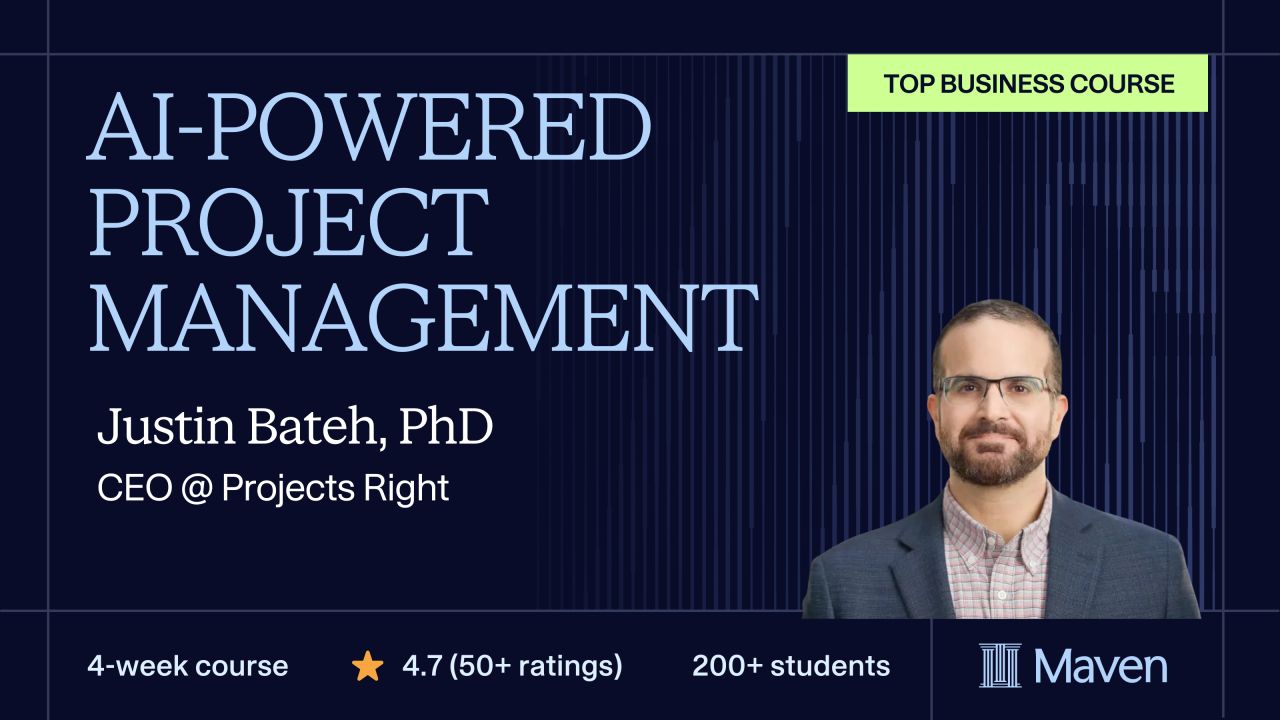
There's a hidden rule quietly governing project management in the AI era. Most people don't see it coming. The closer your work is to decisions, the harder you are to replace. The closer your work is to execution, the easier you are to automate. This isn't about skills or experience. It's about proximity. 1/ Most PMs Live in the Execution Zone → Trained to coordinate, not decide → Chase down status updates → Organize timelines and track deliverables → Make sure nothing falls through cracks → All critical work. All perfectly automatable. 2/ AI Owns Execution Now → ChatGPT writes better status reports than most humans → Project tools auto-generate timeline updates → AI never forgets follow-ups or misses deadlines → It processes notes faster than you can take them → The coordination game is over 3/ The Deadly Response → Most PMs double down on execution → More detailed tracking systems → Cleaner reports and tighter processes → But they're competing where AI dominates → Fighting a war they've already lost 4/ Execution vs Decision Work → Execution: Implement what's been decided → Decision work: Shape what gets decided → One happens downstream. One shapes the stream. → Guess which AI can't replace. 5/ The Reality Check Think about your last project update. Did it explain what happened and who owns what? Or did it surface a decision that was stuck, highlight a risk leadership was missing, or frame a tradeoff they were avoiding? The first is coordination. The second is leverage. Most PMs live in the first. 6/ What Decision-Shaping Actually Looks Like → Identifying decisions that aren't being made → Connecting problems across different workstreams → Translating technical debt into business language → Surfacing dependencies leadership can't see → Framing choices that shape strategy This work happens before execution starts. 7/ The Line That Determines Everything → If your value shows up AFTER decisions are made, → You're downstream → If you shape what gets decided, you're upstream → AI compresses everything toward upstream → Cross that line or get compressed out AI doesn't eliminate roles. It compresses value toward decisions. The PMs who struggle aren't the ones who lack skill...they're the ones who never crossed the line from execution to decision-shaping. P.S. I'm running a cohort on exactly this shift...how PMs can leverage AI to move upstream into decision-shaping work. If you read this post and thought "I need to make this shift," that's what we're building together. Join my upcoming cohort here: https://bit.ly/4jXn2VS
- LINKEDIN · IMAGESince 20 Jan 2026
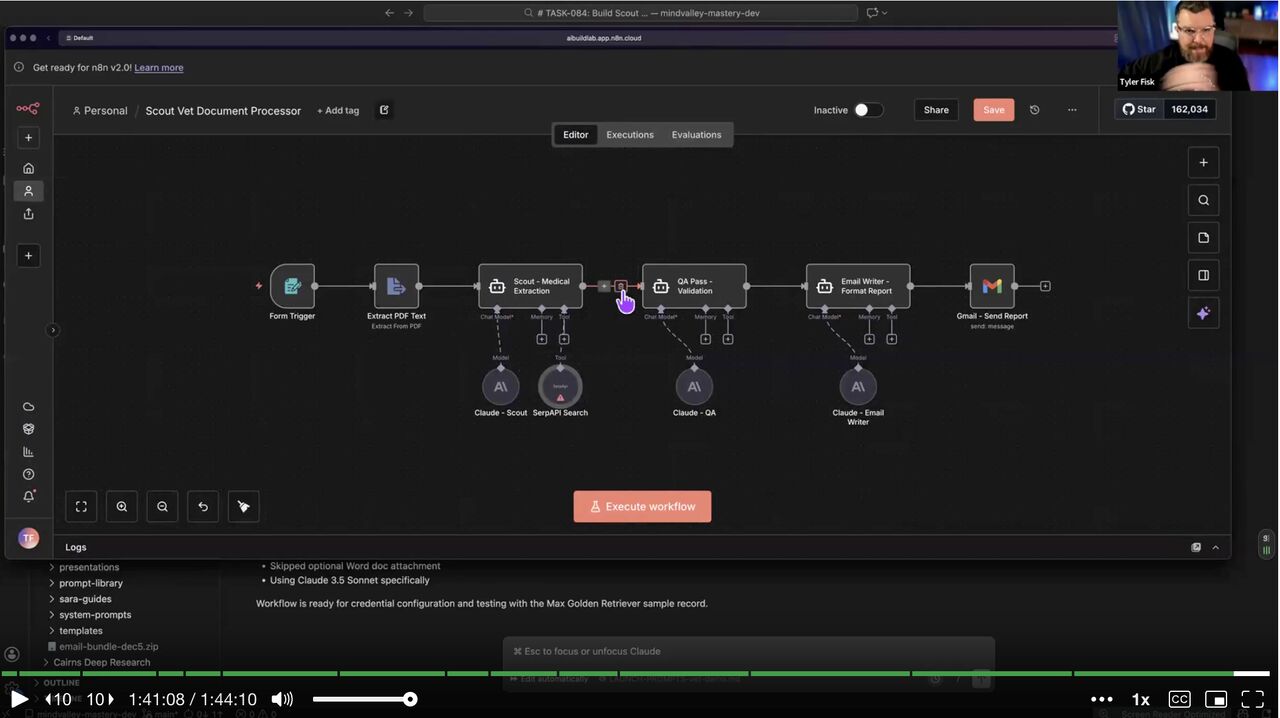
The AI skill gap for 2026 comes down to the question: Can you design the work so that agents can optimally execute? The question is a mind meld because we are so used to defining our value by our ability to execute. Now I'm asking you whether you can design the work that needs to get done, and have agents execute it. We watched Tyler demo this live in our lightning lesson last week. He described what he wanted. Claude Code wrote the plan. Agents built the workflow in two platforms while he talked to a few hundred people on Zoom. He didn't touch a node. At one point he told a story about arguing with an AI a few weeks back. He wanted to build something his usual way. The agent: "Why not use a code block? It's free, faster, won't burn tokens." He knew enough to evaluate the suggestion. Let it try. It worked. That's the job now. Not knowing everything. Knowing enough to design, direct, and evaluate. Different skill set: → Context engineering (what the AI has access to when it thinks) → Environment design (the spec becomes the product) → Orchestration (managing agents like a program manager) → Evals (proving it works, not just demoing it) This is where we're taking our teaching in 2026 because this is where the world is going. Join our upcoming cohort here: https://bit.ly/4qphGoV
- LINKEDIN · IMAGESince 16 Jan 2026
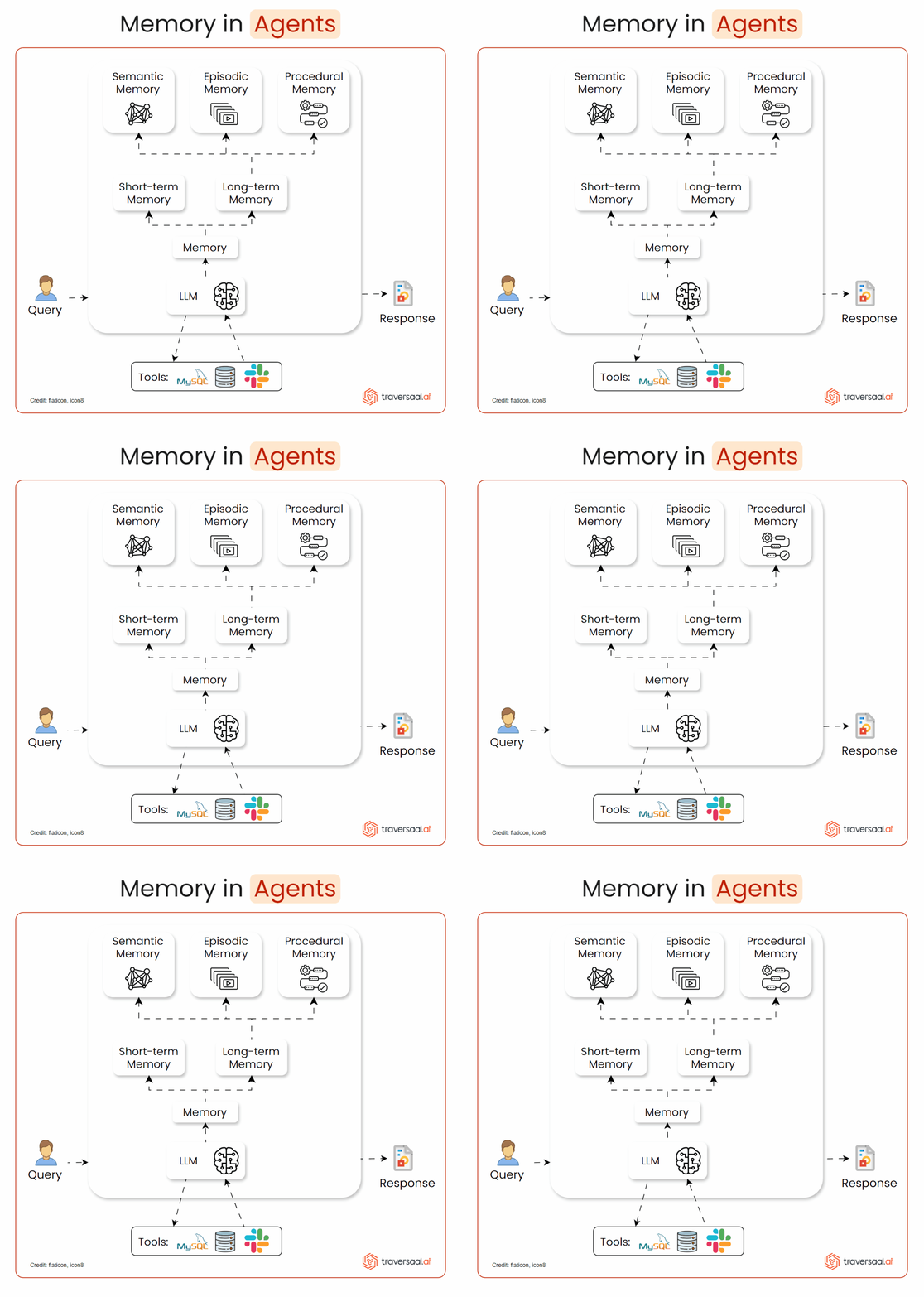
Most AI agents are “clever parrots”-- They talk, but they don’t think. Without memory, intelligence collapses into AI slop. It responds reactively, but forgets everything the moment the conversation ends. While it might work well enough for trivia, it’s ultimately useless for enterprise workflows. If you want personalized, adaptive AI agents, you need memory. I define four layers of agent memory that mirror human cognition: Working Memory (Short-Term): Holds recent context, tool outputs, or reasoning chains. Like mental math, but fast and temporary. Episodic Memory (Long-Term): A journal of past interactions. Critical for customer service agents that must recall user history or preferences. Semantic Memory (Long-Term): Encodes facts and concepts. You don’t remember when you learned gravity, but you know it. Procedural Memory (Long-Term): The agent’s muscle memory. How to call APIs, run tools, or execute SQL queries. By building these specialized digital workers that don’t hallucinate or forget the information you fed it an hour ago, they can master domains like medical coding or supply chain forecasting to deliver repeatable, enterprise-grade results. Interested in utilizing AI to its fullest extent? I’m teaching a Maven course on building and deploying actual AI agents that drive real business impact. You’ll learn how to: Prototype fast with no-code tools Scale complex systems with low-code methods Build full-scale web apps with AI backends Join my next cohort in January with this exclusive offer for my LinkedIn audience: https://bit.ly/45bWA4P
- LINKEDIN · IMAGESince 16 Jan 2026
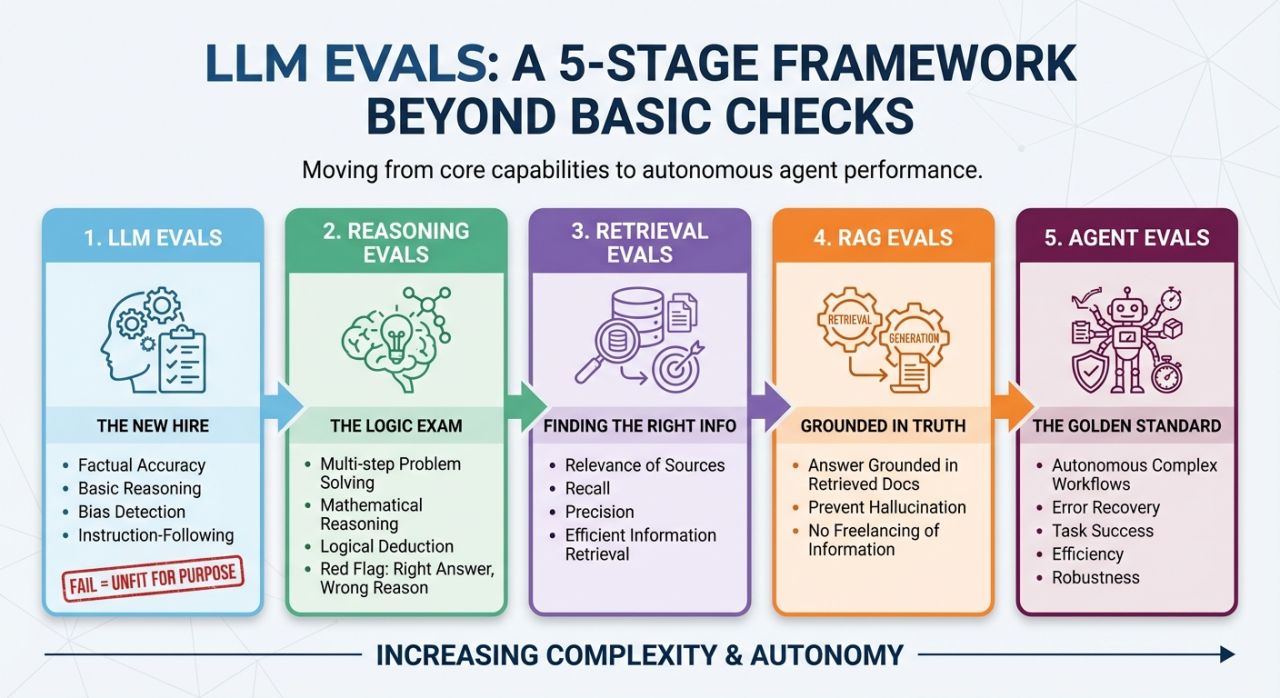
Everyone’s impressed by what AI can say. But can it really be trusted to do the job? Evaluations for Large Language Models and advanced AI systems is a crucial part of the production-readiness process. In order for them to be adopted for critical, real world applications, we can’t rely on outputs that merely “sound right.” Trust in AI needs to be earned, not assumed. My framework outlines five essential types of Evals that go far beyond basic model checks. 1. LLM Evals: Think of this as evaluating a new hire fresh out of training. We test for factual accuracy, basic reasoning, bias, and instruction-following. If a model fails here, it’s not fit for any purpose, no matter how fluent it may sound. 2. Reasoning Evals: This is a logic exam that assesses the model’s ability to solve multi-step problems, mathematical reasoning, and logical deduction. Getting the right answer for the wrong reasons is always a red flag here. 3. Retrieval Evals: Here, we’re measuring if the system can find the right information efficiently. That includes the relevance, recall, and precision of the sources it cites. 4. RAG Evals: Is the final answer grounded in retrieved documents, or is it making that information up? This test ensures the LLM isn’t hallucinating or freelancing. 5. Agent Evals: The golden standard here is for an autonomous agent to complete a complex workflow and recover from errors. We’re evaluating task success, efficiency, and robustness. Moving from “wonder” to trust in AI requires a disciplined, structured approach to measurement. As product managers and builders, we have to treat AI systems like a sophisticated machine that requires training, greasing, and a rigorous quality control checklist at every stage. If you wouldn’t launch a rocket without a systems check, don’t launch AI without Evals. And if you want to learn more about AI Agents that are able to create real change, join my Agentic AI System Design for PMs class. You’ll be able to: -Identify high-value use cases that deliver measurable ROI -Design, evaluate, and deploy production-ready AI agents (No coding required) -Confidently lead AI initiatives and align teams around business outcomes Sign up for hands-on learning: https://bit.ly/4sFXMrb
- LINKEDIN · IMAGESince 17 Dec 2025
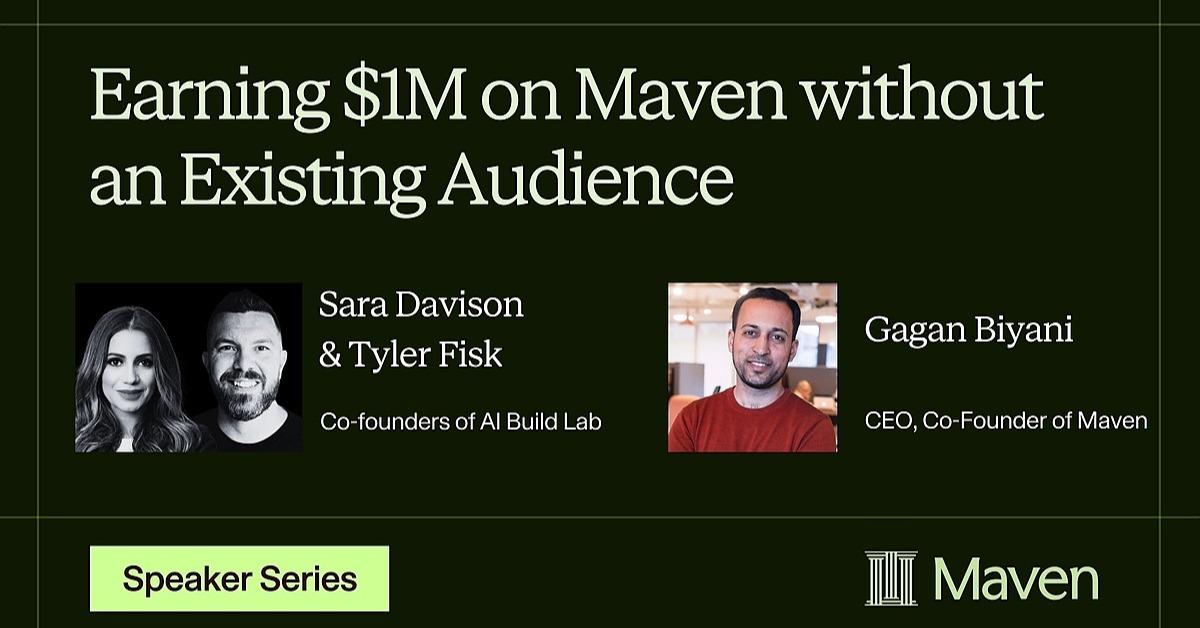
I've been stopped in hallways and DM'ed by many: "Do Maven instructors really make $1M+?" The answer is yes, it's true. Many do. The question is: how? We're going to start dissecting this in a series of free events. I'll also write a recap of each lesson and post it here. The next interview will be with Sara Davison and Tyler Fisk, who had no audience when they joined Maven. They were strong builders with real expertise working with enterprise clients. They used Maven's growth system from scratch, and turned it into a $1M growing course business. Monday, Dec 22, 12pm PT / 3pm ET: https://bit.ly/4j98GS2 P.S. If you have questions for either of them, please comment here and I'll try to ask them. Even if you can't attend, I'll write the answers into future posts.
- LINKEDIN · IMAGESince 17 Dec 2025
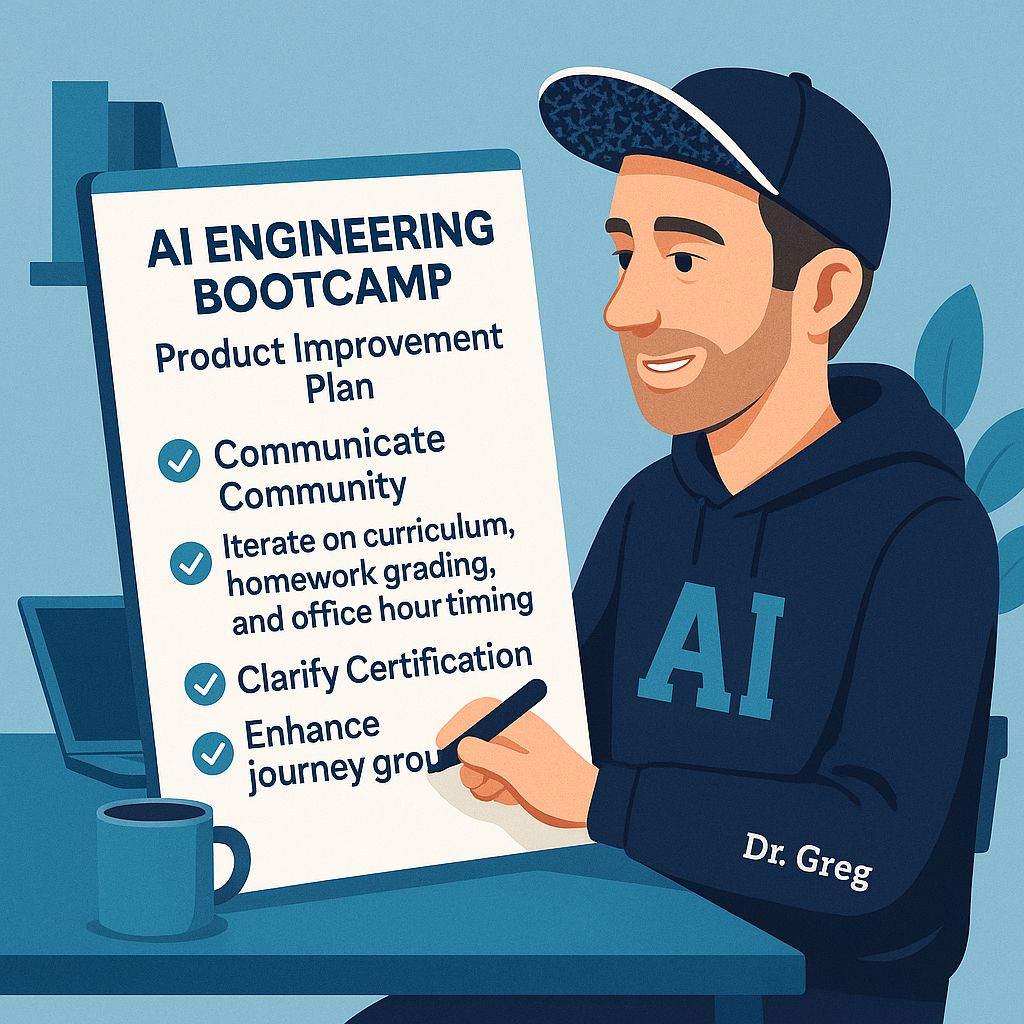
We asked our customers what 𝒇𝒆𝒂𝒕𝒖𝒓𝒆𝒔 of The AI Engineering Bootcamp gave them the most value. Here's what they said, order-ranked by value of feature: 1. 📚 𝐂𝐮𝐫𝐫𝐢𝐜𝐮𝐥𝐮𝐦 ➕ "I enjoy the relentless focus on practicality. This bootcamp distills the most important concepts of building AI-based applications while not inundating students with framework-of-the-week style lessons." ➖ "I think you are improving the curriculum for cohort 7. I agree with your move." "A bit more learning about deploying, especially at the beginning of the bootcamp" " I like to deep dive into how the underlying APIs and models work. I loved the content related to GRPO, fine-tuning, etc and I wanted to dive even more into SOTA models and techniques" "some foundational knowledge of Gen AI and frameworks would have been helpful to get up to speed faster." "mention versions of the libraries used in the notebooks (e.g. langchain) vs. most up-to-date versions" "More real world case studies." "Give us access to future cohort materials" 2. 🌎 𝐂𝐨𝐦𝐦𝐮𝐧𝐢𝐭𝐲 ➕ "Sense of community should be highlighted more." "Community - the Discord is amazing." "Discord. I hadn't used it earlier. I can see how it's adding real value to both the cohort channels and outside/main AIM discord. " "The community aspect of build ship share is great. It really worth it just for that. Learning how to do that is important in this day and age, and it really helps doing it in a group setting." "Trust - you guys create an environment with a lot of authenticity and transparency. And "learning by doing" AT ITS BEST." 3. 🧑💻 15+ 𝐀𝐬𝐬𝐢𝐠𝐧𝐦𝐞𝐧𝐭 𝐁𝐮𝐢𝐥𝐝𝐬 & 𝐏𝐞𝐫𝐬𝐨𝐧𝐚𝐥𝐢𝐳𝐞𝐝 𝐅𝐞𝐞𝐝𝐛𝐚𝐜𝐤 ➖ "Less intense for people with full-time jobs" "More coding questions." "Scoring of the homework, the numbers were a bit opaque." 4. 🧑🤝🧑 𝐏𝐞𝐞𝐫 𝐒𝐮𝐩𝐩𝐨𝐫𝐭 & 𝐉𝐨𝐮𝐫𝐧𝐞𝐲 𝐆𝐫𝐨𝐮𝐩𝐬 ➖ "Keep journey groups a little more dynamic" "Proactive mentoring/engaging" 5. 🤩 𝐃𝐞𝐦𝐨 𝐃𝐚𝐲 ➖ "An interesting alternative might be to get employers to offer POC projects or real-life tasks (think internship) to work on, and then learners could make their demo day presentation about their experience." 6. 🥇 𝐂𝐞𝐫𝐭𝐢𝐟𝐢𝐜𝐚𝐭𝐢𝐨𝐧 🤷♂️ 7. 🧑🏫 𝐎𝐟𝐟𝐢𝐜𝐞 𝐇𝐨𝐮𝐫𝐬 ➖ "A lot of office hours were at the same time 5pm (EST), which was the most difficult time for me to atten.d" 8. 🕔 𝐈𝐧𝐬𝐭𝐫𝐮𝐜𝐭𝐨𝐫𝐬 ➕ "Greg and Chris' sincerity and approach to teaching. Really stood out to me. I would love to be associated with you all." 🪄 𝐌𝐲 𝐟𝐚𝐯𝐨𝐫𝐢𝐭𝐞 𝐦𝐚𝐠𝐢𝐜 𝐰𝐚𝐧𝐝 𝐬𝐮𝐠𝐠𝐞𝐬𝐭𝐢𝐨𝐧 "More accountability sessions and maybe team quests (journey groups)" 📜 𝐌𝐲 𝐢𝐦𝐩𝐫𝐨𝐯𝐞𝐦𝐞𝐧𝐭 𝐭𝐨-𝐝𝐨 𝐥𝐢𝐬𝐭! - Communicate Community - Iterate on curriculum, homework grading, and office hour timing - Clarify Certification - Enhance journey groups Keep building 🏗️, shipping 🚢, and sharing 🚀, and we'll do the same! Join us: https://bit.ly/4qamIoN #unautomatable
6 of 60+ adsSign up to see every Maven ad, filter by format and date, and get alerts on new ones.
See all 60+ adsOn Google Search, YouTube and Display
Domain maven.com · 60 ads on the Transparency Center, checked 3 Nov 2026 · 16 recorded
- All 16
- Image 2
- Video 11
- Text 3
 Video previewGOOGLE · VIDEOLast shown 31 Oct 2026
First shown 26 Oct 2026
 Video previewGOOGLE · VIDEOLast shown 1 Nov 2026
First shown 26 Oct 2026
- GOOGLE · IMAGELast shown 31 Oct 2026
First shown 8 Oct 2026
 Video previewGOOGLE · VIDEOLast shown 8 Oct 2026
First shown 4 Oct 2026
- GOOGLE · IMAGELast shown 11 Oct 2026
First shown 3 Oct 2026
 Video previewGOOGLE · VIDEOLast shown 14 Oct 2026
First shown 2 Oct 2026

Show 10 more Google ads
 Video previewGOOGLE · VIDEOLast shown 24 Oct 2026
First shown 28 Sept 2026
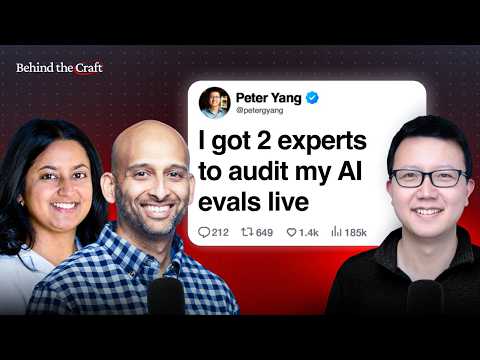 Video previewGOOGLE · VIDEOLast shown 24 Oct 2026
First shown 25 Aug 2026
 Video previewGOOGLE · VIDEOLast shown 21 Aug 2026
First shown 17 Aug 2026
 Video previewGOOGLE · VIDEOLast shown 15 Aug 2026
First shown 14 Aug 2026
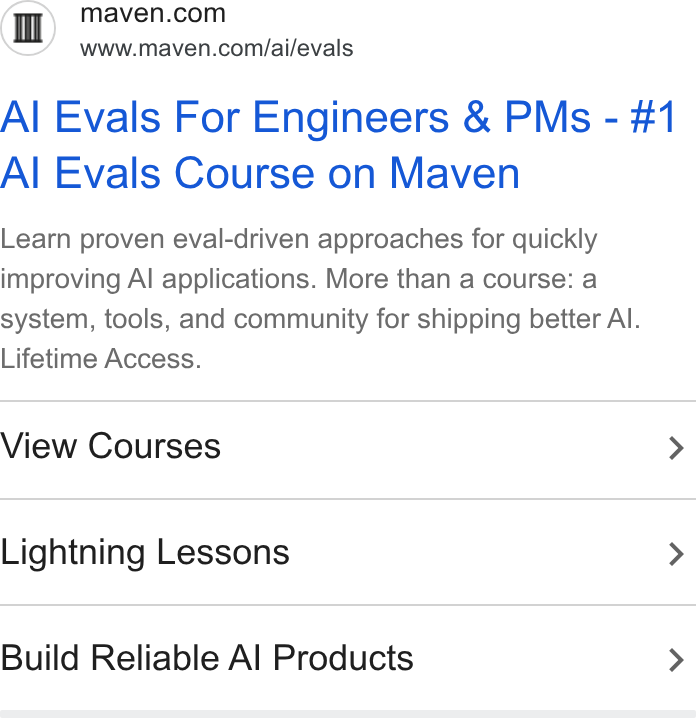
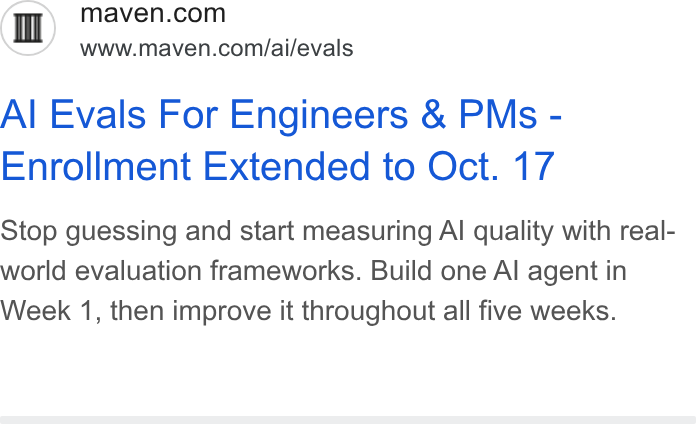
- GOOGLE · TEXTLast shown 24 Oct 2026
First shown 4 Aug 2026
 Video previewGOOGLE · VIDEOLast shown 24 Oct 2026
First shown 20 Jul 2026
- GOOGLE · TEXTLast shown 24 Oct 2026
First shown 20 Jul 2026
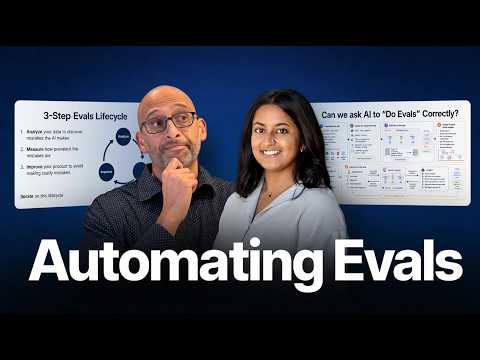 Video previewGOOGLE · VIDEOLast shown 25 Aug 2026
First shown 20 Jul 2026
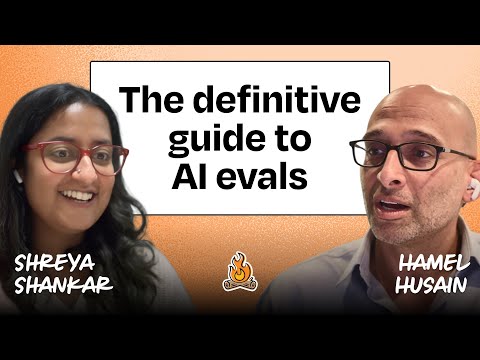 Video previewGOOGLE · VIDEOLast shown 12 Oct 2026
First shown 18 Feb 2026
- GOOGLE · TEXTLast shown 24 Oct 2026
First shown 27 Jan 2026
Questions about Maven’s ads
Does Maven have new LinkedIn ads?
We found no new LinkedIn ads for Maven in the 30 days to 12 Nov 2026.
How many LinkedIn ads has Maven run?
LinkedIn’s ad library lists 38 ads for Maven. We recorded 60 LinkedIn ads for Maven, first recorded on 25 Sept 2026 and last recorded on 25 Sept 2026.
Does Maven run Google ads?
Yes. We recorded 60 Google ads for the domain maven.com on 3 Nov 2026.
Which ad formats does Maven use?
The 6 LinkedIn ads on this page include 6 image ads.
Watch the companies you care about.
Filter every ad by industry, country, format and network, and get alerts when a company you watch starts running new ads.