0 new LinkedIn ads in 30 days · 2 of 3 networks checked

Lumi AI ads
- lumi-ai.com
- Software Development
- CA
- 15 employees
Lumi AI’s ads on LinkedIn, Meta and Google, recorded by adsrunning. Browse the latest here for free. Sign up free to browse our full recording. Watch Lumi AI on any plan to get each new one in your feed.
Watchlist included in every plan
What Lumi AI runs
- Single image · LinkedIn
- 5
- Video · LinkedIn
- 1
- Google ad on 2 Nov 2026
- 1
| Network | Status | Last 30 days | Total ads found | Ad activity | Checked | Next step |
|---|---|---|---|---|---|---|
| None recorded | 0 | 169+ | 11/10/2026 | View ads → | ||
| Meta | Not checked | — | — | View ads → | ||
| Ads recorded | — | — | 11/02/2026 | View ads → |
Lumi AI has no new LinkedIn ads in the last 30 days. We recorded 1 Google ad on 2 Nov 2026.
Latest ads
- LINKEDIN · IMAGESince 24 Apr 2026
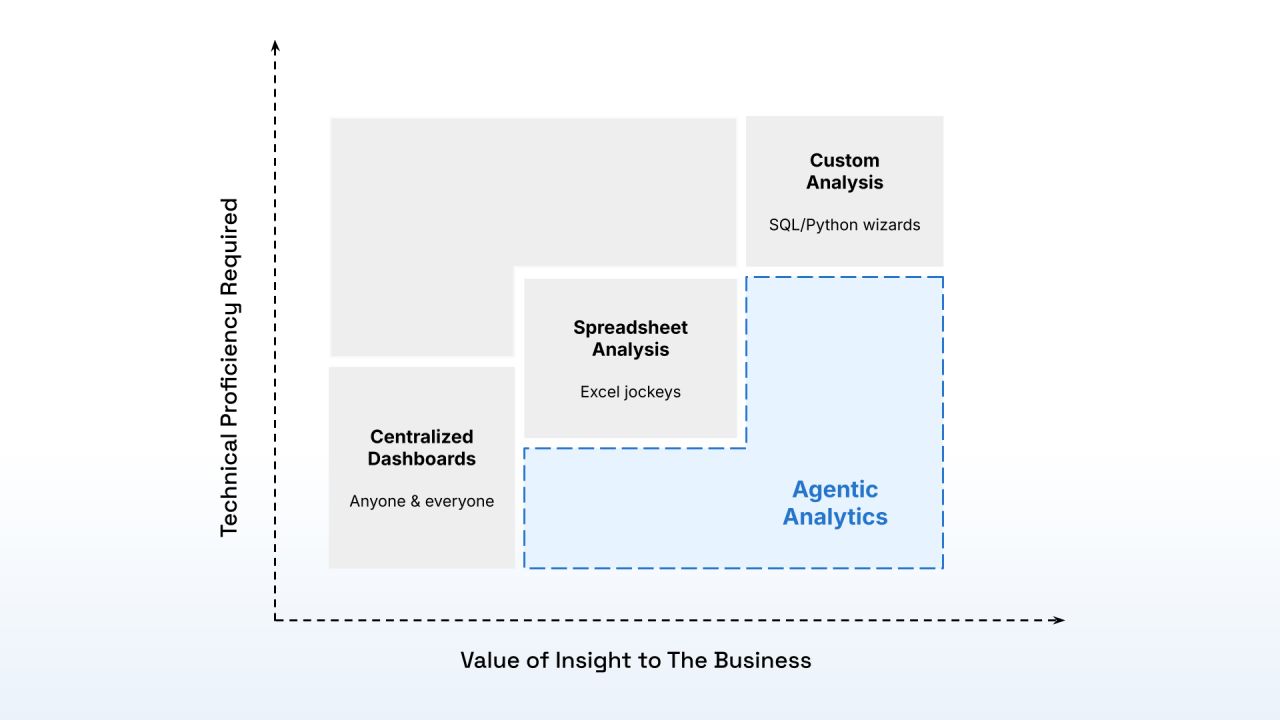
I’m seeing strategic analytics leaders moving past questions of internal/team disruption and asking: "what happens when a competitor refactors their operations around agentic decision-making and we don’t?” My answer is that somebody’s lunch is getting eaten! We’re really not far from the efficiency gains that come with better, faster data-driven decision making showing up as competitive pressure in the market. Sure, if you’re not on the front lines of the space, maybe AI-powered data analysis still doesn’t feel very existential for the business. The questions stay tactical. How can we wrangle our data to be useful? Who would own the context management? How is an AI-generated insight gets reviewed, trusted, and acted on? You are reckoning with the first order effects of the paradigm shift. But those who are really plugged in have moved on to reckoning with the second order effects, and at that stage things do start to get pretty existential. The crux of it is this: a business that commits fully to agentic insight extraction and execution will get more efficient at the margin across the entire value chain in thousands of small improvements. And in a highly competitive marketplace all those marginal gains ladder up to big impact. Faster detection of anomalies. Broader exploration of edge cases. Better prioritization of what matters today instead of what is easiest to measure. Decisions made with more context and acted on with less friction. All those marginal gains compound. If you’re the laggard competitor, you’re suddenly going to be wondering “Why do they respond faster?” “Why do their promotions lands so well?” “Why do their mistakes cost less?” “Why does it feel harder to compete quarter over quarter??” I’m not going to claim that we’re there yet - even the most forward-thinking Lumi customers are at the beginning of the journey. They’re rolling out agentic analytics technology on specific high value use cases, proving impact, and then starting to scale across to a wider chunk of their operations. But the results have been validating enough that they’re pressing the gas, because they see the big commercial opportunity out there on the horizon and they know they want to get there first. Photo: Here’s part of the Lumi team that’s helping these strategic leaders get ahead! If you’d like to to see the platform we implemented for them, check out https://www.lumi-ai.com/
- LINKEDIN · IMAGESince 24 Apr 2026
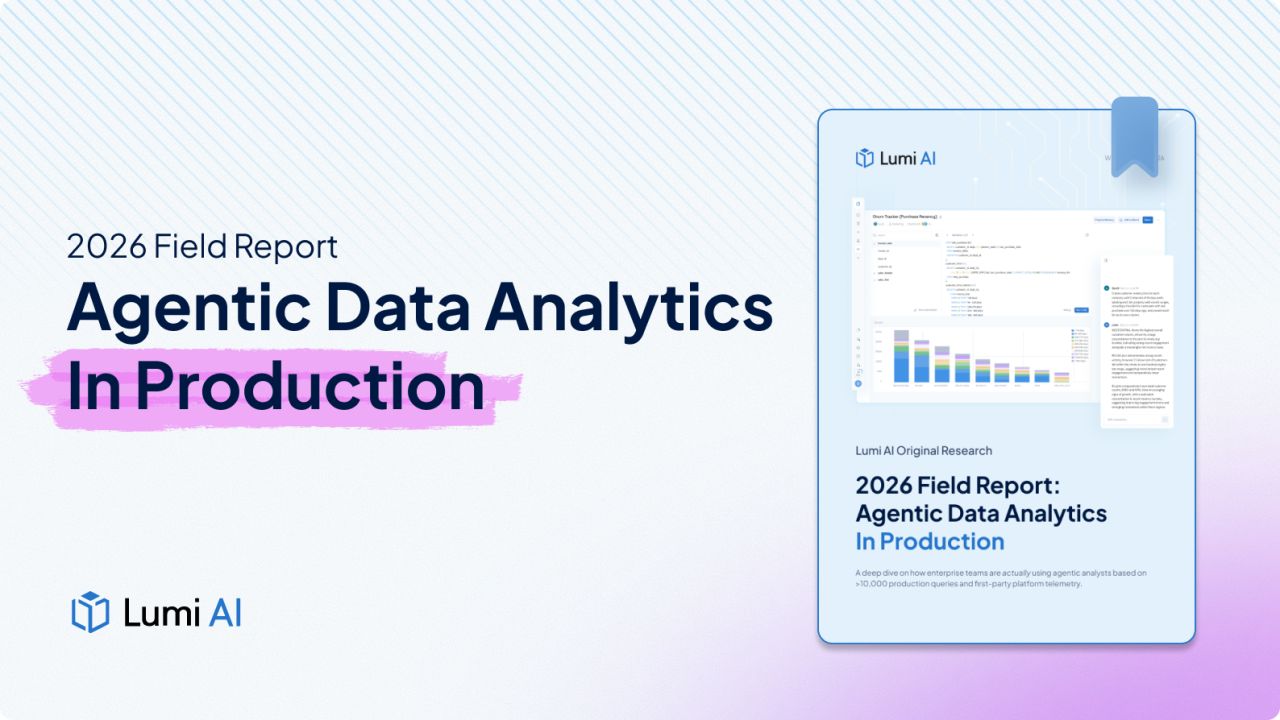
It's so hard to get real signal on how analytics agents are 𝘢𝘤𝘵𝘶𝘢𝘭𝘭𝘺 helping data teams right now. So we went straight into our product, analyzed over 10k relevant threads, and published the results. Releasing this is something of a pinch me moment - I’m proud we’re able to drive the market’s understanding of agentic AI applications for data analysis forward…using real data from Lumi AI customers! 🤯 Here are a few of the most interesting tidbits in my opinion: - The heaviest users of our tool are data analyst titles. In other words, the agents are not replacing the analysts, they’re empowering them to work faster and deliver higher-value insights. Read up on Jevon’s paradox if you want our view on how agents will impact the market demand for data analyst roles. - The split between what we consider basic data analysis/retrieval and more complex analysis efforts is roughly even across all users, BUT we see a big difference between the types of questions our “Power Users” ask versus the rest. - At the long end of the tail, users are leveraging Lumi to deliver insights that would take days or weeks of hand-written SQL effort in under ten minutes. This is the strongest proof we have of the pardigm productivity shift that is happening in the analytics space right now. We include real examples so you can see some of the use cases where agentic analysis really shines. There’s a bunch more interesting reading in here, and I encourage anyone with an interest in the State of the Art of agentic analytics right now to go check out the report (I’ll leave the link in the comments). Myself and the team (James & Anthony) had a lot of fun making it. Looking forward to see how usage of our product grows and evolves this year!
- LINKEDIN · IMAGESince 24 Apr 2026
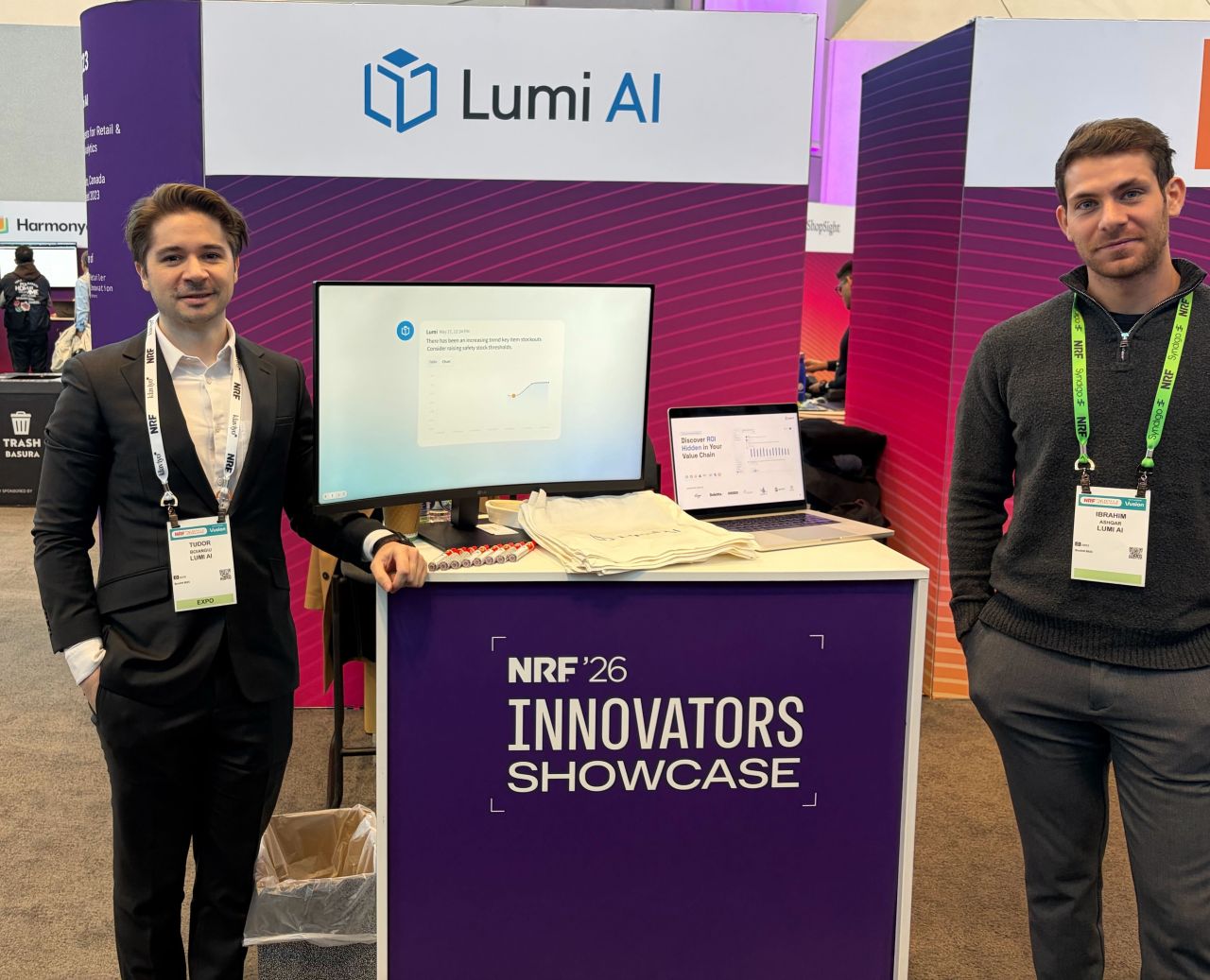
The good, the bad, and the ugly of agentic analytics in 2026. We close with the ugly: it’s clear the data function as conceived from 2010 - 2025 is obsolescing in front of our eyes, but new paradigms are murky and painful. I’m not sad the world is re-thinking how data can best drive business decision-making. The status quo had become untenable. “Dashboard Anarchy”. Overworked teams of analysts scrambling, simply trying to fill gaps in operational visibility that weren’t supposed to exist. Over and over in my time leading data transformation projects at a large consulting firm, I saw the same problem: the data team lacked the business context to deliver the insight their stakeholders needed. And the business stakeholders, basically, weren’t trained data analysts, so they couldn’t extract insights themselves. The result was frustration on both sides. It contributed to the perception of data teams as cost centers instead of value drivers, and, let’s be honest, made data analytics a practice that felt less exciting in recent years. We started Lumi AI because we saw that agentic AI would disrupt this broken model. And it’s happening; with Lumi, business stakeholders are uncovering seven-figure opportunities through plain-language exploration of their operational data - no SQL or Python required. The challenge is answering what this means for the role of the data analyst going forward. At Lumi we don’t believe the role will go extinct, but we believe it’s going to evolve rapidly in the coming years. We can look to some of our own customers as a signpost of how. For a leading luxury retailer, our product was a godsend for a stretched data team. They were able to configure Lumi and run with it to unlock new ways of working with their business users, performing complex shopper cohort analyses that wouldn’t have been possible with the pre-Lumi status quo. They acted, essentially, as context engineers, ensuring the tool had the correct inputs to generate trustworthy, meaningful outputs for the business. This example shows the way towards an evolved role for the data analyst in the new analytics paradigm, where clean context becomes data infrastructure. Change isn’t easy, and at the individual level it requires adaptability and open-mindedness. We pay close attention to the change management aspect of implementing agentic analytics tooling, and we partner closely with data teams to help them evolve their practice in tandem with implementation. If you’re feeling the pull of the new analytics paradigm and need a partner to help you through the messy process of change, send me a message. We’d love to set you up for success in 2026. Photo: Lumi AI at the 2026 NRF Big Show Innovators Showcase this week - our conversations there were more proof the world of retail analytics is evolving at breakneck speed!
- LINKEDIN · IMAGESince 24 Apr 2026
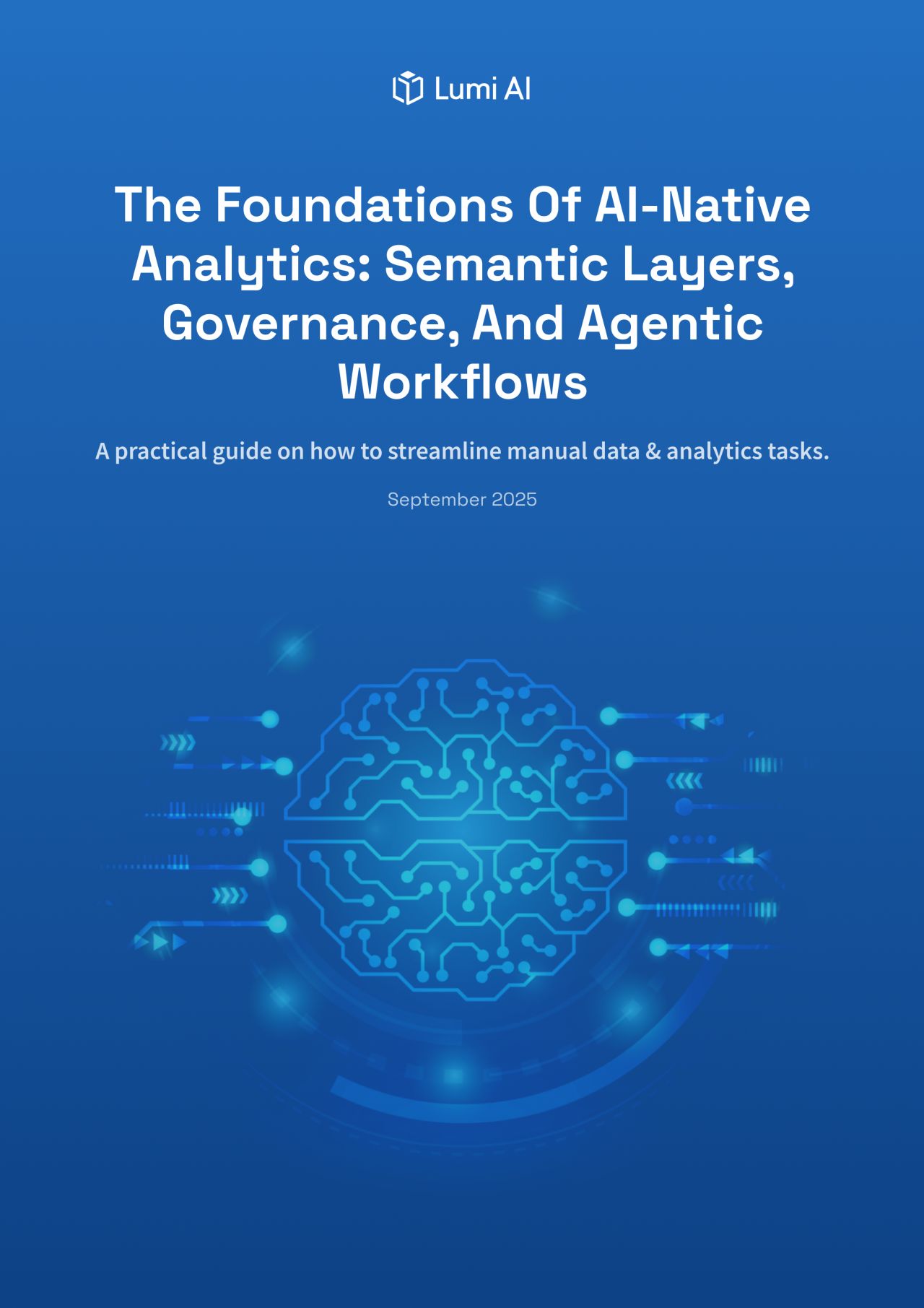
We just published a whitepaper on the foundations of AI-native analytics 💫 It covers many highly relevant topics including semantic layers, multi-agent frameworks, governance, and change management. The goal is to provide a clear, actionable blueprint wherever you are in your data/ gen AI journey. I hope you enjoy it! You can download it here: https://lnkd.in/dMmqXW8h
- LINKEDIN · IMAGESince 24 Apr 2026
The good, the bad, and the ugly of agentic analytics in 2026. Let’s start with the good. Under the right conditions, agents are starting to deliver on their core promise of empowering better business decision-making at scale. This is already a major win versus the pre-agentic status quo, which a client described to us as a state of “dashboard anarchy.” Data teams and business stakeholders had fallen into a lazy loop of thinking one more dashboard might provide the context, flexibility, and nuance to give much-needed visibility into operational data. But it rarely happens, because the best questions and the best opportunities occur at the margins, connecting previously unconnected relationships, applying novel business lenses to the dataset. Dashboards are intrinsically bad at this. This is what agentic analytics promises to solve for, and now IS solving for forward-looking organizations. There’s groundwork required but the results are worth it. At Lumi AI in 2025, our value engineers worked hand-in-glove with customers to clean up their data models and refine the relevant business context in their Lumi AI instance. The reward for this investment has been seven-figure insights unearthed in their operational data. To be clear: without an agentic approach to analytics, these optimizations would not have been surfaced or actioned. One of my favourite examples is Kroger. For large grocery chains like them, Store Order vs. Distribution Shipment (OvS) is a critical supply chain metric, measuring how well shipments align with store demand. Kroger manages over 511K item–store and 1.8K vendor–DC combinations daily. Existing tools can’t analyze OvS at scale, forcing high-level summaries and manual workarounds, driving unresolved out-of-stocks. With Lumi, Kroger rapidly identified vendors with the largest gaps between their global OvS across all distribution centers (DCs) and local OvS at individual DC, filtering for vendor-DC pairs with material demand and unfulfilled units to surface only high-impact exceptions. The net result was the identification of 1.2 million units of unfulfilled demand that would have stayed unfulfilled if not for our agents’ exploratory analytical power. That’s an insight with serious ROI! Most exciting to me heading into 2026: this is just the first inning of AI in enterprise analytics. We’re still very early. In the next five years, we’re going to see step-level improvements in value chain efficiency thanks to the opportunities these tools uncover. I’m excited to be building towards this future with our customers.
- LINKEDIN · VIDEOSince 24 Apr 2026
In 2026, companies with complex value chain processes will realize huge efficiency gains thanks to the power of agentic analytics. Is yours one of them? Watch our CEO Ibrahim Ashqar demo the core Lumi AI feature set, and begin thinking about the value creation opportunities - or value leakage points - the platform could reveal in your business.

6 of 169+ adsSign up to see every Lumi AI ad, filter by format and date, and get alerts on new ones.
See all 169+ adsQuestions about Lumi AI’s ads
Does Lumi AI have new LinkedIn ads?
We found no new LinkedIn ads for Lumi AI in the 30 days to 11 Nov 2026.
How many LinkedIn ads has Lumi AI run?
LinkedIn’s ad library lists 69 ads for Lumi AI. We recorded 169 LinkedIn ads for Lumi AI, first recorded on 25 Sept 2026 and last recorded on 25 Sept 2026.
Does Lumi AI run Google ads?
Yes. We recorded 1 Google ad for the domain lumi-ai.com on 2 Nov 2026.
Which ad formats does Lumi AI use?
The 6 LinkedIn ads on this page include 5 image ads and 1 video ad.
Watch the companies you care about.
Filter every ad by industry, country, format and network, and get alerts when a company you watch starts running new ads.