On air · 1 of 3 networks

Landmark Capital CJSC ads
- landmarkcapital.am
- Financial Services
- AM
- 34 employees
Landmark Capital CJSC’s ads on LinkedIn, Meta and Google, recorded by adsrunning. Browse the latest here for free. Sign up free to see all 22. Watch Landmark Capital CJSC on any plan to get each new one in your feed.
Watchlist included in every plan
What Landmark Capital CJSC runs
- Single image · LinkedIn
- 5
- Video · LinkedIn
- 1
- Google ad on 2 Nov 2026
- 1
| Network | Status | Live ads | Nov 2025LinkedIn activity · 52 weeksNov 2026 | Checked | Next step |
|---|---|---|---|---|---|
| None recorded | 0 | Checked 3 Nov 2026 | See all 22 ads → | ||
| Meta | None recorded | 0 | No active ads recorded on the Meta Ad Library | Checked 22 Oct 2026 | Collect them with the API → |
| Running | 1 | Ads on the Google Ads Transparency Center | Checked 2 Nov 2026 | Collect them with the API → |
Landmark Capital CJSC has no live LinkedIn ads. Its Facebook page had no active ads on 22 Oct 2026, and we recorded 1 Google ad on 2 Nov 2026.
Latest ads
- LINKEDIN · IMAGERecorded 3 Nov 2026
$235 billion-that is precisely the amount Nvidia could spend repurchasing its own shares. Hayk Khekoyan, Head of Investments and Products at Landmark Capital, explains what drives this move and what investors should watch. Over recent years, Nvidia has been one of the primary beneficiaries of the rapid development of artificial intelligence. High demand for data center GPUs has provided the company with record revenue and profit growth. Now, the results of the AI boom are beginning to manifest not only in financial statements, but also in the sheer volume of capital Nvidia is prepared to return to its shareholders. In late September, the company announced a $150 billion increase to its share repurchase program. The total available volume of the program reached approximately $235 billion, making it one of the largest in corporate history. It is important, however, to distinguish between the approved amount and actual repurchases: the company has been authorized to buy back shares up to this amount, but is not obligated to use the entire limit. A share buyback means that a company purchases its own shares from the market, reducing the total number of outstanding shares. All else being equal, this increases earnings per share (EPS) and the ownership stake of the remaining shareholders in the business. For investors, such a decision can also serve as a signal of management's confidence in the company's ability to generate significant cash flows. What makes Nvidia's situation unique is that the company is simultaneously funding the further development of its business while allocating substantial capital to share repurchases. This demonstrates just how massive the financial returns from the AI investment cycle have become. However, it is crucial to understand that a high volume of buybacks does not, in itself, signal the end of Nvidia's active growth phase or a transition into a mature company model. For investors, the key question revolves around capital allocation efficiency. If the company buys back shares at an attractive valuation, it can increase shareholder value for those who remain. But if the market price already reflects overly optimistic expectations regarding future AI revenue, even a massive buyback will not guarantee positive returns. There is also a broader market implication. Until now, investors have evaluated the AI boom primarily through the lens of capital expenditure in computing infrastructure and revenue growth rates among tech companies. Nvidia’s decision adds another dimension to this narrative — the ability to convert high demand for technology into cash flows substantial enough not only to fund business growth, but also to return capital to shareholders. Thus, Nvidia’s record buyback program demonstrates that the financial rewards of the AI boom are already enabling the company to distribute significant funds to its shareholders.
- LINKEDIN · IMAGERecorded 22 Oct 2026
Shares of tech giants already reflect high expectations, while small and mid-cap companies are trading at a discount. Anahit Khekoyan, Investment Advisor at Landmark Capital, explains why investors are increasingly looking in their direction and what risks they face. 'Over recent years, the growth of the US stock market has largely been driven by the largest technology companies. However, in 2026, investor attention has gradually begun to shift toward another segment: small- and mid-cap companies. Behind this interest lies not only a desire for diversification, but also a significant difference in company valuations. After prolonged growth, the shares of tech giants already price in high expectations regarding future earnings. Smaller companies, by contrast, are in many cases trading at a discount compared to large corporations. This creates potential opportunities, especially if corporate earnings growth begins to spread to a broader range of industries. However, an attractive valuation alone does not guarantee high returns. One of the main constraints for smaller companies remains the cost of financing. They are more dependent on bank loans and debt capital, so high interest rates have a stronger impact on their expenses and profits. It is precisely this sensitivity to rates that largely explains why shares of smaller companies can face pressure even amid relatively favorable economic prospects. This highlights an important distinction from the largest tech corporations, many of which hold significant cash reserves and stable cash flows. Therefore, a discount in the valuation of smaller companies may reflect not just undervaluation, but also higher financial risks. For an investor, it is crucial to distinguish between companies that are priced cheaper due to temporary market factors and those whose low valuation is driven by underlying business weakness. Another argument relates to the concentration of the US stock market. When the dynamics of major indices largely depend on a handful of the largest companies, even a minor change in expectations regarding their earnings can significantly impact the market. Investing in other segments helps reduce portfolio dependence on a limited number of issuers, although it does not eliminate broader market risks. Thus, the growing interest in smaller companies does not mean abandoning tech giants. Rather, investors are starting to look more carefully for opportunities where future earnings growth is not yet fully reflected in stock prices. In doing so, the key factor remains not the size of a company or even its relative cheapness, but its ability to sustainably grow earnings, service debt, and create shareholder value.
- LINKEDIN · IMAGERecorded 17 Oct 2026
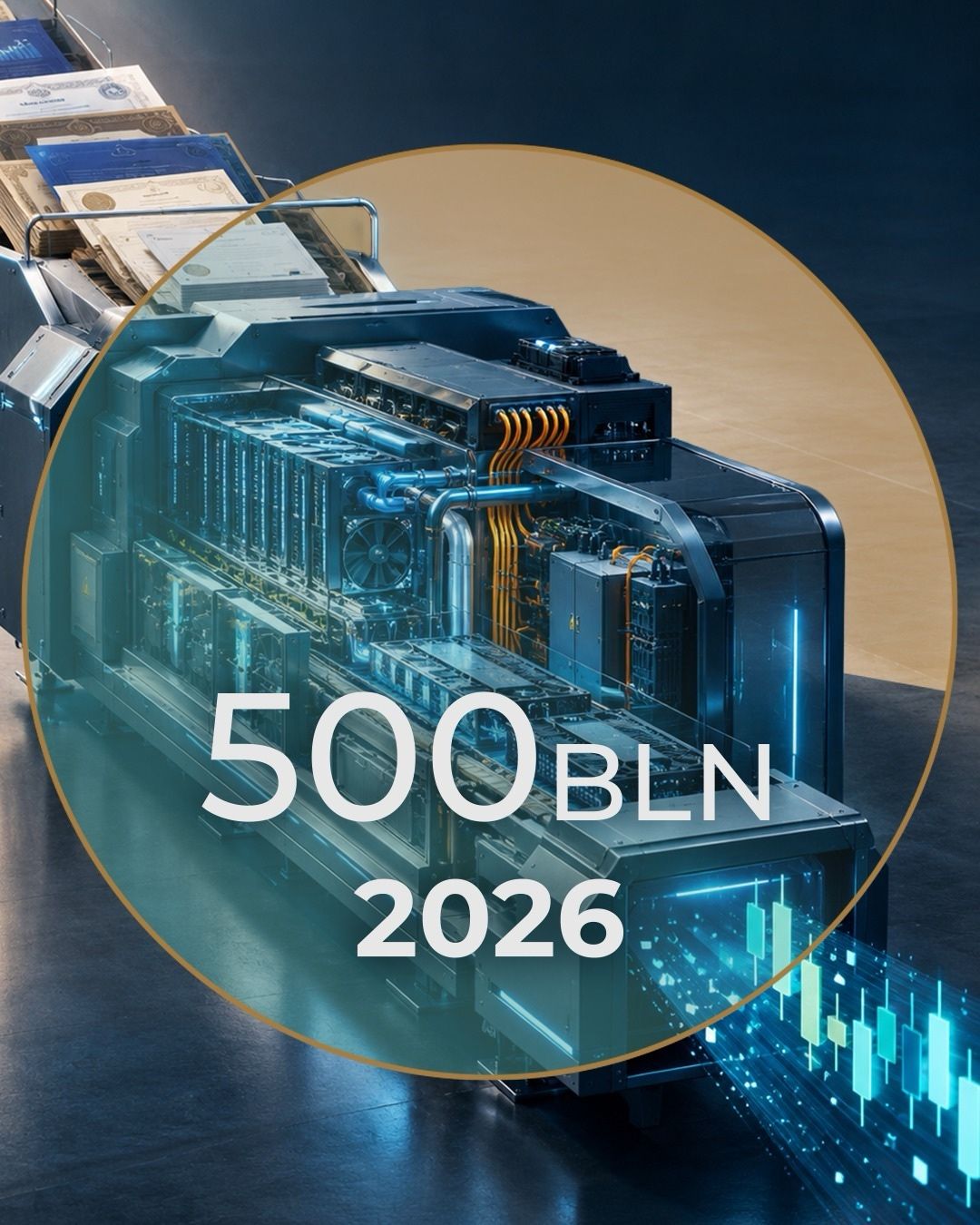
The AI boom is no longer only an equity story. Hayk Khekoyan, Head of Investments and Products at Landmark Capital, on what the shift means for investors — and the new risks facing bondholders. Until recently, the investment boom around artificial intelligence was discussed mostly through technology stocks. That is changing. Building data centers, buying processors, and expanding energy infrastructure require so much capital that AI has become one of the largest themes in the debt market as well. Goldman Sachs estimates that AI-related debt issuance in 2026 is approaching $500 billion. The largest technology companies account for only about 40% of that volume. The rest comes from the wider infrastructure around AI: data centers, energy, and related projects. For investors, this creates an interesting setup. Many issuers still have high credit ratings and relatively low leverage, so demand for their bonds remains strong. Goldman Sachs notes that the total yield on some of these corporate bonds is around 6%, despite a relatively small premium over US Treasuries. That is also where a new risk appears. Equity holders participate in potential profit growth if these huge AI investments pay off. A bondholder receives a predetermined coupon, but also takes on the issuer’s credit risk. For the bond market, the key question is how quickly hundreds of billions of dollars of investment will turn into sustainable cash flows. The next phase of the AI boom may be defined not only by how fast technology revenues grow, but by how effectively companies convert massive capital spending into cash. For investors, the analysis is shifting from “which stocks will win?” to a broader question: who is financing this investment cycle, at what price, and what risk they are taking in return. #AI #FixedIncome #Investing #CreditMarkets #LandmarkCapital
- LINKEDIN · VIDEORecorded 9 Oct 2026
A strong team is the greatest guarantee of success 🩵 Not just a team-building trip, but a tradition: every year in Cyprus, as a family. And that family has one name — Landmark Capital ✨
- LINKEDIN · IMAGERecorded 9 Oct 2026
📣 We invite you to join our team as an IT service and infrastructure specialist. If you have 3–5 years of professional experience, are goal-oriented and professional, don’t miss your opportunity to join one of Armenia’s best teams. Please send your CVs to [email protected]. For the job details and description, follow the link: 🔗 https://lnkd.in/duZSzmV5
- LINKEDIN · IMAGERecorded 24 Sept 2026
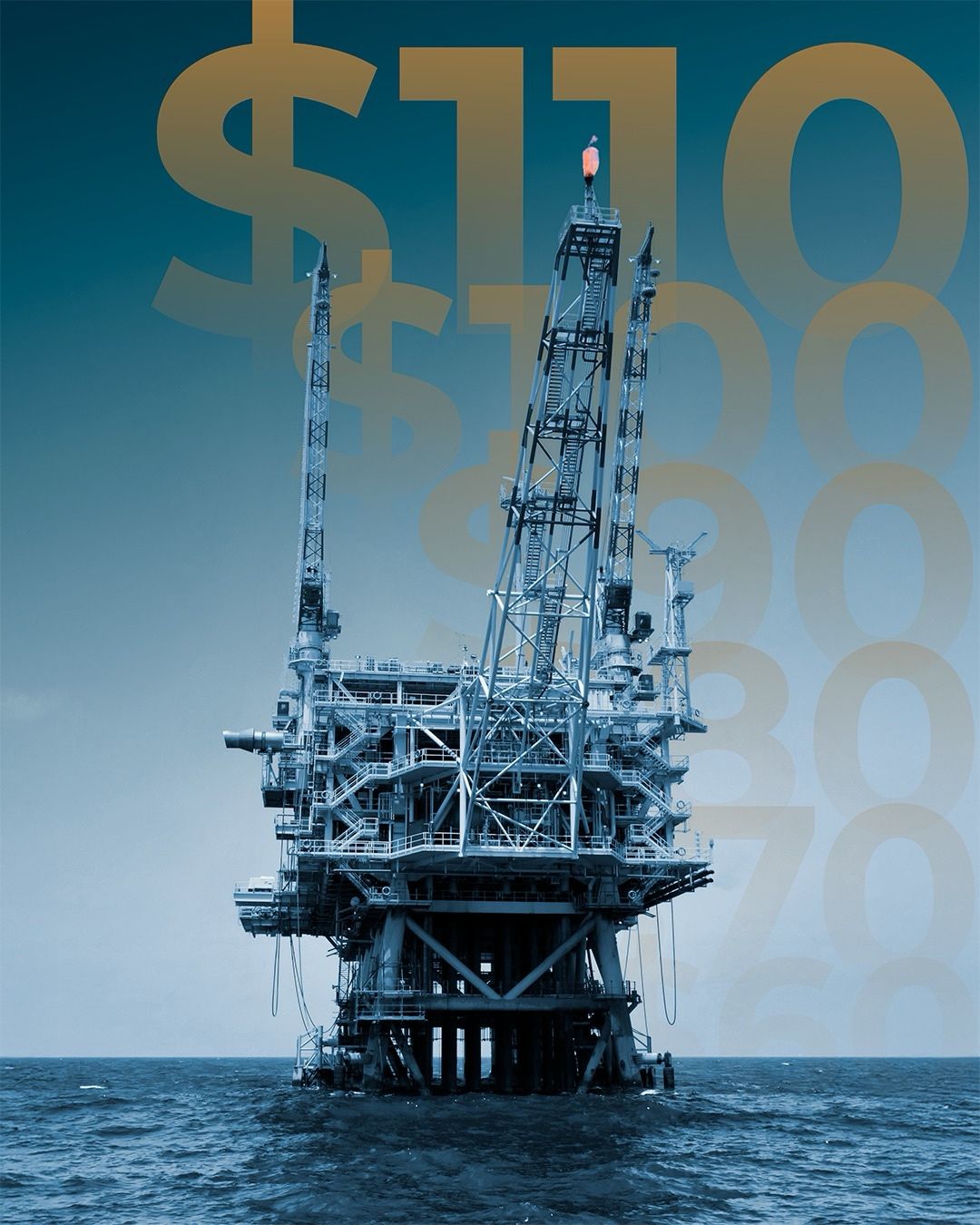
Expensive oil is not just good news for energy stocks. It is a potential shock for the entire global economy. Brent has been trading close to $110 this week as geopolitical risks rise and markets worry about supply through key Middle East routes. That move matters far beyond the oil and gas sector. The main transmission channel is inflation. Higher oil prices raise the cost of fuel, transport and production — and those costs eventually show up across a wide range of goods and services. Early signs are already visible: US producer inflation accelerated to 5.4% year-on-year in August, with energy a key driver. That makes life harder for central banks. If energy keeps inflation sticky, the room to cut rates shrinks — and in some scenarios the next move could even be a hike. That is why oil is now feeding directly into Fed expectations. The bond market has already reacted. The 10-year Treasury yield has climbed toward 4.95%, close to multi-year highs, as investors reprice inflation and rate paths. Equities face a mixed picture. Higher energy costs squeeze corporate margins. Higher bond yields raise the discount rate applied to future cash flows. Growth and high-valuation names are usually the most exposed. $100–110 oil is no longer just an energy story. A sustained period of high prices can travel the full chain: Oil → inflation → rates → bond yields → asset prices That is why investors are watching not only the headline price, but how long this energy shock lasts. — Anahit Khekoyan, Investment Advisor, Landmark Capital #Oil #Inflation #Fed #Markets #Investing #Energy #Bonds #Equities



6 of 22 adsSign up to see every Landmark Capital CJSC ad, filter by format and date, and get alerts on new ones.
See all 22 adsQuestions about Landmark Capital CJSC’s ads
Is Landmark Capital CJSC running LinkedIn ads?
We recorded no live LinkedIn ads for Landmark Capital CJSC on 7 Nov 2026.
How many LinkedIn ads has Landmark Capital CJSC run?
LinkedIn’s ad library lists 22 ads for Landmark Capital CJSC. We recorded 22 LinkedIn ads for Landmark Capital CJSC, first recorded on 24 Sept 2026 and last recorded on 3 Nov 2026.
Does Landmark Capital CJSC advertise on Facebook and Instagram?
Landmark Capital CJSC’s Facebook page had no active ads in Meta’s Ad Library, last recorded on 22 Oct 2026.
Does Landmark Capital CJSC run Google ads?
Yes. We recorded 1 Google ad for the domain landmarkcapital.am on 2 Nov 2026.
Which ad formats does Landmark Capital CJSC use?
The 6 LinkedIn ads on this page include 5 image ads and 1 video ad.
Watch the companies you care about.
Filter every ad by industry, country, format and network, and get alerts when a company you watch starts running new ads.