Not on air · 2 of 3 networks checked

Kanmon ads
- kanmon.com
- Financial Services
- US
- 23 employees
Kanmon’s ads on LinkedIn, Meta and Google, recorded by adsrunning. Browse the latest here for free. Sign up free to see all 101. Watch Kanmon on any plan to get each new one in your feed.
Watchlist included in every plan
What Kanmon runs
- Single image · LinkedIn
- 6
| Network | Status | Live ads | Nov 2025LinkedIn activity · 52 weeksNov 2026 | Checked | Next step |
|---|---|---|---|---|---|
| None recorded | 0 | Checked 7 Nov 2026 | See all 101 ads → | ||
| Meta | Not checked | — | |||
| None recorded | 0 | No ads found on the Google Ads Transparency Center | Checked 1 Nov 2026 | Collect them with the API → |
Kanmon has no live LinkedIn ads. We recorded no Google ads on 1 Nov 2026.
Latest ads
- LINKEDIN · IMAGERecorded 24 Sept 2026
Field service businesses often look healthier in the field than they feel in the bank account. The work is real. Customers need the service. Jobs are scheduled, technicians are paid, materials are purchased, and invoices go out after completion. Cash arrives later. That timing gap can make growth uncomfortable. More jobs can mean more upfront costs before revenue becomes cash. A company can be winning and stretched at the same time. Field service platforms have a unique view of that reality. They know job volume, completion history, invoice timing, customer repeat behavior, seasonality, and technician utilization. Those signals can provide better context than a traditional lender working from static financials. Embedded working capital gives operators access to capital where the work is managed. It can help fund materials, bridge invoices, and support hiring ahead of demand without sending the customer into a separate financing process. For platforms, the opportunity is to become part of how customers manage growth, not just how they schedule work. Kanmon helps turn field service workflow data into responsible capital experiences. See how it works for home and field service platforms: kanmon.com/home-services
- LINKEDIN · IMAGERecorded 24 Sept 2026
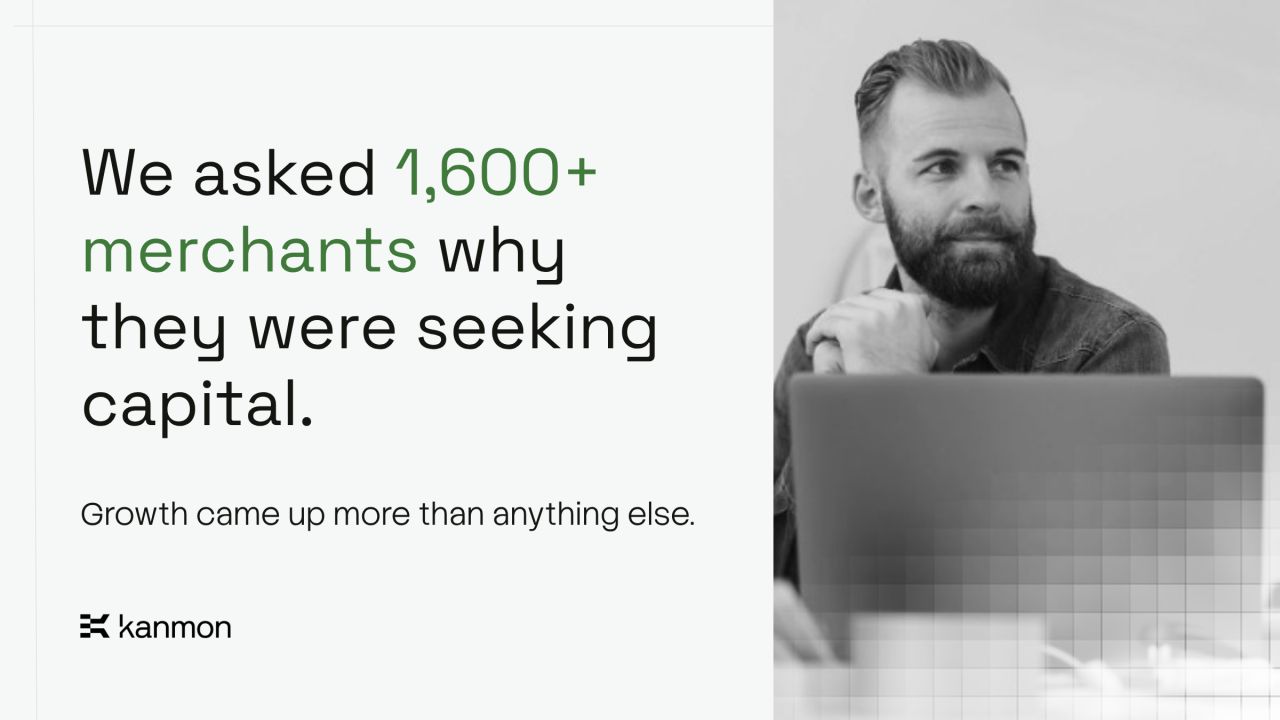
Working capital is often associated with cash shortages. Our merchant data tells a broader story. The most common reasons businesses seek capital are tied to growth: buying inventory and equipment, expanding operations, managing cash flow, and maintaining financial flexibility. In fact, growth and expansion represent the largest cluster of stated uses. Inventory and equipment purchases are right behind them. That matters for platforms. When customers have demand but lack the capital to act on it, financing can help unlock more inventory, more capacity, more jobs, and more transactions—inside the ecosystem they already use. Capital is valuable because of what it enables. Read more: https://lnkd.in/gEm6Ek4g
- LINKEDIN · IMAGERecorded 24 Sept 2026
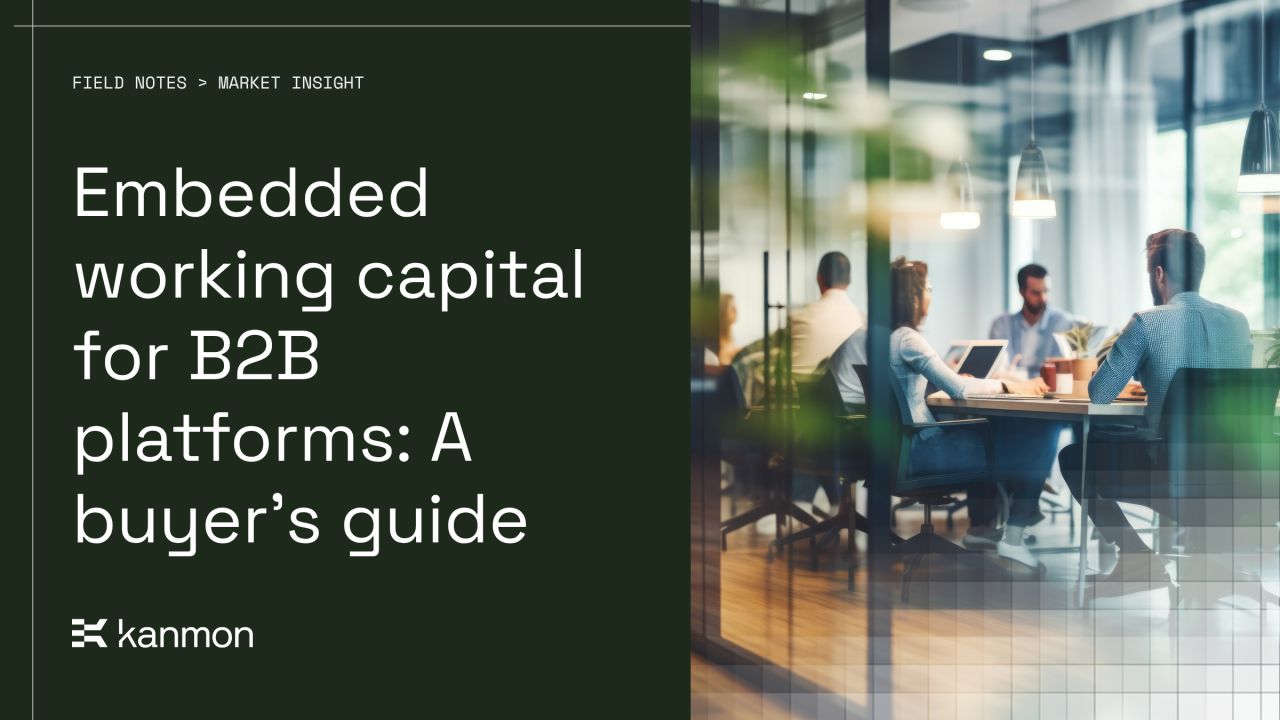
Your customers already have working-capital needs. They feel them when inventory has to be purchased before it is sold. When suppliers need to be paid before receivables arrive. When labor and materials are required before a project gets paid. For B2B platforms, that creates an important question: 👉 When capital becomes the constraint, does the customer stay inside your ecosystem or leave it to solve the problem somewhere else? Embedded working capital keeps that moment of need within the customer experience. Financing can surface where the need already exists, while the platform keeps the relationship and avoids the operational burden of becoming a lender. In our latest Field Note, we look at why this matters for B2B platforms, what makes the model work, and the questions worth asking when evaluating an embedded lending partner. If your customers run their businesses through your product, capital may be a natural extension of the value you already provide. Read more: https://lnkd.in/gDJv2V7v
- LINKEDIN · IMAGERecorded 24 Sept 2026
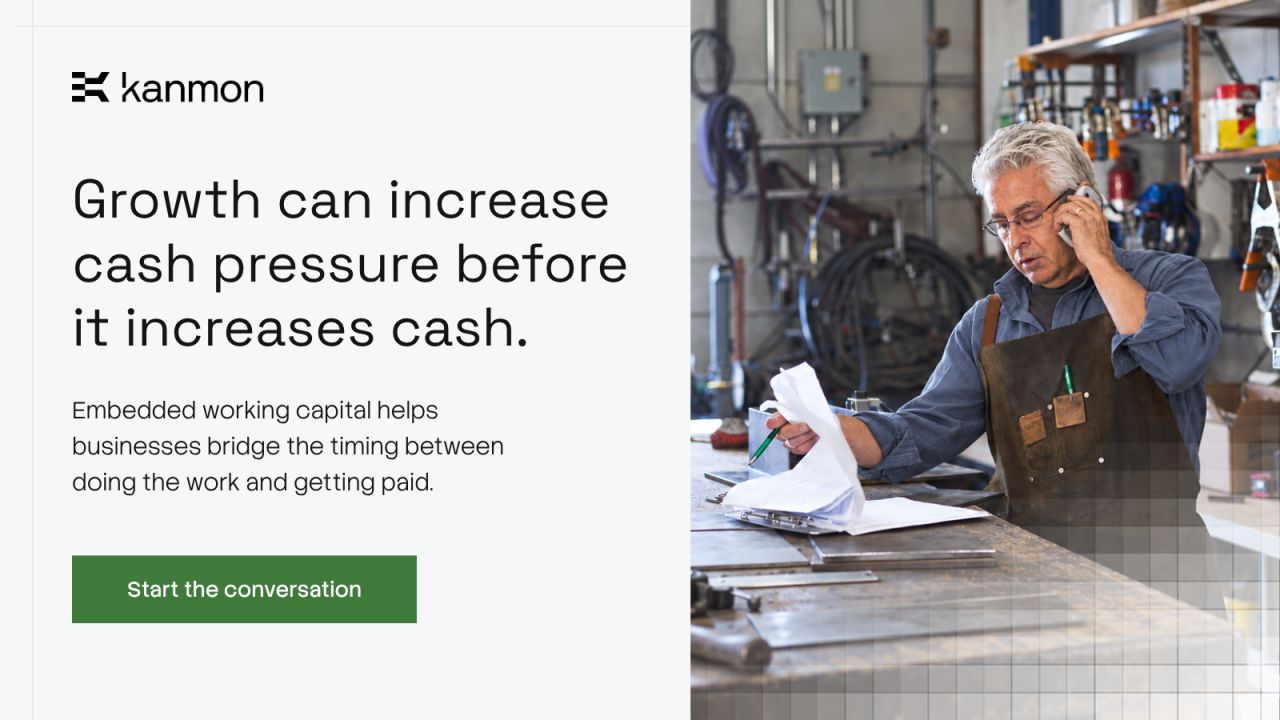
More growth can create more cash pressure. A business wins more work. It buys more inventory, schedules more labor, pays more suppliers, and ships more product. Revenue is increasing, but cash still arrives on the customer’s timeline. That is why working-capital needs can get larger as a healthy business grows. The problem is not always access to a long-term loan. It is the gap between when the business has to act and when the cash comes back. Platforms already sit inside many of those moments: the order, the invoice, the shipment, the payment. They can often see the timing issue before it turns into a delayed purchase or a missed opportunity. Embedded working capital brings capital closer to that point of need. The platform keeps the customer in the workflow. The lending partner handles the underwriting, funding, compliance, and servicing. Growth should not become harder simply because the cash arrives later than the work: https://lnkd.in/ggNZeBWT
- LINKEDIN · IMAGERecorded 24 Sept 2026
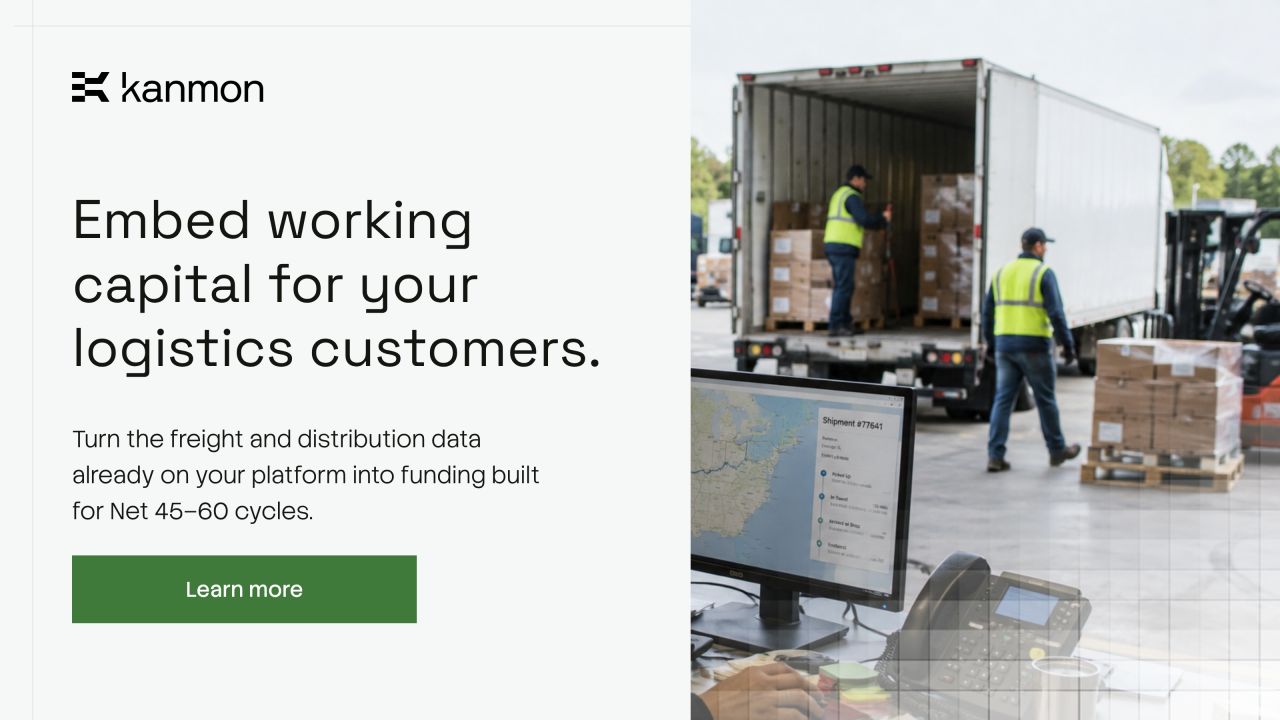
Strong cash flow. Wrong timing. That's the reality for a lot of logistics and distribution businesses. A freight broker can place 200 loads a month, generate healthy economics, and still carry 200 open invoices at any given moment. The business isn't broken. The cash is just arriving later than the expenses required to keep it moving. That timing gap is structural. The financing should be built for it. Net 45- to 60-day payment cycles are normal in freight and distribution. Kanmon uses the operational data already flowing through the business: transaction volume, payment behavior, receivables, load history — to structure working capital around how the business actually operates. And high volume isn't a liability. Consistent transaction and payment history are powerful underwriting signals. You also don't need to be an API-first software company to make this work. If you have meaningful operational data around freight or distribution activity, you may already have what's needed to support embedded working capital. The cash flow is there. Kanmon closes the gap between earning it and getting paid: https://lnkd.in/gmya-QUH
- LINKEDIN · IMAGERecorded 24 Sept 2026
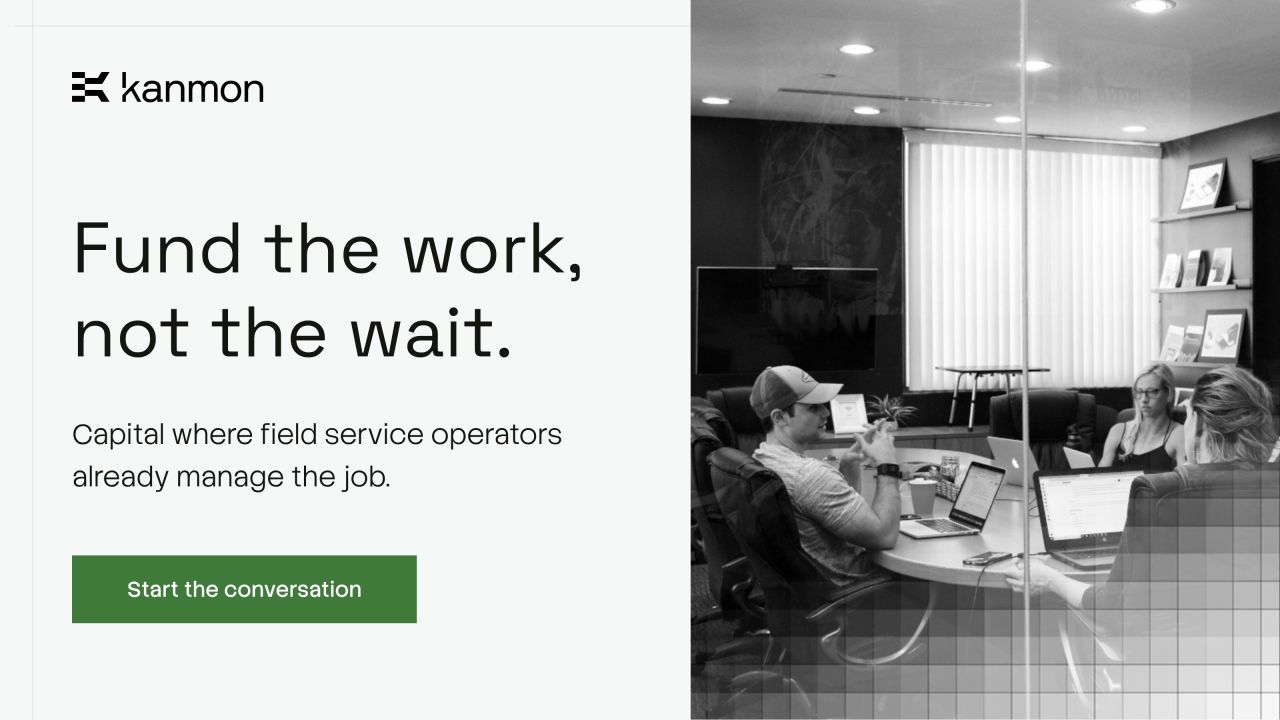
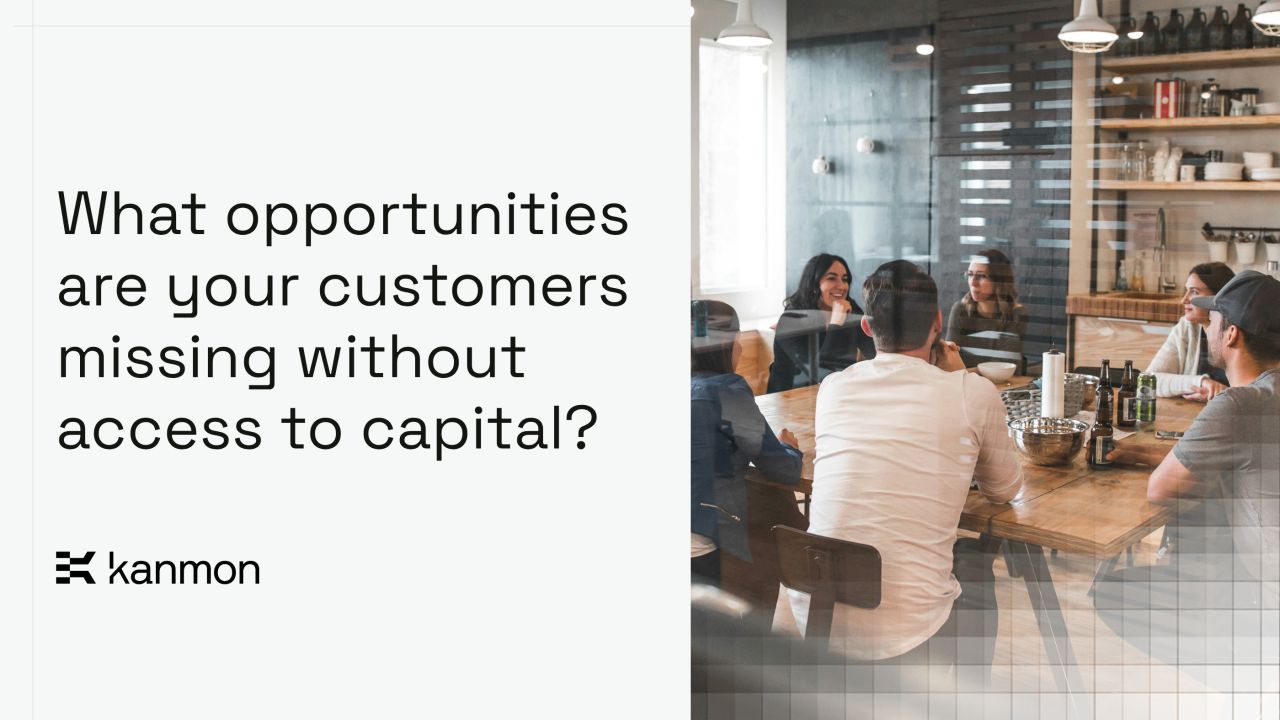
Do your merchant customers lose opportunities because they don't have the cash on hand to act? That's what access to capital unlocks: the capacity to say yes when it counts. • Yes to a larger order. • Yes to more inventory. • Yes to new equipment, another location, or the next stage of growth. So how can your merchant customers use capital as a growth driver? The best time to answer that question is the moment the opportunity appears. And the best place may be right inside the platform they already use to run their business. When platforms deliver access to capital in context, financing becomes more than another product. It helps customers move faster, capture more opportunities, and grow, with less reason to look elsewhere. What could your customers say yes to if capital were available the moment they needed it? Let's have that conversation: https://lnkd.in/ggNZeBWT
6 of 101 adsSign up to see every Kanmon ad, filter by format and date, and get alerts on new ones.
See all 101 adsQuestions about Kanmon’s ads
Is Kanmon running LinkedIn ads?
We recorded no live LinkedIn ads for Kanmon on 9 Nov 2026.
How many LinkedIn ads has Kanmon run?
LinkedIn’s ad library lists 101 ads for Kanmon. We recorded 101 LinkedIn ads for Kanmon, first recorded on 24 Sept 2026 and last recorded on 24 Sept 2026.
Does Kanmon run Google ads?
We recorded no Google ads for the domain kanmon.com on 1 Nov 2026.
Which ad formats does Kanmon use?
The 6 LinkedIn ads on this page include 6 image ads.
Watch the companies you care about.
Filter every ad by industry, country, format and network, and get alerts when a company you watch starts running new ads.