On air · 1 of 3 networks
justt
- justt.ai
- Financial Services
- US
- 142 employees
justt’s ads on LinkedIn, Meta and Google, recorded by adsrunning. Browse the latest here for free. Sign up free to see all 213. Watch justt on any plan to get each new one in your feed.
Watchlist included in every plan
| Network | Status | Live ads | Nov 2025LinkedIn activity · 52 weeksNov 2026 | Checked | Next step |
|---|---|---|---|---|---|
| None recorded | 0 | Checked 3 Nov 2026 | See all 213 ads → | ||
| Meta | Not checked | — | |||
| Running | 100+ | Ads on the Google Ads Transparency Center | Checked 1 Nov 2026 | Collect them with the API → |
justt has no live LinkedIn ads. We recorded 100+ Google ads on 1 Nov 2026.
Latest ads
- LINKEDIN · IMAGESince 18 Jun 2026
Something I didn't expect when I got deep into this space: pre-arbitration isn't the end of the road. You submit strong evidence. The case is solid. The data is clear. The issuer pushes it to pre-arbitration anyway. That doesn't necessarily mean the merchant's evidence is insufficient. In some cases, the issuer may have overlooked a key detail in the evidence. In others, there may be additional pressure from the cardholder side or a need to determine whether the merchant is willing to continue through the next stage of the process. What we've observed is that many merchants choose not to pursue cases beyond pre-arbitration due to the added cost, operational effort, and uncertainty involved. However, merchants that develop a disciplined approach to evaluating which cases are worth advancing past pre-arbitration often achieve better ROI, even after accounting for a percentage of arbitration loss fees. Pre-arbitration isn't always the conclusion of a chargeback. Sometimes it's where the most important decisions are still being made. #Chargebacks #DisputeManagement #Payments
- LINKEDIN · IMAGESince 18 Jun 2026
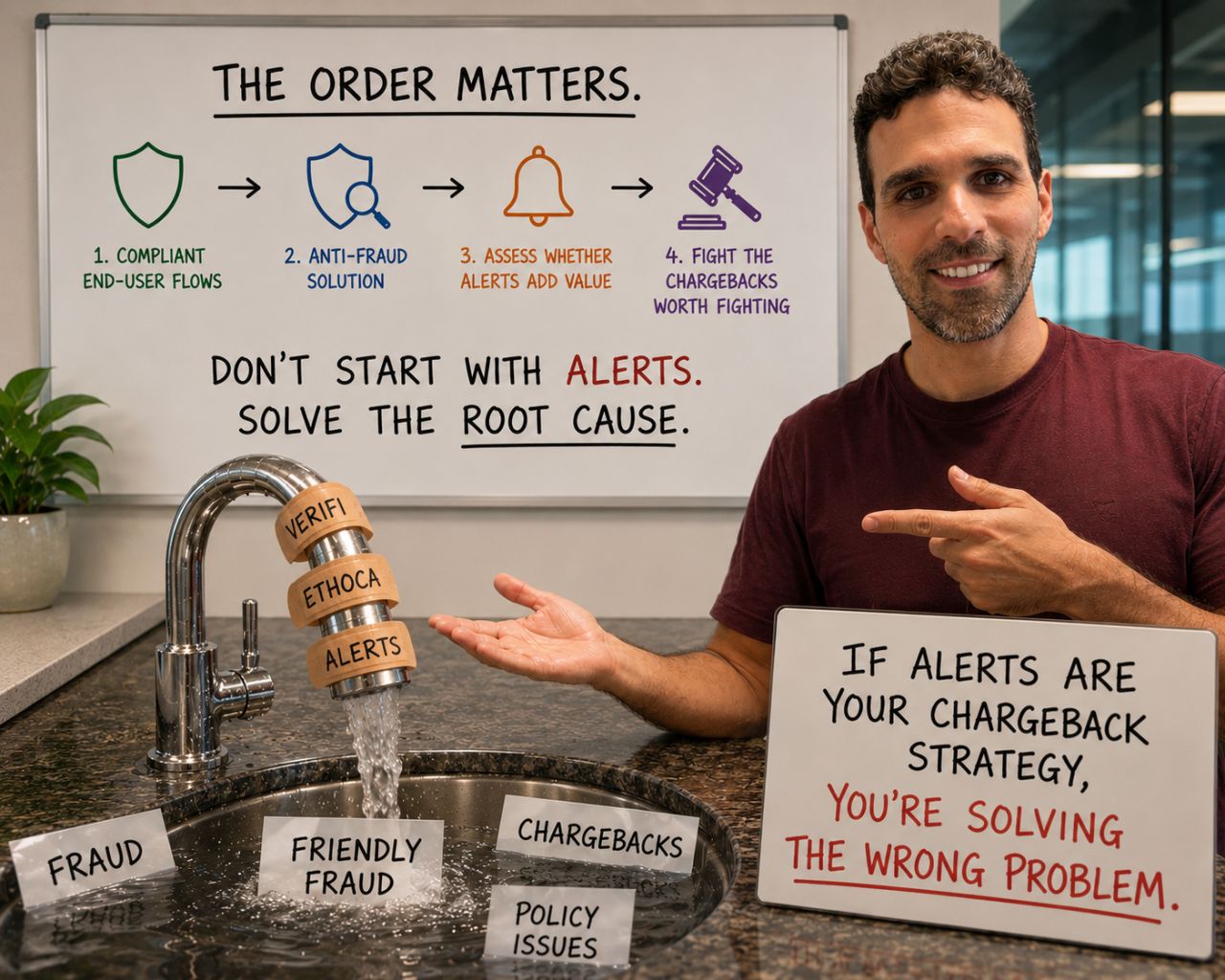
If alerts are your chargeback strategy, you're solving the wrong problem. I spoke with a merchant who was running heavy on Verifi and Ethoca. Every alert that came in, they refunded. No analysis. No selective fighting. Just: alert in, refund out. On paper, it appeared to be a sound risk strategy. In reality, they were paying per alert, refunding customers while letting them keep the goods, and not actively disputing the chargebacks that weren't prevented. When I asked about their anti-fraud solution or chargeback solution, there wasn't one. They had gone straight to alerts - a downstream tool - to manage a problem that needed to be solved upstream. The alerts weren't protecting them. They were just making the losses more expensive and harder to see. It's like putting a Band-Aid over a leaky faucet. The order matters: Make sure your end-user flows are compliant. Get an anti-fraud solution in place. Then assess whether alerts actually add value. Then fight the chargebacks worth fighting. Alerts have a place. But if they're your anti-fraud & chargeback strategy, you're solving the wrong problem.
- LINKEDIN · IMAGESince 5 Jun 2026
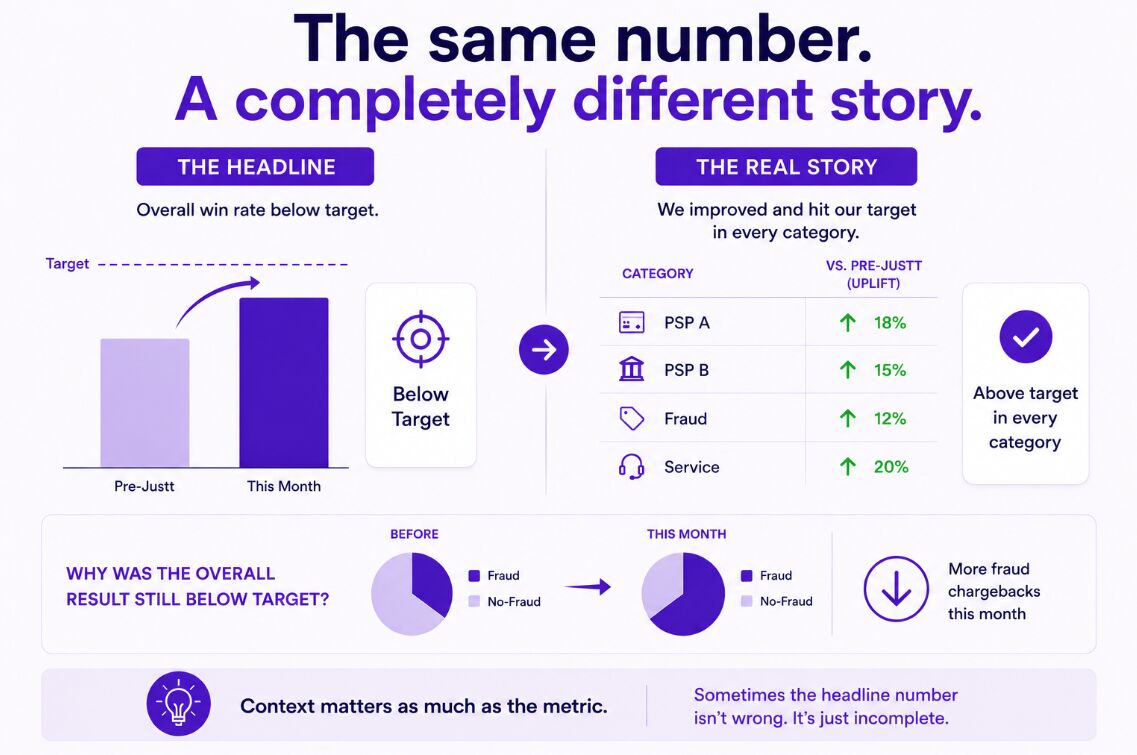
The overall win rate was below target. The client had the numbers in front of them. We had improved on their pre-Justt performance, but we still hadn't reached our goal. When we broke the data down by PSP, reason code, and business line, a very different picture emerged. We had increased win rates and exceeded our targets in every single category. In some segments, by a significant margin. So why was the overall result still below target? Their mix had changed. They were seeing a much higher share of fraud cases. Fraud disputes naturally have lower win rates than service disputes. Even though we improved performance across every segment, the shift in case mix pulled down the blended result. We missed the overall target, but we exceeded our targets within each underlying category. The overall win rate couldn't tell the difference. The conversation shifted from, "Why are we missing the number?" to, "How should we account for changes in case mix when measuring performance?" If you're evaluating chargeback results, context matters as much as the metric itself. Sometimes the headline number isn't wrong. It's just incomplete.
- LINKEDIN · IMAGESince 5 Jun 2026
I didn't make it to Money20/20 Amsterdam this year. But thanks to Omer Unger from Mastercard, I still got a memorable moment from the conference. Last year, Omer and I shared the stage at Money20/20 Amsterdam. This year, he was attending a fireside chat on "Smart Money, Secure Foundations: From Digital Currencies to Agentic Payments" featuring leaders from Mastercard, NVIDIA, Amazon Web Services (AWS), and Accenture. Then I got a message from Omer: "Georgios Kolovos from NVIDIA just mentioned justt on stage as an example of a company successfully using AI in payments." Not a bad message to receive. It's always gratifying to hear justt come up in conversations about the future of the industry, especially from leaders whose perspectives help shape where that future is headed. Thank you, Georgios Kolovos, for your partnership and mention, and thank you, Omer Unger, for making sure I didn't miss it. A proud moment for all of us at justt. #Money2020 #Payments #AI #Fintech #Justt #NVIDIA
- LINKEDIN · IMAGESince 2 Jun 2026
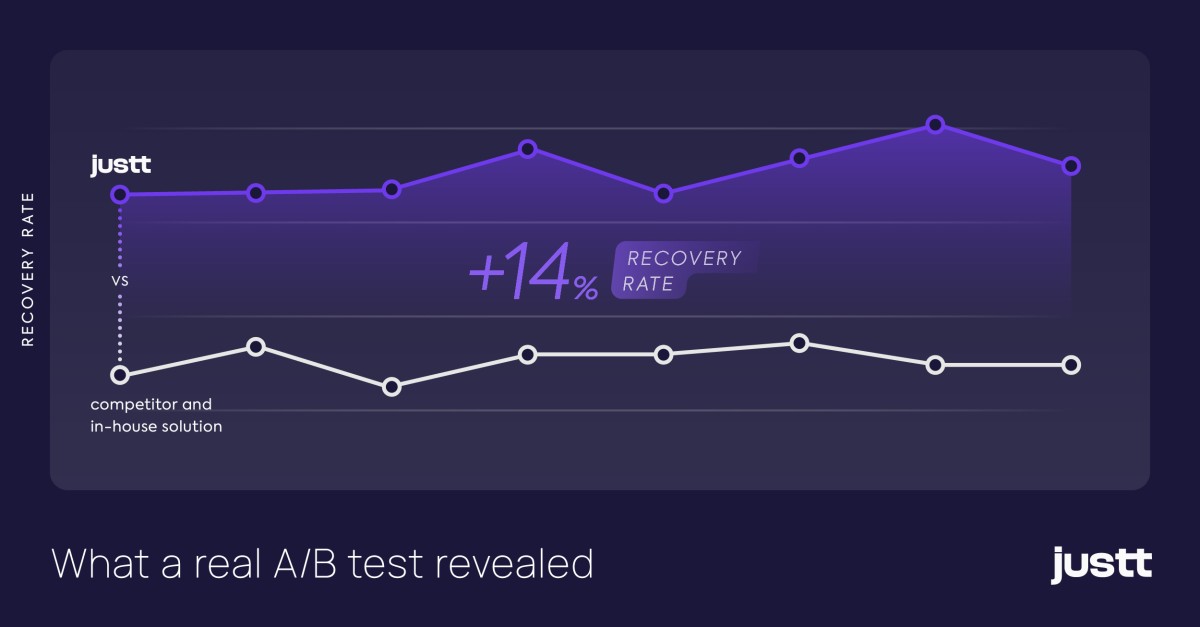
Some merchants won't pick a chargeback vendor until they’ve tested them head-to-head. We welcome that. A major tech company recently split its non-fraud disputes across three groups: 🔹Justt 🔹A competitor 🔹Their in-house team Same merchant. Same PSP setup. Randomized traffic. Eight months of live chargeback data. The outcome: Justt's recovery rate came in 14 percentage points higher, nearly double the performance of both the competitor and the internal team. If Justt had handled the full dispute volume, the merchant would have recovered an additional $1M in revenue. Straight to the bottom line. What would another $1M in pure-margin revenue do for your business? #Chargebacks #RevenueRecovery #Fintech
- LINKEDIN · IMAGESince 27 May 2026
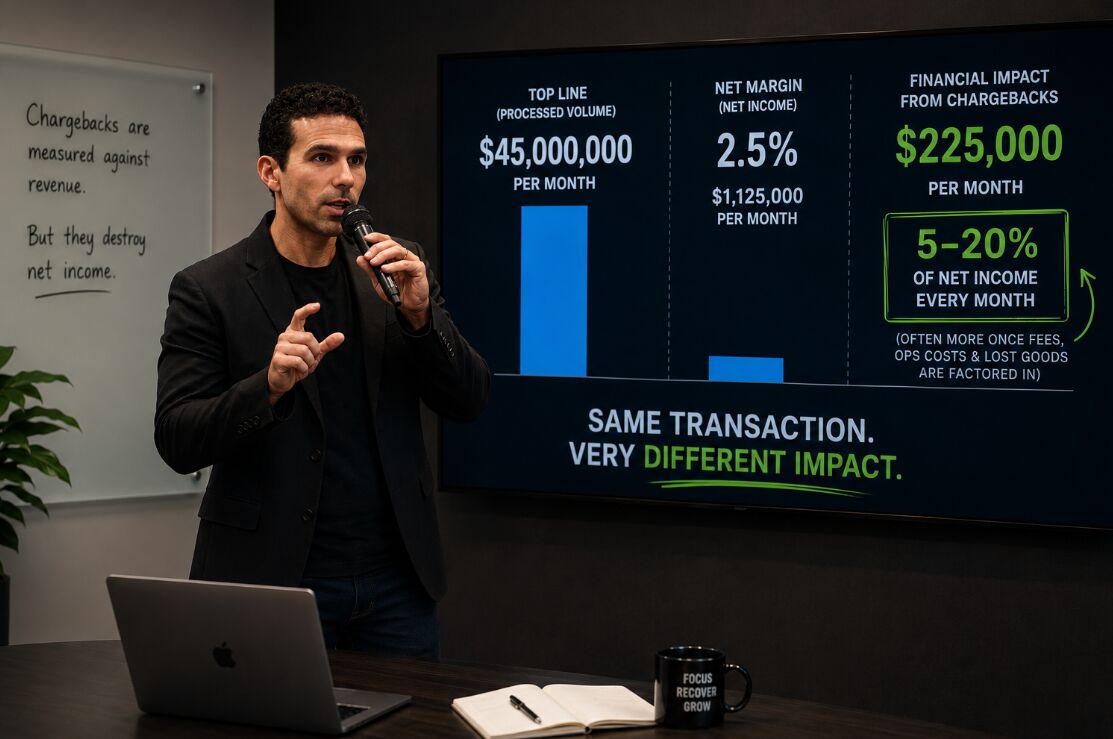
"Our chargeback ratios are healthy. We don't really need help with this." I heard this from multiple merchants over the years. And I understand it, if you're below the monitoring thresholds, the problem feels managed. But chargeback ratios are measured against revenue. Not net income. I’ll never forget the first time I sat with the finance team at the company where I built my first chargeback solution. At first, they weren’t very impressed with what we were doing. They kept looking at the top line, millions of dollars processed every month, while I was recovering “only” tens or hundreds of thousands of dollars in chargebacks. But then I showed them the real math. The company was making roughly 2.5% net margin on those millions in processed volume. When we won a chargeback, we weren’t recovering 2.5% of the transaction value, we were recovering 100% of it. That completely changed the conversation. You could literally see their eyes open. For a merchant operating on 3-10% margins, losing 0.6% of revenue to chargebacks can quietly wipe out 5-20% of net income every month, often even more once fees, operational costs, and lost goods are factored in. Healthy ratios mean you're not in trouble with the card schemes. They don't mean you're not leaving significant money on the table every month. #Chargebacks #Payments #RevenueRecovery #Fintech


6 of 213 adsSign up to see every justt ad, filter by format and date, and get alerts on new ones.
See all 213 adsWatch the companies you care about.
Filter every ad by industry, country, format and network, and get alerts when a company you watch starts running new ads.