Not on air · 1 of 3 networks checked

Hokstad Consulting Ltd ads
- Technology, Information and Internet
- GB
- 5 employees
Hokstad Consulting Ltd’s ads on LinkedIn, Meta and Google, recorded by adsrunning. Browse the latest here for free. Sign up free to see all 28. Watch Hokstad Consulting Ltd on any plan to get each new one in your feed.
Watchlist included in every plan
What Hokstad Consulting Ltd runs
- Single image · LinkedIn
- 6
| Network | Status | Live ads | Nov 2025LinkedIn activity · 52 weeksNov 2026 | Checked | Next step |
|---|---|---|---|---|---|
| None recorded | 0 | Checked 7 Nov 2026 | See all 28 ads → | ||
| Meta | Not checked | — | |||
| Not checked | — |
Hokstad Consulting Ltd has no live LinkedIn ads.
Latest ads
- LINKEDIN · IMAGERecorded 22 Sept 2026
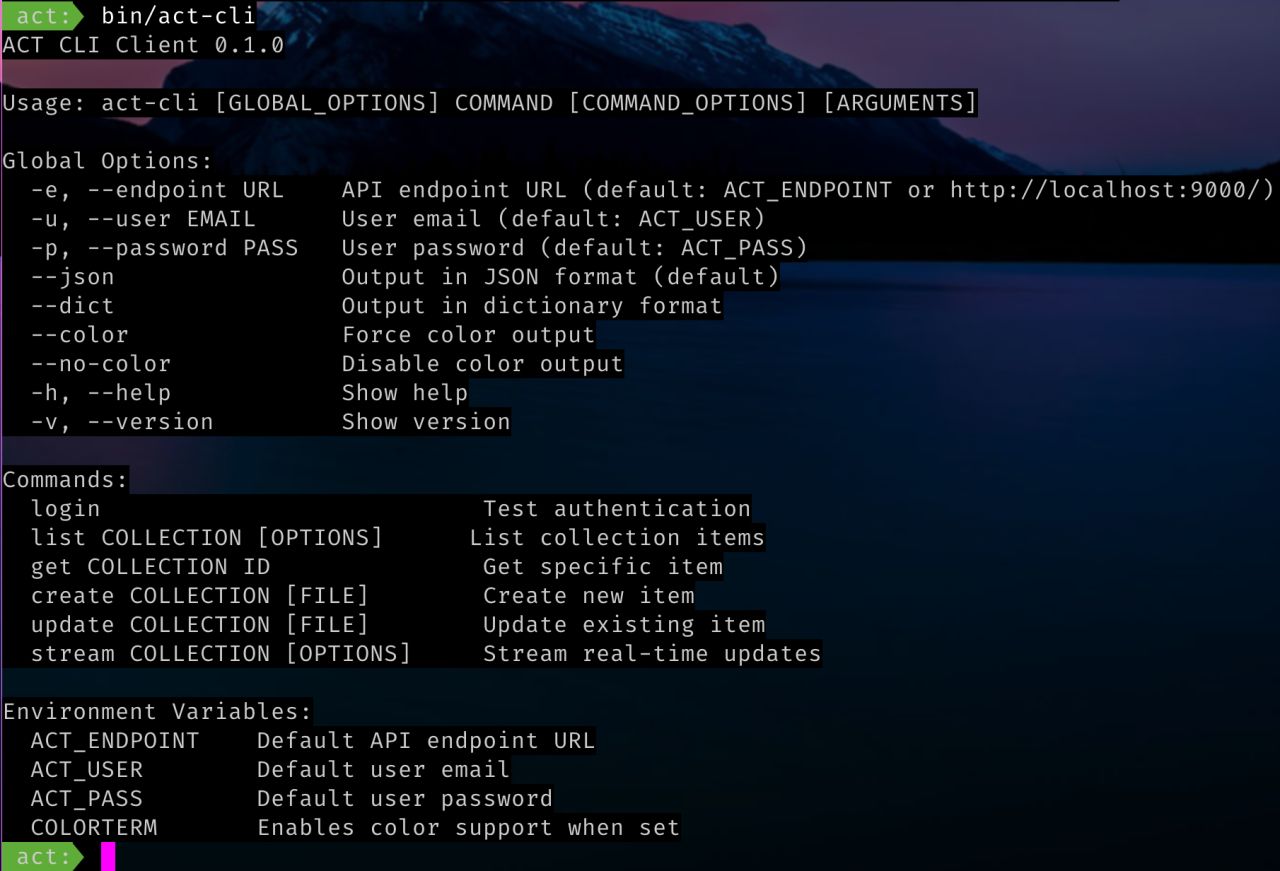
For ease of testing ACT - my app server, I had my new experimental Ruby coding agent write a CLI client for ACT's REST interface. I haven't even read the code yet - I'm sure there are atrocities in there - but what I've tested so far works and involved *zero lines of code written by me*, and about 5 paragraphs worth of prompts specifying input and output formats, and required commands and options. A couple of those 5 paragraphs worth came as I saw it working, interrupted it and corrected some misunderstandings. During development, it'd routinely run the tool against my dev instance to test it (in addition to writing test cases). It also keeps running rubocop (linter) without being asked (its whitelisted). It also wrote a README without being asked. I think this is a near ideal case to accelerate with an assistant - the API implementation effectively acted as a spec. (Brian Feister this is similar to the example you mentioned...) Overall it cost me about $10 in API credits for about 1000 lines of working code. I intend to have it write an MCP server wrapping this next, so I can have my coding assistant introspect and update my ACT instances directly. Since I use ACT to host my websites, this would allow me to also have it make content changes on the dev instances of my sites. I'll have my coding assistant design and write its own website (hosted on ACT) next.
- LINKEDIN · IMAGERecorded 22 Sept 2026
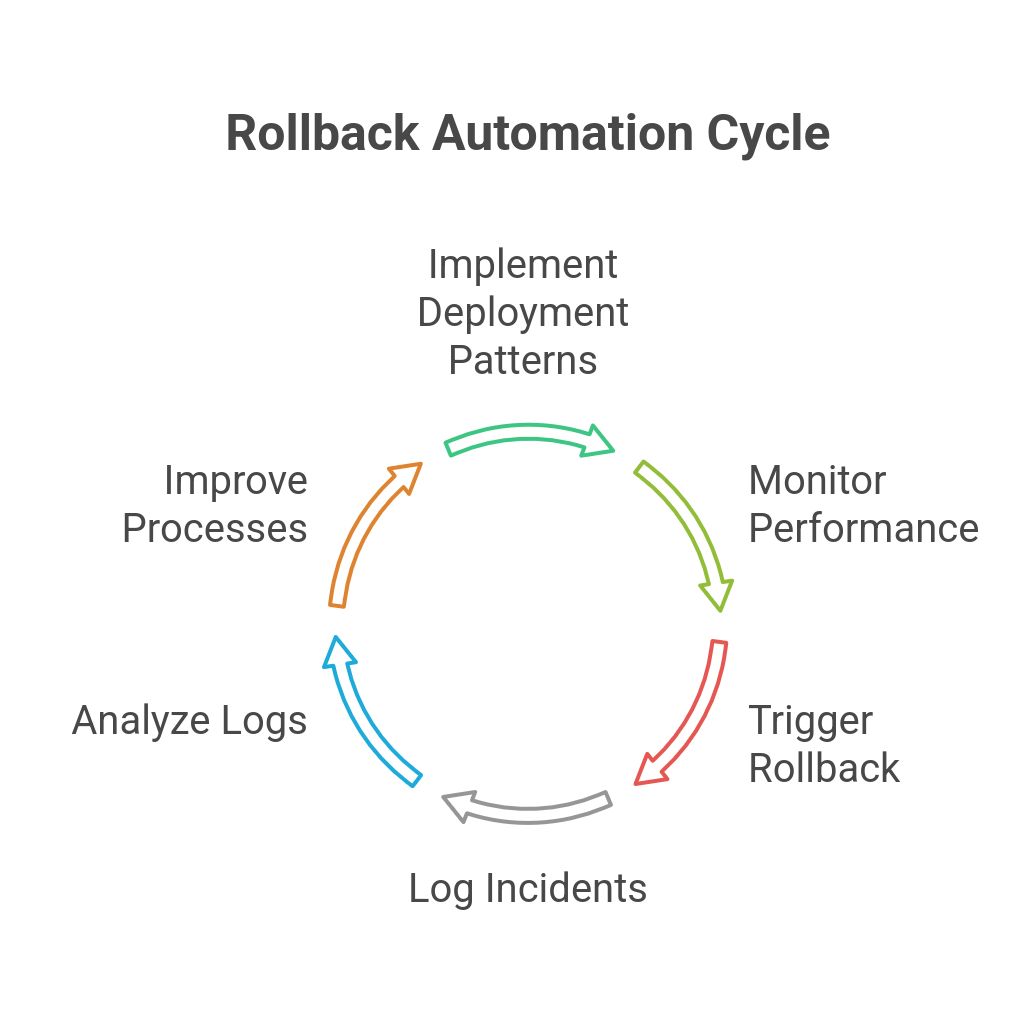
Rollback automation isn't just a nice-to-have - it's the difference between a minor hiccup and your CEO calling me at 3 AM because your production system is down and nobody knows how to get back to a working state. (I don't mind getting that 3 AM call, because it means I get to bill your CEO a lot of money - but I suspect your CEO will mind) Let's break down why rollback automation matters and how to get it right: First, in modern CI/CD pipelines, the ability to quickly revert to stable versions isn't optional. When deployments fail (and they will), you need immediate action to protect user experience and minimize costly downtime. Automatic detection and reversion mechanisms are your first line of defense - they catch issues and roll back without waiting for humans to wake up and make decisions. But here's where it gets tricky: Database mismatches and state management make rollbacks complex. You can't just flip a switch and expect everything to work. This is why you need clear rollback triggers based on performance metrics and proper deployment patterns. Speaking of patterns - let's talk about blue-green and canary deployments: - Blue-green gives you instant rollbacks but needs more resources - you maintain two environments, effectively. - Canary allows gradual rollbacks with lower resource requirements but carries medium risk - you can't just flip a switch and instantly be back. Note that you have hybrid options: You can do blue-green releases component by component, and tear down the extra environment once you're confident i nthe new release. Core principles you can't ignore: - Handle application state carefully - Set clear, measurable rollback criteria - Test your rollback procedures regularly (not just when things break) - Use immutable infrastructure (seriously, stop manually tweaking servers) Your monitoring and observability stack needs to deliver real-time metrics and alerts that actually mean something. Link technical issues to business impacts - that's what makes the difference between noise and actionable data. Incident logging isn't just bureaucracy - it's your blueprint for improvement. Log everything during rollbacks; you'll thank yourself later when troubleshooting. Building resilient CI/CD pipelines comes down to three things: 1. Reliable deployment patterns that support quick reversions 2. Robust monitoring that tells you what's actually happening 3. Clear failure criteria that trigger automatic responses For businesses looking to level up their rollback game: - Audit your current processes - Find the gaps in your automation - Get expert help if needed (yes, this is where I come in) Remember: Every minute of downtime costs money. Proper rollback automation isn't an expense - it's insurance against the 3 AM calls. Make it work before you need it.
- LINKEDIN · IMAGERecorded 22 Sept 2026
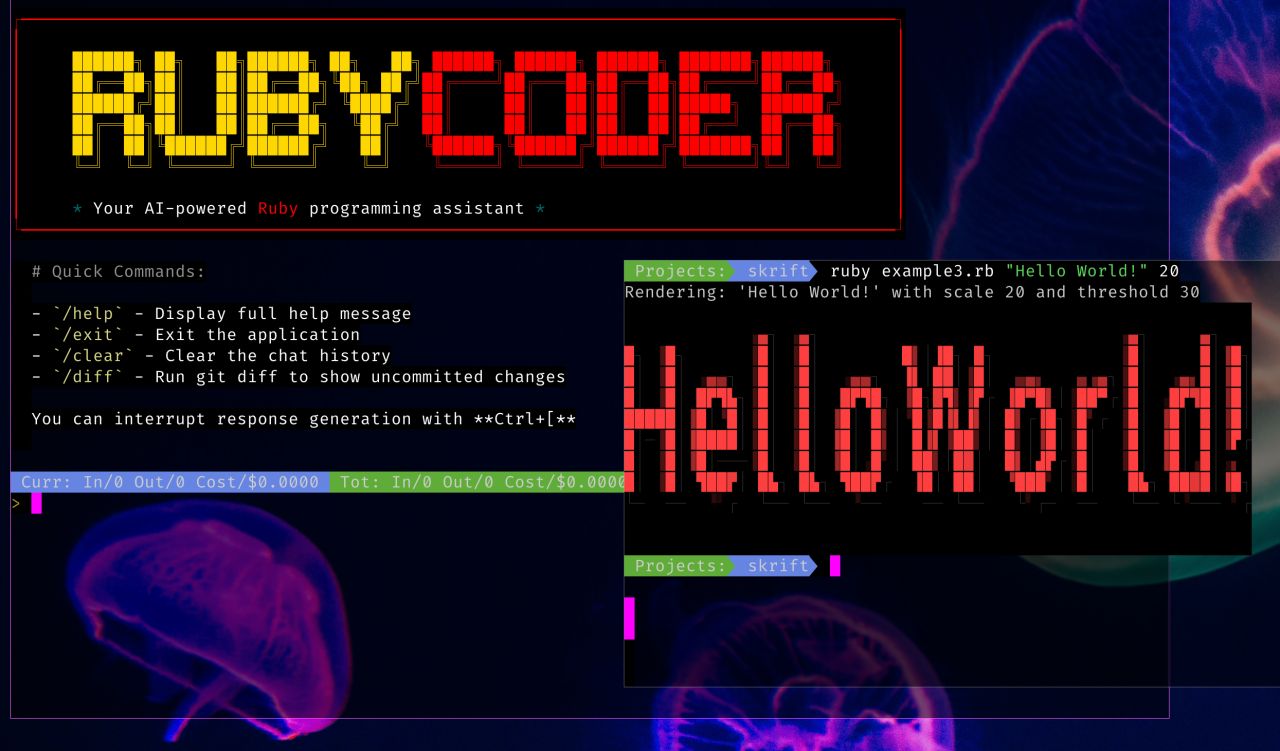
Last Friday, on a whim, I decided to see how much effort it was to create an LLM coding agent. I spent a few hours on it over the weekend. The answer: Not very much (assuming you use someone elses LLM) At its core, an agent consists of a loop that requests a prompt, receives responses that may include tool uses, and includes at least one tool: The ability to execute (hopefully with confirmation) shell commands. Modern models are good enough that *this is enough to bootstrap* by having the agent itself write additional tools. The more interesting part of that experience? 1. It's actually usable. I now prefer it to Claude Code for my Ruby coding. 2. How easy it is to hook up all kinds of tools. 3. How good these LLMs are at figuring out ways of doing things if you just hand them access to standard command line tools. Got a web API? It'll save you tokens to write a tool or MCP server, but the LLM will *manage* with just curl. 4. How "eager" the models are to be good engineers. My assistant adds a Rubocop (linter) tool, and the LLM will *usually* regularly call the linter without having been asked to, and will then unilaterally decide to fix issues it has introduced. 5. How helpful it is to control your tooling - the integration of the Rubocop tool itself fixes a significant proportion of the issues I have with Claude Code for Ruby use. E.g. Rubocop will flag it if the assistant has done something stupid like overriding a method it defined earlier instead of replacing the previous version. Not everyone should write their own coding assistant, but it's worth considering whether you have use cases for your own specialised agents/assistants for your business. (I'm happy to help...) (screenshot: My toy agent running in my terminal, with a logo it created itself, and showing off an example it created of using my Ruby font renderer to render a truetype font to unicode block characters at 4x the character resolution)
- LINKEDIN · IMAGERecorded 22 Sept 2026
Stay focused on innovation—we’ll keep your infrastructure running seamlessly. Hokstad Consulting’s expert team manages servers at Hetzner, OVH, and other providers, ensuring top performance and security. Whether you need a single dedicated server or an entire fleet, we’ve got you covered. Let’s work together: https://heyor.ca/kQGhTE #DevOps #CloudManagement
- LINKEDIN · IMAGERecorded 22 Sept 2026
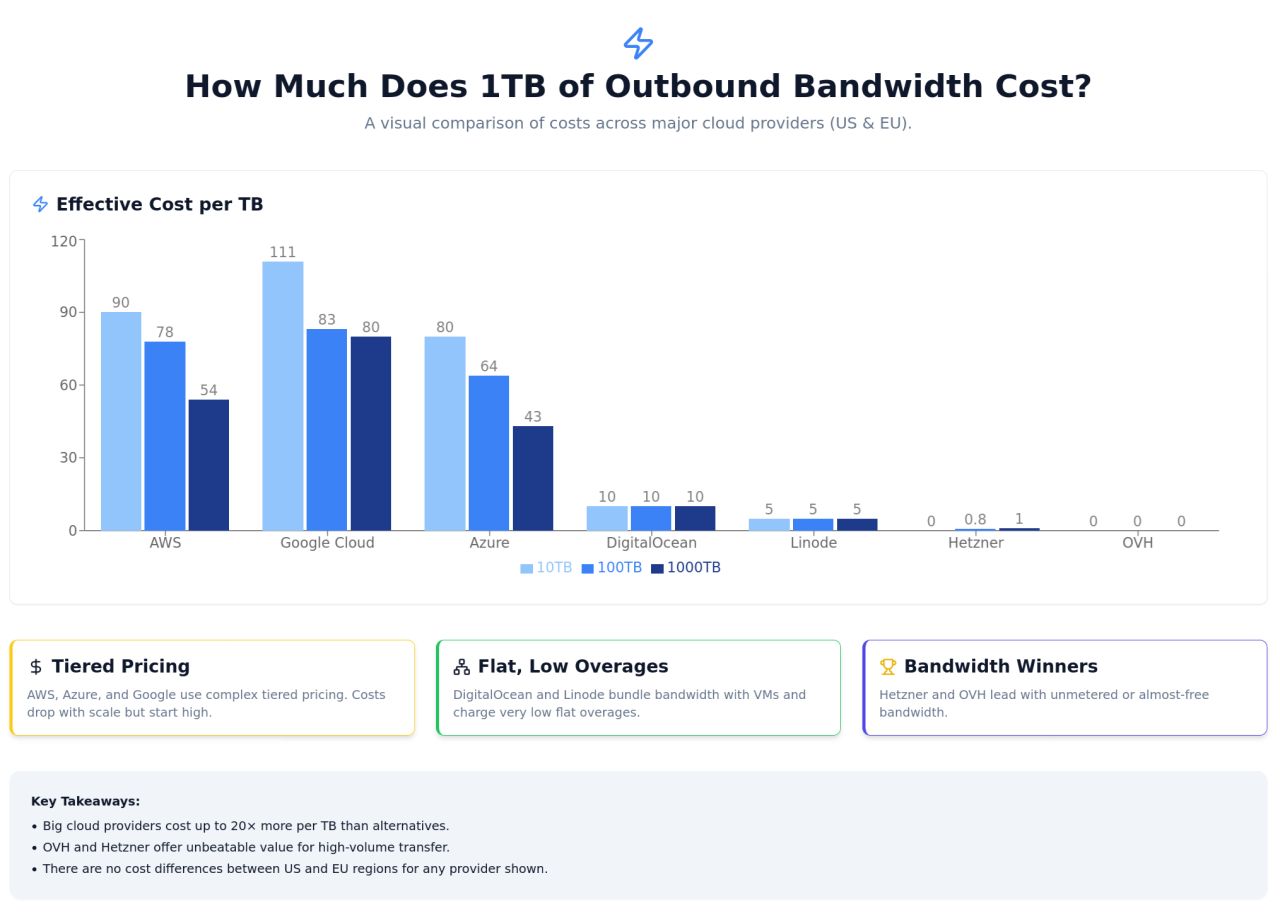
How much does 1TB of outbound bandwidth cost? Or why you should seriously consider your cloud strategy. Hetzner and OVH numbers are on the basis of free tiers dominating and low overage fees for Hetzner, and port-based pricing for OVH. You don't need to stop using cloud services to drive this cost down. You don't even need to move everything out of AWS/Google/Azure if that's where you are. You can start getting savings in ways that can leave your core infrastructure untouched to start with. If you want to know more about how to drive down your bandwidth costs without changing your entire cloud setup, ask in the comments, or connect.
- Text-onlyOdds are your AI agents have major security holes. Here's a common problem: 1. Your give your AI agent access to your database via tools/MCP. 2. You give your AI agent ways to exfiltrate data that are generated by the agent at least in part (send e-mails, return answers to a customer in a support chat) 3. Some or more of the input, *including any column in any table* the agent can be convinced to read from and integrate into the context, can be written by an untrusted user. E.g. a description in a support ticket, chat input, or even something like an address field in a contact database. What prompted this? Turns out Supabase's Cursor agent can read support tickets *and everything else in the database*. Support tickets can contain user input. This user input can end up in context. Why this is a giant problem: It's nearly impossible to entirely prevent "prompt injection". If a user can try to write instructions to the agent in a support ticket, odds are they can find a way of tricking the agent into doing things *they* want it to. (And in the Supabase case, that has been demonstrated) For that reason, you need to treat the agent with no more trust than you'd trust the *least privileged user able to influence the data that ends up in the context*. If your agent can ever happen to read a support ticket written by an unauthenticated user, for example, this mean your agent needs to be treated as *equally untrustworthy as any unauthenticated user*. That means certainly not giving the same agent access to read every part of your database. But it's worse. If your agent is able to read data that can be influenced by disparate users, the privileges it has needs to be lowered to the *subset of permissions in common for all entities that can influence the context*. This means that e.g. if an agent might pull in context from a chat between multiple users, you should be very wary about giving it access to any data that should be inaccessible to *any* of those users. How do you fix this? First of all, the good old principle of least privilege: Don't be tempted to give your agents access to MCP servers that expose functionality they don't strictly need. Secondly: Treat each agent as *an agent of the user(s) whose data they put into context* NOT OF YOU. A malicious user may only need to succeed in convincing the agent to act for them once. You need to succeed every time. Thirdly: If your agent needs to act on data from multiple users: Divide and conquer. Use multiple context and process the data from each individual user in a context where the agent only has access to MCP servers and tools that are strictly scoped to that user only. Then only pass *strictly sanitised data* between those contexts / separate agents. Scrutinise those data channels between them heavily, and ideally prevent the "merged" dataset from being interpreted by an LLM at all. (If you need help with this, we're happy to provide consulting services in this space too - DM me)LINKEDIN · TEXT-ONLYRecorded 22 Sept 2026

6 of 28 adsSign up to see every Hokstad Consulting Ltd ad, filter by format and date, and get alerts on new ones.
See all 28 adsQuestions about Hokstad Consulting Ltd’s ads
Is Hokstad Consulting Ltd running LinkedIn ads?
We recorded no live LinkedIn ads for Hokstad Consulting Ltd on 9 Nov 2026.
How many LinkedIn ads has Hokstad Consulting Ltd run?
LinkedIn’s ad library lists 28 ads for Hokstad Consulting Ltd. We recorded 28 LinkedIn ads for Hokstad Consulting Ltd, first recorded on 22 Sept 2026 and last recorded on 22 Sept 2026.
Which ad formats does Hokstad Consulting Ltd use?
The 6 LinkedIn ads on this page include 6 image ads.
Watch the companies you care about.
Filter every ad by industry, country, format and network, and get alerts when a company you watch starts running new ads.