On air · 1 of 3 networks

HALOS Body Cameras ads
- halosbodycams.com
- Software Development
- GB
- 68 employees
HALOS Body Cameras’s ads on LinkedIn, Meta and Google, recorded by adsrunning. Browse the latest here for free. Sign up free to see all 28. Watch HALOS Body Cameras on any plan to get each new one in your feed.
Watchlist included in every plan
What HALOS Body Cameras runs
- Single image · LinkedIn
- 5
- Video · LinkedIn
- 1
- Google ads on 30 Oct 2026
- 100+
- active Meta ads on 4 Nov 2026
- 314
- Meta placements
- 4
| Network | Status | Live ads | Nov 2025Activity · 52 weeksNov 2026 | Checked | Next step |
|---|---|---|---|---|---|
| None recorded | 0 | Checked 7 Nov 2026 | See all 28 ads → | ||
| Meta | Running | 314 | Checked 4 Nov 2026 | Collect them with the API → | |
| Recently | 100+ | Checked 30 Oct 2026 | Collect them with the API → |
HALOS Body Cameras has no live LinkedIn ads. Its Facebook page had 314 active ads on 4 Nov 2026, and we recorded 100+ Google ads on 30 Oct 2026.
Latest ads
- LINKEDIN · IMAGESince 15 Apr 2026
Protect your team, reduce incidents, and save operational costs. See how leading businesses are upgrading their safety tech, while strengthening trust in their communities, their staff, and strategically deploying the tech you need in the modern world.
- LINKEDIN · IMAGESince 15 Apr 2026
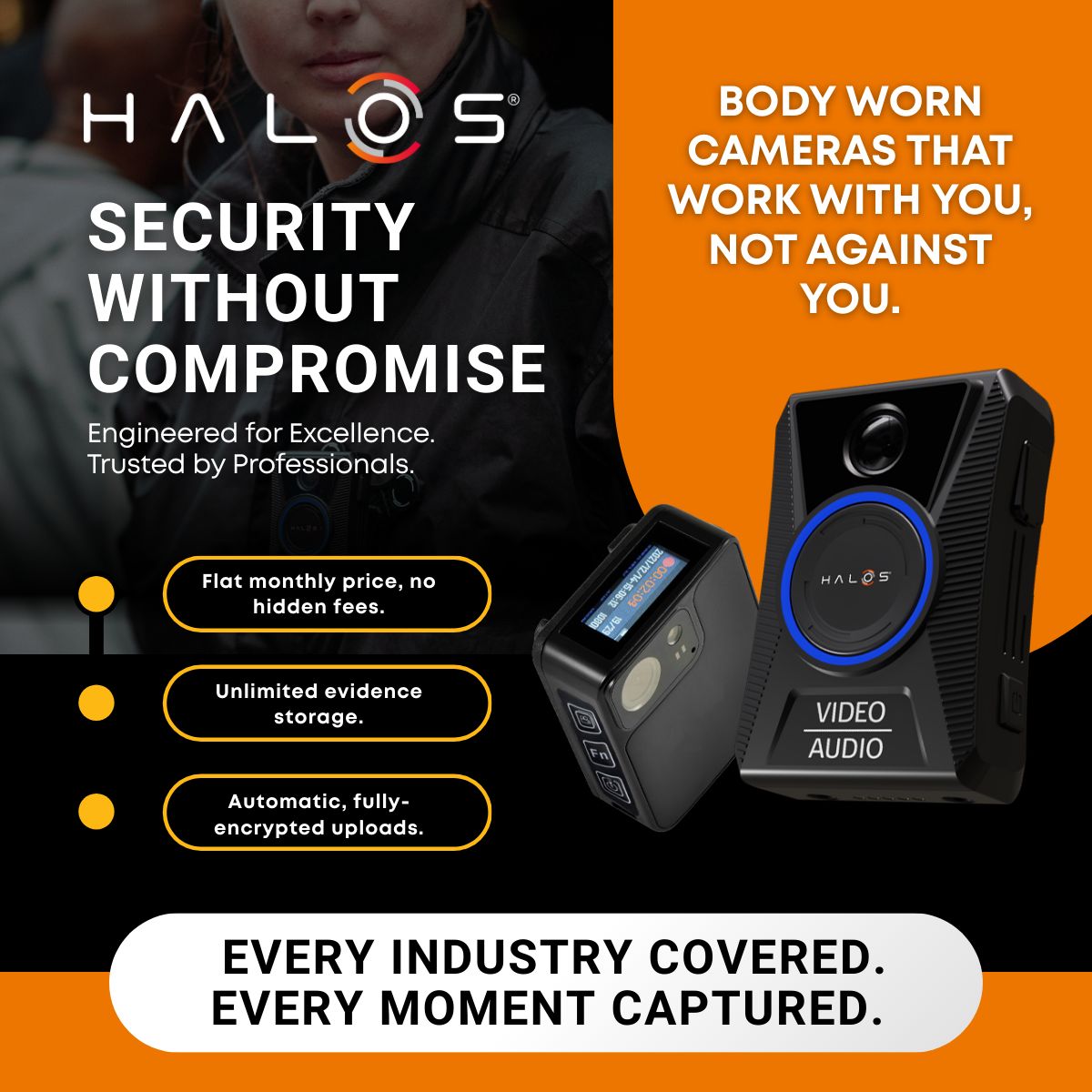
Discover how HALOS Body Cameras can revolutionize your operations. With automatic video uploads and unlimited cloud storage, these devices ensure seamless evidence management while prioritizing user simplicity. Our fixed-cost pricing model eliminates hidden fees, providing top-notch technology at a predictable cost. Enhance safety protocols and foster transparency today.
- LINKEDIN · IMAGESince 15 Apr 2026
Equip your team with the reliability of HALOS Body Cameras: state-of-the-art technology crafted to enhance security measures across industries like retail, transportation, healthcare, or security and law enforcement. Experience effortless incident documentation coupled with streamlined evidence management through our all-inclusive fixed-cost pricing model.
- LINKEDIN · IMAGESince 15 Apr 2026
Everyday the workplace is becoming more unpredictable—capture every moment for both staff and customer safety, security, and compliance. See how HALOS Body Cameras help.
- LINKEDIN · IMAGESince 15 Apr 2026
Security teams trust HALOS for reliable footage, fast evidence access, and zero IT burden, and automatic uploads to reduce administrative work. See how we bring more to your business than just a body camera.
- LINKEDIN · VIDEOSince 8 Apr 2026
Does your team have the tools in place to strengthen operations in 2026? This year, take a proactive step toward greater safety, accountability, and transparency with HALOS Body Cams. With advanced features like unlimited storage, live streaming, and up to 16 hours of continuous recording, HALOS delivers reliable solutions designed to support teams and elevate operations across industries. Make safety your top priority in 2026. Explore our cutting-edge solutions here: https://lnkd.in/gzT-Jgwh #HALOS #BeyondBodycams #BodyCameras #Bodycams #HALOSBodyCams
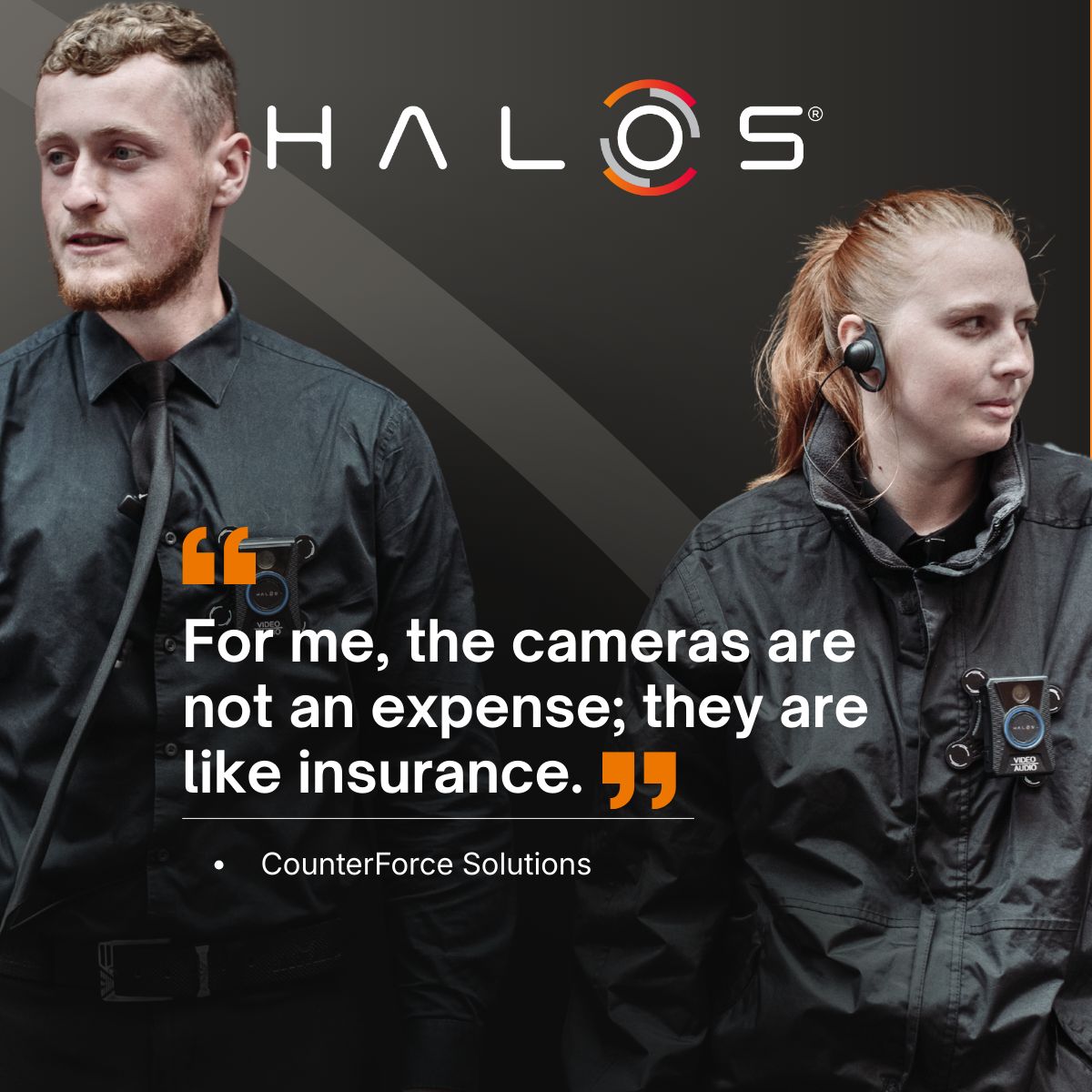
6 of 28 adsSign up to see every HALOS Body Cameras ad, filter by format and date, and get alerts on new ones.
See all 28 adsOn Facebook and Instagram
Facebook page HALOS Body Cameras · 314 active ads, checked 4 Nov 2026 · 50 recorded
- All 20
- Image 15
- Video 5
 Video previewMETA · VIDEOSince 19 Oct 2026
Active on Facebook, Instagram, Threads. Security firms paying damage claims just to keep the client sweet, when the shift footage settles most of them The officer says he never touched the gate. He says it was already like that when he got there on Saturday night. The client says otherwise. An email turns up on Thursday, copied to their head of facilities, with an invoice attached: "The car park gate was damaged over the weekend. Your officer was on site." Nobody can say either way. His report was written up at the end of the shift, from memory. The one photo was taken on a phone on Monday, after the gate had been opened and shut all weekend. The other witness is a colleague on the same payroll. So the firm does what most firms do. It pays, to keep the client sweet. It feels like the sensible call. The bill is smaller than a fortnight of politics, and the contract is worth far more than a gate. Yet nobody on the client's side files it under goodwill. The firm paid, so the officer must have done it. The officer reads it the same way. He told the truth, and his own firm sided with the client anyway. By the retender, the client's file holds a run of damage claims the firm accepted. Nobody remembers they were paid to keep the peace. Only that they were paid. Most of them could have been answered from the footage instead of from memory. The trouble was never the camera. Plenty of firms have them. The footage sits on a card, or in a dock nobody emptied, until someone remembers to upload it... and by then the invoice has gone through. What firms lack is a quick way to find one clip, a safe way to send it, and a bill that behaves itself. HALOS is built for the part that happens after the incident. The cameras upload themselves once they're back in range. No docking station, no SD cards, nobody having to remember at the end of a shift. So when the Thursday email lands, you pull up Saturday night's shift in the Vault. Search by site, officer or time, and there's the gate when he arrived, before he'd touched a thing. You send the client one link. The Vault keeps the original and writes every view, share and download into the audit history, so the record shows it hasn't been touched. Smart Redaction blurs faces, so the clip goes out without everyone who walked past it. It's no longer his word against theirs. The client sees it for themselves. The footage settles most of the claims nobody could answer before. And the bill behaves itself. One subscription covers devices, the Vault, storage, support and updates, at one consistent monthly fee. No storage tiers, no feature fees, no add-ons that expand after rollout. "With HALOS, we feel like we're one team. Their technology is a standard part of our operations, protecting our officers, our customers, and our business." Michael Meeks, Owner, Divergent Security Solutions The next email still turns up on a Thursday. The reply goes back that morning with one link, the invoice goes unpaid, and the officer who said he never touched the gate knows the record backed him. At the retender, the client's file shows complaints answered, not claims paid. So if you're done paying for damage your officers didn't do... see HALOS in action. It's a walkthrough on the live platform, set up for the way you run shifts, with pricing in plain numbers up front. Bring the questions your client asked at the last contract review. https://halosbodycams.com/private-security-uk?utm_medium=cpc-k5
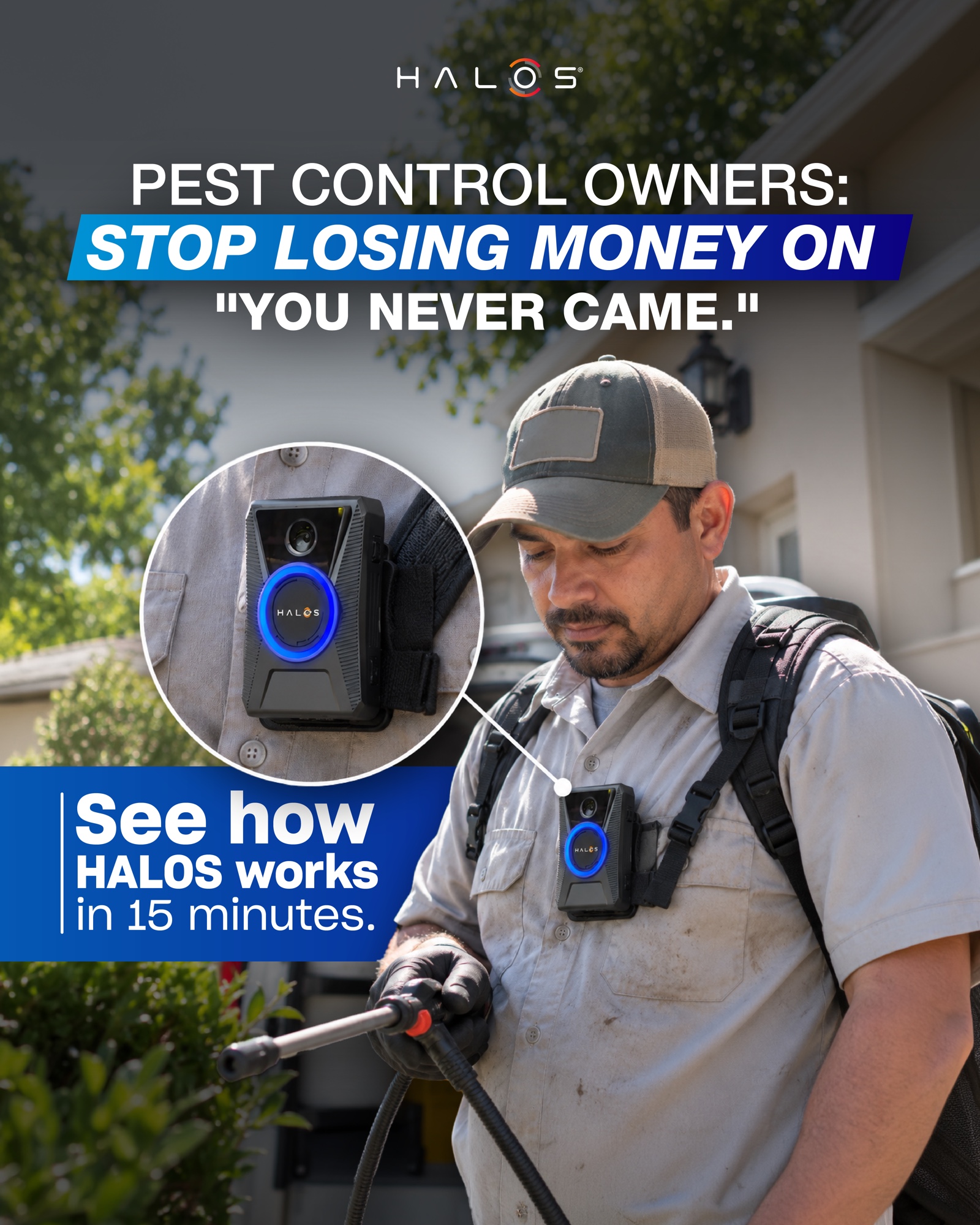 META · IMAGESince 19 Oct 2026
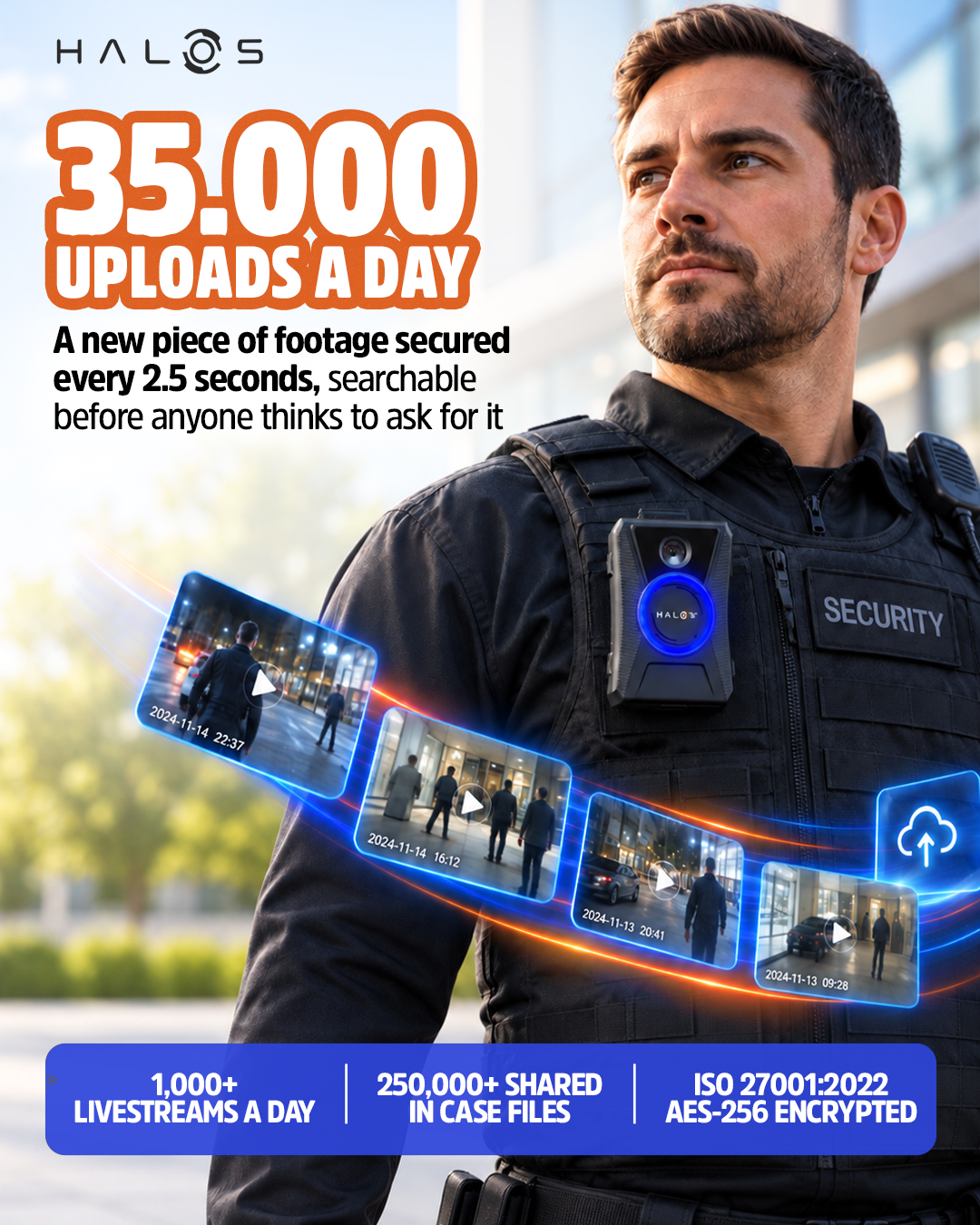
Active on Facebook, Instagram, Threads. How pest control owners answer "you never came" with footage of the tech at the stop, not a free re-service It's 4:40 on a Tuesday when the office line rings. "You never came." The customer was home all day. Nobody knocked. The doorbell camera shows no one at the front door, and they've got the clip to prove it. The service ticket says the stop was done at 10:15, exterior perimeter treated. Both sides are telling the truth as far as they can see it. The tech was around back, working the fence line with the wand, nowhere near the doorbell. So the owner reaches for proof of service. Flags in the yard. A door hanger on the knob. A ticket the tech filled out. The truck's GPS log, showing it parked out front for a while. Each one says the company stopped by. None of them shows a tech walking the perimeter. To a customer holding doorbell footage, it's the company vouching for itself. That leaves two bad options: argue and risk the account, even when the tech did the work... or send the truck back for free. The free re-service usually wins. And it never shows up as a line item. Tech time nobody pays for, on a job that was already done. Fuel. Product. A slot on tomorrow's route that a paying stop should have had. And a customer who might leave anyway, bad review and all. In this trade, that gets filed under the cost of doing business. It isn't the cost of doing business. It's the cost of having no record. The customer has a camera on the front door. The company has nothing on the back fence. HALOS gives the business its own record of the visit. Think of it as the company's own doorbell camera, except it walks the perimeter with the tech. The platform already secures 35,000 uploads a day, a new piece of footage every 2.5 seconds. It's deployed with teams in field services, private security, healthcare, retail and transportation across the US, UK and Ireland. The tech wears the HALOS camera on their chest and presses record at the stop. That's all the tech has to do. The camera runs a full shift on a single charge and is built for drops and rain. When the camera is back in range, the visit uploads itself. No docking, no end-of-day downloads. The footage carries a timestamp and a GPS trail as proof of presence: this tech, on this property, at this time. In the HALOS Vault, you find that stop in seconds by shift or location, and share it in one secure link while you keep the original. Video from the company's own camera only settles anything if the customer can trust it. The footage is encrypted on the camera, so it can't be tampered with or deleted on the device. It's held on a third-party platform, and every view, share and download is logged. It stops being the company's word against the customer's and becomes a shared look at the visit. TexasRenters, a Houston property management company, puts HALOS cameras on the employees it sends to properties. Here's how its owner, Sam Upchurch, describes the cameras: "It's protecting from claims from tenants against employees." Its tenants were reassured too, knowing their property conditions were documented, even in their absence. Here's the same 4:40 call with HALOS on the tech's chest. The owner pulls up the 10:15 stop and asks, right there on the call: "Could we look at this morning's visit together?" The customer says yes, and only then does the owner send the link. The customer watches the tech work the back fence line, wand in hand. The truck stays on its route. And if the owner wants to offer a goodwill credit on the next visit, that's a choice, not a redo. The next step is a 15-minute look at the platform: how a stop is recorded, how it uploads itself, and what the customer sees when the link reaches them. Put it side by side with the flags, tickets and door hangers you use now. One monthly fee covers the cameras, storage with no tiers and every software feature. All hardware arrives pre-configured. Nothing hidden. Everything included. Fifteen minutes, against the next free re-service. So if you're done sending trucks back for stops your techs already did... see how HALOS works in 15 minutes. Tap below. The next page is a short form to book your 15 minutes. https://go.halosbodycams.com/field-services?utm_medium=cpc-k5
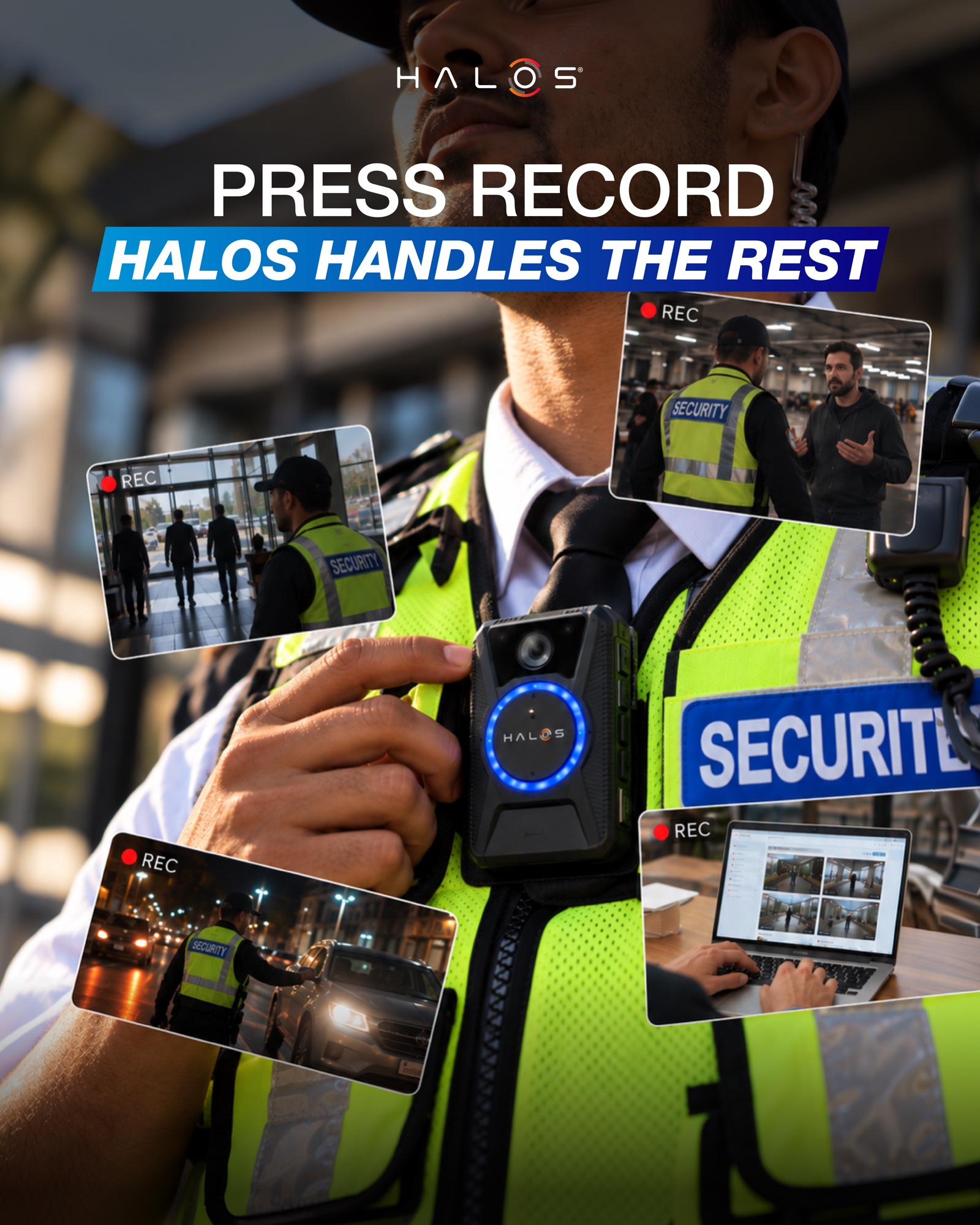 META · IMAGESince 19 Oct 2026
Active on Facebook, Instagram, Threads. When a client complains days after the shift, security firms on HALOS answer from the officer's footage, not from memory Tuesday morning, an email arrives from the client's site manager. "Your officer was heavy-handed with a member of the public in the car park on Friday night." The firm gathers what it has. An incident report, written up at the end of the shift from memory. Phone photos that turned up days later. A statement from a colleague on the same payroll. None of it carries much weight with a client who has already decided what happened on their site. And the officer was wearing a camera. That was supposed to settle it. The footage exists... somewhere. On a camera that never made it back to the dock. On an SD card in a drawer at the depot. Without that clip, a fortnight of politics follows. Meetings, a careful email chain, an officer quietly moved off the site. Then contract review comes round, and the difference between "the officer handled it correctly" and "we paid it anyway" turns out to be one missing clip. There is a way to answer Tuesday's email with the clip itself, without anyone chasing an upload. HALOS is built around the part of security work that happens after the incident. The officer presses record. HALOS handles the rest. When the camera comes back in range, the footage uploads itself. No docking station, no SD cards, nobody having to remember at the end of a shift. The footage is encrypted on the camera, so it can't be tampered with or deleted on the device. It lands in the HALOS Vault, one incident, one case file. Search by site, officer, time or incident type, and the clip is there in seconds. Smart Redaction blurs the faces of everyone who walked past. The clip then goes to the client, the insurer or their legal team by encrypted link, and the original stays in the Vault. Encryption is table stakes. Answering for the footage is the harder part: who has seen it, who it went to, whether anyone touched it. Every view, share and download is written into the audit history, so that answer is already on file. Nobody switches because of the camera. What firms lack is a quick way to find one clip, a safe way to send it, and a bill that behaves itself. HALOS puts the cameras, the Vault, storage, support and updates under one monthly subscription, with all hardware pre-configured. No storage tiers. No feature fees. No add-ons that expand after rollout. HALOS is in daily use across private security, retail, healthcare and transport, in the UK and Ireland. Michael Meeks, Owner of Divergent Security Solutions: "With HALOS, we feel like we're one team. Their technology is a standard part of our operations, protecting our officers, our customers, and our business." Next time that email lands on a Tuesday morning, your team searches the site and the time, and the reply goes back with the clip. The client watches what happened in their car park on Friday night: a man shouting, and an officer who kept his distance. Most of the time, that settles it. The officer stays on the site, knowing the record backs him. And when the contract comes up for renewal, you're putting evidence in the bid, not a promise. See HALOS in action: a walkthrough on the live platform, set up around the way you run shifts. Pricing comes in plain numbers, up front. Bring the questions your client asked at the last contract review, and compare the answers with what you're running now. So if you're done answering complaints from memory and a colleague's statement... tap below to book your walkthrough of the live platform. https://halosbodycams.com/private-security-uk?utm_medium=cpc-k5
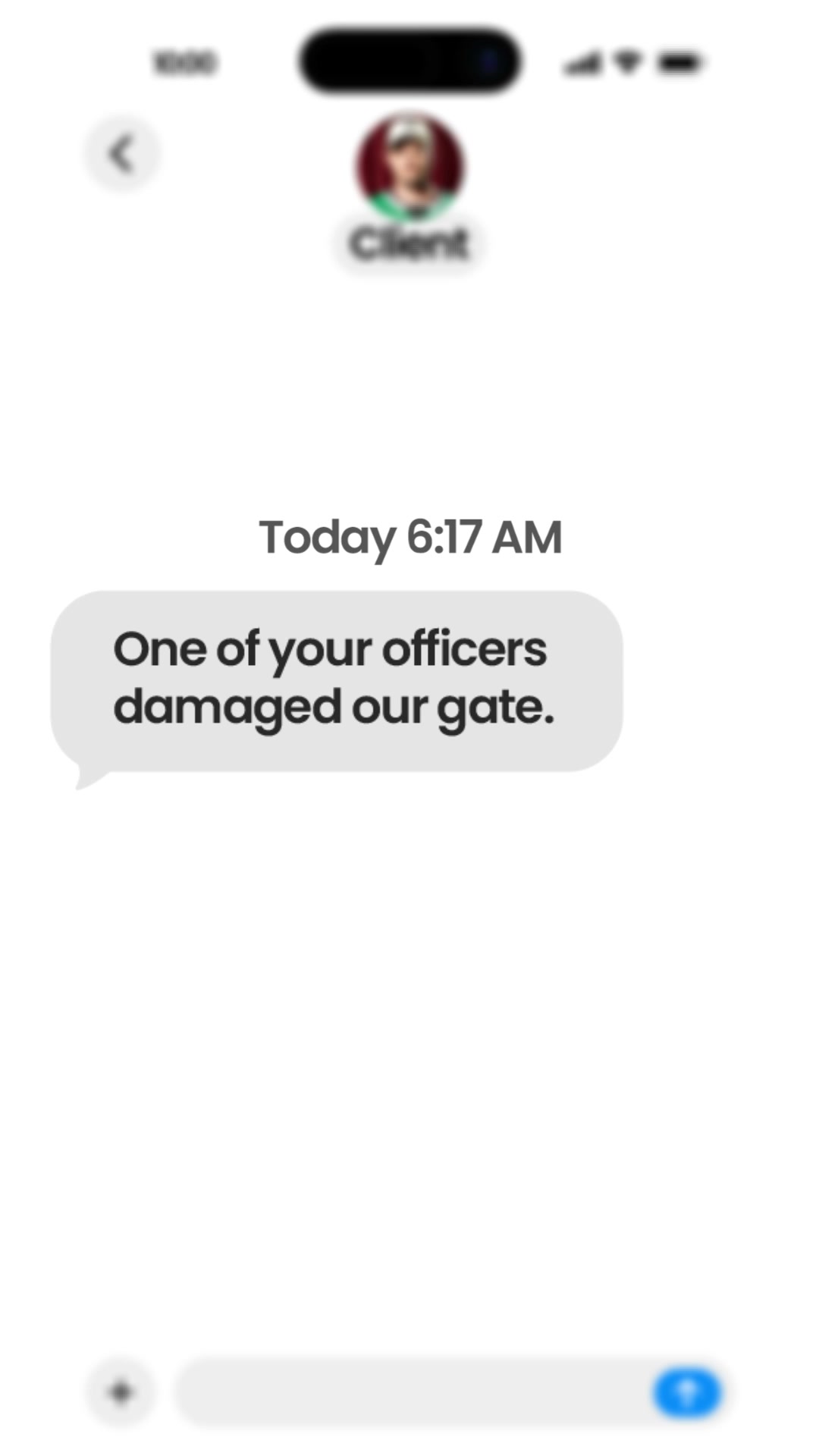 Video previewMETA · VIDEOSince 13 Oct 2026
Active on Facebook, Instagram, Messenger, Threads. How security firms go from paying damage claims on a guess to showing the property as their officer found it, with a search by shift instead of arguing over reports. When nobody can show what the post looked like, a damage claim gets decided by whoever sends the invoice. The shift itself never gets a say. The email lands on a Thursday, with a repair invoice attached. The client's property manager says the back gate was damaged on Tuesday night, during the overnight shift. The officer who worked that post says he never touched it. His shift report agrees with him. All secure. Nothing to note. To the client, that report is the officer marking his own homework. And nobody can say whether the gate was already like that when he got there (least of all the property manager, who wasn't there either). So the owner does the maths... The contract is worth far more than one repair bill. The invoice gets paid. To keep the client sweet. And that's where the real bill starts. The officer hears about it by Friday. He said he didn't do it, and the company paid anyway. To him, it sounds like his word wasn't worth defending. Somewhere in the client's file, his name now sits beside a gate he may never have touched. An owner can't stand at every post on every shift. And every night shift that ends without a record is another Thursday email waiting to happen. Paying keeps the client calm. Pushing back with nothing to show leaves the officer's word against the property manager's memory. Slowly, the company that was hired to protect the property becomes the company that pays for it. What's missing every time is a picture of the post from before anyone touched it. That missing picture is the reason HALOS Vault exists. The Vault is where the footage from an officer's camera lands and stays, ready to be found again. It already takes in 35,000 uploads a day, a new piece of footage secured every 2.5 seconds. Divergent Security is one of the security firms that use HALOS. "With HALOS, we feel like we're one team. Their technology is a standard part of our operations, protecting our officers, our customers, and our business." (Michael Meeks, Owner, Divergent Security) The officer wears a HALOS camera on shift. When the camera is back in range, the footage uploads itself, with no dock to find and nothing to download at the end of a long night. The footage is encrypted on the camera, so it can't be tampered with or deleted on the device. In transit and at rest, the footage carries AES-256 encryption. It's also backed up across multiple locations. Then the claim turns up days later, the way claims do... By then, the footage from his shift has been sitting in the Vault for days. The office searches by shift, location or incident, and his shift comes up in seconds. Here's the gate when he arrived, before he touched a thing. His report was written from memory at the end of the night, by the one person the claim is about. A shift report is the officer's account of the gate. The footage is the gate. One secure link sends it to the client, and the original stays in the Vault. Every view, share and download is logged, so a full audit trail sits behind that link. What the client decides after that is the client's call. The difference is they decide with the gate on screen. The usual worry about putting cameras on officers is a fair one. One day, the footage might show the officer really did it. If it does, the owner knows that too, and handles it properly, with the facts in hand. A camera will never stop a damage claim from arriving. It just means the footage from his shift is there to check when one does. So the next Thursday email lands differently. Before lunch, the office has pulled up the overnight shift, found the back gate and sent one link. The officer hears about it too. This time, what he hears is that someone went and looked. And the owner can see a post without having stood on it. The next step is a short demo of the HALOS Vault. Every claim you pay on a guess costs more than the invoice. Part of it comes out of your officer's trust. If your officers work client sites, book the demo before the next invoice arrives. https://halosbodycams.com/private-security-uk?utm_medium=cpc-k5
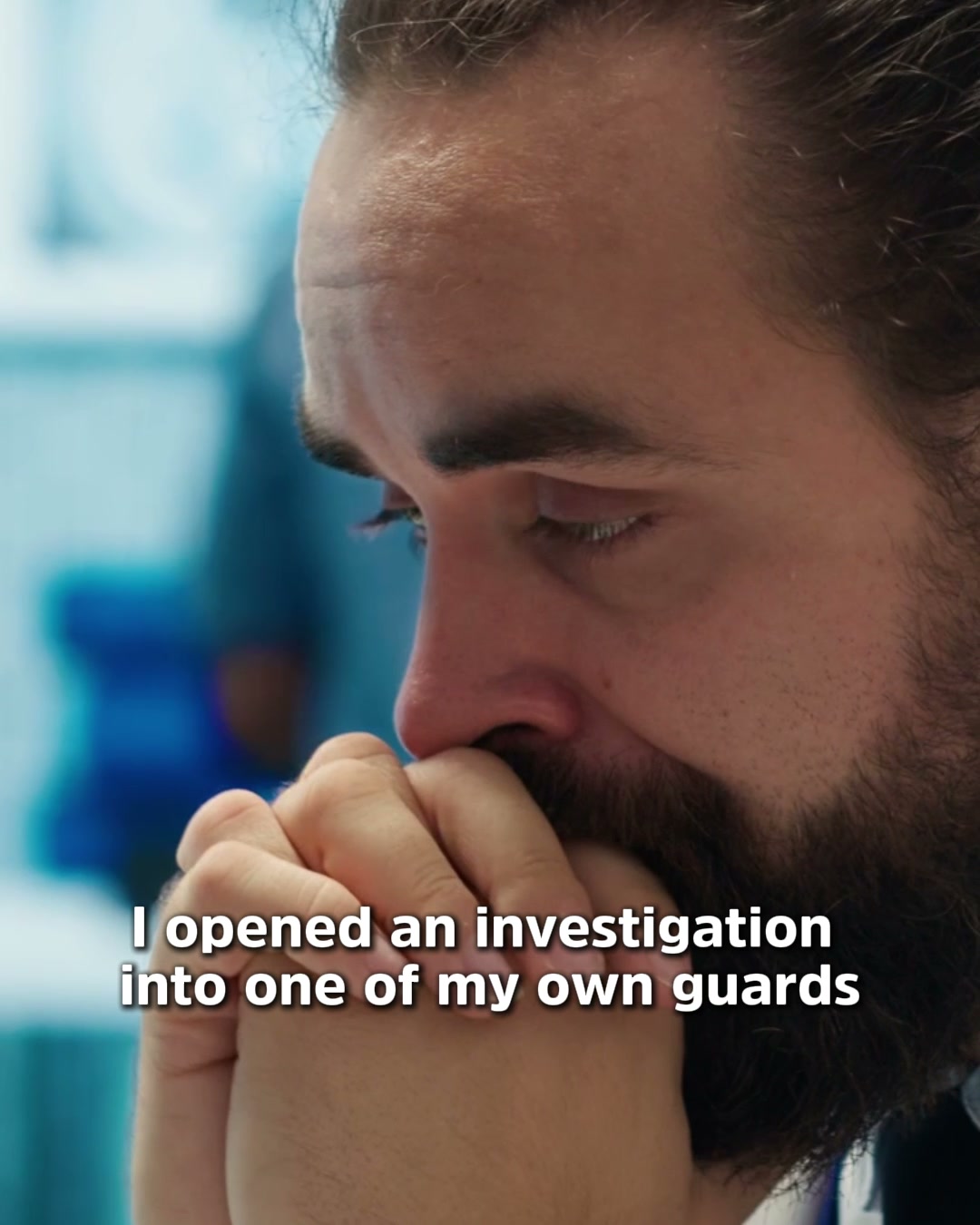 Video previewMETA · VIDEOSince 24 Sept 2026
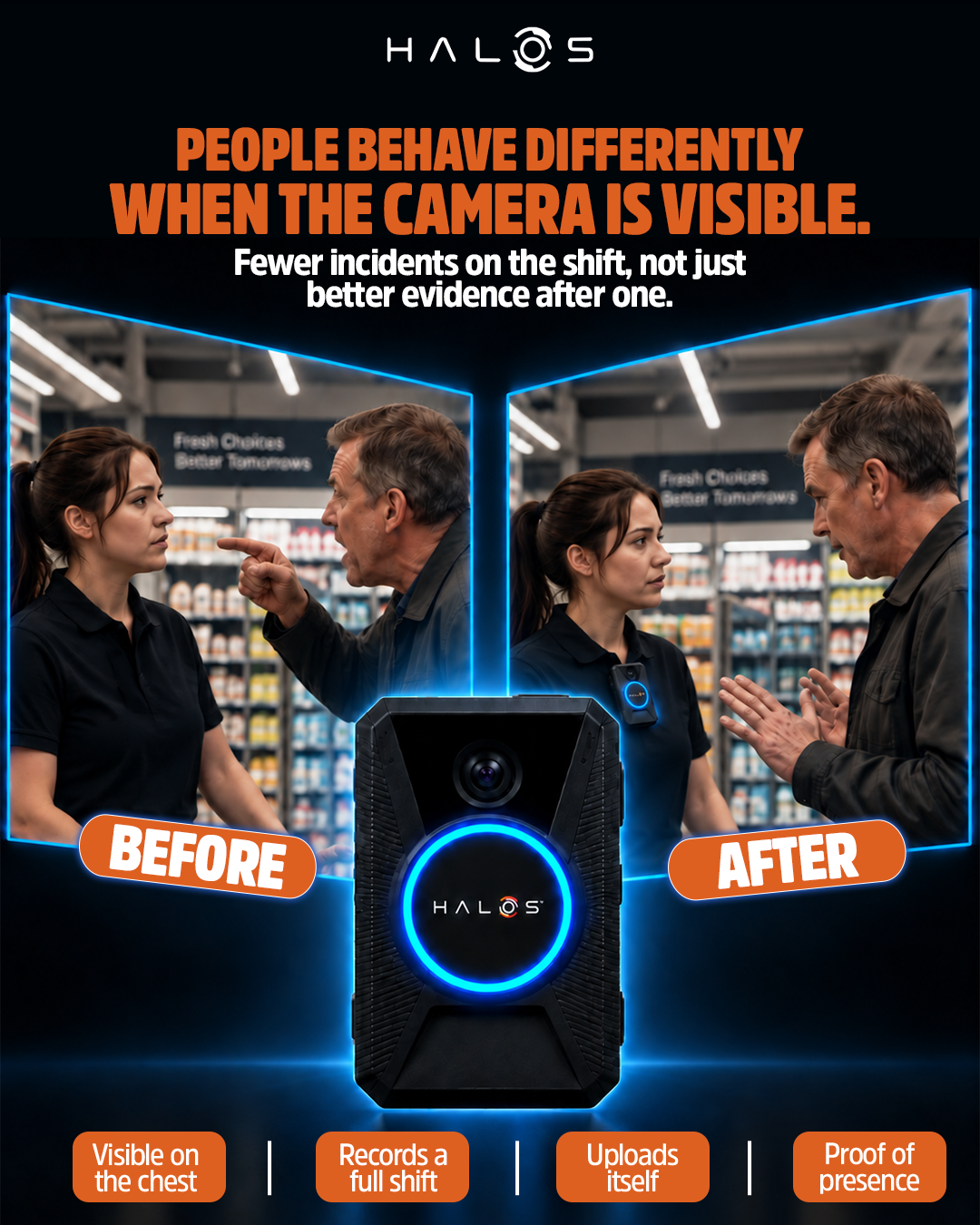
Active on Facebook, Instagram, Messenger, Threads. How security company managers go from investigating their own guard to footage that answers the complaint, without a paper report or a hunch deciding who's right. Last month, the owner of a security company opened an investigation into one of his own guards. A complaint had come in, and there was nothing to check it against. So the owner did it by the book. The guard gave a statement, and the owner ran the review. And the whole time, some part of the owner wondered whether his guard had actually done it... By the book is supposed to be the fair way to handle it. The guard's statement went into the file, beside the paper report from that shift and the complaint itself. Every page in that file was one person's account. And there's another way this goes, where nobody has to wonder. In that investigation, the accuser's word and the guard's word weighed exactly the same. So an invented complaint costs what a real one costs. Down to the statement and the review. Not everyone is as honest as they say they are. The paper report can't break the tie (it's one person's memory, written after the fact, set against another person's). The owner went back through the statement and the report, and nothing in either one could show what happened on that shift. Before that first file ever leaves the desk, a new complaint comes in from a different site, about a different guard, and the owner opens a second one. Each time, the guard may have done the job right, and there's still no way to show it. That loop is what wears a manager down. The same question comes back with every file. Why is there never anything to check the complaint against? Left alone, the pattern hardens. Every dispute turns into a he-said, she-said claim, and the claim gets settled on testimony because testimony is all anyone has. Good guards start to wonder whether the company will stand behind them. And the owner starts looking at his own people the way the complaint does. That suspicion has a source, and it's a gap in the record: a complaint arrives, and nothing from the shift exists to hold it against. HALOS closes that gap, and it's trusted where the truth matters most. Private security, retail, healthcare, transportation and field services teams run it across the US, UK and Ireland. With HALOS in place, the guards wear a HALOS body camera, and every shift is recorded. The moment an incident ends, the footage lands in HALOS Vault on its own, with no dock and no download. HALOS Vault secures 35,000 uploads a day (a new piece of footage every 2.5 seconds). So the evidence exists before the complaint does. The footage is time-stamped to the shift. It shows the guard was at the location. Think about what that alone would have done to the file in that first investigation. And on the device, the footage can't be deleted or altered. The camera records the shift, and HALOS Vault is the part that answers the complaint. When the next complaint comes in, the review starts somewhere else. HALOS Vault pulls the clip by shift, location or incident (whichever the complaint names), and it's found in seconds. The statement still gets taken, with the footage beside it. The same search works across every site, so an owner with guards in several places can check a shift at any of them. When footage has to be shared, HALOS Vault sends it by one secure link while the company keeps the original. Every view, share and download is logged, and the Vault runs under ISO 27001:2022 certification, GDPR compliance and AES-256 encryption. Storage has no tiers. It all runs on one all-inclusive subscription, with zero IT overhead. Paper reports were never going to close this gap, because a written narrative is exactly what the other side can argue with. Consumer-grade Amazon cameras leave the footage on an SD card, where it can be lost or hidden before anyone reviews it. Some owners worry that recording every shift will surface problems they can't afford, or footage that shows a guard at a bad moment. It will show that. The footage shows what happened, whichever way it went. Guards at several organizations didn't wait for management to issue the cameras. They asked for them. A problem on camera gets dealt with and closed, where a suspicion with nothing behind it just sits in the file. Once every shift is recorded, an invented complaint has to get past the footage first. A he-said, she-said finally gets a third account, and it's the one with a timestamp. Organizations that documented every frontline interaction on camera watched their frivolous claims collapse, immediately rather than gradually. CounterForce Solutions, a Las Vegas security company protecting convenience stores, put HALOS to work and saw fewer false accusations, with a safer job for guards and clients. One HALOS customer put it plainly: "Seeing incidents live and reviewing footage removes uncertainty." Cameras will never stop a member of the public from filing an exaggerated complaint. What the camera does is make every interaction verifiable. No owner signs up to be the person who suspects his own guards. For the owner in that investigation, once every shift was recorded, the invented complaints stopped working. And the owner doesn't have to wonder about his own people anymore. Most complaints are real. Dealing with them is the job. Real complaints still get handled properly. If you run guards across more than one site, you know what that investigation feels like. With HALOS Vault in place, the footage is already waiting before the complaint reaches your desk. Without the footage, the next complaint arrives the way the last one did, with a statement, a paper report and nothing to check them against. See how HALOS Vault works across your sites in a 15-minute demo. https://halosbodycams.com/private-security?utm_medium=cpc-k5
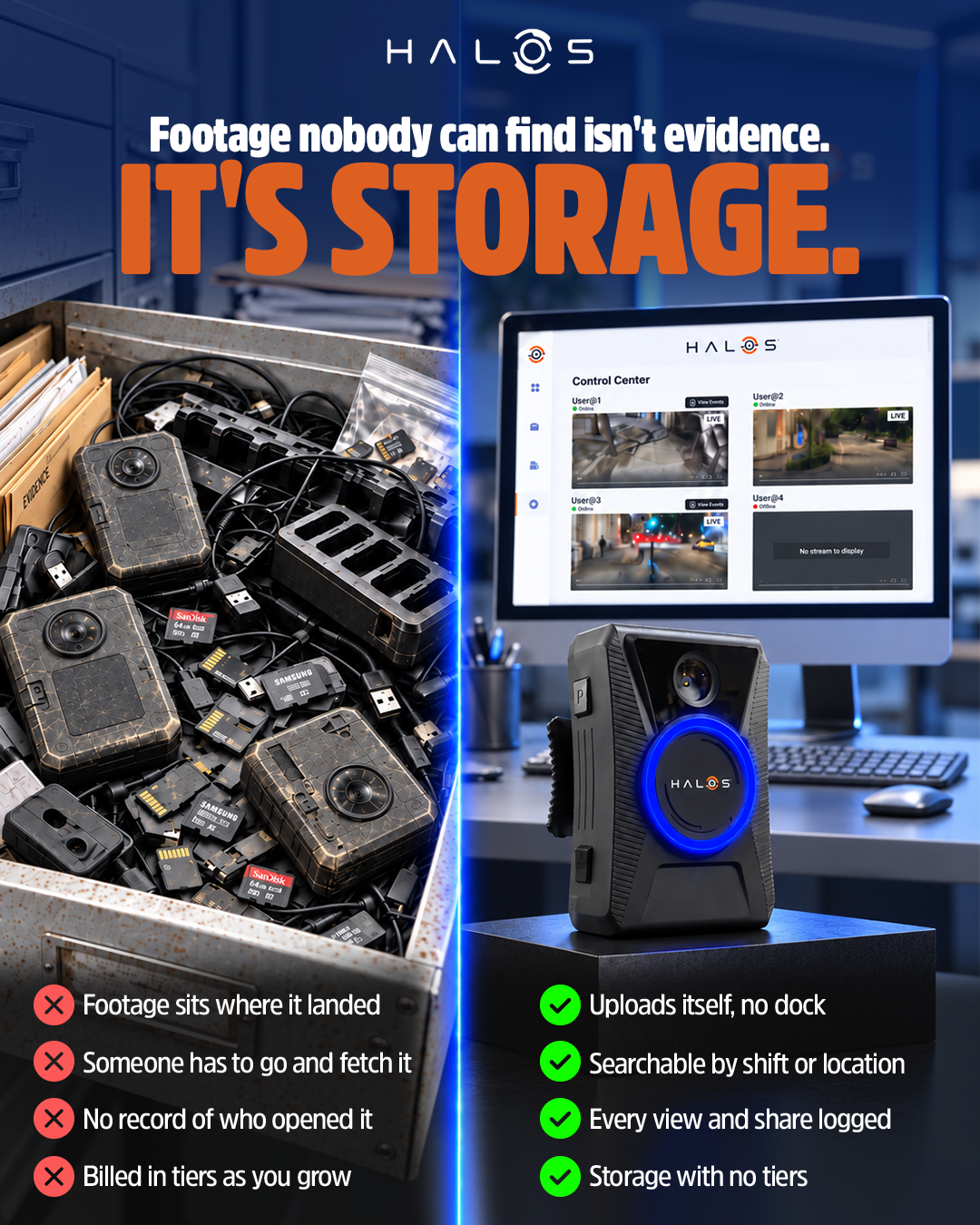 META · IMAGESince 24 Sept 2026
Active on Facebook, Instagram, Threads. Operations leaders running frontline teams do NOT need more storage, which never broke, just the clip in hand while the conversation is still open: HALOS Vault puts it there. Most body camera programs don't fail... They quietly stop being worth the admin. Cards get swapped at the end of a shift, when somebody remembers. Files get exported by the only person who knew the software (and when that person's off, everyone waits). Then a client asks for "the clip from Tuesday," and the camera that recorded it is still in a truck across town. The program's paid for, yet the honest answer is "we're still pulling it." That's when the program starts to feel like a box ticked at renewal instead of protection anyone can hold. And underneath sits a quieter suspicion... What got sold was a camera, and the system that makes it useful was never part of the deal. Eventually the cameras end up in a drawer. Nobody ever decided that. The fix isn't a bigger storage plan. Storage held the files... Getting the right one out is what broke. And the fix isn't training a second person on the export software, either. Because when a complaint lands, the clip that settles it is still on a card somewhere, and the conversation ends without it. Instead, the HALOS Vault was built around the part a program lives or dies on: getting the right clip out while it still matters. The Vault's work starts the moment an incident ends. That's when the HALOS camera begins uploading the footage on its own. No dock to find, no download to run. A camera that's out of range when the incident ends uploads once it's back. Nobody has to remember. And once the upload lands, the clip is searchable in the Vault, whether or not anyone knows yet that Tuesday matters. From there, a search by shift or location turns up the right clip in seconds. Sharing it takes one secure link, and the original stays with the operator. Every view, share and download is logged (which matters the day someone asks who else has seen it). When faces need blurring before a clip goes out, Intelligence redaction handles it inside the Vault. Now set that next to how the old program ran. Footage sat on a card until somebody went and got it, and nobody could say who'd opened a file. Meanwhile the storage bill climbed a tier each time the program grew. In the Vault, storage has no tiers. There are limits worth stating plainly. Cameras will never prevent a customer from tripping, or a member of the public from filing an exaggerated complaint. What a camera does is make every interaction verifiable. The Vault's job is to put that proof on the desk while it can still settle something. And that proof stays protected: it's encrypted on the camera, where it can't be tampered with or deleted, then encrypted in transit and at rest. An NHS trust credits HALOS with "supporting investigations." Next time a client asks for "the clip from Tuesday," the answer is a search by shift and location. A secure link goes back while the conversation is still open. Solid Security Services and Signal Arlington Heights already use the Vault. So the camera is the way in... The Vault is what an operator is actually buying. It turns the operator who used to say "we're still pulling it" into the one whose word has the footage behind it, in every room and with every client. Past the search, the Vault also gives an operator: * Backups across multiple locations, so no clip rests on a single copy * Intelligence transcription, so what was said on a clip is there to read * Live view for the moments that can't wait for an upload * A man-down alert for when someone on shift goes down Somebody's going to ask you for the next clip, whether or not anything changes. Left as it is, that request means another hunt through cards and exports, and a complaint that keeps getting bigger. With HALOS cameras feeding the Vault, your answer is a search away, and the complaint can close at your desk before it grows into a claim for your insurer. Book your 15-minute demo and take a look at the Vault. https://halosbodycams.com/footage-you-can-reach?utm_medium=cpc-k5
Show 14 more Meta ads
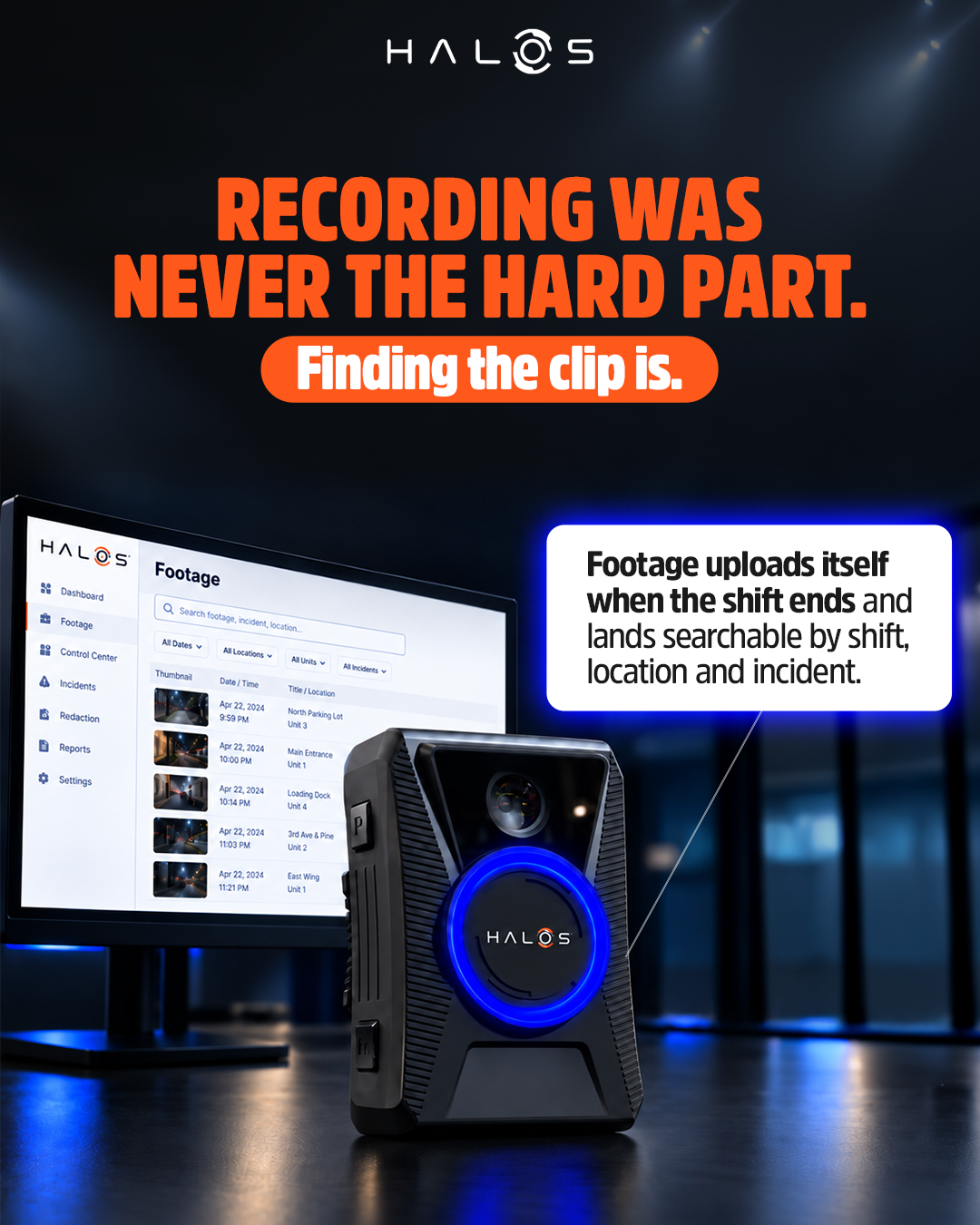 META · IMAGESince 24 Sept 2026
Active on Facebook, Instagram, Threads. Operations leaders running frontline teams do NOT need more storage, which never broke, just the clip in hand while the conversation is still open: HALOS Vault puts it there. Most body camera programs don't fail... They quietly stop being worth the admin. Cards get swapped at the end of a shift, when somebody remembers. Files get exported by the only person who knew the software (and when that person's off, everyone waits). Then a client asks for "the clip from Tuesday," and the camera that recorded it is still in a truck across town. The program's paid for, yet the honest answer is "we're still pulling it." That's when the program starts to feel like a box ticked at renewal instead of protection anyone can hold. And underneath sits a quieter suspicion... What got sold was a camera, and the system that makes it useful was never part of the deal. Eventually the cameras end up in a drawer. Nobody ever decided that. The fix isn't a bigger storage plan. Storage held the files... Getting the right one out is what broke. And the fix isn't training a second person on the export software, either. Because when a complaint lands, the clip that settles it is still on a card somewhere, and the conversation ends without it. Instead, the HALOS Vault was built around the part a program lives or dies on: getting the right clip out while it still matters. The Vault's work starts the moment an incident ends. That's when the HALOS camera begins uploading the footage on its own. No dock to find, no download to run. A camera that's out of range when the incident ends uploads once it's back. Nobody has to remember. And once the upload lands, the clip is searchable in the Vault, whether or not anyone knows yet that Tuesday matters. From there, a search by shift or location turns up the right clip in seconds. Sharing it takes one secure link, and the original stays with the operator. Every view, share and download is logged (which matters the day someone asks who else has seen it). When faces need blurring before a clip goes out, Intelligence redaction handles it inside the Vault. Now set that next to how the old program ran. Footage sat on a card until somebody went and got it, and nobody could say who'd opened a file. Meanwhile the storage bill climbed a tier each time the program grew. In the Vault, storage has no tiers. There are limits worth stating plainly. Cameras will never prevent a customer from tripping, or a member of the public from filing an exaggerated complaint. What a camera does is make every interaction verifiable. The Vault's job is to put that proof on the desk while it can still settle something. And that proof stays protected: it's encrypted on the camera, where it can't be tampered with or deleted, then encrypted in transit and at rest. An NHS trust credits HALOS with "supporting investigations." Next time a client asks for "the clip from Tuesday," the answer is a search by shift and location. A secure link goes back while the conversation is still open. Solid Security Services and Signal Arlington Heights already use the Vault. So the camera is the way in... The Vault is what an operator is actually buying. It turns the operator who used to say "we're still pulling it" into the one whose word has the footage behind it, in every room and with every client. Past the search, the Vault also gives an operator: * Backups across multiple locations, so no clip rests on a single copy * Intelligence transcription, so what was said on a clip is there to read * Live view for the moments that can't wait for an upload * A man-down alert for when someone on shift goes down Somebody's going to ask you for the next clip, whether or not anything changes. Left as it is, that request means another hunt through cards and exports, and a complaint that keeps getting bigger. With HALOS cameras feeding the Vault, your answer is a search away, and the complaint can close at your desk before it grows into a claim for your insurer. Book your 15-minute demo and take a look at the Vault. https://halosbodycams.com/footage-you-can-reach?utm_medium=cpc-k5
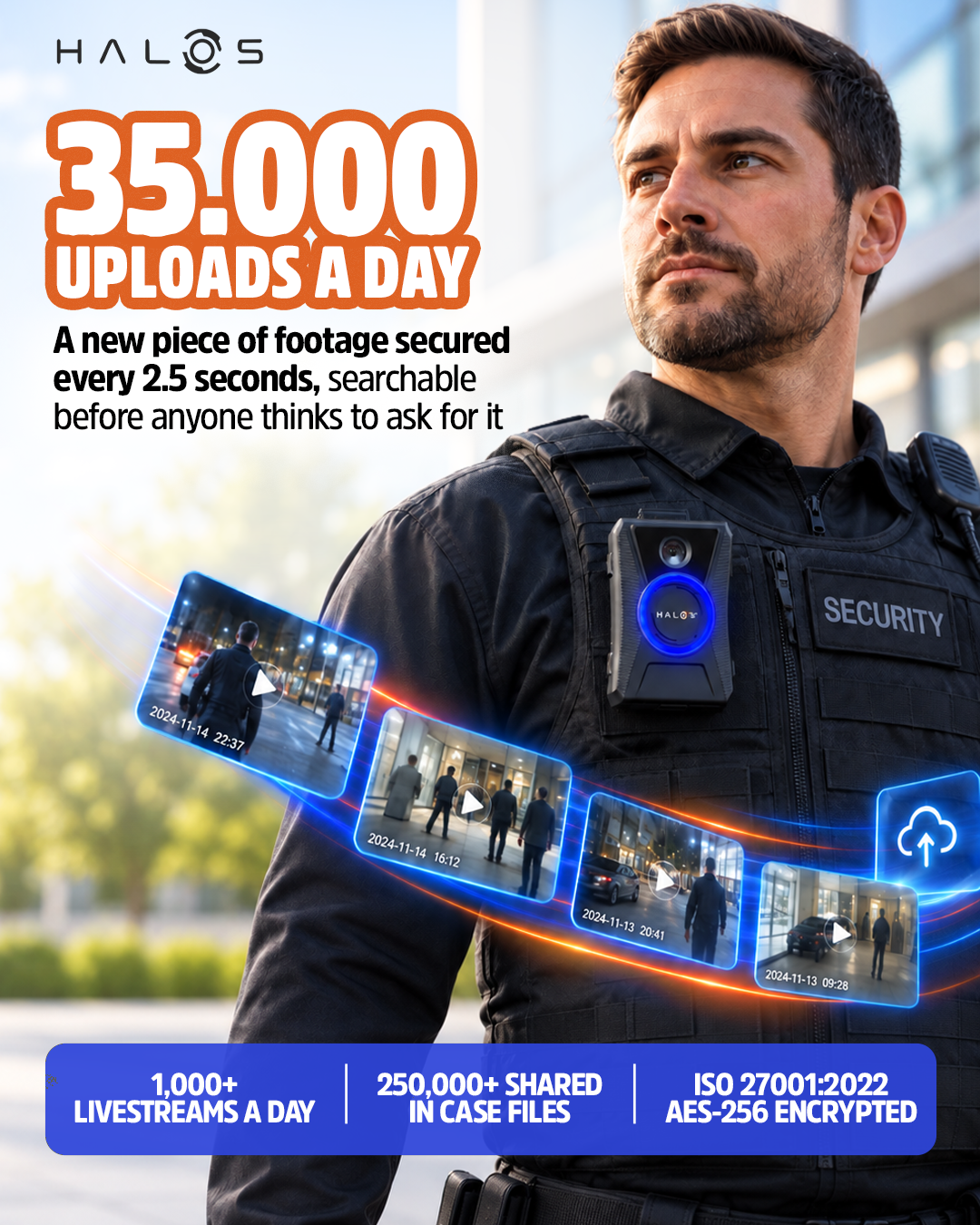 META · IMAGESince 24 Sept 2026
Active on Facebook, Instagram, Threads. Most operations leaders do NOT realize their frontline footage can't settle a complaint while it's still open if this retrieval gap is ignored. Body camera programs don't usually fail. They quietly stop being worth the admin... errand by errand. A client calls about Tuesday. Something happened on site, and everyone involved remembers it a little differently. The footage exists. It's on a camera that went home in someone's truck at the end of the shift. Nobody sees a frame of it until that camera is back on a dock and the download finishes. So the client waits... then stops waiting, and the complaint turns into a claim with the insurer. And that's only Tuesday. Over a few months, the small stuff compounds. Cards go missing between shifts. Exporting a single "quick" clip eats somebody's afternoon. The storage bill keeps climbing while the cameras get used less and less. Eventually they end up in a drawer. Nobody ever decided that. It happened by default. At renewal, the whole thing gets canceled. The money stings, but it's the smaller cost. Every complaint that sits unanswered makes the program feel more like a box somebody ticked than protection anybody holds. And underneath that sits a quieter suspicion... that the money bought a camera, and the thing the operation needed never came in the box. That a sharper operator would have spotted it on the first sales call. The HALOS Vault starts from a pattern those programs share. Every camera recorded fine. The trouble started after the recording stopped... with the footage still sitting on the device, waiting on a person. So the Vault is built around the second a recording stops. Recording stops, and the upload starts. No dock. No download. If a camera's out of range, the footage goes up as soon as it's back, so nothing depends on anybody remembering to plug anything in. The footage moving off the camera on its own is what makes the record exist BEFORE anyone asks for it. Once a clip lands, a search by shift, location or incident finds it in seconds. So when Tuesday comes up, the moment in question is on screen while the conversation's still open. Sharing it takes one secure link. The original stays in the Vault. Every view, share and download is logged, so each clip carries its own history. Before a clip goes out, Intelligence redaction can blur the faces that shouldn't be in it. On the last program, storage was the easy part. Retrieval was the problem. That drawer full of cards stored plenty. Nobody could get the right clip out of it while it still mattered. The Vault turns that around. The footage moves before anyone needs it, and the search does the fetching. Then there's the bill (the part that finally gets a program canceled). The old bill climbed every time the footage piled up. The Vault runs on storage with no tiers, so a growing library never has a next tier to climb into. Still, a fair question hangs over all of this. Didn't the last program prove cameras don't stop complaints? They were never going to. Cameras will never stop a customer from tripping, or a member of the public from filing an exaggerated complaint. What a camera does is make every interaction verifiable. And "verifiable" only counts if the clip turns up while the complaint is still open. An NHS trust calls HALOS "a really important tool for protecting staff, supporting investigations." The Vault's customers include Solid Security Services, Signal Arlington Heights, Caribbean Security Services and Indiana Recovery. A clip found while the complaint is still open is what lets that complaint close at the desk instead of through the insurer. When nobody has to chase footage, the hours it used to eat go back into running the operation. And something harder to measure changes too. The operations leader becomes the one whose word has the footage behind it. In every room, with every client. Which changes how a camera program should be judged. The camera is the way in. The Vault is the thing worth buying. Around the upload and the search, the rest of the system handles: * Intelligence transcription that turns what was said into text * Encryption on the camera, so footage can't be tampered with or deleted on the device * Backups across multiple locations, so the record never sits in one place * Live view and a man-down alert for the moments that can't wait The next time a client calls about Tuesday, you won't be chasing anything. You'll find the moment by shift and send the link while they're still on the phone. That's what it looks like to be the operator who always has the answer. Worst case, you've had a look at the Vault. Or you wait, and the next complaint sits on a camera in a truck again. Book a 15-minute demo of the HALOS Vault. https://halosbodycams.com/footage-you-can-reach?utm_medium=cpc-k5
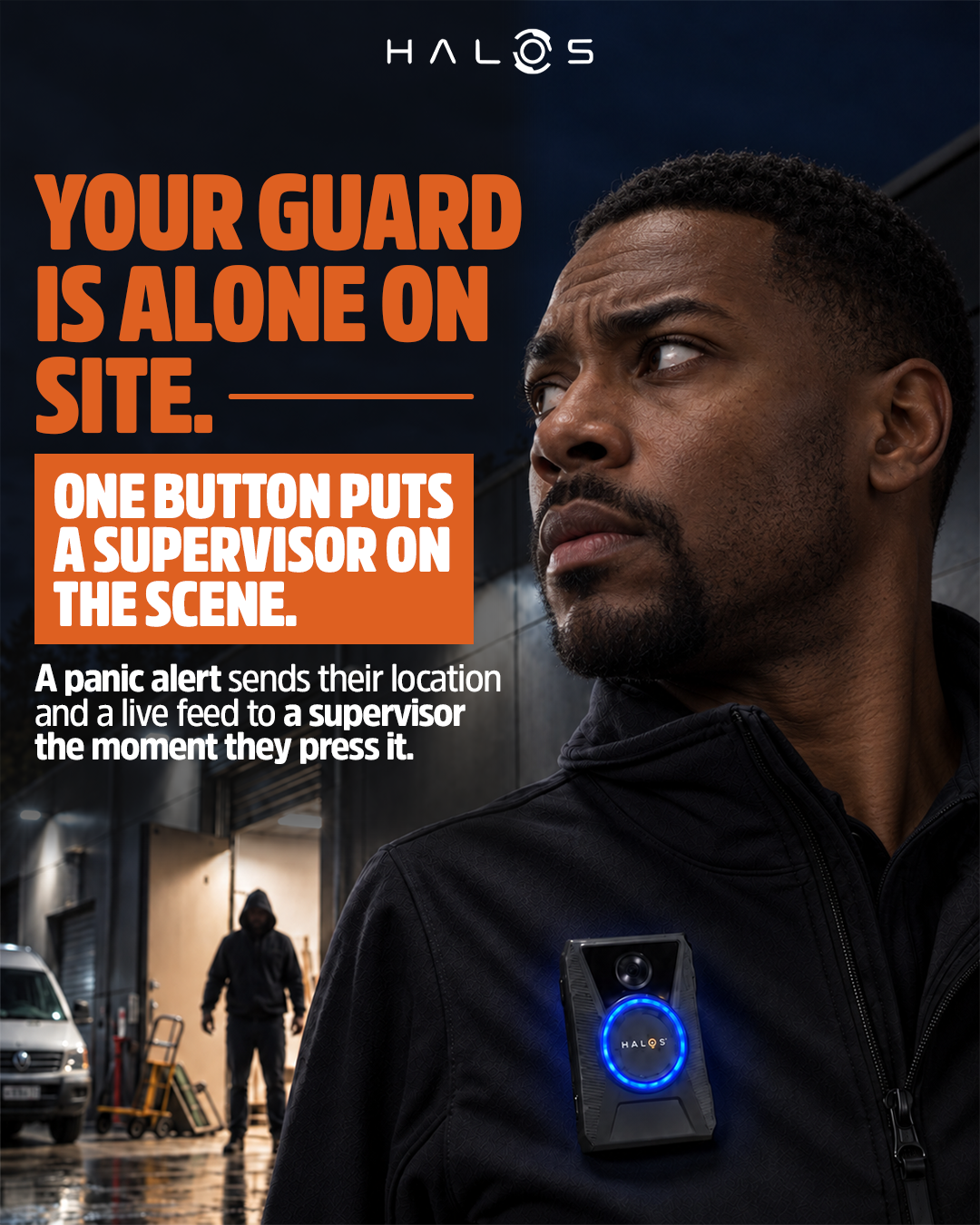 META · IMAGESince 24 Sept 2026
Active on Facebook, Instagram, Messenger, Threads. How security company owners go from always hiring to the one good guards stay with, by backing every guard on shift, without a docking station. Most security company owners think it's normal to keep hiring for the same post. When a good guard leaves, the fix is supposed to be more money. Over time, always hiring becomes what the company is known for... But the real reason guards leave rarely makes it into the resignation. It usually says pay, because pay is the reason people put in writing. The shifts worked ALONE don't make it in. Neither does the night something went wrong. Nobody at the company knew in time. So the owner reads it as a pay problem and puts a higher rate on the next posting. Then training starts over with somebody new, on the same post and the same walk-through. Until the new hire is ready, somebody pulls extra shifts to cover the post. The guards doing the covering start calling out, and the sick days climb. After enough rounds, the owner stops calling it turnover and starts calling it the cost of doing business. That cost spreads. The client stops learning names at the front desk. And the good guards in town hear which companies leave people alone on a post. Eventually the owner is recruiting for the same site again, from whoever is left. All of it starts in the part of a shift when a guard is on their own, and nobody at the company would know if something went wrong... That part of the shift is what HALOS built Horizon for. Solid Security Services and Caribbean Security Services already use HALOS. When a guard presses the panic alert, a supervisor is alerted and gets live view of what the guard is up against. So somebody at the company knows in time. The man-down alert doesn't wait for a press at all. If a guard goes down, it raises the alarm on its own. The moment an incident ends, the footage uploads itself to the HALOS Vault. If the camera is out of range, it uploads as soon as it's back. HALOS handles 35,000 uploads a day, a new piece of footage secured every 2.5 seconds. A guard who knows all of that walks into a bad moment already backed. A higher rate on the next posting never gave a guard that. Turnover also means a steady line of new hires, and each of them has to learn the gear. There's no dock, so a new hire has no docking routine to remember at the end of a shift. The storage comes with no tiers, which matters on guard-company margins. Then there's the hardware worry. New guards drop things, and a guard who quits might not hand the camera back. The camera is built for drops and rain. A camera that leaves with a guard who quits is still a cost, like any gear that doesn't come back. On the next hard night, the guard still handles it. This time, somebody else knows. That's the kind of night guards tell each other about, and it's how a company gets known for backing its people... A camera on a guard's chest is backup for the person wearing it. Guards who feel backed are more likely to stay, and good ones tell other good guards where that is. That's how an owner stops being the company that's always hiring and becomes the one good guards stay with. The next step is a 15-minute demo. It's a look at the HALOS Vault. Before you book it, think about the posts where your guards work alone tonight. Then ask who at your company would know in time if something went wrong on any of them. Those 15 minutes are a small ask next to another round of rehiring. Book your demo, and start building the company good guards stay with. https://halosbodycams.com/private-security?utm_medium=cpc-k5
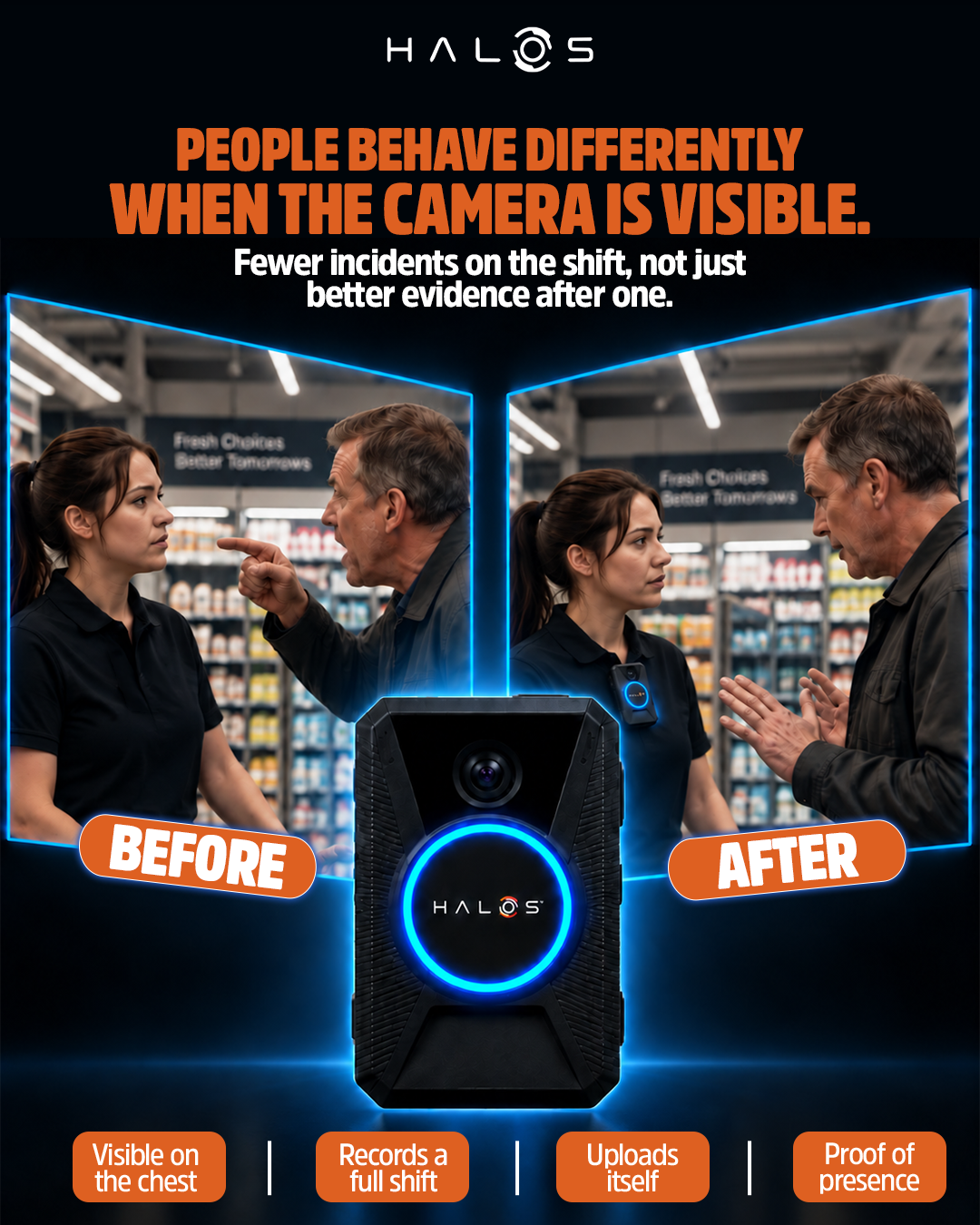 META · IMAGESince 24 Sept 2026
Active on Facebook, Instagram, Messenger, Threads. How a post goes from a new hire every few weeks to a guard who stays, with no docking to teach, because footage uploads the moment an incident ends. In private security, turnover gets treated like the weather. Guards come and go. The owner covers the gap and blames the pay. It feels normal, because every company in the industry lives with it. But the real reason a guard leaves rarely makes it into the resignation text... It's usually the steady one who goes. The guard who takes the overnight post (the one nobody else wants) and never calls out. One night, something happens on that post while the guard is alone, and nobody knows in time. The resignation text says personal reasons. It never mentions that night. Nobody asks. By the weekend, someone's covering the post on a double. Before long, the guard pulling those doubles starts calling out sick. The opening for the same site goes back up. With nothing else to go on, the office reads "personal reasons" as money. So the pay goes up a little. The same post opens again anyway. It turns into a constant train and re-train situation, with the good guards burning out first because they keep covering for the ones who left. If nothing changes, it spreads past one post... A client sees a new face at the desk every few weeks and starts asking questions. Then the renewal goes to the company across town. Over time, the company turns into the place good guards pass through on their way to somewhere better. So what actually keeps a guard on a post? Knowing somebody has their back on the shift. Security companies like Solid Security Services and Caribbean Security Services already run HALOS. What wears a guard down on a bad night is the stretch when nobody knows it's happening... That stretch is the part the resignation text leaves out. And once a guard has sat through one, every overnight after it gets harder to face. HALOS is built to close that stretch, and the camera is only the entry point. It rides visible on the chest and records a full shift on one charge. When a guard presses the panic alert, a supervisor gets the alert and can open live view from that camera in the HALOS Vault. If the guard goes down and can't reach the button, the Vault's man-down alert goes out on its own. That's the backup. The footage uploads itself the moment an incident ends. Every day, the Vault takes in 35,000 uploads, a new piece of footage secured every 2.5 seconds. A raise pays a guard to sit through the next bad night alone. HALOS gets a supervisor the alert while it's still happening. On a post that turns over, a new guard has no dock to learn and no upload to remember. And for a company that can't absorb much more per officer, storage comes with no tiers. The fair worry is a camera that gets broken or lost in all that turnover. That still happens, and it costs money when it does. Footage on the camera is encrypted and can't be tampered with or deleted there, and it uploads itself once the camera is back in range. The Vault backs it up across multiple locations. An NHS trust says HALOS has become "a really important tool for protecting staff." With a supervisor on the other end of the alert, a guard walks into the overnight with more confidence. The guard on the overnight post still works it alone. A bad night there no longer has to turn into the next resignation text. Owners usually buy a camera for the company's sake. The guard wearing it reads it as backup, and as a sign the person on that post is worth protecting. That's what lets a guard take pride in the post. People stay where they're backed. The next step is a 15-minute demo of the HALOS Vault, where the footage from every camera lands. Beyond the alerts, the Vault gives the office: * One secure link to share a clip, while the company keeps the original * A full audit trail, with every view, share and download logged * Intelligence that blurs faces and writes transcripts on its own * Search by shift or incident that finds any clip in seconds Every guard you keep is an opening you don't have to post and a double nobody else has to pull. If it's the wrong fit for your sites, you've spent 15 minutes finding out. Book your 15-minute demo while the guard who never calls out is still on the schedule. The next resignation text won't say why either. https://halosbodycams.com/private-security?utm_medium=cpc-k5
 Video previewMETA · VIDEOSince 24 Sept 2026
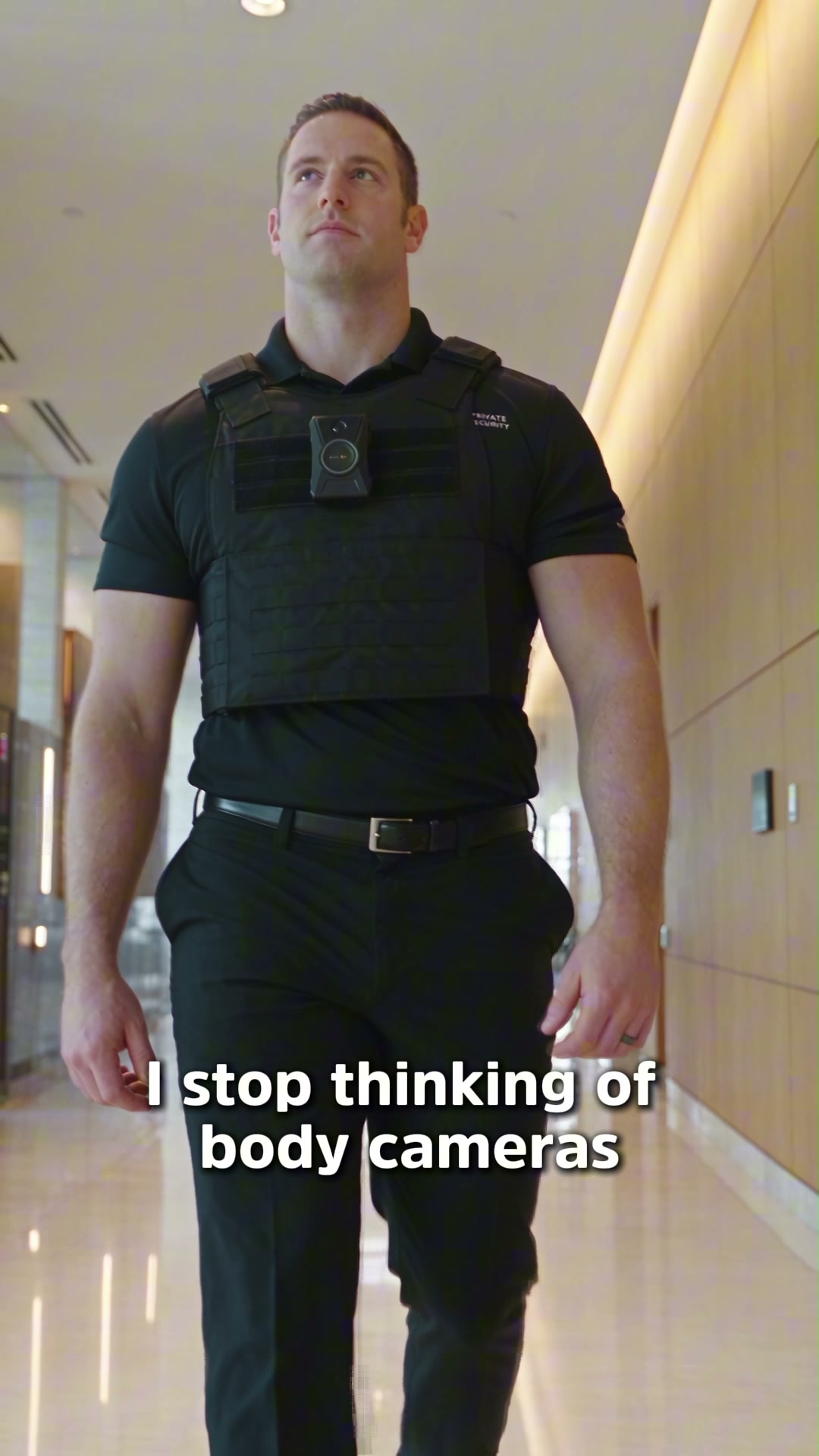
Active on Facebook, Instagram, Messenger, Threads. How security company managers go from investigating their own guard off a paper report to closing the file on one clip, once every shift is recorded. The complaint was invented. The owner still had to treat his guard like it wasn't. In private security, that's treated as normal. A complaint lands, a guard gets investigated, and everyone waits for the report to settle it. Accepting that is the mistake, because the evidence that settles a complaint like this can exist before the complaint does. The owner opened an investigation into his own guard, by the book. There was the guard's statement, and the handwritten report (with nothing to check either one against). And the whole time, part of the owner wondered whether the guard had done it... In an investigation, the accuser's word and the guard's word weigh exactly the same. And not every accuser is as honest as they say they are. So an invented complaint costs what a real one costs. The same hours of statements and reviews. The same doubt, sitting across the desk from a guard who did the job right and can't show it. Then it happens again, at a different site, with a different guard, and the file reads just like the last one. The guard notices being doubted. The owner notices the guard noticing. Run that loop long enough and the owner starts suspecting the people he trusts most. And on paper, a he-said-she-said is what turns a winnable case into a costly settlement. Why does it keep ending the same way? Because the one thing that could show what happened was never recorded. So the owner put a HALOS body camera on every guard, and now every shift is recorded. HALOS already handles 35,000 uploads a day, a new piece of footage secured every 2.5 seconds. The moment an incident ends, the footage lands in HALOS Vault on its own. No dock. No download. Which means the evidence exists before the complaint does. Each clip is time stamped to the shift and shows the guard was at the location. It can't be deleted or altered on the device, and the Vault keeps the original. When a complaint comes in, the clip is found by searching the shift, location or incident. It takes seconds. Whichever site the complaint came from, the owner isn't left guessing what happened there. East & North Herts NHS Trust calls HALOS a really important tool for "supporting investigations, and giving teams confidence that incidents are being accurately captured." A handwritten report is one person's account of what happened. With no footage behind it, it weighs no more than the accuser's word. Consumer-grade Amazon cameras keep footage on an SD card until someone pulls it and hands it in. HALOS is deployed across private security, retail, healthcare, transportation and field services, in the US, UK and Ireland. The owner had a fair worry about all this. Record every shift, and the footage might turn up problems the company can't afford to fix. It might even be used against the company. Both can happen. That's what a record is for. Cameras will never prevent a member of the public from filing an exaggerated complaint. What the camera does is make every interaction verifiable. When a guard gets it wrong, the owner learns it from his own footage and deals with it. That footage stays protected, on a platform that's ISO 27001:2022 certified, with AES-256 encryption in transit and at rest. When a clip is shared, it goes by one secure link, and every view, share and download is logged. Once every shift is recorded, an invented complaint has to get past a clip time stamped to the shift and the location. Organizations that documented every frontline interaction on camera saw their frivolous claims collapse. Not gradually. Immediately. CounterForce Solutions is a Las Vegas security company protecting convenience stores. With HALOS, it lessened the damage from false accusations and built a safer place to work for guards and clients. Most complaints are real. They get dealt with because that's the job, and with HALOS in place, real complaints still get handled properly. The invented ones stopped working. Now when a complaint comes in from any of his sites, the owner watches the recorded shift and sees what his guard did. Guards at several organizations didn't wait for management to issue the cameras. They requested them. And the owner doesn't have to wonder about his own people anymore. The camera is the way in. HALOS Vault is what the subscription buys: - Footage from every site in one place, so no incident has to rest on a handwritten account alone - Search by shift, location or incident, so a complaint gets checked against what the camera saw - One secure link and a full log for every share, so the original stays with the company - Storage with no tiers and no IT overhead, on one all-inclusive subscription Until every shift is recorded, the next invented complaint gets weighed against a paper report, the same way the last one did. If your guards have been doubted over complaints nobody could check, it's worth seeing what a recorded shift changes. Schedule a 15-minute demo and see how HALOS works across your sites. https://halosbodycams.com/private-security?utm_medium=cpc-k5
 Video previewMETA · VIDEOSince 24 Sept 2026
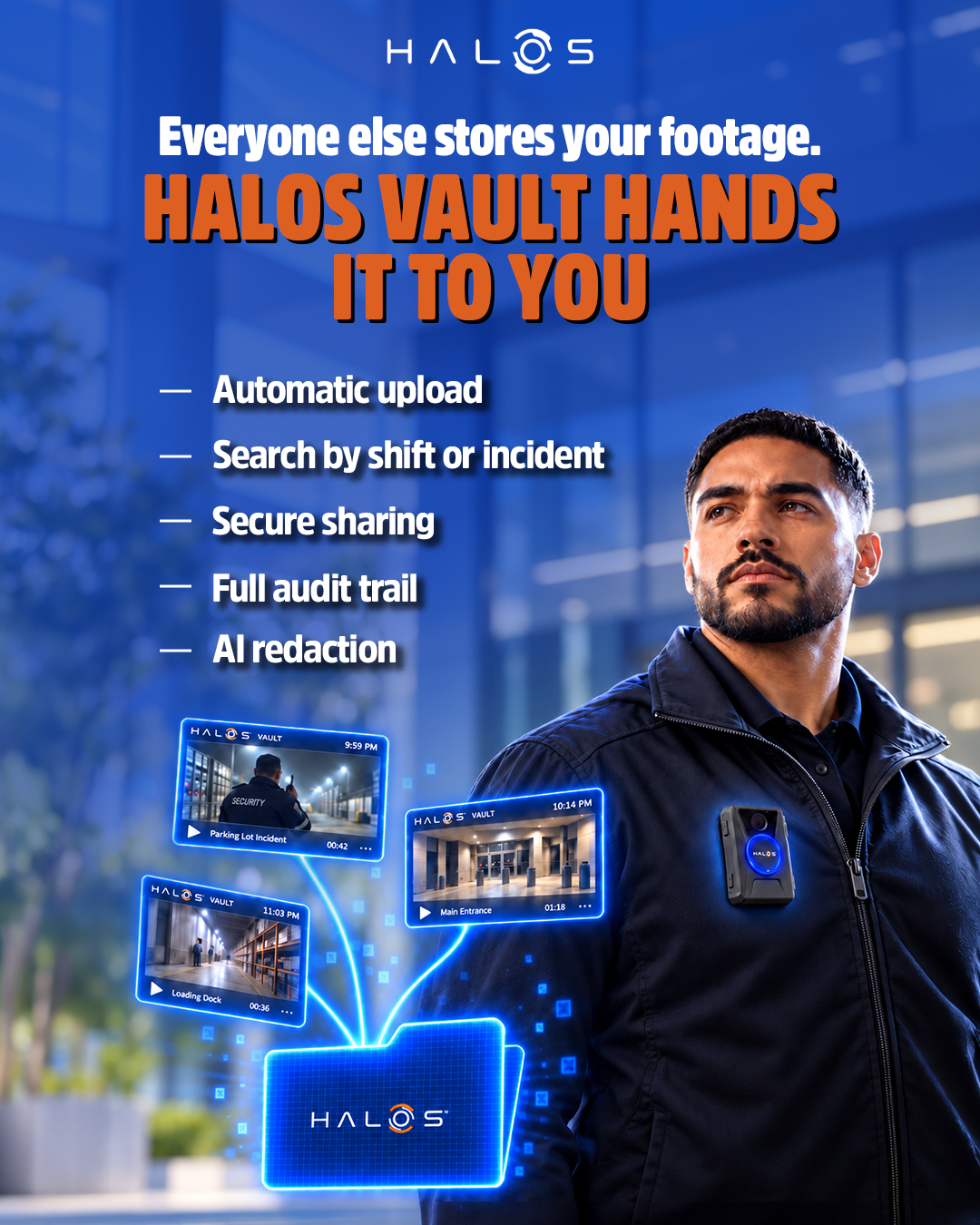
Active on Facebook, Instagram, Threads. HALOS Vault is how security company owners who came second with no explanation show the record, not a promise, now that procurement scores accountability like staffing ratios. Second place on a security contract usually arrives as a short email, with no scoresheet attached. Same rates as the firm that won. Same guards on the posts. And nobody on the buying side will say why. Months later, somebody finally shows the owner the scoresheet. It came down to one section, documentation and accountability. A couple of years ago, most RFPs didn't have that section. Now procurement scores it the way it scores staffing ratios. Every firm on that bid said it was accountable. Only one could show it. A consumer-grade Amazon camera doesn't give a firm that record. Its footage lives on an SD card, and SD cards go missing the week the footage matters. Nor does a cloud plan that charges for uploads and downloads, then adds overages nobody saw coming (until storage costs more than the cameras did). Plenty of camera programs end right there, dropped for cost... Because without a record, a smaller firm bids against bigger providers that bundle technology into their guarding, with nothing to put beside it. And for years, a lot of contracts went to the lowest bidder anyway. That's a hard spot for an owner who set out to be the exception in a business known for mediocrity. A promise of accountability sounds like everyone else's. Instead, HALOS built the Vault to carry the record into the bid. Divergent Security Solutions, a Texas security company, holds contracts that include Dairy Queen, SXSW and schools. It grew with HALOS providing the accountability as it scaled. The Vault takes in 35,000 uploads a day, a new piece of footage secured every 2.5 seconds. HALOS is ISO 27001:2022 certified and GDPR compliant. Every file is encrypted with AES-256 in transit and at rest, the same standard financial institutions and defense contractors use. The same platform runs across private security, retail, healthcare, transportation and field services, in the US, the UK and Ireland. A guard finishes a night shift at a convenience store, with one tense moment at the door. By the time the client calls the next morning, the footage is already in the Vault. It landed the moment the incident ended, with no dock and no download. The whole incident sits in one file, instead of a pile of clips forwarded around an email chain. Anyone cleared to see it finds it in seconds, by shift, location or incident. Access is set by role (which answers the data protection question before the client thinks to ask it). The client gets one secure link, and the original stays in the Vault. CounterForce Solutions, a Las Vegas security company protecting convenience stores, uses HALOS to push back on false accusations and keep guards and clients safer. Every view, share and download is logged, so the audit trail shows who opened the file and when. That audit trail is the part that counts on a bid. It's accountability a buyer can open and check, file by file. A promise can't be opened. Evidence is encrypted and backed up in more than one place. Storage has no tiers. One all-inclusive subscription covers it, so the price holds when the contract scales. That subscription also removes the per-feature bill Axon's pricing is built on. The Vault runs with zero IT overhead, too (an Axon deployment calls for dedicated IT). A small deployment gets the same features as a large one. And compliance is configurable contract by contract. Achilleus Security, which runs event security at Premier League and Champions League matches, switched to HALOS after years on other body camera systems. The wrong choice rarely shows up on the invoice first... It shows up on the next scoresheet, in the section that asks for proof. A camera with nowhere reliable to keep its footage sends the next bid out with the same promise as the last one. Which puts the footage somewhere new on the books. For years it sat in the cost column, paid for in case a claim came in. The accountability section moved it. Now it sits in the revenue column, as part of how a firm goes after new work. One customer put it in a sentence: "Using body cams set us apart from the competition." On the next RFP, the accountability section gets something a buyer can check, down to who opened each file and when. That's a firm clearing the technology bar. And a firm that shows its record doesn't have to compete on rate alone. It gets to bid as a security solutions provider, with the files to back that up. On the page linked below, the accountability section has another name. The bid was lost on the technology section, not on the guards. The client who never has to wonder is the client who renews, and a renewal is work you don't have to bid for again. Your guards were never the problem. Book a 15-minute demo at the link below and see the Vault the way a buyer would, from the secure link to the audit trail behind it. https://halosbodycams.com/win-security-contracts?utm_medium=cpc-k5
 META · IMAGESince 24 Sept 2026
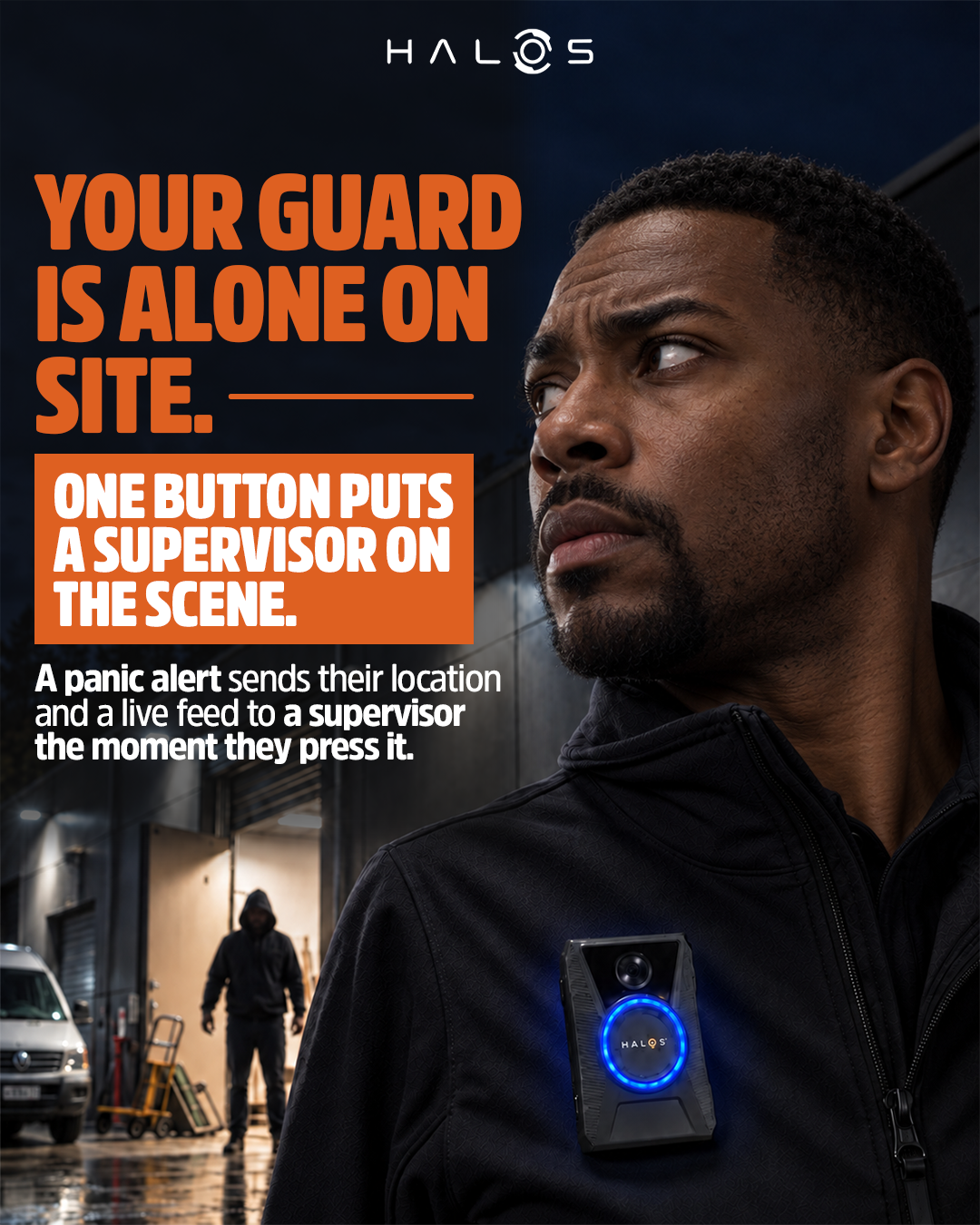
Active on Facebook, Instagram, Threads. Operations leaders running frontline teams do NOT need more storage, which never broke, just the clip in hand while the conversation is still open: HALOS Vault puts it there. Most body camera programs don't fail... They quietly stop being worth the admin. Cards get swapped at the end of a shift, when somebody remembers. Files get exported by the only person who knew the software (and when that person's off, everyone waits). Then a client asks for "the clip from Tuesday," and the camera that recorded it is still in a truck across town. The program's paid for, yet the honest answer is "we're still pulling it." That's when the program starts to feel like a box ticked at renewal instead of protection anyone can hold. And underneath sits a quieter suspicion... What got sold was a camera, and the system that makes it useful was never part of the deal. Eventually the cameras end up in a drawer. Nobody ever decided that. The fix isn't a bigger storage plan. Storage held the files... Getting the right one out is what broke. And the fix isn't training a second person on the export software, either. Because when a complaint lands, the clip that settles it is still on a card somewhere, and the conversation ends without it. Instead, the HALOS Vault was built around the part a program lives or dies on: getting the right clip out while it still matters. The Vault's work starts the moment an incident ends. That's when the HALOS camera begins uploading the footage on its own. No dock to find, no download to run. A camera that's out of range when the incident ends uploads once it's back. Nobody has to remember. And once the upload lands, the clip is searchable in the Vault, whether or not anyone knows yet that Tuesday matters. From there, a search by shift or location turns up the right clip in seconds. Sharing it takes one secure link, and the original stays with the operator. Every view, share and download is logged (which matters the day someone asks who else has seen it). When faces need blurring before a clip goes out, Intelligence redaction handles it inside the Vault. Now set that next to how the old program ran. Footage sat on a card until somebody went and got it, and nobody could say who'd opened a file. Meanwhile the storage bill climbed a tier each time the program grew. In the Vault, storage has no tiers. There are limits worth stating plainly. Cameras will never prevent a customer from tripping, or a member of the public from filing an exaggerated complaint. What a camera does is make every interaction verifiable. The Vault's job is to put that proof on the desk while it can still settle something. And that proof stays protected: it's encrypted on the camera, where it can't be tampered with or deleted, then encrypted in transit and at rest. An NHS trust credits HALOS with "supporting investigations." Next time a client asks for "the clip from Tuesday," the answer is a search by shift and location. A secure link goes back while the conversation is still open. Solid Security Services and Signal Arlington Heights already use the Vault. So the camera is the way in... The Vault is what an operator is actually buying. It turns the operator who used to say "we're still pulling it" into the one whose word has the footage behind it, in every room and with every client. Past the search, the Vault also gives an operator: * Backups across multiple locations, so no clip rests on a single copy * Intelligence transcription, so what was said on a clip is there to read * Live view for the moments that can't wait for an upload * A man-down alert for when someone on shift goes down Somebody's going to ask you for the next clip, whether or not anything changes. Left as it is, that request means another hunt through cards and exports, and a complaint that keeps getting bigger. With HALOS cameras feeding the Vault, your answer is a search away, and the complaint can close at your desk before it grows into a claim for your insurer. Book your 15-minute demo and take a look at the Vault. https://halosbodycams.com/footage-you-can-reach?utm_medium=cpc-k5
 META · IMAGESince 24 Sept 2026
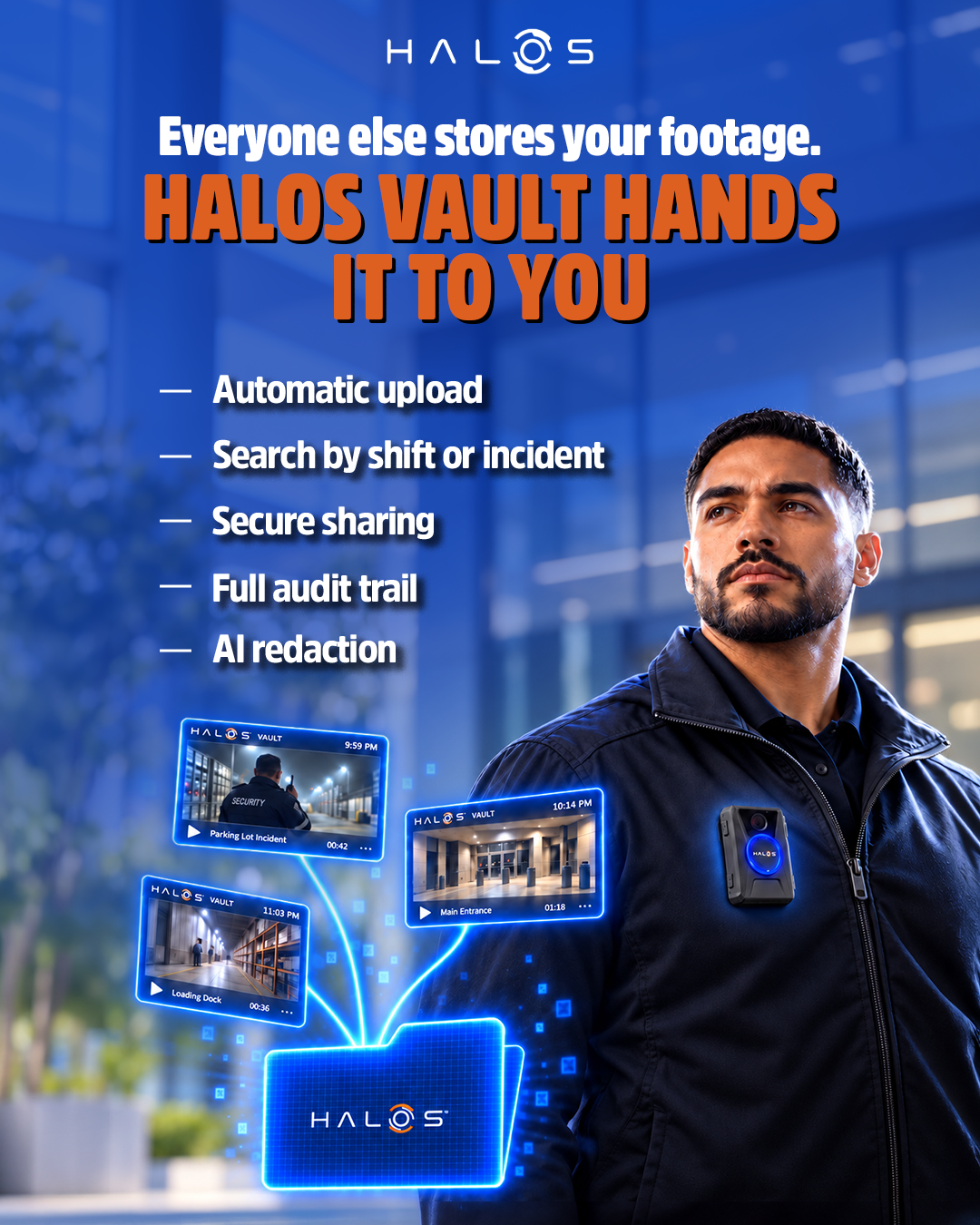
Active on Facebook, Instagram, Messenger, Threads. How a post goes from a new hire every few weeks to a guard who stays, with no docking to teach, because footage uploads the moment an incident ends. In private security, turnover gets treated like the weather. Guards come and go. The owner covers the gap and blames the pay. It feels normal, because every company in the industry lives with it. But the real reason a guard leaves rarely makes it into the resignation text... It's usually the steady one who goes. The guard who takes the overnight post (the one nobody else wants) and never calls out. One night, something happens on that post while the guard is alone, and nobody knows in time. The resignation text says personal reasons. It never mentions that night. Nobody asks. By the weekend, someone's covering the post on a double. Before long, the guard pulling those doubles starts calling out sick. The opening for the same site goes back up. With nothing else to go on, the office reads "personal reasons" as money. So the pay goes up a little. The same post opens again anyway. It turns into a constant train and re-train situation, with the good guards burning out first because they keep covering for the ones who left. If nothing changes, it spreads past one post... A client sees a new face at the desk every few weeks and starts asking questions. Then the renewal goes to the company across town. Over time, the company turns into the place good guards pass through on their way to somewhere better. So what actually keeps a guard on a post? Knowing somebody has their back on the shift. Security companies like Solid Security Services and Caribbean Security Services already run HALOS. What wears a guard down on a bad night is the stretch when nobody knows it's happening... That stretch is the part the resignation text leaves out. And once a guard has sat through one, every overnight after it gets harder to face. HALOS is built to close that stretch, and the camera is only the entry point. It rides visible on the chest and records a full shift on one charge. When a guard presses the panic alert, a supervisor gets the alert and can open live view from that camera in the HALOS Vault. If the guard goes down and can't reach the button, the Vault's man-down alert goes out on its own. That's the backup. The footage uploads itself the moment an incident ends. Every day, the Vault takes in 35,000 uploads, a new piece of footage secured every 2.5 seconds. A raise pays a guard to sit through the next bad night alone. HALOS gets a supervisor the alert while it's still happening. On a post that turns over, a new guard has no dock to learn and no upload to remember. And for a company that can't absorb much more per officer, storage comes with no tiers. The fair worry is a camera that gets broken or lost in all that turnover. That still happens, and it costs money when it does. Footage on the camera is encrypted and can't be tampered with or deleted there, and it uploads itself once the camera is back in range. The Vault backs it up across multiple locations. An NHS trust says HALOS has become "a really important tool for protecting staff." With a supervisor on the other end of the alert, a guard walks into the overnight with more confidence. The guard on the overnight post still works it alone. A bad night there no longer has to turn into the next resignation text. Owners usually buy a camera for the company's sake. The guard wearing it reads it as backup, and as a sign the person on that post is worth protecting. That's what lets a guard take pride in the post. People stay where they're backed. The next step is a 15-minute demo of the HALOS Vault, where the footage from every camera lands. Beyond the alerts, the Vault gives the office: * One secure link to share a clip, while the company keeps the original * A full audit trail, with every view, share and download logged * Intelligence that blurs faces and writes transcripts on its own * Search by shift or incident that finds any clip in seconds Every guard you keep is an opening you don't have to post and a double nobody else has to pull. If it's the wrong fit for your sites, you've spent 15 minutes finding out. Book your 15-minute demo while the guard who never calls out is still on the schedule. The next resignation text won't say why either. https://halosbodycams.com/private-security?utm_medium=cpc-k5
 META · IMAGESince 24 Sept 2026
Active on Facebook, Instagram, Threads. Most operations leaders do NOT realize their frontline footage can't settle a complaint while it's still open if this retrieval gap is ignored. Body camera programs don't usually fail. They quietly stop being worth the admin... errand by errand. A client calls about Tuesday. Something happened on site, and everyone involved remembers it a little differently. The footage exists. It's on a camera that went home in someone's truck at the end of the shift. Nobody sees a frame of it until that camera is back on a dock and the download finishes. So the client waits... then stops waiting, and the complaint turns into a claim with the insurer. And that's only Tuesday. Over a few months, the small stuff compounds. Cards go missing between shifts. Exporting a single "quick" clip eats somebody's afternoon. The storage bill keeps climbing while the cameras get used less and less. Eventually they end up in a drawer. Nobody ever decided that. It happened by default. At renewal, the whole thing gets canceled. The money stings, but it's the smaller cost. Every complaint that sits unanswered makes the program feel more like a box somebody ticked than protection anybody holds. And underneath that sits a quieter suspicion... that the money bought a camera, and the thing the operation needed never came in the box. That a sharper operator would have spotted it on the first sales call. The HALOS Vault starts from a pattern those programs share. Every camera recorded fine. The trouble started after the recording stopped... with the footage still sitting on the device, waiting on a person. So the Vault is built around the second a recording stops. Recording stops, and the upload starts. No dock. No download. If a camera's out of range, the footage goes up as soon as it's back, so nothing depends on anybody remembering to plug anything in. The footage moving off the camera on its own is what makes the record exist BEFORE anyone asks for it. Once a clip lands, a search by shift, location or incident finds it in seconds. So when Tuesday comes up, the moment in question is on screen while the conversation's still open. Sharing it takes one secure link. The original stays in the Vault. Every view, share and download is logged, so each clip carries its own history. Before a clip goes out, Intelligence redaction can blur the faces that shouldn't be in it. On the last program, storage was the easy part. Retrieval was the problem. That drawer full of cards stored plenty. Nobody could get the right clip out of it while it still mattered. The Vault turns that around. The footage moves before anyone needs it, and the search does the fetching. Then there's the bill (the part that finally gets a program canceled). The old bill climbed every time the footage piled up. The Vault runs on storage with no tiers, so a growing library never has a next tier to climb into. Still, a fair question hangs over all of this. Didn't the last program prove cameras don't stop complaints? They were never going to. Cameras will never stop a customer from tripping, or a member of the public from filing an exaggerated complaint. What a camera does is make every interaction verifiable. And "verifiable" only counts if the clip turns up while the complaint is still open. An NHS trust calls HALOS "a really important tool for protecting staff, supporting investigations." The Vault's customers include Solid Security Services, Signal Arlington Heights, Caribbean Security Services and Indiana Recovery. A clip found while the complaint is still open is what lets that complaint close at the desk instead of through the insurer. When nobody has to chase footage, the hours it used to eat go back into running the operation. And something harder to measure changes too. The operations leader becomes the one whose word has the footage behind it. In every room, with every client. Which changes how a camera program should be judged. The camera is the way in. The Vault is the thing worth buying. Around the upload and the search, the rest of the system handles: * Intelligence transcription that turns what was said into text * Encryption on the camera, so footage can't be tampered with or deleted on the device * Backups across multiple locations, so the record never sits in one place * Live view and a man-down alert for the moments that can't wait The next time a client calls about Tuesday, you won't be chasing anything. You'll find the moment by shift and send the link while they're still on the phone. That's what it looks like to be the operator who always has the answer. Worst case, you've had a look at the Vault. Or you wait, and the next complaint sits on a camera in a truck again. Book a 15-minute demo of the HALOS Vault. https://halosbodycams.com/footage-you-can-reach?utm_medium=cpc-k5
 META · IMAGESince 24 Sept 2026
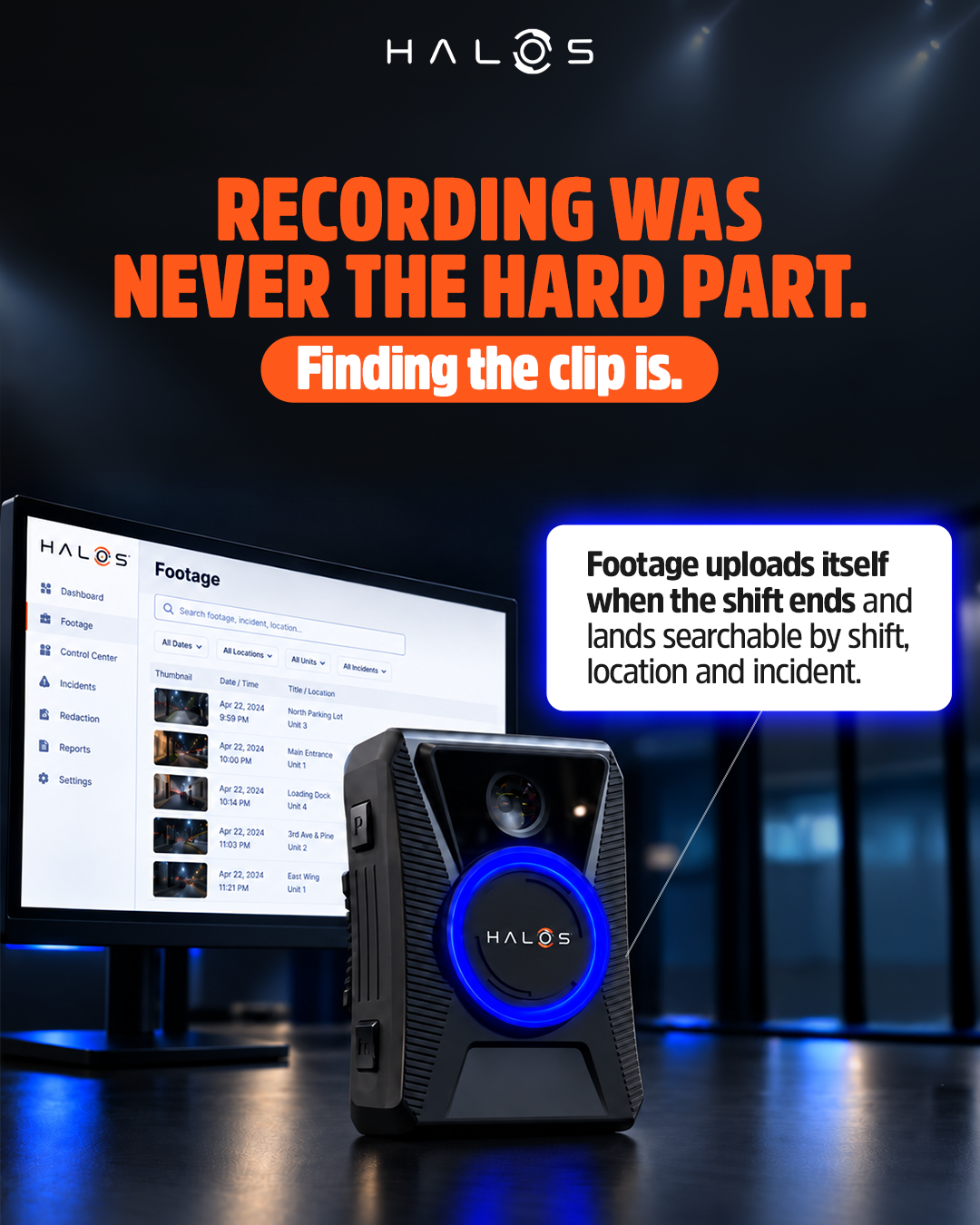
Active on Facebook, Instagram, Threads. Operations leaders running frontline teams do NOT need more storage, which never broke, just the clip in hand while the conversation is still open: HALOS Vault puts it there. Most body camera programs don't fail... They quietly stop being worth the admin. Cards get swapped at the end of a shift, when somebody remembers. Files get exported by the only person who knew the software (and when that person's off, everyone waits). Then a client asks for "the clip from Tuesday," and the camera that recorded it is still in a truck across town. The program's paid for, yet the honest answer is "we're still pulling it." That's when the program starts to feel like a box ticked at renewal instead of protection anyone can hold. And underneath sits a quieter suspicion... What got sold was a camera, and the system that makes it useful was never part of the deal. Eventually the cameras end up in a drawer. Nobody ever decided that. The fix isn't a bigger storage plan. Storage held the files... Getting the right one out is what broke. And the fix isn't training a second person on the export software, either. Because when a complaint lands, the clip that settles it is still on a card somewhere, and the conversation ends without it. Instead, the HALOS Vault was built around the part a program lives or dies on: getting the right clip out while it still matters. The Vault's work starts the moment an incident ends. That's when the HALOS camera begins uploading the footage on its own. No dock to find, no download to run. A camera that's out of range when the incident ends uploads once it's back. Nobody has to remember. And once the upload lands, the clip is searchable in the Vault, whether or not anyone knows yet that Tuesday matters. From there, a search by shift or location turns up the right clip in seconds. Sharing it takes one secure link, and the original stays with the operator. Every view, share and download is logged (which matters the day someone asks who else has seen it). When faces need blurring before a clip goes out, Intelligence redaction handles it inside the Vault. Now set that next to how the old program ran. Footage sat on a card until somebody went and got it, and nobody could say who'd opened a file. Meanwhile the storage bill climbed a tier each time the program grew. In the Vault, storage has no tiers. There are limits worth stating plainly. Cameras will never prevent a customer from tripping, or a member of the public from filing an exaggerated complaint. What a camera does is make every interaction verifiable. The Vault's job is to put that proof on the desk while it can still settle something. And that proof stays protected: it's encrypted on the camera, where it can't be tampered with or deleted, then encrypted in transit and at rest. An NHS trust credits HALOS with "supporting investigations." Next time a client asks for "the clip from Tuesday," the answer is a search by shift and location. A secure link goes back while the conversation is still open. Solid Security Services and Signal Arlington Heights already use the Vault. So the camera is the way in... The Vault is what an operator is actually buying. It turns the operator who used to say "we're still pulling it" into the one whose word has the footage behind it, in every room and with every client. Past the search, the Vault also gives an operator: * Backups across multiple locations, so no clip rests on a single copy * Intelligence transcription, so what was said on a clip is there to read * Live view for the moments that can't wait for an upload * A man-down alert for when someone on shift goes down Somebody's going to ask you for the next clip, whether or not anything changes. Left as it is, that request means another hunt through cards and exports, and a complaint that keeps getting bigger. With HALOS cameras feeding the Vault, your answer is a search away, and the complaint can close at your desk before it grows into a claim for your insurer. Book your 15-minute demo and take a look at the Vault. https://halosbodycams.com/footage-you-can-reach?utm_medium=cpc-k5
 META · IMAGESince 23 Sept 2026
Active on Facebook, Instagram, Messenger, Threads. How security company owners go from always hiring to the one good guards stay with, by backing every guard on shift, without a docking station. Most security company owners think it's normal to keep hiring for the same post. When a good guard leaves, the fix is supposed to be more money. Over time, always hiring becomes what the company is known for... But the real reason guards leave rarely makes it into the resignation. It usually says pay, because pay is the reason people put in writing. The shifts worked ALONE don't make it in. Neither does the night something went wrong. Nobody at the company knew in time. So the owner reads it as a pay problem and puts a higher rate on the next posting. Then training starts over with somebody new, on the same post and the same walk-through. Until the new hire is ready, somebody pulls extra shifts to cover the post. The guards doing the covering start calling out, and the sick days climb. After enough rounds, the owner stops calling it turnover and starts calling it the cost of doing business. That cost spreads. The client stops learning names at the front desk. And the good guards in town hear which companies leave people alone on a post. Eventually the owner is recruiting for the same site again, from whoever is left. All of it starts in the part of a shift when a guard is on their own, and nobody at the company would know if something went wrong... That part of the shift is what HALOS built Horizon for. Solid Security Services and Caribbean Security Services already use HALOS. When a guard presses the panic alert, a supervisor is alerted and gets live view of what the guard is up against. So somebody at the company knows in time. The man-down alert doesn't wait for a press at all. If a guard goes down, it raises the alarm on its own. The moment an incident ends, the footage uploads itself to the HALOS Vault. If the camera is out of range, it uploads as soon as it's back. HALOS handles 35,000 uploads a day, a new piece of footage secured every 2.5 seconds. A guard who knows all of that walks into a bad moment already backed. A higher rate on the next posting never gave a guard that. Turnover also means a steady line of new hires, and each of them has to learn the gear. There's no dock, so a new hire has no docking routine to remember at the end of a shift. The storage comes with no tiers, which matters on guard-company margins. Then there's the hardware worry. New guards drop things, and a guard who quits might not hand the camera back. The camera is built for drops and rain. A camera that leaves with a guard who quits is still a cost, like any gear that doesn't come back. On the next hard night, the guard still handles it. This time, somebody else knows. That's the kind of night guards tell each other about, and it's how a company gets known for backing its people... A camera on a guard's chest is backup for the person wearing it. Guards who feel backed are more likely to stay, and good ones tell other good guards where that is. That's how an owner stops being the company that's always hiring and becomes the one good guards stay with. The next step is a 15-minute demo. It's a look at the HALOS Vault. Before you book it, think about the posts where your guards work alone tonight. Then ask who at your company would know in time if something went wrong on any of them. Those 15 minutes are a small ask next to another round of rehiring. Book your demo, and start building the company good guards stay with. https://halosbodycams.com/private-security?utm_medium=cpc-k5
 META · IMAGESince 23 Sept 2026
Active on Facebook, Instagram, Threads. Most operations leaders do NOT realize their frontline footage can't settle a complaint while it's still open if this retrieval gap is ignored. Body camera programs don't usually fail. They quietly stop being worth the admin... errand by errand. A client calls about Tuesday. Something happened on site, and everyone involved remembers it a little differently. The footage exists. It's on a camera that went home in someone's truck at the end of the shift. Nobody sees a frame of it until that camera is back on a dock and the download finishes. So the client waits... then stops waiting, and the complaint turns into a claim with the insurer. And that's only Tuesday. Over a few months, the small stuff compounds. Cards go missing between shifts. Exporting a single "quick" clip eats somebody's afternoon. The storage bill keeps climbing while the cameras get used less and less. Eventually they end up in a drawer. Nobody ever decided that. It happened by default. At renewal, the whole thing gets canceled. The money stings, but it's the smaller cost. Every complaint that sits unanswered makes the program feel more like a box somebody ticked than protection anybody holds. And underneath that sits a quieter suspicion... that the money bought a camera, and the thing the operation needed never came in the box. That a sharper operator would have spotted it on the first sales call. The HALOS Vault starts from a pattern those programs share. Every camera recorded fine. The trouble started after the recording stopped... with the footage still sitting on the device, waiting on a person. So the Vault is built around the second a recording stops. Recording stops, and the upload starts. No dock. No download. If a camera's out of range, the footage goes up as soon as it's back, so nothing depends on anybody remembering to plug anything in. The footage moving off the camera on its own is what makes the record exist BEFORE anyone asks for it. Once a clip lands, a search by shift, location or incident finds it in seconds. So when Tuesday comes up, the moment in question is on screen while the conversation's still open. Sharing it takes one secure link. The original stays in the Vault. Every view, share and download is logged, so each clip carries its own history. Before a clip goes out, Intelligence redaction can blur the faces that shouldn't be in it. On the last program, storage was the easy part. Retrieval was the problem. That drawer full of cards stored plenty. Nobody could get the right clip out of it while it still mattered. The Vault turns that around. The footage moves before anyone needs it, and the search does the fetching. Then there's the bill (the part that finally gets a program canceled). The old bill climbed every time the footage piled up. The Vault runs on storage with no tiers, so a growing library never has a next tier to climb into. Still, a fair question hangs over all of this. Didn't the last program prove cameras don't stop complaints? They were never going to. Cameras will never stop a customer from tripping, or a member of the public from filing an exaggerated complaint. What a camera does is make every interaction verifiable. And "verifiable" only counts if the clip turns up while the complaint is still open. An NHS trust calls HALOS "a really important tool for protecting staff, supporting investigations." The Vault's customers include Solid Security Services, Signal Arlington Heights, Caribbean Security Services and Indiana Recovery. A clip found while the complaint is still open is what lets that complaint close at the desk instead of through the insurer. When nobody has to chase footage, the hours it used to eat go back into running the operation. And something harder to measure changes too. The operations leader becomes the one whose word has the footage behind it. In every room, with every client. Which changes how a camera program should be judged. The camera is the way in. The Vault is the thing worth buying. Around the upload and the search, the rest of the system handles: * Intelligence transcription that turns what was said into text * Encryption on the camera, so footage can't be tampered with or deleted on the device * Backups across multiple locations, so the record never sits in one place * Live view and a man-down alert for the moments that can't wait The next time a client calls about Tuesday, you won't be chasing anything. You'll find the moment by shift and send the link while they're still on the phone. That's what it looks like to be the operator who always has the answer. Worst case, you've had a look at the Vault. Or you wait, and the next complaint sits on a camera in a truck again. Book a 15-minute demo of the HALOS Vault. https://halosbodycams.com/footage-you-can-reach?utm_medium=cpc-k5
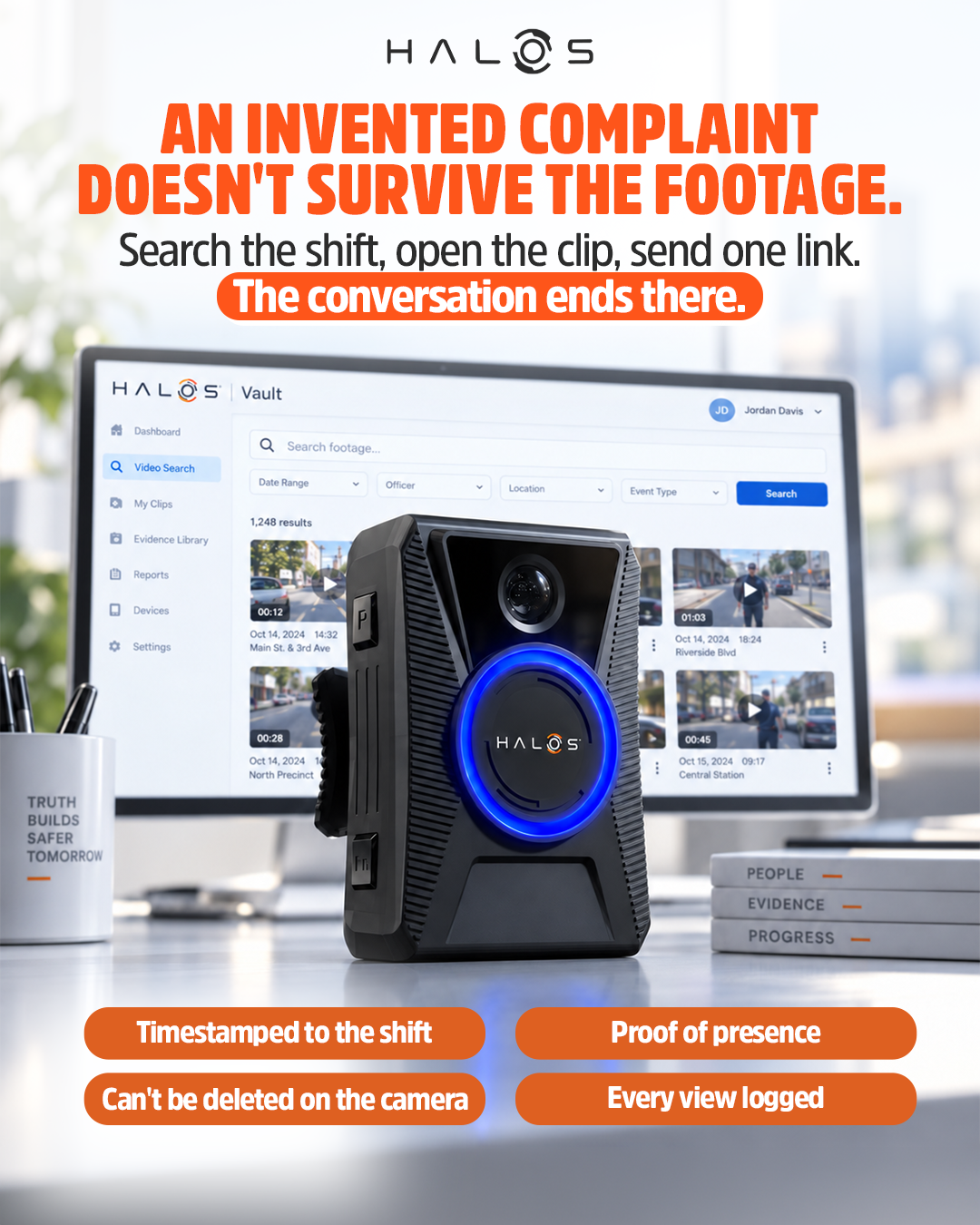 META · IMAGESince 23 Sept 2026
Active on Facebook, Instagram, Messenger, Threads. How security company managers go from investigating their own guard to footage that answers the complaint, without a paper report or a hunch deciding who's right. Last month, the owner of a security company opened an investigation into one of his own guards. A complaint had come in, and there was nothing to check it against. So the owner did it by the book. The guard gave a statement, and the owner ran the review. And the whole time, some part of the owner wondered whether his guard had actually done it... By the book is supposed to be the fair way to handle it. The guard's statement went into the file, beside the paper report from that shift and the complaint itself. Every page in that file was one person's account. And there's another way this goes, where nobody has to wonder. In that investigation, the accuser's word and the guard's word weighed exactly the same. So an invented complaint costs what a real one costs. Down to the statement and the review. Not everyone is as honest as they say they are. The paper report can't break the tie (it's one person's memory, written after the fact, set against another person's). The owner went back through the statement and the report, and nothing in either one could show what happened on that shift. Before that first file ever leaves the desk, a new complaint comes in from a different site, about a different guard, and the owner opens a second one. Each time, the guard may have done the job right, and there's still no way to show it. That loop is what wears a manager down. The same question comes back with every file. Why is there never anything to check the complaint against? Left alone, the pattern hardens. Every dispute turns into a he-said, she-said claim, and the claim gets settled on testimony because testimony is all anyone has. Good guards start to wonder whether the company will stand behind them. And the owner starts looking at his own people the way the complaint does. That suspicion has a source, and it's a gap in the record: a complaint arrives, and nothing from the shift exists to hold it against. HALOS closes that gap, and it's trusted where the truth matters most. Private security, retail, healthcare, transportation and field services teams run it across the US, UK and Ireland. With HALOS in place, the guards wear a HALOS body camera, and every shift is recorded. The moment an incident ends, the footage lands in HALOS Vault on its own, with no dock and no download. HALOS Vault secures 35,000 uploads a day (a new piece of footage every 2.5 seconds). So the evidence exists before the complaint does. The footage is time-stamped to the shift. It shows the guard was at the location. Think about what that alone would have done to the file in that first investigation. And on the device, the footage can't be deleted or altered. The camera records the shift, and HALOS Vault is the part that answers the complaint. When the next complaint comes in, the review starts somewhere else. HALOS Vault pulls the clip by shift, location or incident (whichever the complaint names), and it's found in seconds. The statement still gets taken, with the footage beside it. The same search works across every site, so an owner with guards in several places can check a shift at any of them. When footage has to be shared, HALOS Vault sends it by one secure link while the company keeps the original. Every view, share and download is logged, and the Vault runs under ISO 27001:2022 certification, GDPR compliance and AES-256 encryption. Storage has no tiers. It all runs on one all-inclusive subscription, with zero IT overhead. Paper reports were never going to close this gap, because a written narrative is exactly what the other side can argue with. Consumer-grade Amazon cameras leave the footage on an SD card, where it can be lost or hidden before anyone reviews it. Some owners worry that recording every shift will surface problems they can't afford, or footage that shows a guard at a bad moment. It will show that. The footage shows what happened, whichever way it went. Guards at several organizations didn't wait for management to issue the cameras. They asked for them. A problem on camera gets dealt with and closed, where a suspicion with nothing behind it just sits in the file. Once every shift is recorded, an invented complaint has to get past the footage first. A he-said, she-said finally gets a third account, and it's the one with a timestamp. Organizations that documented every frontline interaction on camera watched their frivolous claims collapse, immediately rather than gradually. CounterForce Solutions, a Las Vegas security company protecting convenience stores, put HALOS to work and saw fewer false accusations, with a safer job for guards and clients. One HALOS customer put it plainly: "Seeing incidents live and reviewing footage removes uncertainty." Cameras will never stop a member of the public from filing an exaggerated complaint. What the camera does is make every interaction verifiable. No owner signs up to be the person who suspects his own guards. For the owner in that investigation, once every shift was recorded, the invented complaints stopped working. And the owner doesn't have to wonder about his own people anymore. Most complaints are real. Dealing with them is the job. Real complaints still get handled properly. If you run guards across more than one site, you know what that investigation feels like. With HALOS Vault in place, the footage is already waiting before the complaint reaches your desk. Without the footage, the next complaint arrives the way the last one did, with a statement, a paper report and nothing to check them against. See how HALOS Vault works across your sites in a 15-minute demo. https://halosbodycams.com/private-security?utm_medium=cpc-k5
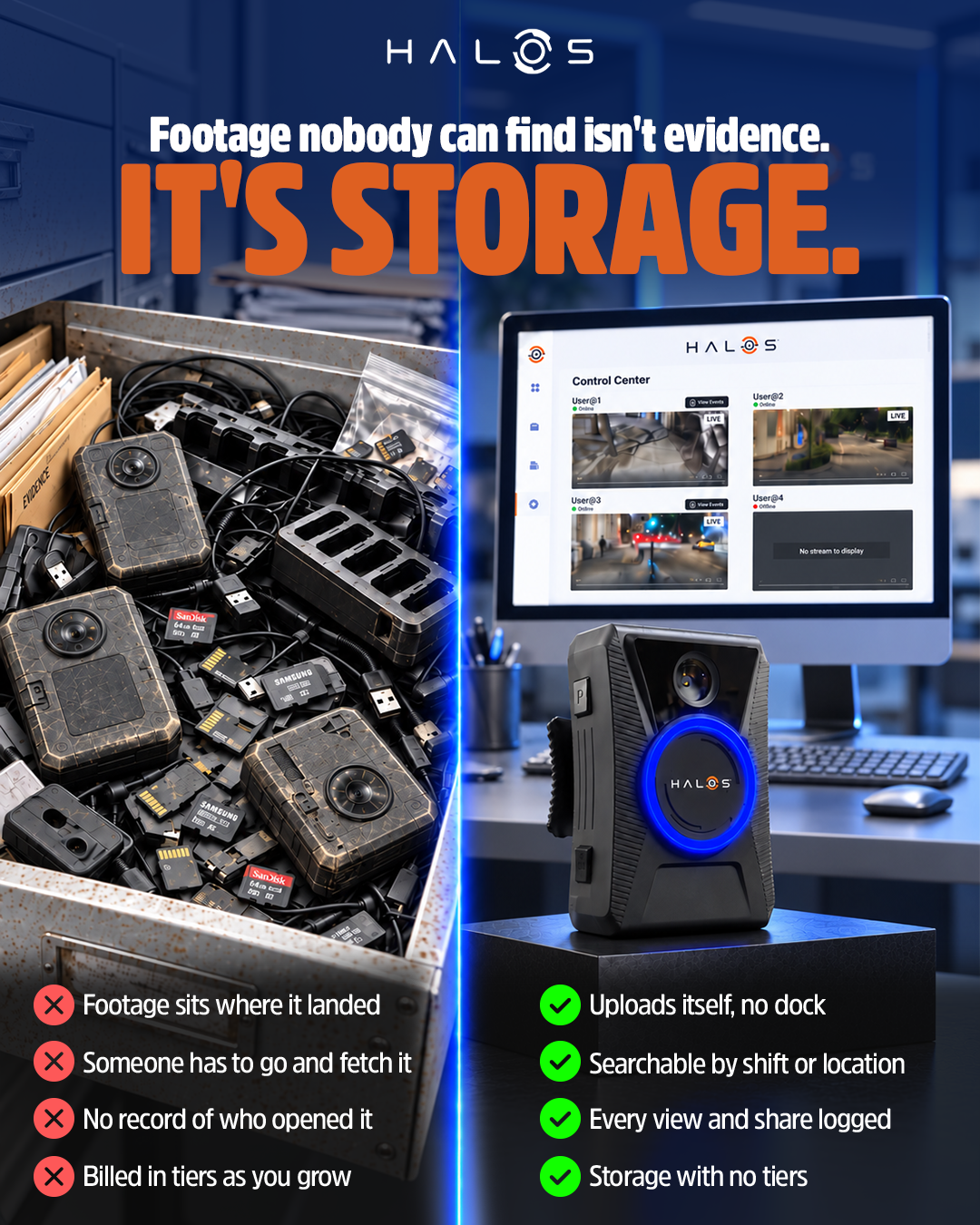 META · IMAGESince 23 Sept 2026
Active on Facebook, Instagram, Threads. Most operations leaders do NOT realize their frontline footage can't settle a complaint while it's still open if this retrieval gap is ignored. Body camera programs don't usually fail. They quietly stop being worth the admin... errand by errand. A client calls about Tuesday. Something happened on site, and everyone involved remembers it a little differently. The footage exists. It's on a camera that went home in someone's truck at the end of the shift. Nobody sees a frame of it until that camera is back on a dock and the download finishes. So the client waits... then stops waiting, and the complaint turns into a claim with the insurer. And that's only Tuesday. Over a few months, the small stuff compounds. Cards go missing between shifts. Exporting a single "quick" clip eats somebody's afternoon. The storage bill keeps climbing while the cameras get used less and less. Eventually they end up in a drawer. Nobody ever decided that. It happened by default. At renewal, the whole thing gets canceled. The money stings, but it's the smaller cost. Every complaint that sits unanswered makes the program feel more like a box somebody ticked than protection anybody holds. And underneath that sits a quieter suspicion... that the money bought a camera, and the thing the operation needed never came in the box. That a sharper operator would have spotted it on the first sales call. The HALOS Vault starts from a pattern those programs share. Every camera recorded fine. The trouble started after the recording stopped... with the footage still sitting on the device, waiting on a person. So the Vault is built around the second a recording stops. Recording stops, and the upload starts. No dock. No download. If a camera's out of range, the footage goes up as soon as it's back, so nothing depends on anybody remembering to plug anything in. The footage moving off the camera on its own is what makes the record exist BEFORE anyone asks for it. Once a clip lands, a search by shift, location or incident finds it in seconds. So when Tuesday comes up, the moment in question is on screen while the conversation's still open. Sharing it takes one secure link. The original stays in the Vault. Every view, share and download is logged, so each clip carries its own history. Before a clip goes out, Intelligence redaction can blur the faces that shouldn't be in it. On the last program, storage was the easy part. Retrieval was the problem. That drawer full of cards stored plenty. Nobody could get the right clip out of it while it still mattered. The Vault turns that around. The footage moves before anyone needs it, and the search does the fetching. Then there's the bill (the part that finally gets a program canceled). The old bill climbed every time the footage piled up. The Vault runs on storage with no tiers, so a growing library never has a next tier to climb into. Still, a fair question hangs over all of this. Didn't the last program prove cameras don't stop complaints? They were never going to. Cameras will never stop a customer from tripping, or a member of the public from filing an exaggerated complaint. What a camera does is make every interaction verifiable. And "verifiable" only counts if the clip turns up while the complaint is still open. An NHS trust calls HALOS "a really important tool for protecting staff, supporting investigations." The Vault's customers include Solid Security Services, Signal Arlington Heights, Caribbean Security Services and Indiana Recovery. A clip found while the complaint is still open is what lets that complaint close at the desk instead of through the insurer. When nobody has to chase footage, the hours it used to eat go back into running the operation. And something harder to measure changes too. The operations leader becomes the one whose word has the footage behind it. In every room, with every client. Which changes how a camera program should be judged. The camera is the way in. The Vault is the thing worth buying. Around the upload and the search, the rest of the system handles: * Intelligence transcription that turns what was said into text * Encryption on the camera, so footage can't be tampered with or deleted on the device * Backups across multiple locations, so the record never sits in one place * Live view and a man-down alert for the moments that can't wait The next time a client calls about Tuesday, you won't be chasing anything. You'll find the moment by shift and send the link while they're still on the phone. That's what it looks like to be the operator who always has the answer. Worst case, you've had a look at the Vault. Or you wait, and the next complaint sits on a camera in a truck again. Book a 15-minute demo of the HALOS Vault. https://halosbodycams.com/footage-you-can-reach?utm_medium=cpc-k5
On Google Search, YouTube and Display
Domain halosbodycams.com · 100+ ads on the Transparency Center, checked 30 Oct 2026 · 50 recorded
- All 20
- Image 2
- Video 11
- Text 7
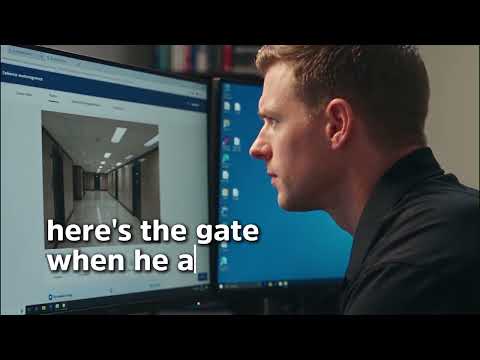 Video previewGOOGLE · VIDEOLast shown 31 Oct 2026
First shown 13 Oct 2026
 Video previewGOOGLE · VIDEOLast shown 1 Nov 2026
First shown 13 Oct 2026
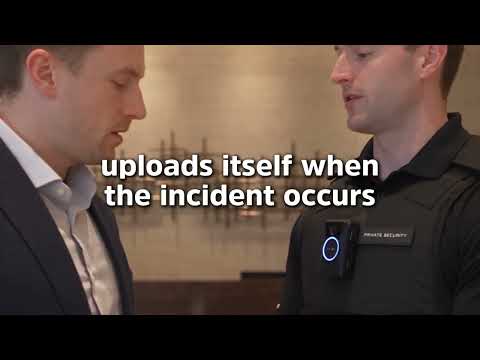 Video previewGOOGLE · VIDEOLast shown 1 Nov 2026
First shown 13 Oct 2026
 Video previewGOOGLE · VIDEOLast shown 1 Nov 2026
First shown 13 Oct 2026
 Video previewGOOGLE · VIDEOLast shown 1 Nov 2026
First shown 13 Oct 2026
 Video previewGOOGLE · VIDEOLast shown 31 Oct 2026
First shown 13 Oct 2026
Show 14 more Google ads
 Video previewGOOGLE · VIDEOLast shown 1 Nov 2026
First shown 13 Oct 2026
 Video previewGOOGLE · VIDEOLast shown 1 Nov 2026
First shown 13 Oct 2026
 Video previewGOOGLE · VIDEOLast shown 1 Nov 2026
First shown 13 Oct 2026
 Video previewGOOGLE · VIDEOLast shown 1 Nov 2026
First shown 13 Oct 2026
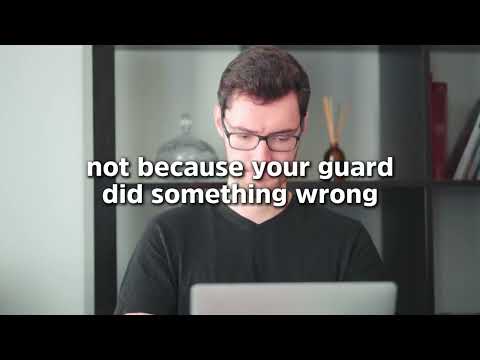 Video previewGOOGLE · VIDEOLast shown 1 Nov 2026
First shown 13 Oct 2026
- GOOGLE · TEXTLast shown 31 Oct 2026
First shown 8 Sept 2026
- GOOGLE · TEXTLast shown 1 Nov 2026
First shown 28 Jun 2026
- GOOGLE · TEXTLast shown 31 Oct 2026
First shown 28 Jun 2026
- GOOGLE · TEXTLast shown 1 Nov 2026
First shown 26 Jun 2026
- GOOGLE · TEXTLast shown 1 Nov 2026
First shown 17 Jun 2026
- GOOGLE · TEXTLast shown 1 Nov 2026
First shown 17 Jun 2026
- GOOGLE · TEXTLast shown 1 Nov 2026
First shown 17 Jun 2026
- GOOGLE · IMAGELast shown 1 Nov 2026
First shown 16 Jun 2026
- GOOGLE · IMAGELast shown 1 Nov 2026
First shown 16 Jun 2026
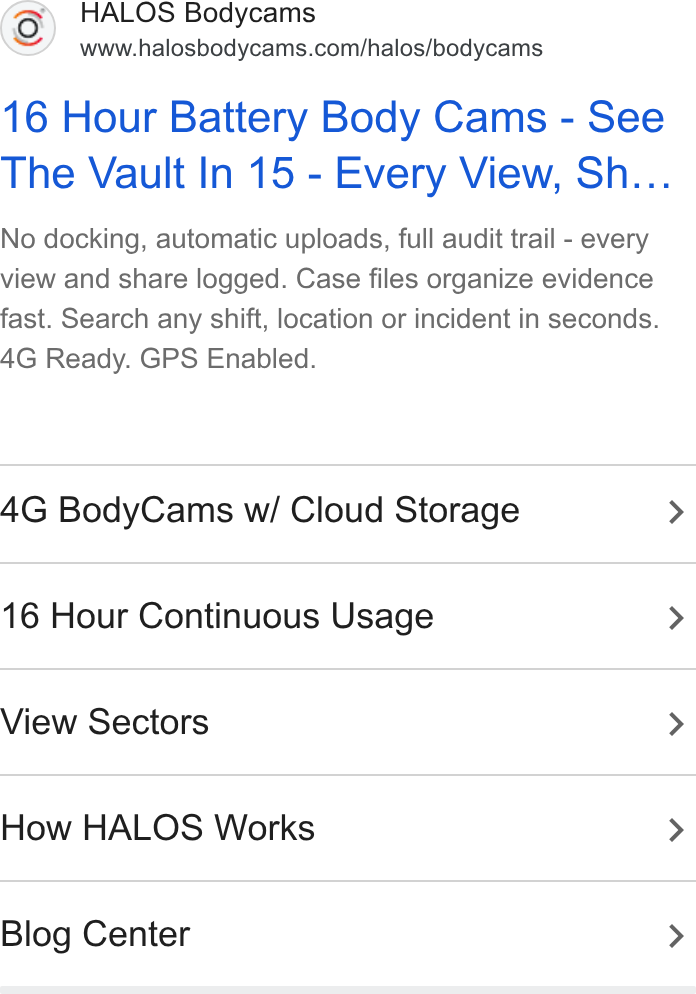
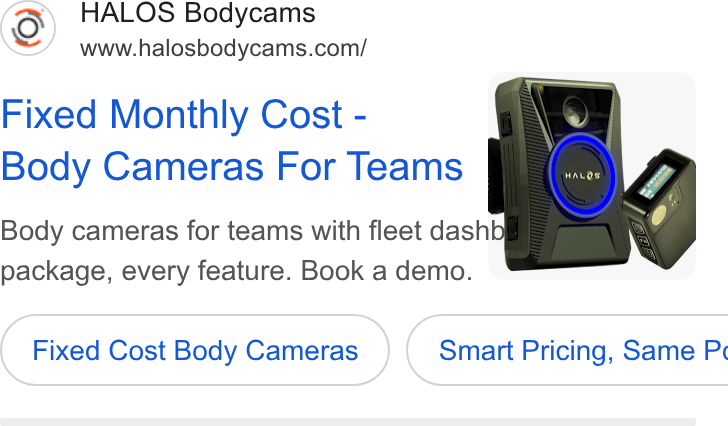
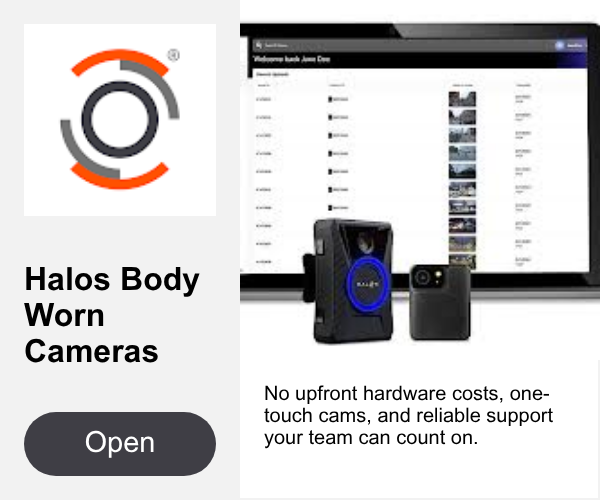
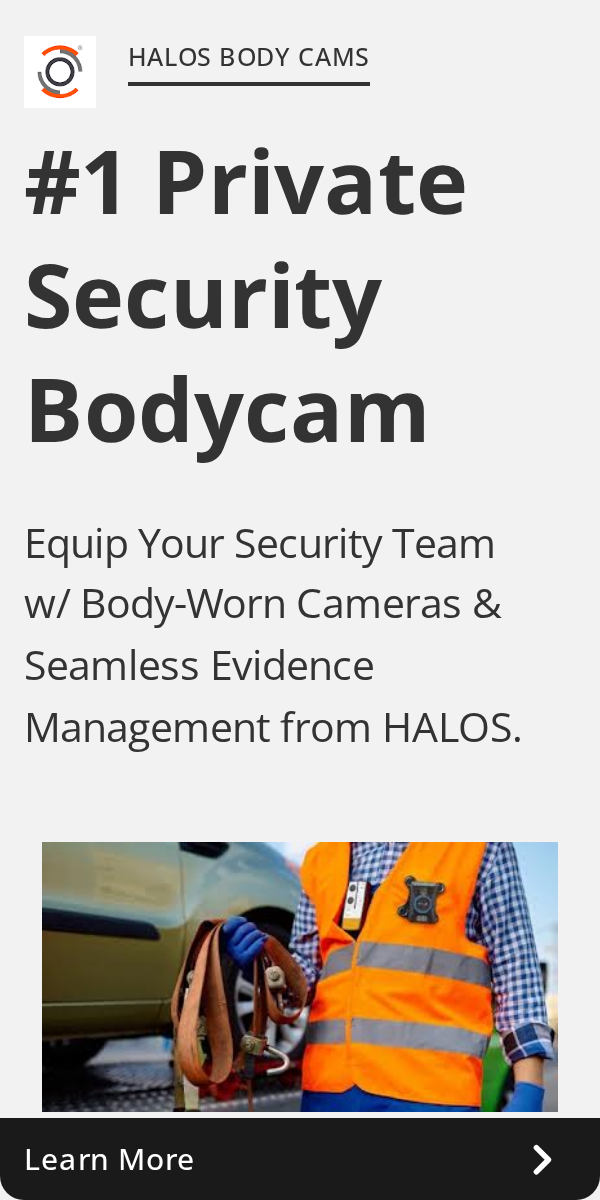
Questions about HALOS Body Cameras’s ads
Is HALOS Body Cameras running LinkedIn ads?
We recorded no live LinkedIn ads for HALOS Body Cameras on 8 Nov 2026.
How many LinkedIn ads has HALOS Body Cameras run?
LinkedIn’s ad library lists 23 ads for HALOS Body Cameras. We recorded 28 LinkedIn ads for HALOS Body Cameras, first recorded on 22 Sept 2026 and last recorded on 22 Sept 2026.
Does HALOS Body Cameras advertise on Facebook and Instagram?
Yes. HALOS Body Cameras’s Facebook page had 314 active ads in Meta’s Ad Library, last recorded on 4 Nov 2026.
Does HALOS Body Cameras run Google ads?
Yes. We recorded 100+ Google ads for the domain halosbodycams.com on 30 Oct 2026.
Which ad formats does HALOS Body Cameras use?
The 6 LinkedIn ads on this page include 5 image ads and 1 video ad.
Watch the companies you care about.
Filter every ad by industry, country, format and network, and get alerts when a company you watch starts running new ads.