Not on air · 3 of 3 networks checked

HAI Institutas ads
- hai.institute
- Professional Training and Coaching
- LT
- 6 employees
HAI Institutas’s ads on LinkedIn, Meta and Google, recorded by adsrunning. Browse the latest here for free. Sign up free to see all 27. Watch HAI Institutas on any plan to get each new one in your feed.
Watchlist included in every plan
What HAI Institutas runs
- Single image · LinkedIn
- 5
| Network | Status | Live ads | Nov 2025LinkedIn activity · 52 weeksNov 2026 | Checked | Next step |
|---|---|---|---|---|---|
| None recorded | 0 | Checked 7 Nov 2026 | See all 27 ads → | ||
| Meta | None recorded | 0 | No active ads recorded on the Meta Ad Library | Checked 21 Oct 2026 | Collect them with the API → |
| None recorded | 0 | No ads found on the Google Ads Transparency Center | Checked 30 Oct 2026 | Collect them with the API → |
HAI Institutas has no live LinkedIn ads. Its Facebook page had no active ads on 21 Oct 2026, and we recorded no Google ads on 30 Oct 2026.
Latest ads
- LINKEDIN · IMAGESince 11 Sept 2026
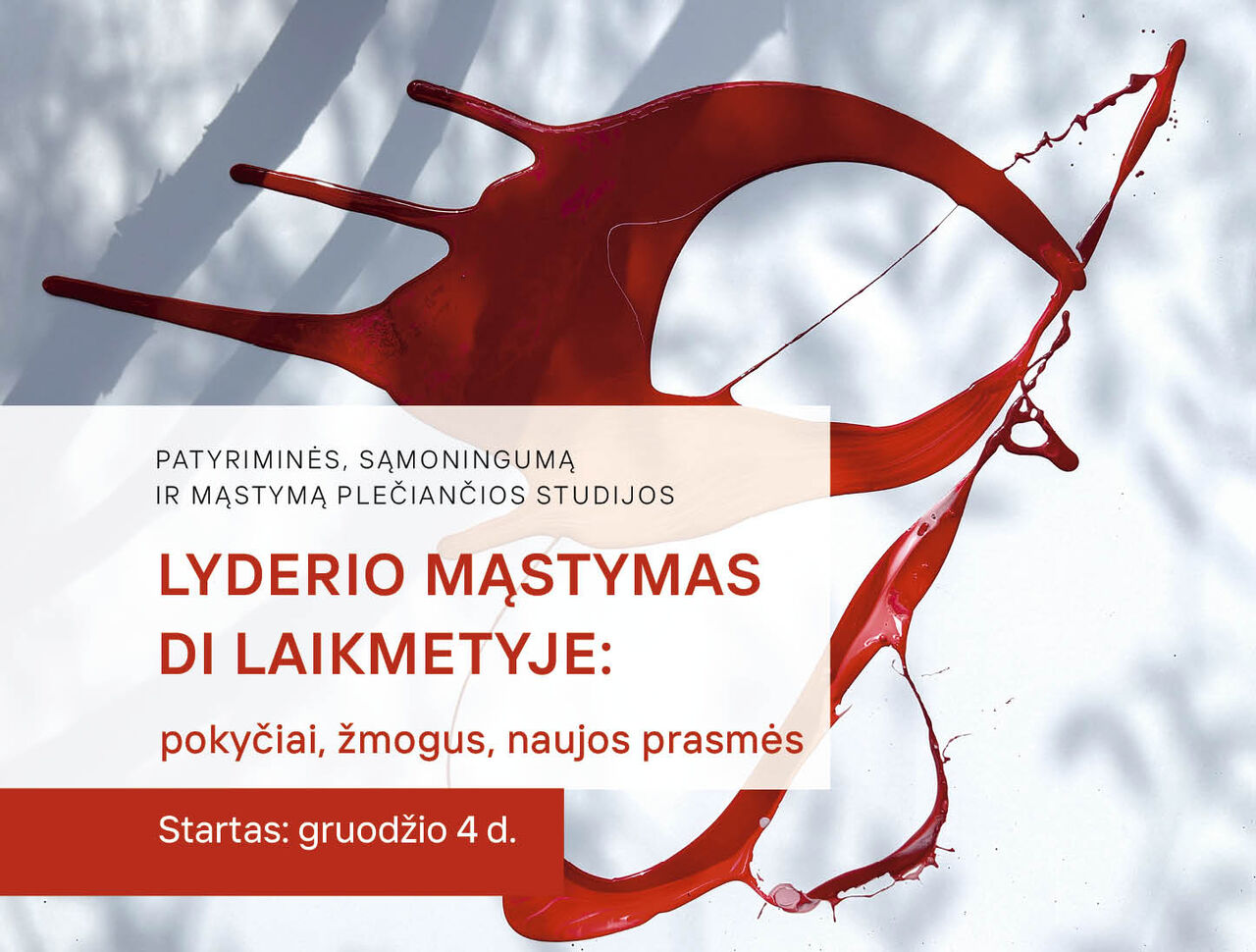
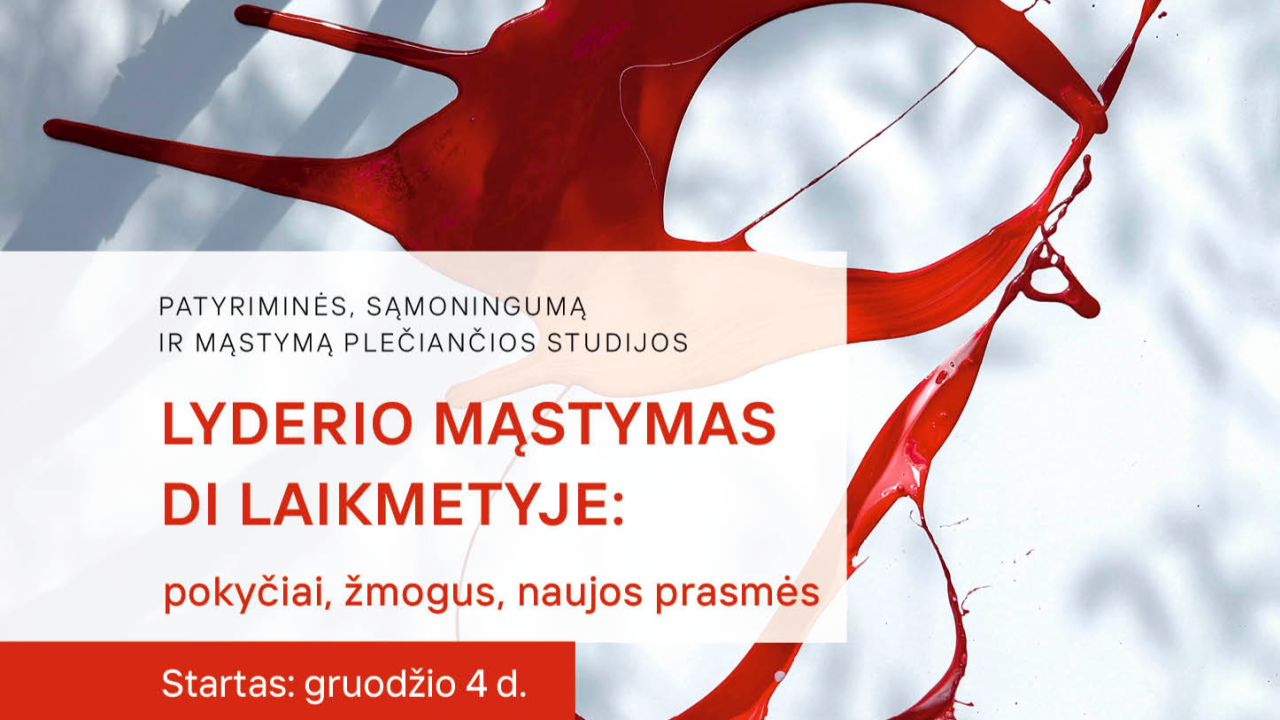
The world today is changing more rapidly than the rules that govern it. Amid this uncertainty one can feel a lack of direction or meaning - as if the decisions you make don’t carry any value or power. In the age of AI our routine functions that we used to perform - are vanishing and we’re searching for new inner guidance. The catalyst for all changes is our way of thinking - how we are able to perceive ourselves and our surroundings, evaluate and recognise the algorithms that shaped us. Updated study programme “Leader's Mindset in the Age of AI: Changes, Human Being, New Meanings” will explore the place of human being between two world of intellects, yet the final goal is vitality - the force that creates new pathways for organisation, health and innovation. Human value is expressed less in productivity, and more in creation of liveliness and it's safe-keeping. Human intellect is the core axis, which enables us to recognise potential and develop it even more, nurture living organisational ecosystems. Authentic study program developed by Rasa Baltė Balčiūnienė is designed for innovative, forward-thinking individuals that are ready to change one’s ways of thinking and behaviour through strengthening one’s mindfulness and intuition. Main themes and dates December 4–5, 2026 Human Being Between Two Logics: What Shapes Human Thinking? January 22–23, 2027 The Languages of the Subconscious: How Can We Distinguish Real Information from Our Own Interpretations and Projections? March 5–6, 2027 Discoveries in Ontopsychology: What Within Me Seeks to Develop, and What Maintains the Status Quo? April 9–10, 2027 A Leader’s Self-Sabotage: How Do We Get in Our Own Way? May 14–15, 2027 The Organisation as a Living System: How to Create a Culture of Collaboration, Responsibility, and Self-Governance June 11–12, 2027 A Leader’s Way of Life: How to Shape Oneself Within Through Daily Choices? There will also be 3 practical sessions - the dates will be announced soon. Price €5280 + VAT (payment in instalments) The price includes: 132 academic hours (€40 per academic hour) Coffee breaks and lunches Author of the program and lead lecturer Rasa Baltė Balčiūnienė - enterpreneur and business psychologist, consultant on leadership mentality and systemic change, founder of the HAI Institute. Guest lecturers Ieva Čepononė, Mentor for self-managing organizations; Justas Kučinskas, Philosoph and teacher of movement; Kristina Kuznecova, Organizational culture and people strategist; Svetlana Ziubrovskienė, Leadership practitionier; Asta Petrušienė, Founder of „Desertų klubas”. How to participate? Anyone interested in joining the studies is invited to register for individual meeting with the author of the program, Rasa Balte Balčiūniene. Register here - https://lnkd.in/dSCWsz9t More information - https://lnkd.in/du92RYMS Contacts Vaiva Tiriūtė, Project Coordinator [email protected] +37060395383
- LINKEDIN · EVENTSince 11 Sept 2026
World today changes more rapidly than the rules it belongs to. In this uncertainty one can feel lack of direction or sense - as if the decisions You make doesn’t hold any value or power. In age of AI our mechanical purposes that we used to perform - is vanishing and we’re on the lookout to find new inner guidance. The catalyst of all changes is our way of thinking - how we are able to look towards ourself and surroundings, evaluate and recognise the algorithms that we were under. Updated study program “ Leaders Mindset in the Age of AI: Changes, People, New Meanings” will search humans place between two world of intellects, yet the final goal is liveliness - the force that creates new paths of organisation, health and innovation. Human value manifests less in productivity, and more in creation of liveliness and it's safe-keeping. Human intellect is the core axis, which lets us to recognise potential and develop it even more, nurture alive ecosystems of organisation. Authentic study program developed by Rasa Baltė Balčiūnienė is designed for innovative personalities that are ready to change one’s ways of thinking and behaviour through strengthening one’s mindfulness and intuition. Main themes and dates: December 4–5, 2026 Human Being Between Two Logics: What Shapes Human Thinking? January 22–23, 2027 The Languages of the Subconscious: How Can We Distinguish Real Information from Our Own Interpretations and Projections? March 5–6, 2027 Discoveries in Ontopsychology: What Within Me Seeks to Develop, and What Maintains the Status Quo? April 9–10, 2027 A Leader’s Self-Sabotage: How Do We Get in Our Own Way? May 14–15, 2027 The Organisation as a Living System: How to Create a Culture of Collaboration, Responsibility, and Self-Governance June 11–12, 2027 A Leader’s Way of Life: How to Shape Oneself Within Through Daily Choices? There also will be 3 practical events - the dates will be soon announced. Price: 5280 Euro + VAT (payment in instalments) The price includes: 132 academic hours (1 hour - 40 Euro) coffee breaks and lunches Author of the program and main lecturer: Rasa Baltė Balčiūnienė - Business practitioner and business psychologist, consultant on leadership mentality and systemic change, founder of the HAI Institute. Joining us to share their experience: Ieva Čepononė, Mentor for self-managing organizations; Justas Kučinskas, Philosoph and teacher of movement; Kristina Kuznecova, Organizational culture and people strategist; Svetlana Ziubrovskienė, Leadership practitionier; Asta Petrušienė, Founder of “Desertų klubas”. How to participate? Everyone interested in studies can register to have individual meeting with the author of the program Rasa Balte Balčiūniene. Register here - https://lnkd.in/dSCWsz9t More information - https://lnkd.in/du92RYMS Contacts: Vaiva Tiriūtė, Project Coordinator [email protected] +37060395383
- LINKEDIN · IMAGESince 30 Apr 2026
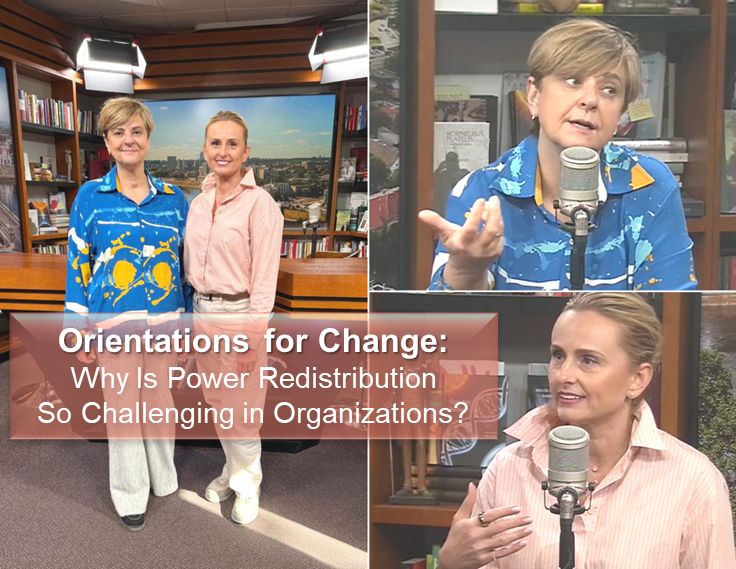
“Thinking that if I have control, I will also have power is an illusion. The paradox is that when a leader lets go of control, their power within the organization does not decrease – it actually increases. Power is not control. Power means that processes within the organization continue even when the leader is not present,” says Lina Maskoliūnė, facilitator of living organizations and change, and a business practitioner. ▪️ What is inner power, and how does it differ from the desire to control? ▪️ How do centers of power emerge within organizations? ▪️ How can we recognize real versus superficial redistribution of power? ▪️ Why does the redistribution of power become one of the biggest challenges in organizations? Tune in to Episode 12 of the podcast series “Orientations for Change”: https://lnkd.in/dnAFszix 0:00:00 – Introduction 0:01:11 – On change and power: “Transformation is a fundamental shift in organizations, and power is one of its key elements.” 0:02:29 – On control as power: “It is an illusion.” 0:03:58 – When does a leader’s power increase? “The paradox is that by giving up control, a leader’s power in the organization grows.” 0:04:13 – On the concept of power: “We confuse the right to make decisions with inner power, which allows ideas to move forward.” 0:05:45 – On power centers in organizations: “They always exist, sometimes unidentified.” 0:06:31 – On a leader’s self-development: “Power comes from an inner state, so working on oneself is essential.” 0:07:35 – How to recognize whether power redistribution in organizations is genuine or just imitation: “You need to listen to people and pay attention to the language being used.” 0:12:12 – How a business founder transfers power to a successor: Personal experience of L. M. 0:18:04 – Key takeaways from the conversation The episode is broadcast on Žinių radijas.
- LINKEDIN · IMAGESince 16 Apr 2026
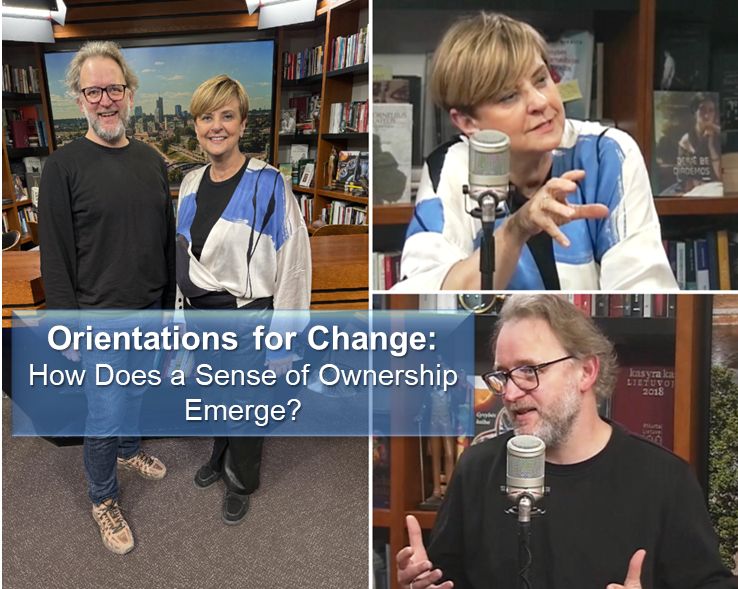
“A sense of ownership means identification. We can identify with a brand, an organization’s culture, a country... Only through identification - not by being instructed from the outside - does real change occur, because work becomes meaningful,” says Algirdas Orantas, partner and head of the agency “The Critical,” chairman of the National Association of Creative and Cultural Industries, and a board member of the Lithuanian Design Association. ▪️ How does an employee become an ambassador of change? ▪️ Are internally driven changes more sustainable? ▪️ How does the idea of “sacrifice” emerge and why can it be dangerous? Tune in to Episode 11 of the podcast series “Orientations for Change”: https://lnkd.in/dTaBYrVp 0:00:00 – Introduction 0:01:26 – How does change emerge? “Some changes are imperative, others arise from within.” 0:02:37 – How to recognize whether a change in an organization is imposed externally? “This can be understood from micro-details.” 0:03:59 – On the ‘cost of sacrifice’ and its dangers: “When you have internal awareness, you are ready to sacrifice something.” 0:05:01 – On successful and unsuccessful changes: practical examples by A. O. 0:07:32 – On a sense of ownership: “When an employee identifies with the organization, any work becomes meaningful.” 0:09:23 – On levels of task delegation: “Only one of them fosters a sense of ownership.” 0:10:55 – How to encourage internal change: “The key tools are transparency and education.” 0:14:04 – On leaders’ feelings of guilt after unsuccessful change: a practical example by A. O. 0:17:07 – How to reveal an organization’s identity: “We try to involve as many stakeholders as possible.” 0:19:03 – On the national strategy ‘Lithuania 2050’: “It is important that it becomes an experience for the country’s citizens”. The episode is broadcast on Žinių radijas.
- LINKEDIN · IMAGESince 31 Mar 2026
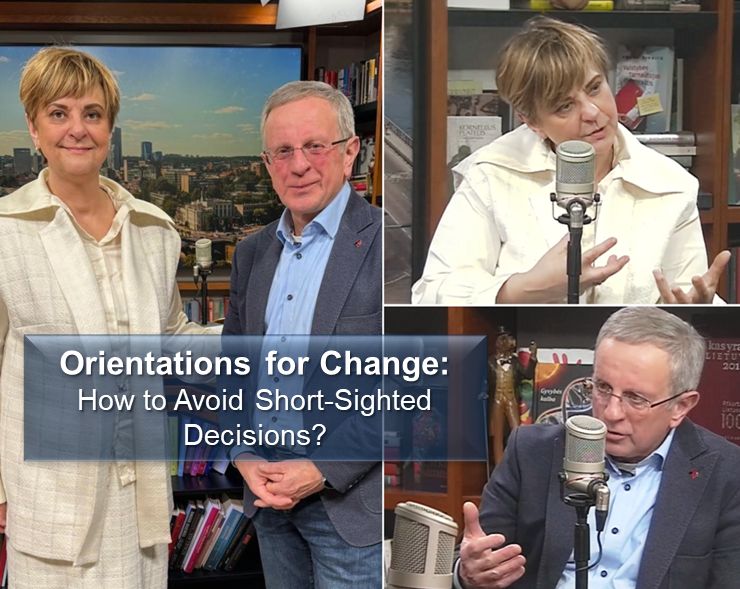
In business, when dissatisfaction with results arises, quick, short-term decisions are often made. But real change does not happen. “As many as 70% of changes fail because the wrong implementation approach is chosen: it is not always enough to adjust people’s actions - sometimes it is necessary to change the business model or even undertake a shift in thinking,” says Gintaras Vilda. ▪️ How can you identify what kind of change an organization needs? ▪️What is the difference between changes, transformations, and reforms? ▪️What conditions are necessary for a reform to take place? ▪️Why do some companies choose short-sighted decisions? Tune in to Episode 10 of the podcast series “Orientations for Change”: https://lnkd.in/dHFwvRzM 0:00:00 – Introduction 0:01:06 – On different depths of change: “In today’s society, the word ‘change’ generalizes all types of transformation.” 0:03:36 – What kind of change does an organization need? “The first step is to identify where the real problem behind poor results lies.” 0:07:38 – How was the “Manufacturing Innovation Valley” created? “It was a serious reform: it required transforming thinking and rethinking elements of company culture.” 0:13:03 – Why do companies choose short-term solutions? “Statistics show that about 70% of changes fail because inappropriate implementation methods are chosen.” 0:15:32 – A practical example by G.V.: “We reformed Lithuania’s innovation ecosystem.” 0:19:51 – On the conditions required for change: “No transformation or reform is possible without three key elements - mindset, culture, and behavior.” The episode is broadcast on Žinių radijas.
- LINKEDIN · IMAGESince 18 Mar 2026
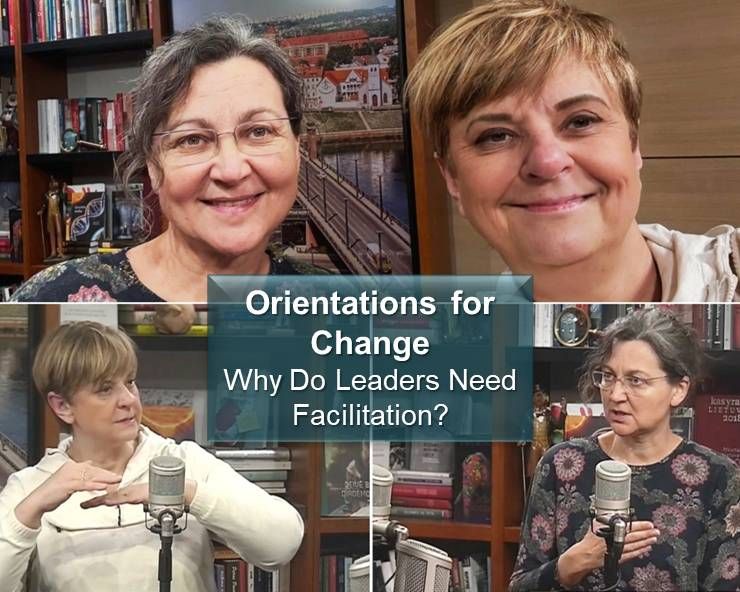
“The era we live in is full of incredible opportunities and a great deal of uncertainty about where they will lead us. There are no longer people who can do everything. The age of heroes is over. Today, we talk about the ability to coexist with different perspectives, to create, and to stay present in tension. Facilitation helps us do exactly that. We have reached a point where it is a strategic mistake to think: I will do everything myself,” says 𝐄𝐠𝐥ė 𝐃𝐚𝐮𝐧𝐢𝐞𝐧ė, founder of the Sociocracy Center, consultant at OVC Consulting, and lecturer at Vilnius University. ▪️ How does facilitation support the change process? ▪️ How can a group conversation be transformed into a meaningful dialogue? ▪️ How is facilitation different from moderation? ▪️ When does the leader-facilitator tandem become successful? Tune in to Episode 9 of the podcast series “Orientations for Change”: https://lnkd.in/dgWm-rgi 0:00:00 – Introduction 0:00:43 – On the essence of facilitation: “It is an effort to guide a group of people toward common ground.” 0:02:31 – What tools does a facilitator use? “A facilitator knows which method can help a group move into dialogue.” 0:04:06 – Facilitation vs. moderation: “Unlike a moderator, a facilitator ensures the group wants to move forward together.” 0:06:03 – The importance of facilitation in change: “Facilitation helps create a sense of unity that enables outcomes no individual could achieve alone.” 0:08:52 – Why is it hard to encourage organizations to try facilitation? “Our culture values speed.” 0:10:34 – What do leaders fear? “After facilitation, people feel more empowered, and leaders are unsure how to maintain control.” 0:12:03 – Responsibility and psychological maturity: “The ability to facilitate requires psychological maturity.” 0:16:39 – On a successful leader-facilitator tandem: “When roles are shared, creative solutions emerge.” The episode is broadcast on Žinių radijas.
6 of 27 adsSign up to see every HAI Institutas ad, filter by format and date, and get alerts on new ones.
See all 27 adsQuestions about HAI Institutas’s ads
Is HAI Institutas running LinkedIn ads?
We recorded no live LinkedIn ads for HAI Institutas on 8 Nov 2026.
How many LinkedIn ads has HAI Institutas run?
LinkedIn’s ad library lists 24 ads for HAI Institutas. We recorded 27 LinkedIn ads for HAI Institutas, first recorded on 22 Sept 2026 and last recorded on 22 Sept 2026.
Does HAI Institutas advertise on Facebook and Instagram?
HAI Institutas’s Facebook page had no active ads in Meta’s Ad Library, last recorded on 21 Oct 2026.
Does HAI Institutas run Google ads?
We recorded no Google ads for the domain hai.institute on 30 Oct 2026.
Which ad formats does HAI Institutas use?
The 6 LinkedIn ads on this page include 5 image ads.
Watch the companies you care about.
Filter every ad by industry, country, format and network, and get alerts when a company you watch starts running new ads.