On air · 1 of 3 networks
Gentis
- gentis.com
- HR & Recruiting
- BE
- 162 employees
Gentis’s ads on LinkedIn, Meta and Google, recorded by adsrunning. Browse the latest here for free. Sign up free to see all 52. Watch Gentis with Starter to get each new one in your feed.
Watchlist with Starter · $49/mo
| Network | Status | Live ads | Nov 2025LinkedIn activity · 52 weeksOct 2026 | Checked | Next step |
|---|---|---|---|---|---|
| Running | 7 | Checked 28 Oct 2026 | See all 52 ads → | ||
| Meta | Not checked | — | |||
| None recorded | 0 | No ads found on the Google Ads Transparency Center | Checked 30 Oct 2026 | Collect them with the API → |
Gentis has 7 live LinkedIn ads. We recorded no Google ads on 30 Oct 2026.
Latest ads
- LINKEDIN · IMAGESince 18 Feb 2026
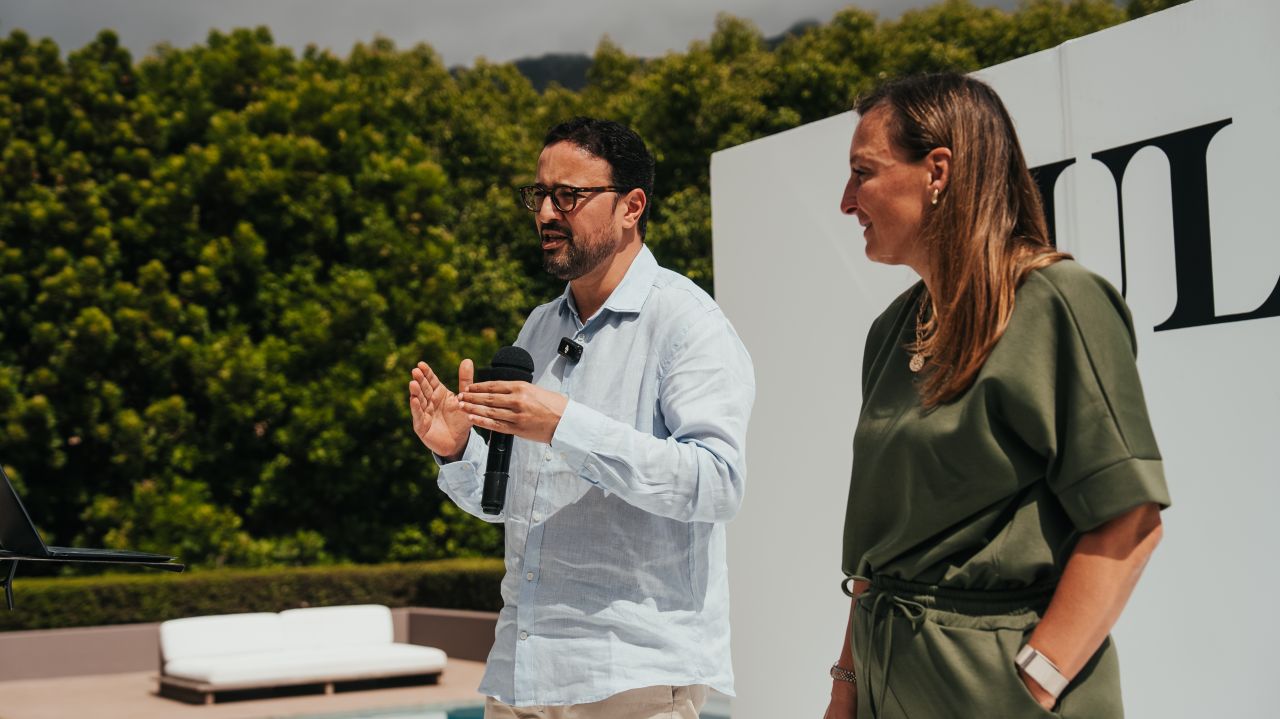
My husband and I have both given dozens of conferences. Different stages, different countries, different audiences. Last week in South Africa, we gave one together for the first time. Same stage. Same story. Completely unfamiliar. We had to figure out whose turn it was to talk, how to share the spotlight without stepping on each other, how to tell a story we'd never told as a unit. Funny thing is, we've built businesses side by side for years. Raised kids while scaling companies. Made decisions together that affected both our careers. But we'd always kept our professional voices separate. His audience, my audience. His way, my way. South Africa changed that. People didn't just want to hear about recruitment or entrepreneurship. They wanted to know how we do this together. How we balance ambition with family. How we support each other without competing. Apparently that's the part people are curious about. Took us long enough to figure that out. Thank you Marvin Ndiaye.
- LINKEDIN · IMAGESince 17 Feb 2026
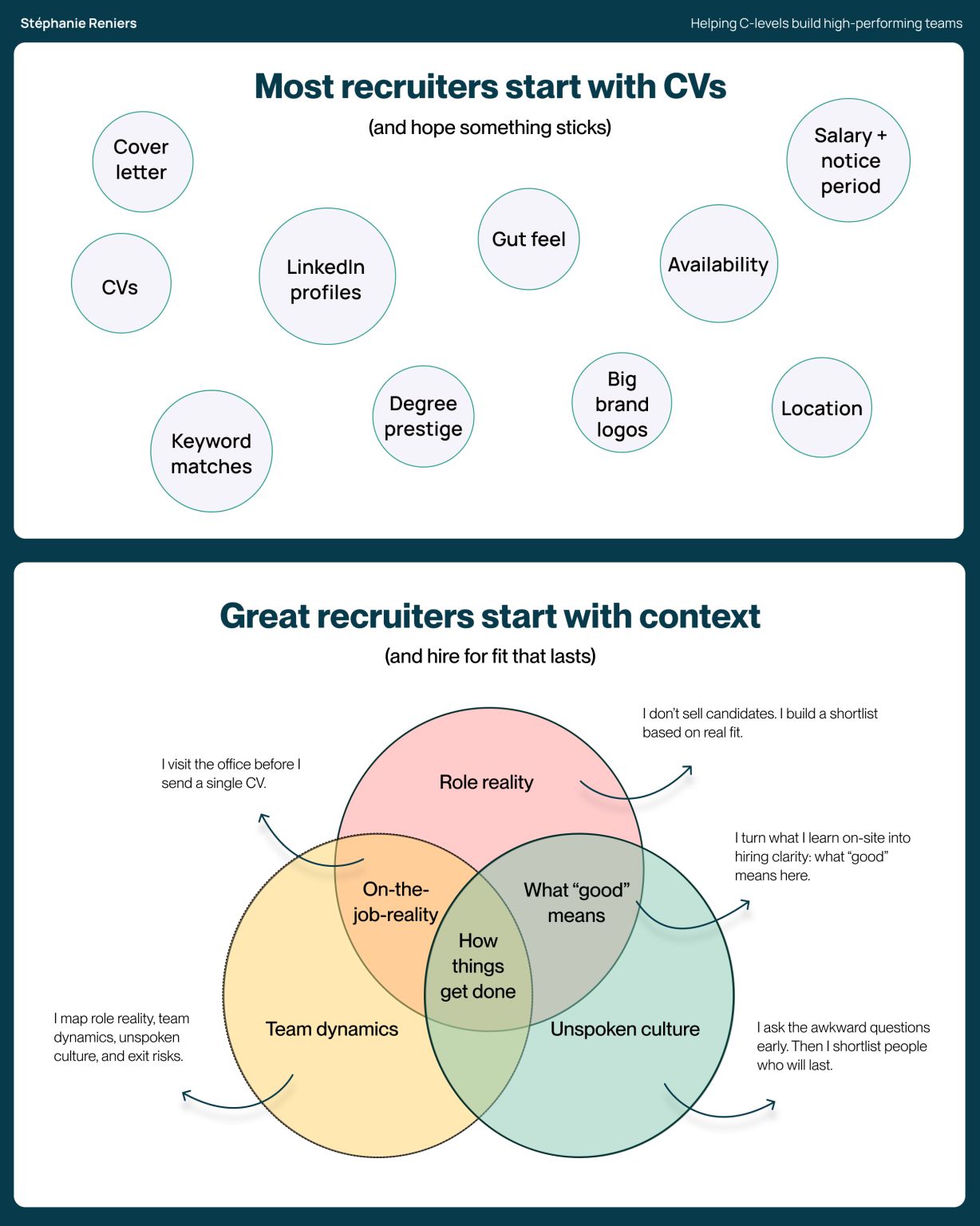
In 2010 I decided to do something seemingly inefficient in recruitment. CHROs keep thanking me for it: I stopped sending CVs until I'd visited the office. Not a video call. Not a briefing document. An actual visit. Sitting with the team, watching how they work, asking questions that aren't on any intake form. Other agencies called it a waste of time. They were busy sending 40 CVs and hoping something would stick. 14 years later: 650 hires. 53 nationalities. 8 countries. Here's what I ask before I source a single candidate: 1. About the role: • What does success look like at 6 months? At 18 months? • Why is this role open: growth, replacement, or restructure? • What happened with the last person in this seat? 2. About the team: • Who will they work with daily, and what are those people like? • What's the unspoken culture, the stuff not in the job ad? • If I sat in your office for a day, what would I notice? 3. About fit: • Who's thrived here that surprised you? Who struggled that you thought would succeed? • What would make someone leave within a year? • What do you need that you haven't found internally? These questions don't show up in a job description. That's the point. A CV tells me what someone's done. These questions tell me whether they'll actually work in your team, your culture, your context. It takes longer upfront. Here's what it saves: Six months managing a bad fit. The cost of rehiring. The slow drain when someone's technically fine but culturally wrong. I don't compete on speed. I compete on fit. And fit starts with the questions no one else is asking.
- LINKEDIN · IMAGESince 17 Feb 2026
Things I'm finally gutsy enough to no longer apologize for: 1. High standards. I pay for good work. I expect it. 2. Taking up space. If I'm in the room, I'm talking. 3. Saying no. Full sentence. No essay attached. 4. Prioritizing family. I leave for school plays. That's it. 5. Being direct. Clarity saves everyone time. Took me years to get here. Being a female CEO, you learn early that "assertive" and "aggressive" sit one word apart. So you hedge. I hedged. Early on, "sorry, but could we..." was my opener. I thought it was polite. It was making people trust me less. The more I apologized, the more they questioned me. The less I apologized, the more they listened. "Sorry" wasn't earning me respect. Dropping it did. Which of these five do you still catch yourself apologizing for?
- LINKEDIN · IMAGESince 17 Feb 2026
Most hiring managers think they can spot great talent in a polished interview. They're wrong. The fire alarm went off ten minutes into the interview. Chaos erupted. Everyone rushing out. Alarms blaring. The kind of disruption that derails everything. Most candidates would freeze. Wait for instructions. Apologize profusely for the inconvenience. He didn't. Here's the problem: We've built hiring processes that reward preparation, not adaptability. We value credentials over character. We mistake polish for performance. And then reality hits. Deadlines shift. Clients panic. Systems crash. Markets change overnight. That's when the gap shows. Between who looked good in the interview room and who actually delivers when conditions aren't perfect. The candidate I almost overlooked became one of our best hires : not because of what he said in that interview room, but because of what he did when the alarm went off. He asked if we could continue outside. Followed me to the parking lot. Pulled out his notebook. Picked up exactly where we left off. No frustration. No drama. Just calm focus. What I learned: Resilient teams don't start with impressive resumes. They start with people who perform in the moments no one rehearses. The parking lot interview revealed: • Adaptability when conditions changed without warning • Ownership of outcomes, not just processes • Curiosity that outlasted comfort The solution isn't better interview questions. It's paying attention to unscripted moments. Skills can be coached in months. Mindset takes years to build. The hires who scale with your company aren't the ones who look "perfect" on paper. They're the ones who stay steady when things fall apart. Who solve instead of complain. Who don't need ideal conditions to perform. Those people become your culture carriers. Your stabilizers. Eventually, your leaders. Over to you: What unpolished moment made you realize someone was the right hire?
- LINKEDIN · IMAGESince 17 Feb 2026
"Culture fit." "She's too assertive." "We need someone dynamic." We hear these phrases constantly in recruitment. They sound professional and thoughtful, but they're coded language that filters out anyone who doesn't look or think exactly like the people already inside. That's how companies accidentally hire the same profile repeatedly. Same background. Same mindset. Same blind spots. If every hire feels familiar, your culture never grows. At Gentis, we challenge this thinking. Not aggressively, but gently and firmly. We ask: "What makes someone a culture fit?" "What value are you hoping this person brings?" "What would a culture add look like instead?" When we shift the conversation from fit to add, everything changes. The question becomes: "Do they bring something we don't have yet?" rather than "Do they blend in?" This builds stronger teams and real diversity. Once you stop hiring for comfort, you start hiring for growth.
- LINKEDIN · IMAGESince 17 Feb 2026
Quiet quitting wasn’t the problem. Quiet leadership was. And every HR leader I talk to is bracing for more of it in 2026. For two years, I watched teams do the emotional equivalent of shutting the window while the house was on fire. - People disengaged. - Managers looked away. - Everyone lost. 2026 won’t be fixed with pep talks or pulse surveys. It’ll take managers who can name tension before it explodes. Not louder leaders, just honest ones. The ones who don’t confuse silence with alignment. Who don’t hide behind “positivity.” Who don’t send a soft Slack and call it “feedback.” Most managers wait. They hope. They sugarcoat. Meanwhile, the issue grows legs. If your managers can have that one conversation early? (I mean clearly, directly, without drama) You’ll stop 80% of the fires you’re used to fighting. I help companies build teams that stay. Need help hiring leaders who can actually lead? DM me.



6 of 52 adsSign up to see every Gentis ad, filter by format and date, and get alerts on new ones.
See all 52 adsWatch the companies you care about.
Filter every ad by industry, country, format and network, and get alerts when a company you watch starts running new ads.