0 new LinkedIn ads in 30 days · 2 of 3 networks checked

Gehtsoft USA LLC ads
- gehtsoftusa.com
- Software Development
- US
- 26 employees
Gehtsoft USA LLC’s ads on LinkedIn, Meta and Google, recorded by adsrunning. Browse the latest here for free. Sign up free to browse our full recording. Watch Gehtsoft USA LLC on any plan to get each new one in your feed.
Watchlist included in every plan
What Gehtsoft USA LLC runs
- Single image · LinkedIn
- 6
| Network | Status | Last 30 days | Total ads found | Ad activity | Checked | Next step |
|---|---|---|---|---|---|---|
| None recorded | 0 | 128+ | 11/10/2026 | View ads → | ||
| Meta | Not checked | — | — | View ads → | ||
| None recorded | — | — | 10/30/2026 | View ads → |
Gehtsoft USA LLC has no new LinkedIn ads in the last 30 days. We recorded no Google ads on 30 Oct 2026.
Latest ads
- LINKEDIN · IMAGESince 28 Jan 2026
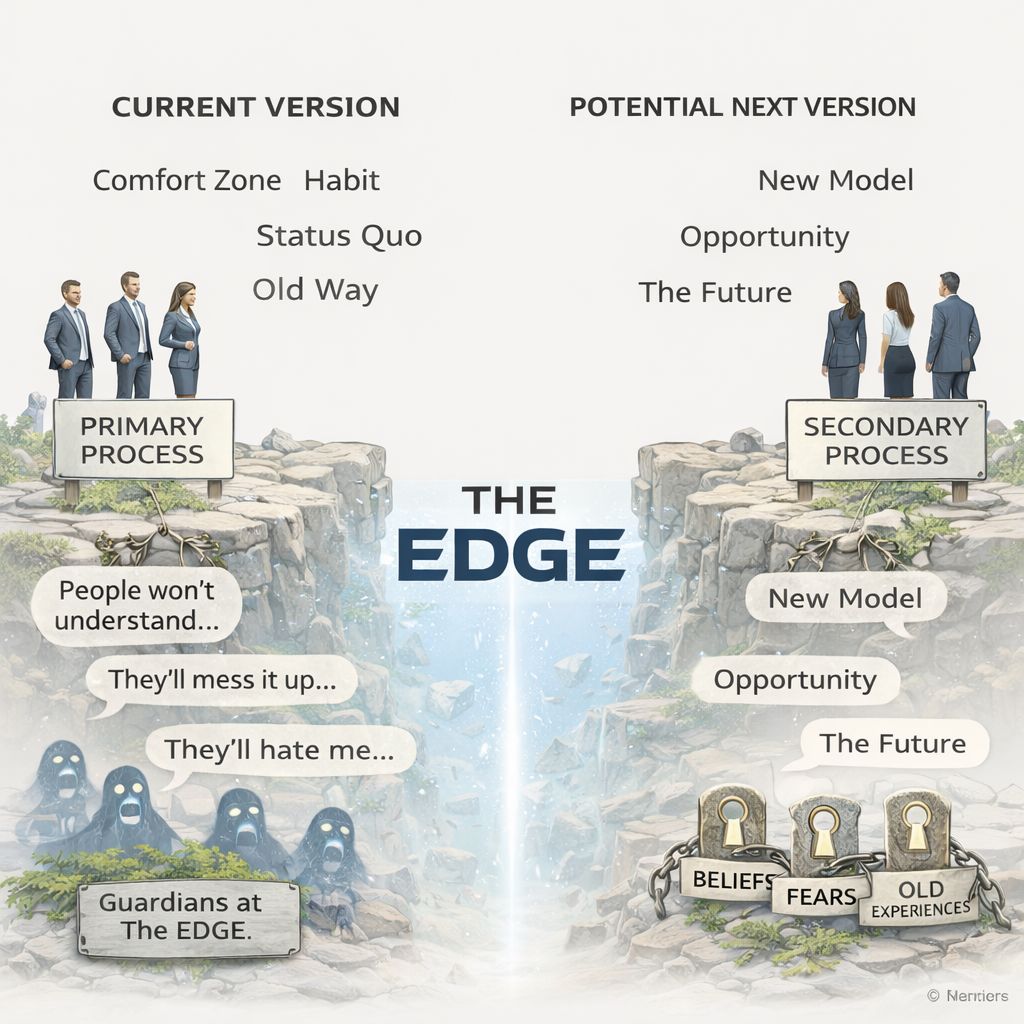
Why your team says it wants to change - but nothing shifts There's a framework from process-oriented psychology (Arnold Mindell) that explains this perfectly. It's called the Edge. Your team always has two parts: 1. Current version of yourself This is your habitual way of working: how you make decisions, communicate, run meetings. What's already settled and "how it usually goes." In process work, this is called the primary process. 2. Potential next version This is where you supposedly want to go: delegate more, be a strategist instead of a firefighter, have a proactive and responsible team. This is the secondary process — the new thing that doesn't feel like "you" yet. Between them is a boundary - the Edge. It's the moment where you see the new behavior model, but you hit an invisible wall. Thoughts pop up: "I can't change processes so suddenly, people won't understand." "If I demand more accountability, they'll hate me." "If I hand over that project, they'll mess it up - better I do it myself." These are the guardians at the Edge: beliefs, fears, old experiences protecting the status quo. How it looks in real companies: - A leader says they want strategic focus but keeps micromanaging every task. - A team says it wants more responsibility but pulls everything back to the boss at the first sign of risk. - An organization declares "agility and speed" but every decision drowns in approvals. Not because people are "weak," "lazy," or "don't care." But because they're standing at their personal or team Edge. The key insight: Until the Edge is made conscious and worked through, any new process, strategy, or org structure will be quietly, systematically sabotaged. What you can do as a leader: Notice the moments where you "hit the wall" and start defending the old model. Talk directly with your team: "What are we afraid of if we really start working the new way?" Distinguish: where are real risks, and where is it just habit and fear of crossing the boundary? The coaching work at this point isn't to "motivate harder." It's to help you see your Edge and safely cross it: update your leadership role, change your management style, reset team agreements. If you feel like you've outgrown the old way of working but new approaches keep "rolling back" — it's probably not a discipline issue. It's your Edge. I work with this as coach with: — Transitions from operations to strategic leadership — Building a new management style — Teams that want to change but are stuck If this resonates — reach out. Let's look at your specific Edge and find real steps to move through it. #LeadershipCoaching #ExecutiveCoach #ChangeManagement #TeamDevelopment #EdgeWork #ProcessPsychology #LeadershipTransition #OrganizationalChange #CoachingInsights #PersonalGrowth
- LINKEDIN · IMAGESince 28 Jan 2026
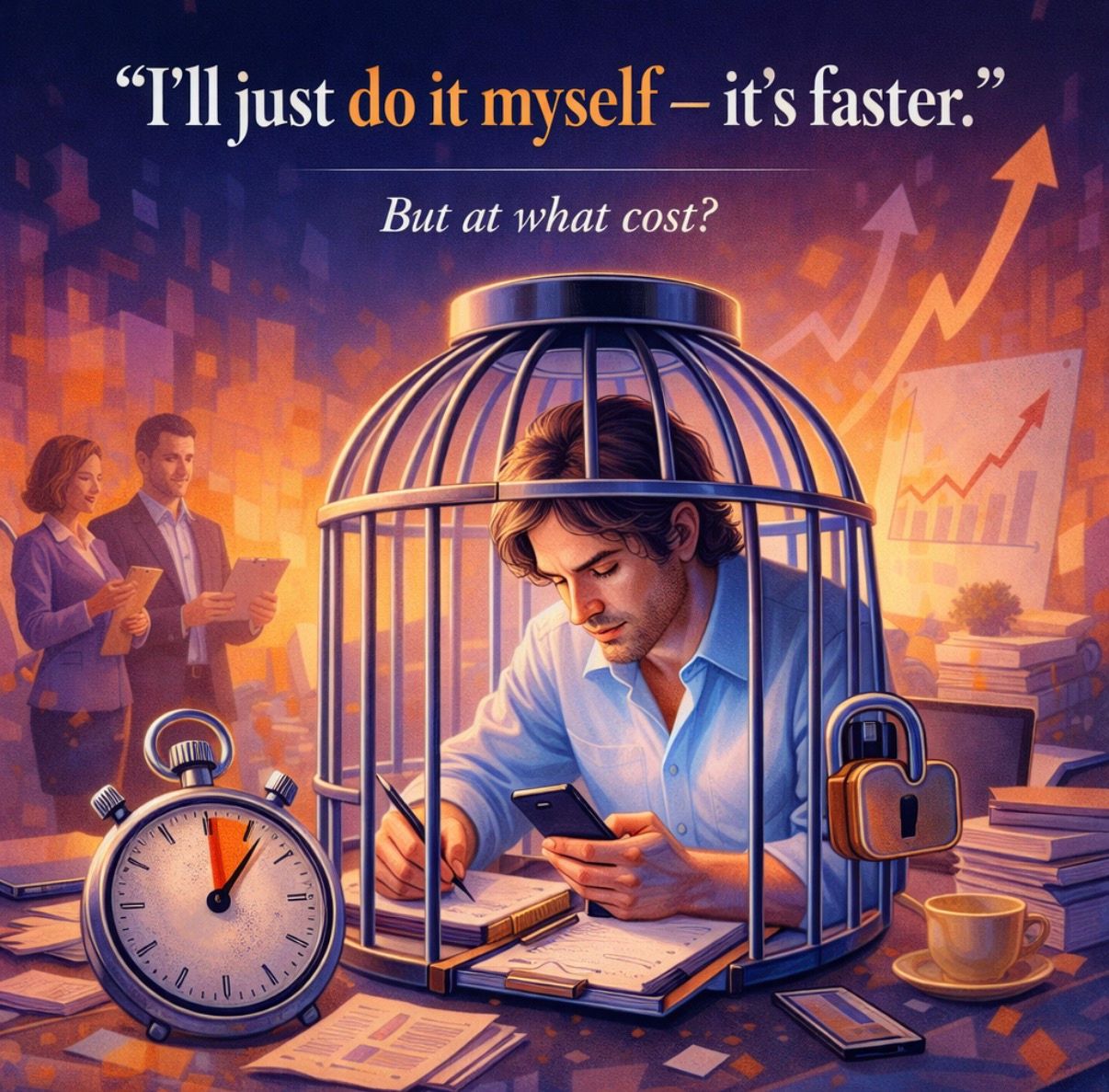
“I’ll just do it myself — it’s faster.” It sounds like productivity. In a scaling business, it’s often one of the most quietly expensive habits you can have. I see this pattern again and again: what feels fast for one person becomes slow — and costly — for the whole system. A real example from friends of our family. They run a successful fashion brand in Europe — a husband-and-wife business that has grown rapidly. Many everyday processes are still not written down, because “explaining it would take longer than doing it myself.” Here’s the math we rarely stop to do. If something takes 30 minutes, it feels trivial. But an 8-hour day has only 16 half-hour slots (and that’s before we account for the fact that we’re human — we get distracted, need to eat, use the bathroom, and reply to a message from a child). Fill them with “quick fixes,” and the day is gone. Not on strategy. Not on growth. Not on building systems. Just on keeping things running. We often see the same challenge described differently depending on the lens: economists call it opportunity cost, operations experts see it as a bottleneck, and management frameworks warn of key-person dependency. Different terms, same reality: when the highest-leverage people spend time on low-leverage tasks, growth slows and risks rise. The real cost here isn’t time. It’s scale. When processes aren’t documented and delegated: • growth becomes limited by one person’s capacity, • strategic work is constantly postponed, • and the organization becomes fragile. Processes are not bureaucracy. They’re how you protect the most expensive resource in the company — the time of the people who create growth. If your days are filled with “just 30-minute tasks,” ask yourself: Are you being fast — or quietly making your business more expensive to grow? Curious to hear from founders and leaders here: what was the first process you finally stopped doing yourself — and what did it unlock for your business? #Operations #Leadership #Scaling #StrategicFocus #OrganizationalDesign
- LINKEDIN · IMAGESince 13 Jan 2026
Most teams ask the wrong question. They ask: «What if this fails?» The brain answers politely. Optimistically. And usually — uselessly. There’s a much more effective move. Assume the project has already failed. Completely. Budget gone. Timeline blown. Trust damaged. And only then ask: «Why did this happen?» That small shift changes everything. When failure is hypothetical, people defend the plan. When failure is a fact, the brain stops protecting ego and starts diagnosing reality. This is the logic behind Pre-Mortem. It doesn’t add pessimism. It removes illusion. Instead of learning after the damage, teams borrow insight from the future — while there’s still time to act. Post-mortems explain the past. Pre-mortems protect the future. If your strategy only feels solid because you haven’t imagined its collapse yet, it’s not confidence. It’s blind spot. #Leadership #DecisionMaking #RiskManagement #PreMortem
- LINKEDIN · IMAGESince 13 Jan 2026
The most dangerous illusion of a smart person: "I am thinking objectively." You know that feeling during a heated debate? You are bringing facts, logic, and common sense to the table. Your opponent? They seem to be driven by pure emotion and hidden biases. In that moment, you feel like the only voice of reason in the room. Here is the catch: They are thinking exactly the same thing about you. In psychology, this is called the Bias Blind Spot. It is a cognitive trap identified by researchers at Princeton. The mechanism is simple but harsh: we are physically incapable of seeing our own biases. Why? Because of the "Introspection Illusion." 🔹 When we judge others, we look at their actions (and immediately spot the errors). 🔹 When we judge ourselves, we look inward (at our intentions). Inside our heads, everything looks clean. We see our own "good intentions" and "experience." Our brain effectively hides the distortion process from us. Here is the scary part for any leader: Intelligence doesn’t save you. Research shows that high IQ does not inoculate you against the Bias Blind Spot. In fact, smart people are often better at constructing complex logical defenses for their own errors. We build fortresses of arguments to protect our "rightness." So, what can a leader do? 1. Admit that self-reflection has its limits here. You cannot see your own blind spot without a mirror. In business, your "mirror" is that one team member or partner who isn’t afraid to say: "Wait, I think you’re wrong here, and here is why." Don’t silence those people. Don't fire them. They are the only thing standing between you and the hallucination of your own infallibility. 2. "Consider the Opposite." A mental exercise: deliberately force yourself to find 2–3 arguments against your own point of view. This compulsively triggers critical thinking. #Leadership #DecisionMaking #Psychology #CognitiveBias #Management #SelfAwareness
- LINKEDIN · IMAGESince 8 Jan 2026
Alignment is overrated. What leaders actually need is structured disagreement. Most leadership teams don’t fail because they lack intelligence or data. They fail because once alignment appears, thinking quietly stops. An idea gains momentum. Agreement starts to feel like progress. And challenging the direction becomes socially costly. This is exactly where the Devil’s Advocate matters. Not as a personality. As a mechanism. Instead of hoping someone will push back, you assign dissent a role. For a limited time, one person is responsible for arguing against the decision — regardless of their personal opinion. This changes the dynamics of the room: disagreement stops being emotional; ideas get tested before reality tests them; leaders see risks early, not after launch. When dissent is optional, it disappears. When dissent is built into the process, decision quality goes up. Alignment feels efficient. Structured disagreement makes teams resilient. #Leadership #DecisionMaking #ExecutiveTeams #CognitiveBias #Strategy
- LINKEDIN · IMAGESince 8 Jan 2026
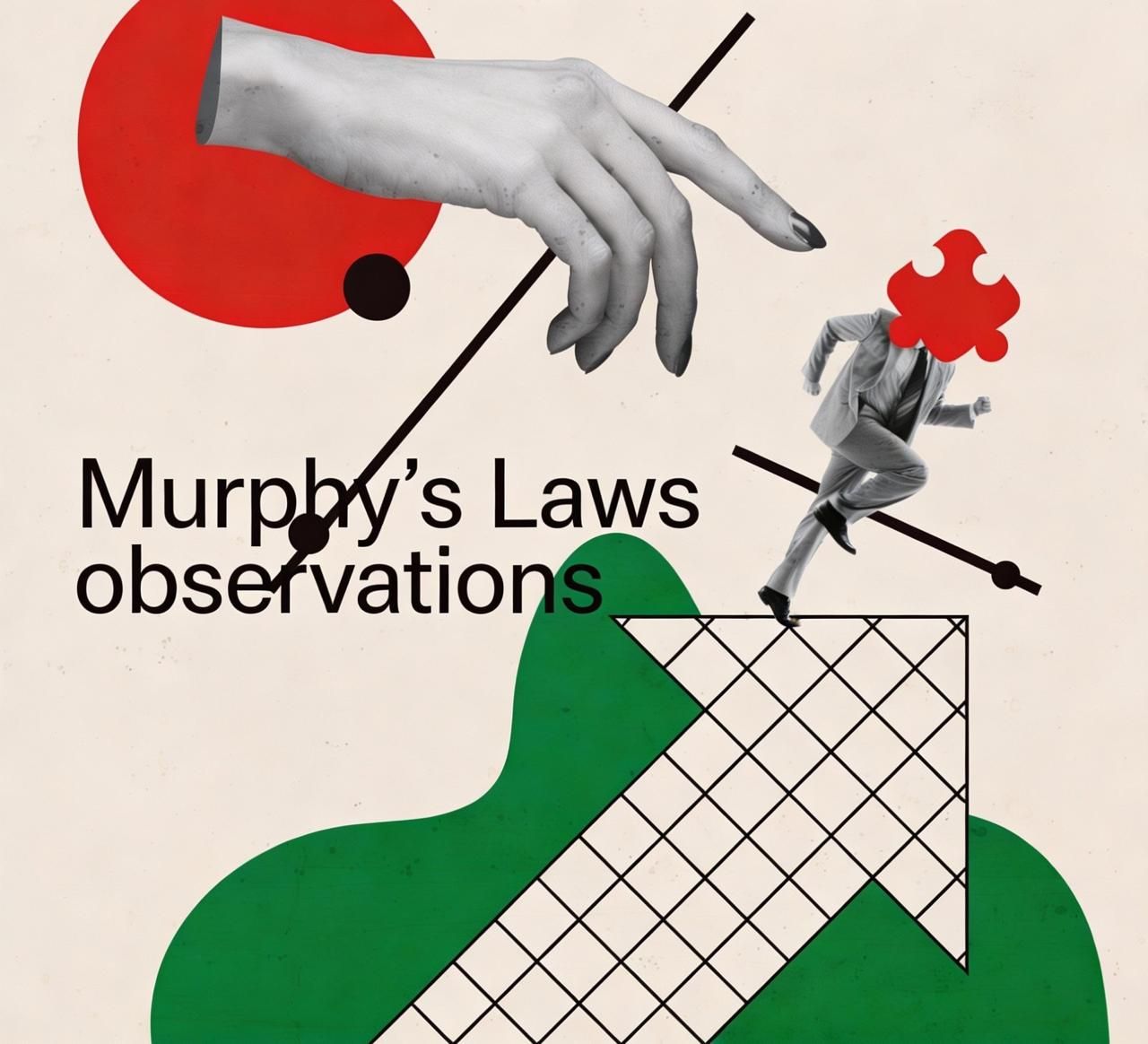
Why do the busiest people always get more done than those with an empty calendar? I recently explored a case during a coaching session: a critical task stalled with an employee who was "completely free," while the overloaded team lead finished their part in an hour. It reminded me of an old Air Force engineering truth: "If you want something done urgently, give it to the busiest person." It sounds counterintuitive, but the busy person has momentum. The idle person has inertia (and excuses). Murphy’s Laws aren’t just internet jokes. They are engineering observations on how systems break. And a team is a system. 👉 Here are 3 laws I see in almost every struggling company: 1. The Collective Responsibility Paradox: "If more than one person is responsible for a task, no one is at fault." Without a single owner (DRI), tasks don't get done - they get "discussed." 2. The Meeting Triviality Principle: "The time spent discussing a problem is inversely proportional to its importance." We spend an hour debating the button color and 5 minutes approving the architecture. Why? Because everyone has an opinion on color; architecture is scary. 3. The Scaling Fallacy: "Eight people do the work of ten better than twelve." Adding bodies to a late project is like fighting fire with gasoline. Communication noise kills efficency. Is your team stuck in these paradoxes? As a coach, I help you rebuild the system so it works despite Murphy. DM me if you are tired of fighting the chaos alone. #management #teamcoaching #productivity #murphyslaw #leadership #gehtsoft Gehtsoft USA LLC



6 of 128+ adsSign up to see every Gehtsoft USA LLC ad, filter by format and date, and get alerts on new ones.
See all 128+ adsQuestions about Gehtsoft USA LLC’s ads
Does Gehtsoft USA LLC have new LinkedIn ads?
We found no new LinkedIn ads for Gehtsoft USA LLC in the 30 days to 12 Nov 2026.
How many LinkedIn ads has Gehtsoft USA LLC run?
LinkedIn’s ad library lists 68 ads for Gehtsoft USA LLC. We recorded 128 LinkedIn ads for Gehtsoft USA LLC, first recorded on 20 Sept 2026 and last recorded on 20 Sept 2026.
Does Gehtsoft USA LLC run Google ads?
We recorded no Google ads for the domain gehtsoftusa.com on 30 Oct 2026.
Which ad formats does Gehtsoft USA LLC use?
The 6 LinkedIn ads on this page include 6 image ads.
Watch the companies you care about.
Filter every ad by industry, country, format and network, and get alerts when a company you watch starts running new ads.