Not on air · 2 of 3 networks checked
Fractional Source
- thefractionalsource.com
- Technology, Information and Internet
- 4 employees
Fractional Source’s ads on LinkedIn, Meta and Google, recorded by adsrunning. Browse the latest here for free. Sign up free to see all 20. Watch Fractional Source on any plan to get each new one in your feed.
Watchlist included in every plan
| Network | Status | Live ads | Nov 2025LinkedIn activity · 52 weeksNov 2026 | Checked | Next step |
|---|---|---|---|---|---|
| None recorded | 0 | Checked 3 Nov 2026 | See all 20 ads → | ||
| Meta | Not checked | — | |||
| None recorded | 0 | No ads found on the Google Ads Transparency Center | Checked 18 Oct 2026 | Collect them with the API → |
Fractional Source has no live LinkedIn ads. We recorded no Google ads on 18 Oct 2026.
Latest ads
- LINKEDIN · IMAGERecorded 27 Oct 2026
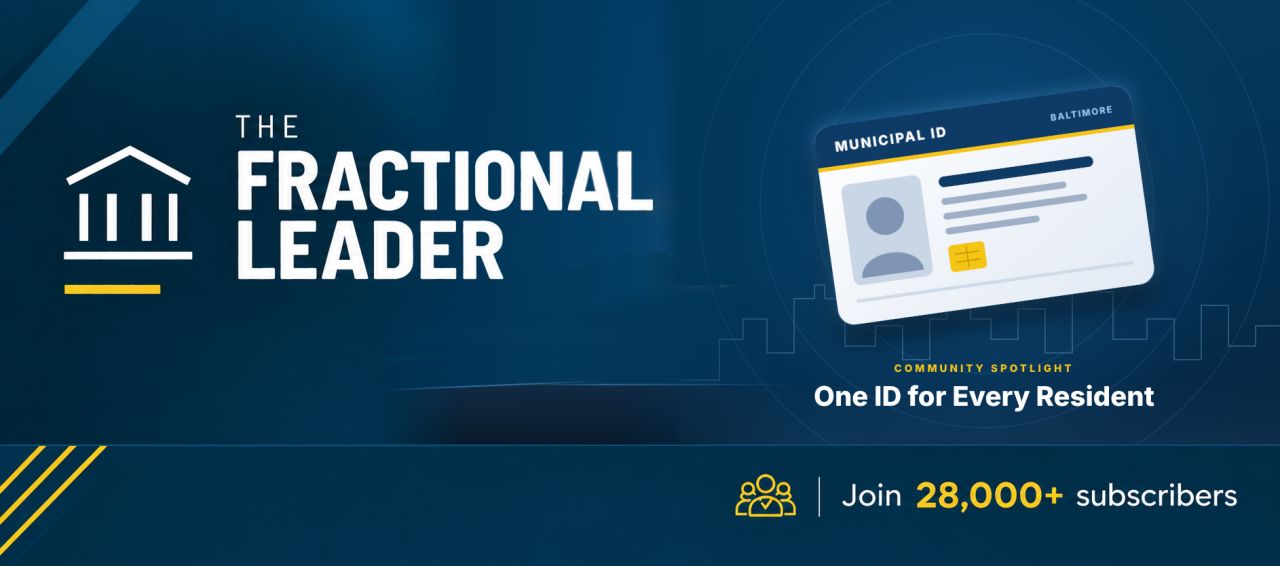
$1.35 million. Nine years. One ID card that every city agency has to accept. In 2016, Councilman Brandon M. Scott got Baltimore’s municipal ID program passed. Then it sat on the shelf with no funding. Now he’s mayor, and he’s finishing what he started. The card will be free for every resident. It’s aimed at people who often can’t get government ID, like seniors, immigrants, and people experiencing homelessness, and who are cut off from city services as a result. The city’s IT office is running it, and a pilot starts in fall 2027. In this week’s Community Spotlight: •Why IT, not a service department, owns the rollout •The four cities Baltimore studied first •The data privacy decision that sets it apart For anyone who has watched a good policy stall after approval, Baltimore shows how to get one moving again. Full story in this issue of The Fractional Leader → link in the comments.
- LINKEDIN · IMAGERecorded 18 Oct 2026
During a cyber incident, who decides whether to shut down systems? A suburban school district serving more than 11,000 students put that question to its leaders in a cybersecurity tabletop exercise. The superintendent, technology leadership, communications staff, and municipal emergency management partners worked through scenarios built around the district’s own risks. Inside this issue: •What audits weren’t designed to test •The communication questions leaders had to answer •Why municipal partners changed the picture •What the district plans to do next Read the full blog in today’s issue of The Fractional Leader. → Link in the comments.
- LINKEDIN · IMAGERecorded 18 Oct 2026
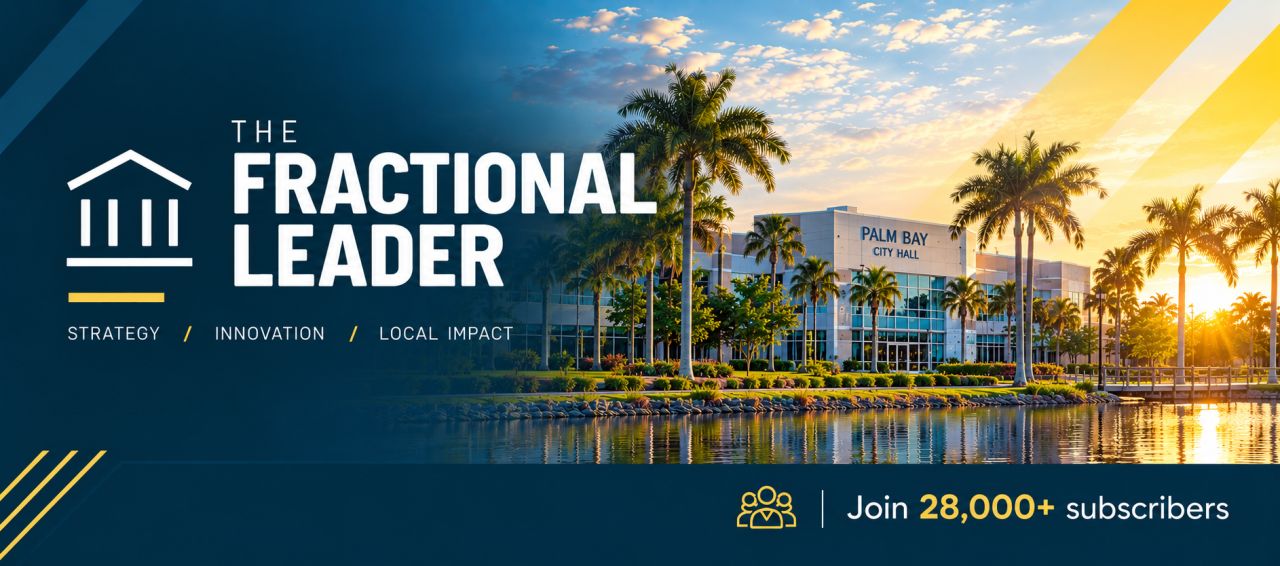
Most local governments assume that adopting AI means signing a vendor contract. Palm Bay, Florida didn't. Under Mayor Rob Medina, the city has pushed to make government more accessible to residents. But commercial chatbots carried two risks: •Municipal data ending up with outside parties •Answers drifting from approved information So the city built its own: •Open-source tools •City-owned servers •Answers drawn only from vetted city documents The real story is how they made it safe enough for residents. With one design choice, some questions never reach the AI at all. Read our Community Spotlight on Mayor Medina and Palm Bay's approach at the link in the comments →
- LINKEDIN · IMAGERecorded 18 Oct 2026
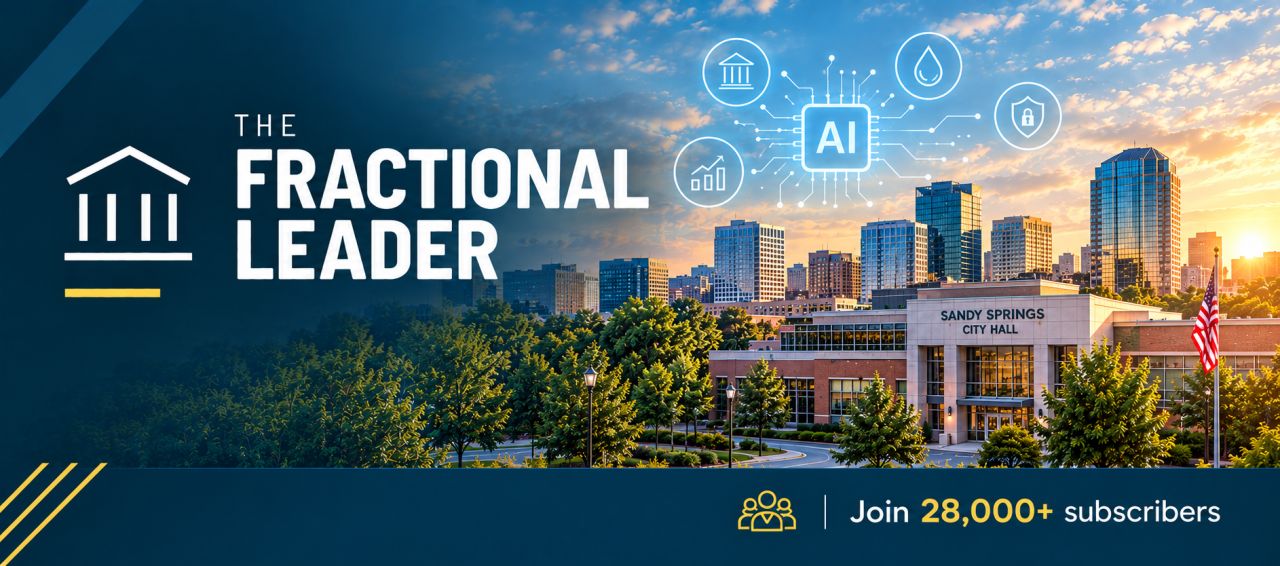
What does a city do when it could lose a third of its revenue? In Sandy Springs, Georgia, one answer is to go further with AI than any of its neighbors. Mayor Rusty Paul is in his final term. He has an aging water system, a mediation with Atlanta and a state proposal that could cut city revenue by one-third. He's also leading one of the most ambitious local government AI efforts in the Southeast. Here's what we cover: •The pilot result that changed the city's approach •What 37 employees learned testing AI at work •How the city protects resident privacy •Paul's unusual request of AI vendors If you lead a city, county or department, this is a model to study. → Read the full story. Link in the comments.
- LINKEDIN · IMAGERecorded 18 Oct 2026
What happens when a city actually listens to 53 residents about which streets scare them? In El Paso's case, people stop dying on those streets. Under Mayor Renard Johnson, the city is proving what's possible when leadership backs data-driven action: •36% drop in roadway fatalities — 3x the national rate •Residents can request safety fixes on any high-injury street •$9.9M in federal funding unlocked by proving small wins first •The city banned the word "accident" — because road design is a choice No massive capital overhaul. No five-year wait. Curb extensions near schools. Lane changes based on crash data. Resident input treated like the intelligence it is. If you work in local government, this is the playbook worth studying. Full breakdown in this issue of The Fractional Leader. Link in comments-->
- LINKEDIN · IMAGERecorded 18 Oct 2026
How does a city of 540,000 convince Apple, Google, and Meta to build on the same 5-mile road? Mesa's answer is worth studying. What stood out about Mayor Mark Freeman's approach: •A tech corridor designated in 2014 — a decade before the payoff •An expedited entitlement process built to win deals faster •School-to-employer pipelines feeding jobs directly to residents •A 14% violent crime drop alongside the growth Mayor Mark Freeman is a retired fire captain with 31 years on the job. He's not running Mesa like a politician. He's running it like an operator. Continue reading in this week's The Fractional Leader. Link in comments -->



6 of 20 adsSign up to see every Fractional Source ad, filter by format and date, and get alerts on new ones.
See all 20 adsWatch the companies you care about.
Filter every ad by industry, country, format and network, and get alerts when a company you watch starts running new ads.