0 new LinkedIn ads in 30 days · 3 of 3 networks checked

FlexMade ads
- flexmade.com
- Software Development
- US
- 88 employees
FlexMade’s ads on LinkedIn, Meta and Google, recorded by adsrunning. Browse the latest here for free. Sign up free to browse our full recording. Watch FlexMade on any plan to get each new one in your feed.
Watchlist included in every plan
What FlexMade runs
- Single image · LinkedIn
- 6
| Network | Status | Last 30 days | Total ads found | Ad activity | Checked | Next step |
|---|---|---|---|---|---|---|
| None recorded | 0 | 147+ | 11/08/2026 | View ads → | ||
| Meta | None recorded | — | — | 10/20/2026 | View ads → | |
| None recorded | — | — | 10/29/2026 | View ads → |
FlexMade has no new LinkedIn ads in the last 30 days. Its Facebook page had no active ads on 20 Oct 2026, and we recorded no Google ads on 29 Oct 2026.
Latest ads
- LINKEDIN · IMAGESince 18 Sept 2026
A product page usually gets attention during ecommerce migration because it sits close to the purchase. But category pages can be even more sensitive. They often attract broad commercial search traffic: running shoes, refrigerators, televisions, vacuum cleaners, sportswear, and hundreds of similar queries. A customer may search by product type first, compare available options, and only then move to a specific product. That makes category pages a key part of the buying path. During migration, several things can go wrong: - Category structure changes Old categories may be renamed, merged, split, or moved deeper inside the new site. If redirects rely only on URL patterns, the old page may lead to a weak match or a 404. - Link equity gets interrupted Category pages often collect backlinks from reviews, guides, partner pages, and saved links. Losing the correct redirect can affect many search queries at once. - Product visibility drops When a category page disappears or points to the wrong place, the products inside that category lose part of their discovery path. The issue moves beyond SEO and starts affecting sales. - Recovery takes time A lost product page can be painful. A lost category page can take months to rebuild in search, especially if it carried years of traffic and external links. That is why category pages need careful mapping before launch. FlexMade created Redirectify AI to support this work during migrations. The tool analyzes page content, titles, metadata, headings, and semantic context, then helps match old category pages with the most relevant new pages. For retail teams, this reduces manual work and gives SEO specialists more time to review high-risk matches before traffic is affected. We covered this topic in more detail in the article on our website: https://bit.ly/4wwR6fz
- LINKEDIN · IMAGESince 23 Oct 2025
Stress tests a system, and it tests people too. In a stable work environment, differences in how people operate aren’t always visible. But when something breaks — when a client suddenly pulls a project, timelines get tight, or priorities shift overnight — that’s when you really see how people respond. Some freeze or go quiet. Others jump in, step up, or quietly hold the line for the rest of the team. Watching that unfold has taught me a few things. You can’t predict how someone handles pressure from a CV. You see it in real situations. And you can’t expect everyone to respond the same way. Some of the best people I’ve worked with aren’t loud in a crisis, but they’re steady. They support others and keep moving. For a leader, the key is not to overreact to reactions. Notice them. Support them. And build a team where different types of strength are respected, especially when things get messy. That’s how resilience really works. Forcing people to «toughen up» is futile. Being a good leader is knowing how your team operates under stress, and giving them space to stay strong in their own way.
- LINKEDIN · IMAGESince 23 Oct 2025
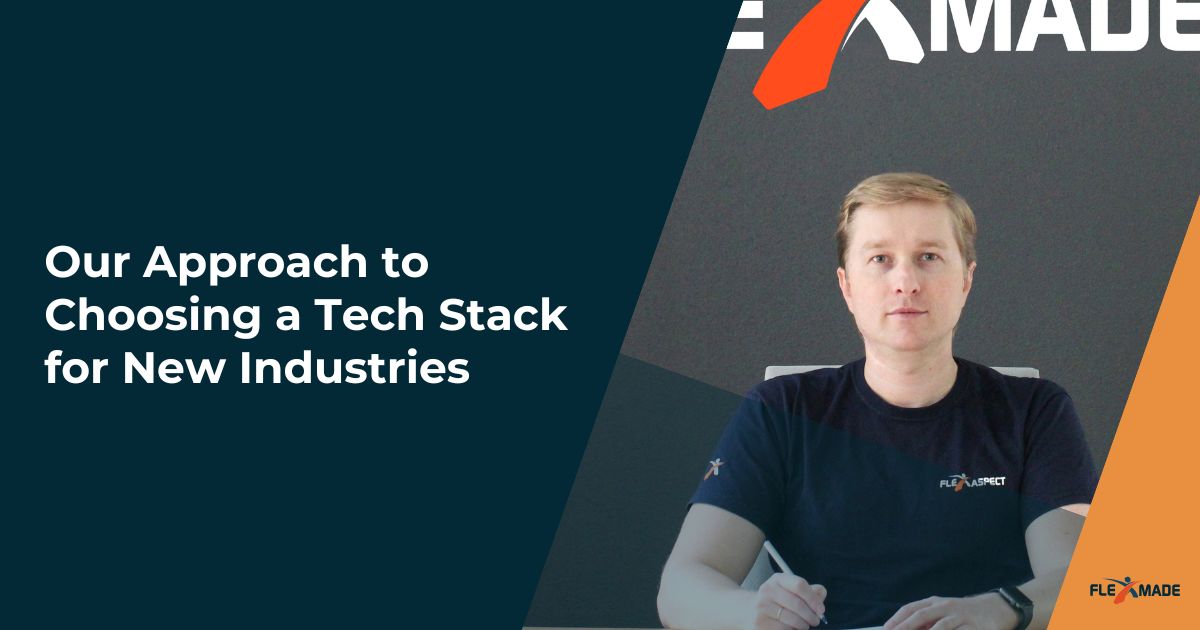
Choosing the wrong tech stack in an unfamiliar industry can cost months of work and slow down delivery. So we have to approach this task carefully. When we enter an industry we haven’t worked with before, the starting point is always the client’s requirements and business goals. Those define the boundaries: performance expectations, regulatory needs, integration points, and any limitations on budget or timelines. From there, we look at the technologies we already know to be reliable in production. Using a proven stack gives us predictability in delivery speed and confidence in the stability of the final solution. It also ensures we can build a team quickly and scale it when the product grows. Of course, every industry brings its own specifics. Telecom will demand certain security protocols, while e-commerce may need particular integrations or optimization patterns. In those cases, we extend the stack with technologies tailored to the domain. This balance between proven tools and selective adaptation lets us deliver predictable outcomes while still respecting the unique demands of a new market.
- LINKEDIN · IMAGESince 23 Oct 2025
Every software project starts with a question: what does the business really need from technology? Answering this clearly is the difference between building features and building value. 🔹 Start with business goals Technology should solve specific problems. Are you aiming to improve customer experience, streamline internal workflows, or open new revenue channels? Clear goals help prevent overengineering and wasted effort. 🔹 Map current processes Look at how your teams and customers interact with existing systems. Identify bottlenecks, manual workarounds, or areas where data isn’t connected. These insights often highlight the areas where software can bring the most value. 🔹 Define must-haves vs. nice-to-haves Every project has constraints — budget, time, resources. Prioritizing core features ensures the first release brings tangible results, while additional features can be phased in later. 🔹 Plan for growth Technology needs to support today’s operations, but it also needs to have the capacity for tomorrow’s opportunities. Scalability, integration potential, and maintainability should all factor into early planning. At FlexMade, we guide clients through this discovery phase to align technical requirements with real business objectives. The result is a foundation that supports both immediate impact and long-term growth. https://flexmade.com/
- LINKEDIN · IMAGESince 23 Oct 2025
The role of COO looks different in every company. For me, it’s never been about big presentations or sitting above the process. This role needs context, consistency, and enough hands-on awareness to step in when needed without disrupting what’s already working. That means knowing how much each direction can handle, where the limits are, and how much margin we have before something breaks. One part of the role is keeping everything in balance. You can’t scale just sales or just tech. Every function has to grow together. If one lags, it drags everything else down with it. Another part is making tough decisions, like having to let go of people because the business hit a wall. That kind of responsibility doesn’t get easier, even if it becomes more familiar. And the day-to-day tasks: helping teams stay focused, making sure communication stays clear, and spotting the silent issues before they turn into real ones. You don’t need to be involved in everything. But you do need to know where to look, and when to step in quietly.
- LINKEDIN · IMAGESince 23 Oct 2025
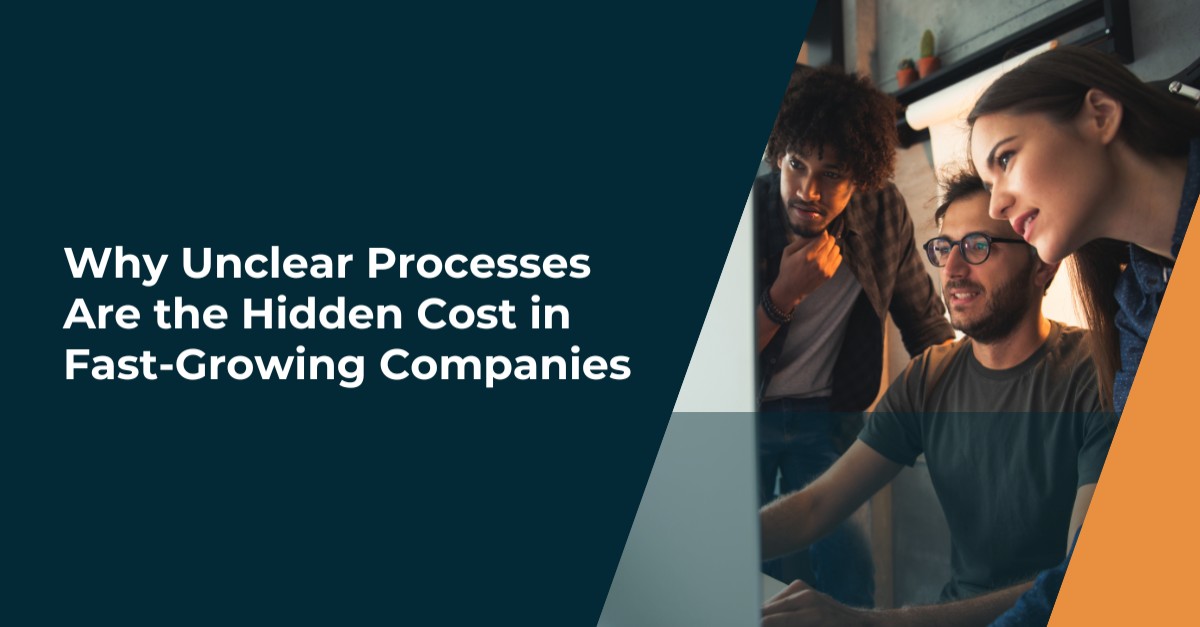
When companies grow quickly, they often rely on speed to compensate for structure. Everyone’s busy, things get done, but not always the same way twice. At first, it doesn’t seem like a problem. Deadlines are met, clients are happy, work is moving. But underneath that movement, something else starts happening: people begin filling the gaps with assumptions. One team documents things carefully, another relies on chat messages. One project uses a consistent estimation model, another doesn’t. Over time, that inconsistency slows things down. New hires take longer to onboard. Teams duplicate effort. And no one is fully sure what’s actually been agreed on. In such cases, the cost isn’t visible until something breaks. A missed detail, a delayed response, or a decision that gets made twice, and the lack of structure If the work is growing and the margin for misunderstanding is getting smaller, the structure has to grow with it. Otherwise, you’re setting yourself up for failure.




6 of 147+ adsSign up to see every FlexMade ad, filter by format and date, and get alerts on new ones.
See all 147+ adsQuestions about FlexMade’s ads
Does FlexMade have new LinkedIn ads?
We found no new LinkedIn ads for FlexMade in the 30 days to 12 Nov 2026.
How many LinkedIn ads has FlexMade run?
LinkedIn’s ad library lists 63 ads for FlexMade. We recorded 147 LinkedIn ads for FlexMade, first recorded on 19 Sept 2026 and last recorded on 8 Oct 2026.
Does FlexMade advertise on Facebook and Instagram?
FlexMade’s Facebook page had no active ads in Meta’s Ad Library, last recorded on 20 Oct 2026.
Does FlexMade run Google ads?
We recorded no Google ads for the domain flexmade.com on 29 Oct 2026.
Which ad formats does FlexMade use?
The 6 LinkedIn ads on this page include 6 image ads.
Watch the companies you care about.
Filter every ad by industry, country, format and network, and get alerts when a company you watch starts running new ads.