Not on air · 2 of 3 networks checked

EXIMION ads
- eximion.com
- Technology, Information and Internet
- US
- 9 employees
EXIMION’s ads on LinkedIn, Meta and Google, recorded by adsrunning. Browse the latest here for free. Sign up free to see all 24. Watch EXIMION on any plan to get each new one in your feed.
Watchlist included in every plan
What EXIMION runs
- Single image · LinkedIn
- 5
- Carousel · LinkedIn
- 1
- Google ads on 16 Oct 2026
- 8
| Network | Status | Live ads | Nov 2025LinkedIn activity · 52 weeksNov 2026 | Checked | Next step |
|---|---|---|---|---|---|
| None recorded | 0 | Checked 8 Nov 2026 | See all 24 ads → | ||
| Meta | Not checked | — | |||
| Recently | 8 | Ads on the Google Ads Transparency Center | Checked 16 Oct 2026 | Collect them with the API → |
EXIMION has no live LinkedIn ads. We recorded 8 Google ads on 16 Oct 2026.
Latest ads
- LINKEDIN · IMAGERecorded 3 Oct 2026
𝐏𝐮𝐥𝐦𝐨𝐧𝐨𝐥𝐨𝐠𝐲 𝐡𝐚𝐬 𝐧𝐞𝐯𝐞𝐫 𝐛𝐞𝐞𝐧 𝐛𝐞𝐧𝐜𝐡𝐦𝐚𝐫𝐤𝐞𝐝. 𝐍𝐞𝐮𝐫𝐨𝐥𝐨𝐠𝐲 𝐡𝐚𝐬. 𝟏,𝟑𝟏𝟗 𝐧𝐞𝐮𝐫𝐨𝐥𝐨𝐠𝐢𝐬𝐭𝐬 went through 𝟐𝟎 𝐬𝐢𝐦𝐮𝐥𝐚𝐭𝐞𝐝 𝐜𝐚𝐬𝐞𝐬, with every clinical decision scored against peers. About 𝟏𝟗,𝟎𝟎𝟎 𝐝𝐞𝐜𝐢𝐬𝐢𝐨𝐧𝐬 total. 𝟔𝟗% 𝐧𝐞𝐯𝐞𝐫 𝐬𝐮𝐬𝐩𝐞𝐜𝐭𝐞𝐝 𝐚 𝐝𝐢𝐚𝐠𝐧𝐨𝐬𝐢𝐬 that belonged on the differential. The call they felt most confident about (𝟖.𝟏 𝐨𝐮𝐭 𝐨𝐟 𝟏𝟎 average) turned out to be the one they got wrong most often (𝟐𝟑% 𝐚𝐜𝐜𝐮𝐫𝐚𝐜𝐲). By the final cases, suspicion had 𝐢𝐦𝐩𝐫𝐨𝐯𝐞𝐝 𝐟𝐫𝐨𝐦 𝟏𝟐% 𝐭𝐨 𝟑𝟏%. The only intervention was seeing their own decisions ranked against colleagues. We're now running the same format for 𝐔𝐒 𝐩𝐮𝐥𝐦𝐨𝐧𝐨𝐥𝐨𝐠𝐢𝐬𝐭𝐬. 𝐔𝐒 𝐏𝐮𝐥𝐦𝐨𝐧𝐨𝐥𝐨𝐠𝐲 𝐂𝐡𝐚𝐦𝐩𝐢𝐨𝐧𝐬𝐡𝐢𝐩 𝟐𝟎𝟐𝟔, Summer Open. 𝟐𝟎 𝐬𝐢𝐦𝐮𝐥𝐚𝐭𝐞𝐝 𝐜𝐚𝐬𝐞𝐬 across community pulmonology. Your workup and your treatment calls, benchmarked against pulmonologists nationally and in your state. 𝐔𝐩 𝐭𝐨 𝟒.𝟎 𝐀𝐌𝐀 𝐏𝐑𝐀 𝐂𝐚𝐭𝐞𝐠𝐨𝐫𝐲 𝟏 𝐂𝐫𝐞𝐝𝐢𝐭𝐬 and 𝐀𝐁𝐈𝐌 𝐌𝐎𝐂 𝐩𝐨𝐢𝐧𝐭𝐬. Top scorer in each state takes the 𝐒𝐭𝐚𝐭𝐞 𝐂𝐡𝐚𝐦𝐩𝐢𝐨𝐧 title. 𝐅𝐫𝐞𝐞 𝐟𝐨𝐫 𝐩𝐫𝐚𝐜𝐭𝐢𝐜𝐢𝐧𝐠 𝐔𝐒 𝐩𝐮𝐥𝐦𝐨𝐧𝐨𝐥𝐨𝐠𝐢𝐬𝐭𝐬. https://lnkd.in/dhJUBa9c #𝐏𝐮𝐥𝐦𝐨𝐧𝐨𝐥𝐨𝐠𝐲 #𝐔𝐒𝐇𝐞𝐚𝐥𝐭𝐡𝐜𝐚𝐫𝐞 #𝐌𝐞𝐝𝐢𝐜𝐚𝐥𝐂𝐨𝐦𝐦𝐮𝐧𝐢𝐭𝐲 #𝐔𝐒𝐏𝐡𝐲𝐬𝐢𝐜𝐢𝐚𝐧𝐬
- LINKEDIN · CAROUSELRecorded 3 Oct 2026
US Pulmonology Championship 2026 🫁 A national competition for community pulmonologists. Diagnose hidden conditions — recognition earned by your decisions, not committees. Start the 7-minute Opening Case →
- LINKEDIN · IMAGERecorded 3 Oct 2026
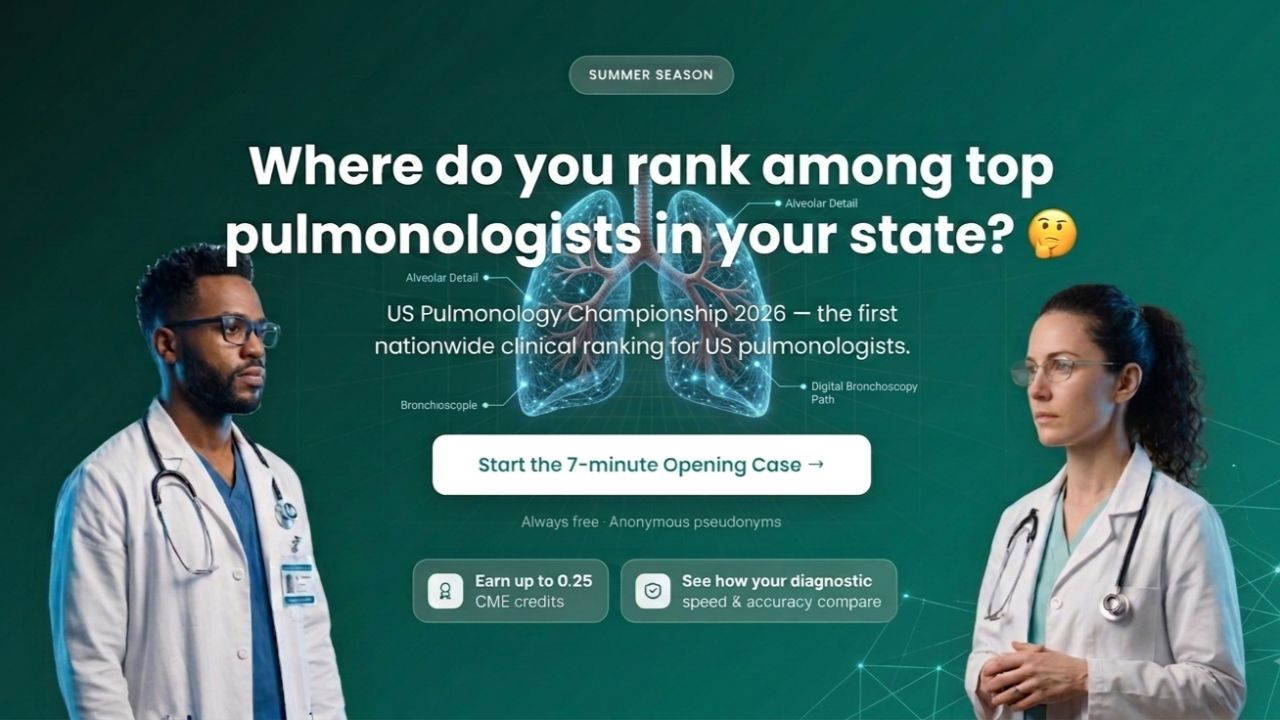
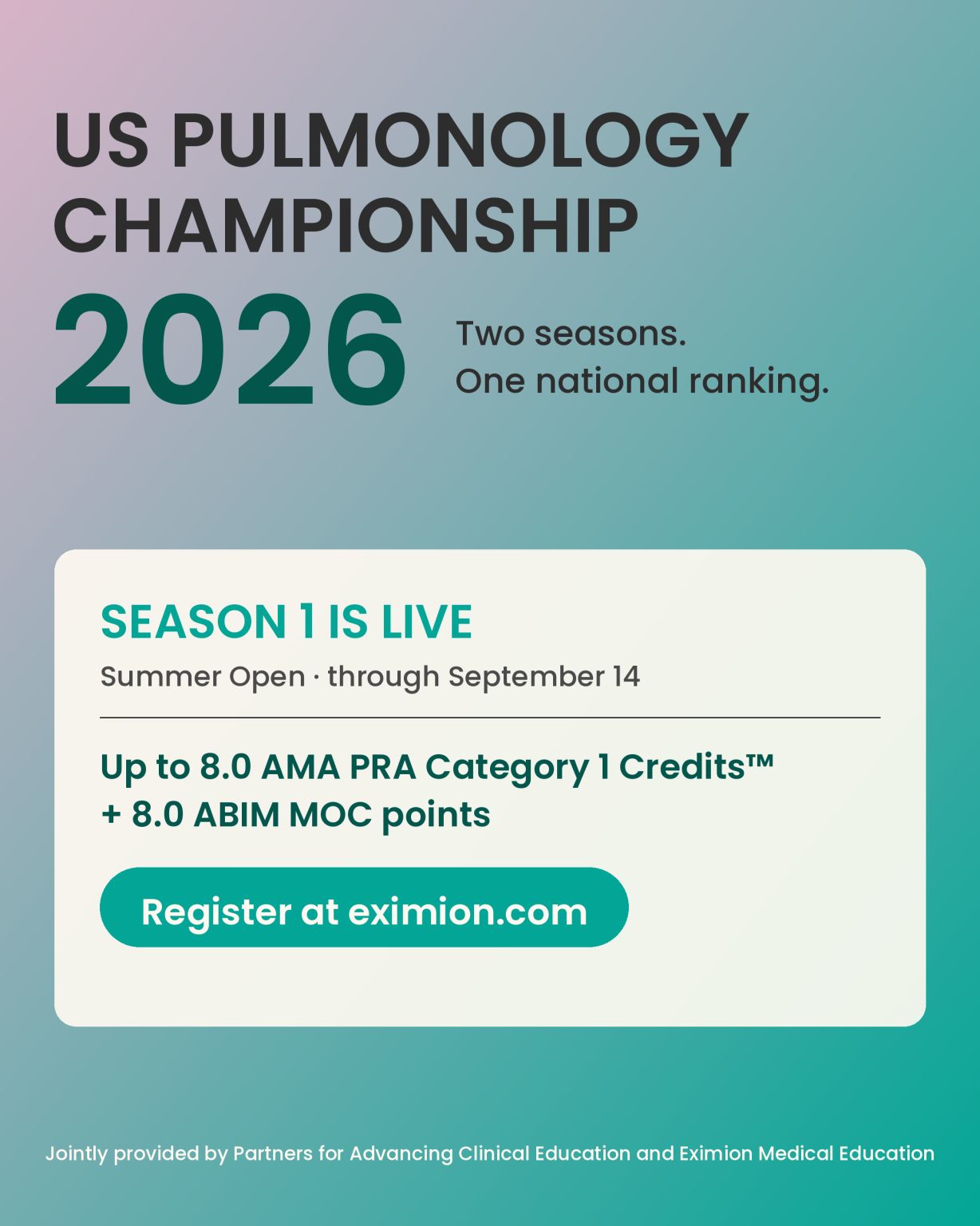
𝗪𝗵𝗲𝗿𝗲 𝘄𝗼𝘂𝗹𝗱 𝘆𝗼𝘂 𝗿𝗮𝗻𝗸 𝗮𝗺𝗼𝗻𝗴 𝘁𝗵𝗲 𝗽𝘂𝗹𝗺𝗼𝗻𝗼𝗹𝗼𝗴𝗶𝘀𝘁𝘀 𝗶𝗻 𝘆𝗼𝘂𝗿 𝘀𝘁𝗮𝘁𝗲? The US Pulmonology Championship 2026 is open, and for the first time that question has a scoreboard. Two seasons of interactive patient cases, with every diagnostic and treatment decision scored against your peers. You compete under a pseudonym and rank by state and nationwide. Season 1, the Summer Open, is live now through September 14. The Fall Championship follows and closes with a national final ranking in November. Up to 8.0 AMA PRA Category 1 Credits™ and 8.0 ABIM MOC points across the two seasons. Faculty Chair: MeiLan K. Han, MD, MS Register at eximion.com #Pulmonology #CME #MedEd
- LINKEDIN · IMAGERecorded 3 Oct 2026
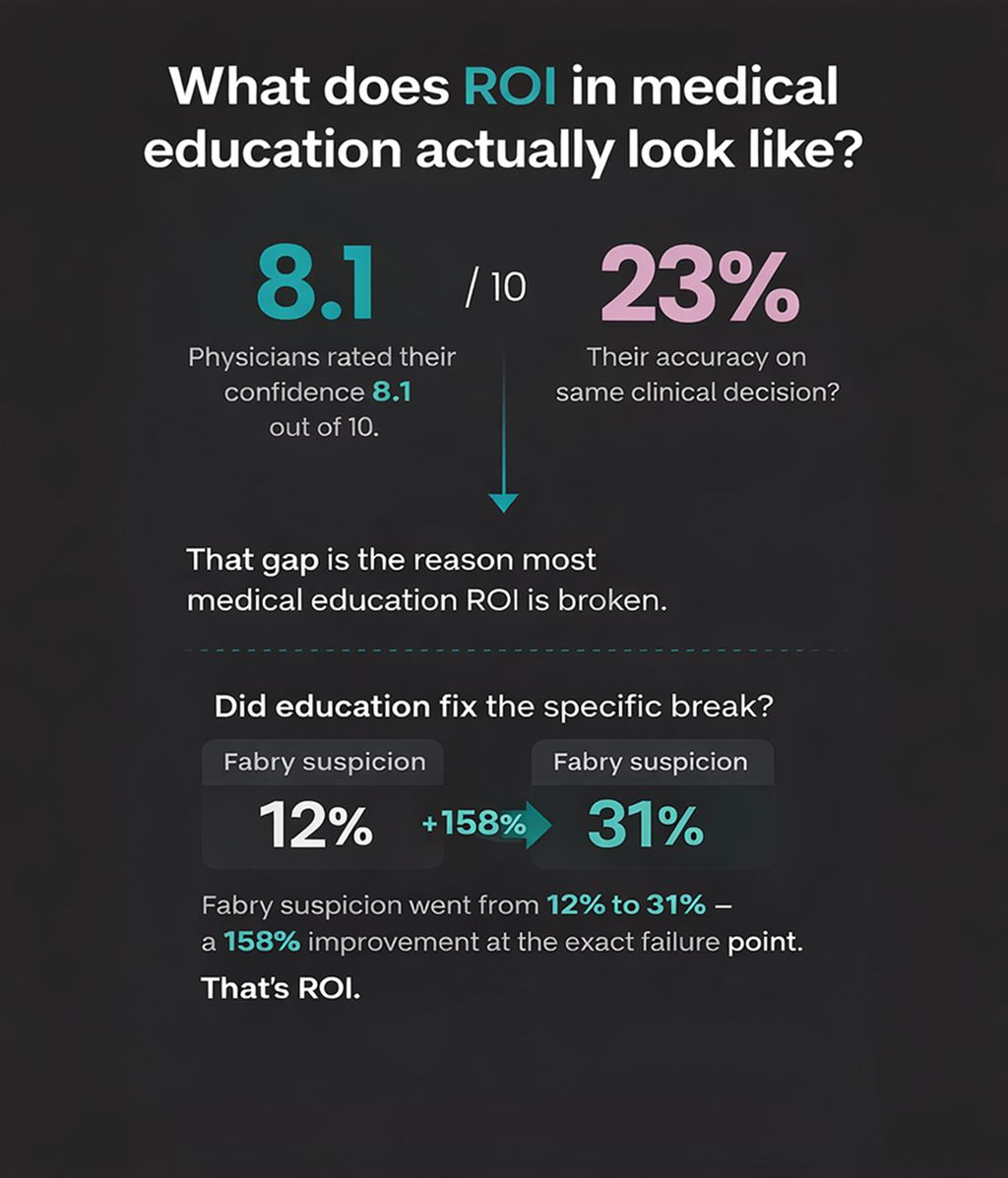
𝗪𝗵𝗮𝘁 𝗱𝗼𝗲𝘀 𝗥𝗢𝗜 𝗶𝗻 𝗺𝗲𝗱𝗶𝗰𝗮𝗹 𝗲𝗱𝘂𝗰𝗮𝘁𝗶𝗼𝗻 𝗮𝗰𝘁𝘂𝗮𝗹𝗹𝘆 𝗹𝗼𝗼𝗸 𝗹𝗶𝗸𝗲? Physicians rated their confidence 8.1 out of 10. Their accuracy on the same clinical decision? 𝟮𝟯%. That gap is the reason most medical education ROI is broken. Here's a better way to measure it. ACCME's data: 96% of CME activities report measuring competence. But 65% of that is self-reported. Surveys. Intentions. "I plan to change my practice." At the performance level, only 18% is objective. 𝗧𝗵𝗲 𝗶𝗻𝗱𝘂𝘀𝘁𝗿𝘆 𝗶𝘀 𝗺𝗲𝗮𝘀𝘂𝗿𝗶𝗻𝗴 𝗼𝗽𝗶𝗻𝗶𝗼𝗻𝘀 𝗮𝗻𝗱 𝗰𝗮𝗹𝗹𝗶𝗻𝗴 𝗶𝘁 𝗶𝗺𝗽𝗮𝗰𝘁. Three questions every medical affairs team should demand answers to. 𝗤𝘂𝗲𝘀𝘁𝗶𝗼𝗻 𝟭: 𝗪𝗵𝗲𝗿𝗲 𝗲𝘅𝗮𝗰𝘁𝗹𝘆 𝗱𝗼𝗲𝘀 𝘁𝗵𝗲 𝗰𝗹𝗶𝗻𝗶𝗰𝗮𝗹 𝗽𝗮𝘁𝗵𝘄𝗮𝘆 𝗯𝗿𝗲𝗮𝗸? "Knowledge improved 30%" is like saying "average body temperature is normal" in a hospital ward. Useless. In a Fabry disease program with 319 neurologists, we mapped the diagnostic pathway step by step: 100% saw the patient. 31% suspected Fabry. 22% reached genetic confirmation. 𝟲𝟵% 𝗻𝗲𝘃𝗲𝗿 𝗰𝗼𝗻𝘀𝗶𝗱𝗲𝗿𝗲𝗱 𝘁𝗵𝗲 𝗱𝗶𝗮𝗴𝗻𝗼𝘀𝗶𝘀 𝗮𝘁 𝗮𝗹𝗹. No survey catches that, because 𝘆𝗼𝘂 𝗰𝗮𝗻'𝘁 𝘀𝗲𝗹𝗳-𝗿𝗲𝗽𝗼𝗿𝘁 𝗮 𝘁𝗵𝗼𝘂𝗴𝗵𝘁 𝘆𝗼𝘂 𝗻𝗲𝘃𝗲𝗿 𝗵𝗮𝗱. 𝗤𝘂𝗲𝘀𝘁𝗶𝗼𝗻 𝟮: 𝗪𝗵𝘆 𝗱𝗼𝗲𝘀 𝗶𝘁 𝗯𝗿𝗲𝗮𝗸? We measured confidence alongside accuracy at each decision node. That 8.1/10 confidence at 23% accuracy I opened with? That was neurologists distinguishing Fabry pain from fibromyalgia. They weren't uncertain and wrong. 𝗧𝗵𝗲𝘆 𝘄𝗲𝗿𝗲 𝗰𝗲𝗿𝘁𝗮𝗶𝗻 𝗮𝗻𝗱 𝘄𝗿𝗼𝗻𝗴. A physician who's unsure looks things up. A physician who's confident doesn't. Does your outcomes report distinguish between learning and overconfidence? Those are opposite outcomes dressed in the same metric. 𝗤𝘂𝗲𝘀𝘁𝗶𝗼𝗻 𝟯: 𝗗𝗶𝗱 𝗲𝗱𝘂𝗰𝗮𝘁𝗶𝗼𝗻 𝗳𝗶𝘅 𝘁𝗵𝗲 𝘀𝗽𝗲𝗰𝗶𝗳𝗶𝗰 𝗯𝗿𝗲𝗮𝗸? Fabry suspicion went from 12% to 31% — a 158% improvement at the exact failure point. But the enzyme-to-genetic-testing handoff barely moved. So the next dollar shouldn't fund another awareness program. It should target that specific transition. That's ROI. Not "we reached Y physicians." But "we moved the primary bottleneck by Z%, identified overconfidence as the driver, and here's where the next investment goes." One gives you a 𝗿𝗲𝗽𝗼𝗿𝘁𝗶𝗻𝗴 𝘀𝗹𝗶𝗱𝗲. The other gives you an 𝗶𝗻𝘃𝗲𝘀𝘁𝗺𝗲𝗻𝘁 𝘁𝗵𝗲𝘀𝗶𝘀. I think about this differently because I was the patient on the wrong end of this math. Years undiagnosed, not because my doctors were ignorant, but because they were confident. That's why I built EXIMION — to make this kind of measurement standard, not exceptional. If there’s a condition where you suspect patients are being lost along the diagnostic journey but you don’t know where, 𝗹𝗲𝗮𝘃𝗲 𝗮 “+” in the comments. I'll show you for free where the drop off happens and how to improve the ROI of your medical education. #MedicalAffairs #RareDisease #CME
- LINKEDIN · IMAGERecorded 3 Oct 2026
Why MedEx is the 𝗺𝗲𝗱𝗶𝗰𝗮𝗹 𝗢𝗹𝘆𝗺𝗽𝗶𝗰 𝗚𝗮𝗺𝗲𝘀, not classic CME Traditional education often looks like this: a webinar → slides → a checkmark (and about 𝟭𝟱% 𝗰𝗼𝗺𝗽𝗹𝗲𝘁𝗶𝗼𝗻). But diagnosis is a skill built through repetition, mistakes, feedback, and emotion. That’s why MedEx is designed as a competitive platform (PvP): doctor vs doctor or team vs team. This radically changes engagement and the speed at which diagnostic patterns form. We deliberately use short-term dopamine hits to drive engagement, but over time the real thing happens: doctors start building their professional profile through results, and learning becomes part of their career. Longer term, it becomes a tool for clinics to identify strong diagnosticians, and for pharma to shorten the patient’s path to the right therapy through better recognition. 𝗪𝗵𝗮𝘁 𝘄𝗲 𝗵𝗮𝘃𝗲 𝗮𝗰𝗵𝗶𝗲𝘃𝗲𝗱 𝘀𝗼 𝗳𝗮𝗿 * Completion rate: 15% → 50%+ * Improvement in diagnostic metrics: +150% * More advanced diagnostic orders (including genetic testing) * 38% retention over a 2 year horizon * In rare diseases: on average 300 competing doctors → 𝟮 𝘁𝗼 𝟱 𝗶𝗱𝗲𝗻𝘁𝗶𝗳𝗶𝗲𝗱 𝗽𝗮𝘁𝗶𝗲𝗻𝘁𝘀 𝗽𝗲𝗿 𝘆𝗲𝗮𝗿 𝗪𝗵𝗮𝘁 𝗿𝗲𝗮𝗹𝗹𝘆 𝗰𝗵𝗮𝗻𝗴𝗲𝘀 We change doctors’ diagnostic patterns. We break habitual templates where rare symptoms did not form a coherent picture, tests were interpreted on autopilot, and patient interviews were incomplete. The more a doctor competes, the more case variations they see and the faster they build correct diagnostic pathways. In real life, rare patients are seen 1 to 2 times in a career, so repetition has to be created through realistic simulation. My 5 to 10 year goal is to make MedEx the benchmark for effectiveness and engagement in CME, because there is only one final metric that matters: fewer years lost by patients due to late diagnosis. If this resonates with you (CME, rare disease, patient finding through diagnostics), I would be glad to connect and talk.
- LINKEDIN · IMAGERecorded 3 Oct 2026
I didn’t want to write this post for a long time. Because in the startup world, you’re supposed to start with the market, the trend, the opportunity. But for me, 𝗲𝘃𝗲𝗿𝘆𝘁𝗵𝗶𝗻𝗴 𝘀𝘁𝗮𝗿𝘁𝗲𝗱 𝘄𝗶𝘁𝗵 𝗮 𝗽𝗮𝘁𝗶𝗲𝗻𝘁. I am a person with a rare disease. And that is an experience that permanently changes how you see the world. You suddenly realize that even the smartest and most caring doctor may not see you. Not because they are bad at their job, but because they simply never had the chance to train that pattern. To get my diagnosis, 𝗜 𝘁𝗿𝗮𝘃𝗲𝗹𝗲𝗱 𝗮𝗰𝗿𝗼𝘀𝘀 𝟰 𝗰𝗼𝘂𝗻𝘁𝗿𝗶𝗲𝘀, 𝘀𝗽𝗲𝗻𝘁 𝟳 𝘆𝗲𝗮𝗿𝘀, 𝗮𝗻𝗱 𝗿𝗼𝘂𝗴𝗵𝗹𝘆 $𝟱𝟬,𝟬𝟬𝟬. At the same time, through conversations with patient communities, I noticed something that feels paradoxical at first: both very poor and very wealthy people suffer in exactly the same way when it comes to rare diseases. Not because they don’t want treatment. But because they cannot find a doctor who recognizes the condition. Rare diseases appear literally only a few times in a physician’s entire career. And without repetition, no pattern forms. The doctor’s brain does not recognize the case. It’s the same as in any profession: to do something well, you need to repeat it many times. If a patient with a specific rare disease shows up only once, the diagnostic muscle never has time to grow. That’s when the idea first appeared. What if we could create a place where doctors encounter rare cases not once in a lifetime, but hundreds of times? 𝗔 𝗽𝗹𝗮𝗰𝗲 𝘄𝗵𝗲𝗿𝗲 𝘆𝗼𝘂 𝗰𝗮𝗻 𝘁𝗿𝗮𝗶𝗻 𝗮 𝗿𝗲𝗮𝗹-𝗹𝗶𝗳𝗲 𝗗𝗿. 𝗛𝗼𝘂𝘀𝗲, not through movies, but through practice. That’s how MedEx was born.


6 of 24 adsSign up to see every EXIMION ad, filter by format and date, and get alerts on new ones.
See all 24 adsQuestions about EXIMION’s ads
Is EXIMION running LinkedIn ads?
We recorded no live LinkedIn ads for EXIMION on 10 Nov 2026.
How many LinkedIn ads has EXIMION run?
LinkedIn’s ad library lists 29 ads for EXIMION. We recorded 24 LinkedIn ads for EXIMION, first recorded on 3 Oct 2026 and last recorded on 3 Oct 2026.
Does EXIMION run Google ads?
Yes. We recorded 8 Google ads for the domain eximion.com on 16 Oct 2026.
Which ad formats does EXIMION use?
The 6 LinkedIn ads on this page include 5 image ads and 1 carousel ad.
Watch the companies you care about.
Filter every ad by industry, country, format and network, and get alerts when a company you watch starts running new ads.