On air · 2 of 3 networks
Combine | Global Recruitment
- combinegr.com
- HR & Recruiting
- US
- 26 employees
Combine | Global Recruitment’s ads on LinkedIn, Meta and Google, recorded by adsrunning. Browse the latest here for free. Sign up free to see all 47. Watch Combine | Global Recruitment with Starter to get each new one in your feed.
Watchlist with Starter · $49/mo
| Network | Status | Live ads | Nov 2025LinkedIn activity · 52 weeksOct 2026 | Checked | Next step |
|---|---|---|---|---|---|
| Running | 9 | Checked 30 Oct 2026 | See all 47 ads → | ||
| Meta | Not checked | — | |||
| Running | 2 | Ads on the Google Ads Transparency Center | Checked 25 Oct 2026 | Collect them with the API → |
Combine | Global Recruitment has 9 live LinkedIn ads. We recorded 2 Google ads on 25 Oct 2026.
Latest ads
- LINKEDIN · IMAGESince 22 Jan 2026
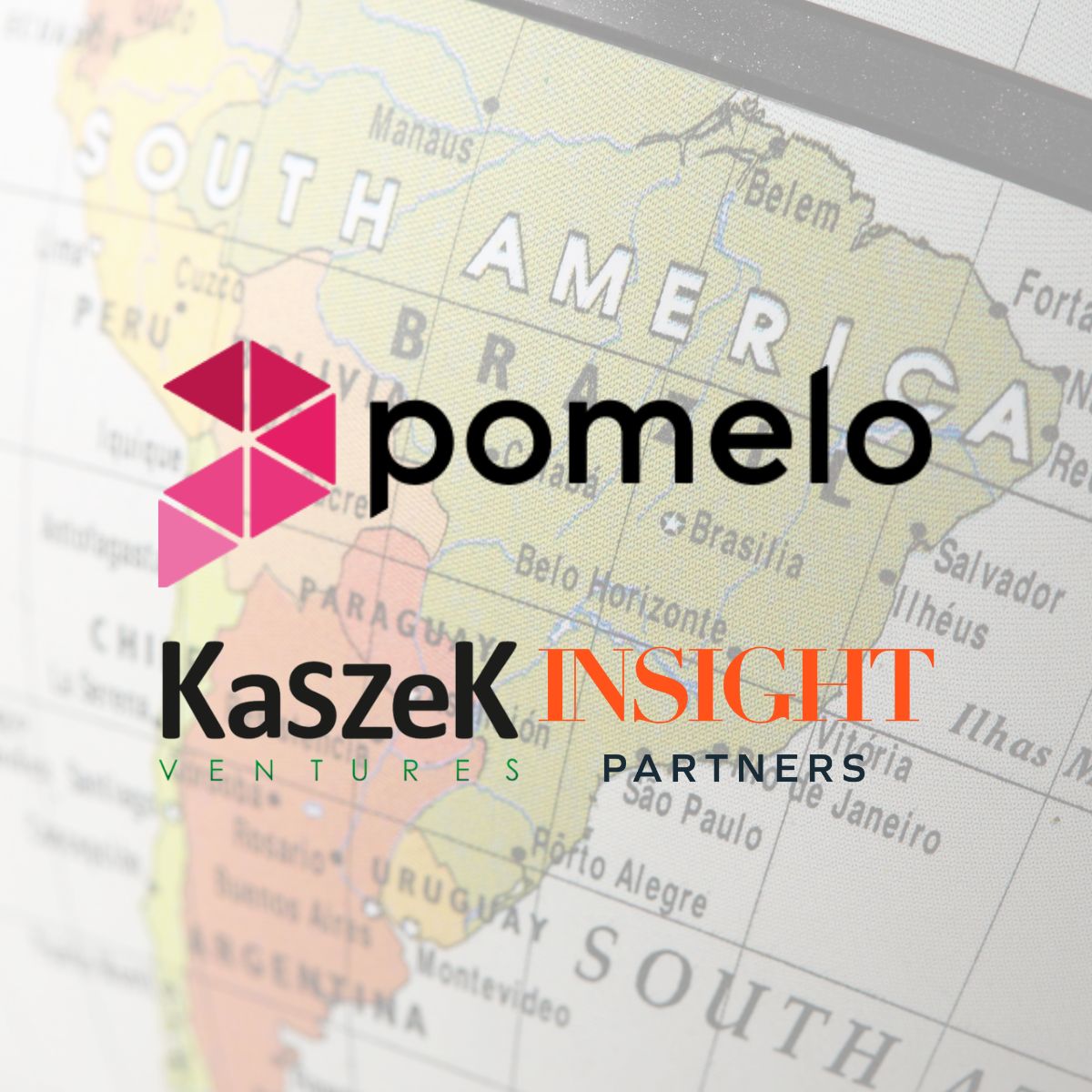
Over the last few months, conversations about LATAM growth, fintech momentum and consolidation have been everywhere. Yesterday, one announcement helped ground that discussion in facts. Pomelo raised a US$55M Series C round, co-led by KASZEK and Insight Partners, with the goal of expanding its payments infrastructure and product capabilities across Latin America. This matters beyond the headline. Series C rounds are typically less about experimentation and more about scale. They signal that a company has moved past validation and is now focused on execution, regional expansion and operational maturity. Pomelo’s case reflects something we often discuss at a high level: LATAM fintechs are reaching a stage where they are no longer just building solutions for niche problems, but strengthening infrastructure that supports broader financial ecosystems. It also highlights how investors are allocating capital in the region. Later-stage rounds like this indicate confidence in a company’s ability to operate across multiple markets, manage regulatory complexity and execute consistently at scale. This is how LATAM growth tends to materialize in practice. Through companies that reach operational maturity and investors willing to support that next phase. Less narrative. More execution.
- LINKEDIN · IMAGESince 21 Jan 2026
Recent data shows that nearly half of global impact investors plan to increase allocations in Latin America over the next cycle. This matters beyond capital flows. Investment in LATAM tends to concentrate in sectors that are execution-heavy: infrastructure, energy, financial services, technology and sustainability-driven models. These sectors don’t scale through capital alone. They scale through people. As investment activity increases, so does demand for local and regional talent that understands regulation, market fragmentation and operational constraints. This is where many global companies recalibrate. LATAM hiring is no longer only about cost efficiency. It becomes about proximity to execution. For 2026, companies that connect investment strategy with talent strategy early will move faster and with less friction. Capital can be deployed quickly. Teams cannot.
- LINKEDIN · IMAGESince 21 Jan 2026
LATAM growth is not a headline. It’s a planning variable for 2026. Over the past weeks, several market outlooks have pointed to the same direction: Latin America is expected to grow faster than many mature economies in 2026. This does not mean a boom. It means relative opportunity. While the US and Europe deal with slower cycles, capital constraints and tighter labor markets, LATAM is positioned to absorb investment, expand operations and rebalance global growth strategies. What often gets missed in these projections is the operational implication. Growth scenarios require execution capacity. For companies planning expansion, LATAM is not just a market to sell into. It is increasingly a market to build from. That puts hiring back at the center of the conversation. Not aggressive hiring. Intentional hiring aligned with complexity, scale and regional execution. Growth projections don’t fail on spreadsheets. They fail when teams are not ready to deliver.
- LINKEDIN · IMAGESince 21 Jan 2026
M&A expectations are rising. Execution will be the bottleneck. Large financial institutions are projecting stronger equity markets and increased M&A activity in Latin America heading into 2026. This is not a signal of easy deals. It is a signal of complexity returning to the agenda. M&A in LATAM amplifies everything: regulatory diversity, integration risk, governance challenges and cultural alignment across countries. When this cycle starts, hiring patterns change. Demand increases for leaders with regional scope, integration experience and decision autonomy. Not just dealmakers, but operators who can stabilize organizations after transactions close. For recruitment teams, this is not a volume game. It is a precision game. In 2026, the companies that benefit most from LATAM’s growth will be those that treat hiring as part of the transaction strategy, not an afterthought.
- LINKEDIN · IMAGESince 16 Dec 2025
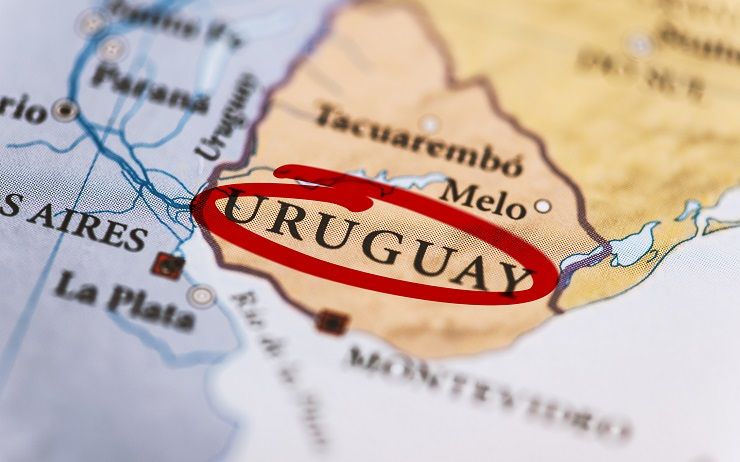
When US companies evaluate LATAM, Uruguay rarely shows up first on the list. That usually changes after the first hire. What stands out is not just geography or cost. It is how predictable the outcome becomes. Teams in Uruguay operate in full US business hours, communicate clearly, and bring a level of consistency that reduces friction across engineering, product and leadership. This combination is harder to find than most companies expect. From a financial perspective, the numbers work. Senior technical profiles in Montevideo remain significantly more accessible than equivalent talent in major US hubs, without forcing trade-offs on quality or collaboration. But the real difference appears over time. Lower turnover. Stronger continuity. People who stay long enough to create institutional knowledge. For companies rethinking their nearshore strategy, Uruguay represents a stable, low-noise option in a market often defined by volatility. Not a shortcut. A long-term decision.
- LINKEDIN · IMAGESince 12 Dec 2025
The Coca-Cola Company has named Henrique Braun, who grew up in Brazil and led its Brazil and Latin America businesses, as its next CEO, effective March 2026. Unilever appointed Argentine executive Fernando Fernandez as its global CEO in March 2025, after a career that included leading operations in Latin America. This is not random. Latin America has become one of the most demanding training grounds for senior leadership. Executives who grow here are forced to build capabilities that are increasingly rare in more stable markets. They learn to manage volatility and still deliver results. They operate in highly diverse consumer landscapes that require granular segmentation and sharp portfolio decisions. They innovate under constraints, make trade offs quickly and execute with limited resources. They balance strategy and operations, because in this region you cannot survive by being only one of those things. And they develop strong people and culture skills, building trust and alignment across teams, partners and channels. When global boards choose leaders who proved themselves in Latin America, they are not taking a symbolic step. They are selecting executives who have already succeeded in one of the most complex business environments in the world. For companies that still underestimate the depth of talent coming from LATAM, these appointments are a clear signal. Latin America is not just a source of talent. It is a region that consistently develops leaders ready to perform at a global level.


6 of 47 adsSign up to see every Combine | Global Recruitment ad, filter by format and date, and get alerts on new ones.
See all 47 adsWatch the companies you care about.
Filter every ad by industry, country, format and network, and get alerts when a company you watch starts running new ads.