On air · 2 of 3 networks
Christian & Timbers
- christianandtimbers.com
- HR & Recruiting
- US
- 53 employees
Christian & Timbers’s ads on LinkedIn, Meta and Google, recorded by adsrunning. Browse the latest here for free. Sign up free to see all 152. Watch Christian & Timbers with Starter to get each new one in your feed.
Watchlist with Starter · $49/mo
| Network | Status | Live ads | Nov 2025LinkedIn activity · 52 weeksOct 2026 | Checked | Next step |
|---|---|---|---|---|---|
| Running | 152 | Checked 30 Oct 2026 | See all 152 ads → | ||
| Meta | None recorded | 0 | No active ads recorded on the Meta Ad Library | Checked 18 Oct 2026 | Collect them with the API → |
| Running | 48 | Ads on the Google Ads Transparency Center | Checked 25 Oct 2026 | Collect them with the API → |
Christian & Timbers has 152 live LinkedIn ads. Its Facebook page had no active ads on 18 Oct 2026, and we recorded 48 Google ads on 25 Oct 2026.
Latest ads
- LINKEDIN · IMAGERecorded 13 Sept 2026
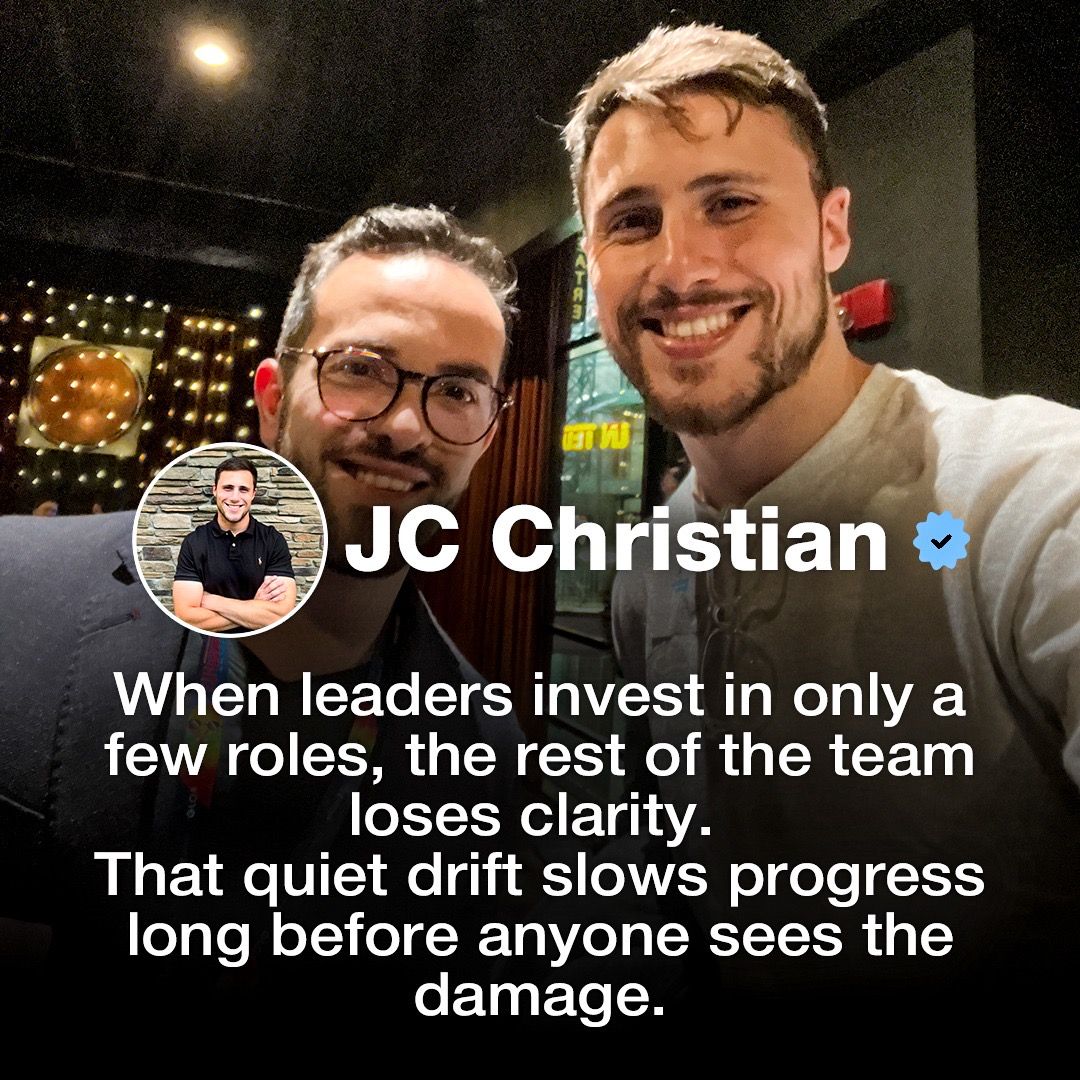
Meta quietly laid off 600 AI roles without warning in 2024. Inside, a dangerous talent imbalance began spreading like wildfire. In January 2024, Meta let go of roughly 600 employees. They were tied to its Fundamental AI Research division. At the same time, a smaller group of top researchers, received more resources and clearer paths to influence. The change was driven by revenue pressure and a push toward applied AI projects that could ship faster. Inside the company, researchers described quiet confusion around priorities and career paths. Uneven investment can shift culture without warning. As FAIR grew to nearly 1,000 employees at its peak, the balance of talent became harder to manage. Leaders had to decide where to place their focus. When support concentrated around a small group, other roles began to feel disconnected from the mission. Communication gaps surfaced. Teams started to move at different speeds. Uncertainty spread faster than many expected. This same pattern shows up in hyper-growth companies. New roles are added quickly, and hiring clusters around a few high-impact positions. But when the broader team cannot see how investment flows, morale drops quietly. Signals stack on top of one another: Slow onboarding More rework Less trust CEOs and CHROs may not feel the shift at first, but their teams do. People begin to guess at priorities instead of asking. Momentum begins to feel heavy. The effects surface later in missed deadlines and talent churn. Growth works best when everyone can see where they fit. Support needs to be visible. Resources need to be clear. Every role needs to feel connected to the mission. Momentum travels through people. And the whole system depends on balance. Uneven talent investment creates drift. When teams lose clarity, progress slows, and it often slows quietly. If you’re seeing early signs of this drift inside your org, there’s a proven path forward. Download the full paper here for governance models, CSL blueprints, AI-native workforce design, and agentic productivity benchmarks: https://lnkd.in/eXgFb8wa
- LINKEDIN · IMAGERecorded 13 Sept 2026
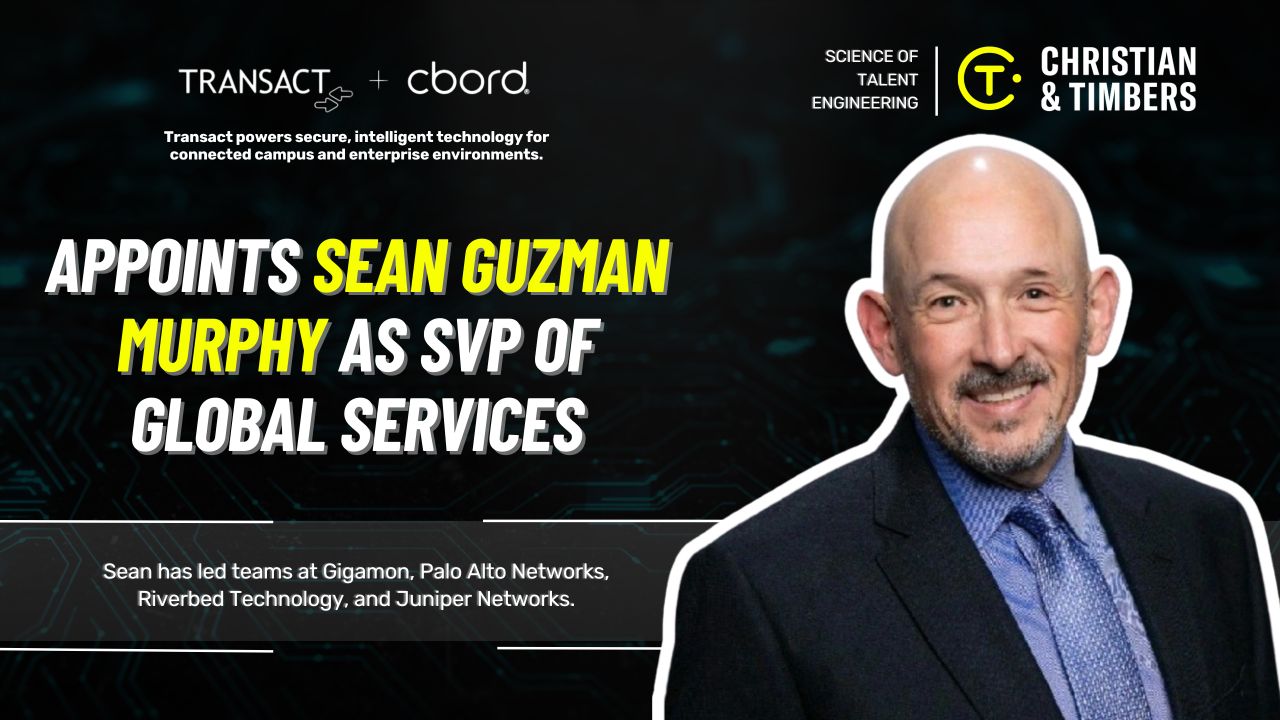
We are pleased to announce that Sean Guzman Murphy has joined Transact + CBORD as SVP of Global Services. Sean brings over 20 years of experience in Customer Experience, Global Services, and Partner Success, having led teams at Gigamon, Palo Alto Networks, Riverbed Technology, and Juniper Networks. His leadership spans SaaS, software, hardware, and security, building high-performing organizations aligned with subscription models and focused on measurable customer outcomes. In his new role, Sean will scale global services, elevate customer experience, and drive partner success across education, healthcare, and enterprise clients, with a focus on service analytics and revenue-linked success metrics. Transact powers secure, intelligent technology for connected campus and enterprise environments, facilitating $53B in transactions annually for over 12M customers. Its mission is to streamline operations and enrich experiences for the communities it serves. This appointment advances Transact + CBORD execution and long-term growth strategy. Read more ▶️ https://lnkd.in/d7j3pR8P
- LINKEDIN · IMAGERecorded 13 Sept 2026
A CEO just offered a Chief Scientist $3.8M total comp. The candidate turned it down. Not because the money wasn't good. Because the CEO couldn't explain the technical architecture in the interview. This is happening everywhere right now. Here's what AI executive compensation actually looks like: Chief AI Officer (Fortune 500) Base: $600K - $700K Bonus: $450K - $700K (75-100% of base) Equity: $2M - $4M (4-year vest) Total year 1: $2.5M - $4M+ Chief Scientist (AI Startup) Base: $350K - $500K Bonus: $200K - $300K (60% of base) Equity: 0.5% - 2% (could be worth $10M+) Total year 1: $800K - $1.5M+ (plus massive equity upside) AI-fluent CHRO Base: $500K - $550K Bonus: $350K - $400K (70-75% of base) Equity: $1.5M - $3M 30-50% premium over traditional CHRO But here's what nobody talks about: These numbers don't matter if you can't close the candidate. The best AI talent doesn't care about your brand or your budget. They care about three things: 1. Can your CEO talk about model architecture? 2. Is your mission worth their time? 3. Will they have real autonomy to build? If the answer to any of those is no, you're competing on price. And you've already lost. We just released our Q4 2025 AI Compensation Benchmark with 47 roles. Comment "DATA" and I'll send it.
- LINKEDIN · IMAGERecorded 13 Sept 2026
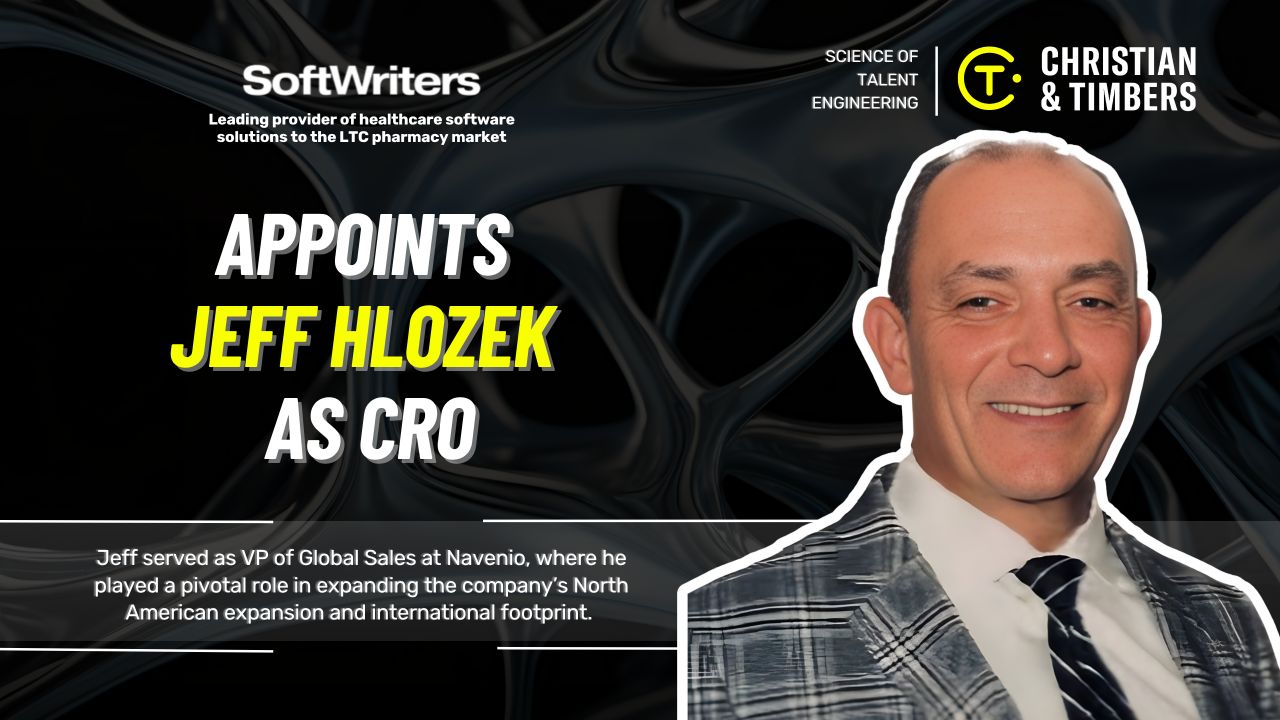
We are pleased to share that Jeff Hlozek has been appointed CRO at SoftWriters. Jeff brings more than 25 years of leadership experience across healthcare technology and enterprise software. His background reflects a consistent focus on building high-performing teams and driving commercial growth across complex, regulated markets. Most recently, Jeff served as Vice President of Global Sales at Navenio, where he expanded the company’s footprint in North America and internationally. He previously held senior roles at MediStreams and SCI Solutions, shaping go-to-market strategy and leading revenue operations through multiple phases of scale. At SoftWriters, Jeff will oversee sales and marketing with a focus on accelerating growth, strengthening cross-functional alignment, and advancing platform innovation in support of long-term care pharmacies. Read more ▶️ https://lnkd.in/dwQ6ZfDw
- LINKEDIN · IMAGERecorded 13 Sept 2026
Last week, someone asked me: "What was Steve Jobs actually like to work with?" The truth? Difficult. In 2003, Steve hired me for a board search at Apple. But here's the thing—he completely ignored every candidate I showed him. For months. I'd present perfect profiles. Former CEOs. Aerospace executives. People with exactly the background he requested. Nothing. Then halfway through the search, he blindsided me. He hired Al Gore. On his own. Without telling me. I was furious. I thought I'd wasted months. But looking back, I realize Steve was teaching me something: The best leaders don't hire for today's problems. They hire for problems three years from now. Gore wasn't there to help Apple sell computers. He was there for U.S.-China trade wars, regulatory battles, environmental positioning—all before the iPhone even launched. Steve saw the future. I was still stuck in the present. Eventually, Apple did hire two of my candidates. Andrea Jung in 2008. Ron Sugar in 2010. Both are still on Apple's board today. 17 years later. Steve Jobs' last two board appointments. The lesson stuck with me: Most CEOs are hiring Chief AI Officers for their current problems. The ones who win are hiring for the company they're building in 2027. What does your organization actually need three years from now?
- LINKEDIN · IMAGERecorded 13 Sept 2026
I recently spoke to 𝟯 𝗖𝗘𝗢𝘀 who were gunning to acquire ABB. Each of them wanted to build the world’s first 𝗔𝗜-𝗻𝗮𝘁𝗶𝘃𝗲 robotics powerhouse using ABB as the foundation. The only one I didn’t reach in time? → 𝗠𝗮𝘀𝗮𝘆𝗼𝘀𝗵𝗶 𝗦𝗼𝗻. He bought it with 𝗦𝗼𝗳𝘁𝗯𝗮𝗻𝗸. And the rest, as they say, is history. Because that deal, that one move, signaled something big: The age of software owning the lion’s share of AI value is being 𝗲𝗰𝗹𝗶𝗽𝘀𝗲𝗱 by the age of 𝗿𝗼𝗯𝗼𝘁𝗶𝗰𝘀. The future won’t be code that builds code. It’ll be 𝗿𝗼𝗯𝗼𝘁𝘀 𝘁𝗵𝗮𝘁 𝗯𝘂𝗶𝗹𝗱 𝗿𝗼𝗯𝗼𝘁𝘀 that build data centers, rockets, houses… and everything else we can imagine. Why? Because humans take too long. And make too many mistakes. ABB has always been a powerhouse. Everyone pays a premium for Swiss-made watches, chocolate, precision hardware… Yet Swiss-made robotics? Going at 𝗳𝗶𝗿𝗲𝘀𝗮𝗹𝗲 prices. Everyone knows SoftBank got a 𝗱𝗲𝗮𝗹. When they closed the $𝟱𝗕 acquisition, their market cap jumped by $𝟮𝟬𝗕. The SoftBank team understood what so many CEOs still don’t: AI’s future lives at the intersection of 𝘀𝗼𝗳𝘁𝘄𝗮𝗿𝗲 + 𝗵𝗮𝗿𝗱𝘄𝗮𝗿𝗲. And yet… so many CHROs, boards, and CEOs are still missing that move. If your organization is serious about transforming or continuing its dominance in AI, book time with me. We’ll get you 𝘸𝘩𝘦𝘳𝘦 𝘺𝘰𝘶 𝘯𝘦𝘦𝘥 𝘵𝘰 𝘨𝘰

6 of 152 adsSign up to see every Christian & Timbers ad, filter by format and date, and get alerts on new ones.
See all 152 adsWatch the companies you care about.
Filter every ad by industry, country, format and network, and get alerts when a company you watch starts running new ads.