Not on air · 3 of 3 networks checked

Bloemteknik ads
- bloemteknik.com
- Horticulture
- GB
- 7 employees
Bloemteknik’s ads on LinkedIn, Meta and Google, recorded by adsrunning. Browse the latest here for free. Sign up free to see all 28. Watch Bloemteknik on any plan to get each new one in your feed.
Watchlist included in every plan
What Bloemteknik runs
- Single image · LinkedIn
- 4
- Video · LinkedIn
- 1
- Carousel · LinkedIn
- 1
| Network | Status | Live ads | Nov 2025LinkedIn activity · 52 weeksNov 2026 | Checked | Next step |
|---|---|---|---|---|---|
| None recorded | 0 | Checked 8 Nov 2026 | See all 28 ads → | ||
| Meta | None recorded | 0 | No active ads recorded on the Meta Ad Library | Checked 18 Oct 2026 | Collect them with the API → |
| None recorded | 0 | No ads found on the Google Ads Transparency Center | Checked 12 Oct 2026 | Collect them with the API → |
Bloemteknik has no live LinkedIn ads. Its Facebook page had no active ads on 18 Oct 2026, and we recorded no Google ads on 12 Oct 2026.
Latest ads
- LINKEDIN · VIDEOSince 26 Oct 2026
Growing in Finland means working with some of the most extreme light conditions in European horticulture: long, dark winters and very little daylight to work with, well beyond what most of Europe ever sees. Finnish growers have built a reputation for doing it brilliantly anyway. At Lindroosin Puutarha, the greenhouse is ready for what’s coming, with Bloemteknik lighting overhead. 🇫🇮
- LINKEDIN · IMAGESince 22 Oct 2026
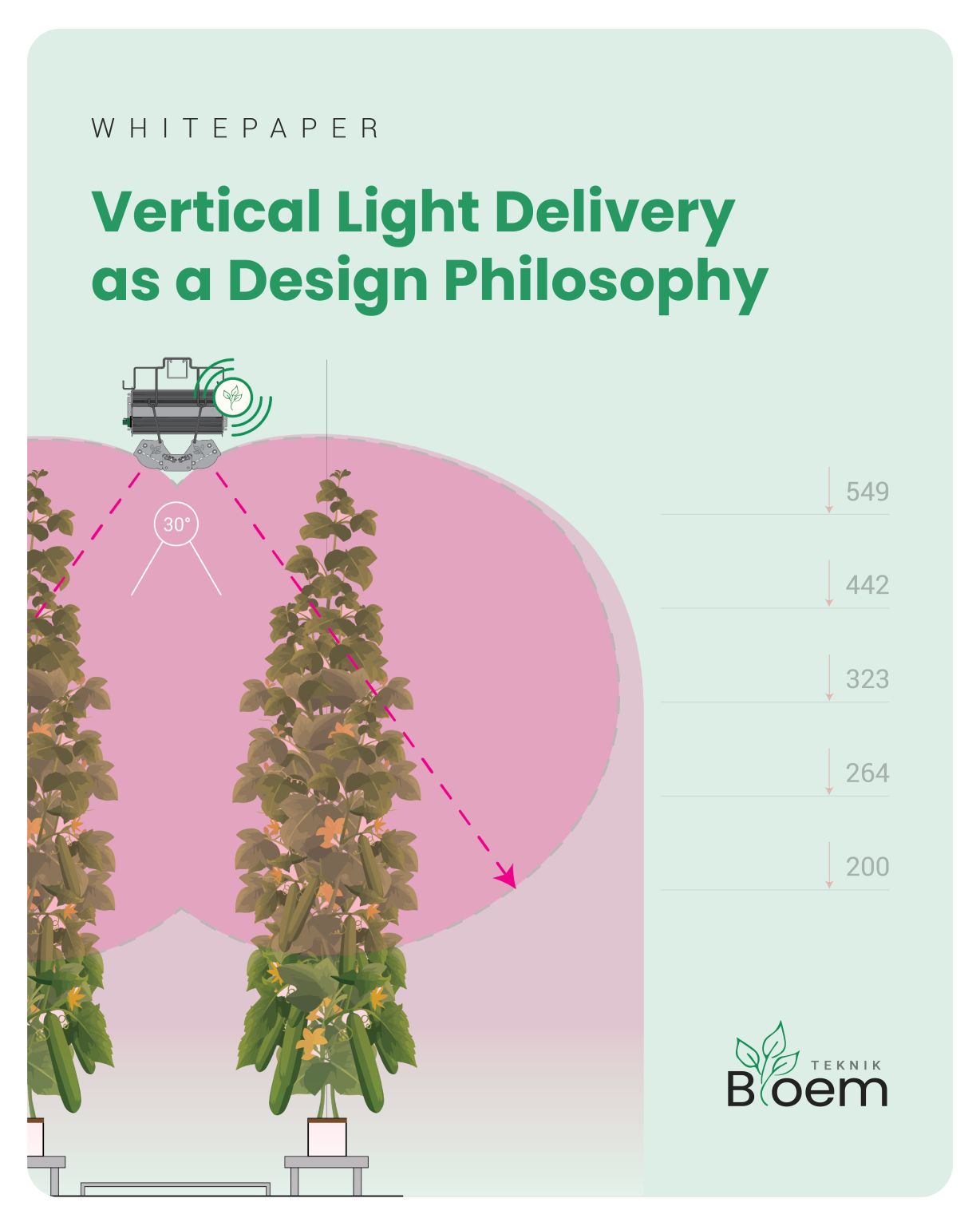
𝗩𝗲𝗿𝘁𝗶𝗰𝗮𝗹 𝗟𝗶𝗴𝗵𝘁 𝗗𝗲𝗹𝗶𝘃𝗲𝗿𝘆 𝗮𝘀 𝗮 𝗗𝗲𝘀𝗶𝗴𝗻 𝗣𝗵𝗶𝗹𝗼𝘀𝗼𝗽𝗵𝘆 Over the past few weeks, we've talked about why horizontal PPFD is an incomplete way to judge a lighting system, why checkerboard toplighting struggles to deliver consistent light row to row, and why mounting height and fixture angle matter more than most lighting manufacturers discuss. Today, we're publishing the whitepaper behind all of it. This is our technical and commercial case for a different way to specify lighting for high-wire crops — one built on real field-measured data from a commercial cucumber site in Finland, a full photometric model matched against a leading point-source toplighting system, and the physiological reasoning that ties it all together. Inside, you'll find: → Why horizontal PPFD alone misrepresents what a fixture delivers to a dense canopy → Field data and independent modelling that arrive at the same conclusion, from two different methods → A verified specification showing how fewer fixtures can outperform a full-spec checkerboard layout where it counts 𝘛𝘩𝘦 𝘯𝘦𝘹𝘵 𝘤𝘩𝘢𝘱𝘵𝘦𝘳 𝘰𝘧 𝘩𝘰𝘳𝘵𝘪𝘤𝘶𝘭𝘵𝘶𝘳𝘢𝘭 𝘭𝘪𝘨𝘩𝘵𝘪𝘯𝘨 𝘸𝘰𝘯'𝘵 𝘣𝘦 𝘸𝘰𝘯 𝘣𝘺 𝘢𝘯𝘰𝘵𝘩𝘦𝘳 𝘧𝘳𝘢𝘤𝘵𝘪𝘰𝘯 𝘰𝘧 𝘢 µ𝘮𝘰𝘭/𝘑. We think it'll be won by designing for the plant, not the spec sheet. Download the whitepaper on https://lnkd.in/dPrmajnf #HorticultureLighting #ControlledEnvironmentAgriculture #CEA
- LINKEDIN · IMAGESince 15 Oct 2026
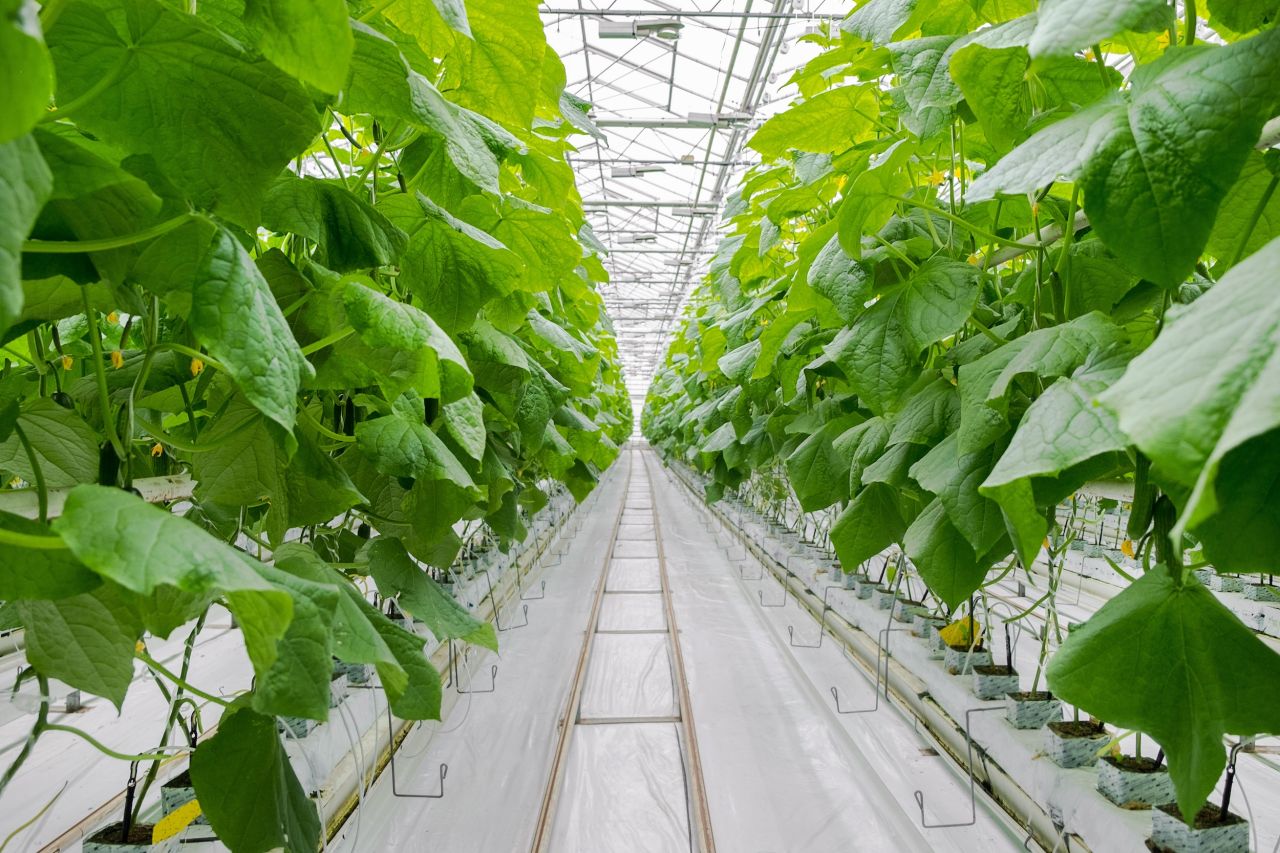
Leaves don’t grow flat, and that matters more than lighting design usually admits. We tend to picture a crop canopy as a horizontal surface, leaves laid out like a tabletop facing straight up. A lot of lighting is designed around that picture. In high-wire crops like tomato and cucumber, it isn’t true. Leaves are rarely horizontal. Many are held at steep angles, and the angle changes with canopy depth and through the day. A steeply inclined leaf catches less light from directly overhead than a flat one would, and more of what it receives comes in at an angle. The sun already works this way. At northern latitudes, greenhouse crops get most of their natural light at a slant, not from straight above. Why does it matter? Upper leaves under strong light are often close to saturation, so extra photons there add little. Leaves in the mid and lower canopy are still light-limited, so each photon that reaches them does more work. Getting light deeper into the canopy, and more evenly across it, raises how efficiently the whole crop uses the light it’s given. Overhead light will always do most of the job. Intercanopy lighting is one way to reach the lower canopy. Tiltable or angled toplights are another. Mounted parallel to the rows, with the light angled onto them, they deliver light in a way that better matches how leaves are actually held, instead of treating the canopy as a flat plane. Light matched to plant architecture is one more lever for light use efficiency. #HorticultureLighting #ControlledEnvironmentAgriculture #CEA #Greenhouse
- LINKEDIN · IMAGESince 12 Oct 2026
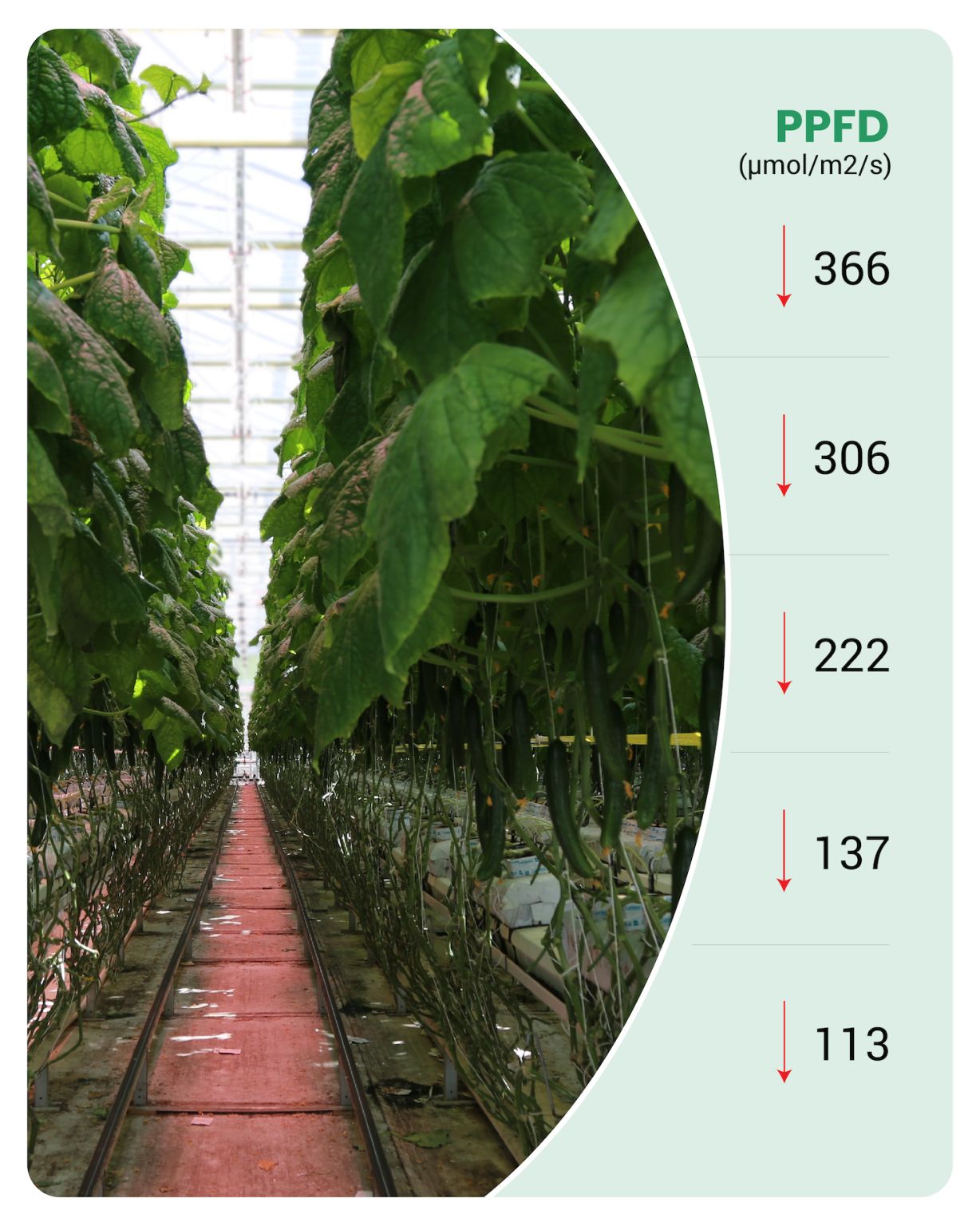
Even with the sun and supplemental lighting working together, the lower parts of a vine crop can be surprisingly dark places. Light has to pass through layer after layer of leaves before it gets anywhere near the bottom of the canopy, and by the time it does, there's very little of it left. That matters because lower leaves are still photosynthetically active, even if less so than the young leaves at the top. They sit closest to the developing trusses, which they preferentially supply with assimilates. Leaves left in deep shade can fall below their light compensation point, becoming a net carbon cost to the plant, and they senesce earlier, so they have to be removed sooner. More light reaching more of the plant means more of the plant working. And more photosynthesis supports more yield. This is one way to think about LUE — light use efficiency. The question isn't only how much light a fixture delivers, but how much of it reaches the parts of the crop that can use it. #HorticultureLighting #ControlledEnvironmentAgriculture #CEA
- LINKEDIN · IMAGESince 1 Oct 2026
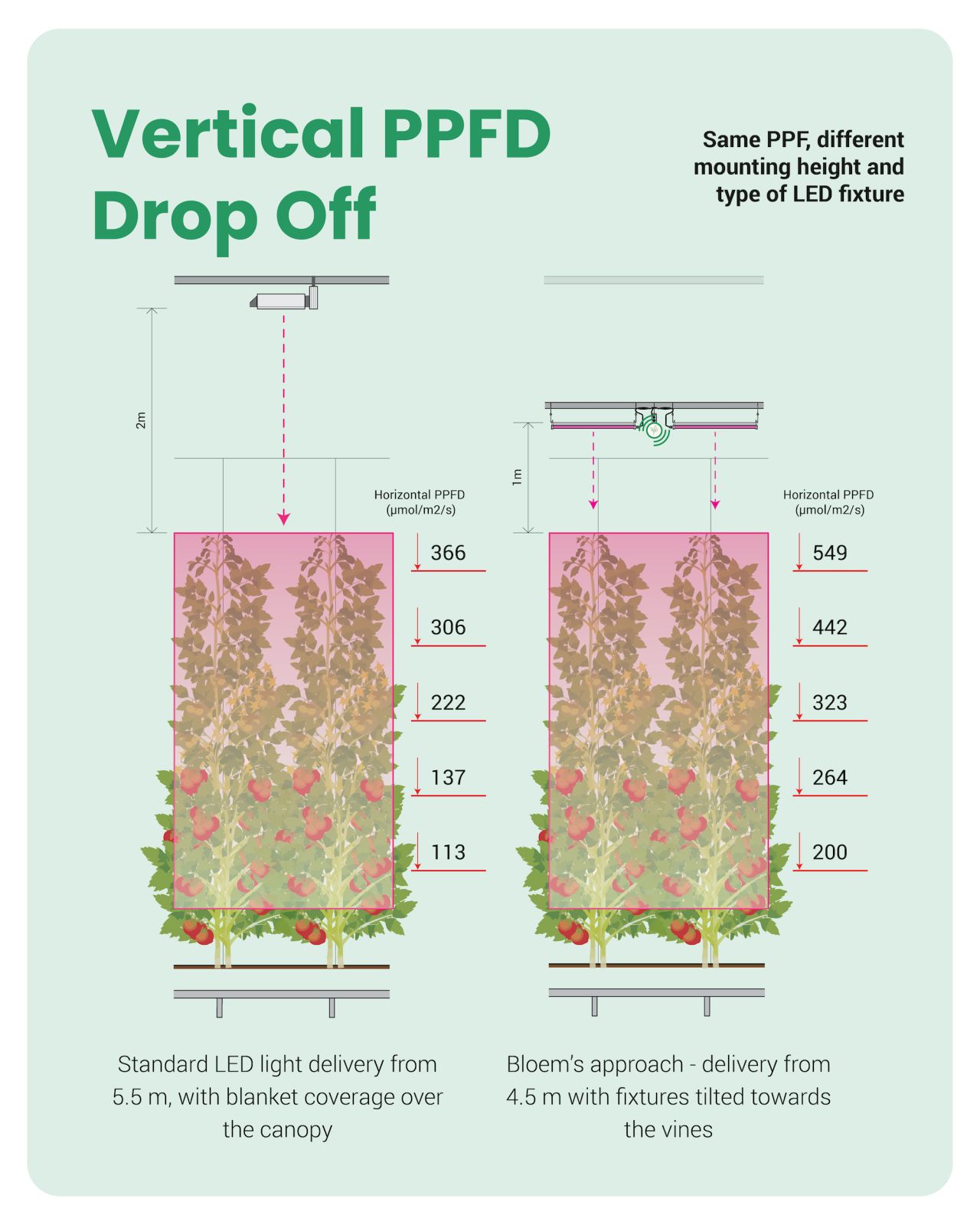
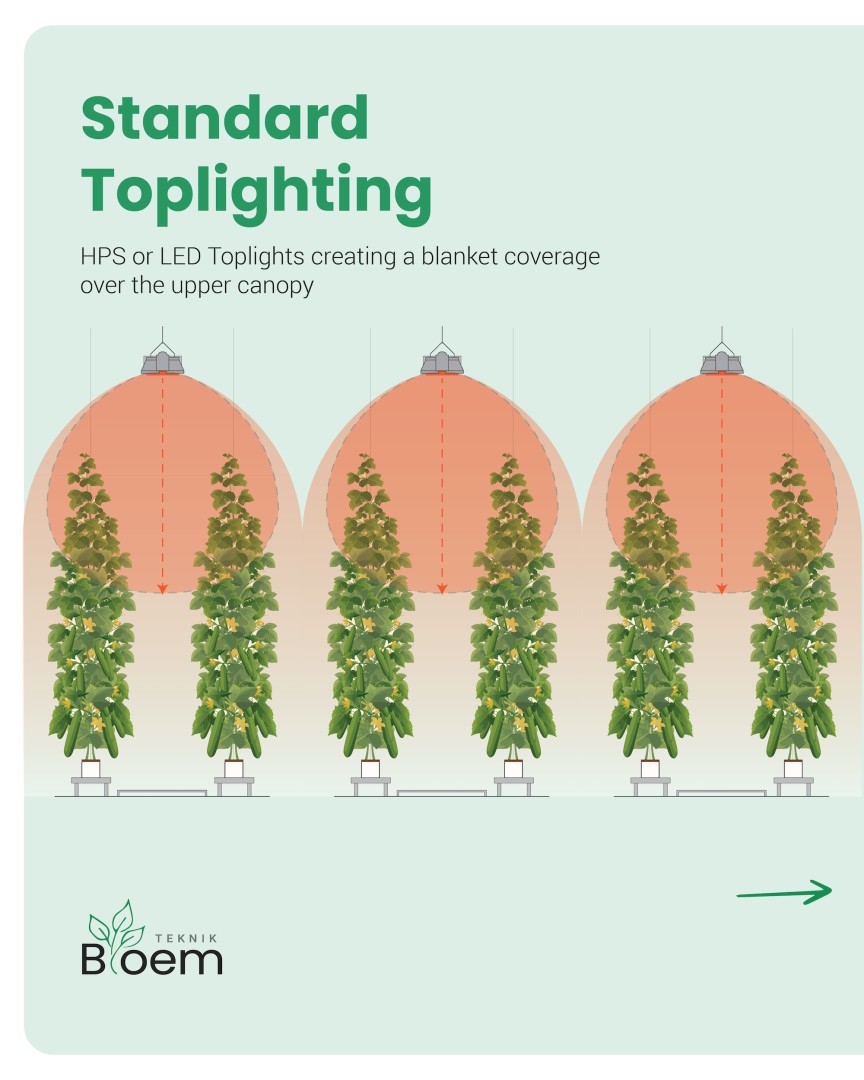
When you're getting your lighting specced out for your tomato or cucumber greenhouse, most of the conversation will cover one thing: horizontal PPFD at the top of the canopy. But that's only half the story. A vine crop like tomato or cucumber isn't flat — it's tall, dense, and productive from top to bottom. Yet most toplighting is designed to blanket the floor evenly, mounted high enough to spread light across a wide horizontal footprint. The result: plenty of light lands on walkways and the upper leaf layer, while the lower and mid-canopy — where fruit trusses are actively drawing energy — are left in relative shadow. This is why we need to talk more about LUE — light use efficiency. It's not about how much light a fixture puts out — it's about how much of that light actually reaches productive plant tissue, rather than being wasted on aisles, gaps, or top leaf layers that are already oversaturated. Bloemteknik's approach is deceptively simple, but the effect is significant: mount lower, and tilt the fixture to direct light laterally onto the vine itself — not just down onto the floor beneath it. The result is meaningfully higher PPFD reaching the lower and mid-canopy, where it's needed most, instead of being spent overhead where the plant can't use it. More usable light throughout the vine means more of the plant is photosynthetically active, not just the top. And that has a direct line to yield. This is the first in a series where we'll go deeper into the science, the data, and the design thinking behind it — including a technical whitepaper on Bloem's lighting method for vine crops which we'll be publishing soon.
- LINKEDIN · CAROUSELSince 1 Oct 2026
Most high-wire toplighting follows the same logic: blanket the upper canopy and hope enough light filters down through the photon-saturated top leaves. Inter-canopy lighting is often added to compensate, targeting the lower canopy from within. We asked a different question: how do you get a traditional toplight installation to drive significantly more light penetration into vine crops — reaching photons where they matter most, the vertical leaf face through the middle and lower canopy? Our whitepaper breaks down exactly how and why it matters. Coming soon.
6 of 28 adsSign up to see every Bloemteknik ad, filter by format and date, and get alerts on new ones.
See all 28 adsQuestions about Bloemteknik’s ads
Is Bloemteknik running LinkedIn ads?
We recorded no live LinkedIn ads for Bloemteknik on 9 Nov 2026.
How many LinkedIn ads has Bloemteknik run?
LinkedIn’s ad library lists 28 ads for Bloemteknik. We recorded 28 LinkedIn ads for Bloemteknik, first recorded on 11 Sept 2026 and last recorded on 28 Oct 2026.
Does Bloemteknik advertise on Facebook and Instagram?
Bloemteknik’s Facebook page had no active ads in Meta’s Ad Library, last recorded on 18 Oct 2026.
Does Bloemteknik run Google ads?
We recorded no Google ads for the domain bloemteknik.com on 12 Oct 2026.
Which ad formats does Bloemteknik use?
The 6 LinkedIn ads on this page include 4 image ads, 1 video ad and 1 carousel ad.
Watch the companies you care about.
Filter every ad by industry, country, format and network, and get alerts when a company you watch starts running new ads.