On air · 1 of 3 networks
IO River
- ioriver.io
- Software (horizontal)
- US
- 40 employees
IO River’s ads on LinkedIn, Meta and Google, recorded by adsrunning. Browse the latest here for free. Sign up free to see all 31. Watch IO River with Starter to get each new one in your feed.
Watchlist with Starter · $49/mo
| Network | Status | Live ads | Nov 2025LinkedIn activity · 52 weeksOct 2026 | Checked | Next step |
|---|---|---|---|---|---|
| Running | 5 | Checked 29 Oct 2026 | See all 31 ads → | ||
| Meta | Not checked | — | |||
| Recently | 3 | Ads on the Google Ads Transparency Center | Checked 1 Oct 2026 | Collect them with the API → |
IO River has 5 live LinkedIn ads. We recorded 3 Google ads on 1 Oct 2026.
Latest ads
- LINKEDIN · IMAGESince 19 Oct 2026
The Edge is distributed. Security has not been. Enterprises adopted Multi-Edge delivery for resilience, performance, and cost-efficiency. Yet security remained tightly coupled to individual providers. That coupling forced a structural tradeoff. Recent provider incidents have shown how fragile layered dependencies can be. A single failure can cascade across regions and organizations. That model no longer works. Today, IO River introduced the first security solution powered by Check Point designed to operate natively across multiple CDNs. This separates delivery from security. Organizations can choose the best Edge platform for performance and resilience while maintaining one consistent security layer across providers. Security must live at the Edge without dictating where traffic is delivered. Decoupling is not a feature. It is the foundation for a more resilient Edge ecosystem. Proud of our team and grateful to our partners at Check Point Software for helping push this architecture forward.
- LINKEDIN · IMAGESince 13 Jul 2026
Multi-edge was always the right architecture. It just required a platform most companies couldn’t afford to build. The industry understood the benefits early: resilience, regional performance variability, and leverage over cost. What limited adoption was execution. Operating multiple edge providers required large teams to build and maintain internal control layers, keep configurations synchronized, monitor regional behavior continuously, and steer traffic without destabilizing the system. For most organizations, that work outweighed the architectural upside. The Forbes article, “Multi-Edge Was Always Right — It Was Just Out of Reach,” captures this reality well. Teams did not struggle with the idea of multi-edge. They struggled with the operating model required to keep it reliable at scale. What has changed is the way the Edge can now be operated. By introducing a Virtual Edge layer above providers, control, observability, and traffic intelligence are removed from individual networks and handled once, centrally. DevOps teams no longer need to translate logic between vendors, reconcile drifting configurations, or build bespoke tooling to understand where performance is degrading. The underlying providers remain. The operational burden does not. This turns multi-edge from a platform engineering project into infrastructure that can be run by large teams without constant intervention. Configuration becomes consistent by default. Regional degradation becomes visible before it becomes failure. Traffic decisions reflect real conditions across networks rather than static assumptions. For DevOps and SRE organizations, this shift matters because it changes responsibility boundaries. Teams focus on policy and intent, not on stitching together provider-specific behavior. Performance, availability, and cost optimization become properties of the system, not outcomes negotiated one vendor at a time. The market is not adopting a new concept. It is finally able to operate the one that always made sense. Read the full post in the comments below.
- LINKEDIN · IMAGESince 13 Jul 2026
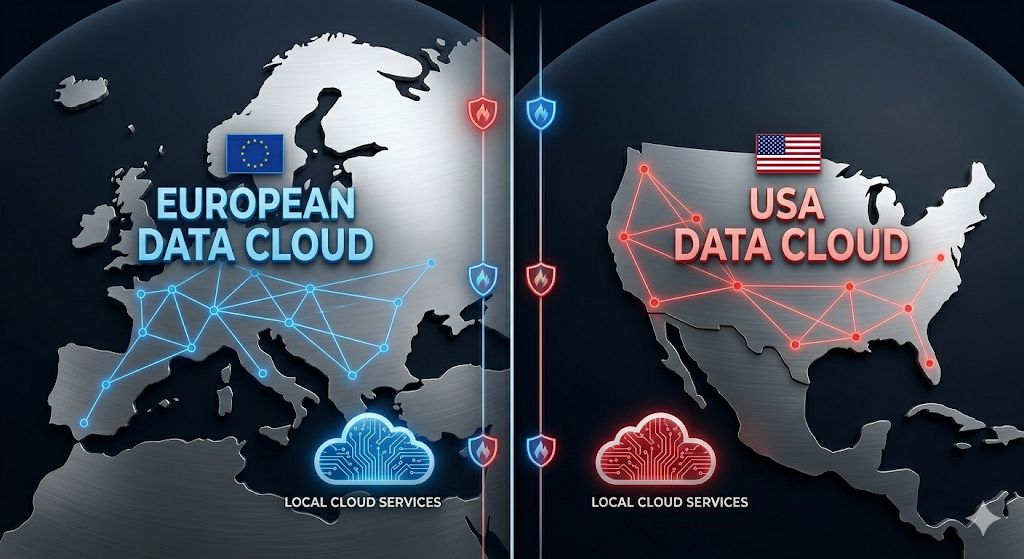
Europe is reclaiming its digital borders. The shift toward cloud sovereignty is no longer just a policy discussion. It is a massive architectural migration. European businesses are moving services away from US-based providers to avoid the trap of conflicting regulations. This move is driven by the reality that global providers cannot meet every local mandate in every jurisdiction. The compliance burden is becoming too heavy for a single network to carry. We see this happening in real time with the rise of the European Cloud User Coalition and the strict data residency requirements of the EU Data Act. These frameworks make it legally risky to store or process sensitive data on infrastructure subject to foreign surveillance laws. This shift creates a massive advantage for local players. A regional provider only needs to satisfy the rules of its own soil without worrying about legal friction from overseas. These local providers are now winning contracts that used to go to the global giants by default. The result is a world of network isolation. The challenge is that users still expect global access. You cannot trade availability for compliance and expect to stay competitive. The industry is stuck in an old mindset of choosing one side or the other. Either you stay global and risk fines, or you go local and lose your reach. In this new reality, the network you choose is no longer just a technical decision. It is a legal one. When the rules of the internet change country by country, can a single global network ever be the right answer again?
- LINKEDIN · IMAGESince 6 Jul 2026
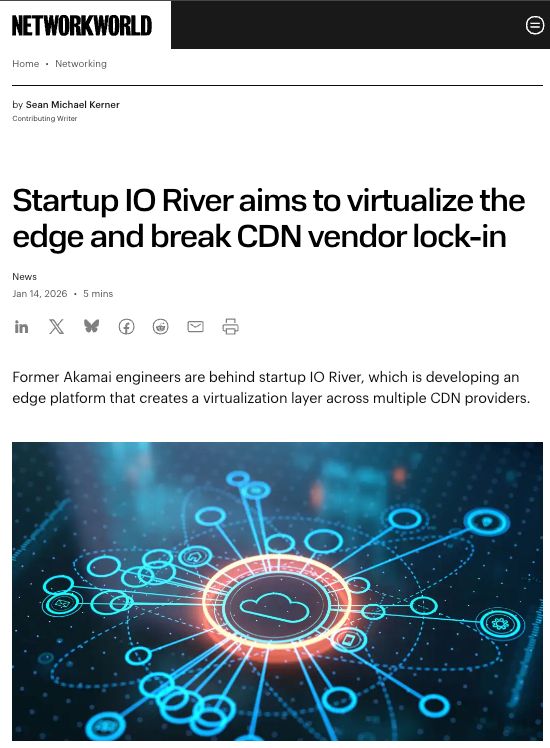
For a long time, edge strategy was treated as a procurement decision. You chose a provider, integrated deeply, and optimized within the limits of that platform. When things worked, the model held. When they did not, teams discovered how little control they actually had. What this Network World article captures is the real shift happening at the edge. The problem enterprises face today is not access to global delivery capacity. It is the inability to operate that capacity as a system. Vendor lock-in at the edge limits more than pricing flexibility. It constrains reliability, negotiation power, and the ability to respond when performance or availability diverges from expectations. Virtualizing the edge changes how the problem is framed. When multiple edge providers are operated through a unified control layer, traffic becomes dynamic rather than contractual. Failures become routing decisions instead of escalations. Cost, performance, and availability can be balanced continuously instead of negotiated annually. This does not replace CDNs. It changes their role. Delivery infrastructure becomes interchangeable. Control moves above the vendors. Architecture stops being defined by provider boundaries and starts being defined by operational intent. The edge is no longer just a delivery surface. It is an environment that needs governance. When the edge fails, who actually controls the traffic, you or the vendor running it? IO River
- LINKEDIN · IMAGESince 6 Jul 2026
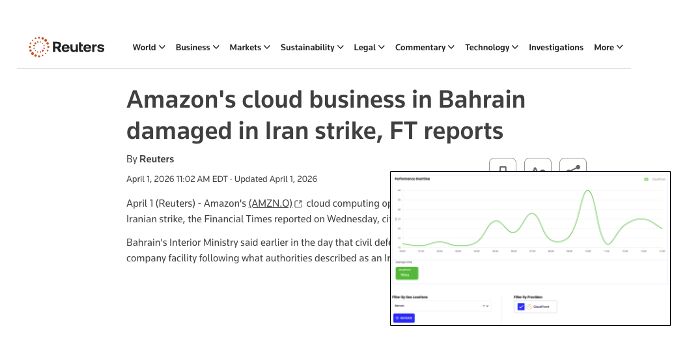
In the modern world, IT infrastructure and networks have become an additional natural resource, like water, gas, and oil. In modern wars, natural resources are a target. The attacks on AWS infrastructure in Bahrain over the last day immediately led to network availability and performance implications. Our society does not rely on a single power plant for electricity - it’s time to upgrade our network resiliency as well.
- LINKEDIN · ARTICLESince 27 Apr 2026
Relying on one CDN isn’t a strategy. It’s an exposure map. When a single vendor controls your uptime, speed, and cost, they also control your business outcomes. The result is predictable: outages you can’t prevent, performance you can’t optimize, and pricing you can’t negotiate. The best-run companies already know this. They’ve moved to multi-CDN architectures not for flexibility, but for control. I break down why single-CDN setups fail structurally, how resilient teams actually operate, and what it costs to wait. Read the full piece. #EdgeDelivery #MultiCDN #InfrastructureResilience



6 of 31 adsSign up to see every IO River ad, filter by format and date, and get alerts on new ones.
See all 31 adsWatch the companies you care about.
Filter every ad by industry, country, format and network, and get alerts when a company you watch starts running new ads.