On air · 1 of 3 networks
insureMO
- insuremo.com
- Insurance
- SG
- 123 employees
insureMO’s ads on LinkedIn, Meta and Google, recorded by adsrunning. Browse the latest here for free. Sign up free to see all 47. Watch insureMO with Starter to get each new one in your feed.
Watchlist with Starter · $49/mo
| Network | Status | Live ads | Nov 2025LinkedIn activity · 52 weeksOct 2026 | Checked | Next step |
|---|---|---|---|---|---|
| Running | 28 | Checked 29 Oct 2026 | See all 47 ads → | ||
| Meta | Not checked | — | |||
| Not checked | — |
insureMO has 28 live LinkedIn ads. We recorded 34 Google ads on 1 Oct 2026.
Latest ads
- LINKEDIN · IMAGESince 27 Jul 2026
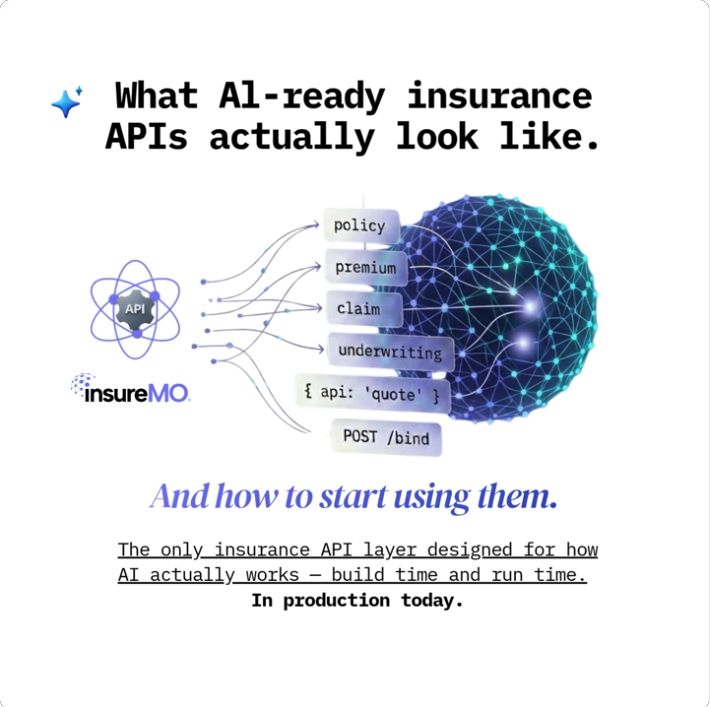
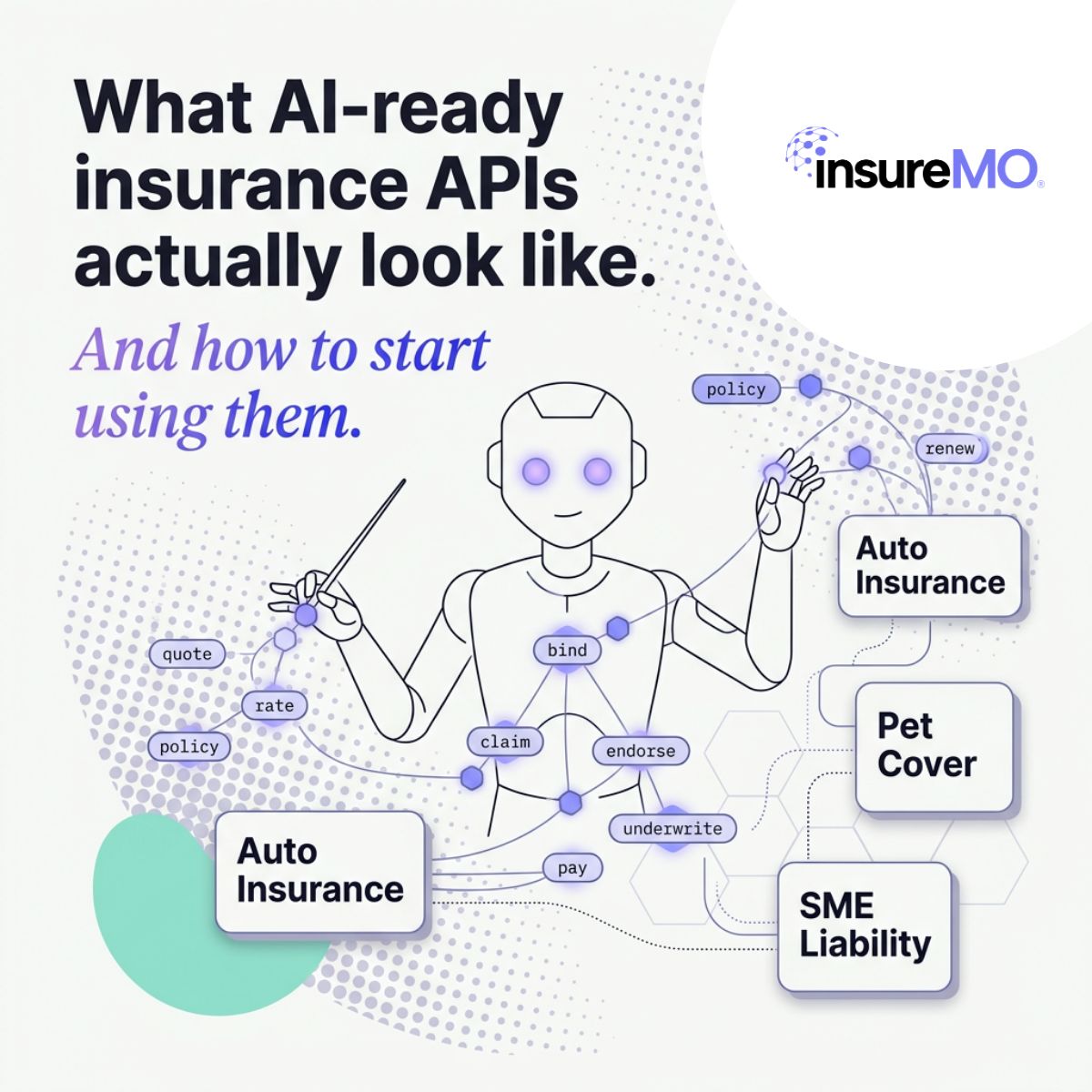
Recently, we asked a room full of insurance leaders one question: "What does an AI-ready insurance architecture actually look like?" The answer isn't a new core system. It's about making your existing infrastructure AI-conversable — APIs that large language models, AI agents, and intelligent underwriting tools can consume, orchestrate, and act on. Without custom middleware. Without months of integration work. At a recent session, we demonstrated something that surprised even the sceptics in the room. Raw policy wordings and product documents, fed directly into InsureMO's AI-friendly API layer — no workshops, no specs — and out came a configurable, deployable insurance product. The infrastructure question in insurance has shifted. It's no longer "can we modernise?" It's: how fast can your APIs talk to AI? If you're a CIO, CTO, or Head of Digital at a Insurance Carrier, MGA, or a Broker or a Channel — we would be glad to share the architecture walkthrough we ran in the room.
- LINKEDIN · IMAGESince 21 Jul 2026
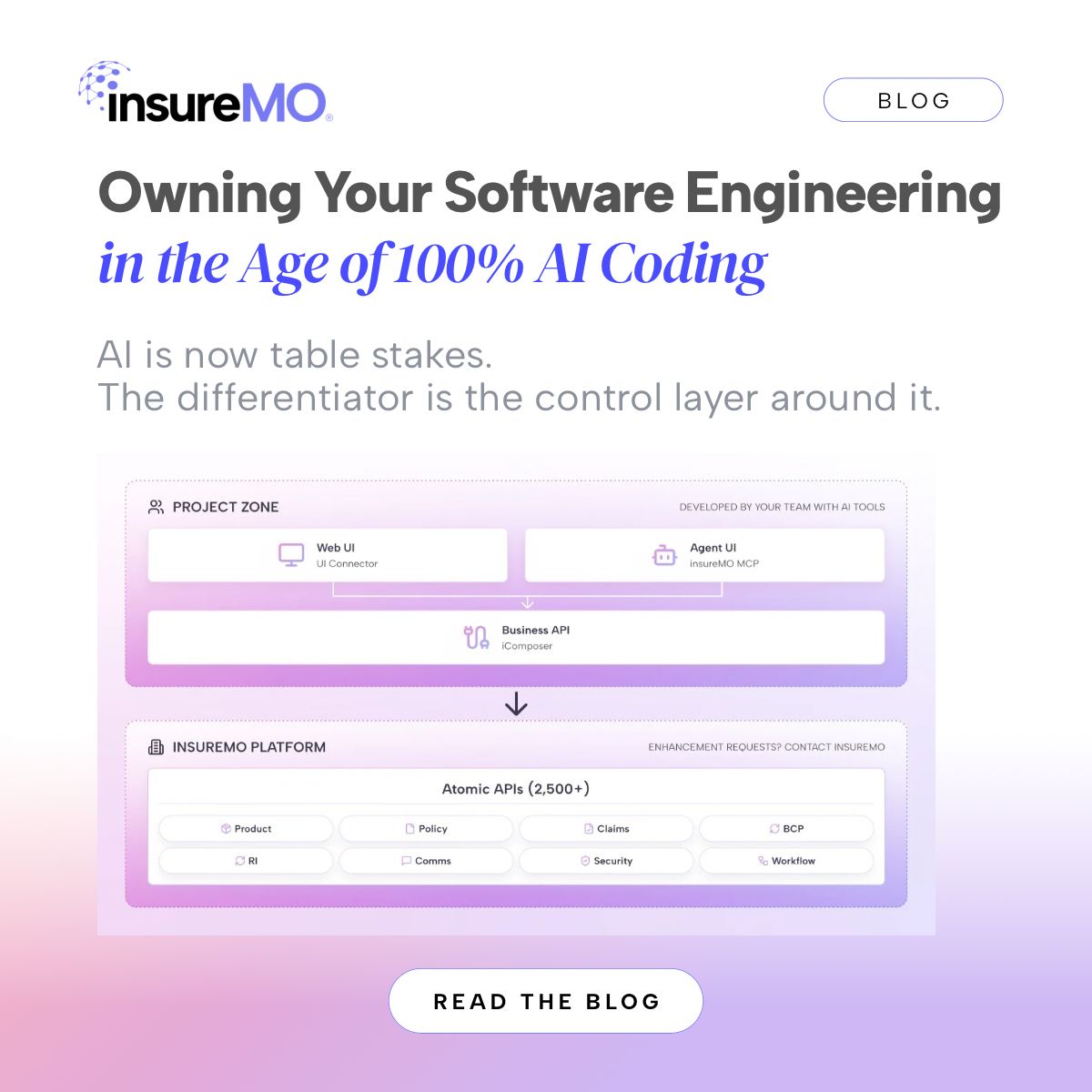
Your competitors use the same LLMs and the same coding agents you do. What separates firms that win with AI is not the AI. It is the control layer around it. AI is the engine. You still have to steer. In insureMO's view, there are four principles to follow: 1. Control Your Architecture and Information Project Zone (yours): Web UI, Agent UI, Business APIs. insureMO Platform (the foundation): 2,000–3,000 atomic insurance APIs, documented, versioned, battle-tested over a decade. 2. Scope Small — Tasks and Codebases AI performs best with small, well-bounded work. The corollary: AI fails best under the same conditions. insureMO bakes this in three ways: • UI Connector (UIC) — typically a few hundred to a few thousand lines per page. Auth and base infrastructure are predefined by the platform. Even a fully vibe-coded page is one rollback away from clean. • iComposer — a simplified scripting style that shrinks business-logic code by ~10x. A typical API is just a few hundred lines. Less code, less to break. • Atomic APIs — agents compose pre-built services instead of reinventing insurance from scratch. 3. Lower the Skills Bar with the Right Infrastructure When the right infrastructure is in place, people closer to the business — analysts, product managers, operations staff — can prototype ideas and build small functions for their own use cases, not just wait on engineering. 4. Be LLM- and Agent-Agnostic LLMs and coding agents are tools, not competencies. Treat them like a database or a message queue: pick a good one, but never build on the assumption that only one will ever exist. 5. The Unspoken Fifth Principle: Domain Depth That is the Vertical PaaS thesis — and it is why a bet on insurance-specific AI-friendliness is the substrate that makes the four principles above actionable. 2026 Is the Defining Year 2026 is when AI governance in insurance moves from ambiguity to definition. The firms that come out ahead will be the ones who treated AI not as a tool to adopt but as an engineering discipline to own. Own your architecture. Scope small. Lower the bar. Own your tools. AI is the engine. You still have to steer. Read the full blog at https://lnkd.in/g3bDKpCu Contact our team today and ride the wave of agentic engineering. Book a demo at https://lnkd.in/gkzWvhxe Rajat Sharma, Saurabh Mehta, Saket V Mishra, Varun Vijan, Kuldip Sarma, Ashwani Kumar, Ankit Agarwal, Jason Barnes, Martin Crew, Anubhav Sharma, Manoj Dialani, Abhishek Sharma
- LINKEDIN · VIDEOSince 7 Jul 2026
We are thrilled to share a new use case: a major global broker in Australia has moved commercial broker placement off email and insurer portals and onto API-first negotiation infrastructure, starting with workers' compensation as the first of four commercial product lines, in one of the first Australian deployments of its kind. What’s even more exciting is that the build was mostly using agentic engineering, with very minimal human coding. This broker operates as the single broking entity. The platform supports new business, mid-term adjustments, renewals, and policy imports, with version control on both risk data and quote terms. The platform puts panel placement into a single negotiation environment where brokers and insurers exchange submissions, conversations, and terms through a shared API layer. Layered and co-insurance structures, known in commercial broking as tower placements, are visualized with side-by-side comparison of terms across the panel. “Commercial placement is one of the few remaining parts of insurance still running on email, spreadsheets, and portals built in the last decade,” said Rajat Sharma, Chief Revenue Officer at InsureMO. “This broker customer has moved that workflow onto purpose-built infrastructure: headless, API-first, version-controlled across both risk data and terms. This deployment is an early reference point for that architecture in this market.” InsureMO offers the Negotiated Placements service and a companion broker-and-insurer application as standard platform products, available to other commercial brokers, MGAs, and insurers. Read the full article at https://lnkd.in/gCnzmXk4 Rajat Sharma, Ashwani Kumar, Ken Slevin, Tauqeer Khan, Ankit Agarwal
- LINKEDIN · IMAGESince 6 Jul 2026
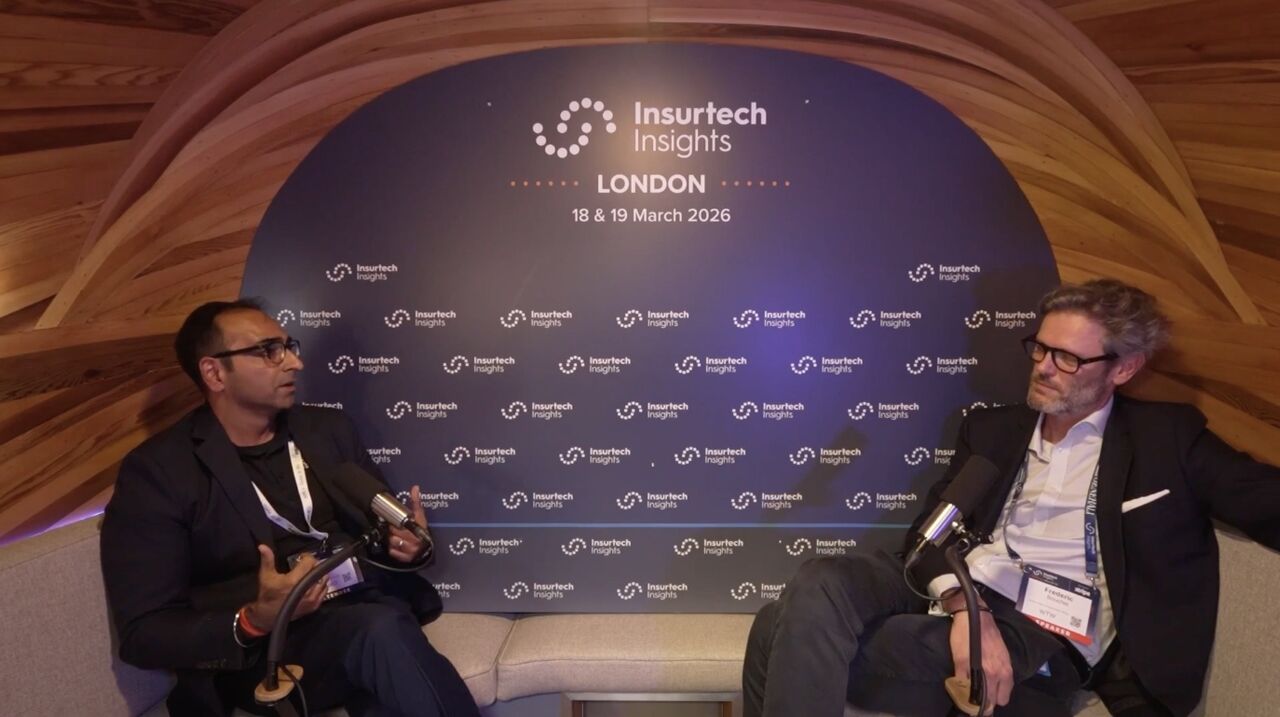
"AI can only sell what it has access to." Frederic Bouchet's line at Insurtech Insights London. He runs Automotive Affinity globally at WTW, and that one sentence has stuck with me. His framing: AI is becoming the next sales channel, the way the API was a generation ago. And probably a transaction channel after that. He sees it playing out in three steps. Today, discovery. A new car owner asks ChatGPT or Claude which cover they should take. The model gives generic guidance. Next, quoting. If an insurer has actually integrated, the AI proposes an offer specific to the car brand you own. Connected services data. Battery status if it is an EV. Usage data. Much sharper than a generic quote. Then, transaction. The full sale happens through the AI surface. The constraint at every stage is the same. The AI can only act on what it has access to. Without insurance APIs the agent can call, the conversation stops at "you should probably get covered." That gap is what InsureMO was built for. APIs an AI agent can discover, call, and compose into a real quote or policy. The car-brand-specific offer Frederic described does not ship without that plumbing underneath. Thanks for the conversation, Frederic Bouchet Full video: https://lnkd.in/gWnByxFR #InsuranceAI #AutomotiveInsurance #AIAPIforInsurance Woody Mo Rajat Sharma Ankit Agarwal Chuck Gomez Ken Slevin Vishal Pai Tauqeer Khan Sandeep Bastikar Fiona Zhang Kuldip Sarma Ashwani Kumar Mildred Crasto Austin Huang
- LINKEDIN · VIDEOSince 2 Jun 2026
Recently, we asked a room full of insurance leaders one question: "What does an AI-ready insurance architecture actually look like?" The answer isn't a new core system. It's about making your existing infrastructure AI-conversable — APIs that large language models, AI agents, and intelligent underwriting tools can consume, orchestrate, and act on. Without custom middleware. Without months of integration work. At a recent session, we demonstrated something that surprised even the sceptics in the room. Raw policy wordings and product documents, fed directly into InsureMO's AI-friendly API layer — no workshops, no specs — and out came a configurable, deployable insurance product. The infrastructure question in insurance has shifted. It's no longer "can we modernise?" It's: how fast can your APIs talk to AI? If you're a CIO, CTO, or Head of Digital at a Insurance Carrier, MGA, or a Broker or a Channel — we would be glad to share the architecture walkthrough we ran in the room. Drop a comment, or DM Chuck Gomez Ankit Agarwal Rafael Cecchini Rodrigues Ashwani Kumar Kuldip Sarma Saurabh Mehta Radha Thakore Joshi or Antoniya Karakuleva or book a session here: 👉 https://lnkd.in/gKbFnXxn #InsurTech #AIinInsurance #InsuranceAPI #DigitalInsurance
- LINKEDIN · IMAGESince 29 Apr 2026
Eight minutes. That is how long it took AI to build a working insurance application against InsureMO APIs. Not a mockup. A functioning application, front-end to business logic, built entirely by AI. The same task against a typical legacy core? Two weeks. And the code still failed at runtime. The difference is not smarter AI. It is the API layer underneath. We wrote the full story. It covers: → Why AI coding fails on most insurance cores (three failure modes) → The two-layer architecture that makes AI coding safe → How InsureMO's native MCP Server delivers compliance by design, not by policy → A five-step playbook to get from where you are now to AI-ready in weeks The thesis: guardrails are a patch. Architecture is the answer. Read it here: https://lnkd.in/gSfKUtnA If you want to see the architecture in action, book a 20-minute walk-through with our pre-sales team. No slides, no pitch, just your use case: https://lnkd.in/gJ7mnKGF Woody Mo Rajat Sharma Ashwani Kumar Sudhakar Siripurapu Masaru Kawakami John Garcia Rudy Siregar Saurabh Mehta Sandeep Bastikar Fiona Zhang Ken Slevin Tauqeer Khan Chuck Gomez Ankit Agarwal RK. Gaurav Krishan Kuldip Sarma Rafael Cecchini Rodrigues Weliton Costa Anubhav Sharma John Macdonald Abhishek Sharma Ajith Bopanna Antoniya Karakuleva Manoj Dialani #InsuranceTechnology #AI #InsurTech #InsuranceInnovation
6 of 47 adsSign up to see every insureMO ad, filter by format and date, and get alerts on new ones.
See all 47 adsWatch the companies you care about.
Filter every ad by industry, country, format and network, and get alerts when a company you watch starts running new ads.