On air · 1 of 3 networks
Ion Interactive
- ioninteractive.com
- Marketing & Advertising
- US
- 376 employees
Ion Interactive’s ads on LinkedIn, Meta and Google, recorded by adsrunning. Browse the latest here for free. Sign up free to see all 124. Watch Ion Interactive with Starter to get each new one in your feed.
Watchlist with Starter · $49/mo
| Network | Status | Live ads | Nov 2025LinkedIn activity · 52 weeksOct 2026 | Checked | Next step |
|---|---|---|---|---|---|
| Running | 124 | Checked 29 Oct 2026 | See all 124 ads → | ||
| Meta | Not checked | — | |||
| None recorded | 0 | No ads found on the Google Ads Transparency Center | Checked 1 Oct 2026 | Collect them with the API → |
Ion Interactive has 124 live LinkedIn ads. We recorded no Google ads on 1 Oct 2026.
Latest ads
- LINKEDIN · IMAGERecorded 8 Oct 2026
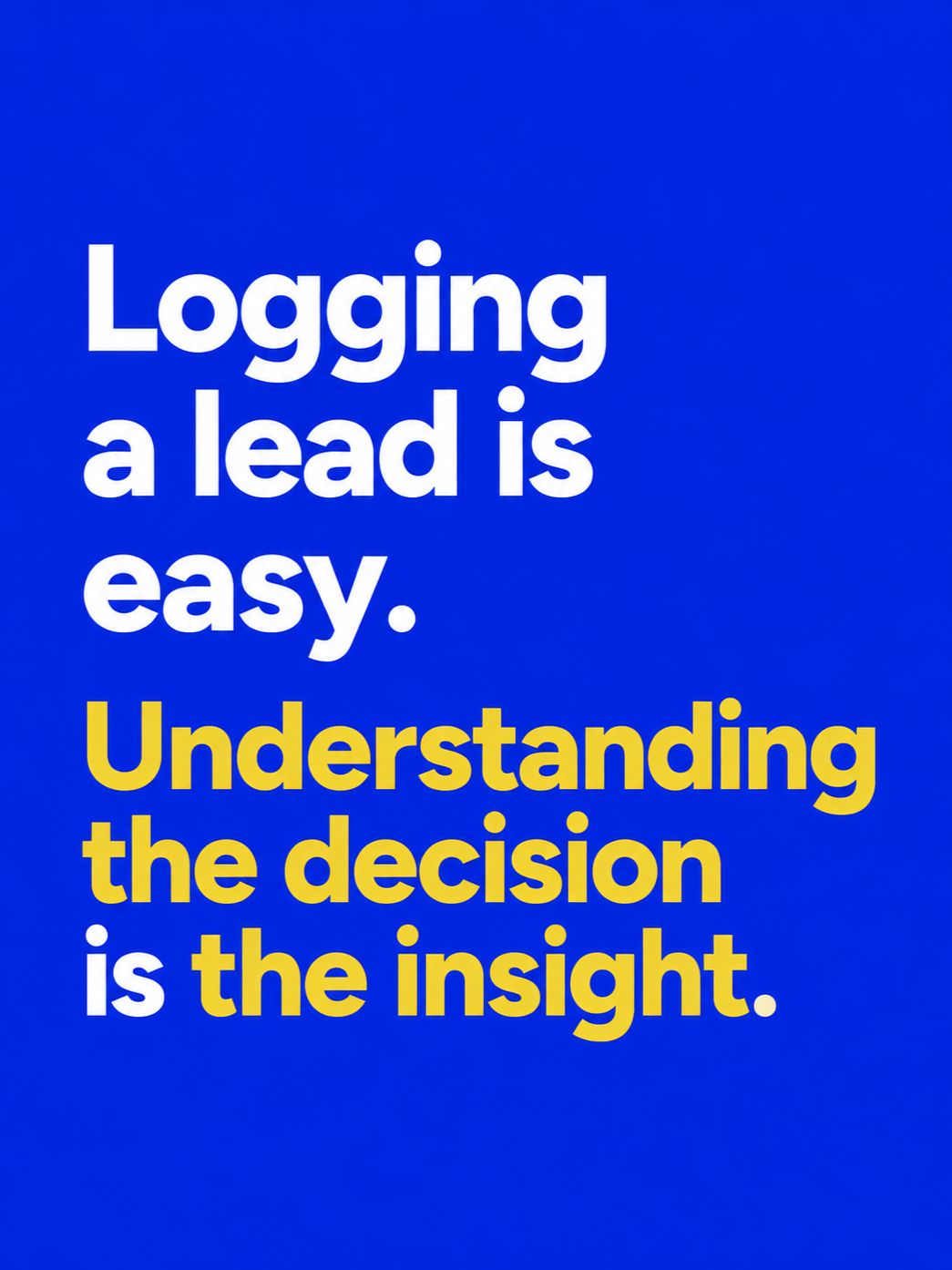
Most of the buying decision has already happened before your system logs anything about the buyer. Gartner put a number on it: 67% of B2B buyers now prefer a rep-free experience, and 45% used AI during a recent purchase. That means a big part of the research happens somewhere your team can't see. What I find most interesting is where the gap shows up. You still get the click. You still get the form fill. What you miss is the reasoning behind it: the question they had, the option they ruled out, the constraint that made them pause. That gap adds up quickly. Pipeline fills with contacts you can't really read. MQLs pass every scoring rule and still reach sales with little context behind the name. The MQL-to-SQL conversion rate takes the hit later, when a rep opens the record and has to piece together the context the buyer already worked through on their own. Trying to pull that research back into trackable channels is a losing bet. The buying habit changed, not just the tools. A better move is to give buyers a useful reason to share what they've already worked out. A static comparison page gets you a pageview. A short diagnostic with three questions can tell you where that buyer actually is. That's far more useful than another traffic number. You don't need to rebuild the funnel for this. Pick the one question your team most often has to guess at on a first call, and turn it into something the buyer can answer for you because it's useful enough to spend two minutes on. Logging that someone showed up is the easy part. Understanding what they were deciding before you ever saw them is where the real pipeline insight sits.
- LINKEDIN · IMAGERecorded 8 Oct 2026
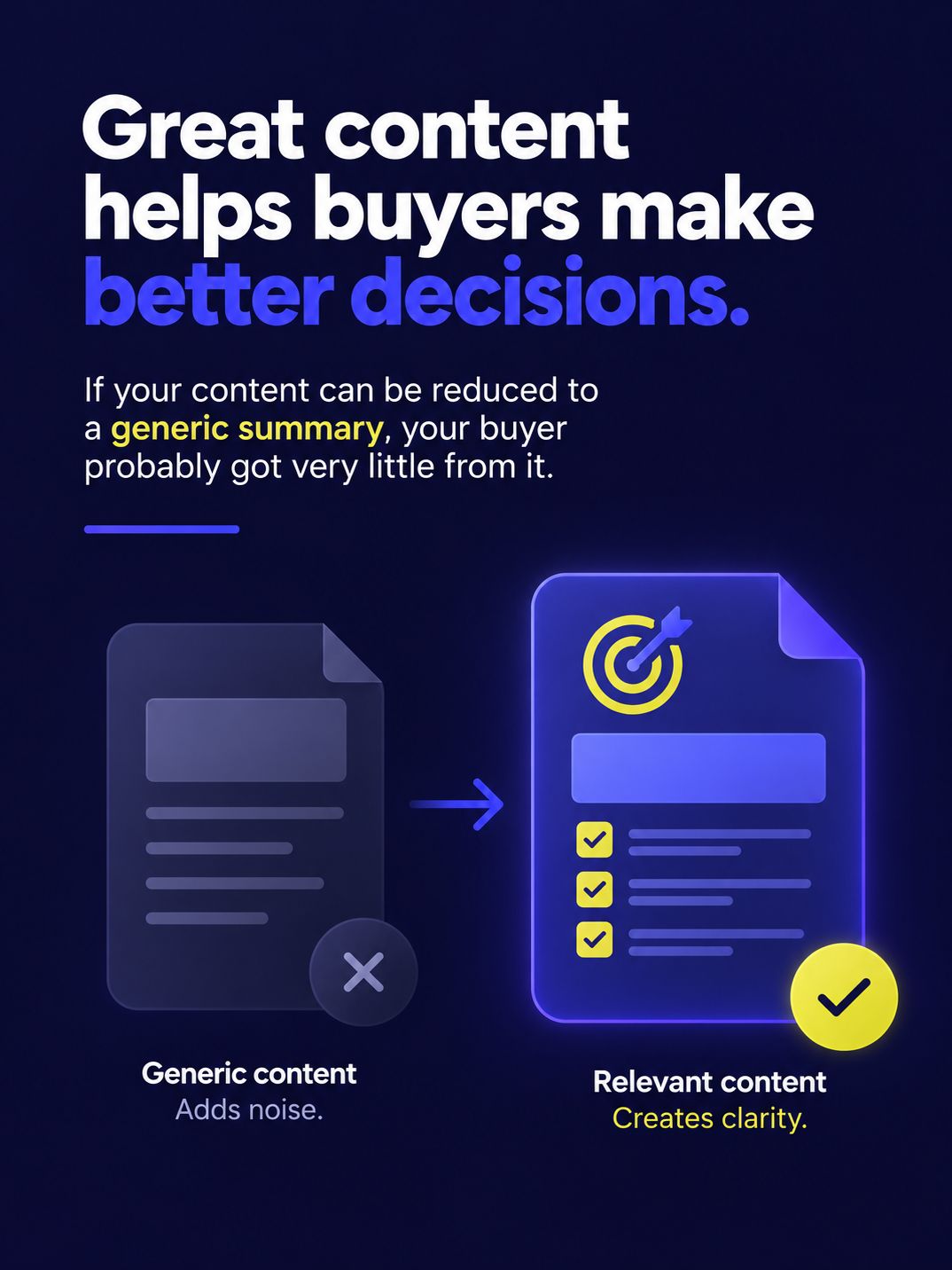
If your content can be reduced to a generic summary, your buyer probably got very little from it. B2B buyers do most of their research before talking to sales. They compare options, evaluate competitors and use AI tools to narrow down their choices. By the time they become a lead, they already have context. To me, the real question is whether your content helped build that understanding or just added another piece to consume. I think that gap appears later in the funnel. Sales receives leads with little buying context, conversations restart from the beginning and MQL quality stays disconnected from business impact. Three questions can reveal if your content is helping buyers make decisions: 1. Does it solve a specific problem or try to speak to everyone? 2. Does it adapt to the buyer's context or deliver the same message regardless of who is reading? 3. Does it create a useful signal for the next interaction or disappear after consumption? Great content leaves your team understanding the buyer a little better than before.
- LINKEDIN · IMAGERecorded 8 Oct 2026
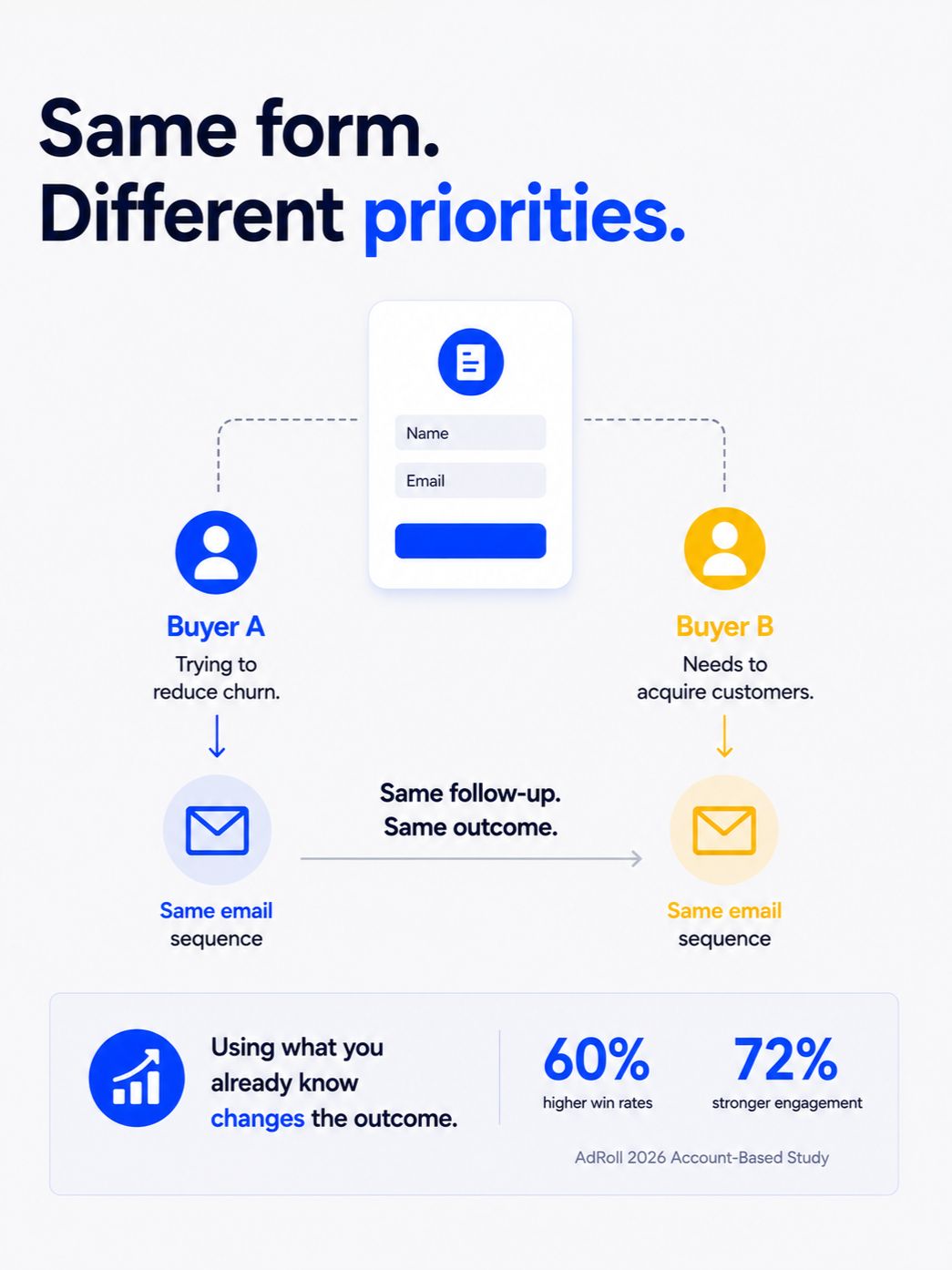
Two buyers can fill out the same form and leave with completely different priorities. The follow-up that reaches them rarely reflects that difference. One is trying to reduce churn. The other needs to acquire customers. Minutes later, both receive the same email sequence, in the same order, on the same day. I think that's exactly how marketing ends up creating MQLs sales struggles to convert into pipeline, and how MQL-to-SQL conversion stays flat no matter how much lead volume grows. The lead shared valuable context, but nothing changed in the journey that followed. AdRoll's 2026 account-based study found that teams acting on what they actually know about an account achieve 60% higher win rates and 72% stronger engagement than teams sending the same message to everyone. What I find interesting is that personalization only matters when it changes what happens next. Sending more emails or collecting more form fields won't move pipeline quality. Using the answer already given will. The buyer who mentioned churn is still waiting for someone to mention it back. 🫡
- LINKEDIN · IMAGERecorded 8 Oct 2026
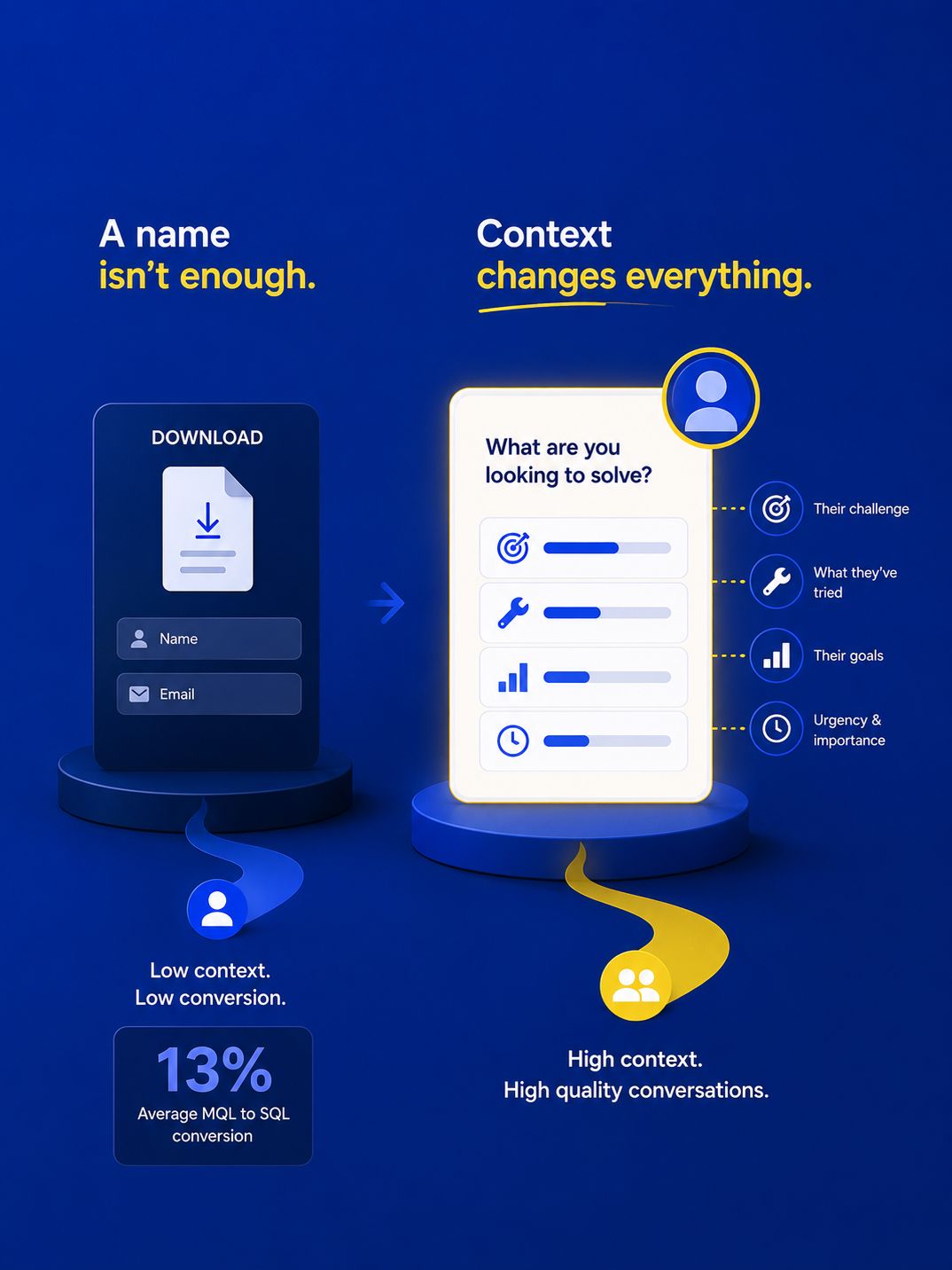
A download tells you one thing: someone filled out a form. It doesn't tell you whether that person is actually worth your Sales team's time. It doesn't explain what sparked their interest, what they're trying to solve, how urgent the issue is, or whether they're involved in the buying decision. That missing context is why so many "qualified" leads never turn into real sales conversations. Industry benchmarks put average MQL-to-SQL conversion at around 13%, which helps explain why marketing and sales so often see lead quality differently. A simple interaction can change what you learn. A few thoughtful questions reveal intent, priorities, and how ready someone is to move forward. You understand what they're dealing with, what they've already tried, what they're hoping to achieve, and how important that challenge is to the business. Downloads create contacts. If you want better conversations, start collecting context too.
- LINKEDIN · IMAGERecorded 23 Sept 2026
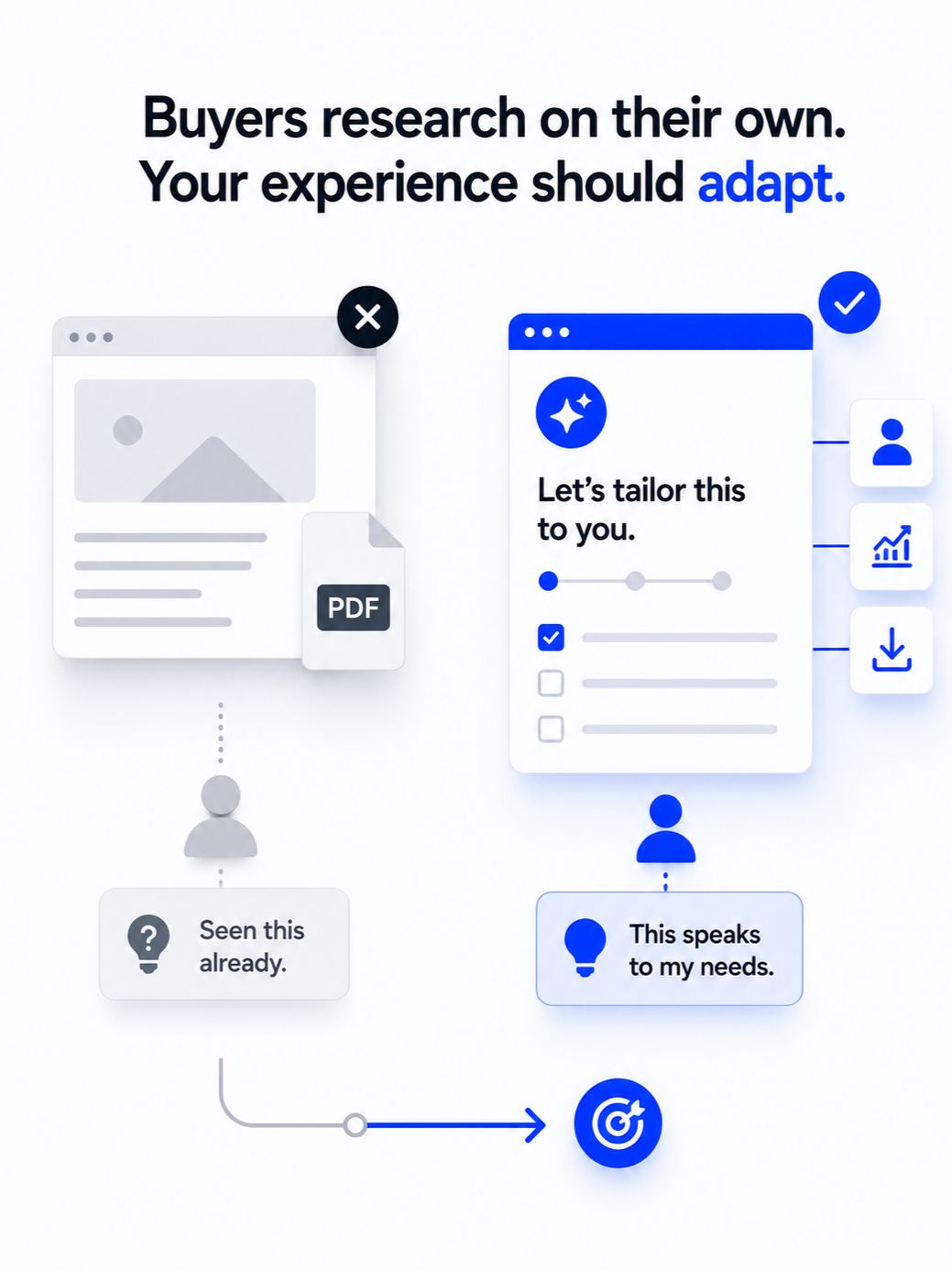
Your landing page now competes with the way buyers research vendors. More B2B buyers are using AI chatbots to compare solutions before they ever visit a company website. By the time they click through, they've often seen a summary of the category, a comparison of vendors, and a list of common differentiators. That changes what they expect when they arrive. A generic landing page or static PDF usually repeats information they've already seen. It doesn't help them connect those ideas to their own situation. A guided experience takes the conversation further. Buyers answer a few questions, receive information that reflects their context, and leave with something more useful than a one-size-fits-all page. SEO still brings visitors to your website. What keeps them engaged is giving them an experience that reflects where they are in the buying journey, rather than another page with the same information they've already read.
- LINKEDIN · IMAGERecorded 23 Sept 2026
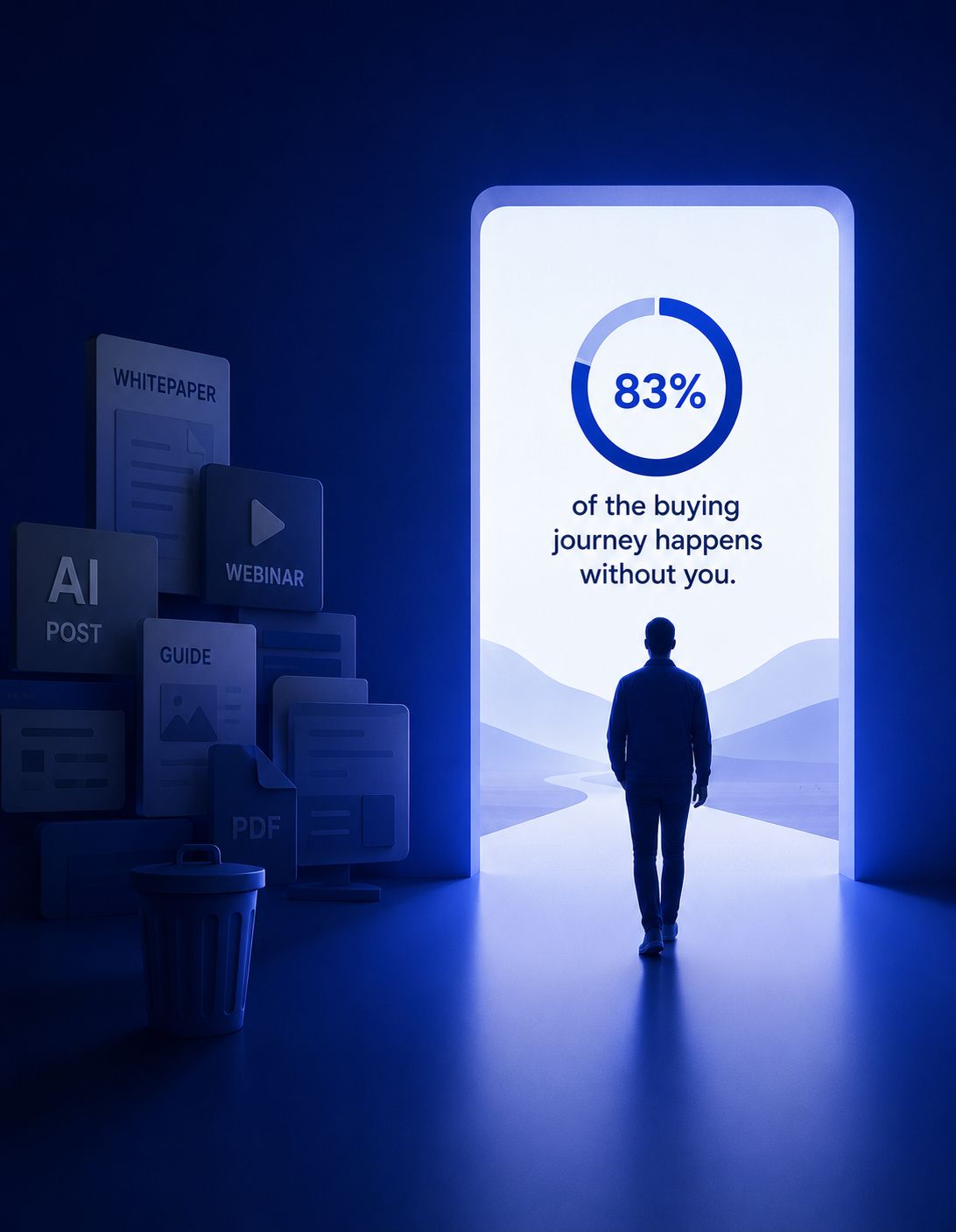
AI solved the content production problem. It didn't solve the buyer understanding problem. Gartner found that buyers spend just 17% of their buying journey talking to vendors. The other 83% happens on their own. Meanwhile, B2B teams keep publishing more, hoping volume turns into pipeline. We're producing more content than ever while learning very little about the people consuming it. A whitepaper gets downloaded and forgotten. A product demo gets abandoned after a few seconds. You learn almost nothing about the person behind the click, and they leave without finding much that speaks to their situation. Instead of another asset, try adding a few well-designed questions. They help buyers think through their priorities while giving you useful context about where they are, what they're evaluating, and how close they are to making a decision. Buyers will keep spending most of their journey without you. Content gets attention. Good experiences give you context.
6 of 124 adsSign up to see every Ion Interactive ad, filter by format and date, and get alerts on new ones.
See all 124 adsWatch the companies you care about.
Filter every ad by industry, country, format and network, and get alerts when a company you watch starts running new ads.