On air · 1 of 3 networks
International Monetary Fund
- imf.org
- Government & Non-profit
- US
- 7,905 employees
International Monetary Fund’s ads on LinkedIn, Meta and Google, recorded by adsrunning. Browse the latest here for free. Sign up free to see all 53. Watch International Monetary Fund with Starter to get each new one in your feed.
Watchlist with Starter · $49/mo
| Network | Status | Live ads | Nov 2025LinkedIn activity · 52 weeksOct 2026 | Checked | Next step |
|---|---|---|---|---|---|
| Running | 33 | Checked 29 Oct 2026 | See all 53 ads → | ||
| Meta | None recorded | 0 | No active ads recorded on the Meta Ad Library | Checked 22 Oct 2026 | Collect them with the API → |
| Recently | 100+ | Ads on the Google Ads Transparency Center | Checked 1 Oct 2026 | Collect them with the API → |
International Monetary Fund has 33 live LinkedIn ads. Its Facebook page had no active ads on 22 Oct 2026, and we recorded 100+ Google ads on 1 Oct 2026.
Latest ads
- LINKEDIN · IMAGESince 14 Oct 2026
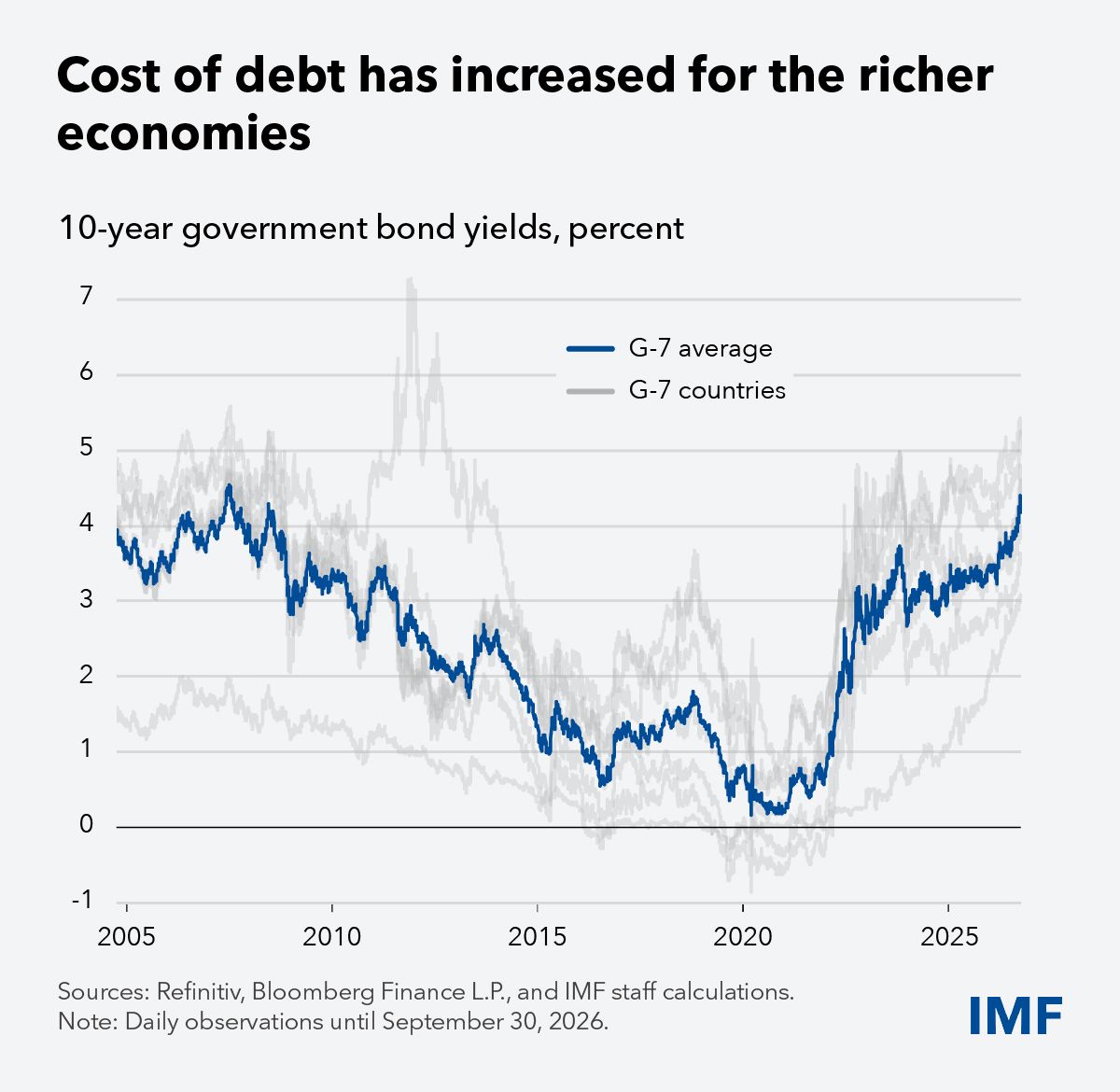
Rising bond yields are adding pressure on public finances already strained by debt approaching its highest since World War II. High debt, spending pressures, and large future borrowing are among the forces pushing yields higher. As higher rates feed into budgets, interest bills are becoming a larger claim on public resources. That leaves less room for public investment and social spending, and less capacity to respond to the next downturn, just as demands from defense, energy security, and aging populations are mounting. The pressure doesn't stay at home: higher benchmark yields can spill across borders and worsen debt dynamics in other economies. The latest Fiscal Monitor blog explains how putting fiscal policy on a credible path now can help contain borrowing costs and avoid a larger adjustment later: https://lnkd.in/eN5iaMwr
- LINKEDIN · IMAGESince 13 Oct 2026
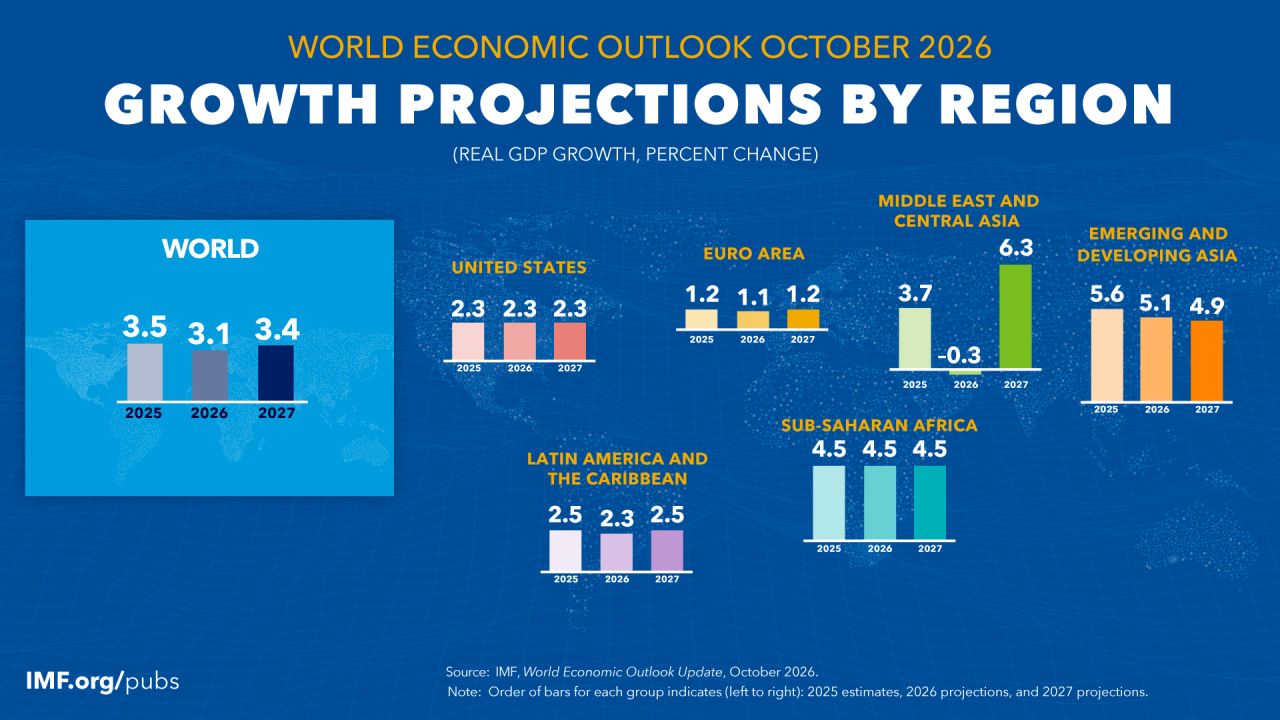
The latest World Economic Outlook finds that the global economy remains resilient, but sustaining that resilience is becoming increasingly costly. Growth is projected at 3.1% in 2026 and 3.4% in 2027, as the war in the Middle East weighs on activity through higher energy and food prices, while AI-related investment provides an offsetting boost. Inflation is also projected to rise to 4.7% in 2026 before easing to 4.1% in 2027. Risks remain tilted to the downside, including renewed escalation in the Middle East and a reassessment of AI-related expectations. But upside risks are also present if AI investment proves more persistent, productivity gains materialize faster, trade arrangements improve, and higher fossil fuel prices accelerate investment in energy security. The policy priorities are to rebuild fiscal space, strengthen energy security, improve AI readiness, and keep trade and cooperation channels open. https://lnkd.in/dnm2nXnH
- LINKEDIN · IMAGESince 13 Oct 2026
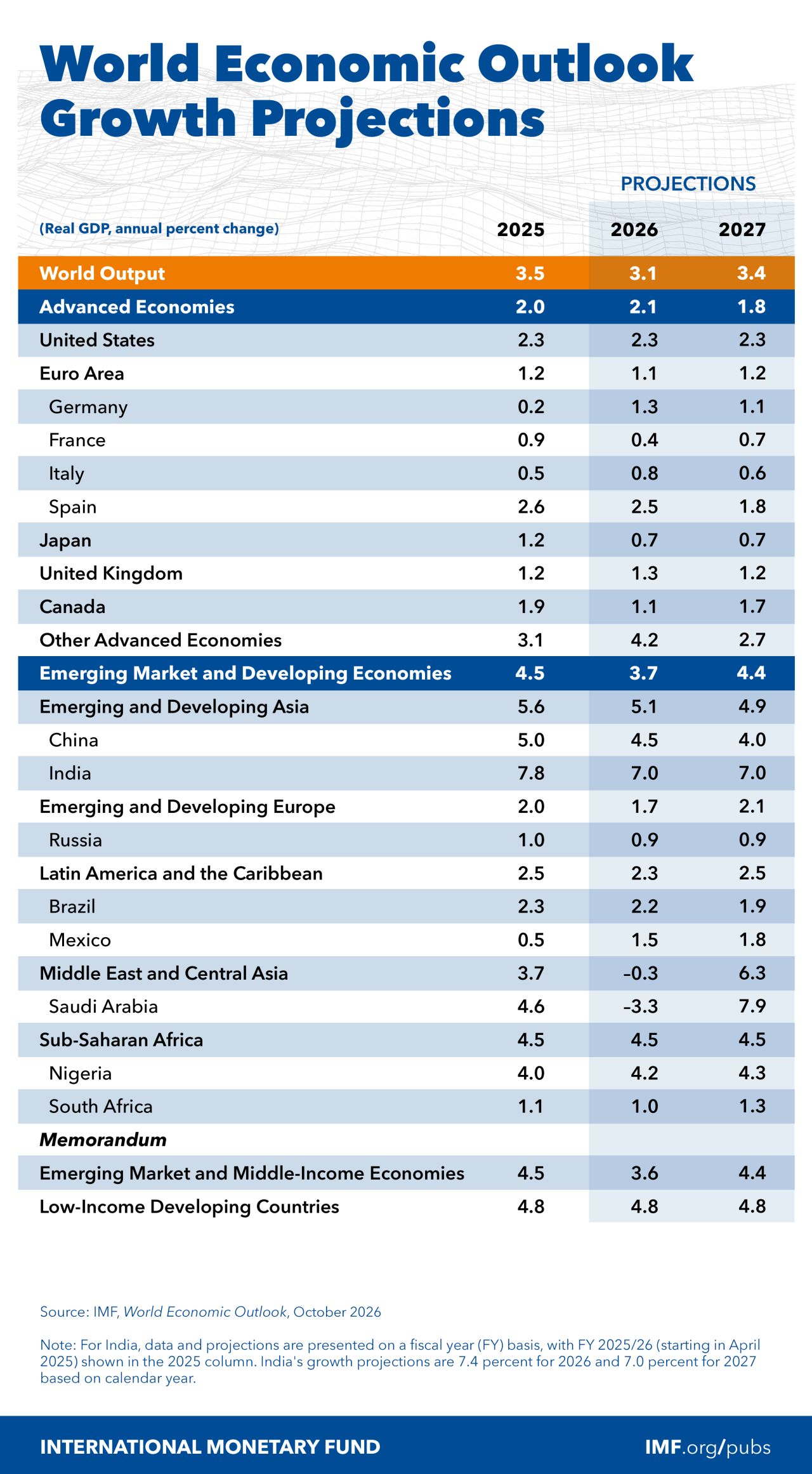
IMF Growth Forecast 2026: 🇺🇸 US: 2.3 % 🇩🇪 Germany: 1.3% 🇫🇷 France: 0.4% 🇮🇹 Italy: 0.8% 🇪🇸 Spain: 2.5% 🇬🇧 UK: 1.3% 🇯🇵 Japan:0.7% 🇨🇦 Canada: 1.1% 🇨🇳 China:4.5% 🇮🇳 India: 7.0% 🇷🇺 Russia:0.9% 🇧🇷 Brazil: 2.2% 🇲🇽 Mexico: 1.5% 🇸🇦 Saudi Arabia: -3.3% 🇳🇬 Nigeria: 4.2% 🇿🇦 South Africa: 1.0% https://lnkd.in/dnm2nXnH
- LINKEDIN · IMAGESince 7 Oct 2026
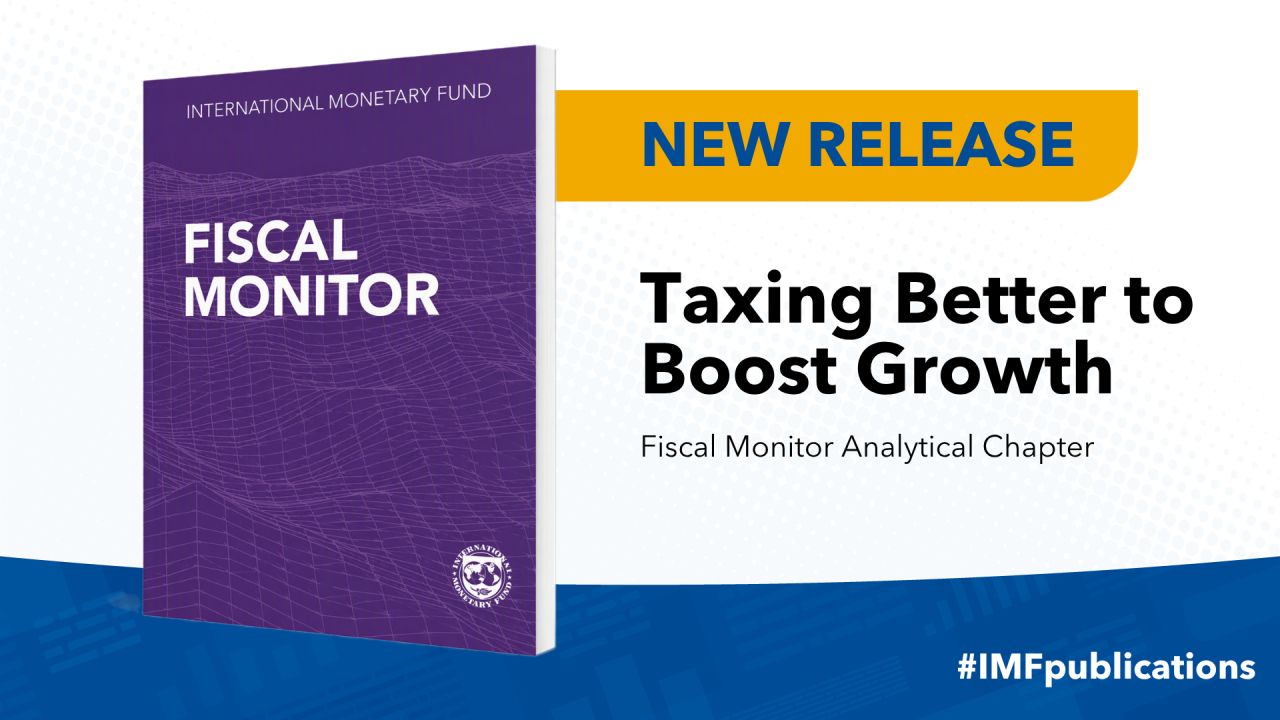
As many countries face tighter fiscal constraints and risking debt burdens, supporting growth has become more challenging. The IMF's latest Fiscal Monitor analytical chapter, “Taxing Better to Boost Growth,” finds that revenue-neutral tax reforms can encourage investment, innovation, and firm growth, while preserving revenues without worsening inequality. Read the full chapter here: https://lnkd.in/ekpwiwnf
- LINKEDIN · IMAGESince 7 Oct 2026
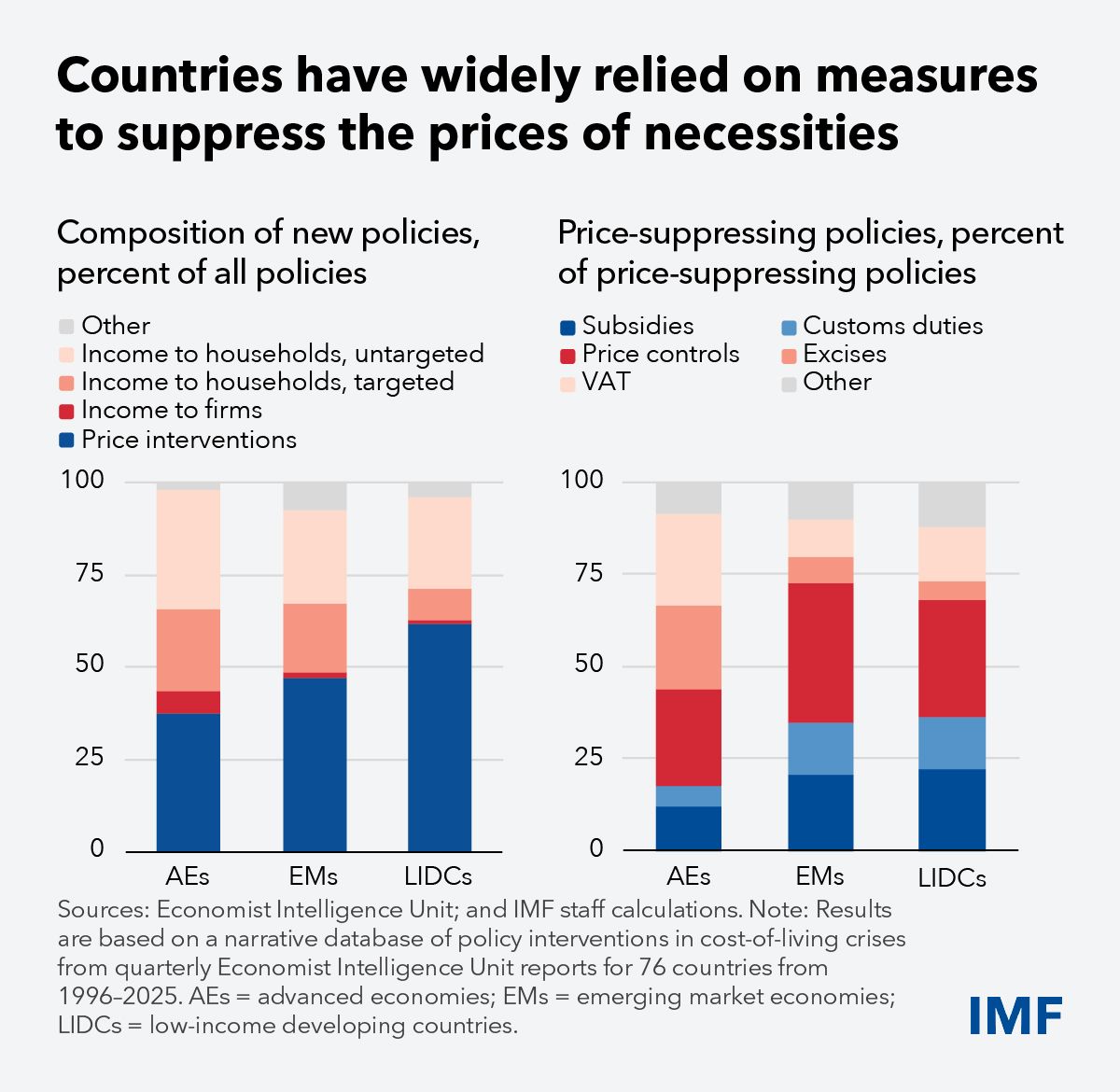
Cost-of-living crises fall disproportionately on lower-income households, who devote a larger share of spending to basic necessities and experience significantly higher inflation than higher-income households. During past episodes, many countries relied heavily on broad-based price-suppressing interventions. New World Economic Outlook research finds that targeted transfers are the most cost-effective way of supporting vulnerable households by preserving price signals, facilitating necessary adjustment in demand, and safeguarding critical fiscal space. Learn more about how governments can better protect vulnerable households. https://lnkd.in/dnm2nXnH
- LINKEDIN · IMAGESince 5 Oct 2026
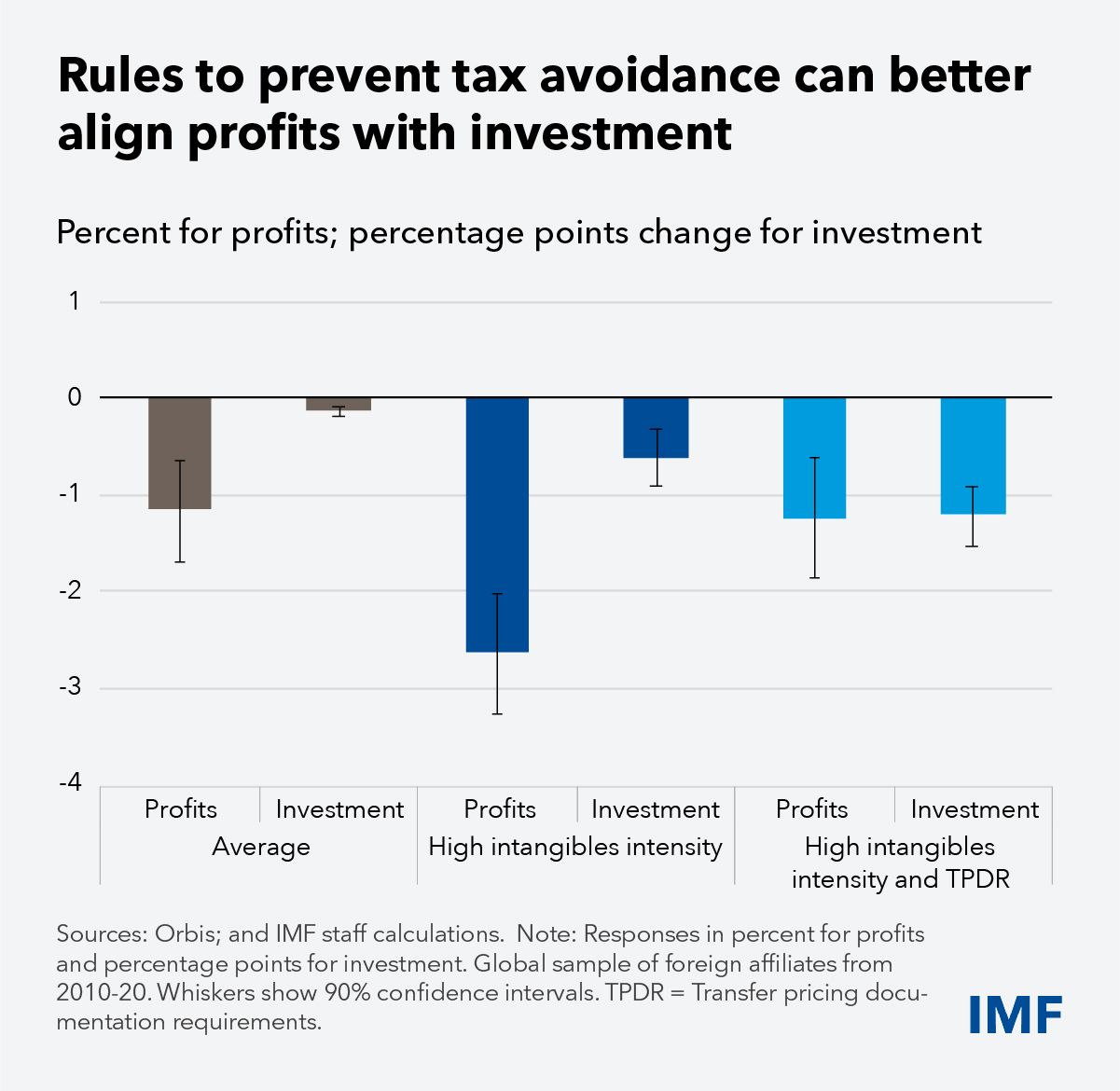
As capital becomes more mobile, governments face a difficult balancing act: attracting investment while preserving the revenues needed to support growth and development. Stronger anti-avoidance frameworks can help ease these trade-offs, especially in emerging market and developing economies that rely more heavily on corporate tax revenues. Anti-avoidance is also changing tax competition, with less pressure on headline rates, and multinationals increasingly reporting profits where real activity takes place. https://lnkd.in/dnm2nXnH
6 of 53 adsSign up to see every International Monetary Fund ad, filter by format and date, and get alerts on new ones.
See all 53 adsWatch the companies you care about.
Filter every ad by industry, country, format and network, and get alerts when a company you watch starts running new ads.