Not on air · 2 of 3 networks checked
INDG | Grip
- grip.tools
- Marketing & Advertising
- NL
- 305 employees
INDG | Grip’s ads on LinkedIn, Meta and Google, recorded by adsrunning. Browse the latest here for free. Sign up free to see all 323. Watch INDG | Grip with Starter to get each new one in your feed.
Watchlist with Starter · $49/mo
| Network | Status | Live ads | Nov 2025LinkedIn activity · 52 weeksOct 2026 | Checked | Next step |
|---|---|---|---|---|---|
| None recorded | 0 | Checked 29 Oct 2026 | See all 323 ads → | ||
| Meta | Not checked | — | |||
| Recently | 1 | Ads on the Google Ads Transparency Center | Checked 1 Oct 2026 | Collect them with the API → |
INDG | Grip has no live LinkedIn ads. We recorded 1 Google ad on 1 Oct 2026.
Latest ads
- LINKEDIN · IMAGESince 31 Aug 2026
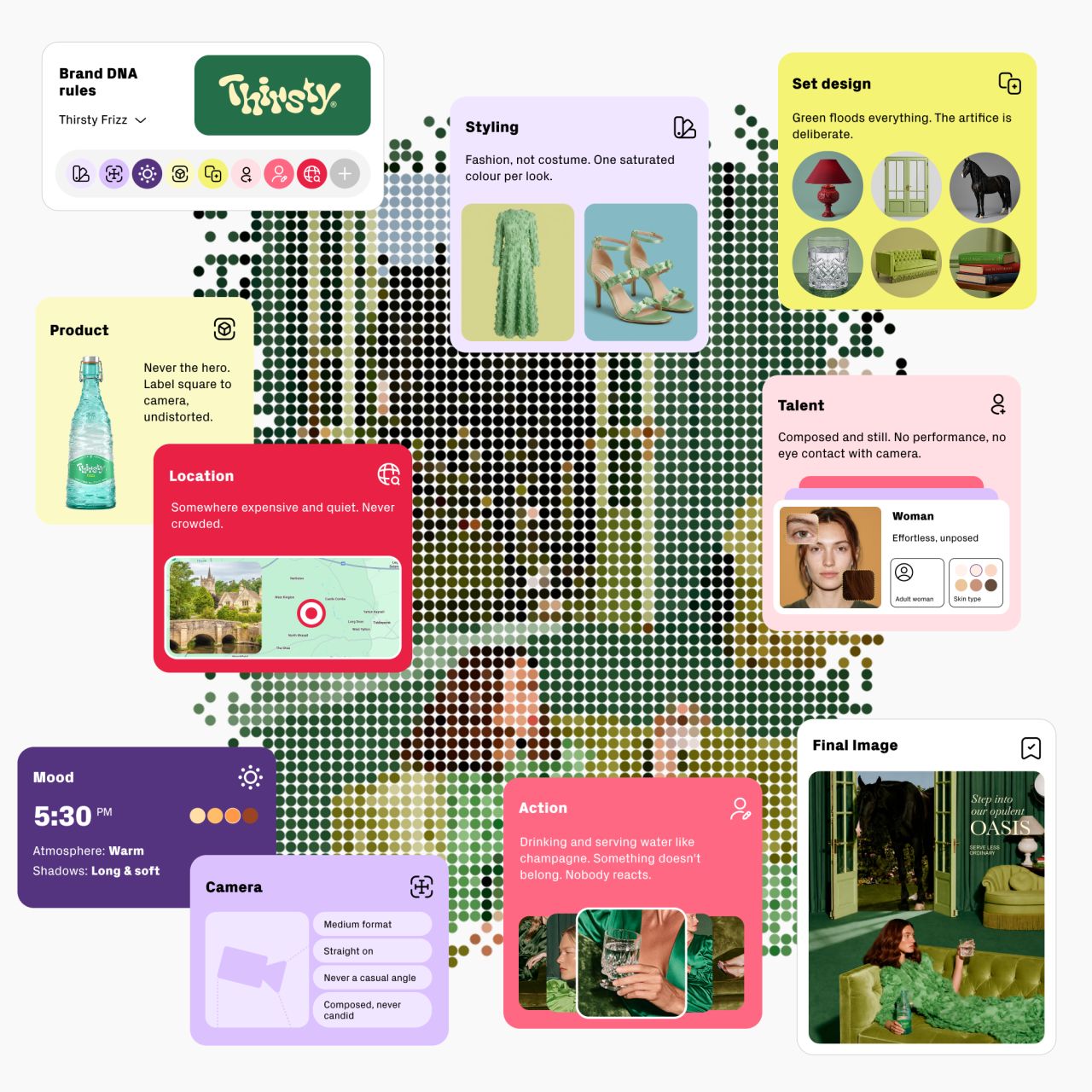
No prompt can hold everything a brand knows about itself. The State of Brand's "Great Flattening" report measured how far competing AI models have converged, and how consumer trust slips as the sameness spreads. The same flattening is now underway in visual content, and writing a better prompt is not how you get out of it. A distinctive brand voice helps, but it won't fit in a prompt box. The camera height, the way talent is caught mid-gesture, which props belong in the frame at all: that knowledge has to sit in the system, so the right detail turns up when the image needs it. The window for staying distinctive is closing faster for images than it is for text. Grip CPO Micha Savelsbergh wrote about where the flattening stops: https://lnkd.in/e677pykZ
- LINKEDIN · IMAGESince 31 Aug 2026
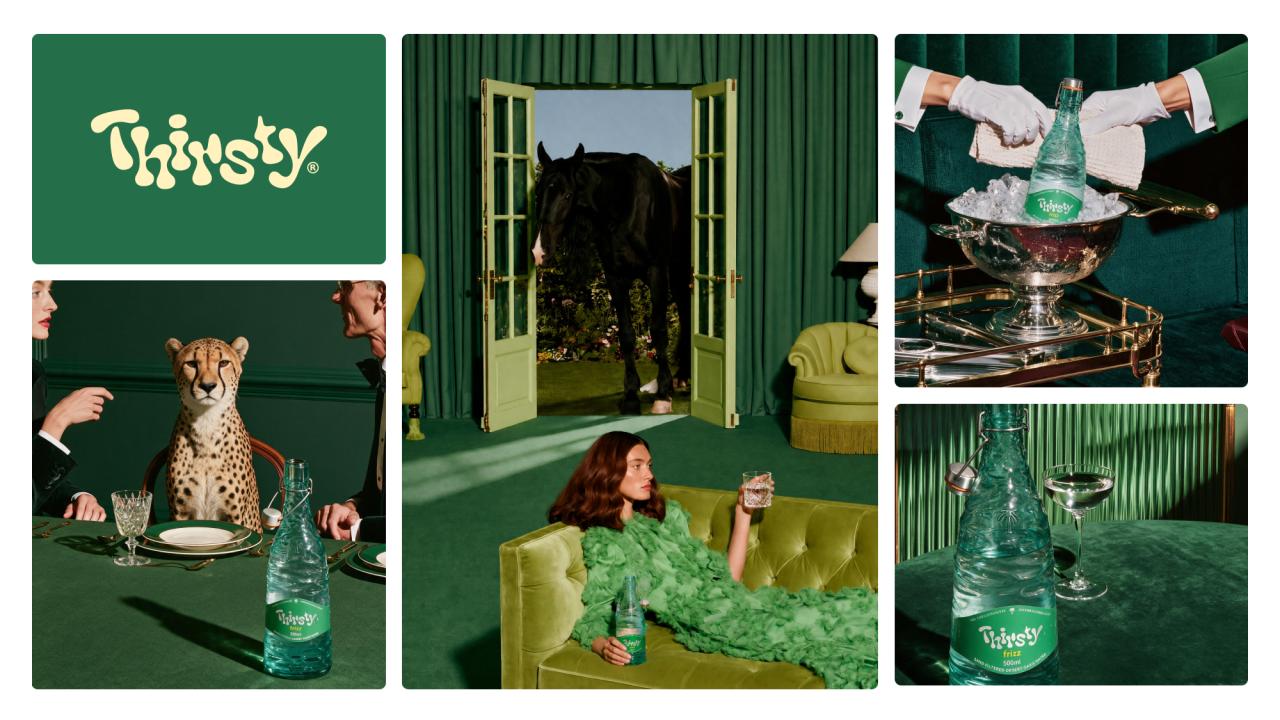
Everything starts to look the same. Golden hour, golden ratio, cinematic light, different logo. The State of Brand measured this for AI text: 81% similarity across models built on opposite sides of the planet. With images it moves faster. A reader gets a paragraph before clocking it as AI. A viewer gets a few hundred milliseconds. Most brands are trying to prompt their way out. I think that is in fact where the flattening starts. So what could stop it? I wrote down my take: https://lnkd.in/ePS-hizE
- LINKEDIN · VIDEOSince 25 Aug 2026
The bottle has to look the same in seventy markets. Moët Hennessy, LVMH's wine and spirits division, brings together more than twenty-five maisons selling across roughly seventy markets. Each maison needs its own campaign and product imagery, on its own timing, and every image has to carry the standards of the house it belongs to. 3D and AI production, built with Grip, carries that spread. Imagery is made once and adapted out per maison and per market, with each house's rules applied as it goes. Seventy markets can move at their own speed and still look like one house. That is Grip Adaptations. Get in touch to see how it was built.
- LINKEDIN · IMAGESince 31 Jul 2026
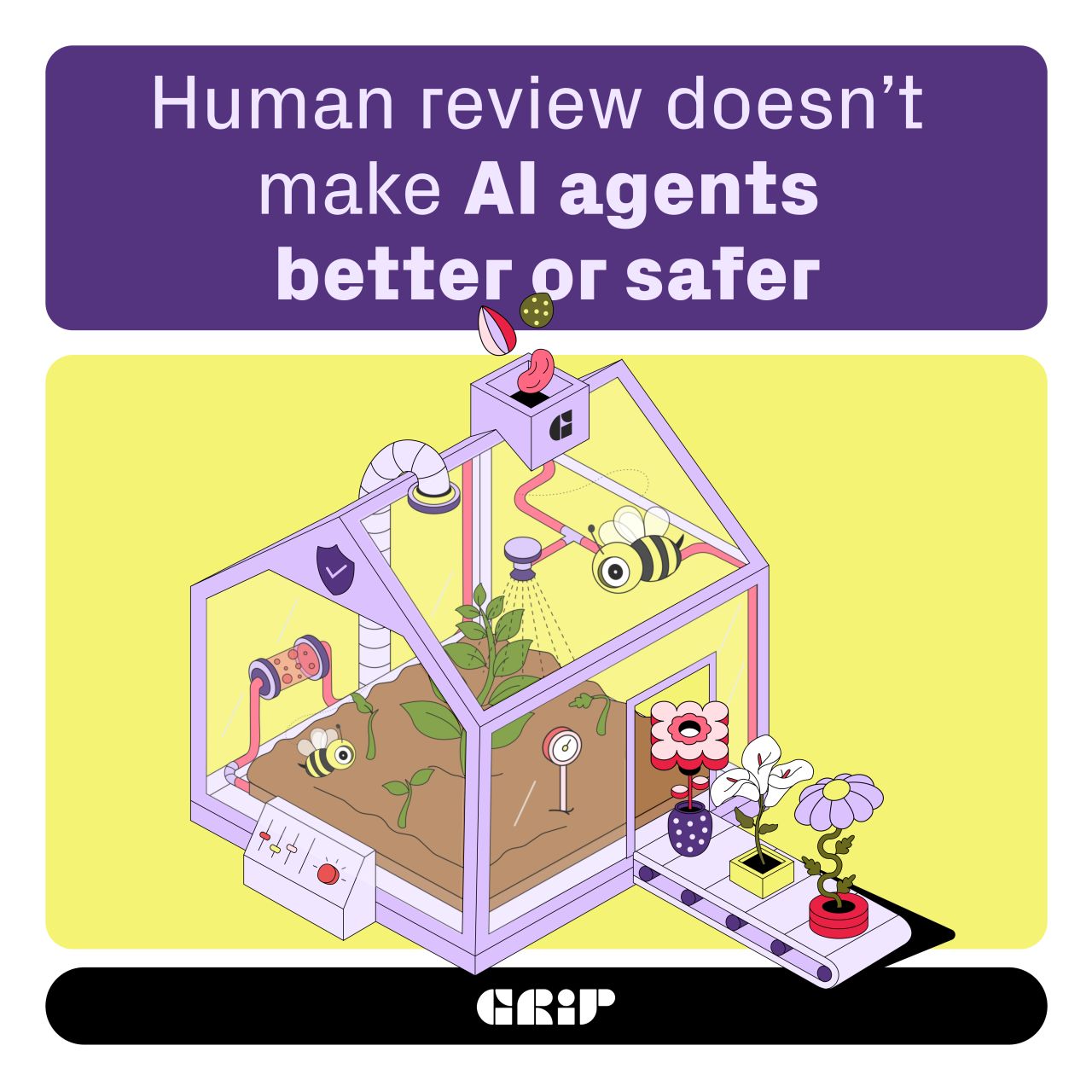
Gartner predicts more than 40% of agentic AI projects will be canceled by the end of 2027. Inadequate risk controls are a leading cause. The industry's standard answer is a human in the loop. The research says that answer fails. Humans are poor monitors, vigilance collapses within half an hour, and AI errors are statistically the most convincing ones. A reviewer approving thousands of agent decisions a day supervises nothing. So how do agents finish work instead of generating more of it? And how do the people in content production stay on the work that was always theirs: art direction, brand judgment, taste? Grip CPO Micha Savelsbergh wrote about why the human-in-the-loop reassurance fails, and what to design instead: https://lnkd.in/eA8nEPN8
- LINKEDIN · IMAGESince 29 Jul 2026
A reviewer who approves ten thousand agent decisions a day supervises nothing. Not because humans shouldn't oversee agents. The danger sits in a different spot. I wrote a longer piece on exactly that: https://lnkd.in/eVxtSR3W
- LINKEDIN · ARTICLESince 21 Jul 2026
💰 Your brand is about to spend millions on AI images it won't own. Not "own" in the legal sense. Own in the only sense that matters: when the tool disappears, what's left? For most of what's being sold right now, the answer is a folder of pictures. New article below: Beautifully Wrong: AI Made Images Free, Not Yours 👇 The question nobody buying AI content tools is asking: when the AI finishes generating, what do you own? 🎲 An output is a dice roll. Four thousand generations, four thousand interpretations of your product, none authoritative. 🧱 An asset is a component. A governed digital twin: image one and image four thousand aren't similar, they're the same. 📉 Adobe just conceded the argument: their new twin offering renders the product from a locked model, not a prompt. Then wired it into a tool artists still drive by hand. 📈 One of the world's biggest CPG groups published the receipts: content twice as fast at half the cost, attention held 3x longer, CTR doubled. Everyone's asking whether AI can generate product images. It can, brilliantly, for five cents. Wrong question. Every collapse in the cost of generation increases the return on owning the thing being generated from. AI doesn't commoditise the asset layer. It multiplies its leverage. "If the tool disappeared tomorrow, what would you still have? A folder of images, or the asset the next tool can render from? You can swap the scenes. You can swap the markets. You can even swap the AI." #ContentSupplyChain #AIStrategy #DigitalTwins #ContentTransformation #BrandSovereignty Arloesi Adobe NVIDIA Working out what you actually own? calendly.com/penri/ Subscribe to Make for more uncomfortable truths: https://lnkd.in/ef6ziqhT
6 of 323 adsSign up to see every INDG | Grip ad, filter by format and date, and get alerts on new ones.
See all 323 adsWatch the companies you care about.
Filter every ad by industry, country, format and network, and get alerts when a company you watch starts running new ads.