On air · 1 of 3 networks
Identiqa Technologies
- identiqa.tech
- IT Services & Consulting
- US
- 39 employees
Identiqa Technologies’s ads on LinkedIn, Meta and Google, recorded by adsrunning. Browse the latest here for free. Sign up free to see all 26. Watch Identiqa Technologies with Starter to get each new one in your feed.
Watchlist with Starter · $49/mo
| Network | Status | Live ads | Nov 2025LinkedIn activity · 52 weeksOct 2026 | Checked | Next step |
|---|---|---|---|---|---|
| Running | 26 | Checked 29 Oct 2026 | See all 26 ads → | ||
| Meta | Not checked | — | |||
| Not checked | — |
Identiqa Technologies has 26 live LinkedIn ads. We recorded no Google ads on 1 Oct 2026.
Latest ads
- LINKEDIN · IMAGERecorded 23 Sept 2026
Enterprises today sit between two extremes: 1. Enterprise software that is powerful but comes with massive complexity and cost. 2. Open-source tools that are free but demand time, expertise, and constant upkeep. At Identiqa Labs, we are building for this middle ground. Where enterprises don’t just get software - they get solutions that: 🔹 Install directly in their environment. 🔹 Integrate servers, routers, storage, and cloud into one view. 🔹 Gather logs across the stack and run deep analysis. 🔹 Use predictive intelligence to forecast incidents before they happen. This isn’t about adding more tools to your pile. Solving complexity shouldn’t be your full-time job. That’s where we step in. #identiqa #identiqalabs #opensource #saas #cloud #itinfra
- LINKEDIN · IMAGERecorded 23 Sept 2026
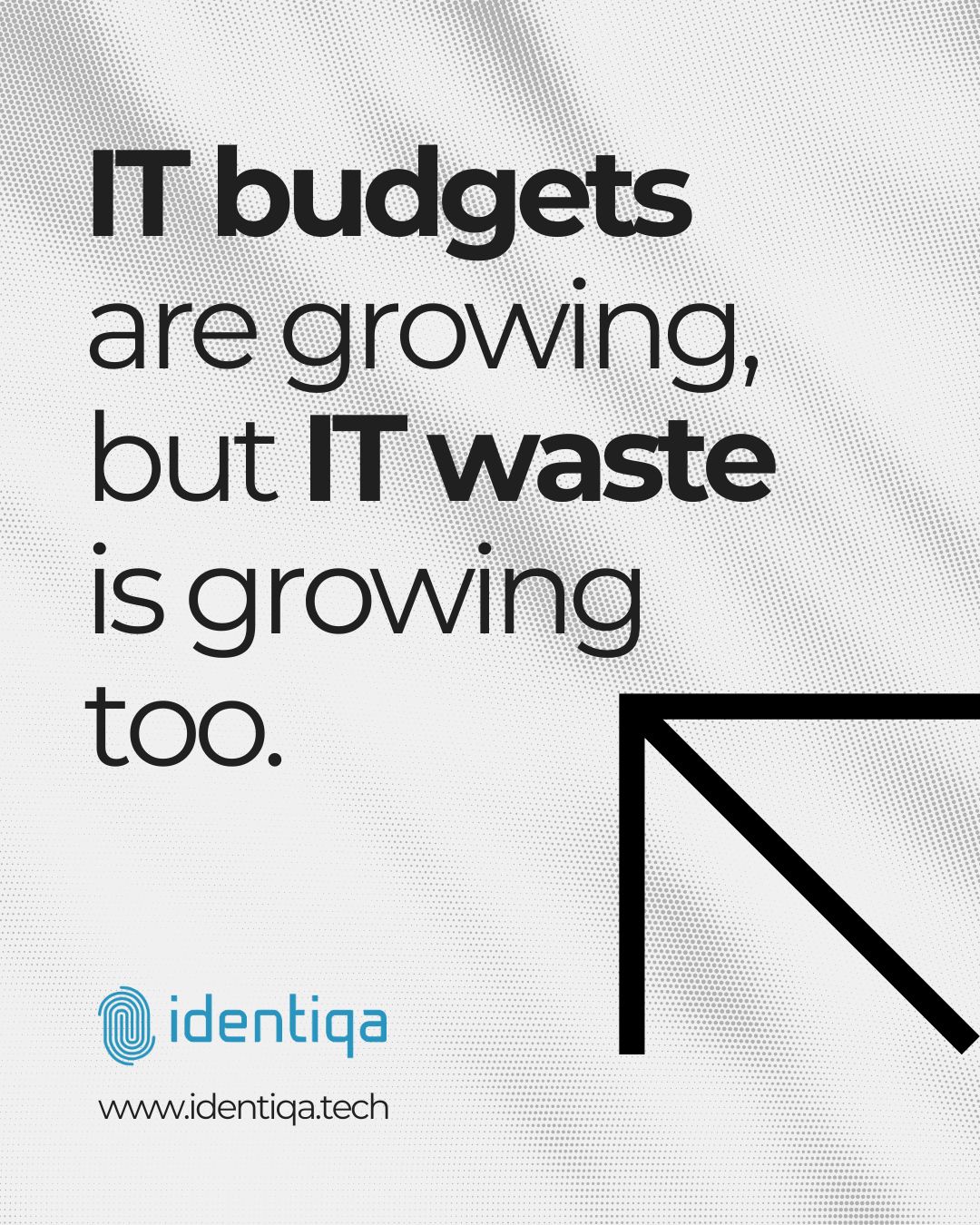
Recent studies show that up to 30% of IT spending is wasted due to overlapping tools, unused licenses, and poorly aligned initiatives. With cloud, cybersecurity, AI, and digital transformation competing for attention, many leaders are asking: where should IT dollars go to create business impact? Optimization doesn’t always mean cutting costs; it means spending with intention. That means auditing underutilized assets, consolidating vendors, and aligning IT investments with strategic business outcomes instead of chasing trends. If you had to prioritize just one area of IT investment for maximum business impact in 2025, would it be? - Cloud enablement - Data analytics - Cybersecurity - AI & automation Let us know in the comments below 👇
- LINKEDIN · IMAGERecorded 23 Sept 2026
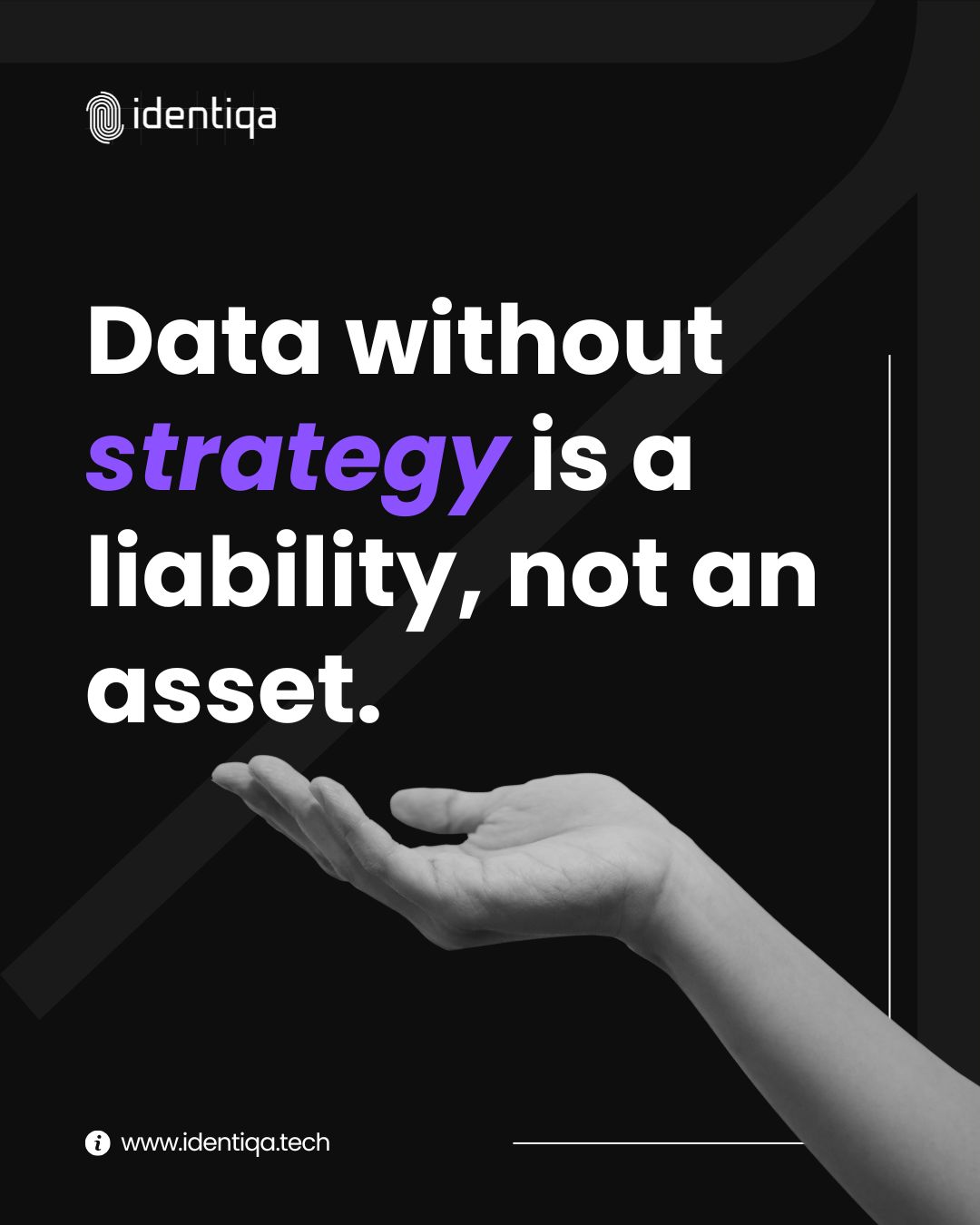
Businesses today don’t struggle to collect data; they struggle to control it. Unstructured, siloed, and poorly governed data isn’t just wasted potential; it’s a risk. Compliance gaps, inconsistent reporting, and missed opportunities can turn “valuable data” into a liability. The difference lies in strategy. Forward-looking organizations are using data for: - Real-time decision-making instead of after-the-fact reporting - Predictive insights that anticipate customer and market needs - Integrated experiences across departments to eliminate silos However, many are still trapped in the cycle of storing data without extracting its value. How mature is your organization's data strategy today: reactive, or truly driving business outcomes? #DigitalTransformation #BusinessIntelligence #TechInnovation #DataStrategy #EnterpriseIT #DataDriven #Analytics #Identiqa
- LINKEDIN · IMAGERecorded 23 Sept 2026
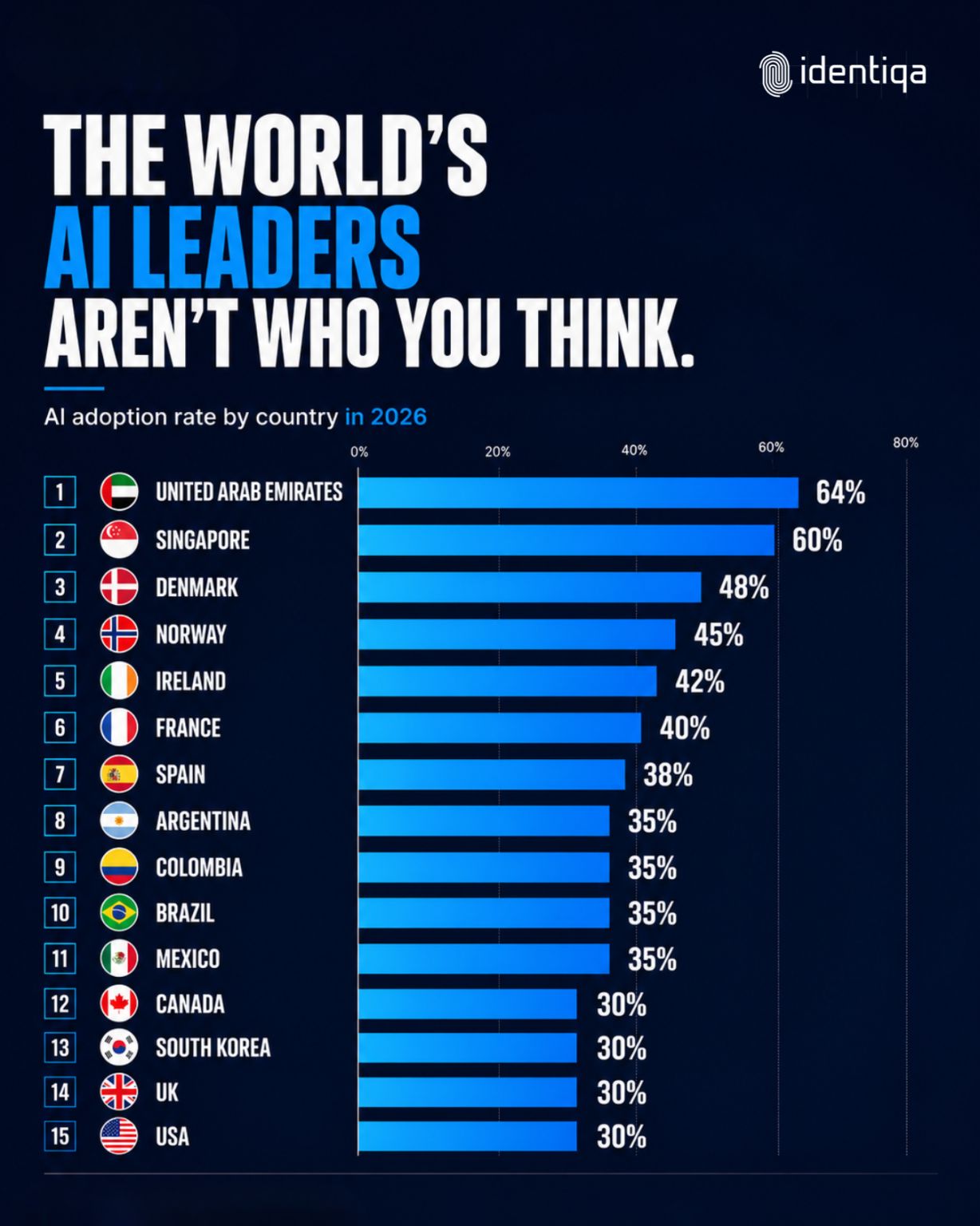
Most people think the global AI race is being led by the usual suspects. The data suggests otherwise. 🇦🇪 UAE: 64% 🇸🇬 Singapore: 60% 🇩🇰 Denmark: 48% Meanwhile, some of the world's largest economies are adopting AI at a much slower pace. That's because AI leadership is defined by who uses it and not by who talks about it. For decades, technological advantage came from building infrastructure. Today, advantage comes from adopting it faster than everyone else. Every industry is being reshaped: • Customer service is becoming AI-assisted • Software development is becoming AI-accelerated • Research is becoming AI-powered • Operations are becoming AI-optimized • Decision-making is becoming AI-informed The race is all about who will adapt AI quickly enough to benefit from it. History rarely rewards the inventors alone. It often rewards the adopters. And right now, some of the countries moving fastest are not the ones most people would expect. 👇 Which country do you believe will gain the biggest economic advantage from AI over the next decade? #ArtificialIntelligence #AI #GenerativeAI #DigitalTransformation #FutureOfWork #Innovation #Technology #Data #BusinessStrategy #Identiqa
- LINKEDIN · IMAGERecorded 23 Sept 2026
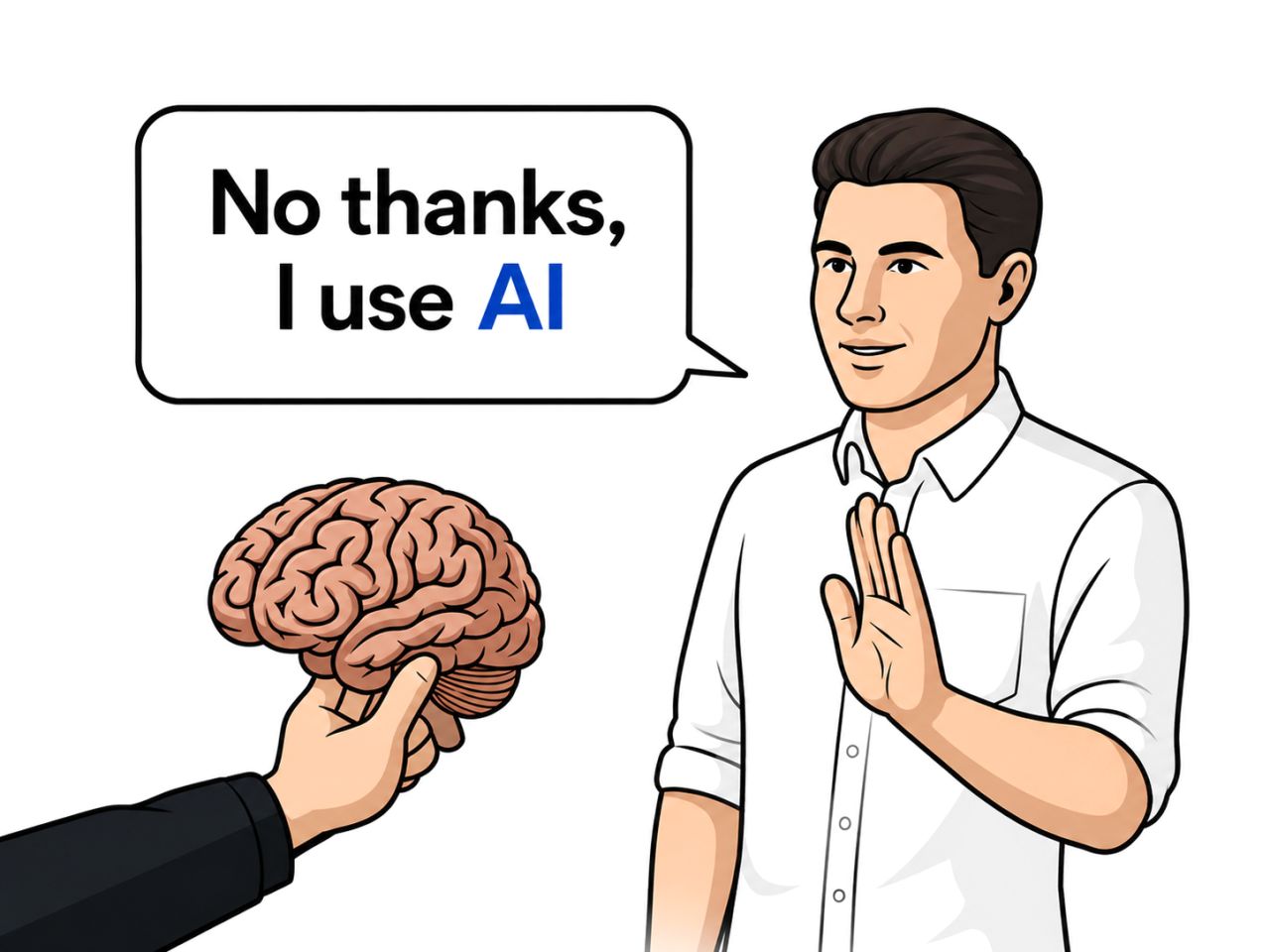
“No thanks, I use AI.” Funny. Also becoming slightly less funny every year. 😅 AI has moved from “let me try this” to “wait, how did I work without this?” remarkably quickly. The 2025 Stack Overflow Developer Survey found 84% of developers were already using or planning to use AI tools in their development process. Among professional developers, 51% were using them every day. But here is where the story gets interesting. As our dependence on AI increases, our trust in it is moving in the opposite direction. Only 33% of developers said they trust AI output for accuracy, while 46% actively distrust it. And just 3% highly trust it. Basically: “I don't completely trust you.” opens AI again 14 seconds later. 😂 And developers know exactly why. 66% said one of their biggest frustrations is AI producing solutions that are almost right, but not quite. Another 45% said debugging AI-generated code can actually take more time. There's an even more fascinating question emerging beyond software development: What happens when we outsource too much thinking? A 2025 MIT Media Lab study divided participants into groups writing essays using an LLM, a search engine, or no external tools. EEG measurements showed the strongest and most distributed brain connectivity in the brain-only group, moderate engagement among search-engine users, and the weakest connectivity among LLM users. The researchers also found lower ownership and poorer recall among the LLM-assisted participants. It's an early study, not proof that AI is somehow making humanity stupid. But it raises a useful question. We spent decades asking: “What can computers do for us?” AI may force us to start asking: “What should we still do ourselves?” Because AI is extraordinary at removing friction. Research. Coding. Writing. Analysis. Summarisation. Brainstorming. But perhaps the winning skill of the AI era won't simply be knowing how to use AI. It will be knowing when not to. Use the machine. Just keep the brain. 🧠 #ArtificialIntelligence #AI #FutureOfWork #Technology #Developers #IdentiqaLabs
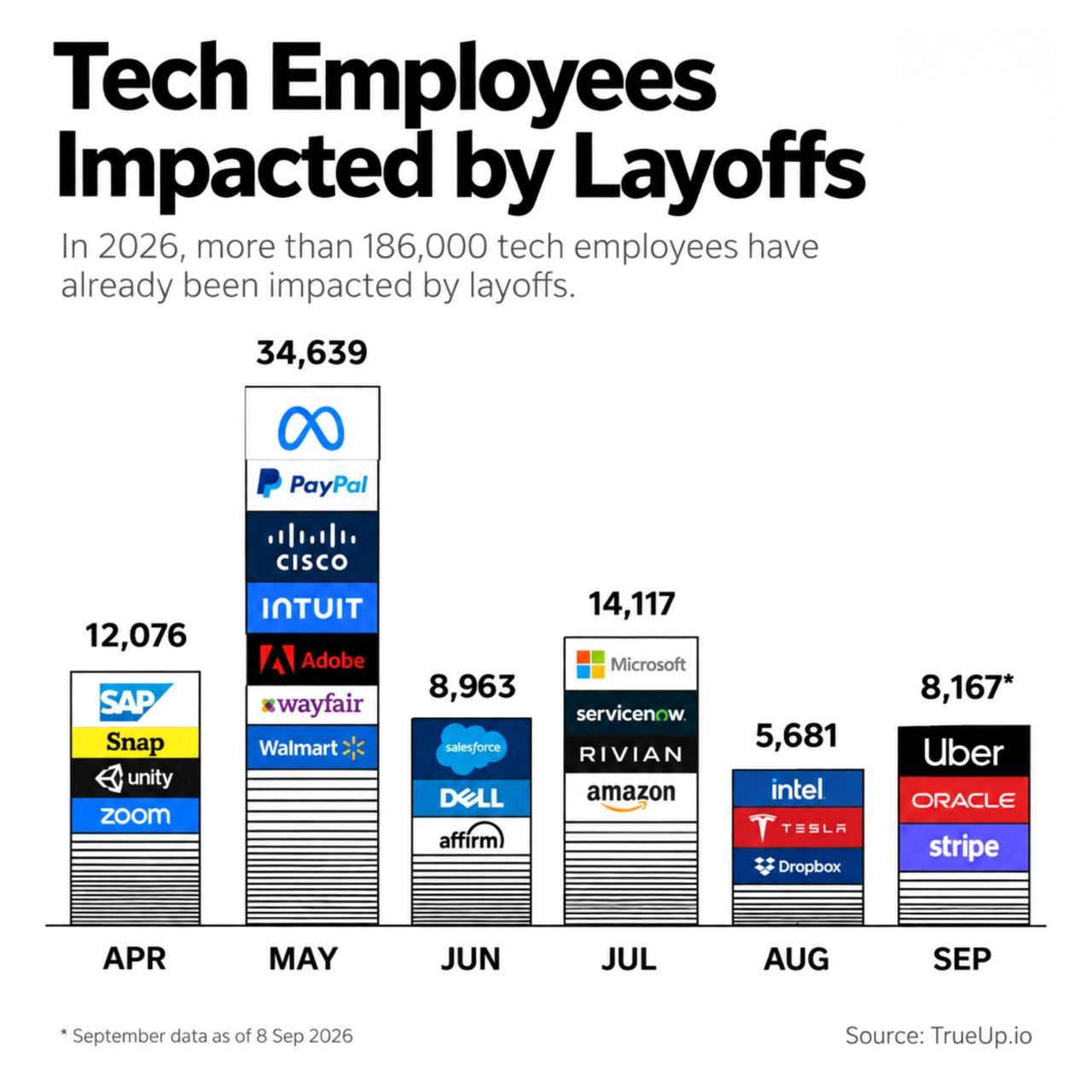
- LINKEDIN · IMAGERecorded 8 Oct 2026
34,639 tech employees impacted by layoffs. In a single month. And that wasn't even the whole story of 2026. According to TrueUp's tech layoff tracker, the numbers across just the last six months have been striking: April: 12,076 May: 34,639 June: 8,963 July: 14,117 August: 5,681 September: 8,167* and counting Across 2026, the tracker has already recorded more than 186,000 tech employees impacted by layoffs. But there is something important these numbers do not tell us. This isn't simply a story of: “AI is taking everyone's jobs.” That headline is tempting. The reality is much more complicated. Technology companies are simultaneously restructuring teams, consolidating functions, reallocating capital, automating workflows, changing management layers and investing enormous amounts into AI infrastructure. Some roles are disappearing. Some are being redesigned. And entirely new skills are becoming valuable remarkably quickly. An engineer who once needed to write every line of code can now work alongside an AI coding agent. An infrastructure team that manually watched hundreds of systems can increasingly automate detection, correlation and remediation. A security analyst can investigate enormous volumes of telemetry with AI-assisted tools. A network engineer can move from configuring devices individually toward automation, orchestration and infrastructure-as-code. That doesn't necessarily make the human less important. It changes where the human creates value. The advantage increasingly moves away from simply doing the task toward being able to: > understand the system, > ask the right questions, > design the architecture, > validate what machines produce, > solve problems machines cannot understand in context, and keep learning when the technology changes again. That last one might be the most important. Because your greatest career risk in technology may no longer be that AI learns your job. It may be that your job changes faster than you do. At Identiqa, we see technology from both sides of this transformation. We build with automation, AI, cloud, cybersecurity, networking and open technologies, but we also invest in the engineers and people who make those technologies useful. Tools will change. Platforms will change. Job descriptions will change. The ability to learn, adapt and solve difficult problems will remain remarkably hard to automate. And perhaps that's the most important number missing from this chart. (September figure as of 8 September 2026. Source: TrueUp. Layoff trackers can differ in methodology and coverage, so figures should be read as tracker-reported totals rather than official labor statistics.) #IdentiqaTechnologies #IdentiqaLabs #TechLayoffs #ArtificialIntelligence #FutureOfWork #Technology #AI #SoftwareEngineering #ITCareers

6 of 26 adsSign up to see every Identiqa Technologies ad, filter by format and date, and get alerts on new ones.
See all 26 adsWatch the companies you care about.
Filter every ad by industry, country, format and network, and get alerts when a company you watch starts running new ads.