On air · 1 of 3 networks
IBS Software
- ibsplc.com
- Logistics & Transportation
- SG
- 6,196 employees
IBS Software’s ads on LinkedIn, Meta and Google, recorded by adsrunning. Browse the latest here for free. Sign up free to see all 196. Watch IBS Software with Starter to get each new one in your feed.
Watchlist with Starter · $49/mo
| Network | Status | Live ads | Nov 2025LinkedIn activity · 52 weeksOct 2026 | Checked | Next step |
|---|---|---|---|---|---|
| Running | 33 | Checked 29 Oct 2026 | See all 196 ads → | ||
| Meta | None recorded | 0 | No active ads recorded on the Meta Ad Library | Checked 26 Oct 2026 | Collect them with the API → |
| Recently | 75 | Ads on the Google Ads Transparency Center | Checked 30 Sept 2026 | Collect them with the API → |
IBS Software has 33 live LinkedIn ads. Its Facebook page had no active ads on 26 Oct 2026, and we recorded 75 Google ads on 30 Sept 2026.
Latest ads
- LINKEDIN · ARTICLESince 26 Oct 2026
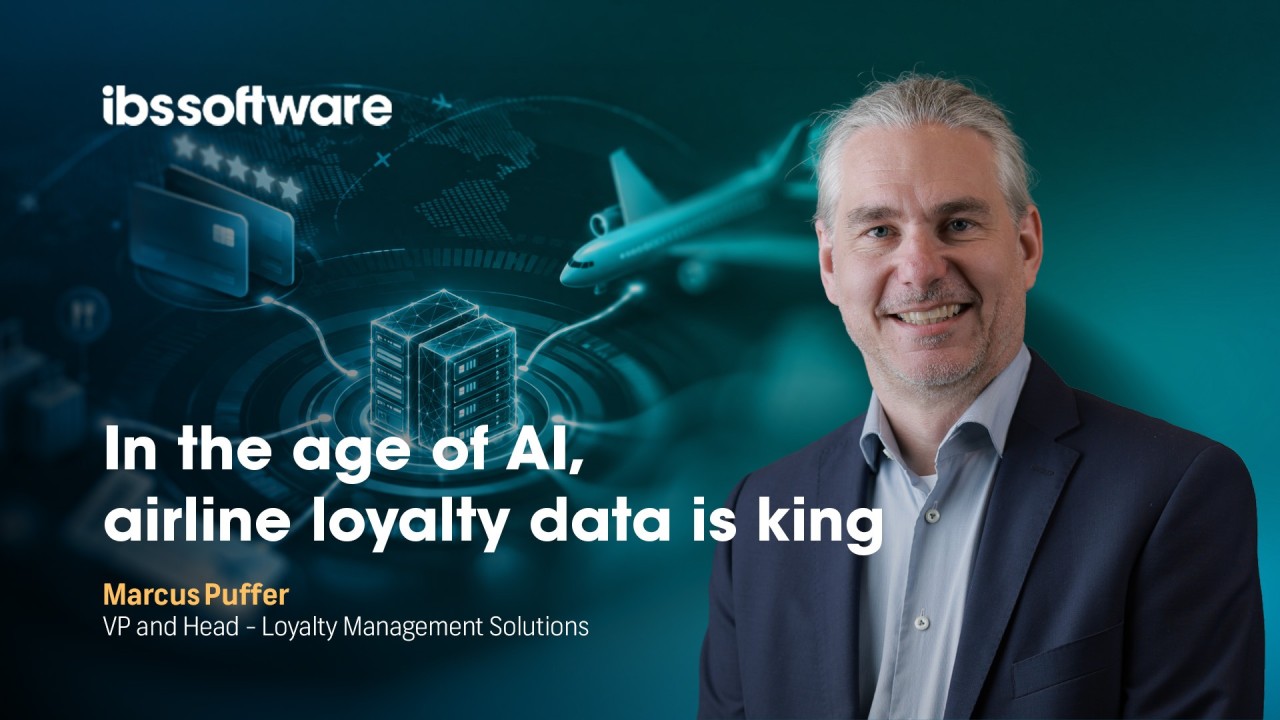
“Many of an airline’s shoppers will soon be non-human agents.” Our VP and Head of Loyalty Management Solutions, Marcus Puffer, argues that this makes loyalty data an airline’s strongest defence against a new wave of middlemen. When an AI agent does the picking and booking, the airline holding years of first-party data and an emotional tie to the traveller can still shape the offer. The one without them risks becoming a capacity provider.
- LINKEDIN · ARTICLESince 25 Sept 2026
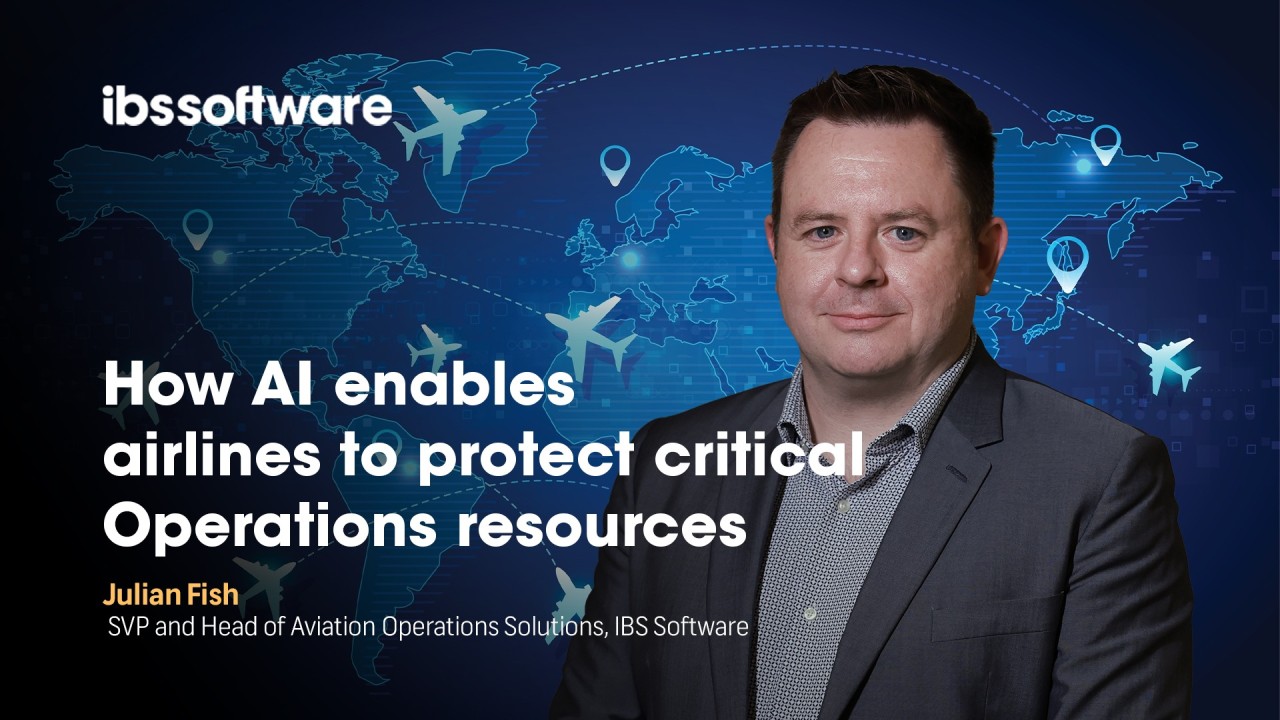
"If your operations rockstars can't pass on their skills and systemise their knowledge now, when they retire it will be too late." Airline operations control centres run on a small group of highly experienced staff, the people who know how to steady things when disruption hits. Passing that knowledge on, and freeing those staff to focus on the judgement calls only they can make, matters more than ever. In this article, Julian Fish, SVP and Head of Aviation Operations Solutions, looks at how AI can spot disruption before it escalates, model recovery options in seconds, and put senior-level expertise in the hands of the junior staff who need it most.
- LINKEDIN · ARTICLESince 14 Sept 2026
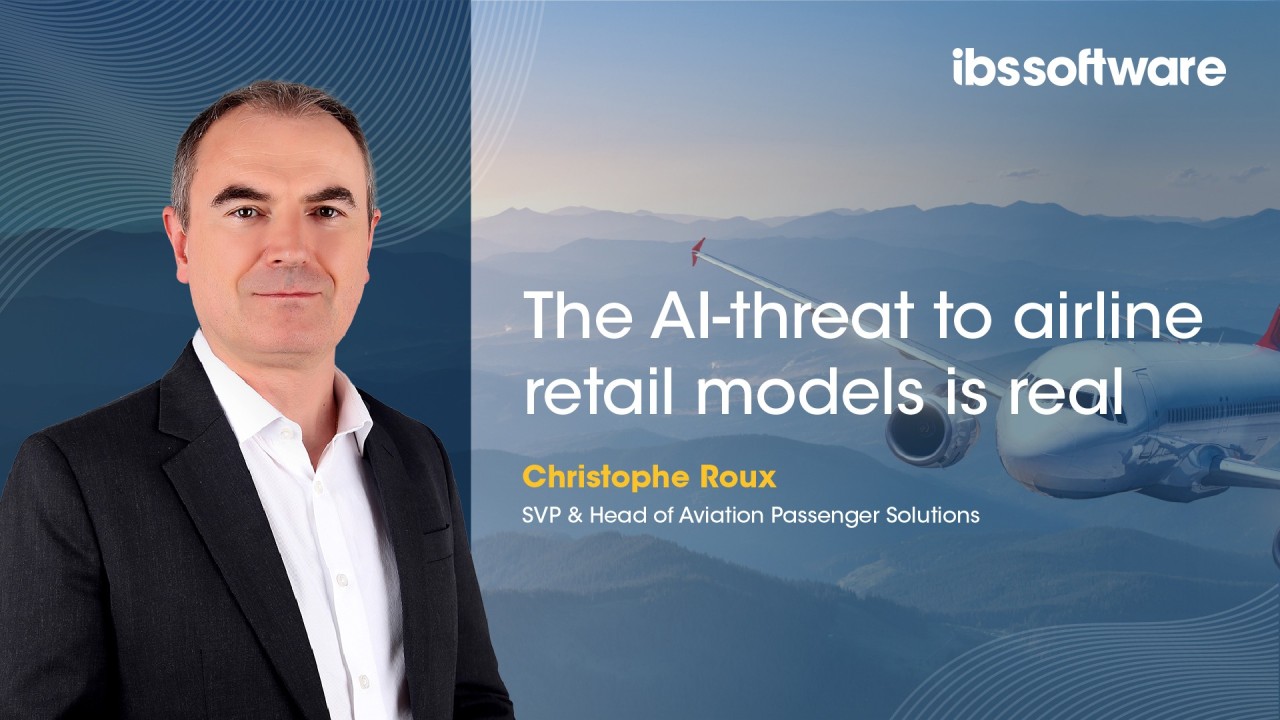
"Whoever controls the AI captures the benefit." Christophe Roux, SVP and Head of Aviation Passenger Solutions, argues that airlines need to own the AI driving the customer's journey, or risk losing control over how the value of their offer gets communicated. AI traffic to travel sites is up 119% year on year. The airlines that shape this shift, rather than react to it, are the ones that stand to gain the most.
- LINKEDIN · IMAGESince 26 Aug 2026
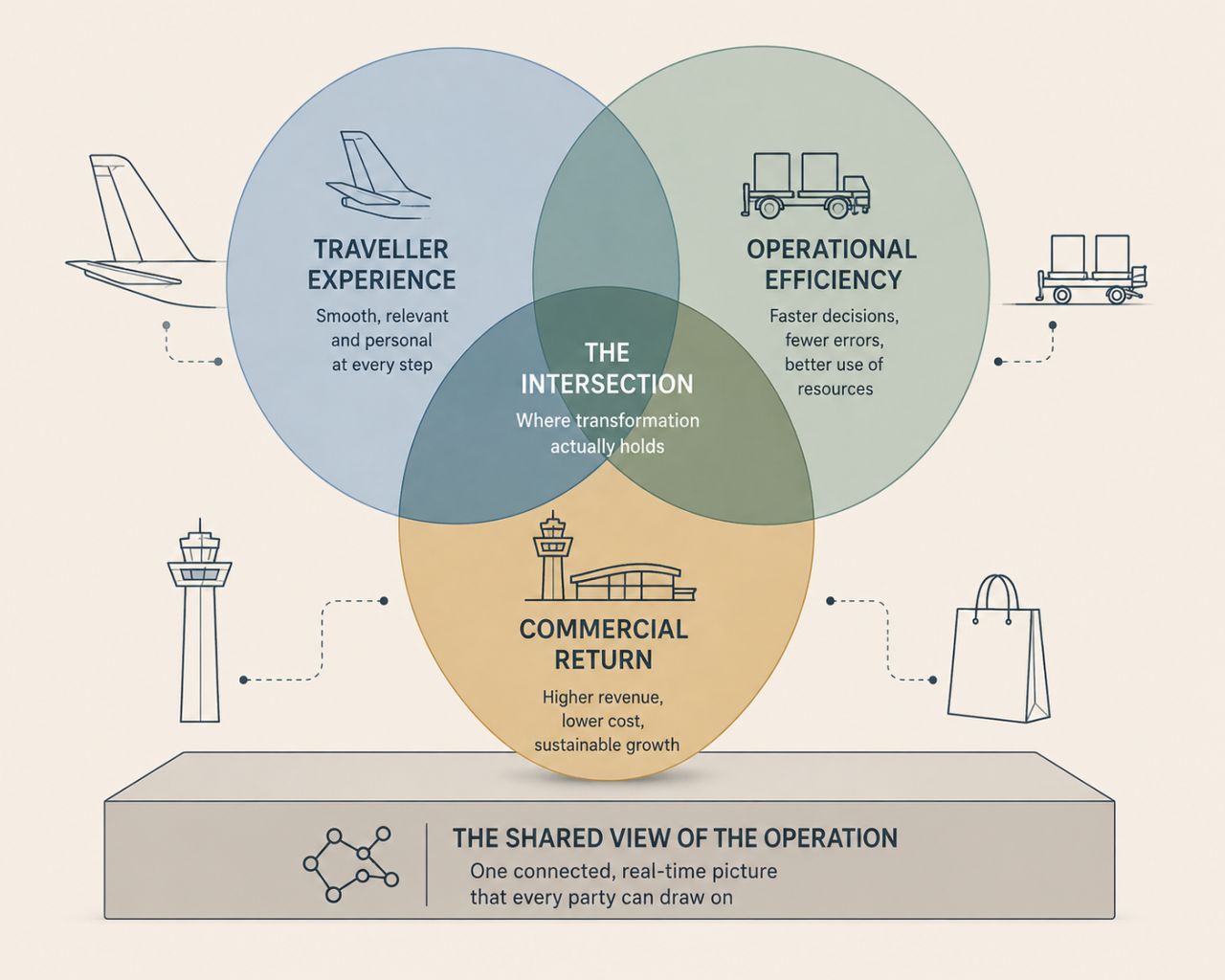
After many years working across airlines, airports, cruise and hospitality, you stop seeing four industries and start seeing the same pattern repeating in four places. A solution sticks when it serves three things at once: a better experience for the traveller, a more efficient operation for the company, and a commercially sensible outcome for the business. Serve all three and it tends to last, serve only one and it tends to disappear quietly, however good it looked at launch. Airports are the hardest place to get this right, because an airport is not one business but dozens of them sharing a building, with the operator, the airlines, the ground handlers, air traffic control and retail all working to their own priorities and their own systems. So a change that looks like a clear win from one seat is often not one from another. A tool that speeds up the operator's decisions while leaving the ground handlers without the same information will not hold for long, because the handlers are the ones who have to act on it. That is why, at an airport more than anywhere, the intersection depends on something underneath it, which is a shared and trusted view of the operation that every party can draw on. Without it, each stakeholder optimises their own corner and the whole thing degrades.
- LINKEDIN · IMAGESince 25 Aug 2026
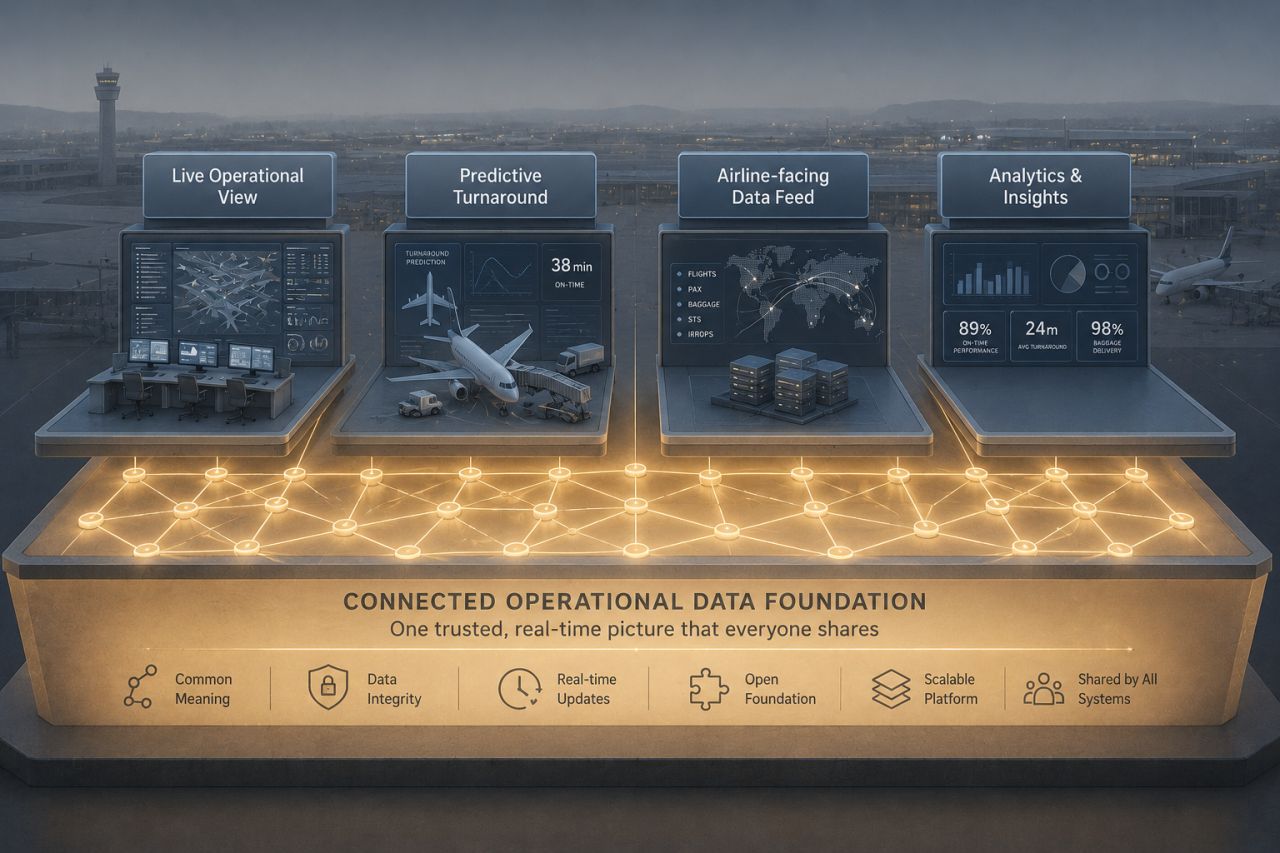
Most conversations I have about modernising an airport start with something visible, such as a new app, a better set of dashboards, a predictive tool for turnaround, or an AI pilot that someone wants to run. All of it is worthwhile, but follow any of it far enough down and you reach the same question, which is whether the data underneath can be trusted. This is the part of airport modernisation that gets the least attention and decides the most. An airport runs on dozens of systems that grew up separately, covering flights, passengers, baggage, stands and staff, each with its own view of the day and few of them agreeing with each other in real time. When a decision has to be made in the moment, whose number is right? Often nobody is quite sure, so it gets made on instinct. What changes that is one connected, real-time picture of the operation that all those systems draw from and feed back into, held in an open foundation rather than in a single vendor's closed box. The part most people underestimate is the meaning, because connecting data is not only about piping it between systems, but also about agreeing what it represents, so that a delay or a gate change carries the same context everywhere it lands. Get that right and new capabilities stop being one-off projects, because you are adding them to a foundation that already holds. It is also the only honest way to be ready for AI, since a model is only ever as good as the operational data feeding it. The airports that move fastest over the next few years will be the ones that did the groundwork of getting their operational data connected and trusted first. Do you agree?
- LINKEDIN · IMAGESince 25 Aug 2026
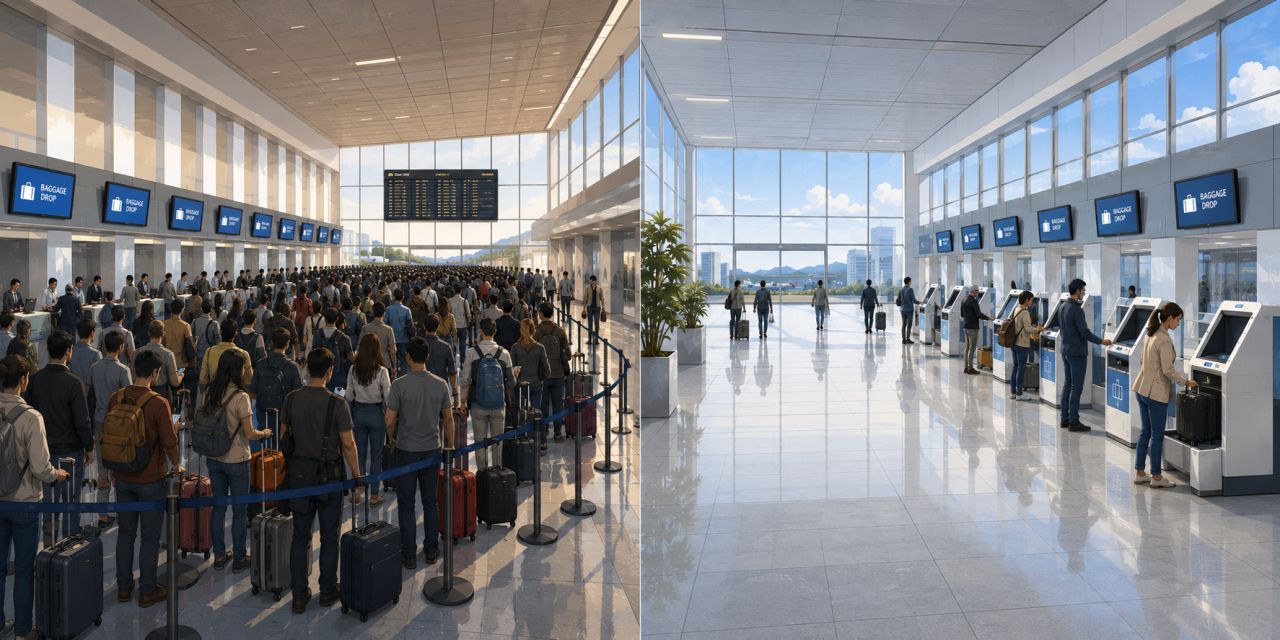
A few years ago, at Materna IPS, we put self-bag-drop automation live at a major European airport, and I still remember the first morning it actually went live. The morning peak there had been difficult for years, with people and bags backing up toward the entrance for a good hour every day, and on that first morning it simply did not happen. People moved through, the line never built up, and by the time the peak was over there was very little to report. I have thought about that a lot since, because we tend to picture operational technology as a launch, something you switch on and then stand back to watch. In practice a lot of it shows by what stops happening, such as a queue that no longer forms, a complaint that no longer comes in, or a shift that staff no longer dread. The new units were visible enough, of course. The old counters came out, the self-service row went in, and anyone walking through the terminal could see that something had changed. What stayed with me though was the morning itself, which had stopped needing to be managed, and that is still the first thing I look for when someone asks whether an operational project has worked. #TravelTransformation
6 of 196 adsSign up to see every IBS Software ad, filter by format and date, and get alerts on new ones.
See all 196 adsWatch the companies you care about.
Filter every ad by industry, country, format and network, and get alerts when a company you watch starts running new ads.