Not on air · 1 of 3 networks checked
IAV Vehicle Safety
- iav.com
- Industry & Manufacturing
- DE
- 34 employees
IAV Vehicle Safety’s ads on LinkedIn, Meta and Google, recorded by adsrunning. Browse the latest here for free. Sign up free to see all 84. Watch IAV Vehicle Safety with Starter to get each new one in your feed.
Watchlist with Starter · $49/mo
| Network | Status | Live ads | Nov 2025LinkedIn activity · 52 weeksOct 2026 | Checked | Next step |
|---|---|---|---|---|---|
| None recorded | 0 | Checked 29 Oct 2026 | See all 84 ads → | ||
| Meta | Not checked | — | |||
| Not checked | — |
IAV Vehicle Safety has no live LinkedIn ads. We recorded no Google ads on 30 Sept 2026.
Latest ads
- LINKEDIN · IMAGESince 26 May 2026
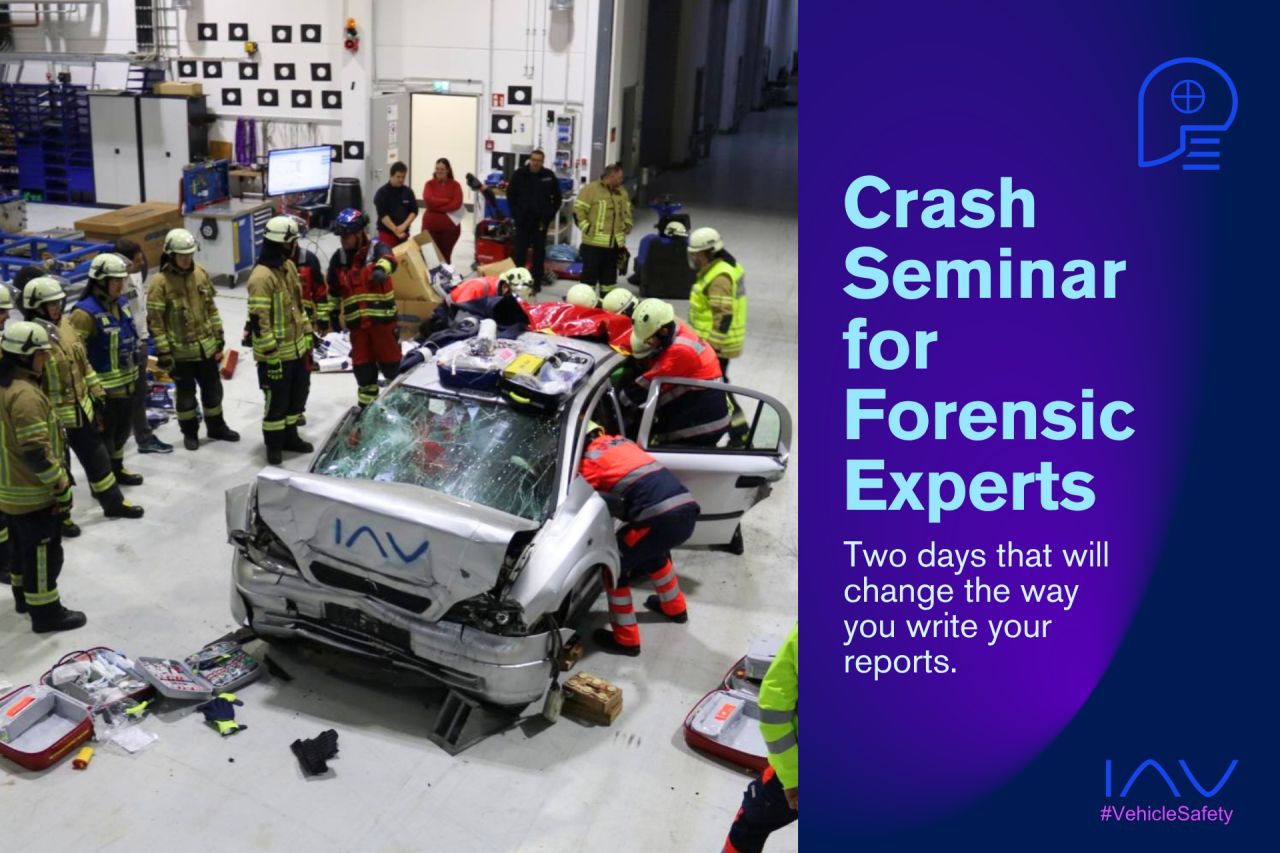
Accident with an EV. 🚒 The fire brigade is on scene. Now what? By the time forensic experts arrive, the fire crew has often already moved everything around. Understandable. They're saving lives. But for accident reconstruction? That's a real problem. This is exactly why we created our Crash Seminar 2026. ➡️ November 20 - 21 in Großmehring, Germany, together with Verkehrsunfallforschung an der TU Dresden GmbH. Two days. Live crash tests with electric vehicles. A real rescue exercise with the fire brigade. Plus everything you need to know as an expert working with BEVs: 💡 Vehicle diagnostics via ECUs, Event Data Recorders, battery assessment, repair information, and damage calculation. Last year, 99% of participants recommended the seminar. We're clearly going to have to top that. 😉 Early bird discount until September 30, 2026: €645 plus VAT. Spots are limited! ➡️ Register now: www.crash-seminar.com Photo: Erik Pechthold #CrashSeminar2026 #ForensicExperts #AccidentReconstruction #VehicleSafety #IAV
- LINKEDIN · IMAGESince 21 May 2026
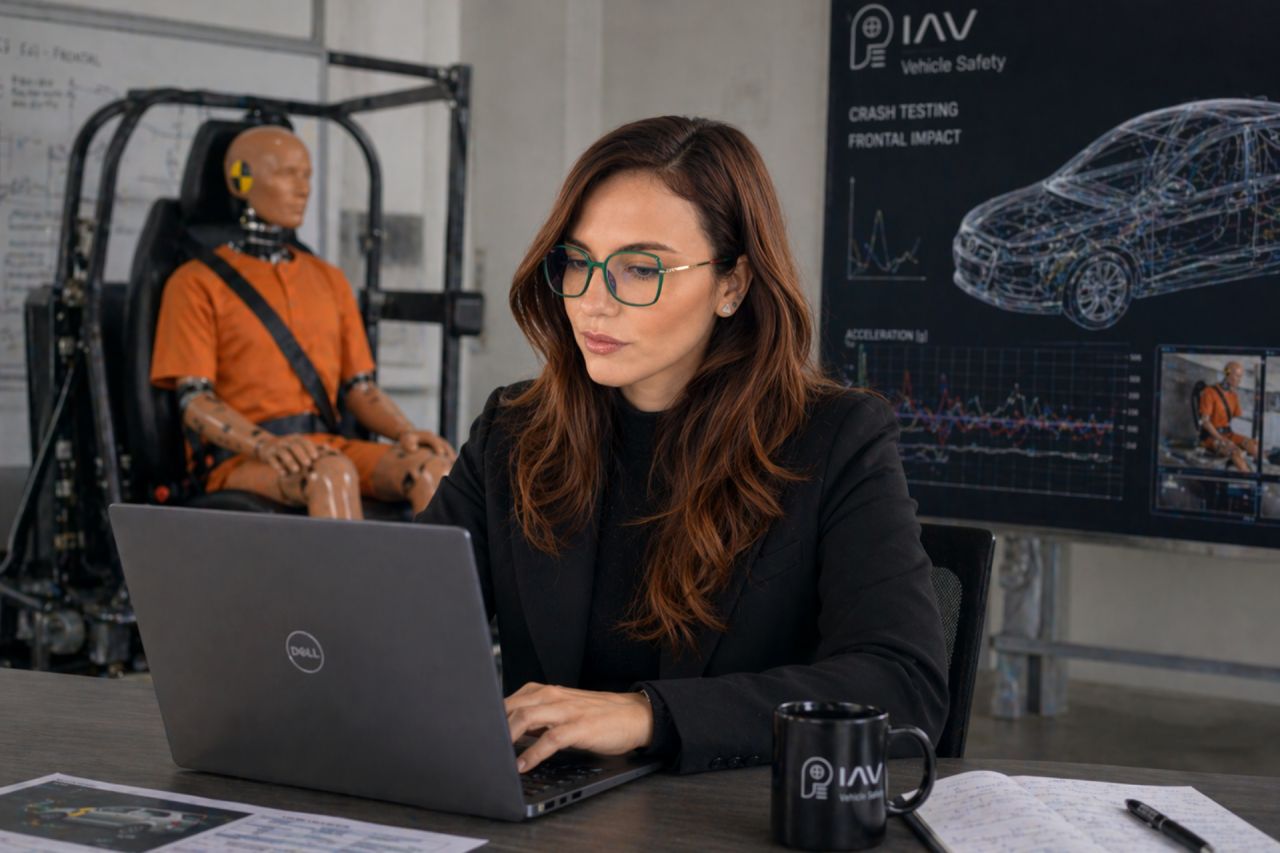
She just published something that shows why crash test data alone is not enough. 🧐 Oana Stanciuc-Otat is a test engineer at IAV Vehicle Safety. Before that, she spent over 10 years researching and teaching at University of Craiova, in Romania. Bachelor's, Master's, PhD in the field, and Associate Professor. 🧳 And then one day she packed her bags and moved to Germany. What she brought with her: the ability to look beyond data. To ask why something happens, what it means, and how it could be done better. A few weeks ago, she published her paper (publication https://lnkd.in/d_-Vezx8) together with IAV Vehicle Safety, based directly on real crash tests from our lab. The topic: ➡️ How dangerous is a frontal crash really, when you combine different factors? Seatbelt or not. 56 km/h or 40 km/h. Large dummy or small. What she found is both surprisingly simple and still widely overlooked in the industry: The same crash data leads to completely different ratings depending on the test protocol. ☝️ Euro NCAP, US NCAP, KNCAP. Same crash. Same dummy. Different rating. And there's more: the smaller dummy variant (5th percentile female) showed more than twice the HIC values compared to the standard dummy. 😯 Not marginal. And this is exactly the point that will matter more and more going forward: Real test data cannot be replaced by anything. Simulations are getting better, AI is getting better, but the foundation will always be what happens in a real impact. If you don't have that data, you're building on sand. 🤷🏻♀️ Oana brings both together: the theoretical side of vehicle and accident dynamics together with hands-on testing. That's exactly the kind of person this industry needs. 🤝 We're glad Oana packed her bags and are happy to have her driving our research forward with so much expertise!
- LINKEDIN · IMAGESince 19 May 2026
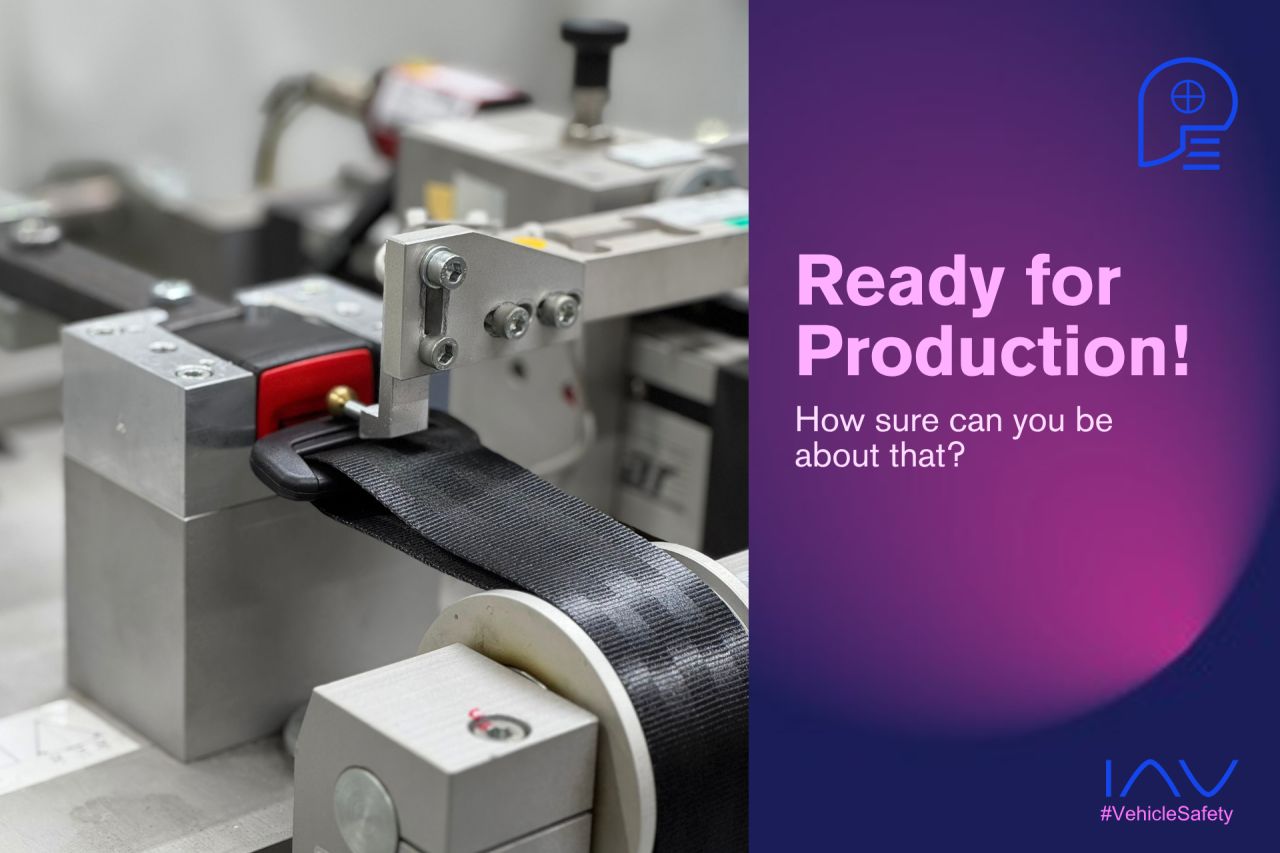
When was the last time you truly put your seatbelt supplier to the test? 🔍 We’re asking because, in many projects, the answer is: too late. ➡️ A supplier wins the contract. ➡️ The component enters the vehicle program. ➡️ And suddenly, it turns out the seatbelt is nowhere near ready for series production under real-world conditions. The result: Endless development loops. Intense time pressure. Stress for everyone involved. 🥵 To prevent exactly this, we’ve been building a specialized qualification process since 2013. Before a restraint system even hits an OEM’s desk, it goes through our structured evaluation: 🔹 CAD Analysis 🔹FMEA (Failure Mode and Effects Analysis) 🔹 Test Matrix 🔹 Facility Review 🔹 Customer-specific Test Programs Only when everything aligns do we give the green light for the final bid. The benefits for you: No nasty surprises, the qualification workload stays with the supplier, and you gain access to a growing pool of trusted, pre-vetted partners. What was the most expensive moment you’ve experienced when realizing a supplier wasn't actually "ready"? 📉 #SeatbeltQualification #RestraintSystems #SupplierQualification #VehicleSafety #OEM #Tier1 #IAVSafety
- LINKEDIN · IMAGESince 16 May 2026
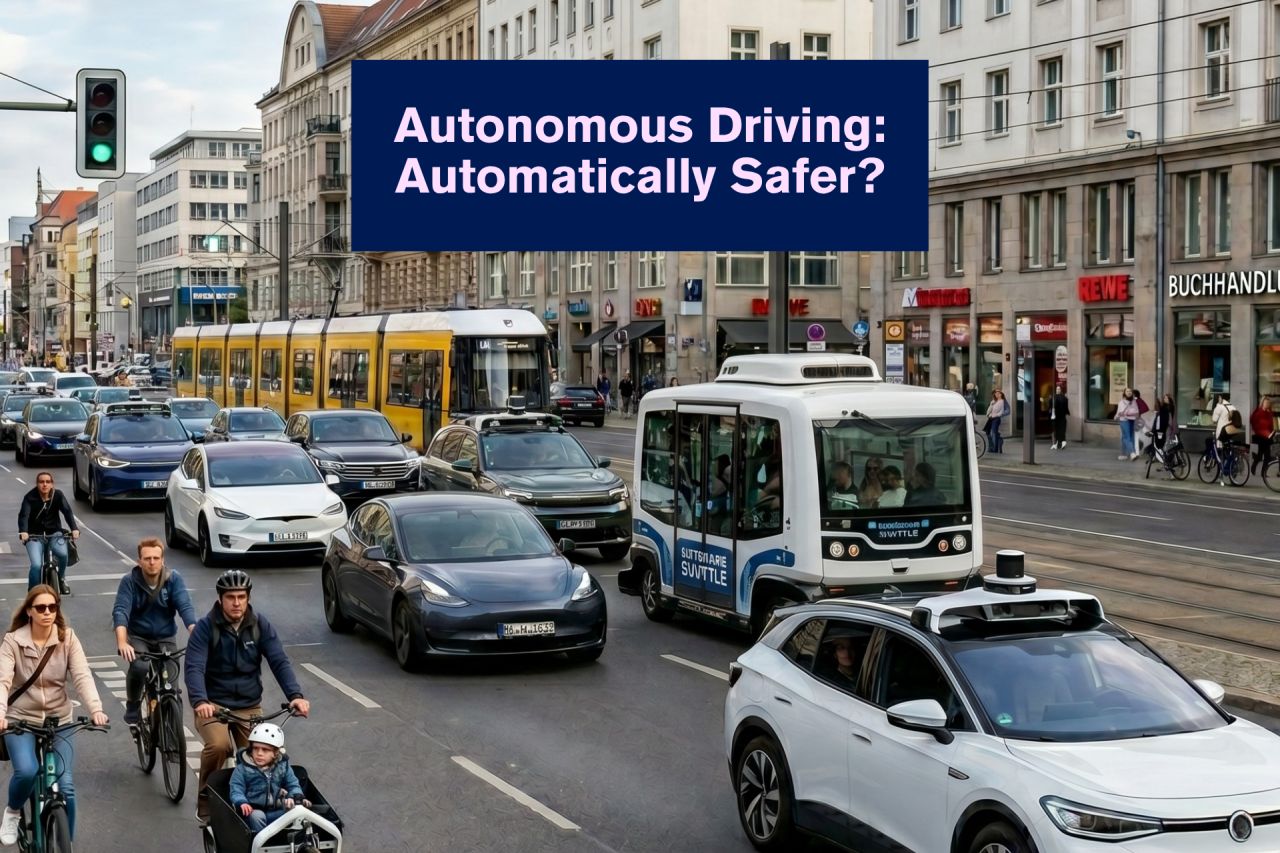
Will we even need passive vehicle safety in a few years? 👀 We work on this every day, and it's one of the most exciting questions the industry is grappling with right now. Because there's no simple answer. The facts point to enormous progress: Level 3 is on the market. Baidu reports over 250,000 driverless trips per week. In the US, hundreds of thousands of robotaxi kilometers are covered as paid rides every day. ADAS is saving real lives, already today. Yet our gut feeling says: The better active safety gets, the more critical the question becomes of what happens when a crash still occurs. 🔹 Because mixed traffic will remain a reality for the foreseeable future. 🔹 Because sensors have limits. 🔹 Because there will always be scenarios that no system has been fully trained on. And because a vehicle that prevents 999 out of 1,000 crashes still needs to protect occupants in the thousandth. What's changing isn't the "whether" but the "how." Future restraint systems will need to handle altered seating positions: people sleeping, reading, or facing backward in autonomous vehicles. 🤷🏻♀️ Occupants that the classic crash test dummy was never designed for. Is your organization investing more or less in passive safety than five years ago? #PassiveSafety #AutonomousDriving #VehicleSafety #ADAS #IAVSafety #VisionZero #FutureOfMobility
- LINKEDIN · IMAGESince 12 May 2026
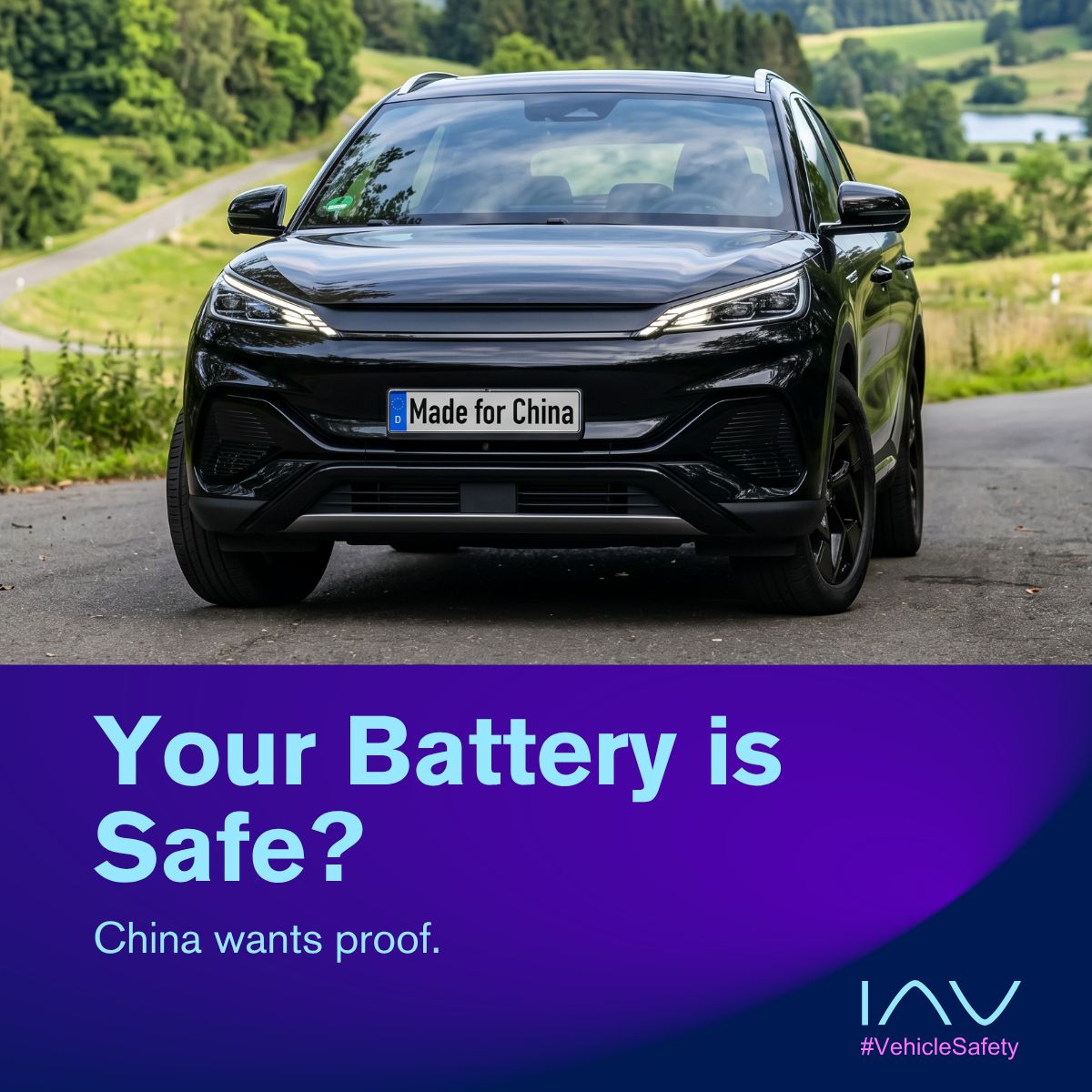
☝️ Starting in July 2026, it will no longer be enough for the Chinese market if your battery simply does not cause a fire. It must be able to guarantee this for at least 2 hours. GB 38031-2025 was published in March 2025. The specific requirements of the new standard are as follows: ➡️ Following the thermal runaway of a single cell, there must be no fire or explosion within a 2-hour window. ➡️ Additionally, there is a mandatory warning requirement within 5 minutes and strict regulations ensuring that no smoke enters the vehicle interior. For existing platforms, proof is also mandatory for already type-approved vehicles starting in July 2027. We support OEMs and battery suppliers in providing exactly this documentation. 🤝 Mechanical validation of housings, underbody impact tests according to GB 18384, test setup, and safety concepts are all provided from a single source. 💬 How far along is your team with validation for the Chinese market?
- LINKEDIN · IMAGESince 7 May 2026
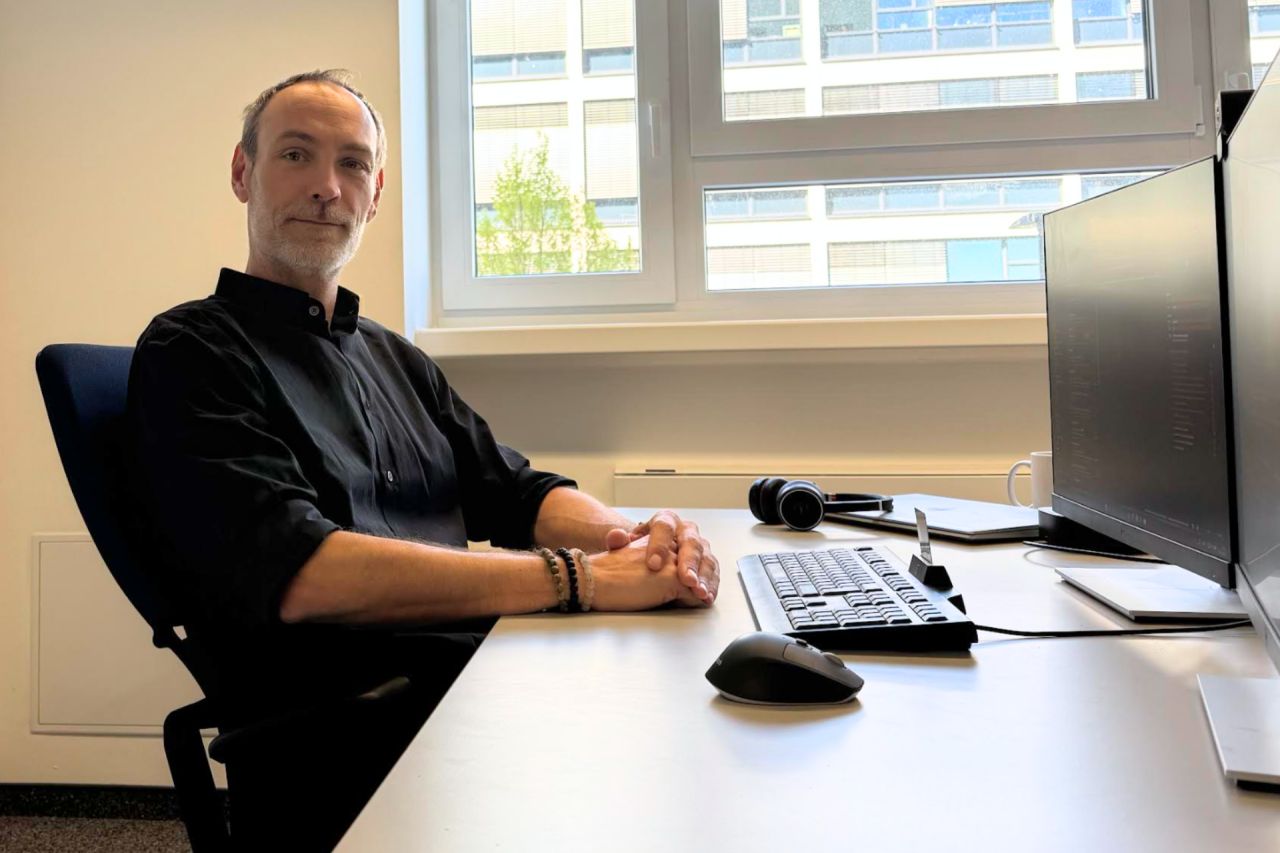
“In three to five years, there won't be a single developer left who doesn't work with AI." 💥 That’s a bold statement from Bastian Schultze. Bastian is a Team Lead in our Engineering department, Project Manager for the BMW account within IAV Vehicle Safety, and a trained Computer Scientist. 👨💻 It sounds provocative at first. But it’s exactly the mindset he’s using to drive a change that goes far beyond his own team. Since last year, Bastian has been our AI Mentor. 🤝 Our parent company, IAV GmbH, has set a clear goal to become an "AI Infused Company," training around 60 mentors across the entire organization to lead the way. Bastian has taken on this vital role within IAV Vehicle Safety. Once a week, a growing group of developers and engineers meets to discuss: 🔹 Which tools are people actually using? 🔹 Where does AI add value and where is it (not yet) worth it? 🔹 How do we move from "just experimenting" to making it "part of the daily workflow"? What many underestimate: The biggest part of this journey isn't technical at all. 👀 ➡️ Building trust, developing new habits, and learning how to steer the AI to get usable, high-quality results: that is the real challenge. So why is he doing this with such conviction? "No invention in the last 25 years will change the way we work as fundamentally as this technology. Everyone should understand how it works and how to use it." Bastian, thank you for driving this topic forward with such incredible energy! 🚀
6 of 84 adsSign up to see every IAV Vehicle Safety ad, filter by format and date, and get alerts on new ones.
See all 84 adsWatch the companies you care about.
Filter every ad by industry, country, format and network, and get alerts when a company you watch starts running new ads.