Not on air · 1 of 3 networks checked
hostkey.com
- hostkey.com
- IT Services & Consulting
- NL
- 42 employees
hostkey.com’s ads on LinkedIn, Meta and Google, recorded by adsrunning. Browse the latest here for free. Sign up free to see all 45. Watch hostkey.com with Starter to get each new one in your feed.
Watchlist with Starter · $49/mo
| Network | Status | Live ads | Nov 2025LinkedIn activity · 52 weeksOct 2026 | Checked | Next step |
|---|---|---|---|---|---|
| None recorded | 0 | Checked 29 Oct 2026 | See all 45 ads → | ||
| Meta | Not checked | — | |||
| Not checked | — |
hostkey.com has no live LinkedIn ads.
Latest ads
- LINKEDIN · IMAGESince 18 Jun 2026
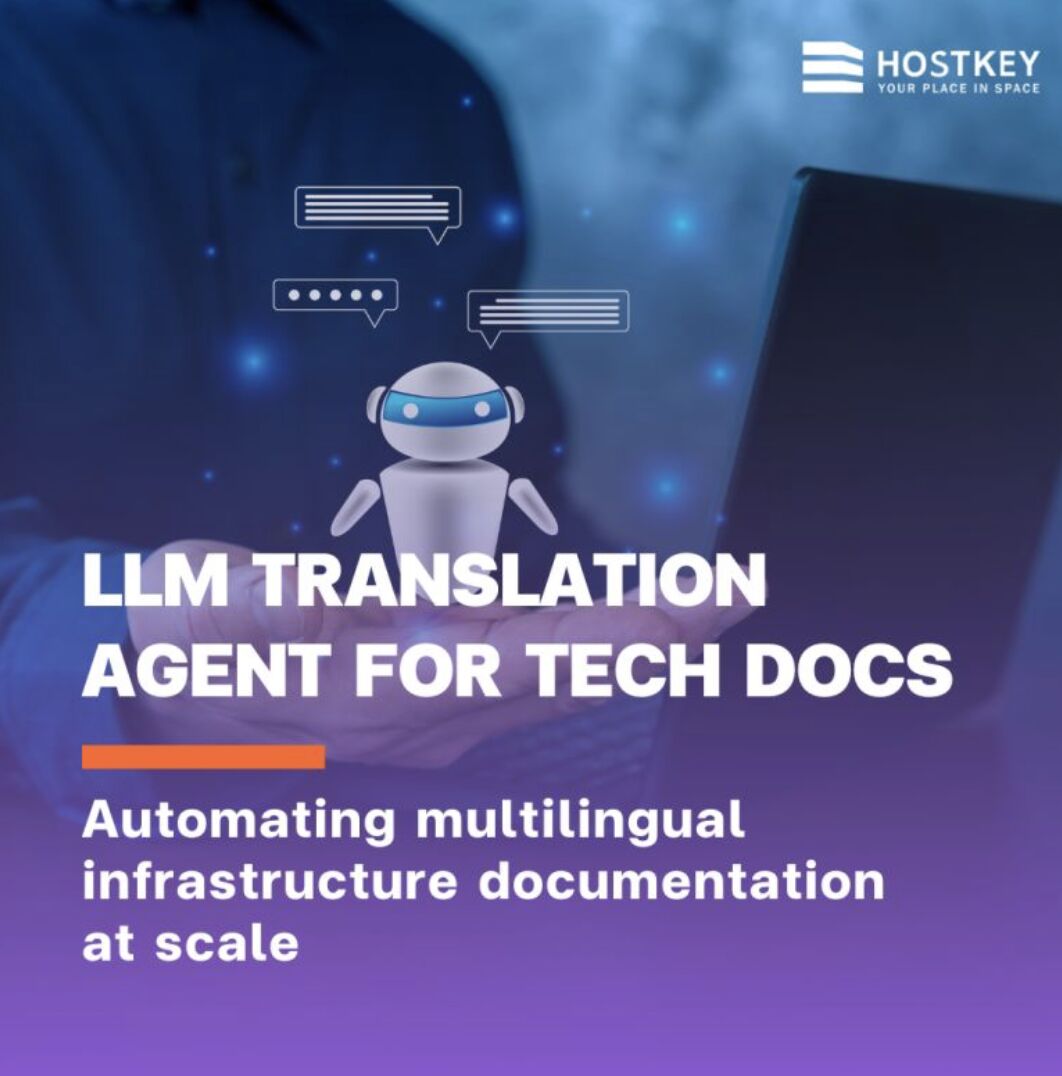
Automated translation is one of those infrastructure problems that looks simple on the surface — until you try to scale it across real documentation systems. In our documentation team, we built an LLM-powered translation agent designed to automatically convert English technical content into multiple languages while preserving structure, terminology and technical accuracy. The goal was not just translation — but consistency across infrastructure documentation at scale. 🧠 What makes this approach different Traditional translation pipelines often fail in technical environments because they: • break formatting and code blocks • lose terminology consistency • require heavy manual review • don’t integrate with documentation workflows Our LLM agent addresses this by introducing structured control over the translation process. ⚙️ How the system works (high level) The agent is built as a multi-step pipeline: • parsing structured documentation inputs • managing the model's context window dynamically • applying translation and terminology rules • preserving variables, commands and code snippets • validating output consistency • integrating directly into documentation workflows This makes it suitable not just for articles, but for real infrastructure documentation systems. 🚀 Why this matters For companies running global infrastructure, documentation is not static content — it’s a living system. This approach enables: ⚡ Faster multilingual documentation rollout 🔄 Consistent terminology across teams and regions 🧩 Reduced manual editing overhead 📚 Scalable documentation workflows for engineering teams 🧭 Final thought Translation in technical environments is no longer just a language problem — it’s an infrastructure problem. And LLM agents are becoming the execution layer that solves it. 👉 Read the full article: https://lnkd.in/eDssvFuK
- LINKEDIN · IMAGESince 8 Jun 2026
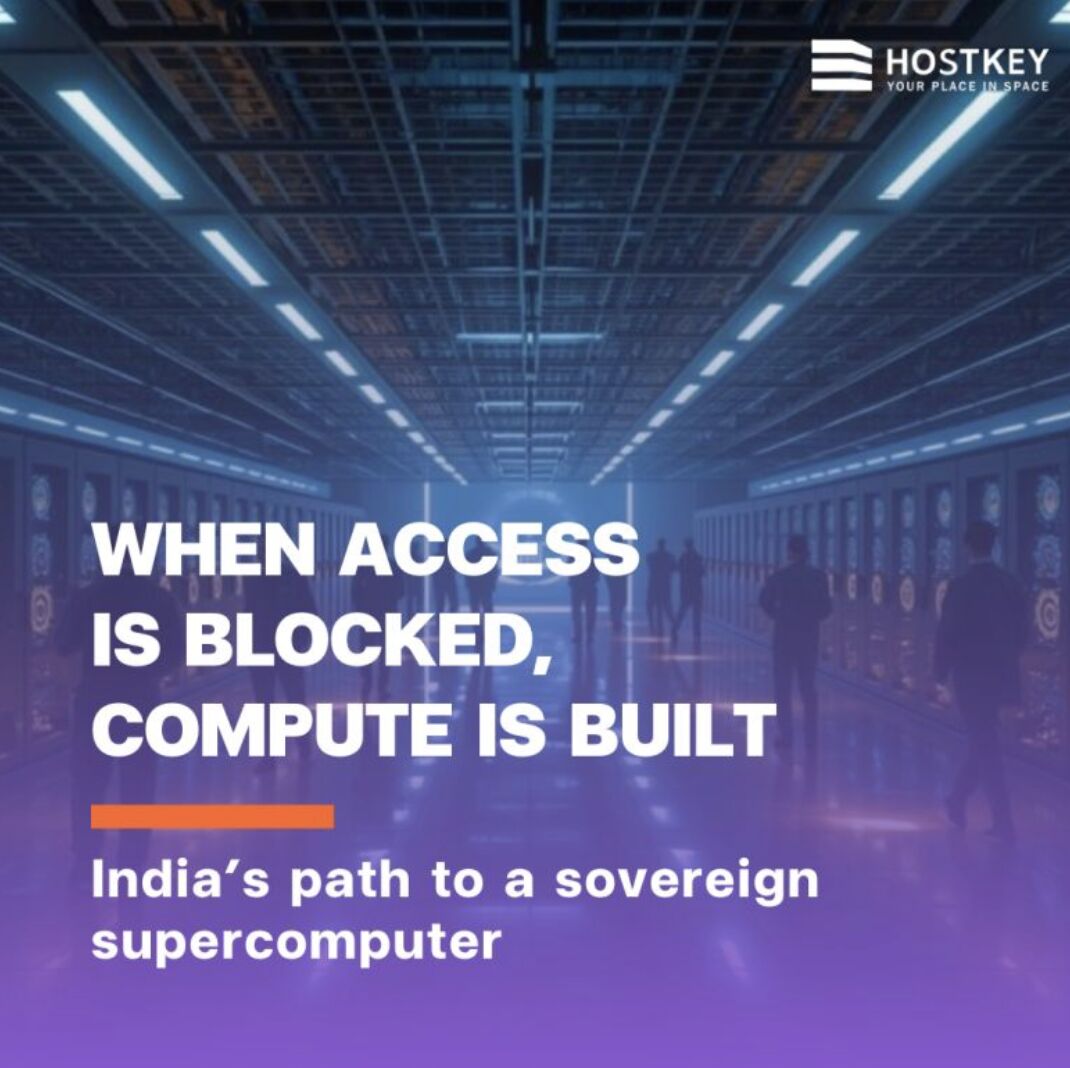
Access to compute has quietly become one of the defining constraints of modern technological development — especially in AI, high-performance computing, and national-scale infrastructure projects. Our new article explores a powerful real-world example of this dynamic: What happens when access to supercomputing infrastructure is restricted — and how countries respond by building their own systems. 🧠 The situation India aimed to acquire a high-performance supercomputing system to support advanced research and large-scale computational workloads. However, due to export restrictions and geopolitical limitations, the purchase path was blocked. Instead of delaying the project, the response was fundamentally different: 👉 the decision was made to build a domestic supercomputing capability from scratch. 🏗 Why this matters This is not just a procurement story — it reflects a broader shift in global infrastructure strategy: • Compute is becoming a strategic national resource • AI development depends directly on hardware sovereignty • Access restrictions are accelerating local infrastructure development • Supercomputing is moving from “buy” to “build” in many regions ⚙️ What this case highlights The article breaks down several key implications: 1) Hardware access is no longer guaranteed Advanced compute (GPUs, HPC clusters, interconnects) is increasingly subject to export control and supply limitations. 2) Infrastructure sovereignty is becoming critical Countries and large organizations are investing in their own compute capacity to reduce dependency on external providers. 3) AI capability is directly tied to infrastructure control Training large models, running simulations and scaling AI systems all depend on consistent access to high-performance compute. 🧠 Bigger picture We are entering a phase where: 👉 cloud access is not enough 👉 ownership of compute is becoming strategic 👉 infrastructure independence is a competitive advantage This applies not only to governments, but also to enterprises building AI-native systems at scale. 🧭 Final thought When access is restricted, innovation doesn’t stop — it shifts direction. In this case, limitation became the catalyst for building long-term infrastructure independence. 👉 Read the full article: https://lnkd.in/d7Vqvi8e
- LINKEDIN · IMAGESince 8 Jun 2026
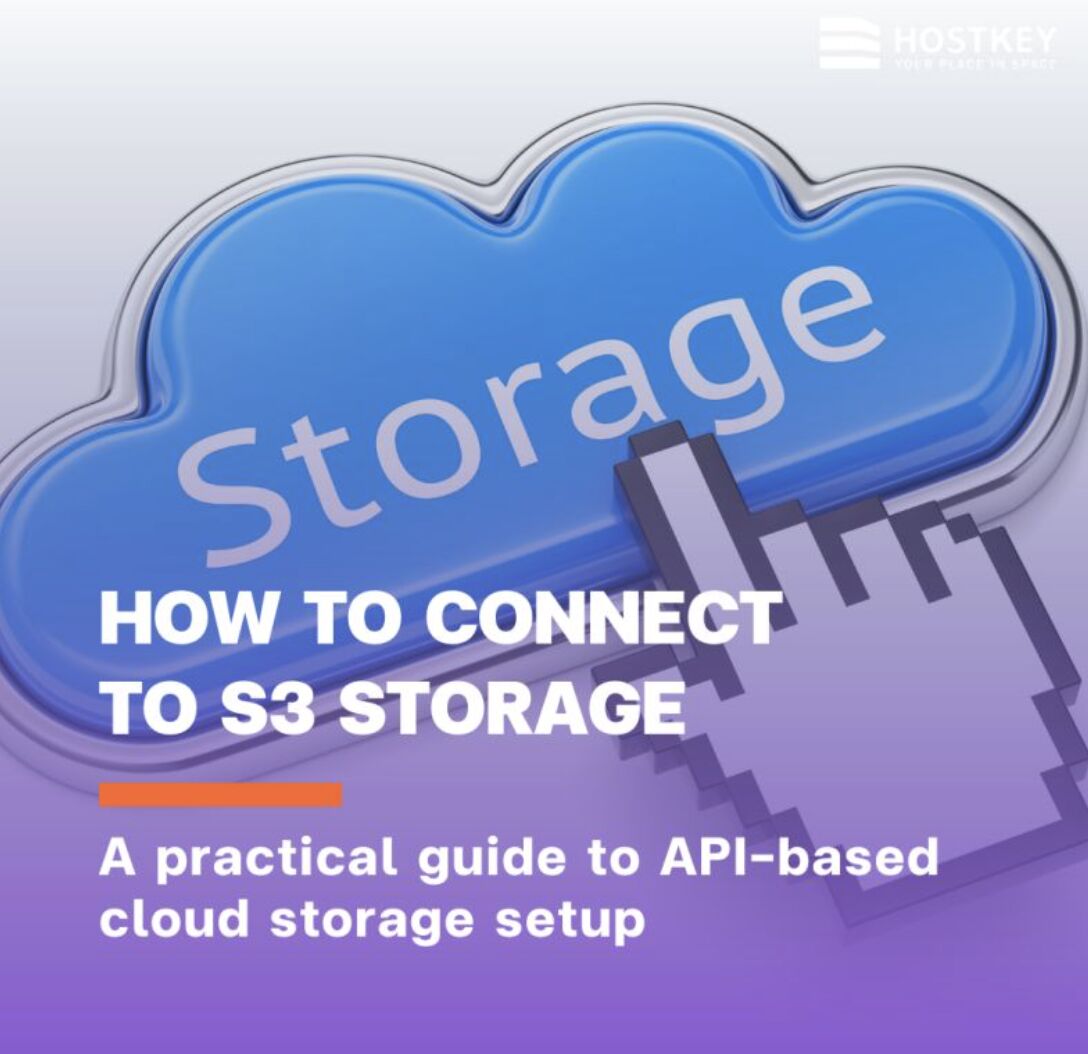
Cloud object storage has become a standard building block for modern infrastructure — from backups and media storage to AI/ML pipelines and distributed applications. In this guide, we break down how to actually connect to S3-compatible storage step by step and make it usable in real environments. S3 is not just a storage concept — it’s an API standard. And that’s what makes it so widely adopted across cloud and hybrid infrastructures. 🧠 What matters in practice Connecting to S3 storage usually comes down to a few core components: • Access credentials (Access Key + Secret Key) • Endpoint configuration (provider-specific or self-hosted) • Bucket selection and permissions • Client tools (CLI, SDKs, or third-party apps) Once configured correctly, S3 behaves like a universal storage layer that can be integrated into almost any system. ⚙️ Why this is important for infrastructure teams S3-compatible storage is now used far beyond simple file hosting: ⚡ AI/ML pipelines (datasets, model checkpoints, training artifacts) 📦 Backup and disaster recovery systems 🌐 Web applications and static asset delivery 📊 Data lakes and analytics workloads The key advantage is not just storage — it’s standardized access across tools and platforms. 🔗 Ecosystem compatibility One of the biggest benefits of S3 is its ecosystem support: • AWS CLI • Python (boto3) • Terraform • Kubernetes integrations • Third-party backup and sync tools This makes it easy to move workloads between cloud providers and dedicated infrastructure without rewriting applications. 🧭 Final thought S3 storage works best when treated as an infrastructure layer, not just a file repository. Once connected properly, it becomes a foundation for scalable and portable systems. 👉 Read the full step-by-step guide: https://lnkd.in/d_mr9zet
- LINKEDIN · IMAGESince 22 May 2026
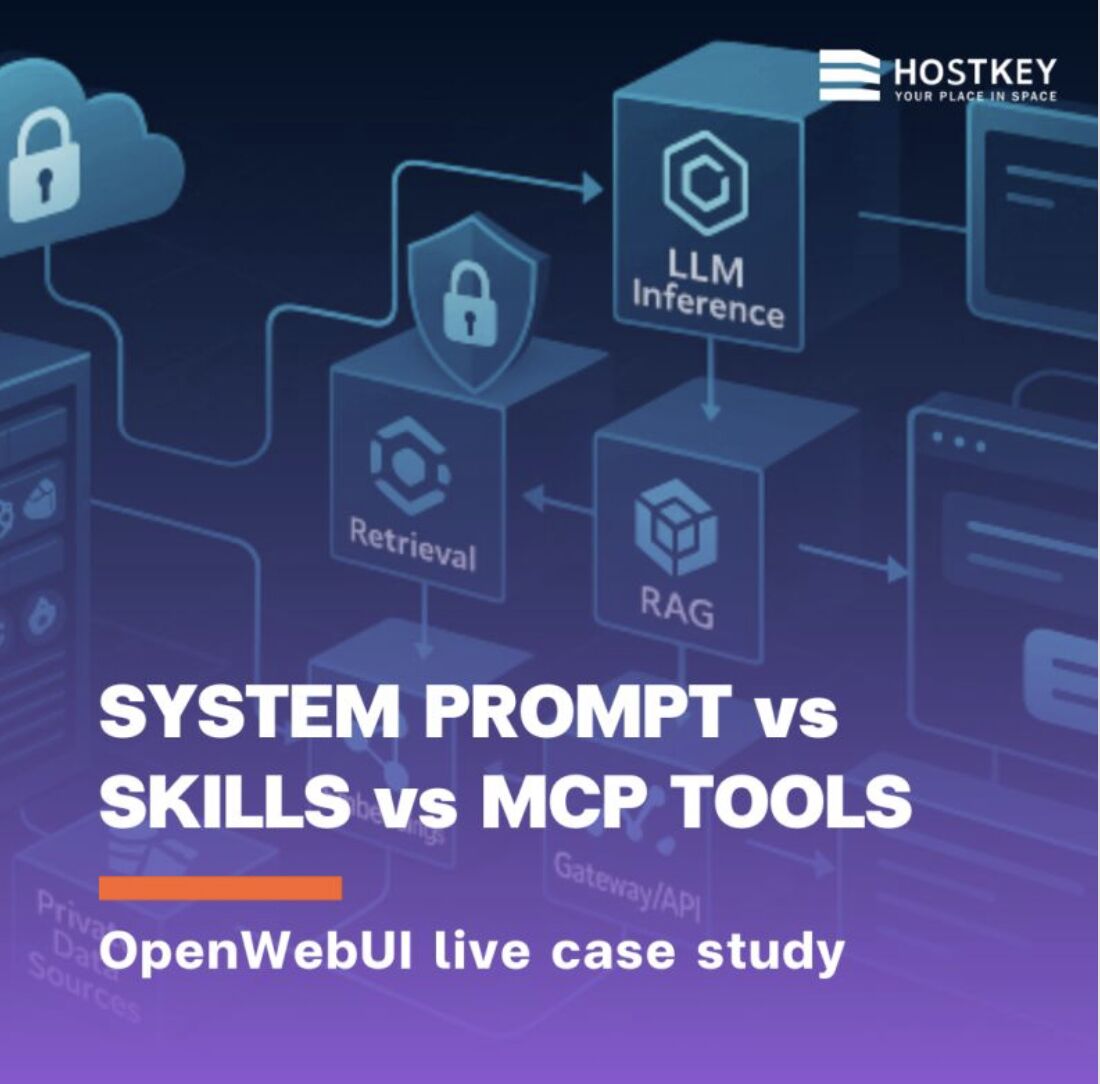
Modern AI interfaces are no longer just about prompting models — they are about orchestration layers that decide how, when and with what tools the model interacts. In our new case study, we explore a real-world scenario in OpenWebUI and break down a critical architectural question: What should control model behavior — system prompts, skills, or MCP tools? And more importantly — how do these layers behave when real-world constraints like URL validation, tool calls and external dependencies are introduced? 🧠 Three layers of AI behavior control Modern LLM applications typically rely on three overlapping mechanisms: 1) System Prompt The highest-level instruction layer. Defines behavior, tone, constraints and global rules. But: • hard to scale • difficult to debug • can become inconsistent under tool pressure 2) Skills (structured capabilities) Reusable behavior modules that extend the model’s functionality. Strengths: • modular logic • reusable across tasks • cleaner than raw prompting Limitations: • still dependent on model interpretation • can conflict with system-level instructions 3) MCP Tools (Model Context Protocol tools) External execution layer that connects models to real systems. This includes: • APIs • external services • real-time validation (like URL checks in this case study) Key advantage: 👉 deterministic execution instead of purely probabilistic reasoning 👉 Full case study: https://lnkd.in/dr-qPTA7
- LINKEDIN · IMAGESince 22 May 2026
Cloud Object Storage has quietly become one of the foundational building blocks of modern infrastructure — especially for AI, data-heavy applications and distributed systems. One of the most widely adopted standards in this space is Amazon S3 (Simple Storage Service) and its S3-compatible implementations. In our new article, we break down what S3 actually is, why it became an industry standard and how it’s used far beyond simple file storage. 👉 Read the full article: https://lnkd.in/dwM7awZQ
- LINKEDIN · IMAGESince 9 Apr 2026
Infrastructure migrations are rarely a one-way journey. In a new HOSTKEY article, we look at real migration case studies where companies moved: - from on-premises to the cloud, - from cloud back to dedicated infrastructure, - or into hybrid setups combining both models. The article explains why these shifts happen — and what teams often underestimate before migrating. Key insights from the case studies: ☁️ Cloud is great for speed, not always for long-term cost Many teams move to the cloud for flexibility and fast scaling, but later face rising costs for steady, predictable workloads. 🖥️ On-prem and dedicated servers still win on predictability Fixed resources, stable performance, and transparent pricing make dedicated infrastructure attractive for databases, core services, and constant load. 🔁 “Back migrations” are becoming more common Moving away from the cloud is no longer a failure — it’s often a rational optimization step once workloads mature. ⚙️ Hybrid architectures are often the real end state Combining cloud for bursts and flexibility with dedicated servers for core systems helps balance cost, performance, and control. The article shows that there is no single “correct” infrastructure model. The right choice depends on workload patterns, growth stage, cost sensitivity, and operational requirements. If you’re planning a migration — or reconsidering a past one — these case studies provide a practical framework for making better infrastructure decisions.
6 of 45 adsSign up to see every hostkey.com ad, filter by format and date, and get alerts on new ones.
See all 45 adsWatch the companies you care about.
Filter every ad by industry, country, format and network, and get alerts when a company you watch starts running new ads.