On air · 1 of 3 networks
Helix Biopharma Corp.
- helixbiopharma.com
- Healthcare & Life Sciences
- CA
- 7 employees
Helix Biopharma Corp.’s ads on LinkedIn, Meta and Google, recorded by adsrunning. Browse the latest here for free. Sign up free to see all 101. Watch Helix Biopharma Corp. with Starter to get each new one in your feed.
Watchlist with Starter · $49/mo
| Network | Status | Live ads | Nov 2025LinkedIn activity · 52 weeksOct 2026 | Checked | Next step |
|---|---|---|---|---|---|
| Running | 13 | Checked 29 Oct 2026 | See all 101 ads → | ||
| Meta | Not checked | — | |||
| Not checked | — |
Helix Biopharma Corp. has 13 live LinkedIn ads. We recorded no Google ads on 30 Sept 2026.
Latest ads
- LINKEDIN · VIDEOSince 26 Oct 2026
One of the central challenges in precision oncology is identifying targets that are much more abundant on cancer cells than on healthy cells, and that therapies can physically reach and bind to. Carcinoembryonic antigen-related cell adhesion molecule 6 (CEACAM6) combines both characteristics: it is overexpressed in several solid tumors and is located on the cell surface, where it can be accessed by targeted therapies. CEACAM6 is a cell-surface glycoprotein expressed in some normal epithelial and myeloid cells.[1] In several solid tumors, however, its expression becomes dysregulated and can increase substantially, including in pancreatic, lung, colorectal, gastric, and breast cancers.[1–4] Importantly, its relevance extends beyond expression alone; elevated CEACAM6 has been associated with tumor progression, invasion, metastasis and poorer survival across multiple cancer types.[2,3,5,6] Its location on the outer cell surface also makes CEACAM6 accessible to targeted therapeutic approaches. Antibodies and antibody-based conjugates can be designed to recognize CEACAM6 on tumor cells, creating opportunities for more targeted treatment strategies.[1,4] The combination of cell-surface accessibility, differential expression and a role in aggressive tumor biology makes CEACAM6 a compelling target for the development of precision cancer therapies. #PrecisionOncology #TargetedTherapy #CancerBiology #Oncology #CancerResearch #TranslationalMedicine #LungCancer #BreastCancer #CEACAM6 #Tumor #Cancer
- LINKEDIN · IMAGESince 26 Oct 2026
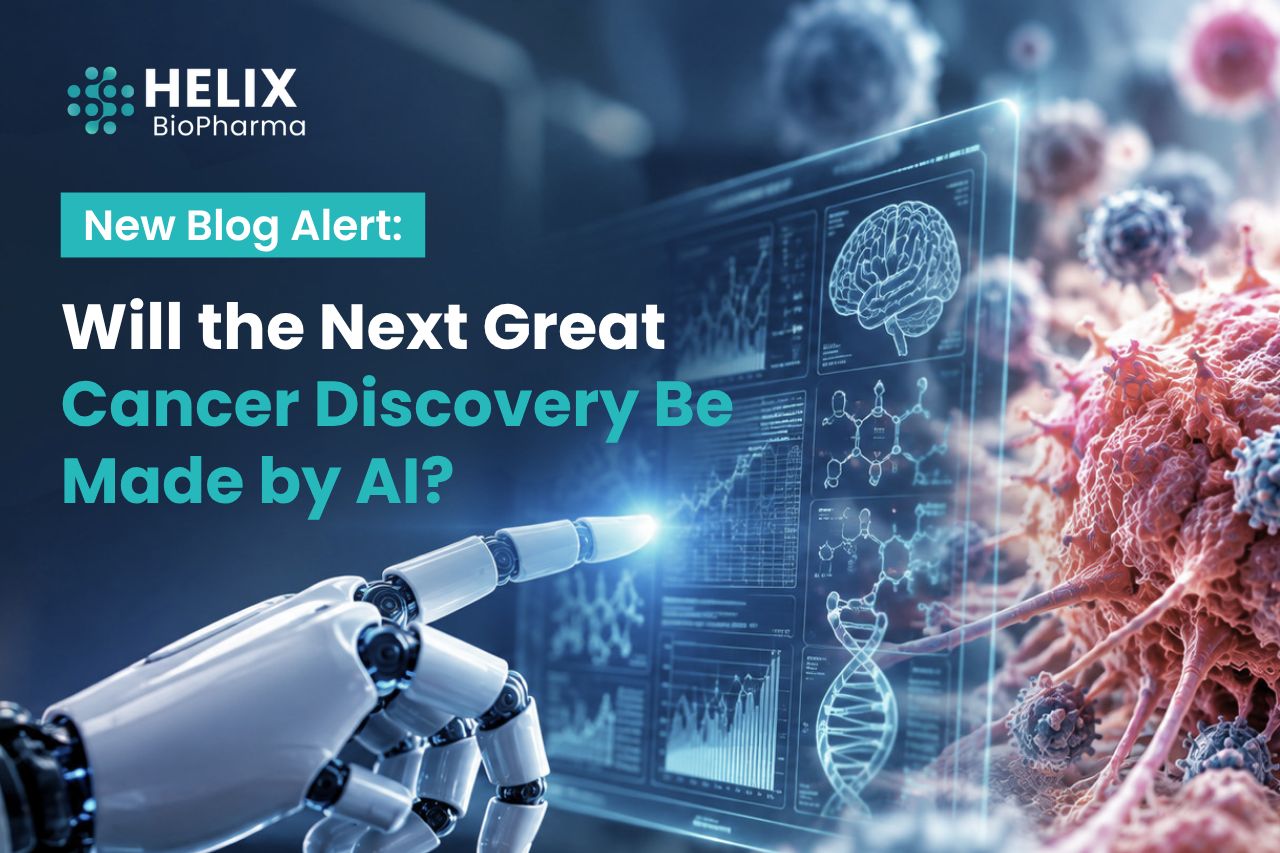
AI can now analyze vast biological datasets, generate hypotheses and propose new drug candidates. It is already accelerating cancer research in ways that were unimaginable a decade ago. But scientific discovery is more than pattern recognition. Some of oncology's most important breakthroughs, from cisplatin to checkpoint immunotherapy to the first KRAS-targeted therapy, began when scientists questioned accepted assumptions or followed findings that did not fit existing models. Our latest blog article explores what AI is transforming in cancer research, where biological insight and scientific judgment remain essential, and why the future of oncology will depend on combining both. Read the full article: https://lnkd.in/dPyh4yCA #CancerResearch #Oncology #CancerBiology #TranslationalMedicine #Biotechnology #MedicalInnovation #FutureOfMedicine #LifeSciences
- LINKEDIN · IMAGESince 22 Oct 2026
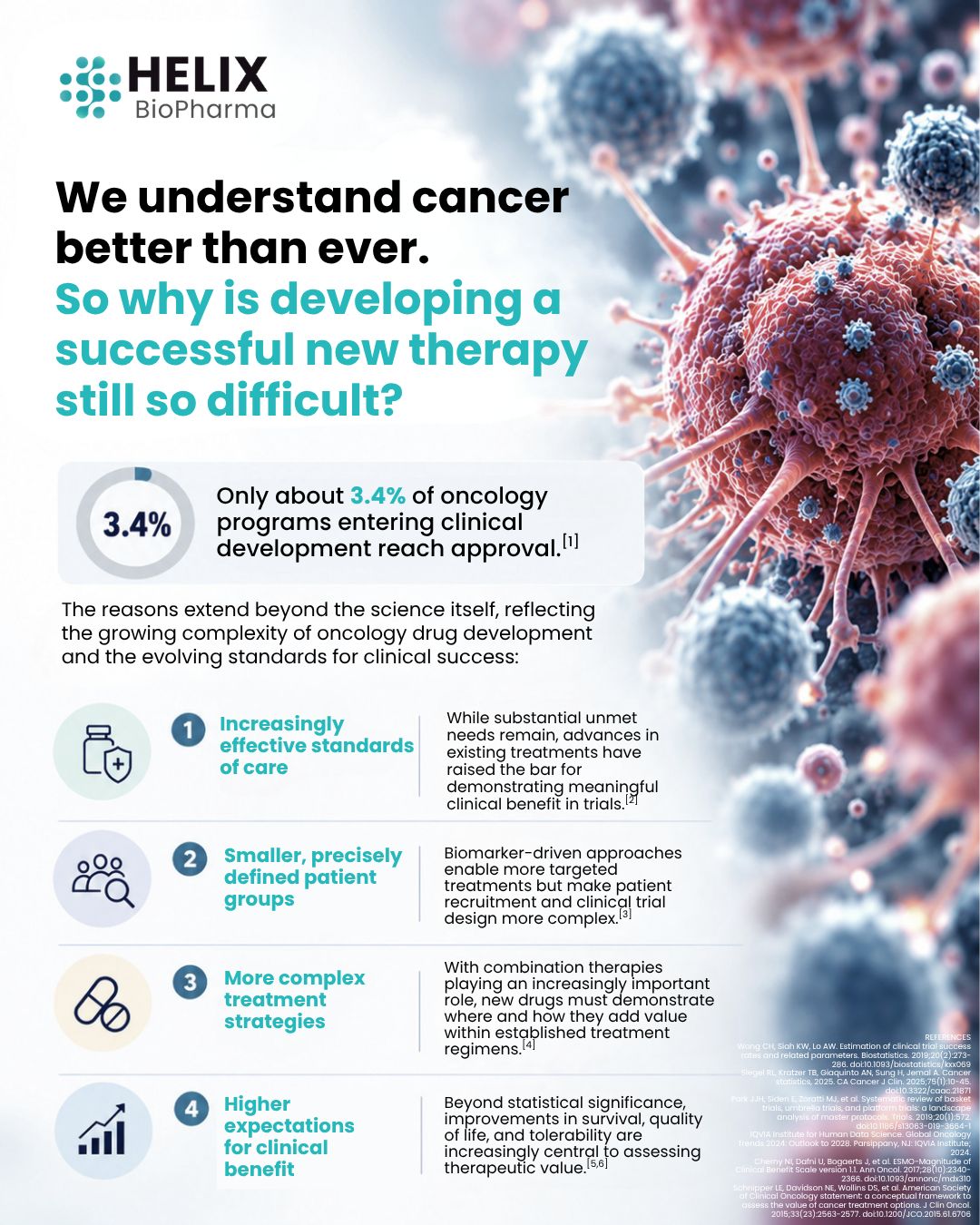
We understand cancer biology better than ever; but translating that knowledge into successful new therapies remains extraordinarily challenging. One large analysis of clinical trials estimated that only 3.4% of oncology drug development programs entering clinical trials ultimately reached approval. The reasons go well beyond scientific discovery: advances in existing treatments, increasingly precise patient populations, complex treatment strategies, and higher expectations for clinical benefit all add to the challenges of bringing new cancer therapies to patients. And despite decades of progress, substantial unmet needs remain across oncology. Addressing these challenges requires more than promising science; it demands a clear understanding of disease biology, thoughtful patient selection, and clinical development strategies designed to demonstrate meaningful improvements in patient outcomes. At Helix BioPharma, we believe the future of oncology therapies will lies in combining scientific insight with smarter development decisions to translate therapeutic potential into real clinical benefit. #Oncology #CancerResearch #PrecisionOncology #TranslationalMedicine #TargetedTherapy #PersonalizedMedicine #Biotechnology #MedicalInnovation #FutureOfMedicine
- LINKEDIN · IMAGESince 21 Oct 2026
Cancer accounted for roughly 35% of all new FDA drug approvals in 2025. Yet progress across oncology remains uneven. Where new therapies emerge depends on more than clinical need. The biology must offer a viable point of intervention, clinical evidence must be feasible to generate, and the development path must be capable of sustaining the investment required to reach patients. Rare cancers bring these pressures into particularly sharp focus. Collectively, they account for approximately one quarter of cancer diagnoses worldwide, yeat each individual disease may affect only a small number of patients. This can make research, trial recruitment, and development more difficult even where unmet need is substantial. Orphan-drug frameworks were created to change part of that equation. Through development incentives and closer regulatory engagement, they can make focused development programs viable for patient populations that may not fit conventional large-market models. Our latest blog article examines why some areas of oncology remain underserved, how biology, clinical development, and economics interact, and how orphan-drug policy has reshaped what is possible in smaller patient populations. It also looks at one setting where these challenges converge: relapse after allogeneic stem cell transplantation in acute leukemia, an area Helix BioPharma is actively targeting through its development pipeline. Read the full article: https://lnkd.in/eQU8JGbp #Oncology #CancerResearch #CancerBiology #TranslationalMedicine #MedicalInnovation #HealthcareInnovation #FutureOfMedicine #Biotechnology #LifeSciences
- LINKEDIN · IMAGESince 17 Oct 2026
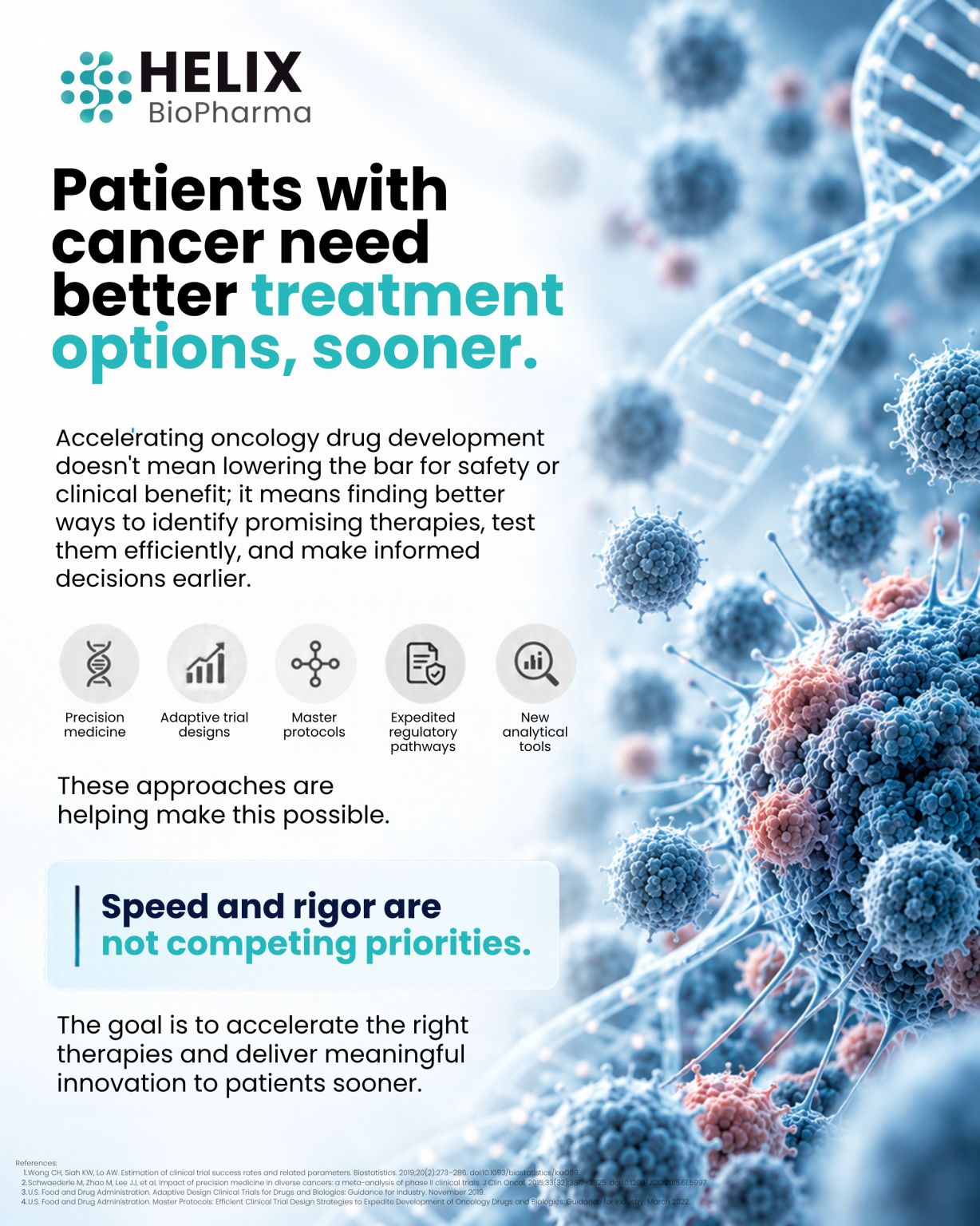
Oncology drug development has a difficult mandate: move promising therapies forward faster while maintaining rigorous standards for safety and clinical benefit. The challenge is substantial. An estimated 3.4% of oncology drug candidates entering clinical development ultimately reach approval, among the lowest success rates across therapeutic areas [1]. More efficient development strategies can help improve how promising therapies are identified and evaluated. In a meta-analysis of 570 phase II oncology trials, biomarker-guided approaches were associated with response rates of 31%, compared with 10.5% for non-personalized strategies [2]. Adaptive trial designs and master protocols, including basket, umbrella and platform trials, can allow researchers to evaluate multiple hypotheses more efficiently and adapt studies as evidence emerges [3,4,6]. Expedited regulatory programs and earlier interaction with regulators can help address development questions sooner [5]. AI and advanced computational approaches are also being explored across trial design, patient selection, recruitment, and data analysis [7]. These approaches are not about weakening the evidentiary standard, but about reducing avoidable delays, improving decision-making and concentrating resources on therapies with the strongest potential to benefit patients. Faster oncology development means generating the right evidence more efficiently and delivering meaningful innovation to patients sooner. #Oncology #CancerResearch #PrecisionOncology #TranslationalMedicine #PersonalizedMedicine #MedicalInnovation #FutureOfMedicine #Biotechnology
- LINKEDIN · VIDEOSince 15 Oct 2026
A single cancer cell can display thousands of proteins, but very few of them justify years of drug development. Target selection depends on a combination of factors: does the molecule contribute to the disease, is its expression meaningfully higher in tumor than in healthy tissue, can the chosen therapeutic modality reach it, and is it present in a clinically relevant patient population? For targeted therapies, tumor specificity is particularly important because on-target, off-tumor activity can create significant toxicity. CEACAM6 is one example of a target that has drawn growing interest against these criteria. It is overexpressed across several epithelial cancers and associated with poorer outcomes, signals through pathways involved in proliferation, invasion and angiogenesis, has been linked to reduced chemosensitivity, and has also been implicated in immune evasion through interaction with CEACAM1 on activated T cells. Its cell-surface expression also makes it accessible to targeted therapeutic approaches. What makes a strong target valuable is that it is not tied to a single technology. CEACAM6 has been explored through antibody-drug conjugates, nanobody-based formats, targeted nucleic acid delivery, and immunoconjugates designed to modify the acidic tumor microenvironment rather than directly kill tumor cells. The most effective therapeutic strategies do not begin with a modality. They behind with biology that is understood well enough to determine where, and how, to intervene. At Helix BioPharma, our work begins with that principle: understanding tumor biology deeply enough to identify where intervention may matter most, and designing therapeutic strategies around it. For a deeper look at CEACAM6 as a therapeutic target, explore our presentation from World ADC London 2026: https://lnkd.in/dnSN772m #CancerBiology #Oncology #CancerResearch #TranslationalMedicine #TargetedTherapy #PrecisionOncology #MedicalInnovation #Biotechnology #FutureOfMedicine
6 of 101 adsSign up to see every Helix Biopharma Corp. ad, filter by format and date, and get alerts on new ones.
See all 101 adsWatch the companies you care about.
Filter every ad by industry, country, format and network, and get alerts when a company you watch starts running new ads.