Not on air · 2 of 3 networks checked
Global Alliance for the Future of Food
- futureoffood.org
- Government & Non-profit
- 25 employees
Global Alliance for the Future of Food’s ads on LinkedIn, Meta and Google, recorded by adsrunning. Browse the latest here for free. Sign up free to see all 137. Watch Global Alliance for the Future of Food with Starter to get each new one in your feed.
Watchlist with Starter · $49/mo
| Network | Status | Live ads | Nov 2025LinkedIn activity · 52 weeksOct 2026 | Checked | Next step |
|---|---|---|---|---|---|
| None recorded | 0 | Checked 28 Oct 2026 | See all 137 ads → | ||
| Meta | Not checked | — | |||
| None recorded | 0 | No ads found on the Google Ads Transparency Center | Checked 30 Oct 2026 | Collect them with the API → |
Global Alliance for the Future of Food has no live LinkedIn ads. We recorded no Google ads on 30 Oct 2026.
Latest ads
- LINKEDIN · EVENTSince 30 Sept 2026
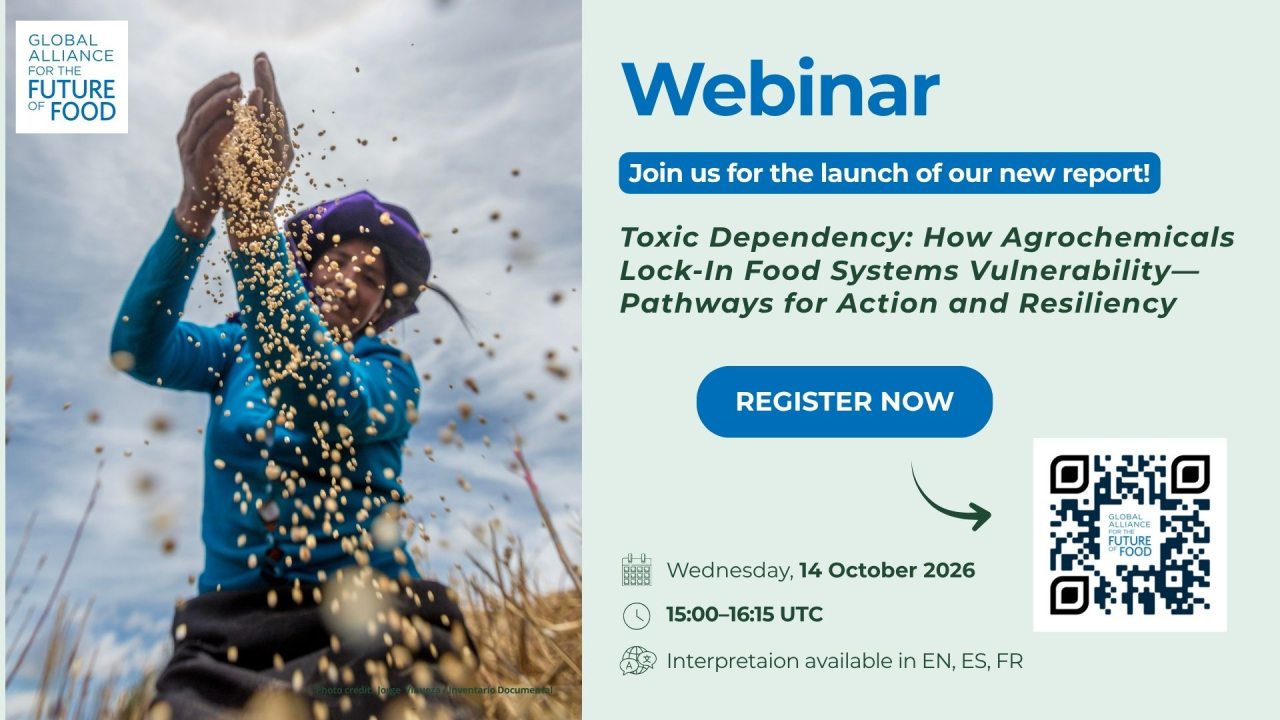
❗Launching soon❗ 🗓️ 14 October 2026 🕒 15:00-16:15 UTC ✅ Register: https://lnkd.in/eiikPTTe Please join us on Wednesday, 14 October 2026, for the launch of our new report—Toxic Dependency: How Agrochemicals Lock-In Food System Vulnerability—Pathways for Action and Resiliency. Building on our longstanding work in unpacking the fossil fuel and food systems nexus, this report, written with contributions from 29 partners, outlines the extent to which agrochemicals— which include fossil fuel-derived pesticides and synthetic fertilizers—sit at the centre of a web of interconnected crises: from the climate crisis, to biodiversity collapse, chronic disease, and farmer indebtedness. The compendium delves into the drivers and impacts of how the lock-in of synthetic fertilizers and pesticides are destabilizing food systems and offers systemic pathways for solutions to transition away from this dependency. Our launch webinar will feature perspectives from funders, researchers, and civil society and frontline community representatives, and highlight why this moment—marked by war, the disruption of global fertilizer and fuel supply chains, and increasingly extreme climate impacts, must spark serious introspection about the status quo and the need to turbocharge funding towards agroecological approaches that are showing powerful results in many parts of the world. IPES-Food Pesticide Action Network UK Shamba Centre for Food & Climate Center for International Environmental Law (CIEL) McKnight Foundation Thousand Currents Agroecology Fund Agroecology Coalition ActionAid ClimateWorks Foundation Self Employed Women's Association Alliance for Food Sovereignty in Africa (AFSA) International Institute for Sustainable Development Humanity and Eco AllIance (HEAL) Macdoch Foundation
- LINKEDIN · IMAGESince 4 Aug 2026
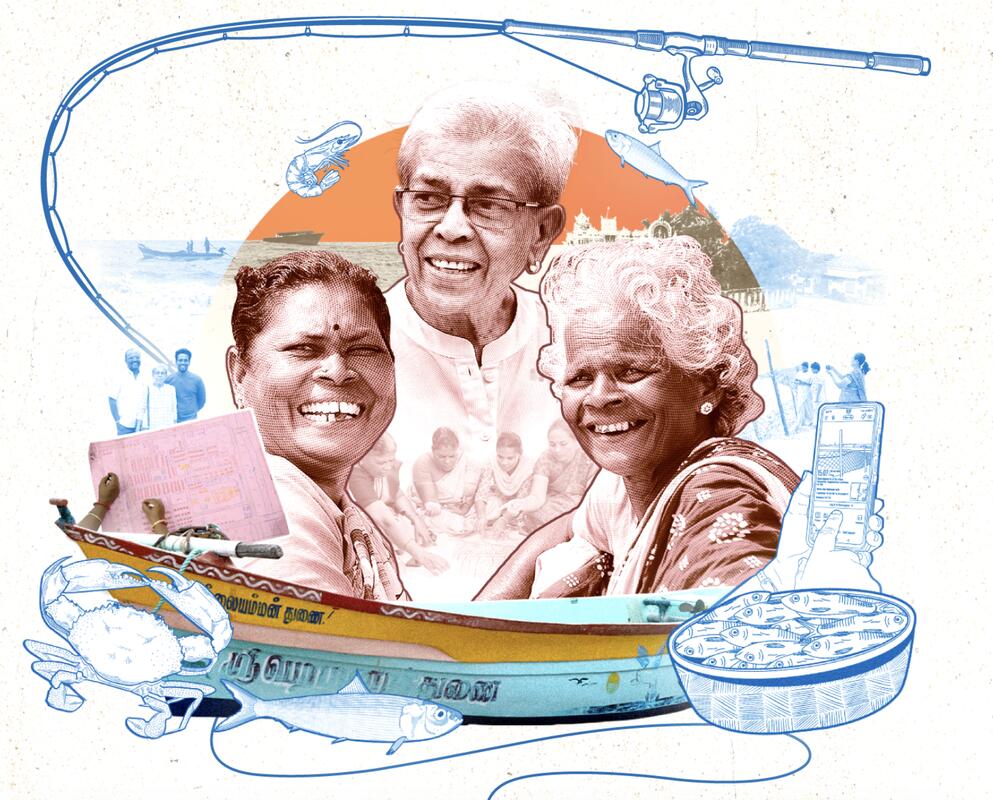
These women have long kept fisheries alive. Today, they are leading the struggle to reclaim fisher communities’ place in India 🌊🐟 Across coastal Tamil Nadu and Puducherry, fisherwomen have borne the brunt of unpaid labour, shrinking spaces to sell fish, and the daily burden of finding clean drinking water as industrial pollution spreads. At the same time, they have moved from the margins of decision-making to the forefront of community struggles. As Saroja B explains, Jesu Rethinam Christy, a human rights lawyer and fisher peoples’ defender, encouraged women to speak for themselves, helping them recognize that sorting fish, drying fish, vending, managing households, protecting coastal commons, and resisting displacement were all political work. Discover how fisherwomen are leading change in India: https://lnkd.in/eK5_FcC6 #AquaticFoods #FoodSovereignty #WomenInFisheries #WomenLeaders #BeaconsofHope
- LINKEDIN · IMAGESince 4 Aug 2026
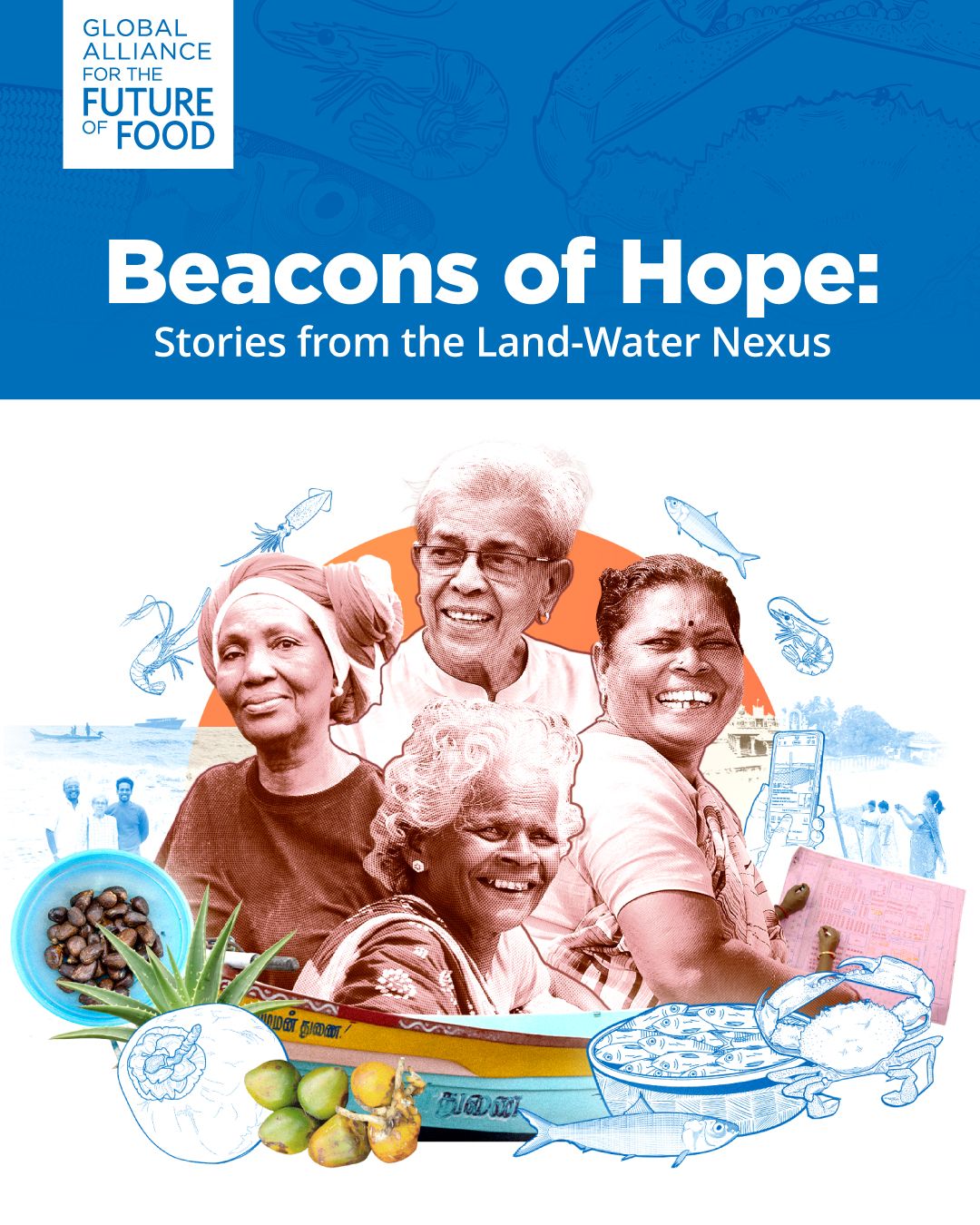
In India and Colombia, women are showing what community-led food systems transformation looks like in practice 🇮🇳🇨🇴 In coastal Tamil Nadu and Puducherry, fisherwomen are mapping villages, wetlands, dry fish yards, boat parking areas, and fishing grounds that official records have long ignored. In Timbiquí, on Colombia’s Pacific Coast, the Red de Mujeres Matamba y Guasá is defending rivers, forests, food, culture, and territory through comadreo, collective care, and women-led governance. Together, these stories show that resilient food futures are built through local knowledge, long-term organizing, and the leadership of communities already defending life across the land-water nexus. Explore the latest in #BeaconsOfHope stories here: https://lnkd.in/gPGBkTjr #AquaticFoods #FoodSovereignty #WomenLeaders
- LINKEDIN · VIDEOSince 21 Jul 2026
Fear did not silence the women of Timbiquí. 🇨🇴 On Colombia’s Pacific Coast, conventional development narratives often rely on a language of scarcity. But when toxic aerial glyphosate spraying and armed conflict threatened their survival, the Afro-descendant and Indigenous women of the Red de Mujeres Matamba y Guasá proved otherwise. In our new story film, see how these women mobilized to defend their living territory. Their work offers philanthropy a scalable blueprint for food systems transformation: ✅ Culture as infrastructure: They transformed comadreo (collective care) into a structured model of feminist governance. ✅ Systemic policy wins: Their long-term advocacy directly secured formal public policy for women, funded by the state. ✅ Structural solutions: They are rebuilding resilient local food systems through seed preservation, artisanal fishing, and agroecology. 🎬 Watch their story unfold and read our complete feature
- LINKEDIN · VIDEOSince 21 Jul 2026
"This territory is not poor. It is rich." 🌊 These words from Mirna Rosa Herrera Vente, an Afro-Colombian feminist, educator, and human rights defender, directly challenge the language of scarcity too often applied to frontline communities. For funders and policymakers searching for sustainable food systems, the women of Timbiquí offer a powerful blueprint. On Colombia’s Pacific Coast, they are actively defending a living territory of rivers, forests, and culture against extractive mining and chemical fumigation. Our latest #BeaconsOfHope video proves that resilient food systems are not built on external, top-down interventions. They are rooted in local abundance, Indigenous knowledge, and collective care. To truly transform food systems, philanthropy must shift power and resources to the frontline networks already doing the work. 🎬 Watch how women are leading systems change in our new story film.
- LINKEDIN · VIDEOSince 21 Jul 2026
What happens when a community's home disappears from the official map? 🗺️ For fisher peoples in Tamil Nadu and Puducherry, official Coastal Zone Management records have long erased the places that sustain everyday life—from shorelines and wetlands to fishing grounds and dry fish yards. In our latest #BeaconsOfHope report, see how fisherwomen federations are making those places visible again. Equipped with handheld GPS devices and deep ecological knowledge, they produce community maps that show the coast and ocean as home, livelihood, and living commons. These maps are now being used as legal documents to challenge government records and halt destructive shoreline development. It is a powerful reminder to the funding community: the most accurate and vital climate data comes from those who live on the frontlines. 🎬 Watch the video to see community mapping in action, and dive into our full report.
6 of 137 adsSign up to see every Global Alliance for the Future of Food ad, filter by format and date, and get alerts on new ones.
See all 137 adsWatch the companies you care about.
Filter every ad by industry, country, format and network, and get alerts when a company you watch starts running new ads.