On air · 2 of 3 networks
Gallup
- gallup.com
- Professional Services
- US
- 2,340 employees
Gallup’s ads on LinkedIn, Meta and Google, recorded by adsrunning. Browse the latest here for free. Sign up free to see all 584. Watch Gallup with Starter to get each new one in your feed.
Watchlist with Starter · $49/mo
| Network | Status | Live ads | Nov 2025LinkedIn activity · 52 weeksOct 2026 | Checked | Next step |
|---|---|---|---|---|---|
| Running | 511 | Checked 28 Oct 2026 | See all 584 ads → | ||
| Meta | Not checked | — | |||
| Running | 17 | Ads on the Google Ads Transparency Center | Checked 30 Oct 2026 | Collect them with the API → |
Gallup has 511 live LinkedIn ads. We recorded 17 Google ads on 30 Oct 2026.
Latest ads
- LINKEDIN · ARTICLESince 21 Oct 2026
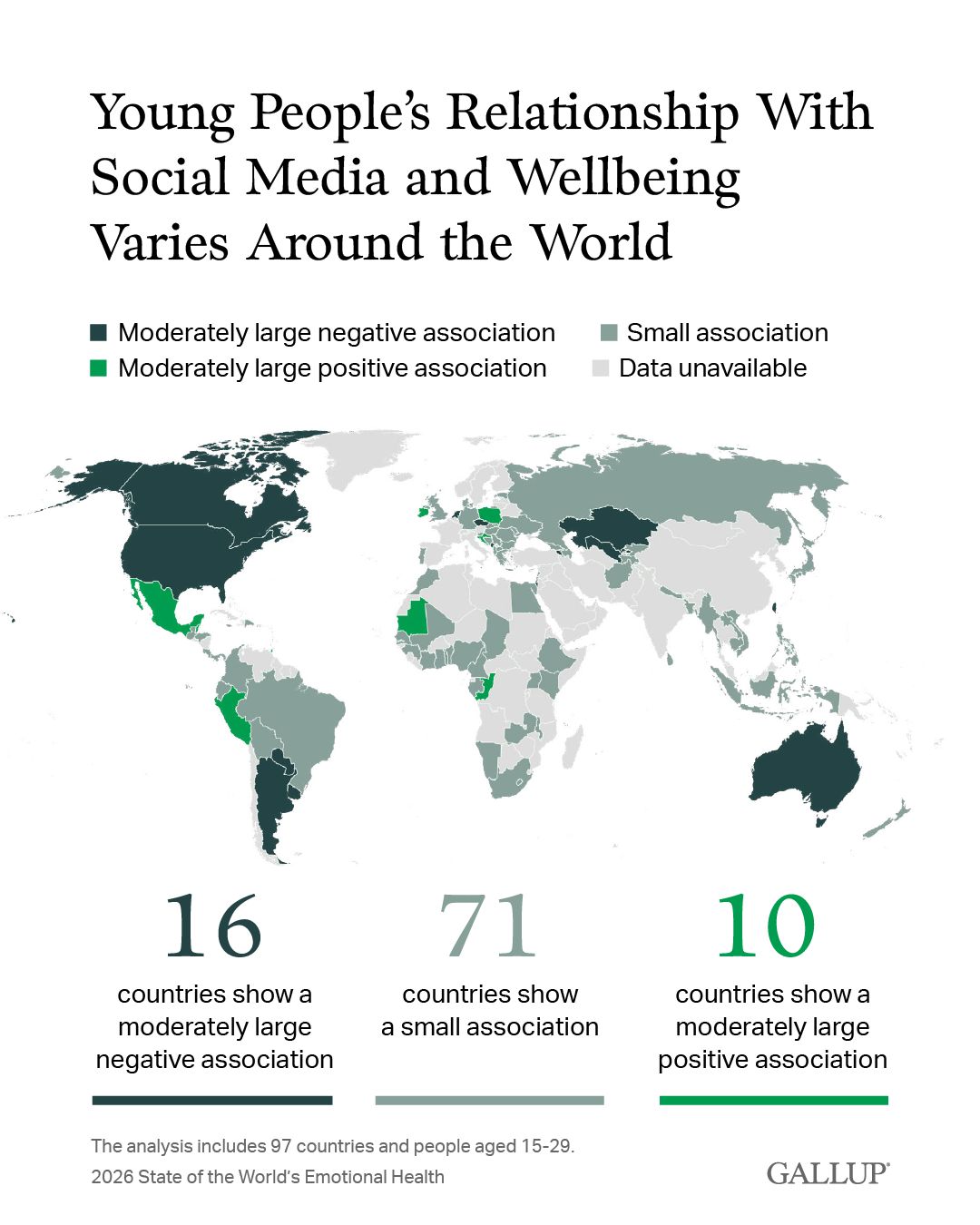
How does social media use vary around the world? And how much time are different age groups spending online? Explore these trends from Gallup’s State of the World’s Emotional Health 2026 report in this week’s Front Page.
- LINKEDIN · IMAGESince 20 Oct 2026
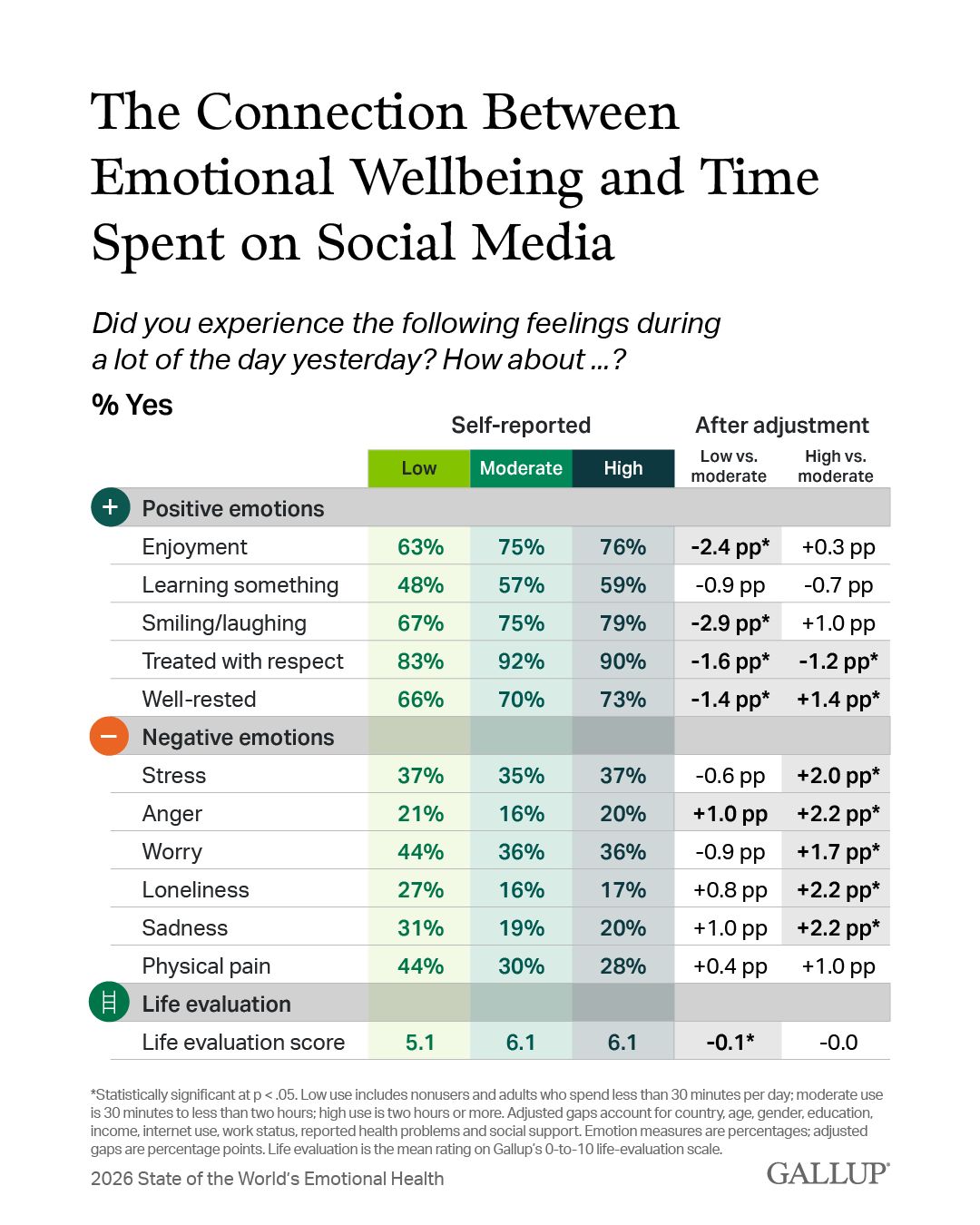
For the first time, Gallup’s State of the World’s Emotional Health report explores the connection between emotional wellbeing and social media. And the story is… complicated! Those who use social media 2+ hours per day report more anger, loneliness, sadness and stress than moderate users. But those who use it less than 30 minutes a day or not at all fare worse in other ways: less enjoyment, less laughter, less often feeling respected. Life evaluations don’t follow a straight line either. Light and nonusers rate their lives lowest, while moderate users and those on it 2+ hours a day rate theirs about the same overall. But in rich countries, spending 2+ hours a day is associated with lower ratings. And among young people, the link is negative in 16 countries, small in 71 and positive in 10. The simple takeaway for now may be that moderation wins, but the story is still unfolding. Stay tuned for a deeper dive on youth next month, and check out the full report here: https://lnkd.in/gAmWpPGB
- LINKEDIN · IMAGESince 20 Oct 2026
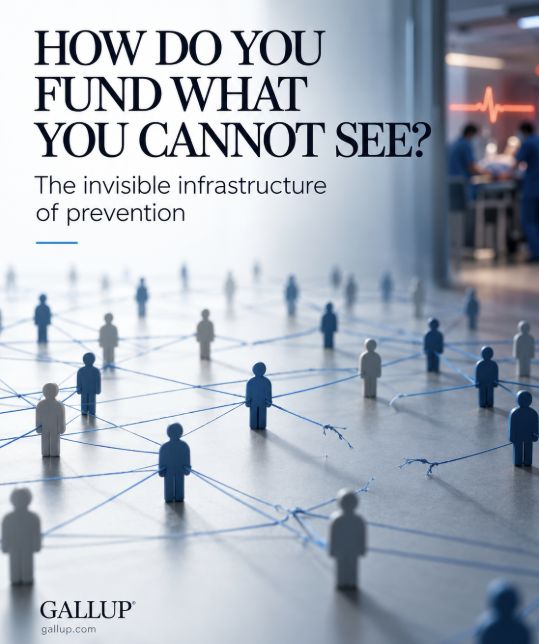
If an ounce of prevention is worth a pound of cure, why do we struggle to pay for the ounce? This is the prevention paradox. The patient who needs treatment today has a powerful claim on public resources. The person who may fall ill ten years from now because we failed to invest in prevention has no equivalent voice in todays budget debate. One of my reflections from the World Health Summit is just how difficult the economics and politics of prevention remain. Prevention requires governments and institutions to commit scarce resources and political capital today against future costs that are highly predictable in aggregate, but have yet to materialise. In systems organised around treating illness, with budgets and accountability tied to the present, that is a difficult case to make. And it requires trust. Trust in the evidence, in the institutions making those decisions, and in the interventions themselves. The latest Wellcome Trust Global Monitor provides a sobering reminder. Trust in science rose during the pandemic, reaching 80% in 2020, but had fallen to 72% by 2025, below the 77% recorded in 2018 (link to the report and all data below). We had an extraordinary opportunity to consolidate that trust dividend. We failed to sustain it. But what concerns me equally is the less visible infrastructure of prevention. Social connection. Community relationships. The institutions and spaces that foster belonging, mutual support and social cohesion. Unlike a vaccine or a statin, these are harder to prescribe, fund and measure. Yet their erosion carries real costs. Loneliness increases. Mental health suffers. Communities become more fragmented. Their deterioration is often gradual, and the consequences emerge across different institutions, budgets and political cycles. By the time the costs become visible, rebuilding what has been lost is considerably harder. How do we make the investment case for protecting something whose value is most apparent when it disappears? Perhaps this is where better measurement can change the economics of prevention. The WHO Commission on Social Connection has called for stronger national monitoring and a global index of social connection. Such measures can make the erosion of social ties visible earlier, provide the evidence to justify investment and create accountability for acting before the damage becomes entrenched. We need to measure the strength of our connections before we are left counting the cost of their loss.
- LINKEDIN · IMAGESince 14 Oct 2026
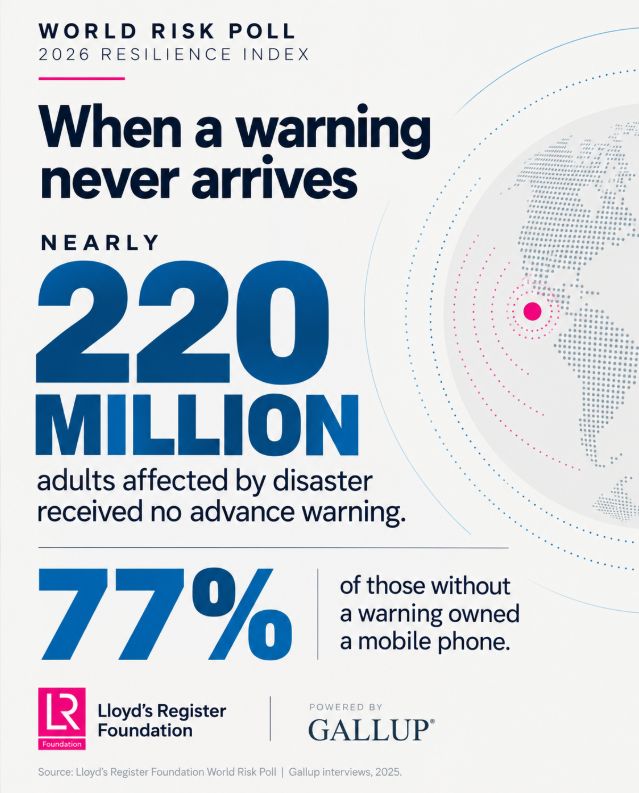
Nearly 220 million people experienced a disaster without receiving an advance warning. Yet 77% of them owned a mobile phone. And even when warnings reach people, too many are unable to act. New findings from the 2026 World Risk Poll Resilience Index, published by Lloyd's Register Foundation, reveal a striking gap between knowing danger is coming and being able to protect yourself. Among people who received a disaster warning, 83% of those with both a household disaster plan and confidence in their ability to protect themselves were able to act. Among those with neither, just 27% could. The disparity between countries is equally concerning. Fewer than half of warned adults in low- and lower-middle-income countries could take action, compared with 71% in high-income countries. Perhaps the most revealing finding is that societal resilience has reached a record high, while individual resilience has fallen to its lowest recorded level. We can invest in sophisticated forecasting systems, better infrastructure and more effective warnings. But unless people have the resources, preparedness and confidence to respond, much of that investment will fall short of its potential. Based on 143,000 interviews conducted by Gallup across 140 countries, the new Index and three accompanying reports provide a remarkable evidence base for understanding where resilience is improving, where vulnerabilities are growing and what policymakers can do about them. Proud of our longstanding partnership with Lloyd’s Register Foundation, and of the contribution this research is making to efforts to build a safer world. Explore the research, and all waves of micro-data over the past decade below: https://lnkd.in/d9BT6YCA #WorldRiskPoll #Resilience #DisasterRiskReduction
- LINKEDIN · IMAGESince 12 Oct 2026
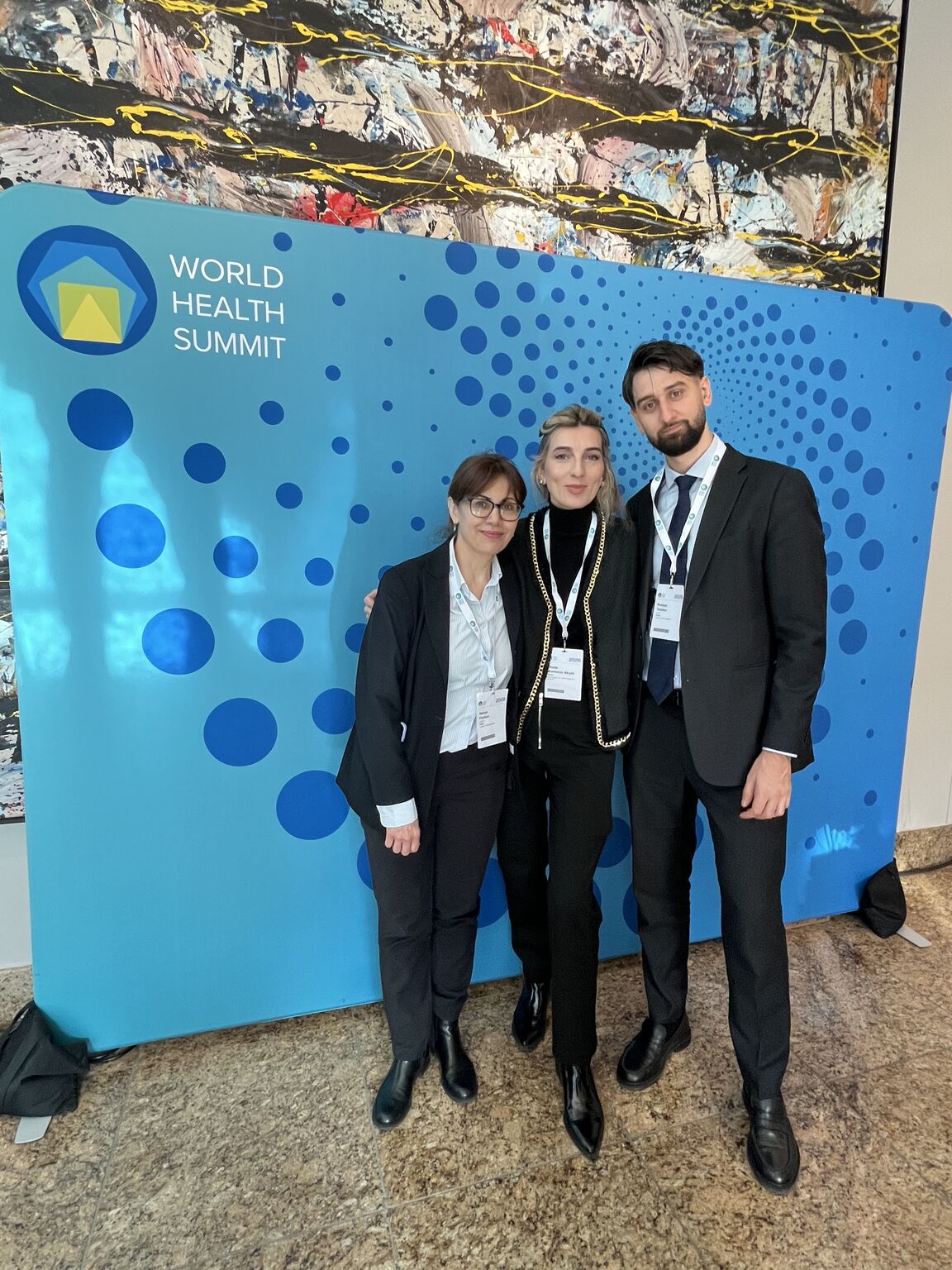
At the World Health Summit today with my brilliant colleagues Riada Asimovic Akyol and Hania Farhan. We have lined up as bar chart 📊 because we are bringing our data from Gallup’s State of the World’s Emotional Health 2026 Report to Berlin. This year our focus was social media and as with all social questions, this is a complex report. For this study, Gallup groups people as low users (no use or under 30 minutes a day), moderate users (30 minutes to under two hours) and high users (two hours or more). 📈High users are more likely to report anger, loneliness, sadness, stress and worry than moderate users. They are also less likely to report being treated with respect. ❌However, life evaluation does not differ significantly between the two groups. Link to the full report in the comments👇
- LINKEDIN · IMAGESince 12 Oct 2026
New Gallup research across 97 countries challenges a simple assumption about social media and wellbeing: More isn’t always worse and less isn’t always better. Compared with moderate use, high use is associated with more anger, loneliness, sadness, stress and worry, while low use is associated with lower life evaluation and fewer positive emotions than moderate use. The findings do not show that social media causes better or worse wellbeing. Instead, they offer a more nuanced global view of how social media use and emotional health are connected. Explore the research in Gallup’s 2026 State of the World’s Emotional Health report, released in partnership with World Health Summit: https://lnkd.in/eTXhAAUc

6 of 584 adsSign up to see every Gallup ad, filter by format and date, and get alerts on new ones.
See all 584 adsWatch the companies you care about.
Filter every ad by industry, country, format and network, and get alerts when a company you watch starts running new ads.