On air · 1 of 3 networks
Gable
- gable.ai
- Data
- US
- 29 employees
Gable’s ads on LinkedIn, Meta and Google, recorded by adsrunning. Browse the latest here for free. Sign up free to see all 21. Watch Gable with Starter to get each new one in your feed.
Watchlist with Starter · $49/mo
| Network | Status | Live ads | Nov 2025LinkedIn activity · 52 weeksOct 2026 | Checked | Next step |
|---|---|---|---|---|---|
| None recorded | 0 | Checked 28 Oct 2026 | See all 21 ads → | ||
| Meta | Not checked | — | |||
| Running | 6 | Ads on the Google Ads Transparency Center | Checked 30 Oct 2026 | Collect them with the API → |
Gable has no live LinkedIn ads. We recorded 6 Google ads on 30 Oct 2026.
Latest ads
- LINKEDIN · IMAGESince 17 Jul 2026
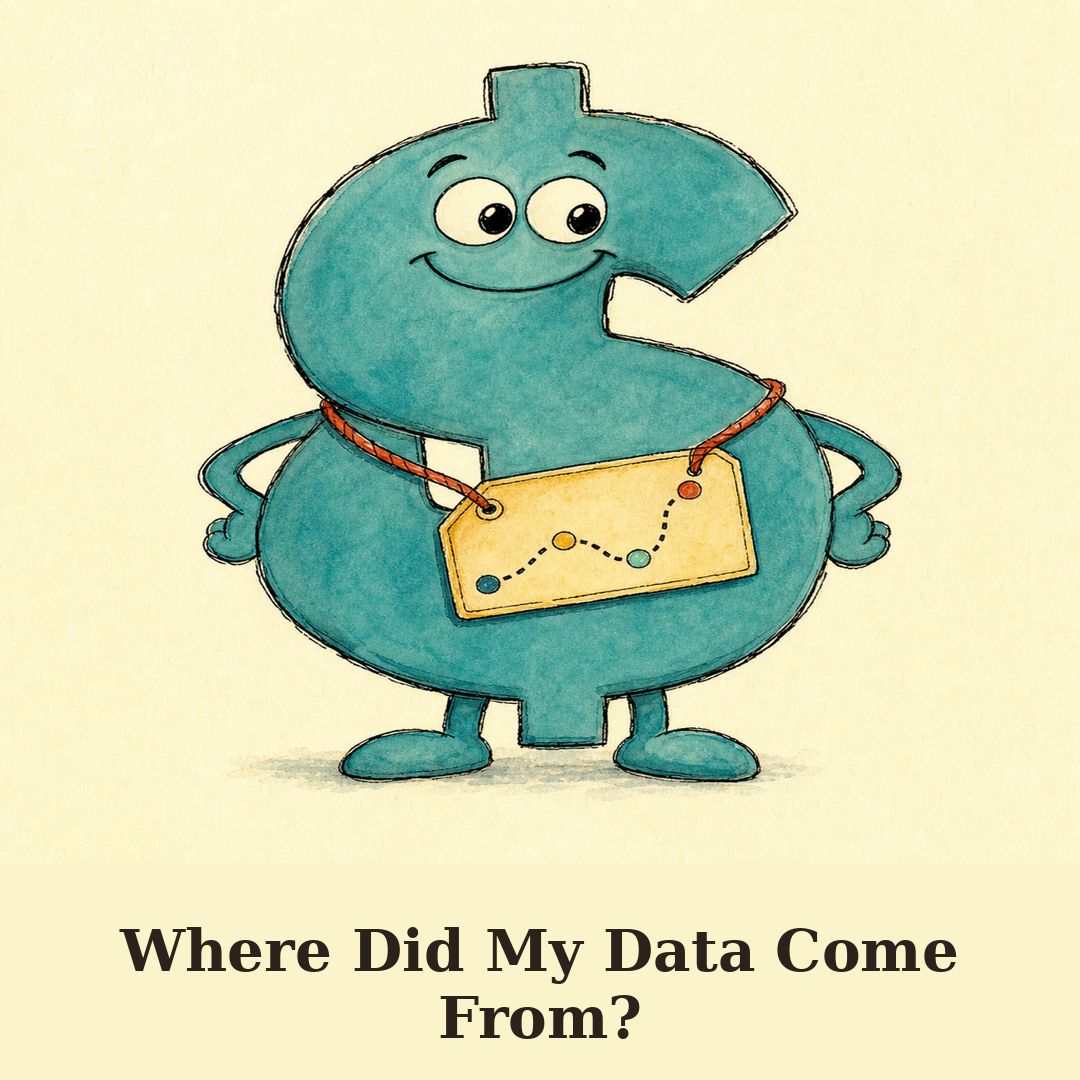
Meet Dave. His one line of code is still costing your bank money.
- LINKEDIN · IMAGESince 17 Jul 2026
Your data has a backstory. Most banks have never read it, but it's the key to compliance.
- LINKEDIN · IMAGESince 16 Jun 2026
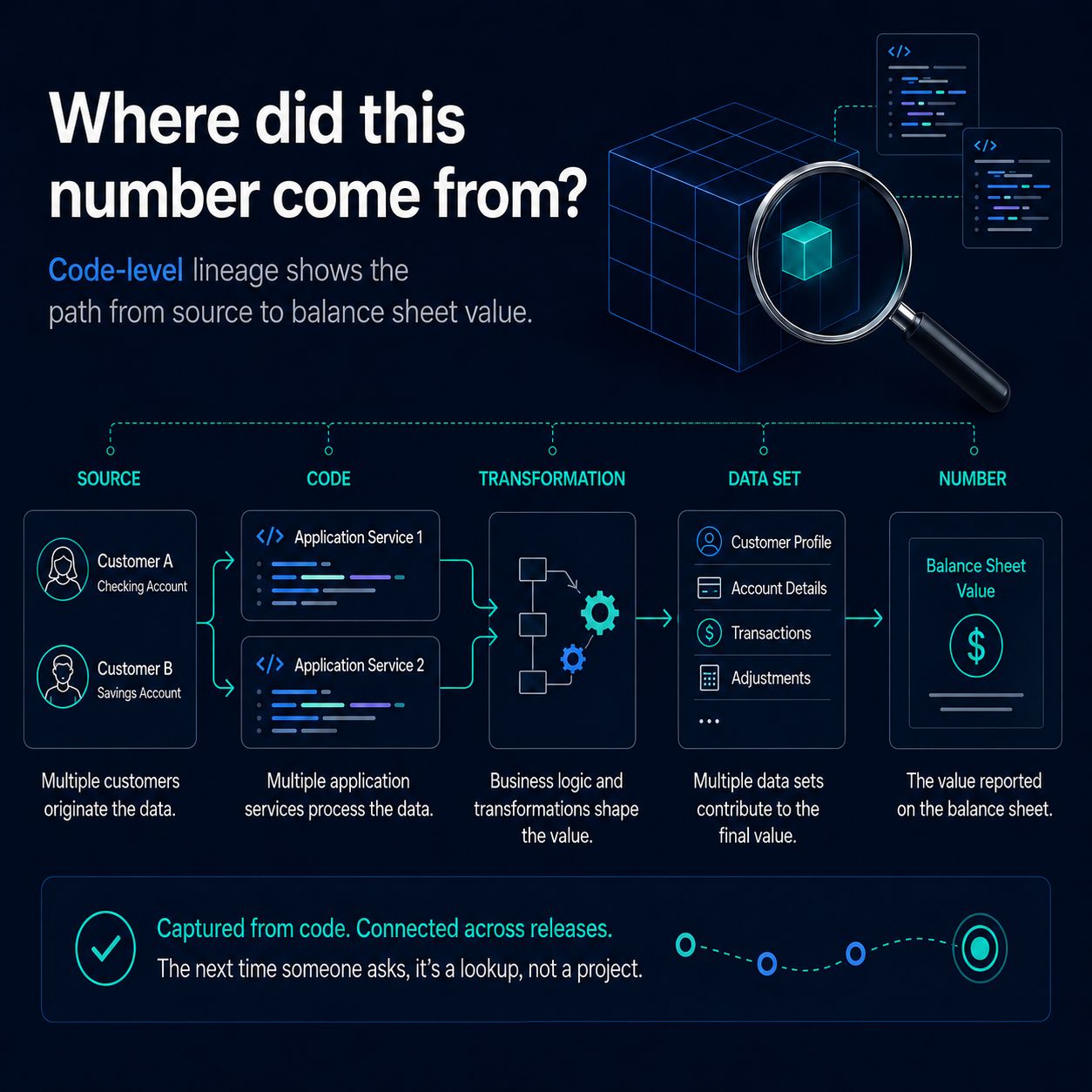
The most expensive question in a regulated bank is five words long: where did this field come from? It usually arrives from compliance or risk, triggered by an audit or a regulatory inquiry. On paper it sounds trivial. In practice it stops your roadmap. To answer it honestly, you pull your most senior engineers off what they were building and put them on archaeology. They trace a single value backwards through services, read through git history, and interview whoever still remembers how the pipeline worked two years ago. This is not an afternoon of work. It runs for weeks and burns hundreds of hours of your most expensive people. And here is what makes it worse. The moment they finish, the map is already wrong, because the code kept changing while they documented it. Then it happens again next quarter. Different field, different examiner, and last quarter's map is already useless. Why is such a simple question so expensive to answer? Because the answer does not live where everyone looks for it. It is not in the warehouse and it is not in the catalog. A regulated value is computed in application code, in a service, in a transformation that shipped three releases ago. The catalog can tell you where the data sits. It cannot tell you the logic that produced it, which is the only thing the examiner actually cares about. The teams that have stopped paying this tax did one thing. They moved lineage into the build. When field-level lineage is captured from the source code as part of CI, every release already carries its inputs and its transformation history. The next time someone asks where a field came from, it is a lookup, not a project. If your engineers are rebuilding lineage by hand every audit cycle, that is the most expensive work on your team that nobody ever put on a roadmap.
- LINKEDIN · VIDEOSince 13 Jun 2026
One bank has already paid more than $500m in fines for data governance failures. Governance owns the mandate, but lineage must be proven at the code level. This video explains how to be compliant, and avoid wasting thousands of engineering hours in the audit process.
- LINKEDIN · IMAGESince 12 Jun 2026
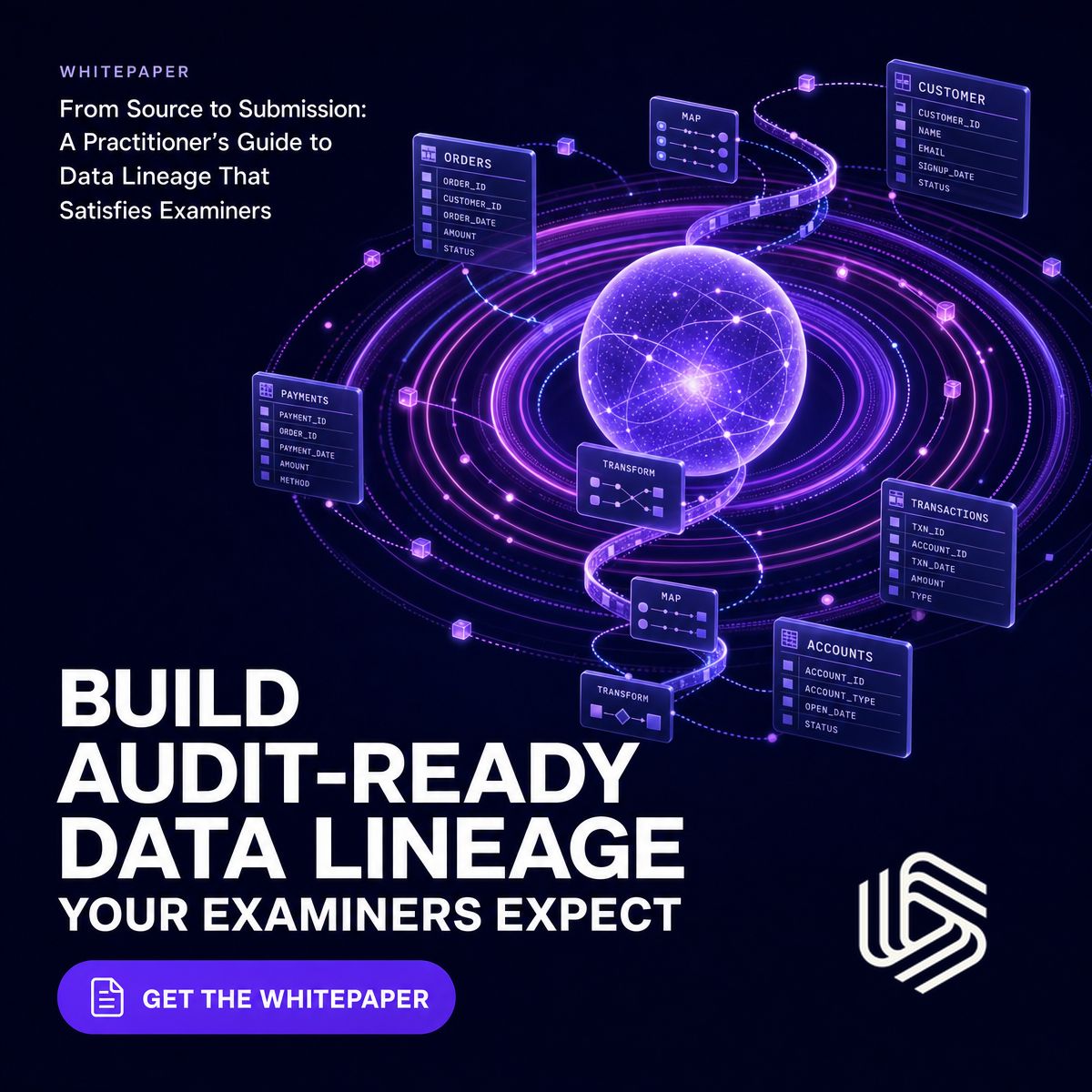
Financial Institutions are using thousands of engineering hours to produce data lineage that’s stale before it ships. Get the whitepaper that shows what BCBS 239 examiners expect from data lineage.
- LINKEDIN · IMAGESince 20 May 2026
Stop wasting thousands of hours on data lineage audits, produce the evidence automatically from the source code. . From Source to Submission is Gable's practitioner's guide to BCBS 239 lineage. It covers what supervisors are actually finding, what examiners are asking, and why the structural failure point keeps showing up upstream of the warehouse, in source systems and application code.

6 of 21 adsSign up to see every Gable ad, filter by format and date, and get alerts on new ones.
See all 21 adsWatch the companies you care about.
Filter every ad by industry, country, format and network, and get alerts when a company you watch starts running new ads.