On air · 1 of 3 networks
Fyorin
- fyorin.com
- Fintech & Financial Services
- MT
- 25 employees
Fyorin’s ads on LinkedIn, Meta and Google, recorded by adsrunning. Browse the latest here for free. Sign up free to see all 20. Watch Fyorin with Starter to get each new one in your feed.
Watchlist with Starter · $49/mo
| Network | Status | Live ads | Nov 2025LinkedIn activity · 52 weeksOct 2026 | Checked | Next step |
|---|---|---|---|---|---|
| None recorded | 0 | Checked 31 Oct 2026 | See all 20 ads → | ||
| Meta | Not checked | — | |||
| Running | 2 | Ads on the Google Ads Transparency Center | Checked 30 Oct 2026 | Collect them with the API → |
Fyorin has no live LinkedIn ads. We recorded 2 Google ads on 30 Oct 2026.
Latest ads
- LINKEDIN · IMAGESince 2 Feb 2026
At what point does expense management stop being operational and start shaping control and visibility? Manual expense management often feels fine in the early stages of growth A small team. One entity. Limited complexity. Receipts are tracked, reimbursements are approved and finance keeps things moving. As soon as a business adds new entities or expands into new geographies, the role of expense management changes. What once felt manageable starts to influence visibility, control and governance. Approvals multiply, tax treatment varies, data arrives later and in different formats and finance spends more time reconciling activity than understanding it. This is where expense management becomes structurally important. Not as an admin workflow, but as a control layer that shapes how spend is governed and how quickly finance can act. Modern expense management gives finance teams visibility before spend happens, enforces policy automatically and keeps data flowing cleanly into core systems. The payoff is less operational drag and far more confidence as complexity increases. We’ve explored this shift in an article outlining why expense management plays a bigger role in scalable finance than many teams expect. If growth is on your roadmap, it’s well worth a read. 👉 Read the article: https://lnkd.in/dxQzUy_i
- LINKEDIN · IMAGESince 28 Jan 2026
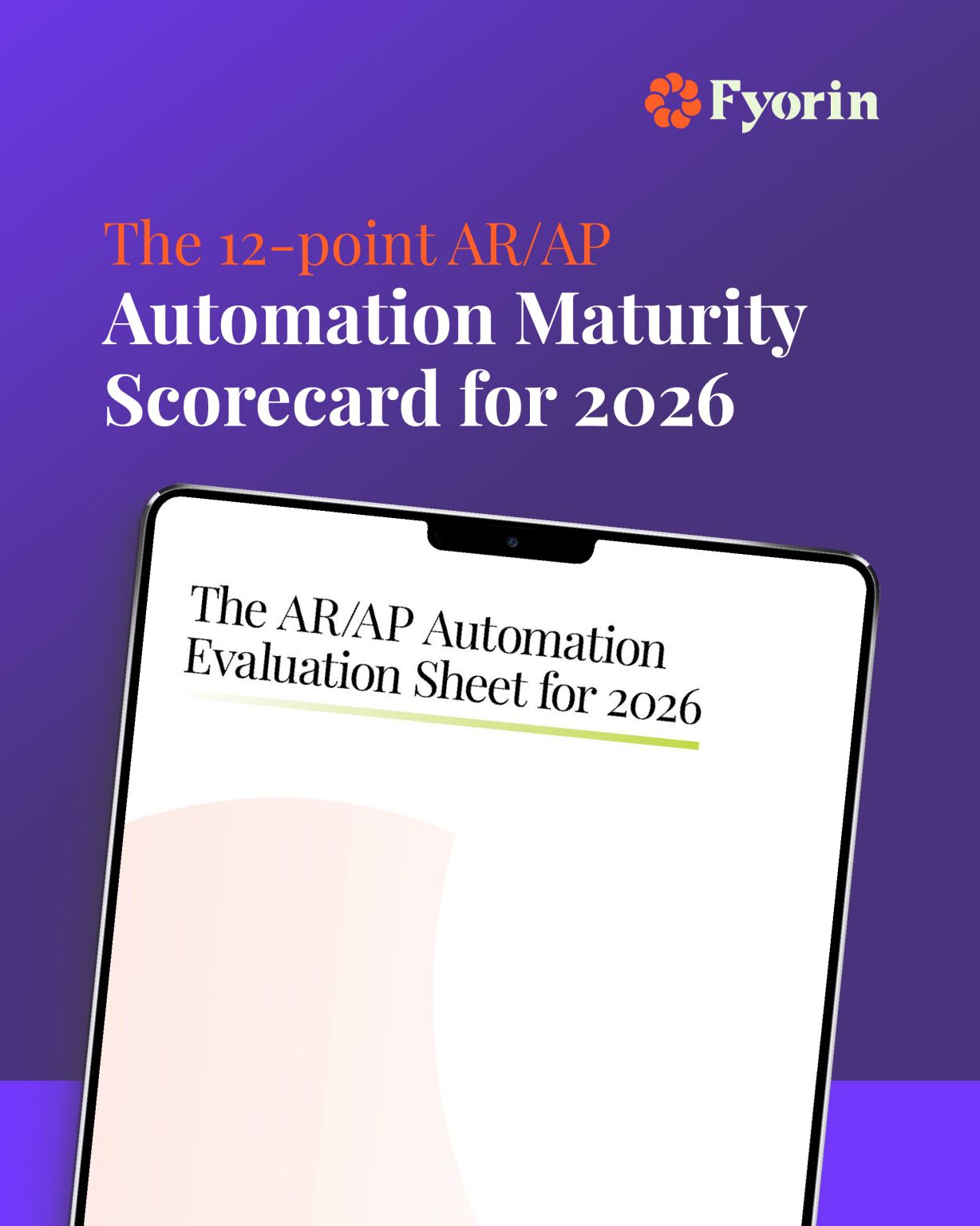
Growth is exciting until finance becomes the bottleneck. Can your finance function scale as fast as your business? Here’s a simple question finance leaders should ask early, not after problems surface. If you added three new entities next quarter, would they plug in cleanly or create weeks of setup, manual work and process friction? Pillar 5 of our AR and AP Automation Evaluation Sheet focuses on scalability for a reason. Low maturity shows up as duplicated admin, custom workarounds and teams rebuilding processes every time the business grows. Finance ends up operating the machinery instead of guiding the business. High maturity looks very different. • New entities connect into existing workflows. • Approvals, controls and data flows extend automatically. • Finance stays focused on insight, not setup. The scorecard doesn’t stop at theory. It gives you a clear 1 to 5 scale for each criterion, with specific descriptors that show exactly where value is leaking and what good actually looks like. If finance is meant to be a strategic engine for growth, benchmarking maturity is the starting point. The full 12 point scorecard offers a practical look inside how scalable finance teams are built. 👉 Find where value is leaking as you scale https://lnkd.in/d3_9xdiM
- LINKEDIN · IMAGESince 20 Jan 2026
❓ How much are uncontrolled cross-entity payments costing you? As finance leaders, we talk a lot about efficiency, automation and visibility. But the cost leak I see most often sits in a place many teams don’t even track: cross-entity payments that move without proper control. I’ve watched this play out in companies of every size: • Invoices routed to the wrong entity. • VAT posted incorrectly. • Approvals handled differently in every country. • Intercompany balances that never quite reconcile cleanly. None of it shows up as a single line item. It shows up as friction, rework, compliance headaches and unplanned cost. If your cross-entity workflow isn’t controlled centrally, you’re absorbing losses you can’t quantify. 👉 That’s exactly why we created the 2026 AR/AP Automation Maturity Scorecard. I wanted a single framework that helps finance teams answer questions like: • Do our cross-entity approvals follow the same logic everywhere? • Are costs being posted to the right books automatically? • Can our ERP reflect the correct entity instantly, not after manual fixes? If you want multi-entity operations that scale without silent leakage, you need a scorecard that exposes the fragmentation and helps you mandate instant multi-entity posting and consistent workflows. I’d encourage every CFO to use it before finalising their 2026 plan. 👉 Comment AP/AR below and I'll send you the automation scorecard, no strings attached.
- LINKEDIN · IMAGESince 13 Jan 2026
Manual approvals aren’t a workflow issue, they’re a strategic risk. Most finance teams still run entity-level approvals through email or WhatsApp. It feels workable until it isn’t. A missing authorisation, an incorrectly routed invoice, a compliance gap that shows up during audit, or a fraud event that should’ve been caught by a structured rule. If governance depends on people remembering the process, it’s already broken. That’s why we created the AR/AP Automation Maturity Scorecard for 2026. It gives you a clear, 12-point benchmark to assess governance strength across every entity, including whether: • Approval rules match spend limits, tax logic and local governance • Audit trails are automatic or manually reconstructed • Your controls apply consistently across teams, countries and subsidiaries Finance leaders are using it to mandate the move from “approvals by inbox” to automated, entity-specific matrices that cut fraud exposure and deliver instant audit readiness. 👉 Download the scorecard and strengthen your governance posture for 2026. https://lnkd.in/d3_9xdiM
- LINKEDIN · IMAGESince 13 Jan 2026
❓ As we step into 2026, here’s an uncomfortable question for finance leaders: are your systems actually automated — or just cosmetically efficient? Automation is widely discussed, yet many finance teams are still operating on what I call fake automation. Workflows that look smooth on the surface, but collapse the moment something changes. The truth is simple. If your finance stack relies on fragmented tools and manual intervention, you’re accumulating technology debt — debt that compounds every time you enter a new market, add an entity, or face a new regulatory requirement. What works in a stable environment becomes a risk multiplier in a volatile one. Global compliance updates, real-time reporting expectations, and cross-border controls don’t wait for legacy systems to catch up. Fragmentation slows adaptation. It creates blind spots. And it forces finance teams to patch over gaps instead of modernising the core. ❓ So here’s the question worth asking as the year begins: Which upcoming regulatory or technology shift poses the biggest threat to your current setup? #finance #cfo #payables #cardexpenses #finops
- LINKEDIN · IMAGESince 18 Dec 2025
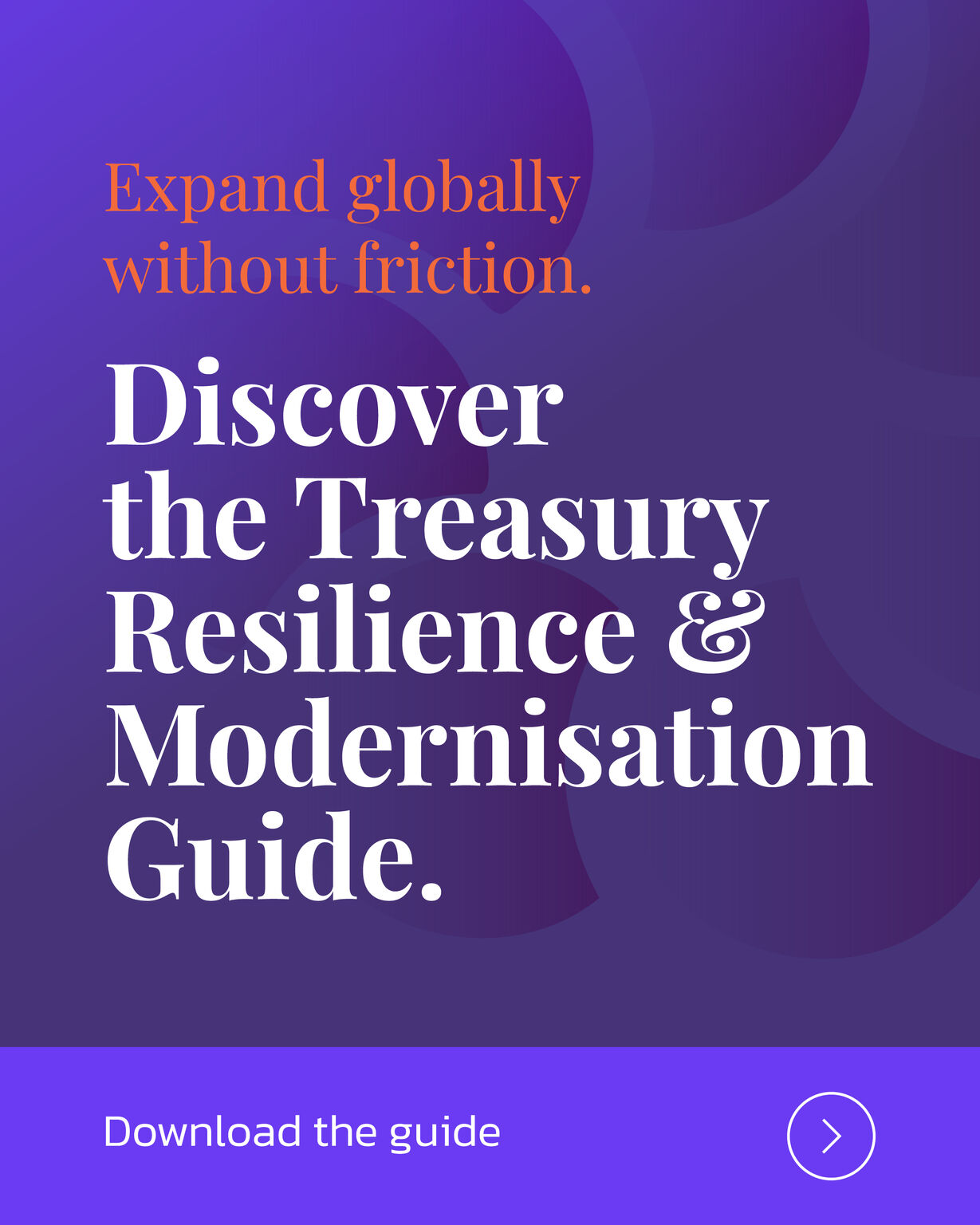
Ready to enter new markets faster? Start with your treasury. Global expansion shouldn’t stall on paperwork and fragmented systems. The Treasury Resilience & Modernisation Guide provides a blueprint to establish banking presence across 200+ countries, enabling finance teams to act quickly and operate globally from one platform. Learn how to: → Unify multi-entity operations under a single governance structure → Move funds instantly between accounts and currencies → Gain real-time visibility and control across borders The world is connected, your treasury should be too. 🌍 Download the guide and accelerate your path to new markets: https://lnkd.in/dtAGepmW

6 of 20 adsSign up to see every Fyorin ad, filter by format and date, and get alerts on new ones.
See all 20 adsWatch the companies you care about.
Filter every ad by industry, country, format and network, and get alerts when a company you watch starts running new ads.