Not on air · 2 of 3 networks checked
Frontal AI
- frontal.so
- Marketing & Advertising
- US
- 15 employees
Frontal AI’s ads on LinkedIn, Meta and Google, recorded by adsrunning. Browse the latest here for free. Sign up free to see all 69. Watch Frontal AI with Starter to get each new one in your feed.
Watchlist with Starter · $49/mo
| Network | Status | Live ads | Nov 2025LinkedIn activity · 52 weeksOct 2026 | Checked | Next step |
|---|---|---|---|---|---|
| None recorded | 0 | Checked 28 Oct 2026 | See all 69 ads → | ||
| Meta | Not checked | — | |||
| None recorded | 0 | No ads found on the Google Ads Transparency Center | Checked 29 Oct 2026 | Collect them with the API → |
Frontal AI has no live LinkedIn ads. We recorded no Google ads on 29 Oct 2026.
Latest ads
- LINKEDIN · IMAGESince 25 Sept 2026
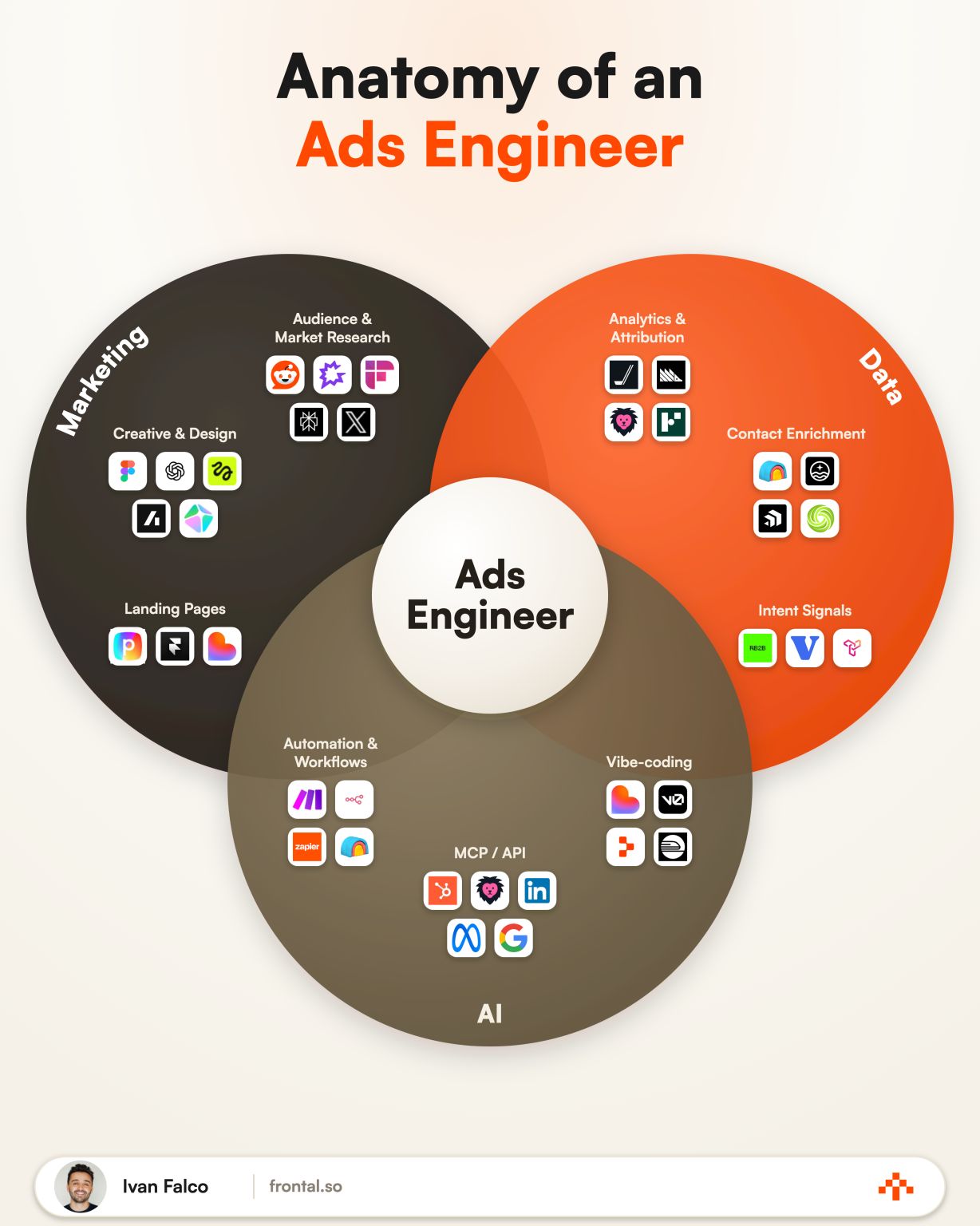
We added $366k in new ARR this month from one service: Ads Engineering. Paid media is quietly turning into a GTM Engineering job, and most teams haven't noticed 👇 Right now, marketing runs the ads and sales runs the outbound. Different tools, different dashboards, both chasing the same accounts, barely talking. Two teams doing half a job each. An Ads Engineer collapses that into one system, built from three parts: → Marketing - the creative, the channels, the message → Data - attribution, enrichment, and the signals that show who's actually paying attention → AI - the workflows, MCPs and tools that wire it all together Then you aim it at accounts, not keywords. A few of the workflows we run: → Warm outbound - run ads to the target list, watch who engages, hand the warm accounts straight to the AEs → Event lists - upload event attendee list from conferences or webinars and run ads to everyone who was in the room → Buying-committee retargeting - ads reach the whole buying group, not just the one person who hit the website → 1:1 ABM ads - rank the hottest accounts by signal, then run 1:1 ABM ads at the same time your SDRs reach out, so the buyer sees the ad and gets the message together That last part is the whole point: This is account-based marketing run as a system instead of a campaign. ABM was never a channel you buy - it's the operating logic an Ads Engineer builds. The teams who get this are compounding. The ones still treating "ads" and "outbound" as separate departments pay twice to reach the same buyer. That's why I'm so bullish on Ads Engineering. Tools mentioned 👇 Marketing - Audience & Market Research: Reddit, Gong, Fireflies.ai, Perplexity, X - Creative & Design: Figma, OpenAI, Higgsfield AI, arcads AI, HeyGen - Landing Pages: Perspective, Framer, Lovable Data - Analytics & Attribution: HockeyStack, PostHog, Fibbler, Funnel - Contact Enrichment: Clay, FullEnrich, ContactLevel, Limadata - Intent Signals: RB2B, Vector 👻, Trigify.io AI - Automation & Workflows: Make, n8n, Zapier, Clay - MCP / API: HubSpot, Fibbler, LinkedIn, Meta, Google - Vibe-coding: Lovable, v0 by Vercel, Replit, Railway
- LINKEDIN · IMAGESince 25 Sept 2026
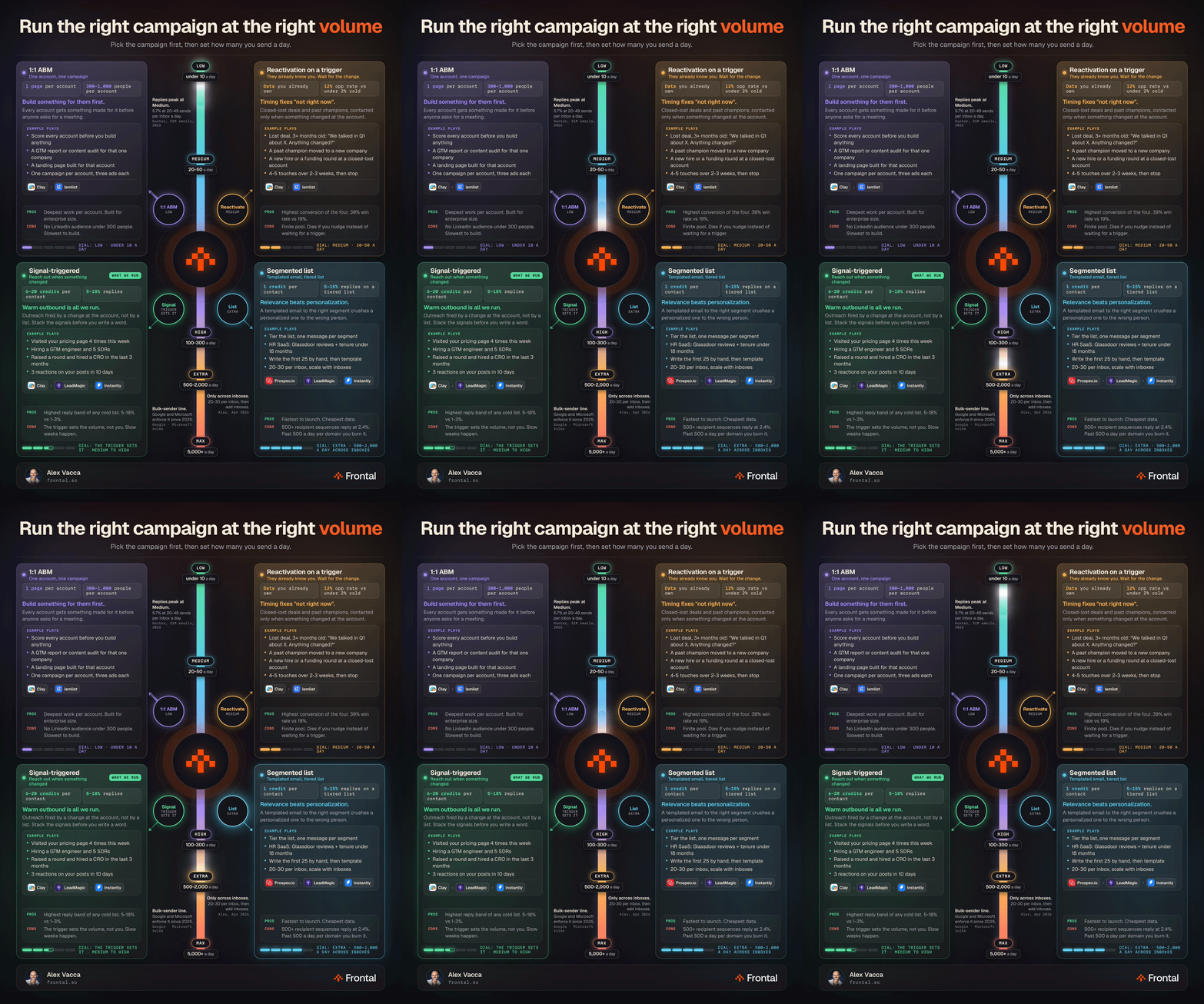
Our best campaign reaches fewer than 10 people a day. Our larger one sends 2,000 emails. Same team, same tools. The difference is what an account is worth to us. The more it's worth, the fewer we send. Four campaigns, and the volume each one can take. 1/ Signal-triggered Someone hit your pricing or booking page four times this week, a company is hiring a GTM engineer and five SDRs, or a round closed and a CRO started within three months. That's the list. Whatever fired this week sets the volume, and some weeks nothing fires. Our signal stacking campaigns reply at 5 to 18%. A static list gets less than 1%. Runs on Clay, LeadMagic and Instantly.ai. 2/ One account, one campaign A GTM report or content audit built for that single company, a landing page nobody else will ever see, and one ad campaign with three creatives. Under 10 accounts a day. LinkedIn won't run ads to fewer than 300 people, so the account needs 300 or more employees on the platform before this is even possible. Runs on Clay and lemlist. 3/ Reactivation A lost deal from three months ago, or a champion who moved companies. "We talked in Q1 about X. Anything changed?" Timing fixes a lot of "not right now". Former customers are a huge source of new deals. Track signals to reach out to them once somethign has changed for them. Runs on Clay and lemlist. 4/ Segmented list Relevance beats personalization. Tier the list, write the first 25 by hand, then template the rest. 20 emails/day per inbox, 500 to 2,000 a day across inboxes. Adding inboxes is the only way to scale it. Pushing one harder just burns it. Runs on Prospeo.io, LeadMagic and Instantly. The top 10% of senders by positive reply rate run the smallest campaigns. Same tools as everyone else, opposite strategy. Which of these four have you never run?
- LINKEDIN · IMAGESince 25 Sept 2026
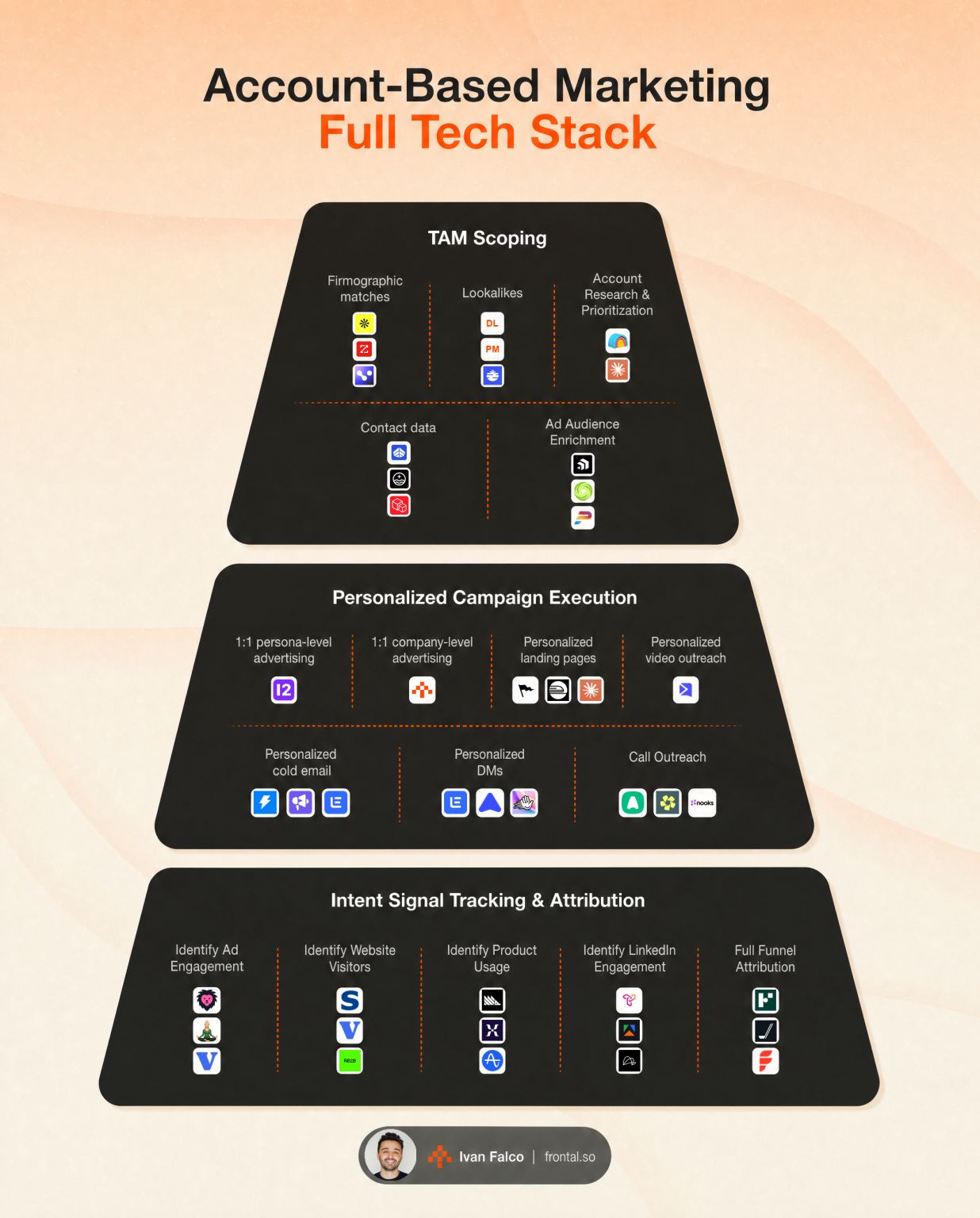
"We do ABM" is the biggest lie in B2B marketing. Picking 500 accounts and emailing all of them the same thing is just a mailing list with a bigger budget. Actual ABM means you know which accounts are paying attention this week, and you spend accordingly. Most teams have no clue. They built the list in January and haven't looked up since. Here's what running it for real takes - 3 layers, in order 👇 1. TAM Scoping - decide who you go after This decides your ceiling, and everything downstream inherits it. › Firmographic matches: Apollo.io, ZoomInfo, Cognism › Lookalikes: Ocean.io › Account research & prioritization: Clay , Claude › Contact data: AI Ark, FullEnrich, Prospeo › Ad audience enrichment: ContactLevel, Limadata, Primer 2. Personalized Campaign Execution - reach them like you know them Same account, one coordinated motion, all built around the problem that account is actually dealing with. › 1:1 persona-level advertising: Influ2 › 1:1 company-level advertising: Frontal AI › Personalized landing pages: Mutiny , Railway, Claude › Personalized video outreach: Sendspark › Personalized cold email: Instantly.ai, Smartlead, lemlist › Personalized DMs: Lemlist, Valley, HeyReach › Call outreach: Aircall, Orum 🥇, Nooks 3. Intent Signal Tracking & Attribution - see who's actually in market The layer most teams never build, and where the money quietly hides. It shows you pour budget into 20 accounts. › Identify ad engagement: Fibbler, ZenABM, Vector 👻 › Identify website visitors: Midbound, Vector, RB2B › Identify product usage: PostHog, Mixpanel, Amplitude › Identify LinkedIn engagement: Trigify.io, Apify, Linkup › Full funnel attribution: Funnel, HockeyStack, Factors.ai Do the first two, skip the third, and you're back to running expensive ads at a spreadsheet. Save this one. What's living in your stack that didn't make the list?
- LINKEDIN · IMAGESince 25 Sept 2026
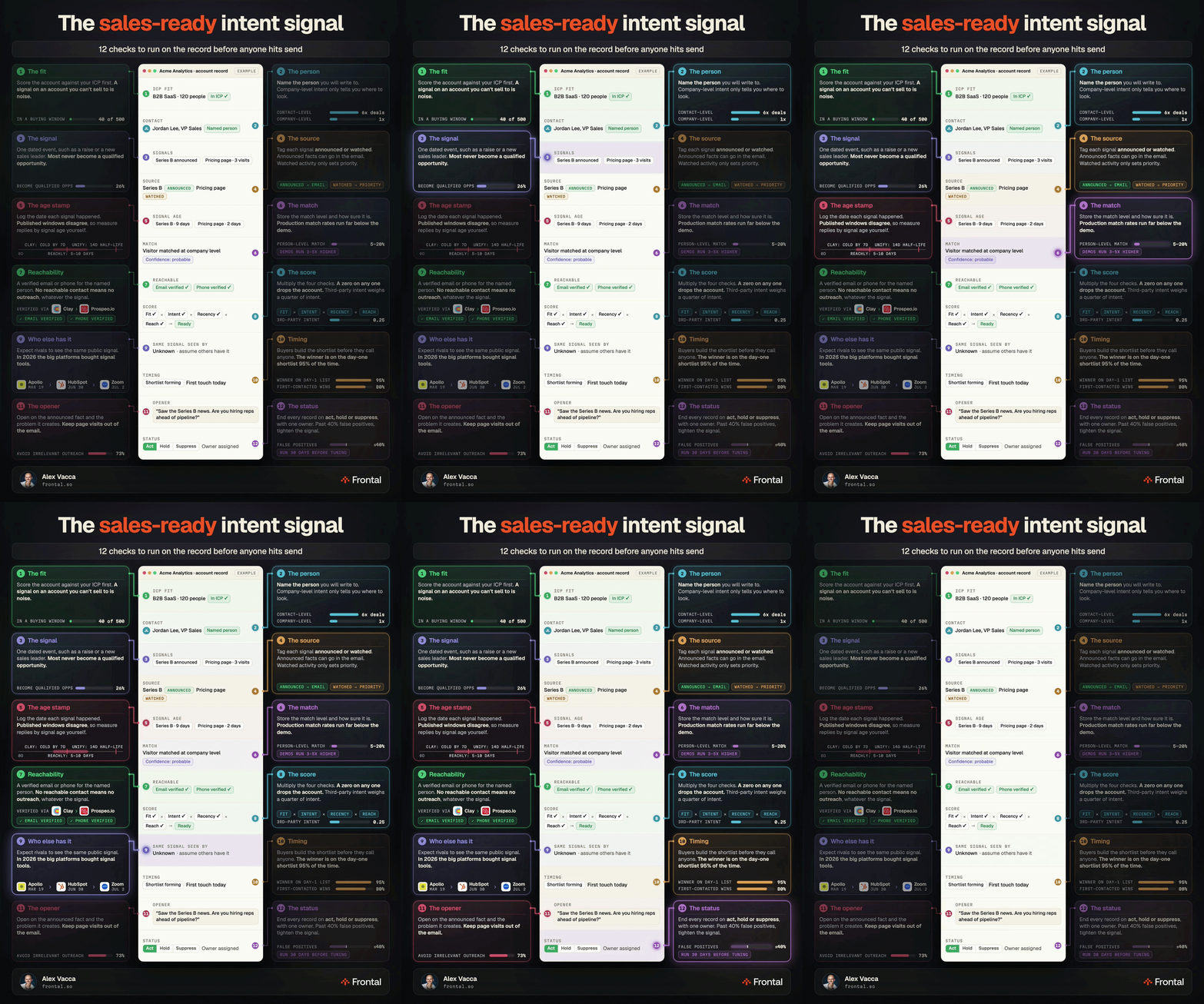
Our signal stacking campaigns reply at 5 to 18%. A static list gets less than 1%. The signal itself is only check 3 of the 12 I'd run before anyone hits send. All 12, in the order I'd run them on the account record 👇 1. Fit Score the account against your ICP first. Roughly 40 of 500 accounts that fit are in a buying window. 2. Person Name who you'll email, because at company level you only know where to look. HubSpot's team reported 6x more deals from contact-level intent than company-level. 3. Signal One dated event, like a raise or a new sales leader. Only 26% of intent signals then became qualified opportunities. 4. Source Tag each signal announced or watched. A Series B is announced and can go in the email. 3 pricing-page visits are watched, so use them for priority, not in the email. 5. Age Log when each signal happened. For a pricing-page visit, it's cold in about a week. 6. Match Store the match level and how sure it is. A visitor-identification vendor matches 5 to 20% of visitors to a person in production and says demos run 3 to 5x higher. 7. Reachability If you can't verify an email or phone for the named person, don't send, however strong the signal. Verify inside Clay with Prospeo.io before you score. 8. Score. Unify's model multiplies fit, intent, recency and reachability, so a zero on any one drops the account. Third-party intent is a quarter of its intent weight. 9. Who else has it Assume competitors saw the same public signal. 10. Timing Buyers build the shortlist before they call anyone. The winner is on the day-one shortlist 95% of the time, and 81% buy from the vendor they spoke to first. 11. Opener. Open on the announced fact and the problem it creates. Eg. The series B signal and the board's pressure to grow pipeline. Gartner found 73% of B2B buyers actively avoid suppliers who send irrelevant outreach. 12. Status. End every record on act, hold or suppress, with one owner. Run it 30 days before tuning, then tighten if over 40% of the accounts you marked hot produced no pipeline. Run your last 20 signal-triggered sends through the 12. And tell me how many stop at check 1, 2 or 7 👇
- LINKEDIN · IMAGESince 25 Sept 2026
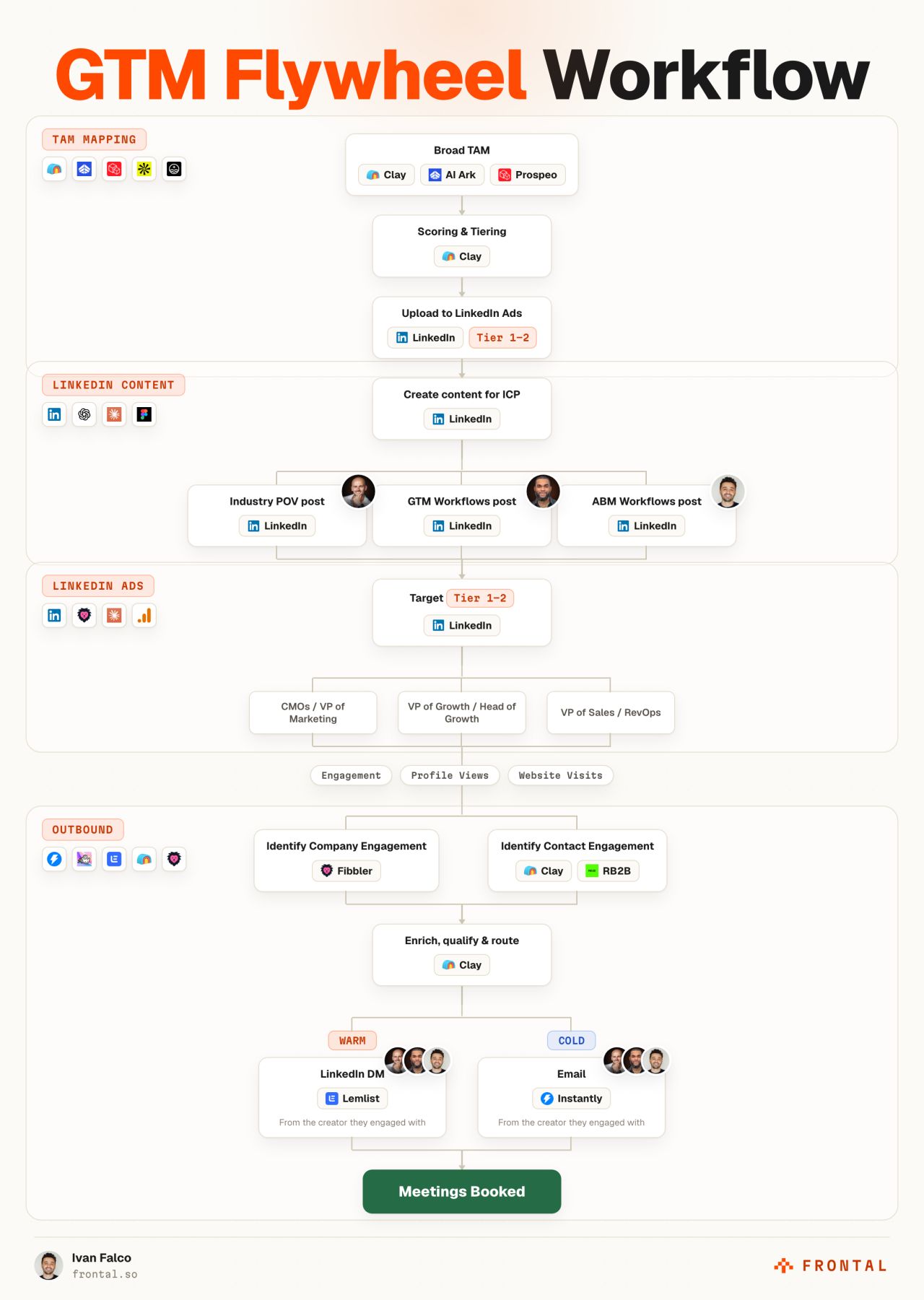
Here's the exact GTM flywheel we use to turn LinkedIn into $5M in pipeline: Outbound, content and ads, in one workflow: 1 - TAM Mapping First, you need to know exactly who you're selling to. We build our full TAM in Clay, enriched with AI Ark, Prospeo and FullEnrich - firmographics, tech stack, funding, persona signals, verified emails. Then we score and tier every account: who has the highest LTV, which titles close fastest, which segment converts. That gives us a clean Tier 1-2 list, and we upload it straight into LinkedIn Ads. One source of truth, every account scored and every persona mapped. 2 - LinkedIn Content Then we create content for that exact ICP, across the team, each on a different angle: Alex Vacca - gives their industry POV in GTM and B2B tech Kenny Damian - shares our outbound & GTM workflows Me - I post about our ABM + ads engineering plays Every post is written for the personas sitting in our TAM, and it runs thousands of impressions a week. But we don't stop at organic. 3 - LinkedIn Ads We target the Tier 1-2 list from step 1, broken down by persona: - CMOs and VPs of Marketing - VPs and Heads of Growth - VPs of Sales and RevOps. Then we take our best-performing organic posts and run them as Thought Leader Ads against that list. I only keep the posts above 10% engagement rate, so I know our ICP is noticing us. Now they see us every time they open their feed. Nothing is random, every impression is deliberate. 4 - Signal-Based Outbound This is where it compounds. We drive engagement, profile views, and website visits from our exact ICP. And every action becomes a signal. - Fibbler surfaces the companies engaging in our ads - RB2B who is visiting our side - Clay identifies the contacts engaging with our posts Then we enrich, qualify, and route every lead. From there: - Warm leads get a LinkedIn DM (lemlist) - Cold leads get an email (Instantly.ai) And the outreach always comes from whoever's content they engaged with, so by the time we land in their inbox, they've been seeing us for weeks. That's how the 3 motions work in tandem to drive more meetings.
- LINKEDIN · IMAGESince 25 Sept 2026
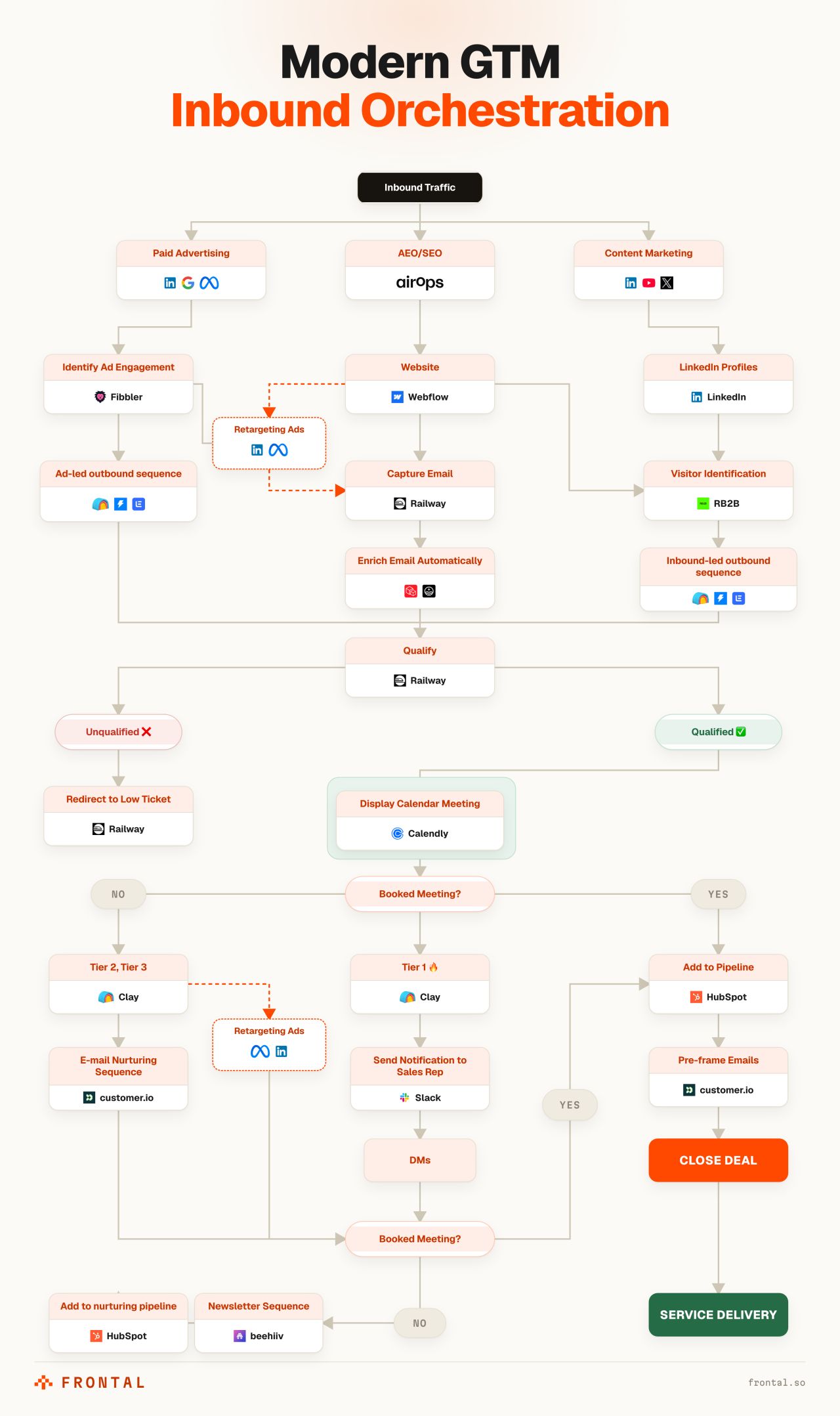
This is how to get 40% more booked meetings out of the inbound you already have. If you're running paid media or any serious inbound motion, you're already spending to generate the traffic. Most teams build a nurture sequence after someone submits an email and stop there. But there's a gold mine of signals your sales team isn't acting on: → Visitors who never fill a form → Ad engagers nobody follows up → People who view your profile or posts → Intent signals that go nowhere Here's the whole inbound engine 👇 I built the version attached in my first months at ColdIQ, when we were just under $2M ARR. 12 months later we were $7M+ and LinkedIn was our #1 pipeline channel. 1) Capture every signal, not just form-fills Most teams wait for a form. We track intent across the whole surface: → Website visits (RB2B) → Ad engagement (Fibbler) → Profile & post views → Email captures (Railway) Every touch becomes a signal. 2) Enrich, score, qualify - fast Signals don't matter. Routing does. We enrich and score every account and persona in one place (Clay, Prospeo, FullEnrich). Qualified goes straight to a booked call. 3) Route everyone else (don't throw them away) Not ready ≠ useless. Unqualified goes to a lower-ticket offer or a nurture track. Not qualified now, maybe qualified later. 4) Turn signals into outbound - automatically Every engagement routes into follow-up while the account is still warm, so outbound only ever touches people already raising their hand. Retargeting ads run as air cover the whole way. 5) Book → pipeline → close → deliver Pre-frame emails fire before the call to lift show rates (Customer.io). Everything syncs to your CRM (HubSpot). Every booked meeting traces back to a signal you can measure. And it compounds: inbound creates signals → signals trigger workflows → workflows create pipeline → pipeline creates proof → proof makes inbound stronger. Tools in the stack: AirOps , FullEnrich, Fibbler, Instantly.ai, lemlist, RB2B, Railway, Customer.io
6 of 69 adsSign up to see every Frontal AI ad, filter by format and date, and get alerts on new ones.
See all 69 adsWatch the companies you care about.
Filter every ad by industry, country, format and network, and get alerts when a company you watch starts running new ads.