On air · 2 of 3 networks
Forest Stewardship Council
- fsc.org
- Government & Non-profit
- DE
- 837 employees
Forest Stewardship Council’s ads on LinkedIn, Meta and Google, recorded by adsrunning. Browse the latest here for free. Sign up free to see all 86. Watch Forest Stewardship Council with Starter to get each new one in your feed.
Watchlist with Starter · $49/mo
| Network | Status | Live ads | Nov 2025LinkedIn activity · 52 weeksOct 2026 | Checked | Next step |
|---|---|---|---|---|---|
| Running | 1 | Checked 28 Oct 2026 | See all 86 ads → | ||
| Meta | None recorded | 0 | No active ads recorded on the Meta Ad Library | Checked 16 Oct 2026 | Collect them with the API → |
| Running | 86 | Ads on the Google Ads Transparency Center | Checked 29 Oct 2026 | Collect them with the API → |
Forest Stewardship Council has 1 live LinkedIn ad. Its Facebook page had no active ads on 16 Oct 2026, and we recorded 86 Google ads on 29 Oct 2026.
Latest ads
- LINKEDIN · FOLLOWSince 10 Oct 2026
Get the latest jobs and industry news
- LINKEDIN · IMAGESince 16 Jun 2026
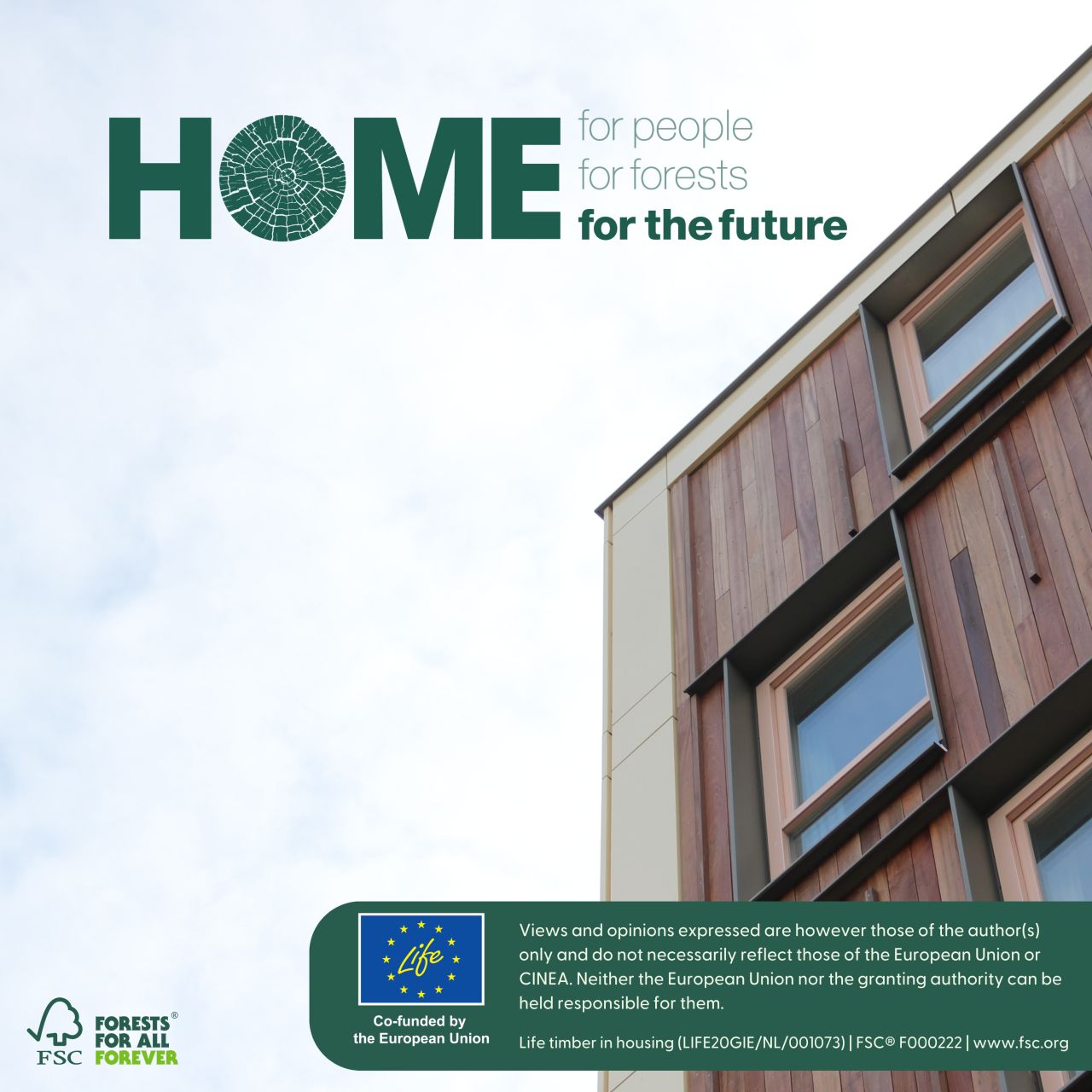
Every major shift in how we build starts the same way. Someone looks at the evidence and decides the old assumptions no longer hold. For timber construction in social housing, that moment is now. The Forest Stewardship Council (FSC) spent five years with HOME for the Future producing the evidence base the sector has been missing. Total cost of ownership over 40 years. Lifecycle analysis. Construction stored carbon calculations. Professional education built on verified science. The transition to timber does not require a leap of faith. It requires access to the right information, and the willingness to act on it. Both are now available.
- LINKEDIN · IMAGESince 16 Jun 2026
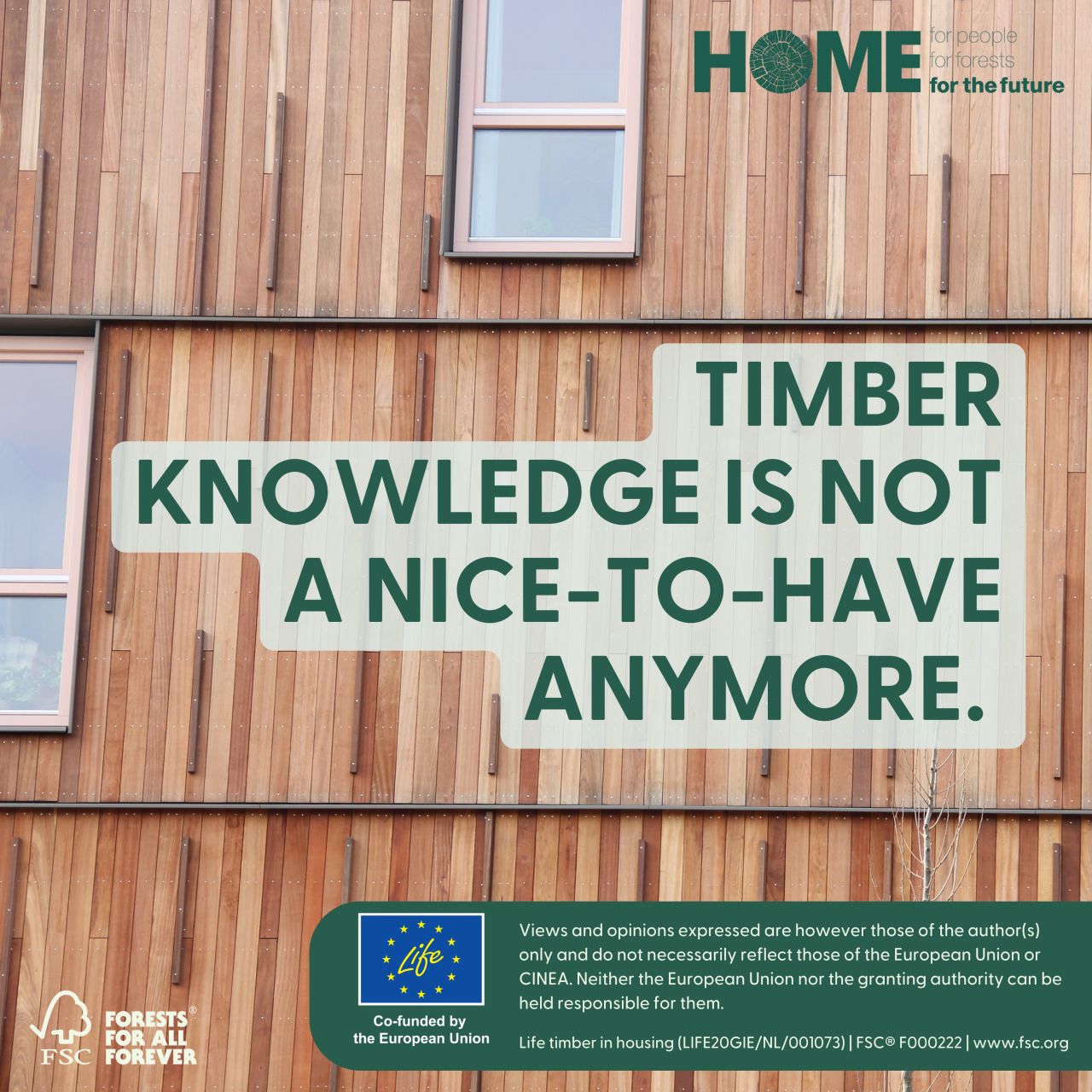
Timber knowledge is not a nice-to-have anymore. In a sector where material decisions are increasingly scrutinised for climate performance, regulatory compliance, and long-term cost, knowledge is not just a professional asset. It is a competitive one. The architects, project managers, and sustainability advisors who can speak fluently about lifecycle carbon, structural timber systems, and facade performance are the ones being asked into the room earlier. That gap is widening. Whole-life carbon disclosure becomes mandatory in 2028. The professionals who have already built their timber knowledge base are better placed to answer those questions, and to shape the projects that follow. The Sustainable Building with Timber MOOC, developed by TU Delft, ranked third globally for architecture, offers exactly that foundation. Six modules. Free to access. Self-paced. Over 4,500 professionals from more than 100 countries already signed up for the course, with an average rating of 8 out of 10. These professionals are already applying that knowledge in procurement conversations, design briefs, and sustainability assessments that others are still catching up on.
- LINKEDIN · IMAGESince 16 Jun 2026
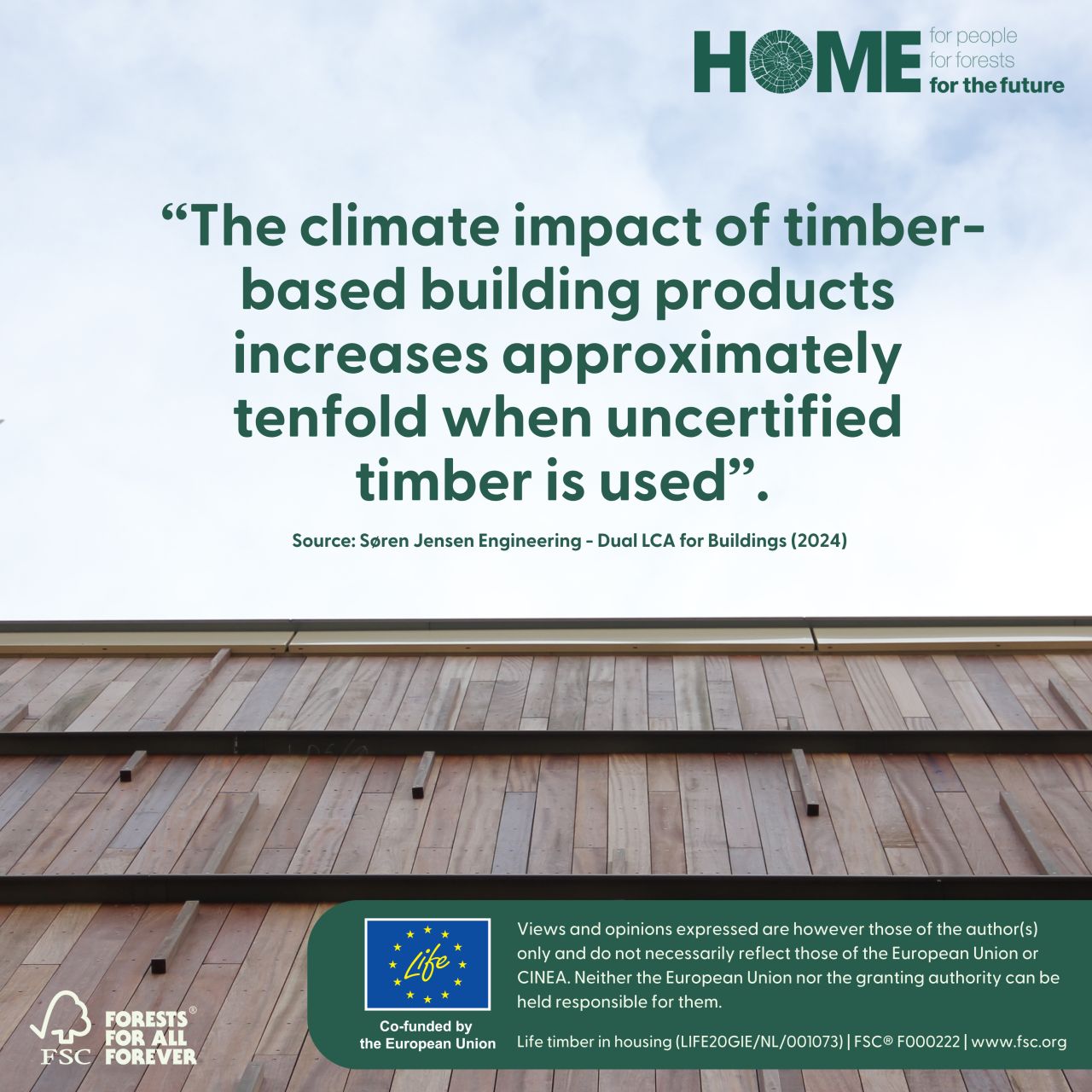
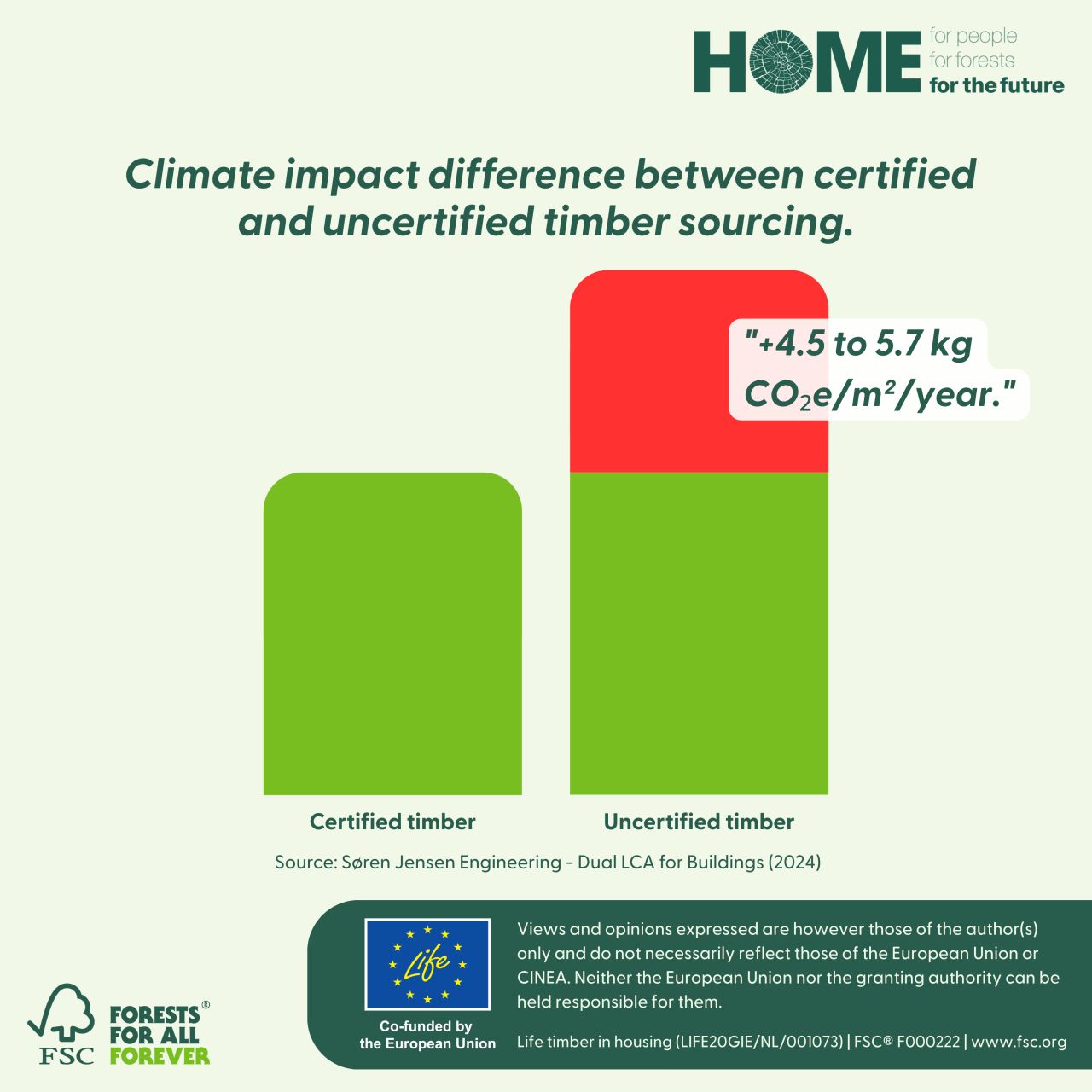
The climate impact of timber-based building products increases approximately tenfold when uncertified timber is used. That is not a policy position. It is the finding of Søren Jensen Engineering, an independent structural engineering firm, after applying a dual lifecycle assessment method to three residential timber buildings over a 50-year reference period. Whole-life carbon disclosure becomes mandatory across the EU in 2028. The methodology is in the report.
- LINKEDIN · IMAGESince 16 Jun 2026
The difference between certified and uncertified timber is not a procurement question. It is 4.5 to 5.7 kg CO₂e per square metre, per year. Søren Jensen Engineering applied a dual lifecycle assessment method to three residential timber buildings, calculating carbon performance across a 50-year period. The central finding is precise: the absence of certified timber sourcing adds 4.5 to 5.7 kg CO₂e/m²/year to a building's climate impact. For two of the three projects studied, that difference alone determines whether a building meets or exceeds current carbon limit values for new residential construction in their country. The method also quantifies the climate value of designing for reuse. Timber structural elements built to be disassembled and used again keep their stored carbon out of the atmosphere beyond the first building lifecycle. The potential is calculated at 2.9 to 4.2 kg CO₂e/m²/year, the single largest positive contribution in the entire assessment. With whole-life carbon disclosure becoming mandatory across the EU from 2028, this methodology offers design teams a practical tool for making material decisions before they become compliance problems.
- LINKEDIN · IMAGESince 16 Jun 2026
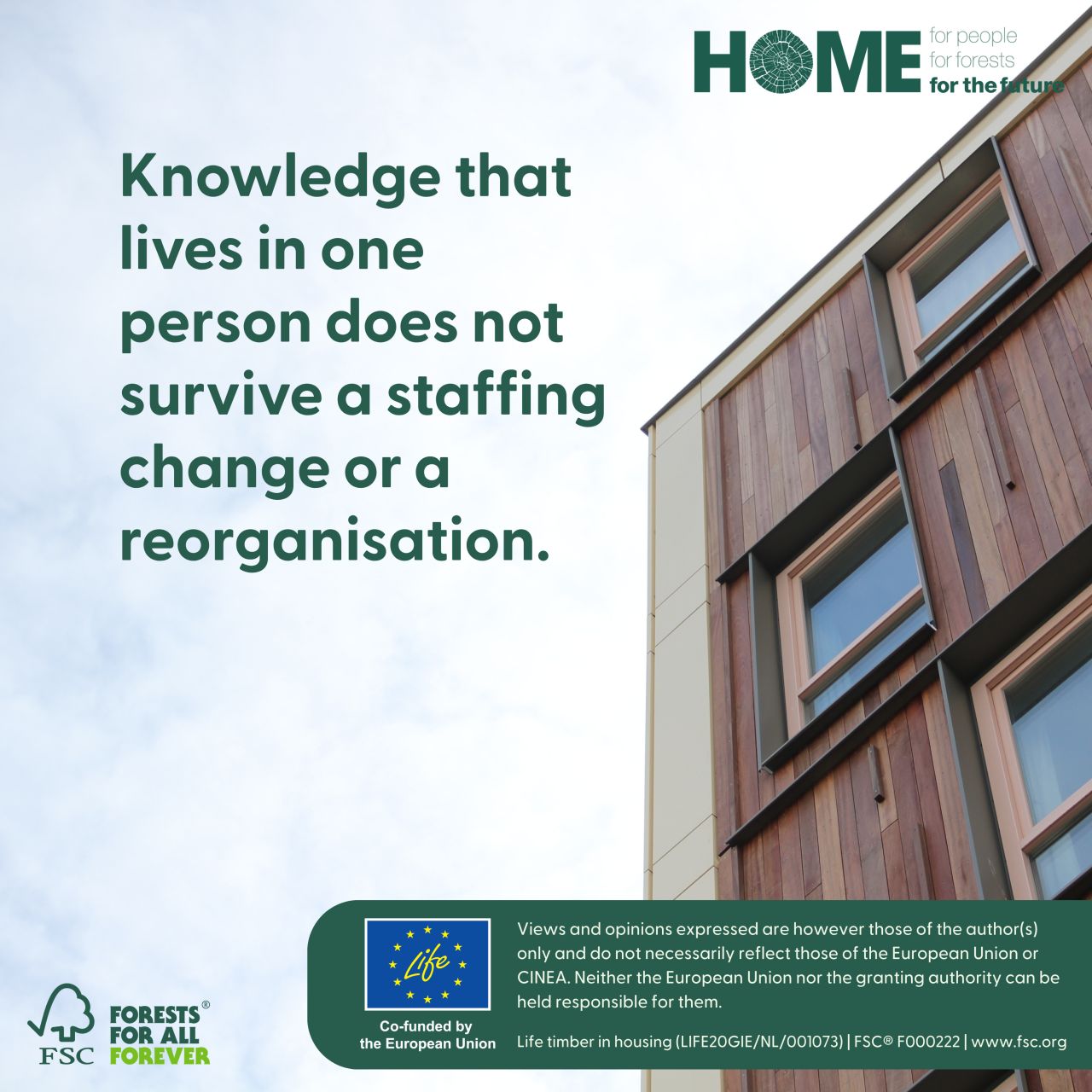
One person in your organisation understanding timber construction is a start. An entire project team understanding it is what changes the next procurement decision. Knowledge that lives in one person does not survive a staffing change, a reorganisation, or a handover to a new project lead. Knowledge embedded in a team, tested in discussion, and connected to real procurement questions is what actually shifts how an organisation specifies. The Timber Construction Course for Housing Corporations was built for exactly this. Developed by FSC together with nine housing corporations and delivered to more than 200 organisations since 2022, it works because it was built by and for the people who actually make timber construction decisions. The Train-the-Trainer Kit makes that programme available to any organisation in Europe, fully adaptable to local regulations and context. You do not need to start from scratch. You start from what 200 corporations already found worth doing. FSC offers free support to organisations that want to develop or adapt the training.
6 of 86 adsSign up to see every Forest Stewardship Council ad, filter by format and date, and get alerts on new ones.
See all 86 adsWatch the companies you care about.
Filter every ad by industry, country, format and network, and get alerts when a company you watch starts running new ads.