Not on air · 2 of 3 networks checked
Flinn.ai
- flinn.ai
- Healthcare & Life Sciences
- AT
- 76 employees
Flinn.ai’s ads on LinkedIn, Meta and Google, recorded by adsrunning. Browse the latest here for free. Sign up free to see all 122. Watch Flinn.ai with Starter to get each new one in your feed.
Watchlist with Starter · $49/mo
| Network | Status | Live ads | Nov 2025LinkedIn activity · 52 weeksOct 2026 | Checked | Next step |
|---|---|---|---|---|---|
| None recorded | 0 | Checked 30 Oct 2026 | See all 122 ads → | ||
| Meta | Not checked | — | |||
| Recently | 23 | Ads on the Google Ads Transparency Center | Checked 2 Oct 2026 | Collect them with the API → |
Flinn.ai has no live LinkedIn ads. We recorded 23 Google ads on 2 Oct 2026.
Latest ads
- LINKEDIN · IMAGESince 21 Oct 2026
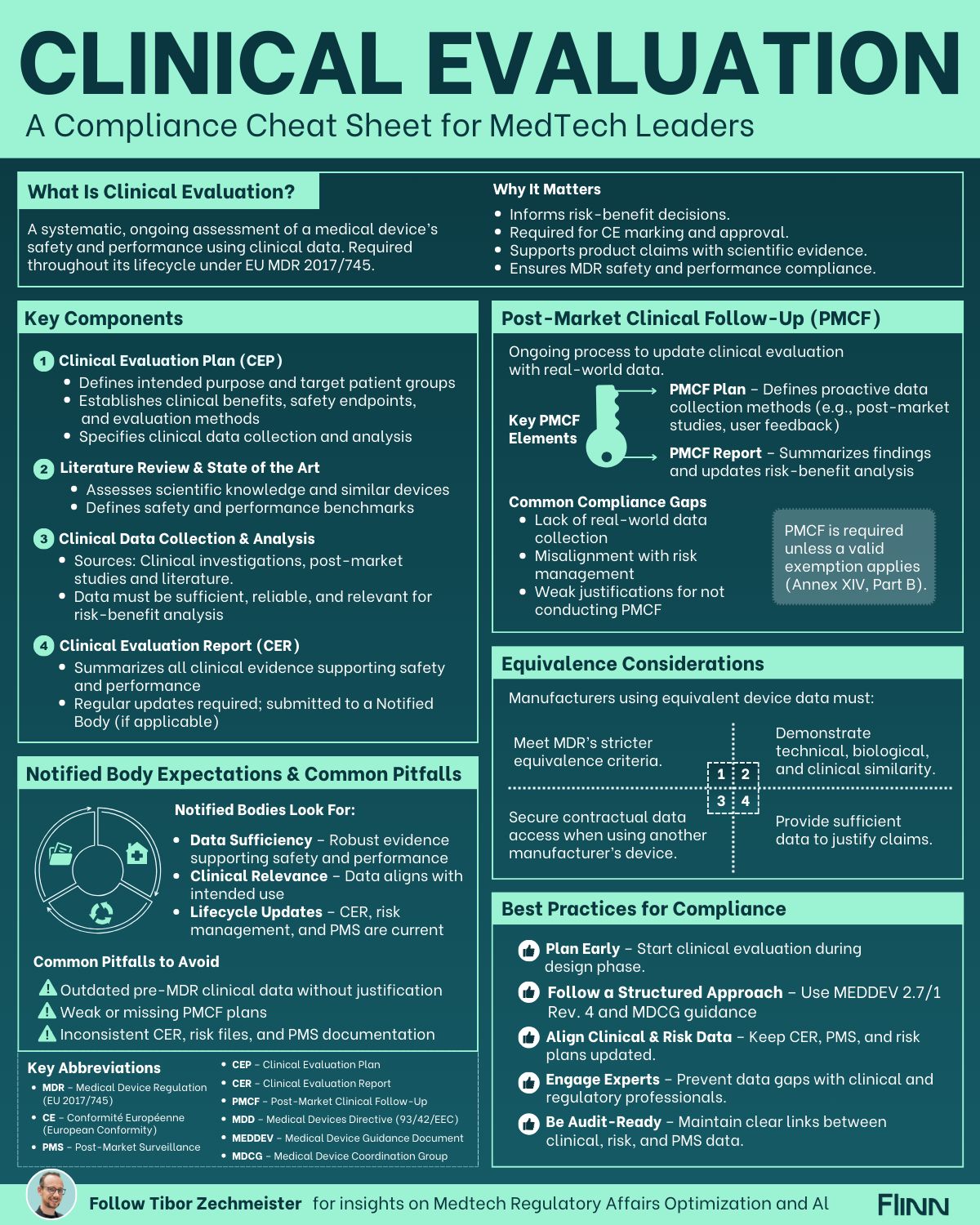
Clinical evaluation is the most underestimated challenge in your MDR compliance journey. Most manufacturers focus heavily on QMS documentation and technical files. But it's your clinical evaluation that often becomes the bottleneck. Why? Because it requires both scientific rigor and regulatory precision. And notified bodies are scrutinizing this area more than ever before. The stakes are clear: insufficient clinical data means delayed market access or even rejection. So what does a compliant clinical evaluation actually look like? Here are 5 essential elements every MedTech leader needs to master: Clinical Evaluation Plan (CEP) ↳ This isn't just a document. It's your roadmap for success. ↳ Define specific endpoints that align with your intended purpose. ↳ Remember that vague objectives lead to undefined outcomes. Literature Review Strategy ↳ Simply collecting studies isn't enough anymore. ↳ You need a systematic search methodology with clear inclusion/exclusion criteria. ↳ Document why certain studies were rejected, auditors always ask this. Clinical Data Sufficiency ↳ "Sufficient" clinical data is subjective until you define it. ↳ Create a clear threshold for what constitutes adequate evidence. ↳ Pre-MDR data often falls short of current expectations. Post-Market Clinical Follow-Up (PMCF) ↳ This isn't optional. It's a fundamental part of your clinical evaluation. ↳ Notified bodies expect proactive data collection, not just passive surveillance. ↳ The days of "we have no complaints" as sufficient PMCF are long gone. Equivalence Justification ↳ The bar for equivalence has been raised significantly under MDR. ↳ You need access to technical documentation of equivalent devices. ↳ Without contractual agreements, equivalence claims are increasingly difficult to defend. Clinical evaluation isn't a one-time task. It's a continuous process throughout your device's lifecycle. The manufacturers who succeed are those who integrate clinical thinking from design phase through post-market surveillance. P.S. What's been your biggest challenge with clinical evaluations under MDR? ⬡⬡⬡⬡⬡⬡⬡⬡⬡⬡⬡⬡⬡⬡⬡⬡⬡⬡⬡⬡⬡⬡⬡⬡⬡⬡⬡⬡⬡⬡⬡⬡⬡⬡⬡⬡⬡⬡⬡⬡⬡⬡ MedTech regulatory challenges can be complex, but smart strategies, cutting-edge tools, and expert insights can make all the difference. I'm Tibor, passionate about leveraging AI to transform how regulatory processes are automated and managed. Let's connect and collaborate to streamline regulatory work for everyone! #automation #regulatoryaffairs #medicaldevices
- LINKEDIN · IMAGESince 17 Oct 2026
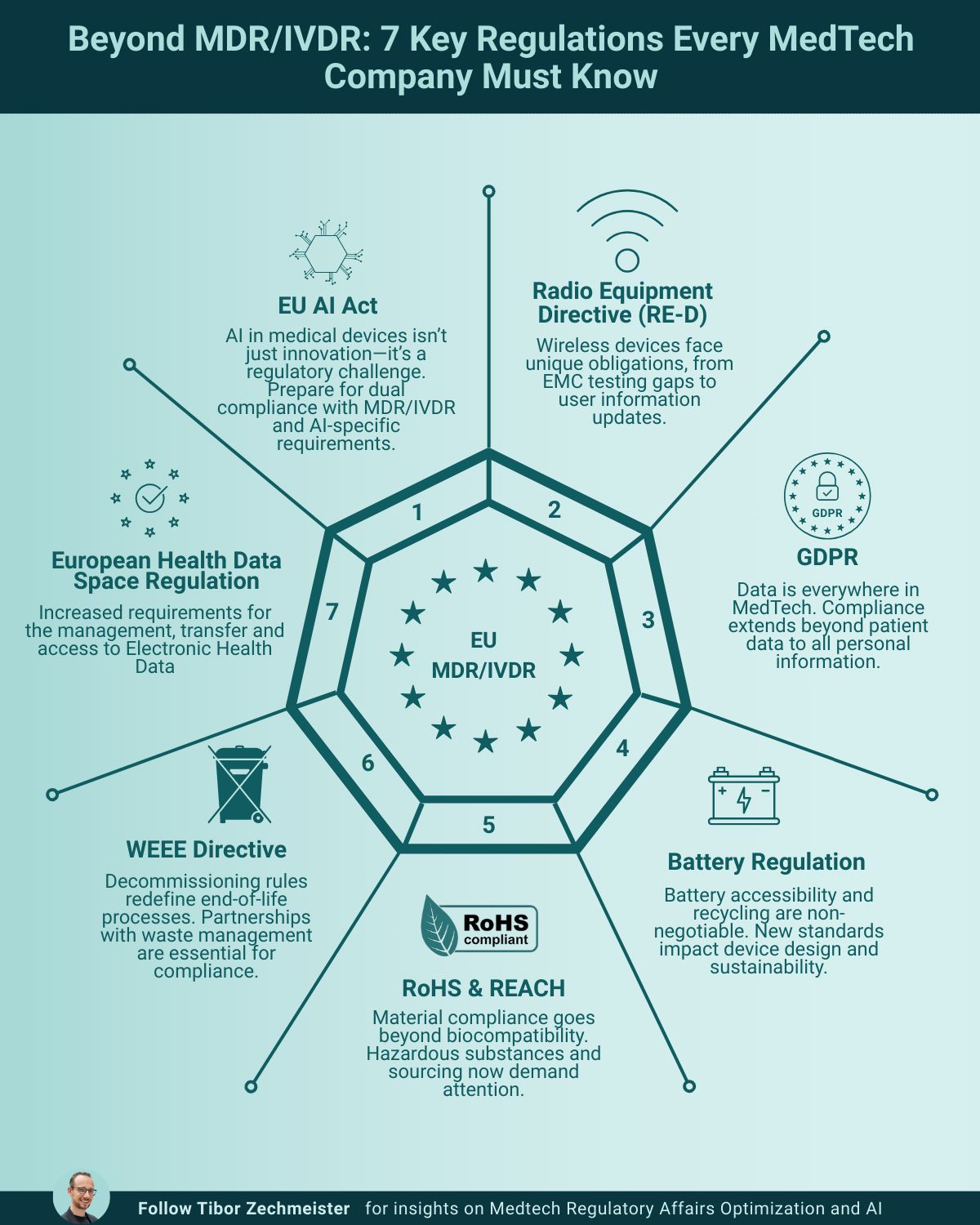
MDR/IVDR Are Just the Tip of Your Regulatory Iceberg; Look Beyond Them A cornerstone of successful medical device development is identifying all regulatory requirements. The MDR (Regulation (EU) 2017/745) and IVDR (Regulation (EU) 2017/746) provide a vast catalog of device requirements and company procedures. Standards then offer additional details for compliance. However, many see this as the entire iceberg and assume it’s enough for full compliance. The reality is different. Medical devices and manufacturers often need to comply with multiple regulations. It’s crucial to identify all applicable regulations beyond the obvious ones. Here are 7 regulations and directives many miss but are often essential: EU AI Act (Proposal COM/2021/206) → Crucial for any medical device incorporating AI. → Adds a certification framework beyond MDR/IVDR. → Overlapping requirements mean a thorough gap analysis is essential. European Health Data Space Regulation (Proposal COM/2022/197) → Central to unlocking cross-border health data sharing in the EU. → A framework for primary and secondary use of electronic health data. → Compliance requires alignment with GDPR and national health laws. Radio Equipment Directive (2014/53/EU) → Applies to devices with wireless communication (e.g., Bluetooth). → EMC testing under MDR isn’t enough for compliance. → Requires additional IFU content, such as wireless frequency specifications. General Data Protection Regulation (Regulation (EU) 2016/679) → Applies to all devices interacting with personal data. → Covers even non-sensitive data, beyond health-related information. → Expected since its enforcement began in 2018. Battery Regulation (Proposal COM/2020/798) → Relevant for devices with rechargeable or disposable batteries. → Mandates user access to batteries for removal or replacement. → Requires compliance with labeling and recycling standards. RoHS (Directive 2011/65/EU) and REACH (Regulation (EC) No 1907/2006) → Limit hazardous substances in device materials. → Biocompatibility doesn’t guarantee compliance with these regulations. → Crucial during material selection for physical devices. WEEE (Directive 2012/19/EU) → Governs proper decommissioning and disposal of electrical devices. → Includes exemptions for implantable and potentially infectious devices. → Often Requires agreements with waste management organizations. By identifying them early, the iceberg may remain large, but at least you’ll have transparency and control. P.S. What other regulations or directives would you add to this list? ⬡⬡⬡⬡⬡⬡⬡ MedTech regulatory challenges can be complex, but smart strategies, cutting-edge tools, and expert insights can make all the difference. I'm Tibor, passionate about leveraging AI to transform how regulatory processes are automated and managed. Let's connect and collaborate to streamline regulatory work for everyone! #automation #regulatoryaffairs #medicaldevices
- LINKEDIN · IMAGESince 15 Oct 2026
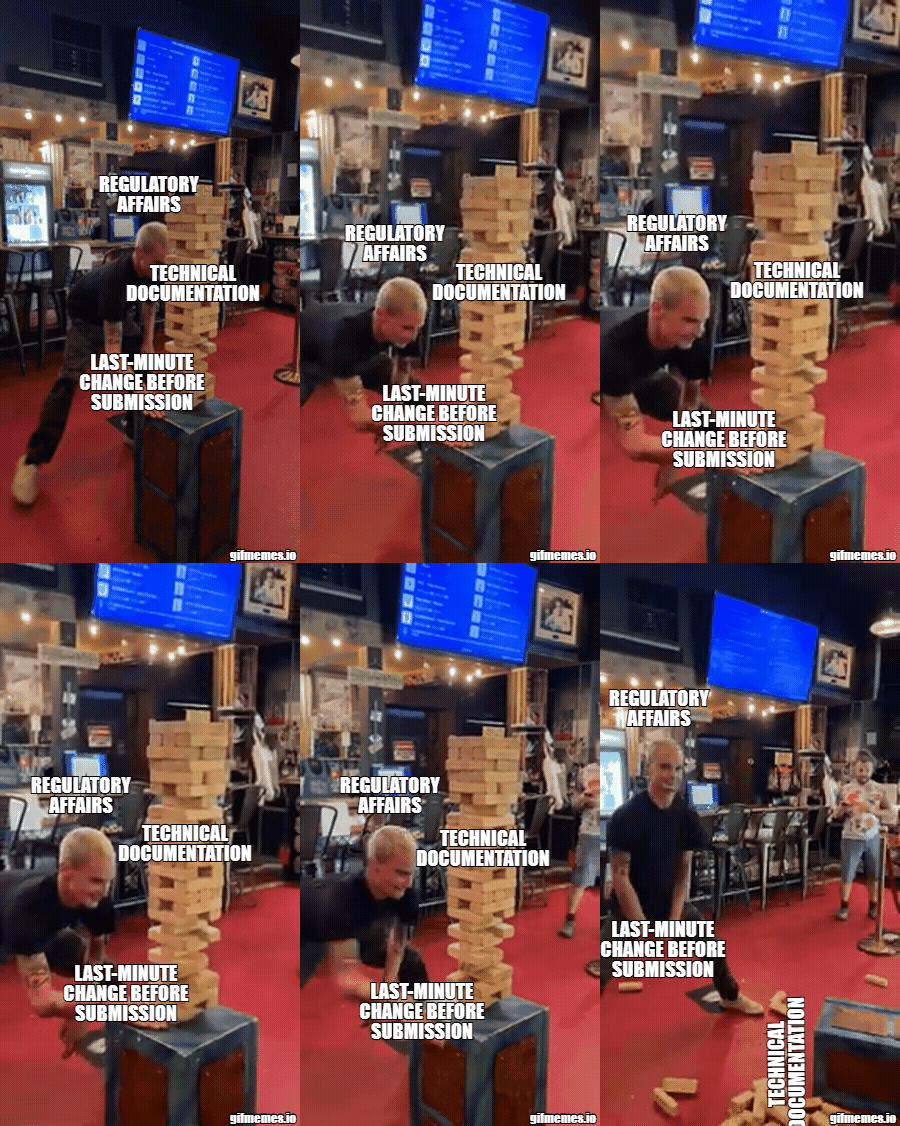
Last minute change before submission is how tech docs play Jenga 🧱😬 Everything looks stable, then one “tiny” update hits the technical documentation and the tower wobbles. It is not the change itself that hurts. It is the ripple effect: versions drift, references break, and reviewers find inconsistencies in minutes. The fastest way to turn a clean submission into a delay is touching the file without a controlled plan. Practical ways to stop the tower from collapsing: ↳ Set a document freeze date and a submission baseline, with version numbers for every deliverable in scope. ↳ Use a one page change impact checklist before approving any last minute update: risk management, verification reports, software versioning, labeling, clinical evaluation conclusions, and manufacturing instructions. ↳ Create a “no-touch window” for the final packaging, only corrections allowed, no new content unless safety critical. ↳ If a change is unavoidable, make it auditable: change request, rationale, approvals, and a clean list of updated documents. ↳ Re-export the submission package from the baseline, do not patch files manually in the folder. ↳ Do a final consistency sweep across the high-visibility docs: device description, IFU, labels, and summaries, looking for mismatched numbers, names, and versions. ↳ Keep a short “what changed since baseline” note ready, so the first reviewer does not have to guess. ⬡⬡⬡⬡⬡⬡⬡⬡⬡⬡⬡⬡⬡⬡⬡⬡⬡⬡⬡⬡⬡⬡⬡⬡⬡⬡⬡⬡⬡⬡⬡⬡⬡⬡⬡⬡⬡⬡⬡⬡⬡⬡ MedTech regulatory challenges can be complex, but smart strategies, cutting-edge tools, and expert insights can make all the difference. I'm Tibor, passionate about leveraging AI to transform how regulatory processes are automated and managed. Let's connect and collaborate to streamline regulatory work for everyone! #automation #regulatoryaffairs #medicaldevices
- LINKEDIN · IMAGESince 12 Oct 2026
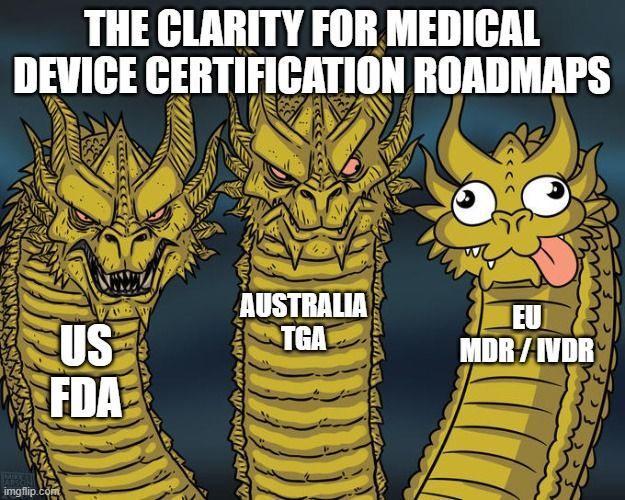
EU MDR and IVDR: the “special” head of the certification hydra 🐉🇪🇺 Founders often tell me the same thing: FDA feels like a path, EU feels like a puzzle. In the US you can follow one main playbook and one agency conversation. In Europe you have a regulation, guidance, standards, a Notified Body, and country-level pieces that all matter at once. It is not that the EU is impossible, it is that the roadmap is less explicit unless you build it yourself. How to turn the EU head into a usable route: ↳ Separate what is law vs what is guidance: MDR or IVDR text, then Implementing and Delegated Acts, then MDCG documents. Treat them differently in your plan. ↳ Track standards like a product dependency: watch harmonisation status (Official Journal), versions, and transition dates so you do not test to yesterday’s edition. ↳ Check if Common Specifications apply to your device category. If they do, they can change what “good enough” looks like. ↳ Build a “country overlay” sheet for your launch markets: language and labeling needs, local registration expectations, incident reporting pathways, and any extra national steps around clinical investigations. ↳ Treat clinical and data as national too: ethics submissions, site contracts, patient info sheets, and how GDPR expectations are implemented in the countries you run studies in. ↳ Ask your Notified Body what they will rely on most: which guidance, which standards, and what their sampling focus is. Document it and build to it. ↳ Maintain one living index: every guidance or national requirement you rely on, with a link, date, and where it is implemented in your QMS or tech file. ⬡⬡⬡⬡⬡⬡⬡⬡⬡⬡⬡⬡⬡⬡⬡⬡⬡⬡⬡⬡⬡⬡⬡⬡⬡⬡⬡⬡⬡⬡⬡⬡⬡⬡⬡⬡⬡⬡⬡⬡⬡⬡ MedTech regulatory challenges can be complex, but smart strategies, cutting-edge tools, and expert insights can make all the difference. I'm Tibor, passionate about leveraging AI to transform how regulatory processes are automated and managed. Let's connect and collaborate to streamline regulatory work for everyone! #automation #regulatoryaffairs #medicaldevices
- LINKEDIN · IMAGESince 12 Oct 2026
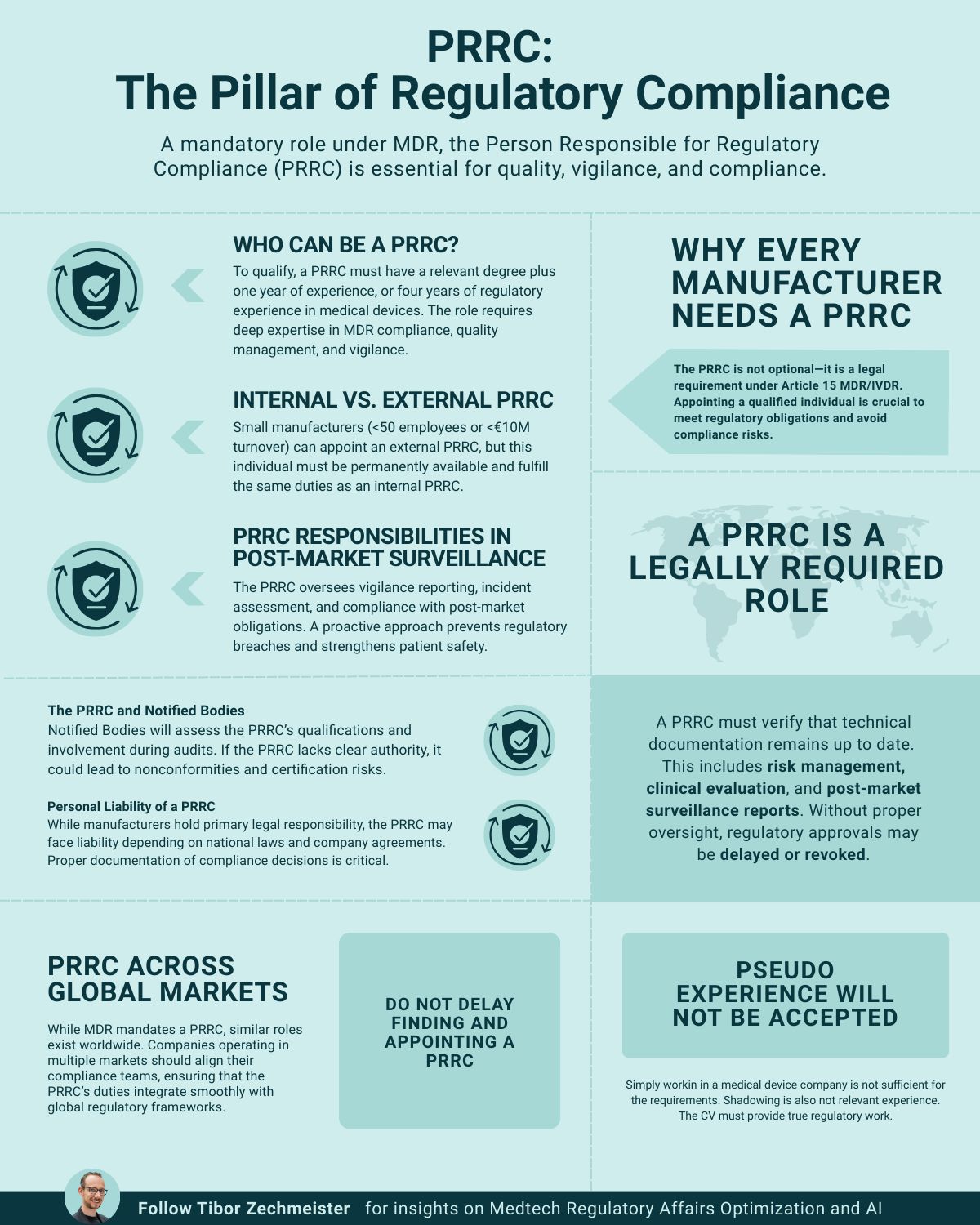
PRRC: The Hidden Champions of MDR Manufacturers Every medical device manufacturer under MDR must appoint a Person Responsible for Regulatory Compliance (PRRC). Sounds simple? In reality, this role is one of the most critical and high-stakes positions in regulatory affairs. Who qualifies as a PRRC? What are their exact responsibilities? And most importantly, what are the personal risks? Let’s analyse it. 1. What is a PRRC? ↳ A legally required role overseeing MDR compliance. ↳ Manages regulatory, quality, and vigilance activities. ↳ Mandatory for manufacturers and certain authorized representatives. 2. Minimum Requirements to Become a PRRC ↳ Degree + 1 year of experience in regulatory or quality. ↳ Or 4 years of professional experience in medical devices. ↳ Experience must be specific to MDR-related tasks. 3. Key Responsibilities of a PRRC ↳ Confirms product compliance before market release. ↳ Maintains and reviews technical documentation. ↳ Oversees post-market surveillance and vigilance. 4. Internal vs. External PRRC ↳ Internal PRRC is required for most manufacturers. ↳ Small companies (<50 employees or <€10M) may outsource. ↳ External PRRC must be permanently available. 5. PRRC Personal Liability ↳ PRRCs are usually not personally accountable for compliance failures. ↳ Liability depends on contracts and national laws. ↳ Clear documentation is key to protecting oneself. A skilled PRRC plays a crucial role in regulatory success. They make sure compliance is always maintained. Products are only released when they fully meet safety and quality standards. Post-market risks are continuously monitored and managed. The PRRC isn’t just a title. It’s the company’s regulatory backbone. P.S. Does your company have an internal or external PRRC? ⬡⬡⬡⬡⬡⬡⬡⬡⬡⬡⬡⬡⬡⬡⬡⬡⬡⬡⬡⬡⬡⬡⬡⬡⬡⬡⬡⬡⬡⬡⬡⬡⬡⬡⬡⬡⬡⬡⬡⬡⬡⬡ MedTech regulatory challenges can be complex, but smart strategies, cutting-edge tools, and expert insights can make all the difference. I'm Tibor, passionate about leveraging AI to transform how regulatory processes are automated and managed. Let's connect and collaborate to streamline regulatory work for everyone! #automation #regulatoryaffairs #medicaldevices
- LINKEDIN · VIDEOSince 2 Oct 2026
160 customers. 50+ MedTech companies. Two days in Vienna. This week, we hosted our first Flinn Thought Leader Conference.Together with customers from across Europe and the US, we spent two days on workshops, panels, and peer discussions around how AI is changing Regulatory Affairs, Quality Management, and Clinical Affairs, plus a look at where Flinn's product roadmap is heading next. We believe the transformation happening in MedTech shouldn't happen in isolation. These two days made it very clear how much we can learn from each other when we actually make time and space for it. A big thank you to everyone who joined us, and especially to our speakers: Matthew Christensen, Kristian Villumsen, Markus Pöttker, Alexander Reiprich, PhD, MSc, Stefan Menzl, Prof. Dr. Claudius Diez, M.D., Andreas Purde, Paola Vivoda, Stefan Fischer, Christian Muenster, Helmut Scherer, Nick Burmester, Markus Enderle, Tanja Knauer, Dr., Adam Kleinman, PhD, Daniel Prell and many more. Thank you for being part of our first one, definitely not our last. 🙌🏼
6 of 122 adsSign up to see every Flinn.ai ad, filter by format and date, and get alerts on new ones.
See all 122 adsWatch the companies you care about.
Filter every ad by industry, country, format and network, and get alerts when a company you watch starts running new ads.