On air · 1 of 3 networks
FleishmanHillard UK
- fleishmanhillard.co.uk
- Marketing & Advertising
- GB
- 181 employees
FleishmanHillard UK’s ads on LinkedIn, Meta and Google, recorded by adsrunning. Browse the latest here for free. Sign up free to see all 58. Watch FleishmanHillard UK with Starter to get each new one in your feed.
Watchlist with Starter · $49/mo
| Network | Status | Live ads | Nov 2025LinkedIn activity · 52 weeksOct 2026 | Checked | Next step |
|---|---|---|---|---|---|
| Running | 45 | Checked 30 Oct 2026 | See all 58 ads → | ||
| Meta | None recorded | 0 | No active ads recorded on the Meta Ad Library | Checked 20 Oct 2026 | Collect them with the API → |
| None recorded | 0 | No ads found on the Google Ads Transparency Center | Checked 29 Oct 2026 | Collect them with the API → |
FleishmanHillard UK has 45 live LinkedIn ads. Its Facebook page had no active ads on 20 Oct 2026, and we recorded no Google ads on 29 Oct 2026.
Latest ads
- LINKEDIN · FOLLOWSince 29 Sept 2026
Get the latest jobs and industry news
- LINKEDIN · JOBSince 16 Sept 2026
- LINKEDIN · VIDEOSince 22 Apr 2026
Our Digital Team at FleishmanHillard UK just put out something really cool — a Digital IP on The Era of Intentional Fragmentation 🧩 At first glance, today’s digital landscape looks chaotic. But it’s not 👀 Audiences aren’t scattering randomly. They are intentionally curating where they spend time, who they trust, and what they engage with. This shift is being driven by five key forces: 🔹 A growing trust recession across platforms and media 🔹 Platform bloat breaking the “everything app” model 🔹 Social gravity outweighing platform gravity (people over platforms) 🔹 Rising sensitivity to authenticity in an AI-saturated environment 🔹 Self-curation is becoming necessary to protect time, focus, and mental bandwidth What this means for brands: 📌 Reach alone is no longer enough. Relevance, credibility, and context matter more than ever. 📌 Real engagement is happening in smaller, purpose-built spaces — and organisations need to earn their place within them. Proud to be part of the team behind this work. If you’re thinking about how your audience strategy needs to evolve, this is worth a read. 👉🏻🔗 The full report: https://lnkd.in/e568Rb22
- LINKEDIN · IMAGESince 20 Apr 2026
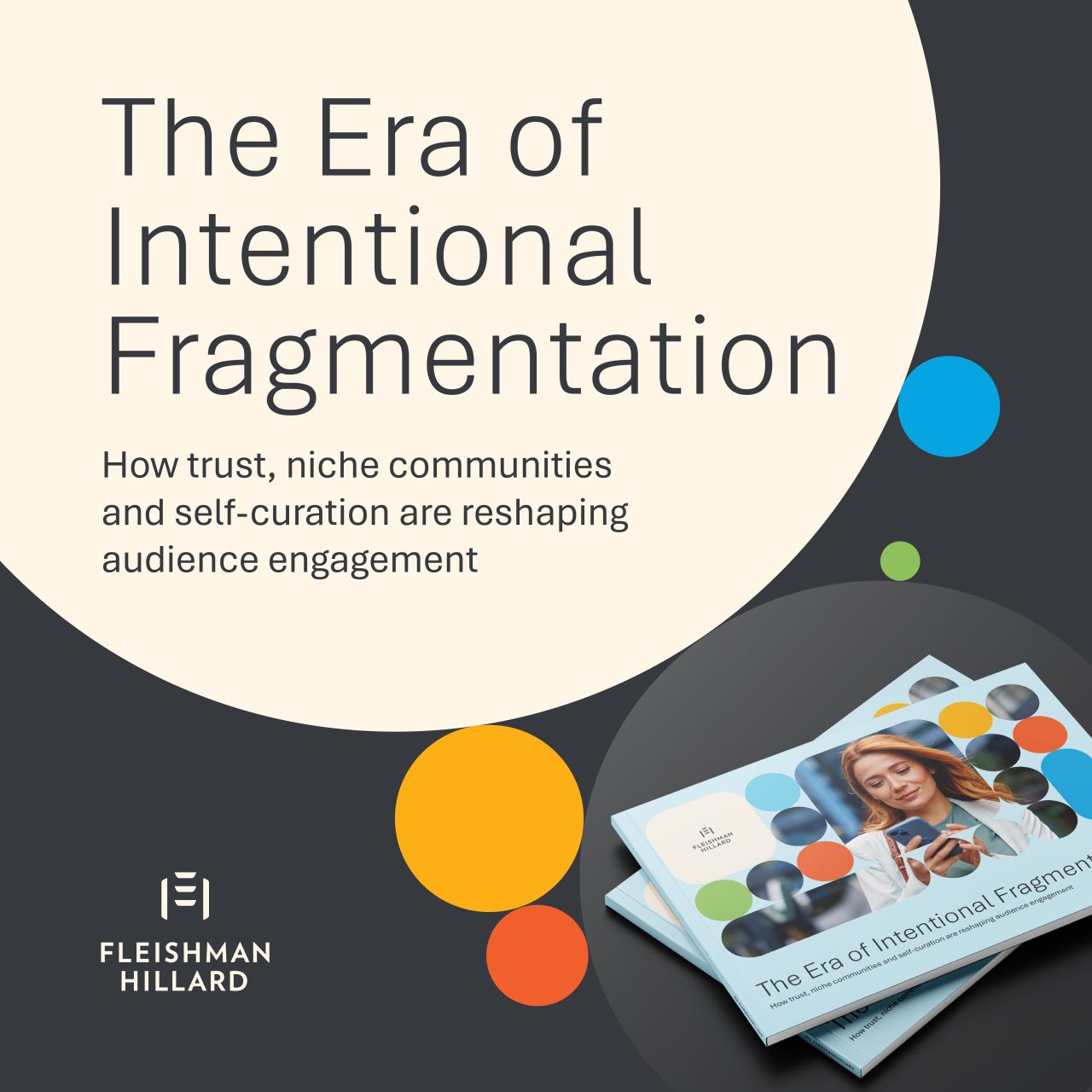
In a world where more brands and creators are competing for attention, it’s easy to assume audiences are overwhelmed... But we’re seeing a different story at FH. Rather than struggling to keep up, people are becoming far more intentional about what they engage with and where they engage with it. It’s not just that audiences are spread across more channels. They’re also far more selective, engaging based on context, mindset and trust in the moment. Fragmentation might feel chaotic from an advertiser’s point of view, but from an audience perspective, it’s pretty deliberate. People are building their own filters, and a lot of brands simply aren’t making the cut. The impact? You can still buy reach, but it gets inefficient quickly when relevance isn’t there. Getting in front of the right people, in the right context, with something that actually lands, is where the challenge (and opportunity) now sits. For paid teams, that means shifting focus towards: 👉 Tighter audience design (not just broader ICPs) 👉 Creative built for context and relevance 👉 Smarter sequencing across channels, not siloed activations If your strategy isn’t aligned to how people choose to engage, your campaigns quickly become noise. Our digital team has just launched a new report, The Era of Intentional Fragmentation, which explores this shift in more detail - why it’s happening, where audiences are going, and what it means for brands. It's a great read, and you can download it here: https://lnkd.in/eeMBw53n
- LINKEDIN · IMAGESince 14 Apr 2026
Some things are obvious… But others require you to dig a little deeper 🔍 Since joining FleishmanHillard UK, I have seen just how the Digital and TRUE Global Intelligence teams take our big questions and truly investigate the answers. ⚡️We are all aware of audience fragmentation. Working in digital makes it hard to avoid the reality that people aren’t using social media in the same way they once were… …what is harder to pinpoint is *why*. ❓ Our new report, 'The Era of Intentional Fragmentation', looks into just that – across 4 key groups: healthcare professionals, IT decision-makers, Gen Z and C-Suite leaders. For healthcare professionals (HCPs), this shift is clearly intentional. They aren’t just fragmenting – they’re filtering for survival: 📈 Managing a growing burden of patient misinformation 🔽 Narrowing their information sources to reduce information overload ✔️ Prioritising verification to ensure reliability For healthcare clients, that means: • Addressing patient misinformation and how that impacts HCPs work – providing a clear and impactful counter-narrative 📨 • Ensuring verification is at the centre of your comms – credible authorship and transparent source citation 💯 • Showing up in the spaces HCPs trust – don’t reinvent the wheel, meet your audience where they are and where they are already invested 🤝 • Acknowledging that HCPs engage in peer networks – they trust other clinicians, not companies. KOLs who authentically advocate for your brand will bring the biggest value 📢 💡 Ultimately, creating impactful comms isn’t about being the loudest voice, it’s about being in the right place with the right message. Read the report here 👉 https://lnkd.in/e568Rb22
- LINKEDIN · IMAGESince 10 Apr 2026
When was the last time you looked at a piece of content and thought – wow, I really feel like I know that person? Or even worse: have you caved in the temptation of using ChatGPT to mindlessly churn content pieces out… just making sure you get rid of the em-dash first, though! We live in the era of trust recession. 📉 Back when I was a teen, a polished IG feed meant status. It meant credibility, inspiration, something to aspire to. Now, it triggers scepticism. 👀 AI-generated noise, algorithmic manipulation (guilty! 🙋♀️), and misinformation make us doubt what’s real and what’s not. As a result, we filter aggressively when consuming content, and we abandon platforms en masse in favour of niche, peer-moderated online communities. Because we can see who the moderators are – and they’re human. In this context, the content we develop for organisations as marketers is being policed more than ever, even when it’s as authentic as it gets. The good news? 📣 Raw human voices now outcompete slick marketing 👍 Peer consensus beats algorithms 🔎Transparent sourcing beats design. Content consumption is an experience we all share – we’re sharing it right now, as you read this. So why shouldn’t trust be designed into this common human experience? I’m so proud of the research the Digital team at FleishmanHillard UK put together. If you’re a content developer, and you’ve noticed your audience scrolling and moving on (or, if you’ve been tempted by the ChatGPT easy mindless churning out), take a look at our report through the link in the comments 👇
6 of 58 adsSign up to see every FleishmanHillard UK ad, filter by format and date, and get alerts on new ones.
See all 58 adsWatch the companies you care about.
Filter every ad by industry, country, format and network, and get alerts when a company you watch starts running new ads.