On air · 2 of 3 networks
Fero Labs
- ferolabs.com
- Industry & Manufacturing
- US
- 29 employees
Fero Labs’s ads on LinkedIn, Meta and Google, recorded by adsrunning. Browse the latest here for free. Sign up free to see all 161. Watch Fero Labs with Starter to get each new one in your feed.
Watchlist with Starter · $49/mo
| Network | Status | Live ads | Nov 2025LinkedIn activity · 52 weeksOct 2026 | Checked | Next step |
|---|---|---|---|---|---|
| Running | 95 | Checked 28 Oct 2026 | See all 161 ads → | ||
| Meta | Not checked | — | |||
| Running | 6 | Ads on the Google Ads Transparency Center | Checked 29 Oct 2026 | Collect them with the API → |
Fero Labs has 95 live LinkedIn ads. We recorded 6 Google ads on 29 Oct 2026.
Latest ads
- LINKEDIN · IMAGESince 24 Sept 2026
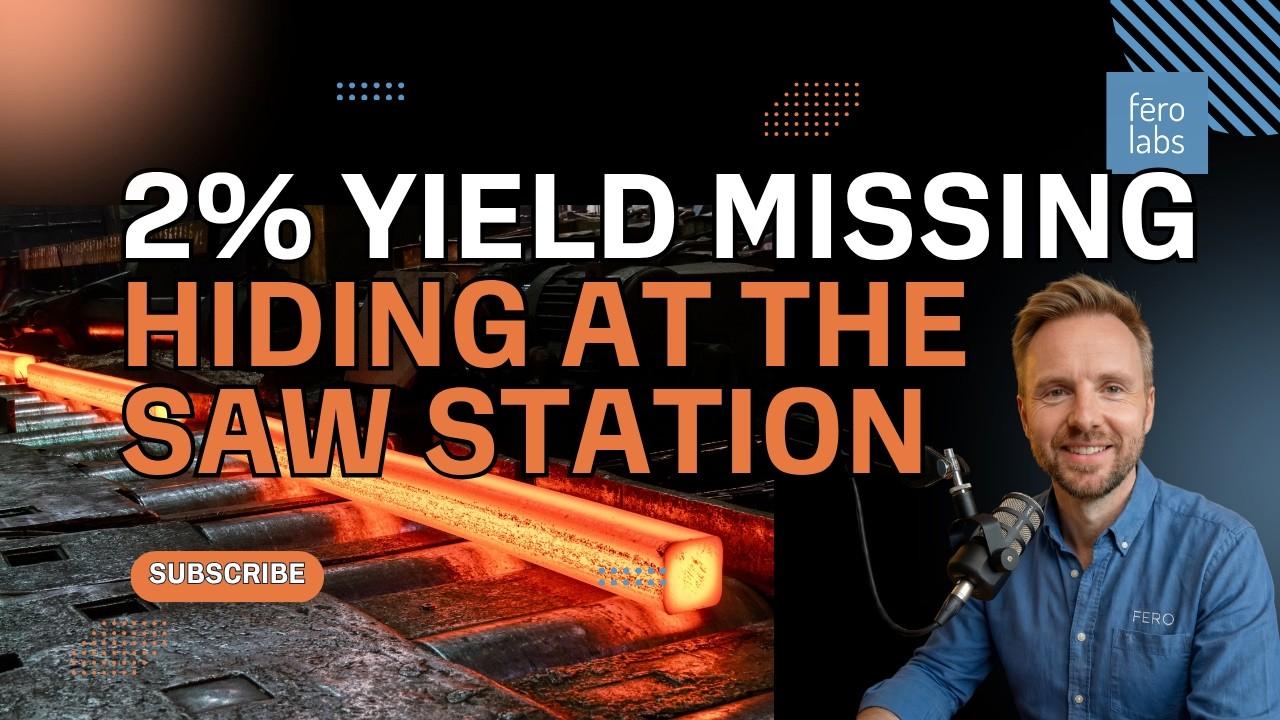
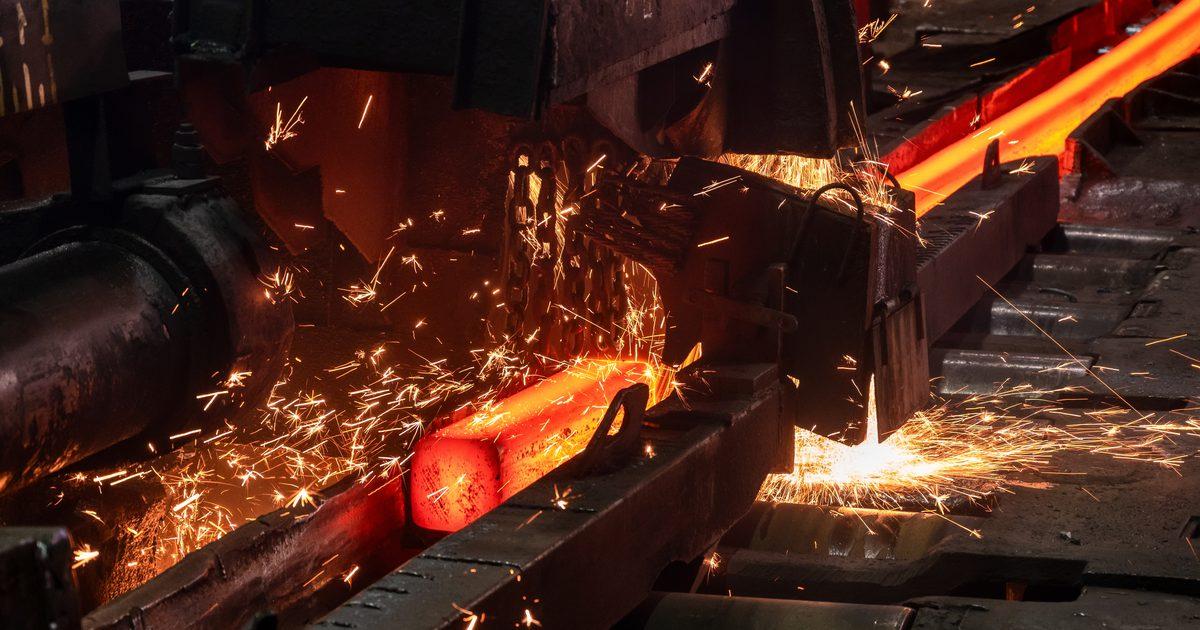
If your cut sequence goes off-plan, how do you know the cut that keeps your production moving is also the one recovering the most yield?💰 You may have no obvious reason to question it - your Saw Operator adjusts to the new conditions, the saw keeps pace and production continues. Where's the problem? But one North American long-product steel mill used Fero Saw Optimizer (FSO), to look more closely at those decisions and uncovered a further 1.5–2% yield improvement opportunity. And this wasn’t driven by an unusual production problem. Their cut sequences were going off-plan during normal production - in fact, it was happening more than 40% of the time. They were able to connect to Fero Saw Optimizer's yield insights and decision support without any hardware or changes to their workflow. If you produce variable-length long products, there could be a similar opportunity sitting inside the decisions your team is already making at the saw. Our latest video looks at how yield can be recovered when cut sequences go off-plan, and where Fero Saw Optimizer fits when the original plan no longer reflects what’s happening in production. ▶️ Watch the video and see whether it raises a question worth asking at your own saw station. https://lnkd.in/dC-JgGGi ➡️ If you already know there's a crew performance difference or yield leak, set up a time to chat with us here: https://lnkd.in/eU2ek4GM
- LINKEDIN · IMAGESince 14 Sept 2026
More than 40% of this mill's cut sequences went off-plan, and $1.20 a ton went with them, until they used Fero Saw Optimizer to calculate the most valuable cuts in real time. Does this sound like your production? You optimize every cut sequence in your planning process before production starts, and then a billet defect changes the usable material, or the cooling bed cannot take the planned lengths, or an order priority moves, and you are no longer running the sequence you optimized. Your production keeps moving and the orders still get filled, so nothing looks wrong. But when conditions change there is usually more than one viable way to complete the sequence, and they do not all recover the same yield or create the same order value. The gap between the decision your expert saw operator made and the highest-value decision available at that moment is real money, and it disappears into the campaign number. At one North American long-product mill this was happening to more than 40% of cut sequences, worth roughly $1.20 a ton, with yield loss running from 7% to 12% depending on which crew was on shift. Fero Saw Optimizer (FSO) keeps the optimization going after the sequence changes, recalculating the best available cut against the conditions that actually exist and giving your Saw Operator a precise cut action with an explainable rationale in real time, on rules your own Process Engineer sets. Our new article covers how that works, why applying it across every crew found another 1.5-2% in yield, reporting Yield Loss and Value Captured in actual revenue, and how to shadow test the whole thing against your own production before changing anything live. If you're looking for a fast way to drive yield and improve operations before the end of the financial year - you will want to check this out today. 👉 https://lnkd.in/gB6kGW4b
- LINKEDIN · VIDEOSince 31 Aug 2026
32% of U.S. companies that eliminated roles after implementing AI have already reinstated the same or similar positions. The Quiet AI Rehire has started. And for engineers, the reasons behind that reversal matter. Ford recently rehired, rehired, and promoted more than 350 veteran design engineers they had previously laid off to be replaced with AI. But they didn't understand the specialized skills that their experienced human engineers bring to their role. Companies are discovering that AI can process enormous amounts of information, but it can't automatically account for engineering knowledge, operational context and everything happening in the real world that was never captured in the data. Robert Half found institutional knowledge and context that AI couldn't replace was a factor in 40% of recent "correction" hires. That's something Fero Labs has understood from the beginning. Fero has always been AI for humans, not AI to replace them. We build industrial AI to help engineers evaluate more information, respond faster to changing conditions and make better, faster and more consistent decisions, while their engineering knowledge remains fundamental to the process. Our new Saw Optimizer brings that same approach to the saw station, where AI can help evaluate the competing production variables while experienced operators and engineers provide the operational context that data alone can't capture. The Quiet AI Rehire is an interesting signal of where AI is heading across many sectors. In the industrial space, we've believed in that direction all along. Learn about Fero Saw Optimizer here: https://lnkd.in/gcvB8QNT
- LINKEDIN · VIDEOSince 12 Aug 2026
FACT: Three out of four AI investments haven't paid off. But ours have 👉 because we grow the value step by step instead of betting everything on one big swing. This video shares the ROI that our AI is achieving. 🚀 The projects that miss try to do it all at once: one big-bang program, one massive return. The steelmakers we work with win by stacking small wins that compound - leaving more bandwidth for bigger projects with Fero. We start with a few dollars a ton on alloy recipes. Time saved for your essential workers. Ten percent off the energy bill. A real-time DI calculation that used to be impossible to run live saving $5 per ton. None of it looks like a headline on its own. But put six or ten together across a year and it's millions of dollars for a single mill at a pace that the busy mill can handle - and that's what we've watched happen. Would $18-$55 per ton grab your attention? How about $3M estimated savings? It's all discussed in the full episode. This is the 3rd episode of our series with Patrick Solomon (Americas) and Karol Majer (EMEA), hosted by Steve Walsh - the three people on our team who sit with steelmakers every week. The previous episodes started with finding what went wrong faster, then capturing tribal knowledge so newer process engineers can reach expert level faster, and now where the returns from AI really come from. Like this promo? Grab a coffee and watch the full episode on our YouTube channel, just 8 minutes 👇 Watch the full Episode 3: ▶️ https://lnkd.in/gWaUEjcj The mills seeing the biggest numbers didn't start with the biggest project. They started with one small win, and let it compound. Want to chat about how Fero's AI can help your mill? https://lnkd.in/eU2ek4GM
- LINKEDIN · VIDEOSince 7 Aug 2026
Are you good at making quick decisions under pressure? Earlier this week we talked about how fast you can find out what went wrong in a heat. This one's about the harder part: knowing what you can do about it. In most melt shops there's one person who can look at a chemistry sample and know instantly whether the heat can be saved, adjusted, or regraded into something else entirely. Thirty, forty years of pattern recognition, held in one head. Everyone knows he's retiring. But most mills don't have a plan for the day he does. Here's the part worth sitting with: that knowledge isn't unknowable, it's just uncaptured. The decisions that veteran makes on instinct are visible in your data, if you know how to look. Which means they can be learned, shared across a team, and put in the hands of the engineer with three years experience instead of thirty. One customer did exactly that and cut downgrades by more than 40%. That's episode two of our short series hosted by Steve Walsh with Patrick Solomon (Americas) and Karol Majer (EMEA) - the three people on our team who sit with steelmakers every week. No broad industry charts, no "future of AI" 👉 just a conversation about what's actually running in melt shops right now, and how mills are turning one person's experience into something valuable that the whole team can use. Like this promo? Watch the full episode on our YouTube channel, 7 minutes, link below. 👇 Want to chat about how AI can help your mill? If there's a decision in your mill that only one or two people know how to make, that's usually the best place to start. Watch the full Episode 2: ▶️ https://lnkd.in/gMmiHuGm 👀
- LINKEDIN · VIDEOSince 28 Jul 2026
A cobble takes down the rolling mill. A heat comes back off-spec. What happens next is the part nobody puts in the annual report: You pull your most experienced process engineers off everything else and hand them a week of data. They hypothesize and test until something sticks. The process can take days or weeks. But not with AI. Most mills run well. They don't make much bad product. So the real cost of a quality event isn't the scrap - it's the days your best people spend reconstructing what happened, while the line waits and another fire starts somewhere else. That's the thread we're pulling on in a new short series hosted by Steve Walsh, with two of our team who sit with steelmakers every week ➡️ Patrick Solomon (Americas) and Karol Majer (EMEA). No broad industry charts and slides, no "future of AI" 👉 just a candid conversation about what's actually running in melt shops and finishing lines right now, in their words - and how AI is helping. Episode 1 is about root cause: why these investigations rarely get scheduled, and what changes when you can find the signal in the noise fast enough to act on it. There's a number in there about how much faster that's happening that surprised me the first time I heard it. Watch the full episode on our YouTube channel, 5 minutes ⏰ , link below. 👇 If your last big investigation took days you'll never get back, it's worth seeing what a few minutes looks like instead. ▶️ https://lnkd.in/gubFkp3W
6 of 161 adsSign up to see every Fero Labs ad, filter by format and date, and get alerts on new ones.
See all 161 adsWatch the companies you care about.
Filter every ad by industry, country, format and network, and get alerts when a company you watch starts running new ads.