On air · 3 of 3 networks
ENAR
- enargroup.com
- Industry & Manufacturing
- ES
- 104 employees
ENAR’s ads on LinkedIn, Meta and Google, recorded by adsrunning. Browse the latest here for free. Sign up free to see all 40. Watch ENAR with Starter to get each new one in your feed.
Watchlist with Starter · $49/mo
| Network | Status | Live ads | Nov 2025LinkedIn activity · 52 weeksOct 2026 | Checked | Next step |
|---|---|---|---|---|---|
| Running | 40 | Checked 28 Oct 2026 | See all 40 ads → | ||
| Meta | Running | 4 | Active ads on the Meta Ad Library, all countries | Checked 28 Oct 2026 | Collect them with the API → |
| Running | 10 | Ads on the Google Ads Transparency Center | Checked 28 Oct 2026 | Collect them with the API → |
ENAR has 40 live LinkedIn ads. Its Facebook page had 4 active ads on 28 Oct 2026, and we recorded 10 Google ads on 28 Oct 2026.
Latest ads
- LINKEDIN · VIDEORecorded 17 Sept 2026
¿Por qué es imprescindible vibrar correctamente el hormigón? El hormigón es el material más utilizado en construcción, pero durante su puesta en obra se generan bolsas de aire que pueden comprometer seriamente el resultado final. 1️⃣ El hormigón contiene aire que debe eliminarse. Al verter hormigón fresco, la mezcla atrapa aire en su interior. Si no se elimina correctamente: - Aumenta el riesgo de coqueras - Se reduce la resistencia mecánica - Disminuye la durabilidad - Se afecta el acabado final La vibración permite liberar ese aire y asegurar una correcta compactación. 2️⃣ El objetivo: máxima densidad y resistencia. Un hormigón bien vibrado consigue: - Mayor resistencia estructural - Mejor adherencia al acero de refuerzo - Mayor durabilidad frente a la corrosión - Un acabado homogéneo y sin imperfectos 3️⃣ La clave está en el proceso. Durante la vibración, el hormigón cambia temporalmente su comportamiento: - Se vuelve más fluido - Libera aire y exceso de agua - Se adapta perfectamente al encofrado Cuando finaliza, recupera su consistencia, pero ya con una compactación óptima. 📘 Descargue la guía completa Descubra cómo mejorar sus procesos de vibración en obra, evitar errores habituales y optimizar el rendimiento de sus equipos. 👉 Acceda ahora a la guía práctica de vibración #ENAR #LeadingVibration
- LINKEDIN · VIDEORecorded 17 Sept 2026
👉 Vibrar correctamente el hormigón no es solo cuestión de equipo También depende de cómo se ejecuta el proceso en obra. Errores como: ❌ Vibrar demasiado o demasiado poco ❌ Mala colocación del material ❌ Técnica incorrecta pueden afectar directamente al resultado final. 📘 Descubra cómo hacerlo bien Acceda a nuestra guía práctica y aprenda a mejorar la compactación, evitar errores y optimizar sus resultados en obra. 👇 Descargar guía #ENAR #LeadingVibration #ENAR #LeadingVibration
- LINKEDIN · IMAGERecorded 17 Sept 2026
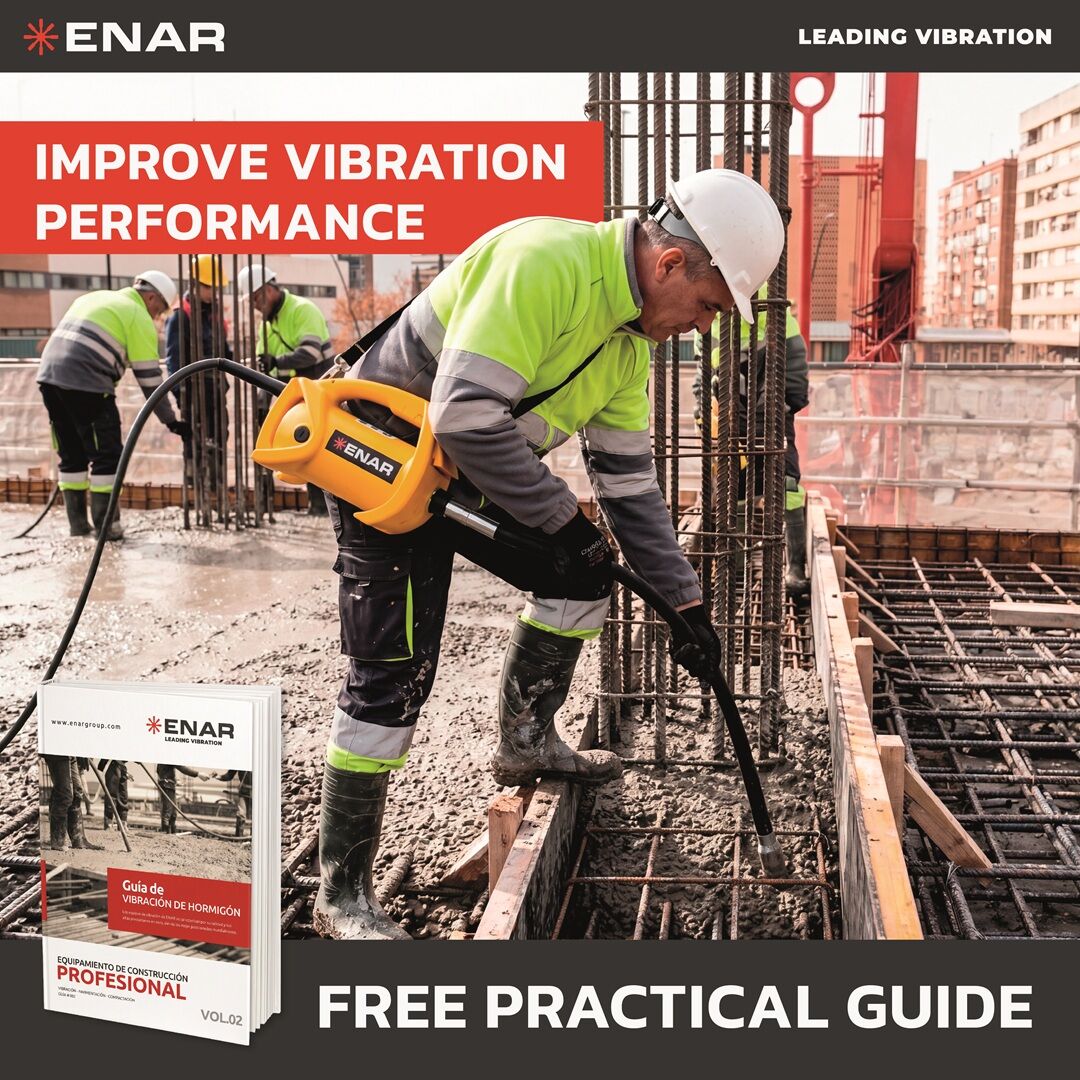
Why is concrete vibration necessary? ✅ Concrete is the most widely used material in construction. When it is placed, it behaves like a fluid and air voids are formed, which can compromise strength, durability, and the final finish. That’s why vibration is an absolutely essential step on any jobsite. 1️⃣ Concrete contains air that must be removed When fresh concrete is poured, its mix of water, cement, and aggregates traps pockets of air. If that air is not removed: - The risk of honeycombing increases. - Mechanical strength is reduced. - Durability and protection against corrosion decrease. A concrete vibrator introduces controlled vibration that reduces internal friction, allows the mix to flow around the reinforcement, and releases trapped air to the surface. 2️⃣ Objective: maximum compaction and density Properly vibrated concrete achieves: - Greater structural strength. - Better bond with the reinforcement steel. - Improved protection against corrosion. - A high‑quality surface finish, free of pores and imperfections. Vibration ensures that aggregates and cement paste redistribute correctly, creating a homogeneous, dense, and uniform mass. 3️⃣ The stages of the process: from solid at rest to fluid mass Vibration momentarily changes the behavior of concrete: 🔹 Resting stage: aggregates interlock and create voids that trap air. 🔹 Vibration stage: the poker vibrator introduces oscillations that overcome particle friction: The mix behaves like a fluid. Excess air and water rise to the surface. The concrete flows into all voids and fully surrounds the reinforcement. Concrete may appear slightly lighter in color due to the rise of water and the redistribution of the cement paste, a temporary effect that indicates proper consolidation. 🔹 Settlement stage: once vibration stops, the concrete regains consistency: The surface closes and smooths out. Only a few isolated bubbles remain. At this point, compaction is considered complete. As the concrete sets, it returns to its natural color. 📘 Download the Complete Guide Discover how to improve your concrete vibration processes on site, avoid common mistakes, and optimize the performance of your equipment. 👉 Access the Practical Vibration Guide Now #ENAR #LeadingVibration
- LINKEDIN · IMAGERecorded 17 Sept 2026
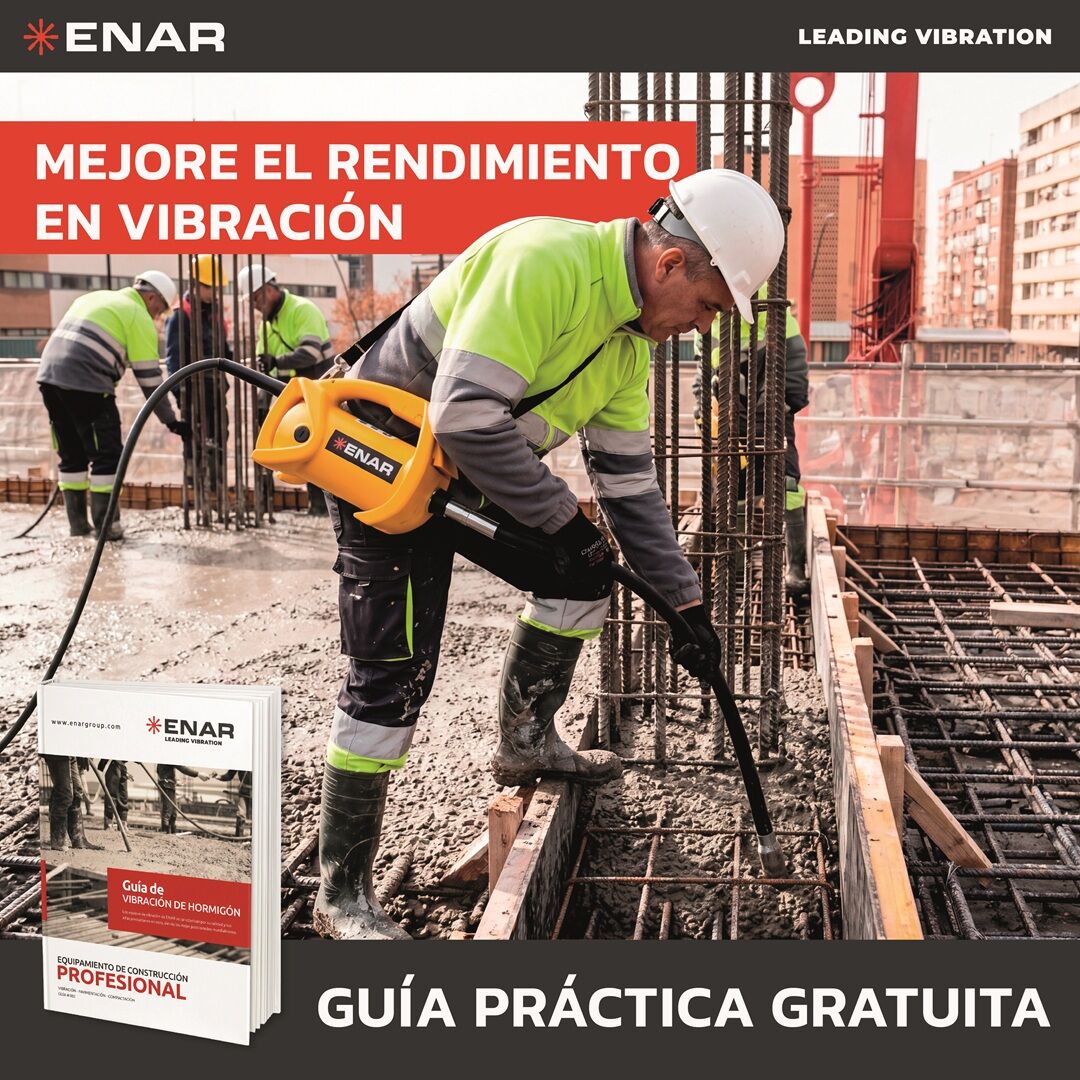
⚠ Muchos problemas en obra empiezan por una vibración incorrecta. Coqueras, baja resistencia o acabados deficientes suelen tener el mismo origen: una mala ejecución del proceso. 👇¿Cómo se debe vibrar correctamente el hormigón? Para conseguir una correcta compactación es imprescindible: - Seleccionar el vibrador adecuado - Trabajar por capas - Aplicar una técnica correcta en cada punto 📘 Descubra cómo hacerlo bien Acceda a nuestra guía práctica y aprenda a mejorar la compactación, evitar errores y optimizar sus resultados en obra. 👇 Descargar guía #ENAR #LeadingVibration
- LINKEDIN · IMAGERecorded 17 Sept 2026
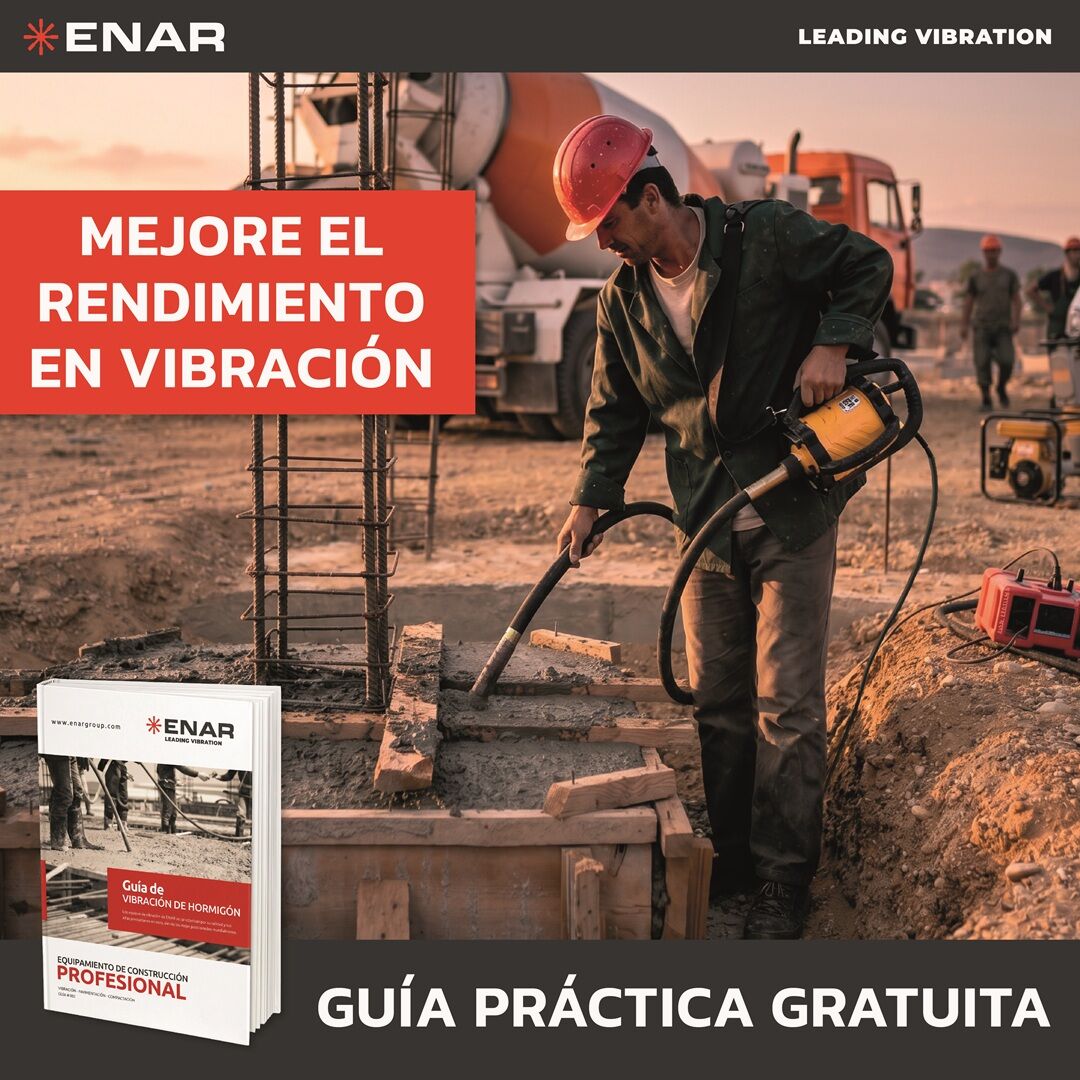
¿Por qué es imprescindible vibrar correctamente el hormigón? El hormigón es el material más utilizado en construcción, pero durante su puesta en obra se generan bolsas de aire que pueden comprometer seriamente el resultado final. 1️⃣ El hormigón contiene aire que debe eliminarse. Al verter hormigón fresco, la mezcla atrapa aire en su interior. Si no se elimina correctamente: - Aumenta el riesgo de coqueras - Se reduce la resistencia mecánica - Disminuye la durabilidad - Se afecta el acabado final La vibración permite liberar ese aire y asegurar una correcta compactación. 2️⃣ El objetivo: máxima densidad y resistencia. Un hormigón bien vibrado consigue: - Mayor resistencia estructural - Mejor adherencia al acero de refuerzo - Mayor durabilidad frente a la corrosión - Un acabado homogéneo y sin imperfectos 3️⃣ La clave está en el proceso. Durante la vibración, el hormigón cambia temporalmente su comportamiento: - Se vuelve más fluido - Libera aire y exceso de agua - Se adapta perfectamente al encofrado Cuando finaliza, recupera su consistencia, pero ya con una compactación óptima. 📘 Descargue la guía completa Descubra cómo mejorar sus procesos de vibración en obra, evitar errores habituales y optimizar el rendimiento de sus equipos. 👉 Acceda ahora a la guía práctica de vibración #ENAR #LeadingVibration
- LINKEDIN · IMAGERecorded 17 Sept 2026
⚠ Muchos problemas en obra empiezan por una vibración incorrecta Coqueras, baja resistencia o acabados deficientes suelen tener el mismo origen: una mala ejecución del proceso. 👇¿Cómo se debe vibrar correctamente el hormigón? Para conseguir una correcta compactación es imprescindible: - Seleccionar el vibrador adecuado - Trabajar por capas - Aplicar una técnica correcta en cada punto 📘 Descubra cómo hacerlo bien Acceda a nuestra guía práctica y aprenda a mejorar la compactación, evitar errores y optimizar sus resultados en obra. 👇 Descargar guía #ENAR #LeadingVibration
6 of 40 adsSign up to see every ENAR ad, filter by format and date, and get alerts on new ones.
See all 40 adsWatch the companies you care about.
Filter every ad by industry, country, format and network, and get alerts when a company you watch starts running new ads.