On air · 1 of 3 networks
Emergence Capital
- emcap.com
- Fintech & Financial Services
- US
- 53 employees
Emergence Capital’s ads on LinkedIn, Meta and Google, recorded by adsrunning. Browse the latest here for free. Sign up free to see all 37. Watch Emergence Capital with Starter to get each new one in your feed.
Watchlist with Starter · $49/mo
| Network | Status | Live ads | Nov 2025LinkedIn activity · 52 weeksOct 2026 | Checked | Next step |
|---|---|---|---|---|---|
| Running | 37 | Checked 30 Oct 2026 | See all 37 ads → | ||
| Meta | Not checked | — | |||
| None recorded | 0 | No ads found on the Google Ads Transparency Center | Checked 28 Oct 2026 | Collect them with the API → |
Emergence Capital has 37 live LinkedIn ads. We recorded no Google ads on 28 Oct 2026.
Latest ads
- LINKEDIN · IMAGERecorded 17 Sept 2026
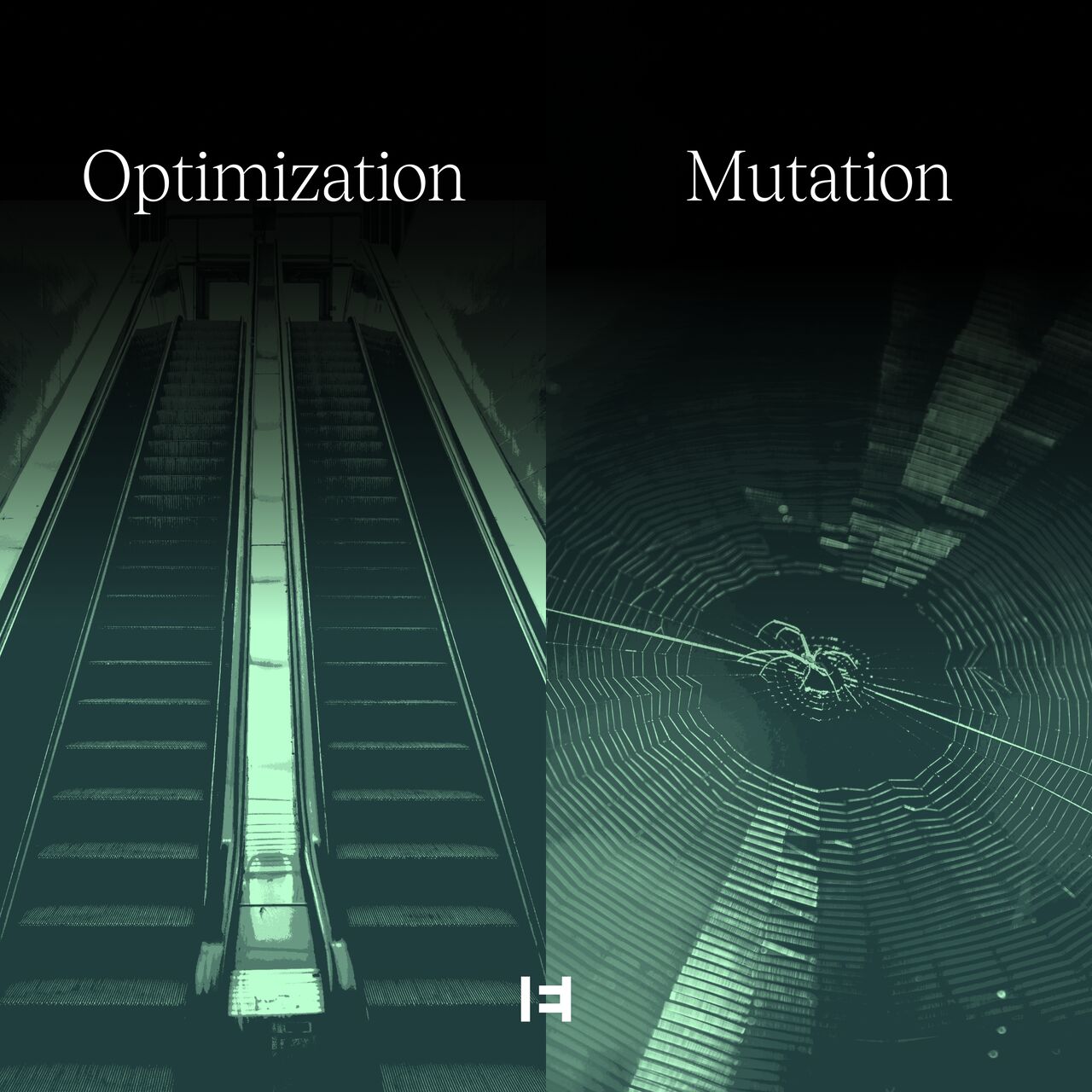
AI can master every rule we give it. But only humans can break the rules that no longer serve us. Optimization is predictable. Mutation is revolutionary. In closed systems like Go, AI can discover strategies no human ever imagined, but only because the rules and outcomes are fixed. The real world isn’t like that. In human-driven domains like sales, marketing, product design, management or leadership, the “game” keeps changing. There is no final answer. Biology does not conform to a fixed outcome. Mutations drive massively complex diversity across species. That’s where humans matter most. Breakthroughs come from unexpected moves — the surprising moments that redefine the game itself. More than 15 years ago, automakers were optimizing gas efficiency and making incremental progress on EV concepts. Tesla mutated the auto market by making EVs aspirational and completely bypassing dealerships. Phones were once optimized for size, battery, and call quality. Apple mutated the category entirely by turning the phone into a touchscreen computer you keep in your pocket. Examples of human “ahas” are everywhere. AI can codify our insights and scale them instantly. We call this the “human dynamic frontier”. But it can’t originate them at the same pace billions of humans can; each one experimenting, innovating, and adapting in real time. Optimization without mutation leads to a plateau. Mutation without optimization leads to chaos. The winning formula is human mutation at the edge, paired with AI’s ability to scale and refine what works. The companies that thrive in the AI era will be those that don’t just automate for efficiency, but deliberately protect and model the human capacity to change the game. If you are exploring ways to harness this human frontier with AI, email me at [email protected].
- LINKEDIN · VIDEORecorded 17 Sept 2026
I’ve always believed life is too precious to spend in a rut. Climbing Denali taught me that firsthand. Minus-20 degrees at the summit, sleepless nights at 17,000 feet, and rockfalls at Windy Corner that could take you (and your whole team) out if you didn’t move fast enough. Those moments remind me why I seek out challenges that push me past my comfort zone. They force you to trust your team, take calculated risks, and stay focused when the margin for error is zero. That same mindset drives how we back Emergence Capital founders: we support people willing to step onto the ridgeline, one careful step at a time. Hear more of my conversation on the Yesterday Podcast with Sonith Sunku.
- LINKEDIN · IMAGERecorded 17 Sept 2026
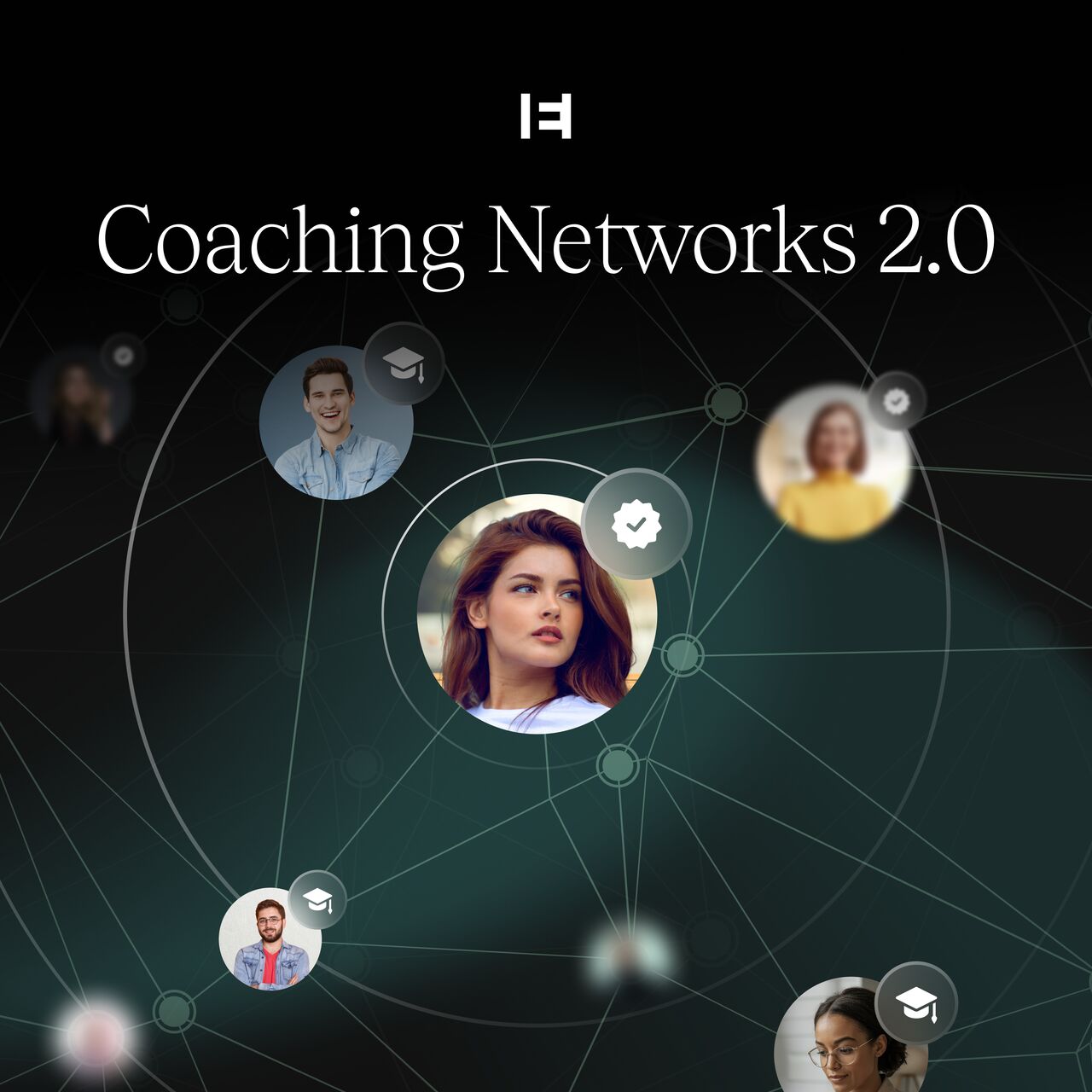
At Emergence Capital, we introduced the concept of “Coaching Networks” nearly a decade ago: https://lnkd.in/gnm3ipHp. The idea was that top-performer activities are identified using basic machine learning and coached to others, creating feedback loops and a culture of shared excellence. Back then, it was more vision than reality. Today, AI brings Coaching Networks to life. AI can identify who your best performers are in every domain, from sales to engineering, and capture the exact moves that make them exceptional. It can then recreate those moves in realistic simulations of specific challenges: a tough customer call, a critical code review, a disagreement with the board. New hires can practice against those scenarios, learning directly from the best without requiring constant one-on-one time. We’re already seeing glimpses of this. Sales platforms like Gong and Chorus analyze the calls of their top performers to generate coaching insights for entire teams. Roleplay applications like Hyperbound.ai and Yoodli help people develop their habits before they are in front of customers. Tools like GitHub Copilot, CodeWhisperer, and DX allow junior developers to see how senior engineers approach problems, shortening the distance between novice and expert. Even firms like McKinsey and Bain are beginning to use AI-driven training to accelerate how new consultants absorb the craft. This transforms skill transfer from an occasional, manual process into a continuous loop. Experts push what’s possible forward, learners catch up faster, and the organization evolves as a whole. The power of Coaching Networks has always been that human ingenuity is disseminated. Now, with AI, it scales. That’s how enterprises can protect and amplify their most valuable IP — the “human algorithm” that makes them different. For founders, creating AI automation applications is a great (and well-understood) way to land within your target ICP. To stand out from the pack, consider how your offering will “prompt” users, as well as models, to improve in their jobs. Not only will your customers appreciate the added value, but your application will learn from these new human habits that only you have uncovered. If you are a founder thinking about ways to prompt users to innovate, along with helping them automate, I’d love to connect with you. Email me at [email protected].
- LINKEDIN · VIDEORecorded 17 Sept 2026
When we started Emergence, we knew we wanted to build a firm where no one person was the CEO: a true partnership where everyone brought their strengths and covered each other’s blind spots. That idea was tested right away. It took us 15 months and 175 meetings just to get the first close of our first fund. Most of those meetings were cross-country, away from our young kids. After more than a year, our gatekeeper told us “no.” It felt like the bottom dropped out. But that “no” turned into the turning point. It freed us to go direct to CalPERS, and a few days later they committed $15M. Enough to rally others to get our first close done. That experience taught us that rejection isn’t the end. Sometimes it’s the thing that clears the way forward. And it cemented the culture we still have today: team-first, resilient, and willing to put in the work. I talk about that journey (and what we learned from it) on the Yesterday Podcast with Sonith Sunku. Link to the full episode in the comments.
- LINKEDIN · IMAGERecorded 17 Sept 2026
In recent weeks, I have been writing about why intellectual property is more than data in a spreadsheet. What sets companies apart is how their people think, decide, and operate. That human algorithm is the real competitive edge. There is also a larger issue at stake: the health of the startup ecosystem. McKinsey says the long-term potential of AI in corporate settings is $4.4 trillion in productivity gains from use cases across business functions. PwC estimates AI’s global economic impact may reach $15.7T by 2030. There’s no doubt the value exists. But who stands to capture it? When startups allow their processes and decision logic to seep into public models, they do more than weaken their own moat. They also strengthen the concentration of power in a few model providers. Without safeguards, most of it will accrue to a small set of incumbents. That is not a healthy ecosystem. The breakthroughs that drove the last generation of tech growth came from young companies building on their own IP: Stripe in payments, Salesforce in enterprise software, Zoom in collaboration. If we want the next generation of leaders in enterprise AI, startups need to protect their customers’ IP while building the proprietary intelligence that defines their value. In the past, the lines were clear. AWS and Azure provided the infrastructure, and startups built differentiated applications on top. Today, large models blur that boundary. They are not just infrastructure but systems hungry to learn from behaviors at the application layer. Without balance, too much power consolidates in too few hands. Protecting IP is not only about preserving competitive advantage. It is about ensuring the startup economy remains diverse, innovative, and strong enough to push the industry forward.
- LINKEDIN · VIDEORecorded 17 Sept 2026
In the first months of this century, I was running IBM Global Small Business after my startup Whistle was acquired. One day, Marc Benioff walked in looking for a launch partner for his nascent company called Salesforce.com. After months of work, we were ready to sign the deal. On the very day we were supposed to sign, IBM’s CEO asked me to have “one last look” at Siebel’s product. I walked into that meeting, listened to their pitch, and then got pulled into a side room with Tom Siebel himself. He knew what was about to happen. He made his case, and let’s just say he made it clear he didn’t want me to sign with Salesforce. I signed anyway. That moment, and working with Marc, taught me two lessons that have stayed with me: - Have conviction about what will matter in the future - And make sure that conviction is non-consensus If everyone already agrees with you, it’s not conviction. It hasn’t been tested yet. I shared this story on the Yesterday Podcast with Sonith Sunku. Link to the full episode in the comments.

6 of 37 adsSign up to see every Emergence Capital ad, filter by format and date, and get alerts on new ones.
See all 37 adsWatch the companies you care about.
Filter every ad by industry, country, format and network, and get alerts when a company you watch starts running new ads.