Not on air · 2 of 3 networks checked
ECLAT DIGITAL
- eclat-digital.com
- Industry & Manufacturing
- FR
- 15 employees
ECLAT DIGITAL’s ads on LinkedIn, Meta and Google, recorded by adsrunning. Browse the latest here for free. Sign up free to see all 30. Watch ECLAT DIGITAL with Starter to get each new one in your feed.
Watchlist with Starter · $49/mo
| Network | Status | Live ads | Nov 2025LinkedIn activity · 52 weeksOct 2026 | Checked | Next step |
|---|---|---|---|---|---|
| None recorded | 0 | Checked 30 Oct 2026 | See all 30 ads → | ||
| Meta | Not checked | — | |||
| None recorded | 0 | No ads found on the Google Ads Transparency Center | Checked 27 Oct 2026 | Collect them with the API → |
ECLAT DIGITAL has no live LinkedIn ads. We recorded no Google ads on 27 Oct 2026.
Latest ads
- LINKEDIN · IMAGESince 1 Oct 2026
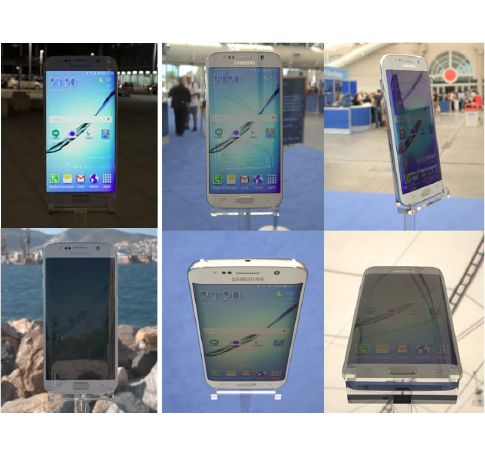
Your display may look perfect in the lab. But what happens: - in sunlight? - at an angle? - with reflections? Display performance is not defined at normal incidence. It’s the result of complex interactions between emission, coatings, glass & lighting Yet most simulations simplify these effects. → Which is why they often fail to predict reality. With Ocean™ you’re able to work on simulating display performance across angles and real conditions, with a focus on readability and glare.
- LINKEDIN · IMAGESince 22 Sept 2026
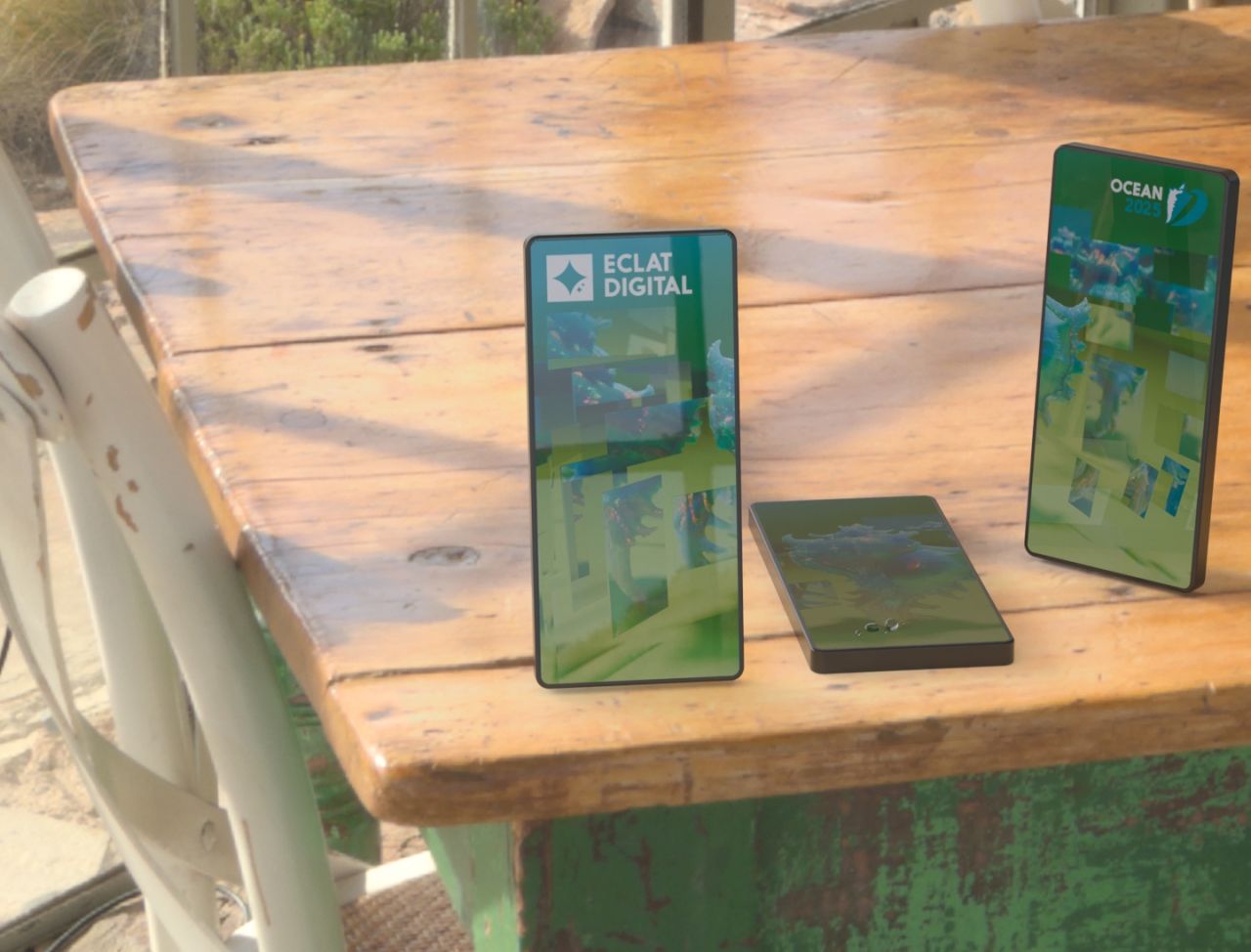
You don’t have the full system yet, but decisions can’t wait. Display integration often happens before any physical prototype exists. Yet you still need to assess: - Readability in real conditions - Impact of viewing angles - Interaction with surrounding materials Most teams rely on datasheets and component-level measurements, but these don’t reflect system-level behavior. We show how to reconstruct a reliable display model with Ocean™ and predict real-world performance using available measured data, without access to the physical prototype. This is where simulation becomes a decision tool. Read our technical article 👇
- LINKEDIN · IMAGESince 16 Sept 2026
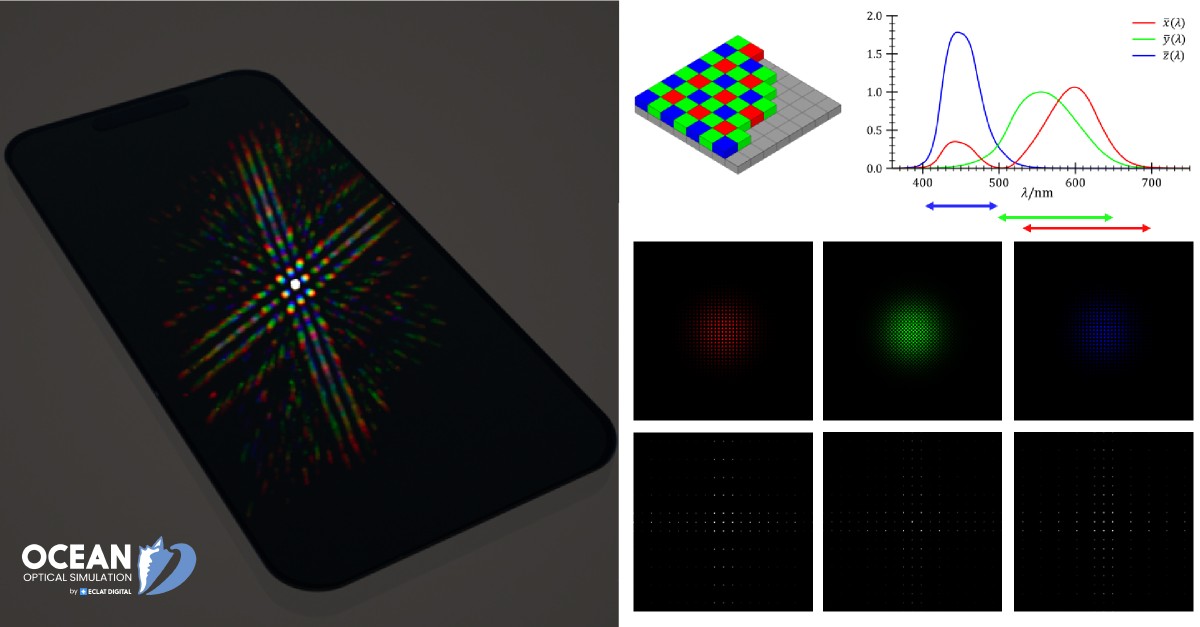
Predict how pixel-scale optical effects affect what users actually see. Pixel diffraction can produce colored or shimmering patterns on high-resolution displays, affecting perceived image quality in ways that may be difficult to anticipate during design. In this technical article, we explore how Ocean™ models pixel diffraction using a spectral diffraction BSDF, based on measured or simulated diffraction patterns. A technical deep dive into: • Pixel-scale diffraction effects • Spectral behavior of diffraction patterns • How diffraction can be integrated into optical simulation Read the technical article below 👇 #DisplayEngineering #OpticalSimulation #DisplayTechnology #PixelDiffraction
- LINKEDIN · IMAGESince 3 Sept 2026
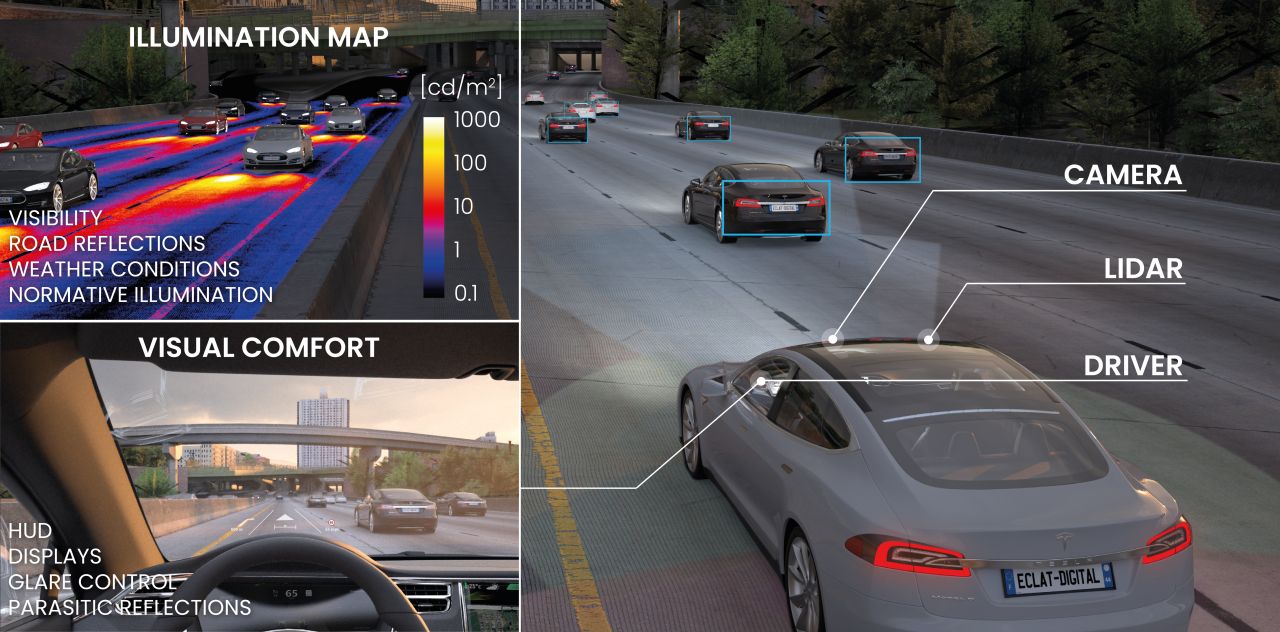
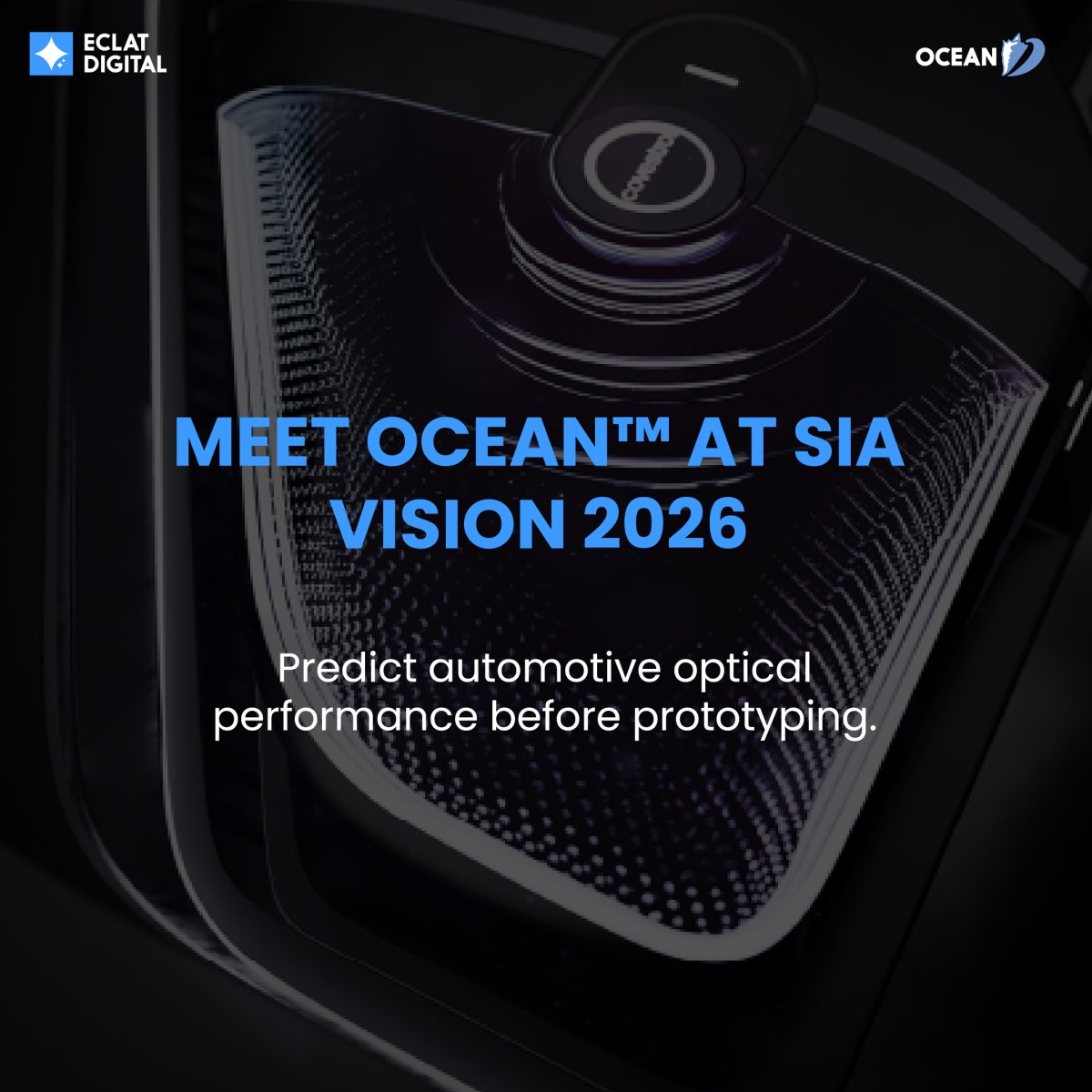
What will your drivers and sensors actually perceive under real-world conditions? Ocean™ combines physically accurate, spectral, polarization-aware and bidirectional optical simulation to evaluate complete automotive scenes, from cameras and LiDAR to HUDs, displays, glare and visual comfort. Combine predictive visualization with quantitative optical analysis to identify issues, compare designs and validate performance earlier. Interested in predictive automotive optical simulation? Tell us what you're working on and we'll show you how Ocean™ could apply to your use case. → Talk to an Ocean™ expert, and validate automotive optical systems digitally, before building physical prototypes.
- LINKEDIN · CAROUSELSince 3 Sept 2026
Validate automotive optical performance before physical prototyping Optical performance depends on materials, geometry, lighting, environment and human perception. Issues often emerge only once components are assembled and tested in real-world conditions. Ocean™ helps engineering teams predict, understand and validate optical performance earlier through physically accurate simulation, quantitative analysis and predictive visualization. From concept to validation, Ocean™ helps you: - Predict performance in real operating conditions - Simulate advanced optical materials and coatings - Engineer complex optical systems and light propagation - Connect micro-scale effects to complete systems - Optimize driver visual perception - Validate predictions with scientific accuracy → Discuss your optical challenge with our team
- LINKEDIN · IMAGESince 18 Jun 2026
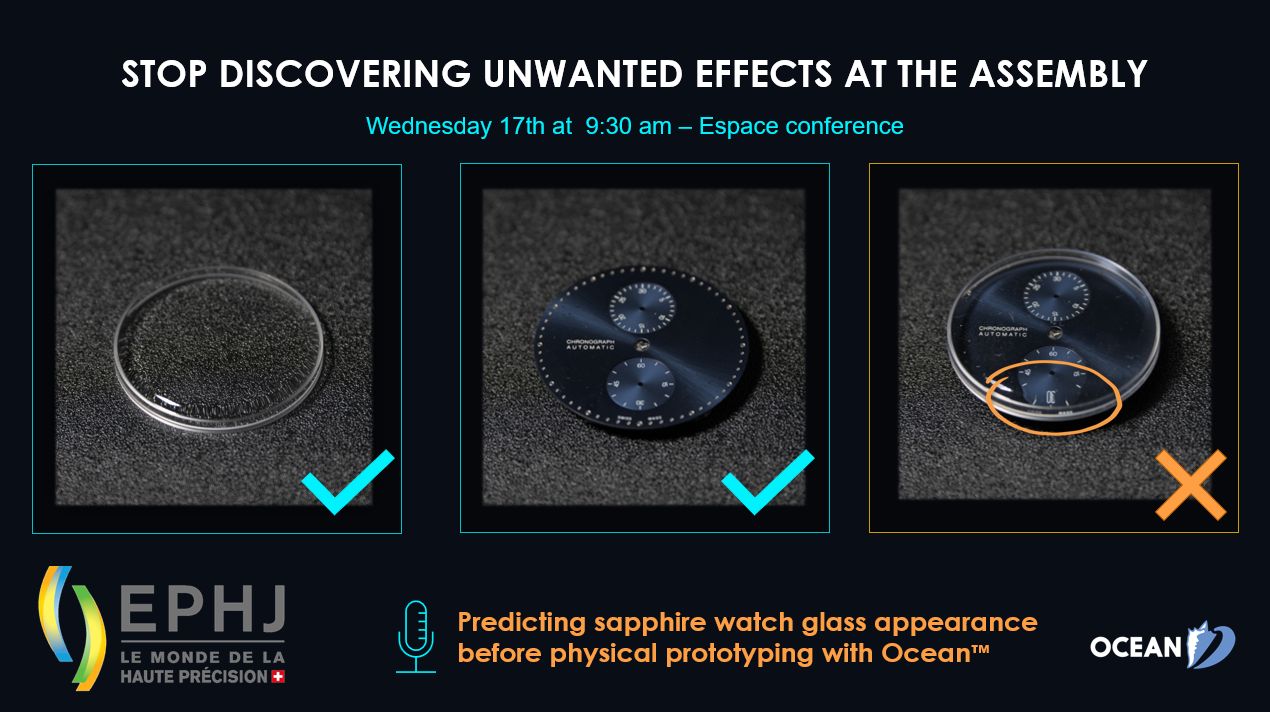
What if the first physical prototype served to confirm a decision rather than discover a visual issue? That was the question behind our conference at EPHJ 2026. Using the example of sapphire watch crystals, we showed how optical simulation can predict visual appearance before manufacturing, helping teams compare alternatives, validate choices earlier, and reduce costly physical iterations. If you couldn't attend the session, feel free to download the slides below Come meet us at booth R100 or get in touch to continue the discussion. #EPHJ #Watchmaking #OpticalSimulation #SapphireCrystal #VirtualPrototyping
6 of 30 adsSign up to see every ECLAT DIGITAL ad, filter by format and date, and get alerts on new ones.
See all 30 adsWatch the companies you care about.
Filter every ad by industry, country, format and network, and get alerts when a company you watch starts running new ads.