On air · 2 of 3 networks
Dotkeeper
- dotkeeper.com
- Cybersecurity
- SE
- 18 employees
Dotkeeper’s ads on LinkedIn, Meta and Google, recorded by adsrunning. Browse the latest here for free. Sign up free to see all 23. Watch Dotkeeper with Starter to get each new one in your feed.
Watchlist with Starter · $49/mo
| Network | Status | Live ads | Nov 2025LinkedIn activity · 52 weeksOct 2026 | Checked | Next step |
|---|---|---|---|---|---|
| None recorded | 0 | Checked 30 Oct 2026 | See all 23 ads → | ||
| Meta | Running | 32 | Active ads on the Meta Ad Library, all countries | Checked 27 Oct 2026 | Collect them with the API → |
| Running | 47 | Ads on the Google Ads Transparency Center | Checked 27 Oct 2026 | Collect them with the API → |
Dotkeeper has no live LinkedIn ads. Its Facebook page had 32 active ads on 27 Oct 2026, and we recorded 47 Google ads on 27 Oct 2026.
Latest ads
- LINKEDIN · IMAGESince 9 Sept 2026
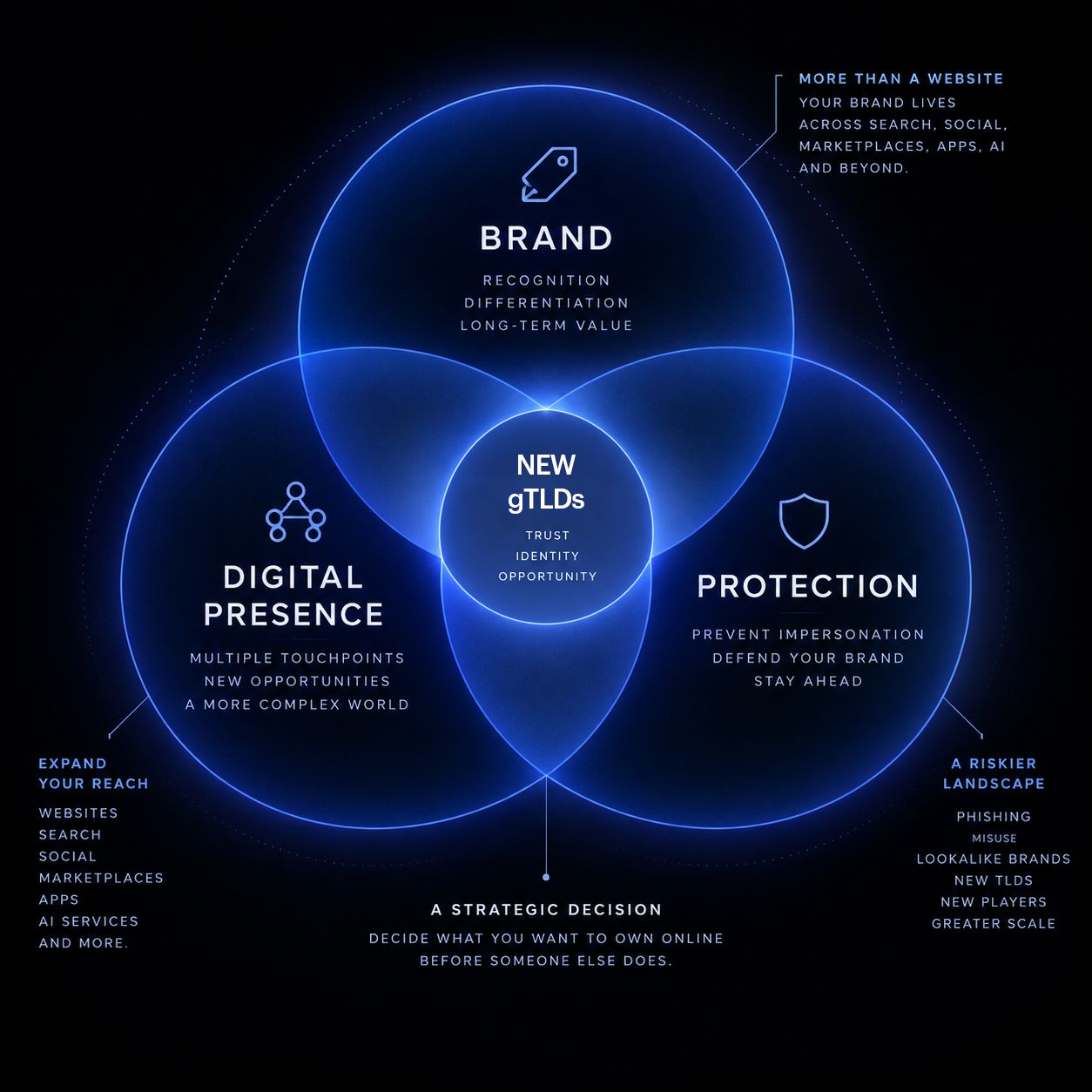
After over twenty-five years in the domain name industry there are a few things I keep coming back to. This is the big one: domains get treated as infrastructure to be managed, and I think that view is running out of road. For most leadership teams, domains have traditionally been operational. You register the company name, protect a few key variations, renew them every year and move on. But people discover brands in many more places than through a website now. Customers meet you across search, social platforms, marketplaces, apps, AI services and countless other touchpoints. At the same time, impersonation, phishing and misuse of trusted brands have become easier to scale. That changes the role of the domain. Domains are still addresses on the internet, of course. But they also sit inside your brand architecture. They help customers recognise that they're dealing with the right company, and they're becoming central to how you control and protect your digital presence. And right now, something significant is happening. On 12 August, ICANN closed the application window for its new round of generic top-level domains, the first since 2012. More than 1,600 applications came in. With a substantial fee just to apply, before anyone has spent anything on launching or operating a top-level domain, applying represents a real strategic commitment. In October we find out what was actually applied for. Some will be generic terms. Some will represent communities or new business ideas. And some will be brands. You don't need to apply for your own top-level domain for this to matter. But there is work worth starting now, and it doesn't depend on what turns up in October. Nobody knows the timeline for certain, but based on how 2012 went, we're probably looking at 2028 before the first of these reach the root, and then they'll launch in waves, each on its own schedule, each with its own sunrise period for trademark holders. Trying to work out what matters to you while that's happening is how companies end up either spending on everything or missing the one that counted. So you have about two years to decide instead. Which of your marks belong in the Trademark Clearinghouse and which don't. What your honest priority order is. Which extensions are worth watching and which are noise. And who inside your company actually owns this decision. Because deciding what you want to own online is also a decision about what you don't want someone else to own for you.
- LINKEDIN · IMAGESince 9 Sept 2026
There will always be a cheaper option. And sometimes that cheaper option is exactly the right one. If you are a startup, have a small domain portfolio, or simply need to keep costs down, there are plenty of providers that allow you to register and manage domains very cheaply. There is nothing wrong with that. The important thing is understanding what you are taking on yourself. Because the registration fee is only one part of managing a domain. Someone still needs to keep track of renewals, registrar accounts, access and MFA, ownership details, DNS changes, certificates, local requirements in different countries, internal approvals and, eventually, decisions around what should be kept, transferred, registered or allowed to expire. None of those things are particularly complicated on their own. But they add up. A portfolio of five or ten domains, perhaps even fifteen, with one clear internal owner can probably be managed perfectly well in-house. Then the company grows. More brands are added. More markets. More domains. Perhaps an acquisition or two. Different people register things through different suppliers. Someone leaves the company. Another department starts managing part of the portfolio. And at some point, managing domains stops being a small administrative task and becomes something that actually needs structure. That is usually where outsourcing starts to make sense. The individual tasks are simple enough, but someone still has to hold the whole thing together: keep the portfolio in one place, maintain clear ownership and consistent security and access rules, and track local requirements and renewal deadlines before they turn into problems. You can build all of that internally. But once the portfolio becomes large or complex enough, you are effectively creating your own domain management function anyway. And that is the point where I think companies should at least stop and ask whether that is really where they want to spend their internal time and resources. At some point, saving a little on each registration or renewal stops being the most important consideration. Visibility, consistency, security and having someone responsible for the whole picture start to matter more. There will always be a cheaper option. The better question is whether the saving is worth the additional responsibility that comes with it. When you compare domain costs, are you comparing the price of the domain, or the cost of managing the portfolio?
- LINKEDIN · IMAGESince 21 Aug 2026
For many organisations, DNS is a set-it-and-forget-it thing. Why fix what isn't broken? Throughout my career I've worked with companies of all sizes, from start-ups to global enterprises. A lot of them trust hyperscalers to power their domains, email, VPN and applications. And on paper, why wouldn't they? These are household names with global reach. The problem? Hyperscalers have a track record of outages. Not always at the global level, but regional outages happen. When they do, internal users can't reach the VPN, email goes dark, customers can't access your application. Lost productivity, lost revenue, and depending on your business, a real hit to brand reputation. So why do most organisations stick with hyperscaler DNS anyway? Because it's "free". It comes bundled into an expensive enterprise license for other products and services. But here's the thing: it's not free. You're paying for it as part of that license. You're just not seeing the line item. Fred, where are you going with this? I get it. Nobody wants to rip and replace their DNS infrastructure. But by staying put, you're making a choice. You're accepting the risk of downtime. Whether that's intentional or not, it's a business decision with real consequences. Get to the point, Fred! If rip and replace is off the table, the answer is secondary DNS. If your primary DNS provider goes down or hits a regional outage, traffic fails over to a secondary DNS running on completely separate infrastructure. Business keeps moving. Users don't notice. The catch? The standard protocol for DNS redundancy (zone transfer/XFR) isn't supported by any of the major hyperscalers. They want you locked into their ecosystem, even at the cost of your availability. But here's where it gets interesting. Dotkeeper has solved this. We can set up a secondary DNS alongside your existing hyperscaler setup, with no zone transfer required, full support for advanced record types, and zero feature loss. You keep what you have, you add redundancy on top, and you stop accepting downtime as an inevitability. If this sounds like a situation you recognise, let's talk. DM me or reach me at [email protected].
- LINKEDIN · IMAGESince 21 Aug 2026
"So, what do you do?" It's a question I've answered hundreds of times, usually over dinner or a glass of wine with someone I've just met: "So, what do you actually do?" For most people working in IT or law, there's a simple answer. For me, working with domain names and online brand protection, it's a bit trickier, and that's exactly what makes it so fun to talk about. I usually say that we help companies protect their name and their brand online, but I can see it in people's faces straight away: they're thinking, okay, but what does that actually mean? It's a fair reaction. Most of us click around online every day without ever stopping to think about everything that goes on behind the scenes to keep a brand protected, a website secure, and a company name safe from misuse. It's about proactive advice and registering rights online. But just as much, it's about monitoring and reacting when someone misuses our clients' brands out there. And as if that weren't enough, we also help encrypt and secure the traffic to and from our clients' domains, through various certificate and security solutions. The reactions at the dinner table? Usually a surprised "wait, is it really that complicated?" And the answer is: yes. Behind every trustworthy website sits a whole ecosystem of rights, monitoring, and security that most people never see, until something goes wrong. What do you do for work, and do people ever look surprised when you explain what it actually involves?
- LINKEDIN · IMAGESince 21 Aug 2026
Last time I shared a bit about what I actually do for work. Today I wanted to tell one of my favorite stories from the day-to-day: when a client finally gets their hands on the domain they've been dreaming of. A lot of people assume it just comes down to price when a company wants to secure their dream domain. The reality is that every deal is unique. Acquiring a domain involves so many different steps, and clients run into all kinds of obstacles along the way, obstacles we're there to help them overcome. Sometimes it's not about money at all, it's detective work. Just as often, our clients are thrilled simply because we managed to track down an owner in, say, the US and get a conversation started so a negotiation could even begin. Getting a clear answer, whether the domain is for sale or not, can be worth its weight in gold to a company whose whole launch plan is on pause until they know. One of my favorite deals we've ever helped with is the one where the seller priced their domain at roughly the cost of a robotic lawnmower. Then they went out and bought one, and named it after the domain. That's the perfect example of why I love this job. You never know what the next deal will bring: sometimes it's a successful negotiation across borders, sometimes it's a lawnmower with a brand new name. Have you ever chased a domain name that felt impossible to get? I'd love to hear how it went.
- LINKEDIN · IMAGESince 1 Jul 2026
There is often a concern that someone else might register your brand name under another domain extension. That is a completely reasonable concern. But the answer is not to register every possible version of your name under every possible extension. In my experience, the strongest domain portfolios are not the biggest ones. They are the ones that make sense. A good portfolio should reflect where the business is today, where it is likely to go next, and what actually needs to be protected. If you operate in Sweden and are expanding into Germany, then .se and .de may be obvious parts of the portfolio. If you have no presence, no plans, and no realistic exposure in a specific market, registering the local extension there will not necessarily add much protection. Defensive registrations can still be important. Some extensions are more commonly associated with abusive activity. In other cases, local dispute processes are limited or unclear, which means recovering a domain later could be much harder than registering it early. But those decisions should be intentional. The companies that handle this well usually keep coming back to a few simple questions: - Where are we active today? - Where are we likely to be active in the coming years? - Which markets are we no longer active in, and how long has that been the case? - Which domains are still relevant for defensive reasons? The important part is that someone inside the organisation owns the conversation. Not necessarily making every decision alone, but understanding why the portfolio exists, what it supports, and when outside input is needed. Without that ownership, portfolios tend to grow in all directions. Domains get registered “just in case”. Old names stay in place because no one wants to take the risk of letting them go. New markets are added without any clear policy. Over time, the portfolio becomes harder to manage, harder to explain internally, and not necessarily stronger. A focused portfolio is easier to manage, easier to defend, and easier to budget for. It does not mean ignoring everything outside it. It means owning what matters and knowing when something outside the portfolio needs attention. That is where monitoring becomes important. A domain watch service can track new registrations that include or resemble your brand name, giving you awareness without forcing you to register every possible variation yourself. And if something problematic appears, there are ways to act, whether through a takedown, a registrar complaint, a UDRP, or another dispute process. Trying to register every possible risk in advance will become far more expensive than building a deliberate defensive layer, monitoring the rest of the space properly, and acting when there’s actually something to act on. Which parts of your domain portfolio are intentional, and which are simply still there because they always have been?




6 of 23 adsSign up to see every Dotkeeper ad, filter by format and date, and get alerts on new ones.
See all 23 adsWatch the companies you care about.
Filter every ad by industry, country, format and network, and get alerts when a company you watch starts running new ads.