On air · 1 of 3 networks
Cytel
- cytel.com
- Healthcare & Life Sciences
- US
- 1,646 employees
Cytel’s ads on LinkedIn, Meta and Google, recorded by adsrunning. Browse the latest here for free. Sign up free to see all 75. Watch Cytel with Starter to get each new one in your feed.
Watchlist with Starter · $49/mo
| Network | Status | Live ads | Nov 2025LinkedIn activity · 52 weeksOct 2026 | Checked | Next step |
|---|---|---|---|---|---|
| Running | 6 | Checked 28 Oct 2026 | See all 75 ads → | ||
| Meta | Not checked | — | |||
| Recently | 100+ | Ads on the Google Ads Transparency Center | Checked 7 Oct 2026 | Collect them with the API → |
Cytel has 6 live LinkedIn ads. We recorded 100+ Google ads on 7 Oct 2026.
Latest ads
- LINKEDIN · IMAGESince 8 Oct 2026
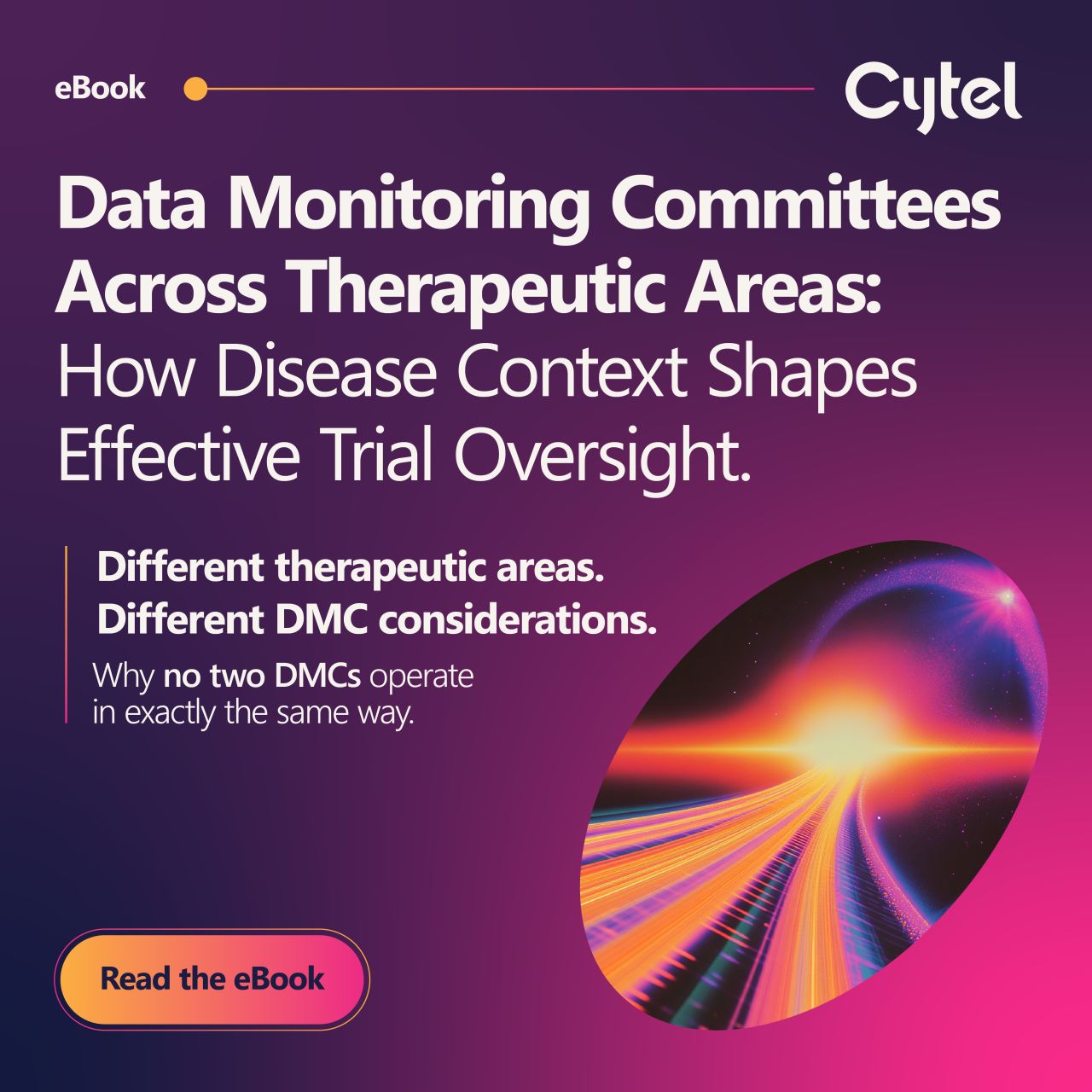
Every Data Monitoring Committee (DMC) has the same job — to protect participants and preserve the integrity of the study. But that doesn’t mean one size fits all. The questions a DMC asks in an oncology trial will look very different from those in a vaccine study, a cardiovascular outcomes trial, or a rare disease program. So how can sponsors prepare and support their DMCs when disease context changes so much? Cytel's latest ebook looks at how DMC oversight works across: • Oncology • Immunology • Vaccines • Cardiology • Neurology • Rare diseases and orphan indications • Special considerations beyond therapeutic area You can read the full eBook via the link below 👇 https://lnkd.in/eX4f3kPZ
- LINKEDIN · IMAGESince 1 Oct 2026
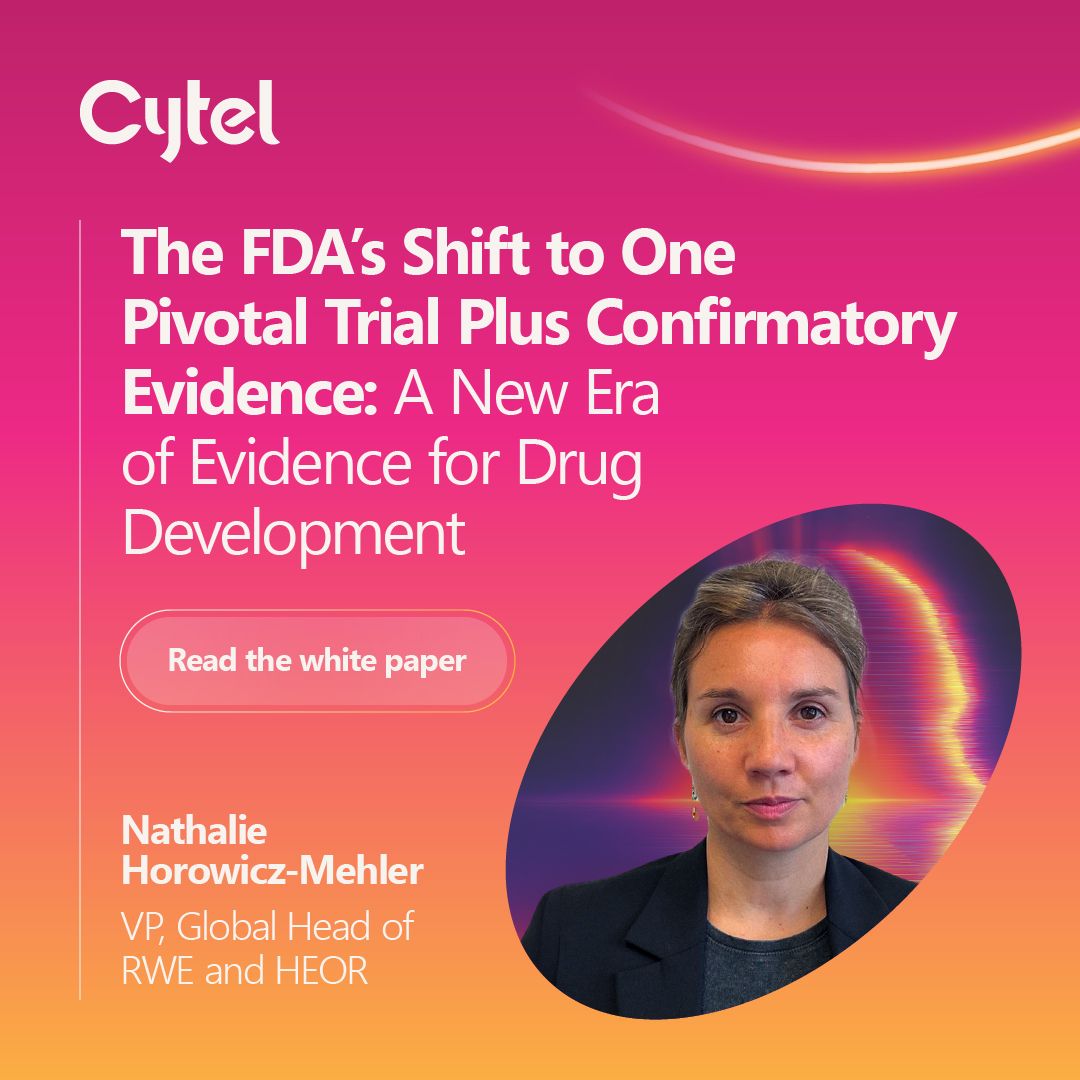
In June, the FDA issued draft guidance that could mark a new era in drug development. 📃🔬 One robust pivotal trial, supported by confirmatory evidence, is re-emerging as a pathway for establishing drug effectiveness, shifting the focus away from the long-standing “two-trial dogma.” But this shift also changes the questions sponsors should be asking. Not simply “how many trials are needed?” but “what combination of rigorous clinical and confirmatory evidence will persuasively demonstrate effectiveness?” In our latest white paper with Cytel, Jurgen Hummel, Evie Merinopoulou, and I explore: 1. The critical factors that make a single pivotal trial persuasive 2. How sponsors can prospectively plan for regulatory-grade confirmatory data including real-world evidence 3. Why relying more heavily on a single pivotal trial raises the evidentiary stakes for the entire development program Learn more in the full white paper via the link below 👇 https://lnkd.in/g7enQpUW
- LINKEDIN · IMAGESince 17 Sept 2026
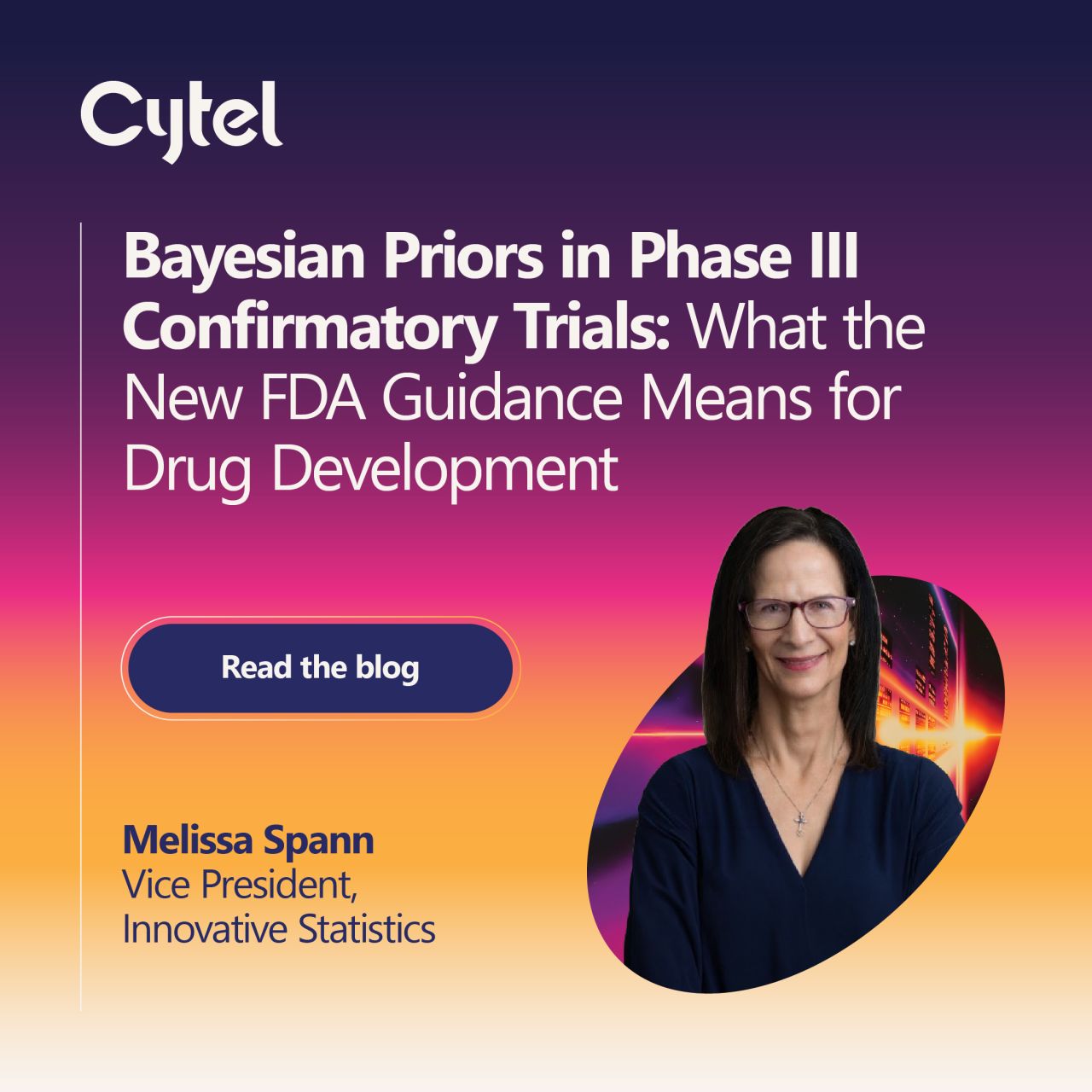
It’s official: Bayesian methods are acceptable, and moving beyond niche applications. The FDA’s long-awaited draft guidance issued earlier this year provides a clearer framework for applying Bayesian priors in confirmatory clinical trials. But, it seems, not all Bayesian priors are equal. The challenge for sponsors is not simply the selection of a prior distribution, but ensuring that historical information is scientifically credible. In my latest blog with Cytel, I explore the key elements needed to construct a scientifically defensible prior evidence package that will resonate with the FDA, from evidence quality and relevance to prior data conflict and alternative assumptions. Read the full blog now via the link below 👇 https://lnkd.in/e8nnsgW8
- LINKEDIN · IMAGESince 2 Sept 2026
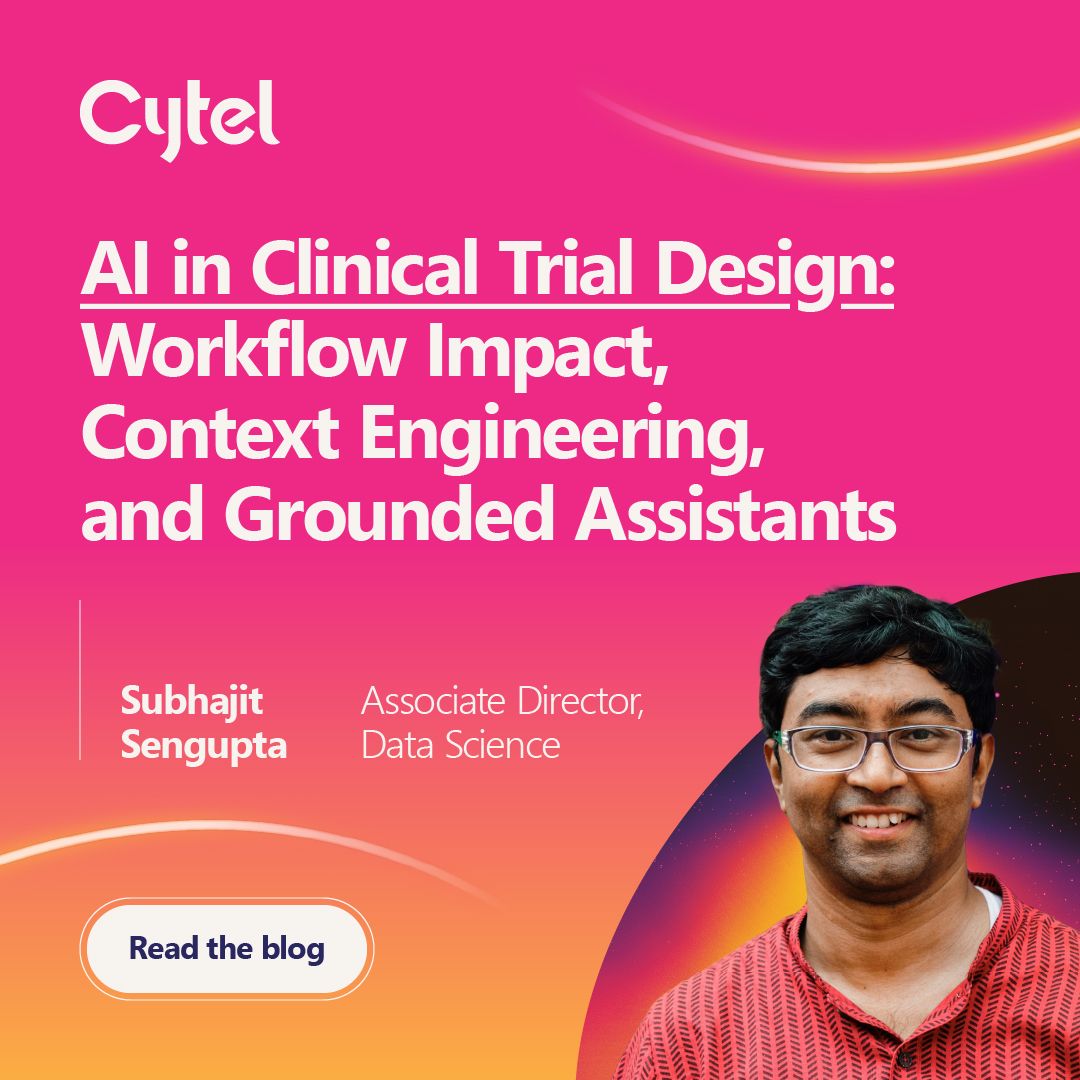
Clinical trial teams are being asked for more statistical rigor, faster timelines, and stronger traceability, all at once. 🔬 Meanwhile, trial designs keep getting ever more complex, with adaptations and Bayesian methods increasingly in the mix. So where can AI genuinely help? What separates an assistant grounded in validated knowledge from a general-purpose model, and what has to happen before we can really trust its output? Gabriel Potvin, P.Eng. and I explore where AI fits into the design workflow, the real value of context engineering, and how these tools should be evaluated in our latest article with Cytel. Read it here to learn more 👇 https://lnkd.in/gJcaNj8X
- LINKEDIN · IMAGESince 12 Aug 2026
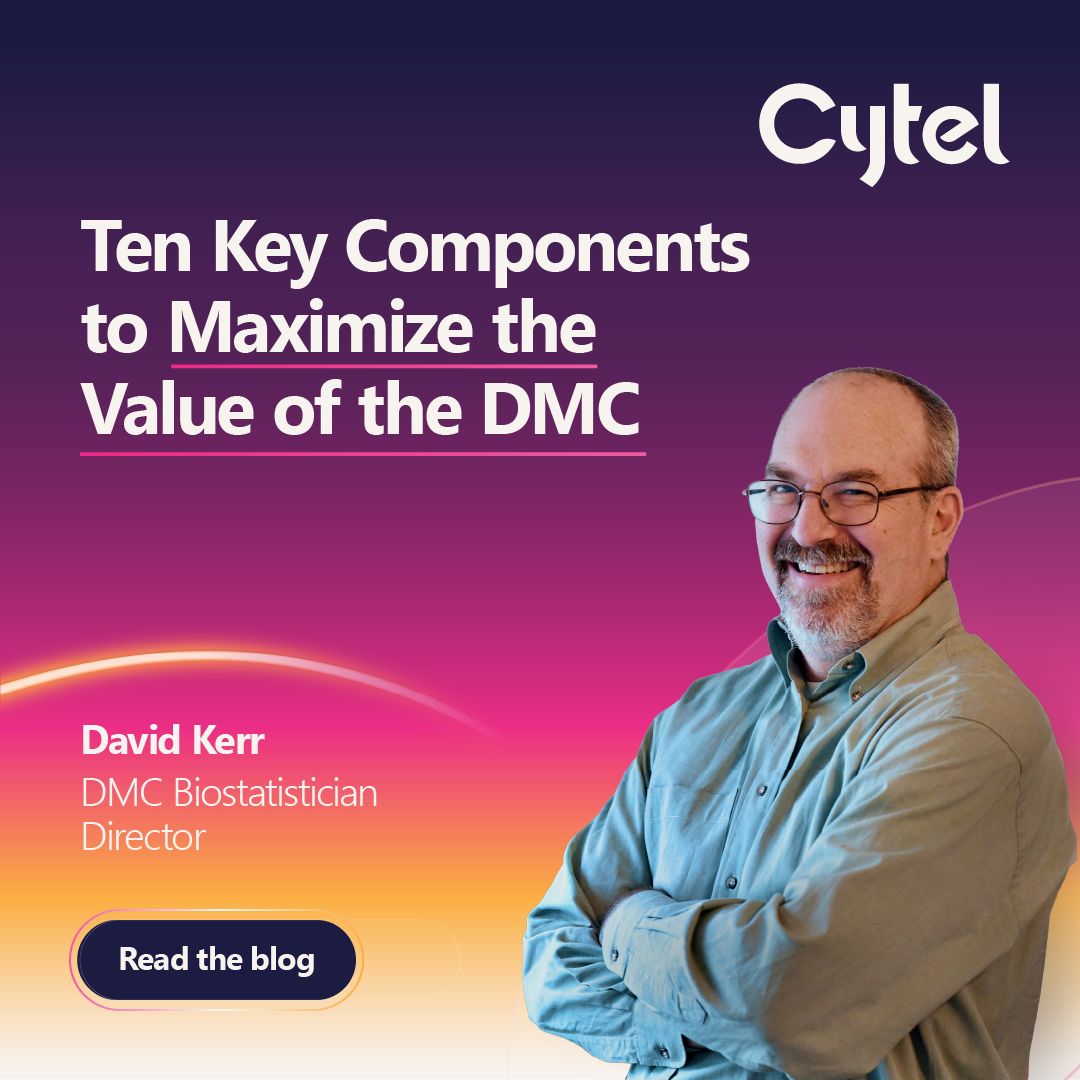
Data Monitoring Committees (DMCs) are an essential safeguard for patients in drug development — but they’re rarely discussed as a financial decision. They should be. A DMC costs a fraction of a study’s budget, yet a well-designed one can cut months from a development timeline, and redirect key resources away from a trial whose answer is already clear. Design one poorly, however, and it’s money wasted on an insurance you won’t use. So what does a successful, cost-effective DMC look like? In my article with Cytel, I set out the ten components of the cost-effective DMC. You can read it now via the link below 👇 https://lnkd.in/gv5PQAFR If you want to learn more, you can also watch my webinar, “Maximizing the Value of the DMC: A Cost-Effective Approach to Safeguarding Clinical Development”, on-demand via the link at the bottom of the article.
- LINKEDIN · IMAGESince 28 Jul 2026
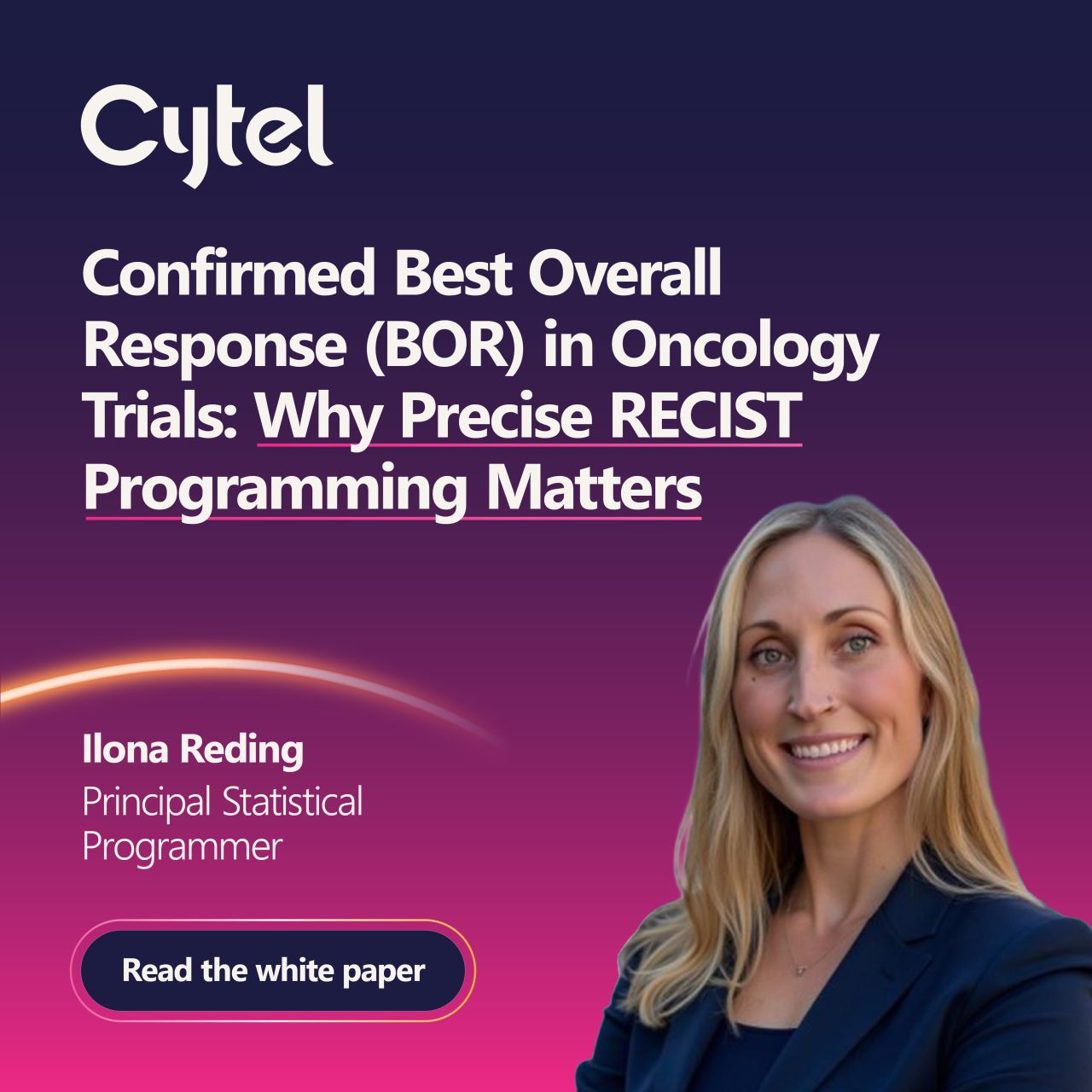
Tumor response endpoints influence some of the most critical decisions in oncology clinical development. They inform go/no-go decisions, anchor regulatory submissions, and, ultimately, can decide how quickly patients gain access to promising therapies. But while RECIST 1.1 gives us a clear framework for assessing tumor response, real-world data rarely follows its tidy timelines. In my latest white paper with Cytel, co-authored with guillaume HERVE and Ophélie Calas-Zeroug, we explore the nuances behind how confirmed best overall response (BOR) is derived in practice. We look into where RECIST 1.1 leaves room for interpretation, the programming and interpretation challenges sponsors face, and why documenting assumptions early can ensure consistency, traceability, and regulatory confidence. Read the full white paper now via the link below 👇 https://lnkd.in/e7hJDBMx
6 of 75 adsSign up to see every Cytel ad, filter by format and date, and get alerts on new ones.
See all 75 adsWatch the companies you care about.
Filter every ad by industry, country, format and network, and get alerts when a company you watch starts running new ads.