On air · 1 of 3 networks
Cozero
- cozero.io
- Climate & Energy
- DE
- 43 employees
Cozero’s ads on LinkedIn, Meta and Google, recorded by adsrunning. Browse the latest here for free. Sign up free to see all 215. Watch Cozero with Starter to get each new one in your feed.
Watchlist with Starter · $49/mo
| Network | Status | Live ads | Nov 2025LinkedIn activity · 52 weeksOct 2026 | Checked | Next step |
|---|---|---|---|---|---|
| None recorded | 0 | Checked 29 Oct 2026 | See all 215 ads → | ||
| Meta | Not checked | — | |||
| Running | 25 | Ads on the Google Ads Transparency Center | Checked 26 Oct 2026 | Collect them with the API → |
Cozero has no live LinkedIn ads. We recorded 25 Google ads on 26 Oct 2026.
Latest ads
- LINKEDIN · IMAGESince 20 Oct 2026
🔁 Continuous improvement cycles for data, systems, and processes dominate the workload of sustainability managers, but real improvements remain beyond reach. The idea is that the more you continuously improve your measurement, evaluation, updates and routine monitoring, you'll automatically hit targets and drive outcomes. ⚠️ Here's the problem: Decarbonisation improvements remain small and incremental in this model: they drive no real transformation. The approach also remains disconnected from the core business strategy, unresponsive to economic volatility and policy changes. 🔍 Finance teams drive decision-making with greater agility, using approaches that could also benefit sustainability teams: 🎯 Data relevance, not quantity matters. Reasonable confidence in the data, not perfect data, is enough to develop a plan. 🔮 Precise historical data trends aren't enough for decision-making. Finance teams use predictions to gain insight. Annual reporting isn't the main goal, improving insight is. This means using predictive analytics along with backward-looking performance reviews. ⚡ Decision-making benefits from integration across the organization. Climate transition plans and emissions reduction strategies should integrate financial drivers, helping the plan to be more responsive. Cozero's Roadmap for carbon management reframes the approach to driving improvements: 📊 Better data insights. 📈 Agile and responsive analytics used in planning. 💶 A clear view of the connection between sustainability and financial performance. 🌱 Carbon management needs to move beyond slow, incremental improvements. 🚀 Responsive, integrated carbon management strategies can work together with finance to accelerate business performance. 👉 𝗖𝘂𝗿𝗶𝗼𝘂𝘀 𝗵𝗼𝘄 𝗶𝘁 𝘄𝗼𝗿𝗸𝘀? Download Cozero’s new white paper “The Carbon Management Roadmap” to drive better carbon management and financial outcomes together. https://lnkd.in/dmFbPp-m #Sustainability #CarbonAccounting #CarbonFootprint #CarbonManagement #DigitalTransformation #FinancialPlanning #FinancialControl
- LINKEDIN · IMAGESince 17 Oct 2026
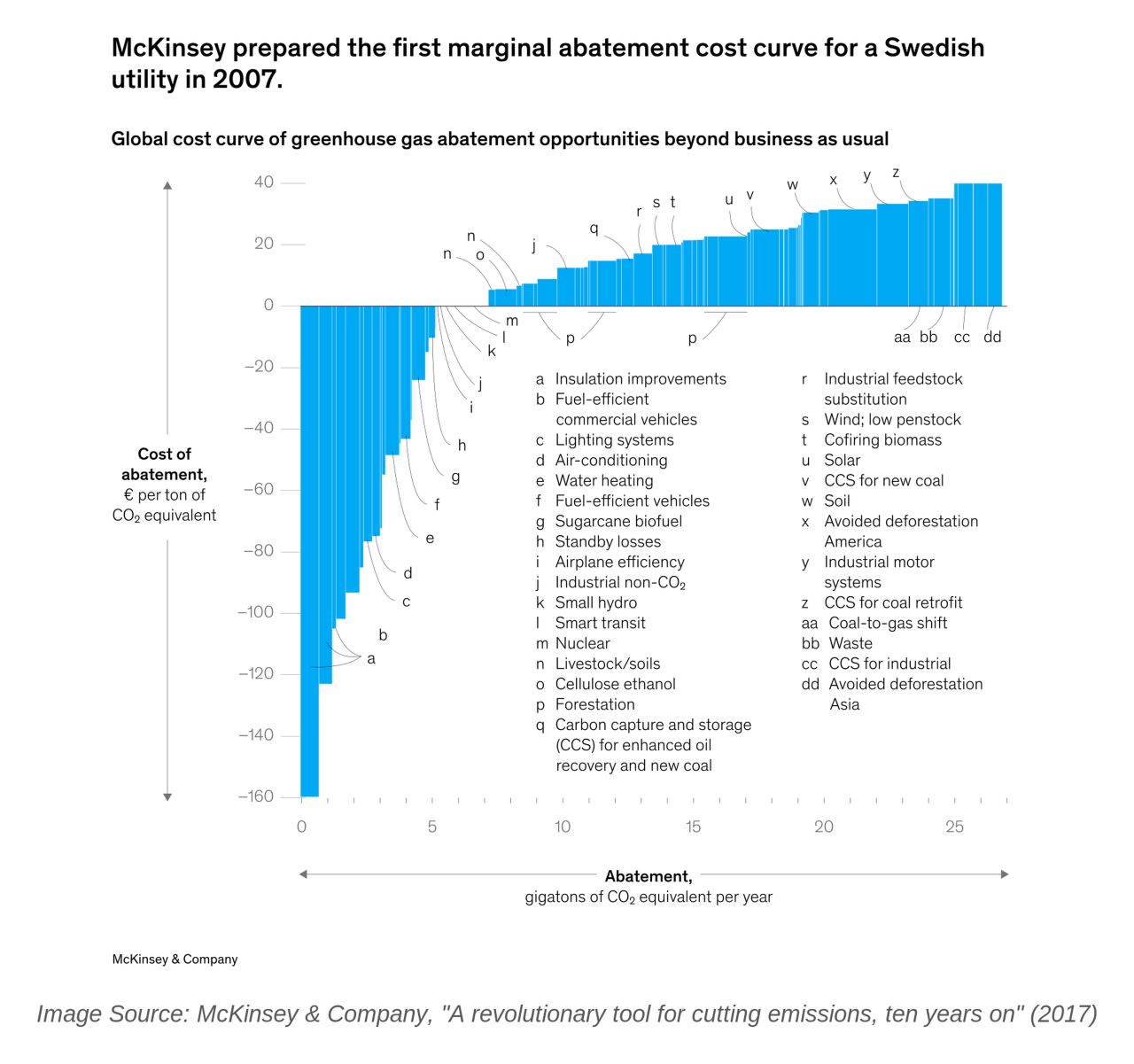
#Climateflation is a new term to describe the economic reality of climate change. It highlights the fact that whether we do or don't act on climate change, there are new costs emerging. University of Ottawa and University of Manchester researchers named three main types of climateflation to help illustrate this point (link in comments). 🛢️ #Fossilflation is the cost of oil and gas dependence from energy price shocks. In Q2 2026, oil prices in Germany were at least 50% higher than in 2025 after the closure of the Strait of Hormuz (BDI). 🌍 #Carbonflation is the cost of all of the climate hazards that damage property, disrupt business, raise the costs of insurance, and destabilise supply chains: storms, floods, wildfires, drought, sea level rise, and extreme temperatures. In 2025, Europe lost €43 billion from carbonflation, if you account for productivity loss and labour supply disruptions. By 2029, losses could grow to €126 billion annually based on probable increases in the number and severity of climate hazards (Bruegel). ♻️ #Greenflation is the cost of transitioning to low emissions technologies and adapting current infrastructure to rising climate effects: EVs, electrification, solar, wind and battery powered energy, sustainable fuels, or strengthening infrastructure. Currently, €1.89 trillion is spent on transitioning the economy to achieve climate goals each year, but research suggests four times more investment is needed (EU Observer). This may sound high, but postponing action can come with much heavier costs later on. For every 10 years of delay, the cost of the climate transition becomes 20-25% more expensive in the EU. If the EU waits to transition key sectors until 2035, the cost to transition bumps up to 40-50% more expensive than it would have cost earlier (EU Observer). In other words, investor's remorse applies to climate change: The best time to act was 10 years ago, but the next best time to act is now. Abatement cost curves are one way to explore cost dynamics and minimize these different forms of climateflation on your business. Read about this smart approach to climate investment decisions here 🔗 https://lnkd.in/dr2WH3BH #inflation #economy #climatetransition #truecost
- LINKEDIN · IMAGESince 14 Oct 2026
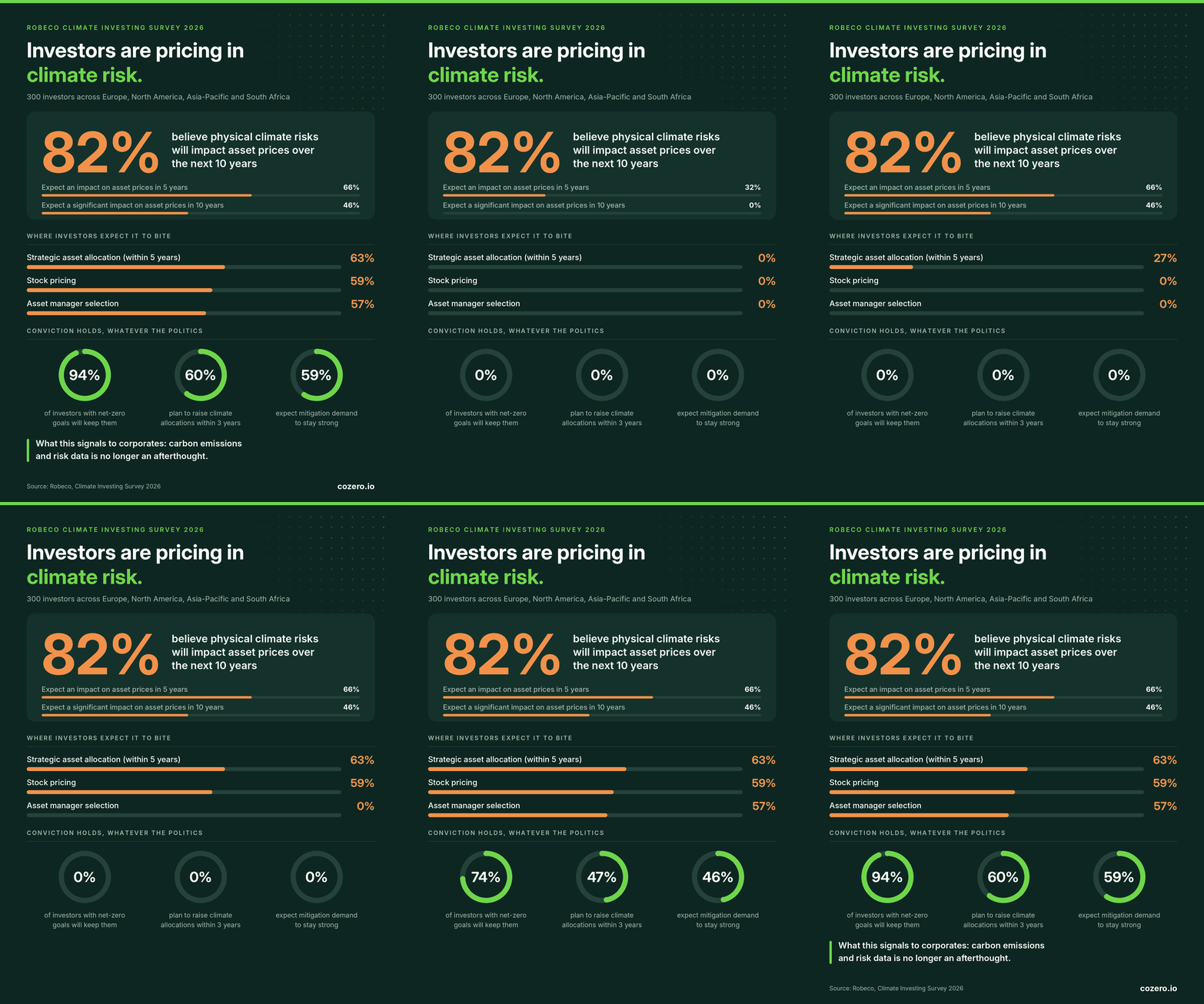
💥 Climate risks are increasing as a material concern for investors in 2026. ➡️ More than 80% believe climate risks will hit asset values in 10 years. The data is from Robeco's “Climate Investing Survey 2026” – see link below 👇 The survey covers 300 investors (200 institutional and 100 wholesale) across Europe, North America, Asia-Pacific and South Africa. Assets under management (AUM) per investor range from USD 1 billion to 1 trillion, totalling an average of roughly USD 35.8 trillion in combined AUM. It's the 6th survey of its kind, and investors are connecting climate-related physical risks to asset prices more than ever. ▪️ 66% expect physical climate risks to have an impact on asset prices in 5 years. ▪️ 82% believe the same will be true over the next 10 years. ▪️ 46% expect a significant impact on asset prices in 10 years. Investors expect climate to have links to other financial metrics, too. ▪️ 63% expect impacts on strategic asset allocation within 5 years. ▪️ 57% expect impacts on asset manager selection. ▪️ 59% expect impacts on stock pricing. Even in a politically divisive time, investor strategies have remained firm. They view demand for climate mitigation as a stable priority. ▪️ 59% expect demand for climate mitigation solutions to stay strong regardless of political sentiment. ▪️ 47% of investors report that climate change is central to their investment policy, up from 46% last year. ▪️ 94% of investors with net-zero goals will keep their targets regardless of government policy. ▪️ 45% name policy uncertainty as the main obstacle to climate mitigation solutions. Here's how they plan to respond. ▪️ 42% plan to raise allocations to climate-focused investments within 12 months. ▪️ 60% plan to raise allocations within three years. What this signals to corporates: ✅ Large global investors are prioritising climate mitigation solutions in their portfolios. ✅ They're likely to prioritise companies within industries that have lower exposure to physical climate risks in 5-10 years. ✅ In 2026, carbon emissions and risk data is no longer an afterthought when planning your business strategy. 👓 The Cozero view: Carbon emissions and climate risk data improvements likely contributed to this maturity in investor perceptions. Leading in your industry means verifying low-emissions innovation with concrete data and a solid business plan, not just good marketing. With climate risks expected to erode businesses' core financials (even in a no-action scenario), it's time for companies to integrate carbon emissions into their financial outlook to better manage their business. We're here to help. Learn how in a demo today 👉 https://www.cozero.io/demo #climatemitigation #climaterisk #investing #climateinvestment #climatestrategy #investmentstrategy
- LINKEDIN · IMAGESince 12 Oct 2026
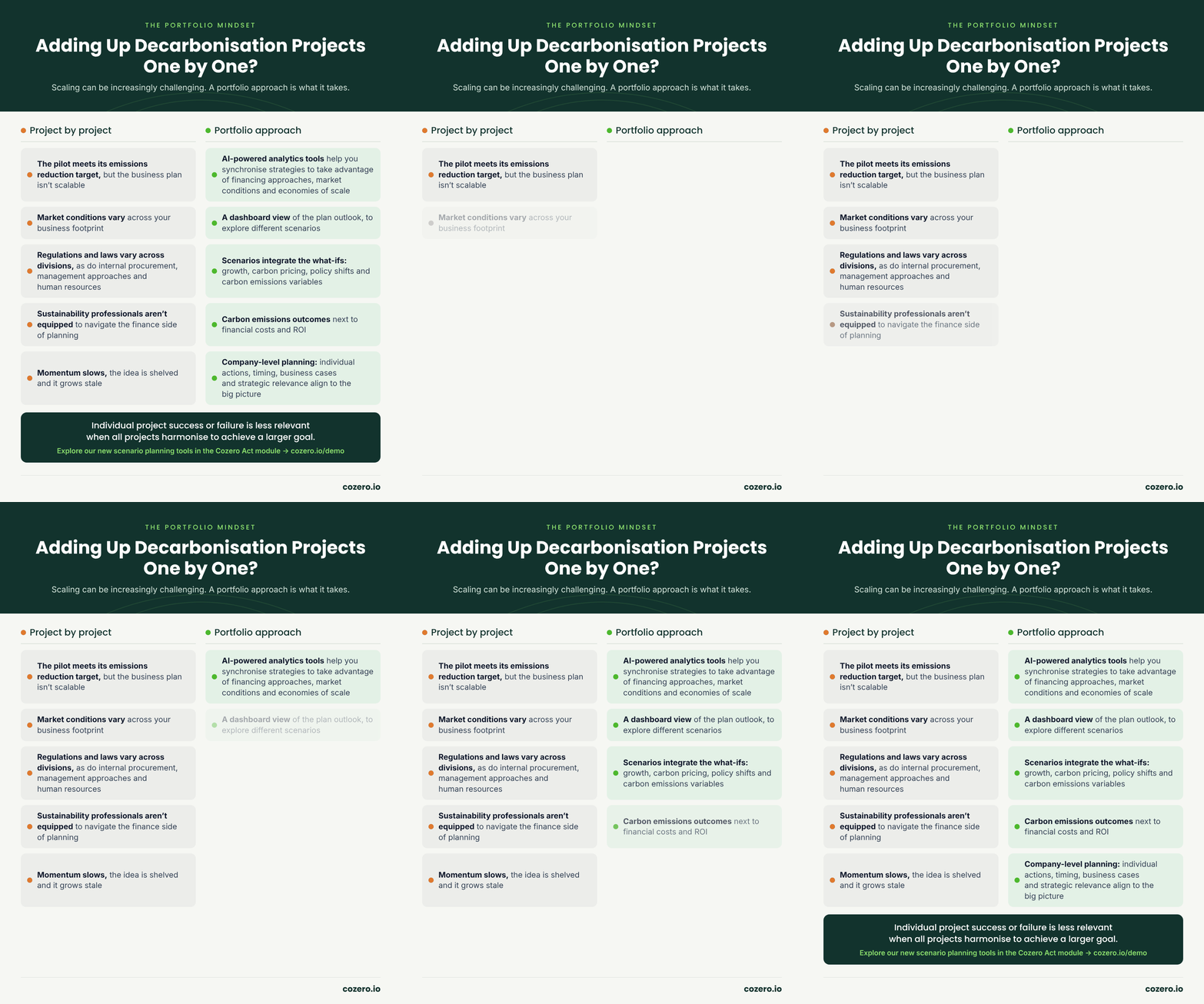
🙄 Are you adding up decarbonisation projects one by one, trying to get to net zero? (Be honest.) If so, scaling can be increasingly challenging. A decarbonisation portfolio approach is what it takes. 💼 😤 We hear about the obstacles to scaling individual projects all the time. 🚀 You launch a pilot project. It meets the carbon emissions reduction target for that project, but the business plan isn't scalable. 🗺️ Market conditions vary across your business footprint. 📚 Regulations and laws vary across your divisions, as do internal procurement, management approaches and human resources. 🤯 The complexity is mind-boggling, and sustainability professionals aren't equipped to navigate the finance side of planning. 🥫 Momentum slows, you shelve the idea, and it grows stale. Enter the decarbonisation portfolio approach. 💡 In this approach, AI-powered analytics tools help you synchronise your strategies to take advantage of different financing approaches, market conditions and economies of scale. 📊 You can clearly view the plan outlook in a dashboard where you can explore different scenarios. Scenarios integrate all of the what-ifs: growth, carbon pricing, policy shifts, and carbon emissions variables. 🔎 You explore carbon emissions outcomes next to financial costs and ROI. Suddenly, you can plan at the company level, and individual actions, timing, business cases and strategic relevance all align to the big picture. 🧘 This is the portfolio mindset. Individual project success or failure is less relevant when all projects harmonise to achieve a larger goal. Want to get started? Get in touch to explore our new scenario planning tools in the Cozero Act module. 👉 https://www.cozero.io/demo #decarbonisation #scenarioplanning #energytransition #financialplanning #portfolioplanning #carbonmanagement
- LINKEDIN · CAROUSELSince 7 Oct 2026
Most ESRS reports look complete until the auditor starts asking questions. Cozero flags exactly which emissions data points are audit-ready 📊 and which aren't before reporting season starts.
- LINKEDIN · IMAGESince 30 Sept 2026
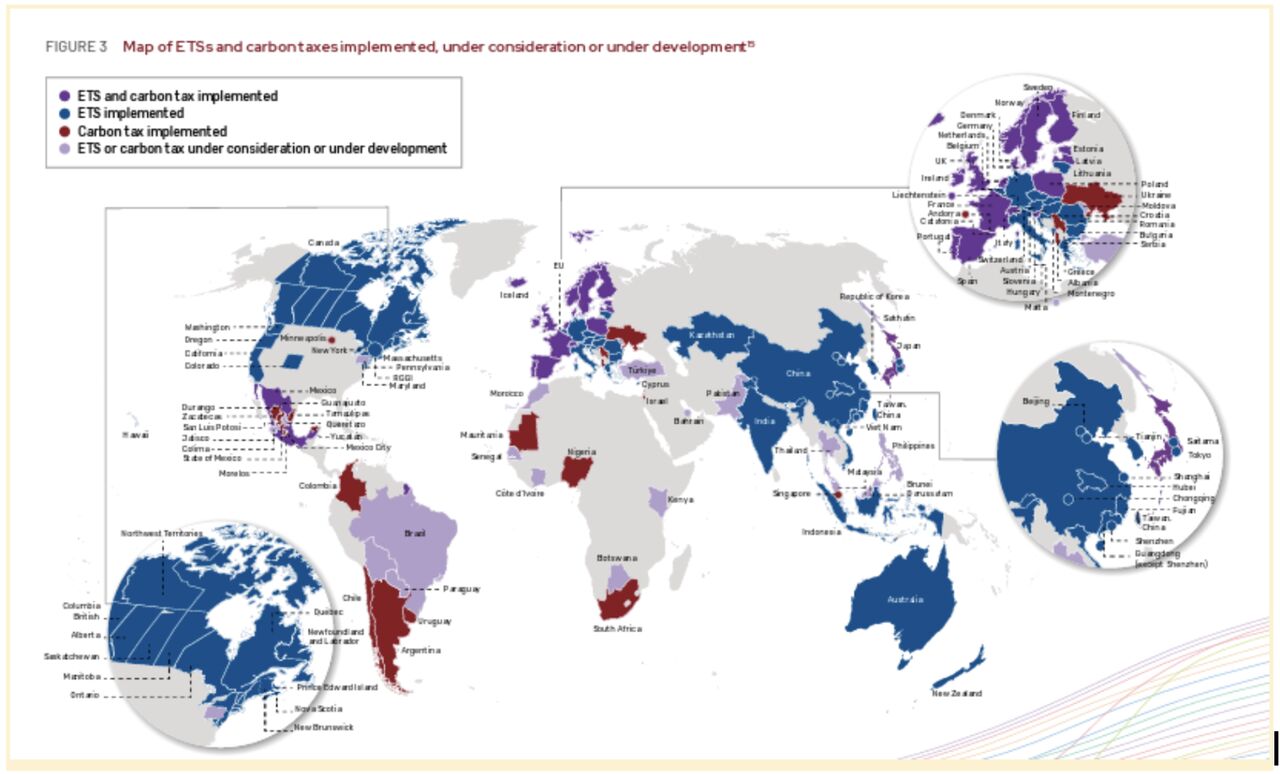
🤔 If you think the EU is the only region scaling carbon pricing, think again. The ripple effects of the EU Emissions Trading System (ETS) and Carbon Border Adjustment Mechanism are spelled out in a recent World Bank Group report. The 2026 State of Carbon Pricing Report shows why it's time to look beyond the EU Emissions Trading System (ETS) and CBAM to understand your carbon pricing risks (link in comments). 🇮🇳 🇯🇵 India and Japan have launched two of the world's largest emissions trading systems (ETSs). Falling closely behind China, the EU, and South Korea in absolute GHG emissions, their systems represent huge coverage of global emissions. 🇯🇵 Japan's GX-ETS entered its second phase on 1 April 2026, now mandating participation from over 700 companies and covering more than 50% of Japan's national GHG emissions — approximately 524 million tonnes of CO2e. 🇮🇳 India's Carbon Credit Trading Scheme (CCTS) uses a baseline-and-credit model targeting seven hard-to-abate sectors, including aluminium, cement, petrochemicals, and fertilisers, covering 490 heavy industry entities and roughly 477 million tonnes of CO2e. 🇪🇺 EU's Carbon Border Adjustment Mechanism (CBAM) also started to scale globally. Even though the embedded GHG emissions of EU imports covered by CBAM were just 0.3 percent of global GHG emissions (171 MtCO2e), more countries are launching their own CBAMs. EU trade partners are taking note. 🇬🇧 The UK CBAM is expected to enter into force in 2027, with a similar framework to the EU CBAM, representing 0.1 percent of global merchandise exports. Other border carbon adjustment taxes are being considered or adopted in Albania, Malaysia, Thailand, Australia, Canada, Taiwan, China, and California. 🔮 Forward-looking investors and companies are not waiting to incorporate the cost of carbon into their procurement, allocation and investment decisions. Competitive strategy means treating the cost of carbon like a financial input: factoring into asset pricing and investment ROI. ✅ Cozero's platform gives you the carbon data foundation and financial planning analytics to embed internal carbon pricing into your carbon management strategy. Learn why internal carbon prices are a growing trend in our latest insight 👉 https://lnkd.in/dx4Eg8PU #carbonpricing #CBAM #ETS #carbontax #internalcarbonpricing #carbonadjustedEBITDA


6 of 215 adsSign up to see every Cozero ad, filter by format and date, and get alerts on new ones.
See all 215 adsWatch the companies you care about.
Filter every ad by industry, country, format and network, and get alerts when a company you watch starts running new ads.