On air · 1 of 3 networks
Condor Group
- condor-group.uk
- Professional Services
- GB
- 8 employees
Condor Group’s ads on LinkedIn, Meta and Google, recorded by adsrunning. Browse the latest here for free. Sign up free to see all 30. Watch Condor Group with Starter to get each new one in your feed.
Watchlist with Starter · $49/mo
| Network | Status | Live ads | Nov 2025LinkedIn activity · 52 weeksOct 2026 | Checked | Next step |
|---|---|---|---|---|---|
| Running | 30 | Checked 30 Oct 2026 | See all 30 ads → | ||
| Meta | Not checked | — | |||
| None recorded | 0 | No ads found on the Google Ads Transparency Center | Checked 25 Oct 2026 | Collect them with the API → |
Condor Group has 30 live LinkedIn ads. We recorded no Google ads on 25 Oct 2026.
Latest ads
- LINKEDIN · IMAGERecorded 28 Oct 2026
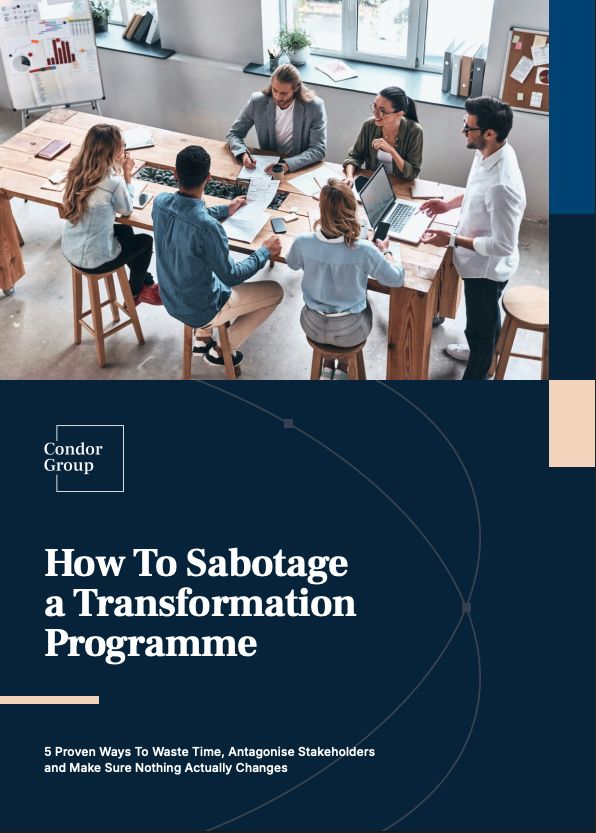
I'm excited to launch our “How to Sabotage a Transformation Programme” guide. In it, Edward Boyns and I break down the five easiest ways to sabotage a transformation programme, from distraction tactics to terrifying everyone. This was our first piece of long form content, and I actually found it to be a great experience, especially with such an interesting topic. The inspiration came from a 1944 US wartime intelligence manual on sabotaging organisations from the inside. It set out tactics that “citizen saboteurs” in German-occupied Europe could use to subvert public institutions. We put this together to show how fragile transformation programmes can be and how much depends on their execution. For each form of "sabotage", we’ve included real stories of where it has happened. You can give it a read here: https://lnkd.in/ej6R6yd6
- LINKEDIN · IMAGERecorded 28 Oct 2026
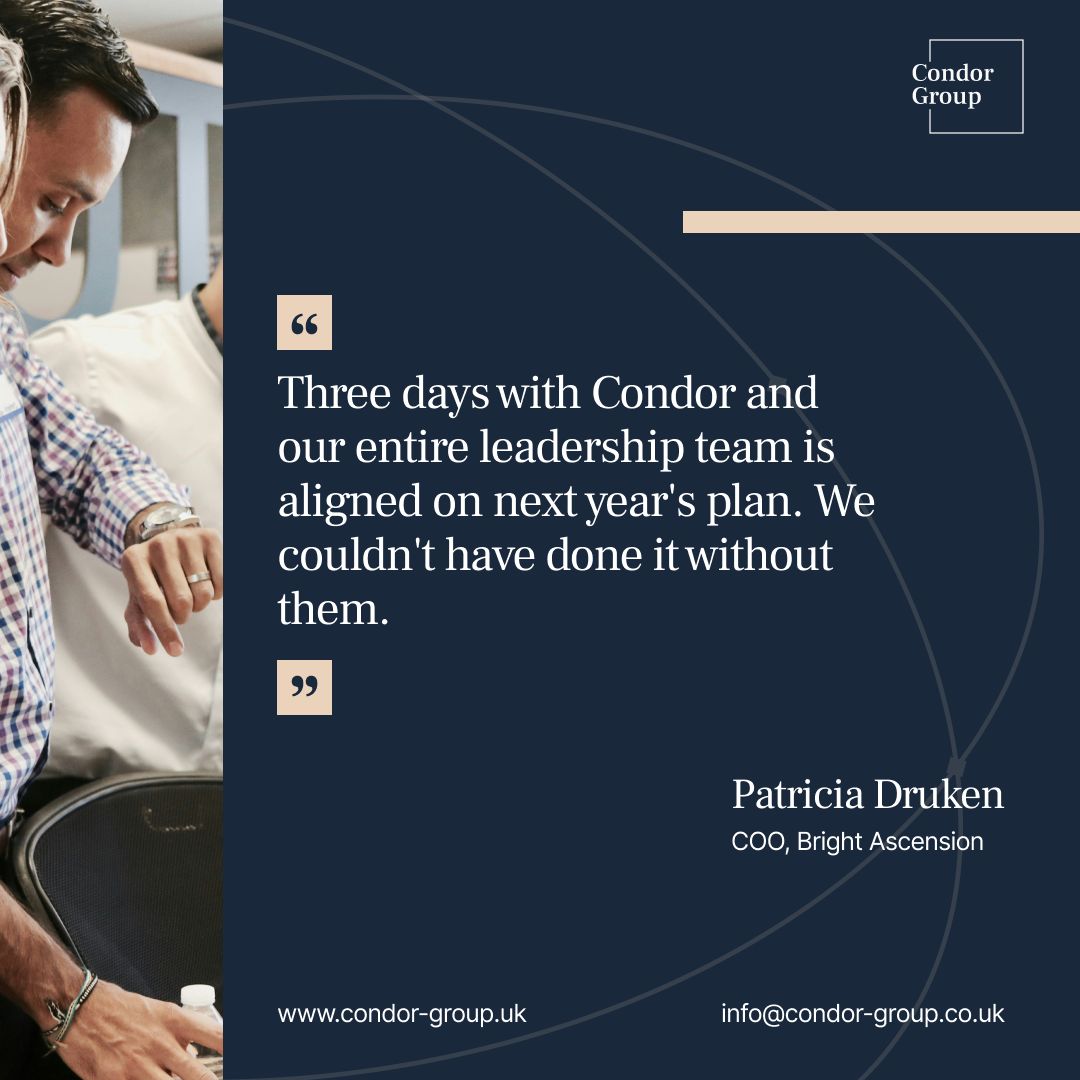
Pleased to share some feedback the Condor Group team received following a recent client engagement with Bright Ascension Ltd. Using our Executive Workshop methodology we worked with their senior leadership team in surfacing where alignment really exists, identify the critical differences that need resolving, and create a clear path from strategic ambition to execution. It was our first piece of work together - thank you to the client team for their trust and openness throughout.
- LINKEDIN · IMAGERecorded 11 Oct 2026
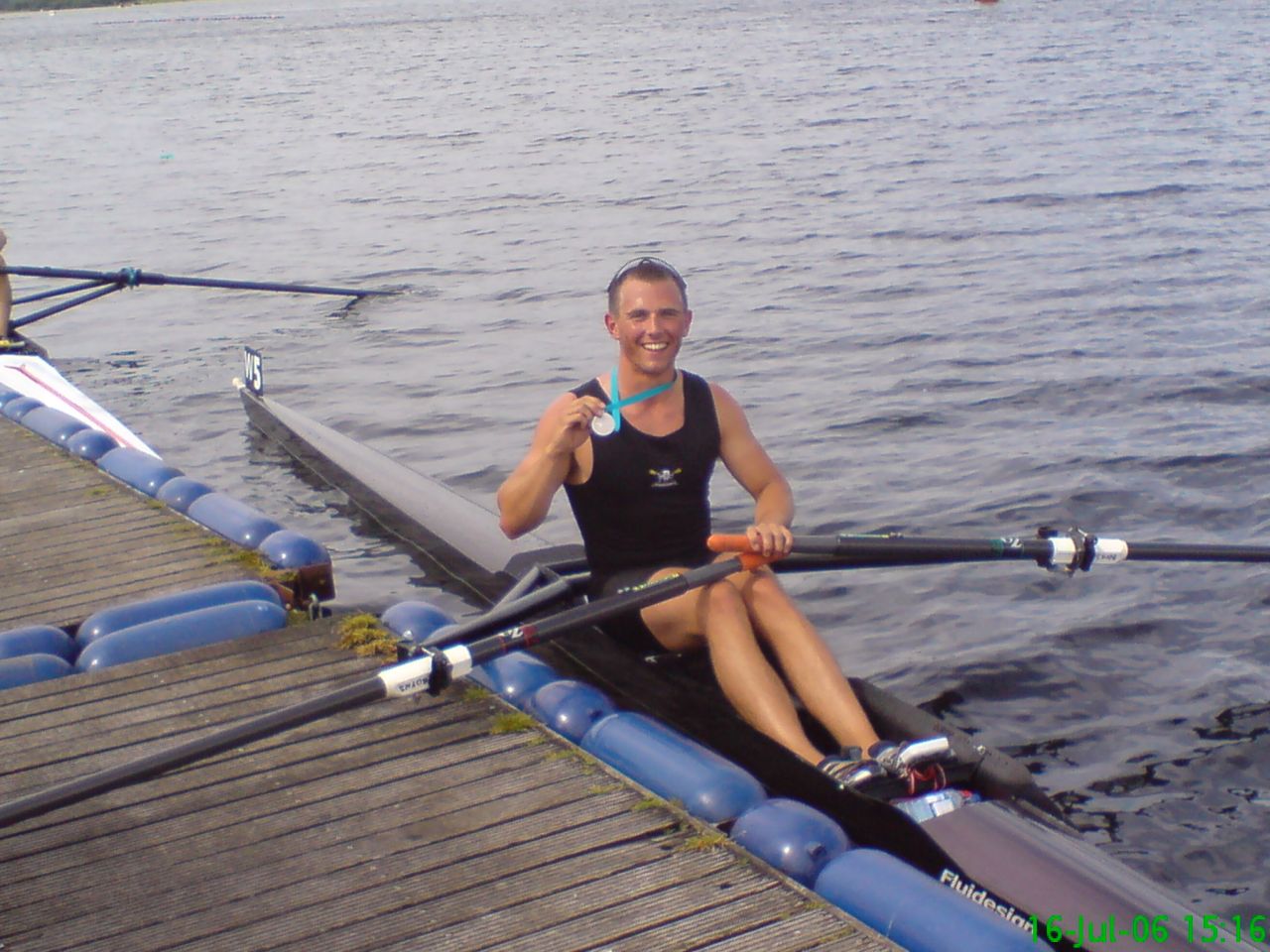
Sport taught me what I know about performance excellence. Back in 2007, after rowing full-time for years and trialling at U23 level, I made a difficult and deliberate decision to step away from the sport. The risk of dedicating four or five years to an Olympic cycle and still not making it felt too high, and I chose to start building a career instead. (People in my network have actual Olympic medals, and I'm certainly not in their league 😅) Whilst rowing, I learnt to create a repeatable process, that once perfected meant the outcome took care of itself. Focusing on controlling what you can control to have the biggest impact, as documented extensively by the likes of the GB Cycling Team, GB Rowing Team and others. Sometimes referred to as "Kaizen": the Japanese philosophy of continuous improvement. 1% marginal gain, constantly. Always asking "is what we're doing going to make us faster/ better?" The result? Team GB performance at Summer Olympics improved from 15 medals at Atlanta 1996 to a peak of 67 medals at Rio 2016, and has stabilised around that level. I soon found I was able to transfer that thinking to operational excellence as I took my career from Tesco to BT to Barclays and Capita. I've seen every operational programme in terms of that foundational principle. How do we optimise what we can control? It helps you see how to be a little bit better every day, and how to build a process around obsessively achieving your goals and objectives. We can't all be chasing Olympic medals, I know that all too well! One of my life goals ended in 2007, but shaped everything I've done since. But continuous improvement is a daily discipline that I can promise you reaps rich rewards - again and again. (This is me exactly 20 years ago with a silver medal at the British National Championships!)
- LINKEDIN · IMAGERecorded 11 Oct 2026
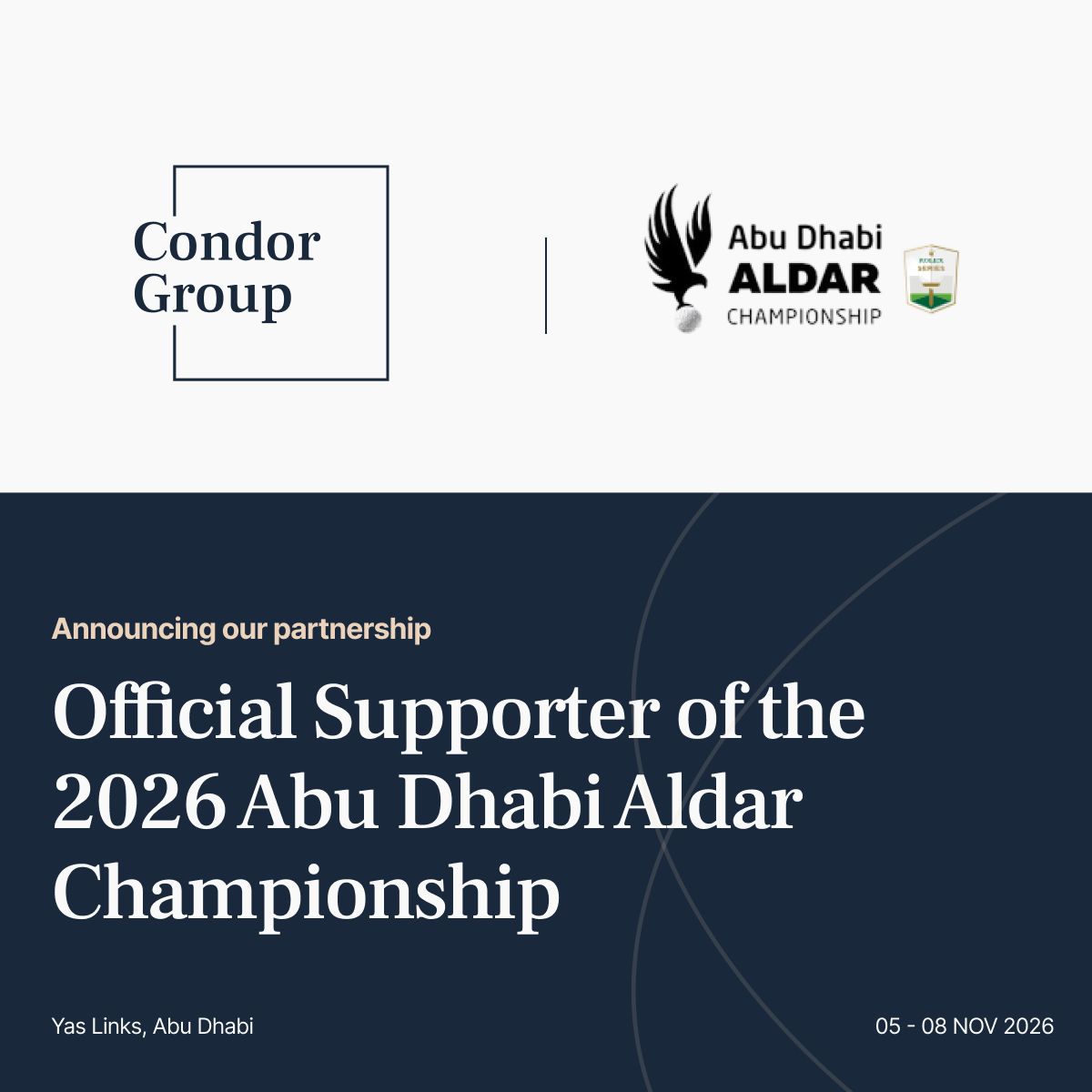
I’ve never been this excited to make a work-related announcement in my life. The business I started three and a half years ago (Condor Group) is an Official Supporter of the Abu Dhabi Aldar Championship, a DP World Tour event from 5th to 8th November! ⛳️ Anyone who’s met me knows that golf makes up a huge part of my life, as does running my business, so this feels like a collision of two worlds. Seeing the Condor logo next to the DP World Tour’s and so many others still feels surreal! I’m sure you’ll be seeing more from me and from Condor Group over the next few weeks, so I’ll wrap this post here. I can’t wait for a week of building relationships with clients, partners and leaders we’re looking to connect with in the region… and, importantly, the golf.
- LINKEDIN · IMAGERecorded 11 Oct 2026
After over 50 transformation programmes in my career, these are the hardest: 1. Carve-outs and separations: You're unpicking multiple sets of systems, people and processes all whilst keeping the business operational day-to-day. It's almost always against tight timelines because of board pressure, which leaves no room for error. 2. Post-merger integrations: After a firm agrees to buy or merge with another, the months that follow can make or break whether the deal is successful. This is where I often see the most resistance to change. You're integrating systems, cultures, people, behaviours, leadership. The lot. 3. Core technology change: Big system changes like ERP or CRM uncover inconsistencies that need changing. Broken processes, half-built systems, and always data issues. The challenge here is that when you move to a new system you have to fix the underlying processes while training people. 4. Operating model redesign: This is probably the hardest one, because the way a business operates at £250m turnover vs £500m is completely different. But you can't change everything overnight. So what ends up happening is you're redesigning the operating model whilst still trying to grow the business. Across all of these, the technical side is generally straightforward. It's ensuring leadership alignment, managing organisational behaviour and protecting the best bits of the culture that make things difficult.
- LINKEDIN · IMAGERecorded 11 Oct 2026
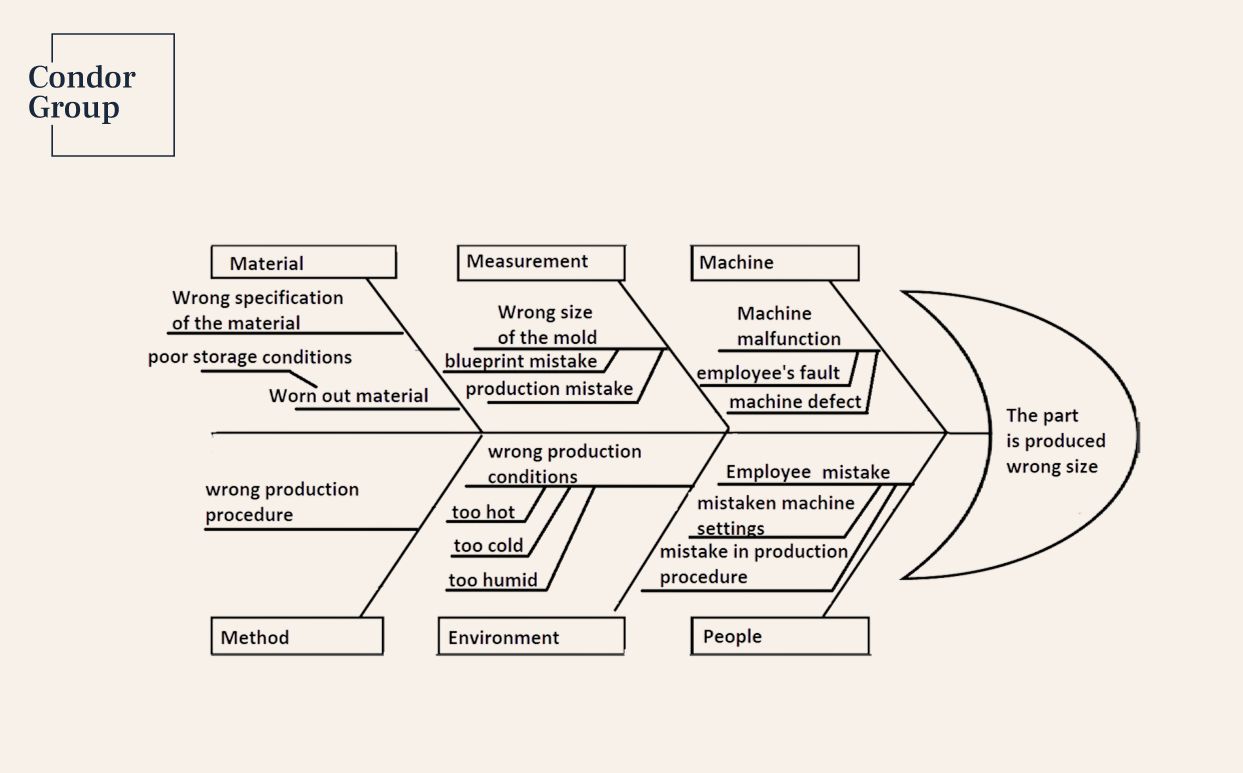
When I was working at a manufacturing company, I received some customer complaints about the finish of our products. An initial top level analysis pointed the finger at a 20-year-old mould, which would have cost £40,000 to replace. Root Cause Analysis told a different story. The best tool for RCA is the Fishbone diagram (also known as Ishikawa analysis, see below). In short: you place your central problem at the "head" of the fish. From the spine out, you draw six bones and assign broad headings, like: Material Measurement Machine Method Environment People These headings will be inspiration to identify the specific things within your organisation that lead to the central problem, but the key to its effectiveness is prioritisation. This is often the step that is approached incorrectly. They fill out the Fishbone diagram and then systematically try to fix every single issue. Do not do that. Instead, assess the frequency and significance of each factor and prioritise the root causes that have the highest impact, vs those with the lowest effort, by mapping them on a 2x2 axis: "effort" vs "impact". In our case, the Fishbone showed me how giving the factory team better screwdrivers, higher quality sandpaper, and more comfortable overalls empowered them to finish the products perfectly. A more effective and infinitely cheaper solution, saving thousands. It's worth saying, AI can often be a high effort solution to the wrong problem leading to very little impact. RCA helps you avoid that.

6 of 30 adsSign up to see every Condor Group ad, filter by format and date, and get alerts on new ones.
See all 30 adsWatch the companies you care about.
Filter every ad by industry, country, format and network, and get alerts when a company you watch starts running new ads.