On air · 1 of 3 networks
Conde House global official
- condehouseglobal.com
- Industry & Manufacturing
- JP
- 8 employees
Conde House global official’s ads on LinkedIn, Meta and Google, recorded by adsrunning. Browse the latest here for free. Sign up free to see all 37. Watch Conde House global official with Starter to get each new one in your feed.
Watchlist with Starter · $49/mo
| Network | Status | Live ads | Nov 2025LinkedIn activity · 52 weeksOct 2026 | Checked | Next step |
|---|---|---|---|---|---|
| None recorded | 0 | Checked 30 Oct 2026 | See all 37 ads → | ||
| Meta | Running | 12 | Active ads on the Meta Ad Library, all countries | Checked 27 Oct 2026 | Collect them with the API → |
| None recorded | 0 | No ads found on the Google Ads Transparency Center | Checked 25 Oct 2026 | Collect them with the API → |
Conde House global official has no live LinkedIn ads. Its Facebook page had 12 active ads on 27 Oct 2026, and we recorded no Google ads on 25 Oct 2026.
Latest ads
- LINKEDIN · IMAGESince 28 May 2026
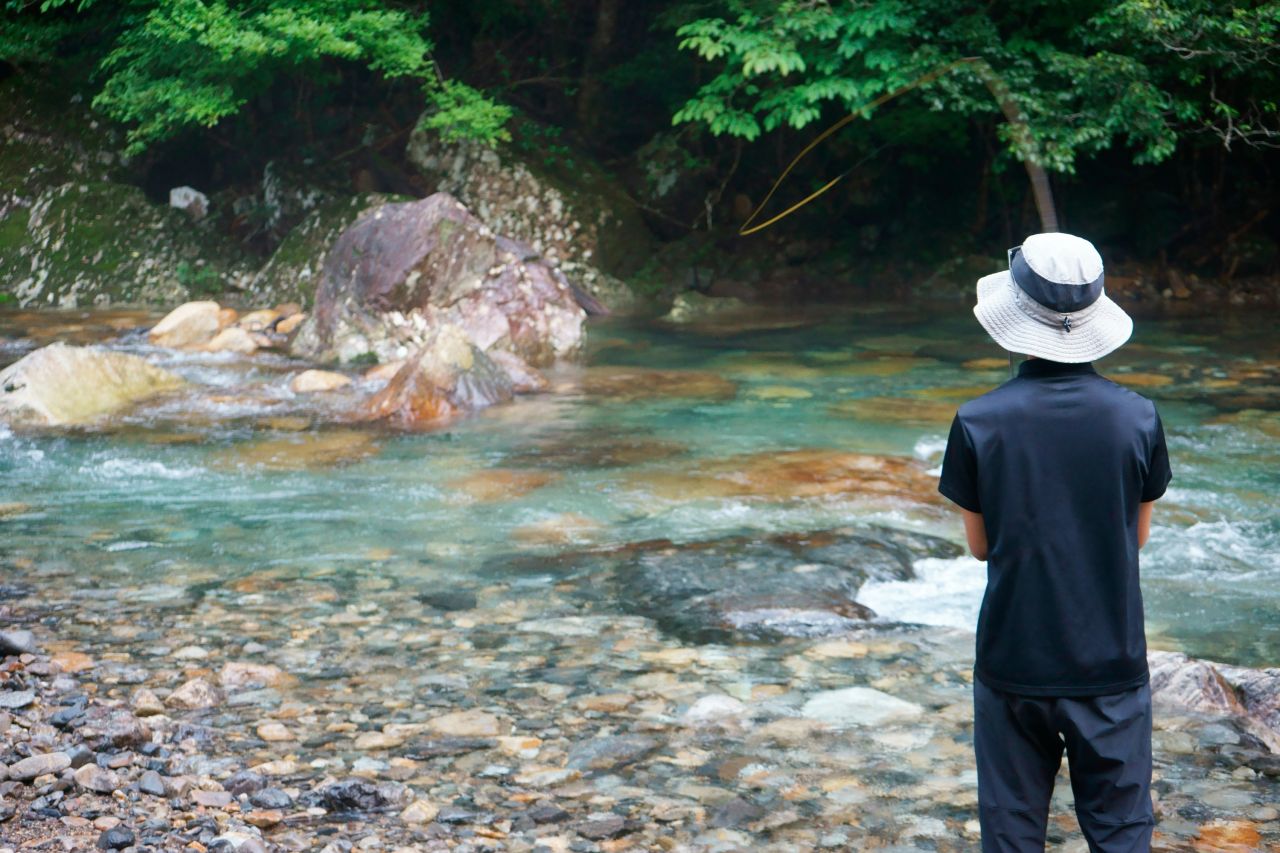
WHAT LEONARDO SAW I have a confession: I very often quote famous people to sound smarter than I am. It's a bad habit, and LinkedIn has made it worse. With that out of the way — There is a quote widely attributed to Hemingway in Japan: "When you can't catch fish, think of it as time granted to contemplate life." No one can actually prove he said it. I've decided I don't care. Standing by a river in Hokkaido with an empty bucket and a bruised ego, a man needs whatever psychological defense he can find. The trouble is, while I was busy pretending to contemplate life, I was mostly contemplating whether to open the snacks I'd brought. Leonardo da Vinci once stood by a river and saw something else entirely. He saw vortices. The swirling, complex patterns of fluid in motion. From those patterns, he developed theories about how heart valves open and close — driven not by muscle, but by the subtle geometry of blood flow. Scientists didn't confirm this until centuries later. I saw no fish. Einstein claimed that genius is 1% talent and 99% hard work. I suspect he was being generous. He probably couldn't fathom how a person could stare at a vortex for an hour and think only about sandwiches. The gap between genius and the rest of us is, I've concluded, a blind spot for both parties. We can't see our own shallowness. They can't imagine it. Leonardo wrote: "Human subtlety will never devise an invention more beautiful, more simple, or more direct than does nature — because in her inventions, nothing is lacking, and nothing is superfluous." Wood has knots, burls, erratic grain — what the market sometimes calls defects. I call them a record. The history of a tree's argument with wind and time, compressed into timber. Nature doesn't make mistakes. She just has a longer timeline than our quarterly reports. I still can't catch fish. But the river might be trying to tell me something. I'm just not Leonardo enough to hear it yet. #Philosophy #Curiosity #Japan #ShungoIjima
- LINKEDIN · IMAGESince 22 May 2026
THE ABYSS OF KAROSHI I used to be the guy who clocked 100 hours of overtime a month. Not because I was told to. Because everyone around me did, and leaving before them felt like a confession of weakness. That's the part that doesn't make it into the headlines. A young woman at Japan's top advertising firm took her own life after clocking over 100 hours of overtime in a month. When that story broke, I didn't feel outrage. I felt recognition. I was at the Ministry of Finance — "elite of the elite," as they say — and my numbers looked the same. The difference between her story and mine had nothing to do with character or resilience. It was just luck, probably. Here's the structure nobody talks about. Japanese companies hire generalists and promise lifetime employment. They can't fire you. So when demand drops, they don't reduce headcount — they squeeze hours. Overtime becomes the adjustment valve. The government eventually added real penalties for this. Companies responded by telling employees to stop recording their hours. Problem solved. Statistically. I grew up in Hokkaido — not an island. But Japan is small, and the walls are real. Evolutionary psychologists note that psychopathy rates in island nations run below 1%, versus 4% in continental ones. The deviant gets noticed. The deviant gets removed. The person who leaves the office first isn't just tired. They're marking themselves. I'm not clean on this. Neither are you. Every convenience we take for granted — the package that arrives overnight, the restaurant that stays open late — may run on someone's unpaid hours. We are all downstream of this system. We call it a problem. We work on it. But in a market where our competitors run on unpaid ghost hours, "doing it right" is sometimes a competitive disadvantage. I have no elegant conclusion to offer here. Just this: There are roughly 150 official deaths from overwork — Karoshi — reported in Japan every year. Official. The abyss is still open. And most of us, at some point, have stood a little too close to the edge — and called it dedication. #Karoshi #WorkLifeBalance #FutureOfWork
- LINKEDIN · IMAGESince 18 May 2026
THE LONELY GOLDFISH On a business trip to Tokyo, I looked around the subway car. Every single person was hunched over a screen. Including me. I felt a vague sadness about this. Then I put my earphones in. My sister is twelve years younger than me. When she was a kid, she would corner my friends — total strangers to her — and lecture them about Pokémon. For thirty minutes. Whether they wanted it or not. I found it exhausting. Somewhere between childhood and "becoming a professional," we stopped doing that. I'm not sure that's entirely a bad thing. Still. I once watched a video of an experiment. A shy man walks up to a woman at a café. He's wearing an earpiece. He thinks he's being coached by a communication expert. The expert is a five-year-old girl. She tells him what to say. He sits down and says: "Can I tell you a story? Once upon a time, there was a goldfish. He was all alone. The end." The woman didn't call security. She smiled and said, "That was really unusual." I think about that goldfish more than I should. Though honestly, if someone sat next to me on the subway and opened with a goldfish story, I would probably pretend to be asleep. I don't know what I'm trying to say here. Maybe that loneliness is something we're choosing, at least partly. Or maybe we're just tired. Or maybe both, and there's no clean answer, and I should stop writing before I sound like I have one. #HumanConnection #Leadership #Japan #Tokyo
- LINKEDIN · IMAGESince 11 May 2026
I CAN LOSE THOUSANDS IN A DAY. And still hesitate over a $1 discount. I’ve done both. Lost money in the stock market without blinking. Then stood in a supermarket, staring at cereal, waiting for it to go on sale. I once bought a $2,000 suit. I was so afraid of spilling coffee on it that I barely wore it. At home, I’m in UNIQLO. Head to toe. Every day. I know this makes no sense. But spending money rarely does. There’s this idea— buy experiences, not things. Sounds right. I agree with it. But experiences feel… unstable. Take travel. Whether you enjoy it or not depends on things you can’t control— like whether you end up arguing with your wife, or how much you dread going back to your boss afterward. Compared to that, a growth stock almost feels predictable. I bought a new car once. Made a promise to keep it spotless. Never washed it. Not even once. Every time I see people carefully washing their cars, only for the rain to undo it a few hours later, I can’t help wondering if it’s some kind of training— to get used to effort not paying off. I think we adapt faster than we admit. Maybe that’s the problem. Or maybe that’s just how we survive. So now I try to spend on things I’ll actually touch every day. Not because it’s rational. Because I know I’m not. And even then, I still stand in the cereal aisle, doing the math over a dollar. #ConsumerBehavior #BehavioralEconomics #HumanNature #DecisionMaking
- LINKEDIN · IMAGESince 11 May 2026
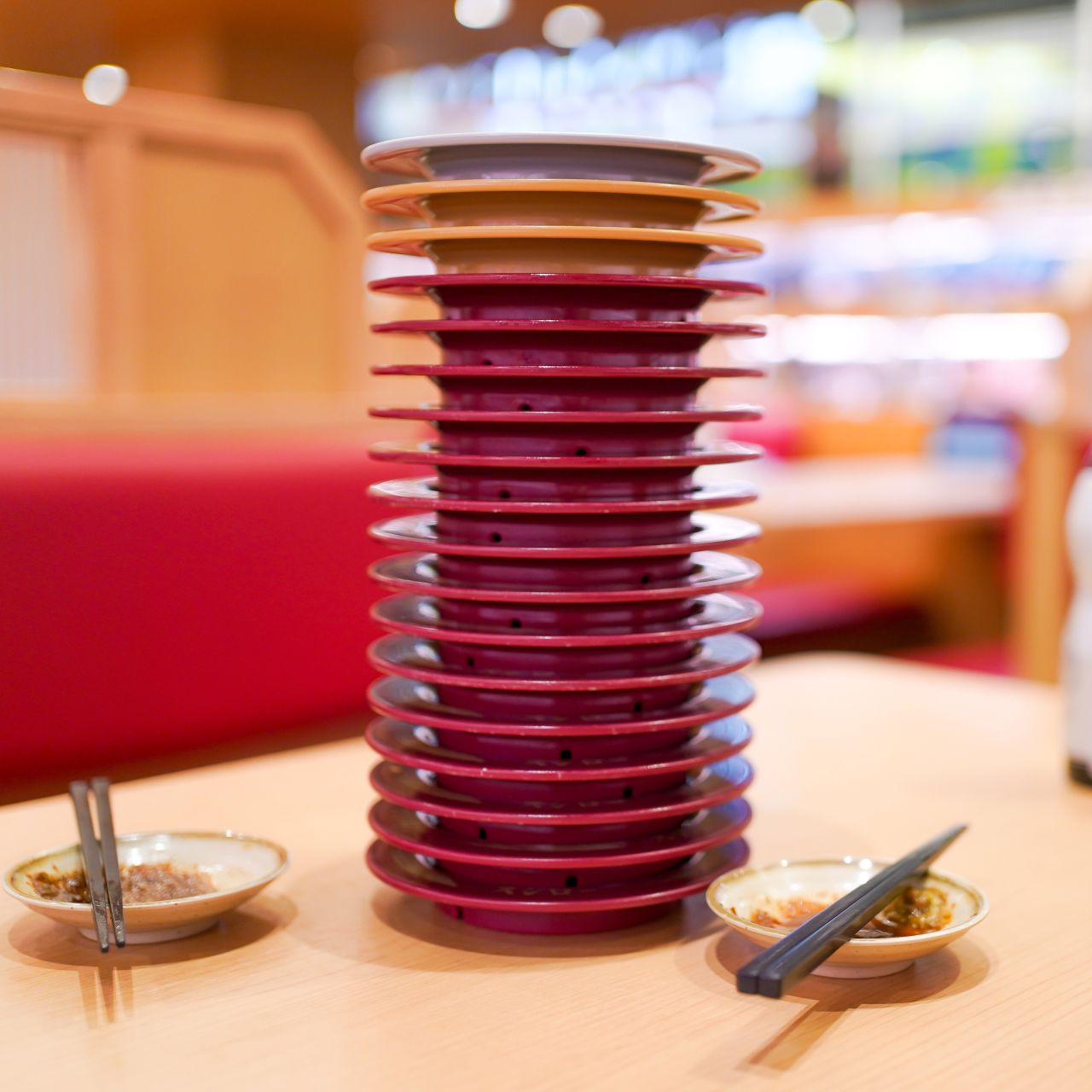
SUSHI USED TO TASTE BETTER Not because it was better. Because it was rare. Now you can eat it anytime. And I do. Usually at conveyor-belt places. Honestly, I think tourists know better sushi than I do. We got richer. At least, that’s what I used to believe. I once worked on tuna vessels. We were at sea for months. Everything smelled like fish. At some point, I stopped wanting to eat tuna at all. Even back then, the number of Japanese crew was already shrinking. We were outsourcing the hard part just to keep sushi cheap. It made sense. I still think it does. But somehow, I don’t remember the last sushi I ate. I used to eat it twice a year. Birthdays. New Year’s Eve. We didn’t go to fancy restaurants. It was usually delivery. I remember trading pieces with my sisters, or quietly taking the ones my parents didn’t eat. I remember both. Maybe nothing is wrong. Maybe this is exactly what we wanted. Or maybe this is just me, getting older and saying “things were better back then.” Still, it’s a strange trade. We got “anytime.” And I’m not sure what we gave up for it. #DesignAnthropology #ConsumerBehavior #JapaneseCulture #BusinessThinking
- LINKEDIN · IMAGESince 7 May 2026
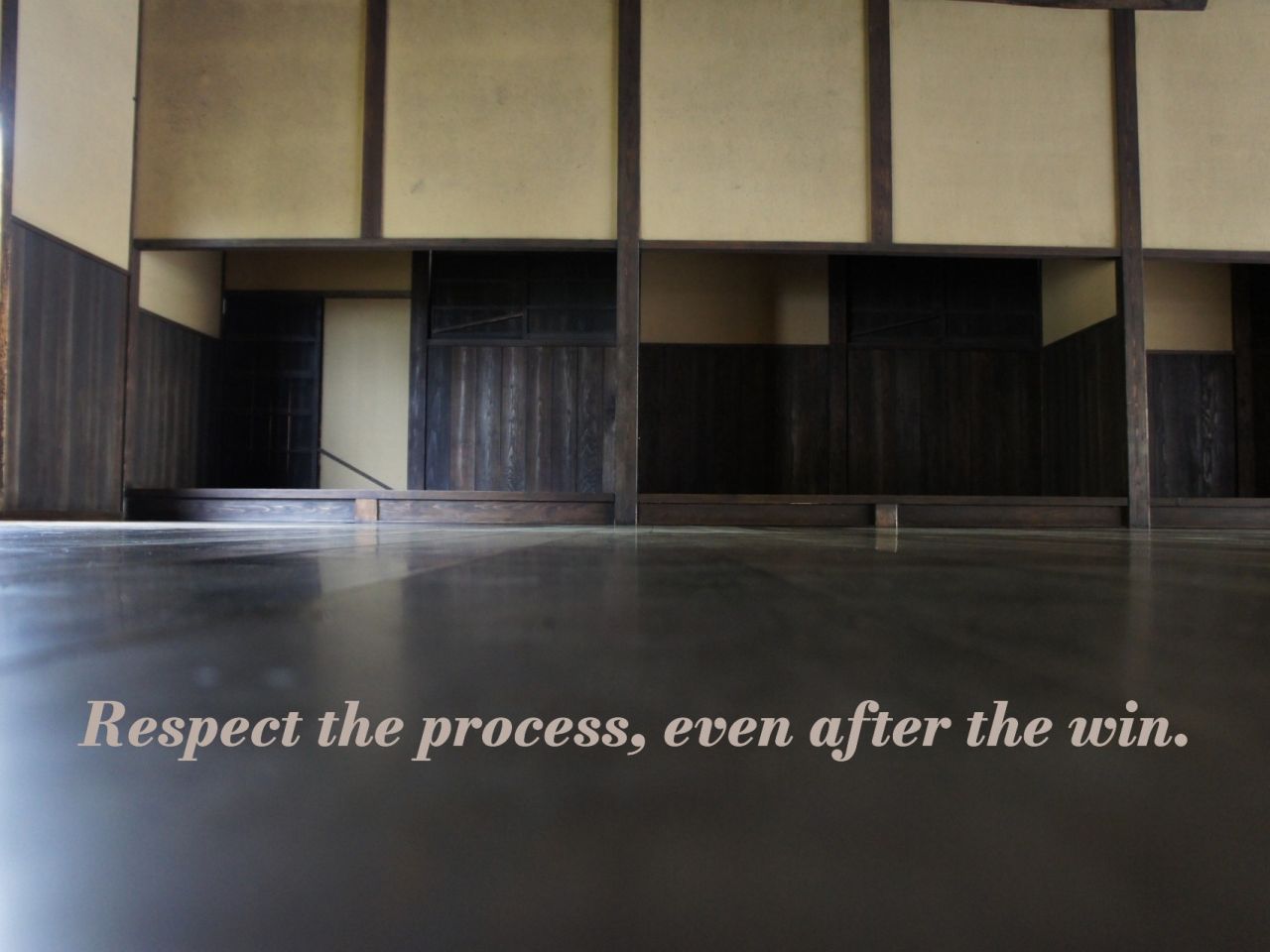
THE ECHO OF VICTORY: Why the Process Matters After the Win When Shohei Ohno won a gold medal in Judo at the Tokyo 2020 Olympics, he didn’t pump his fist. He didn’t smile. He simply bowed. To a world watching for a spectacle of joy, his silence felt strange. But in the world of Japanese martial arts, victory is not a celebration. It is a moment for reflection. This is why Kendo—the way of the sword—refuses to become an Olympic sport. In Kendo, if you celebrate after scoring a point, that point is revoked. Why? Because a "Way" (Do) isn't about the scoreboard. It’s about how you carry yourself throughout the entire journey. [ Zanshin: The Quality of the Process ] Central to this is the concept of Zanshin —the "lingering heart." Centuries ago, Zanshin was a survival skill. On the battlefield, the moment you thought you had won was the moment you were most likely to be killed. You had to stay focused, even after the strike. Today, Zanshin has evolved into an aesthetic of the "Echo." It’s the beauty of the resonance after a bell has rung. It means the work isn't finished when the result is achieved. It’s finished when the "afterglow" of your effort is clean and disciplined. [ The Danger of "Winner Takes All" ] I see a quiet version of Zanshin in our factory every day. Our craftspeople maintain their tools and tidy their workspace with a calm focus—even when no one is watching. In a modern business world obsessed with "Winner takes all" meritocracy, we often lose sight of this. We focus so much on the "Point" (the closing of a deal, the quarterly goal) that we forget the quality of the process that led us there. If we only value the win, we become reckless. We ignore the small, vital details that build long-term trust. Perhaps the real value of Zanshin in business is this: The quality of your work is revealed not by the victory itself, but by how you behave the moment after you’ve won. (I say all this with a straight face, but I must confess: I have zero "Zanshin" when it comes to my local baseball team, the Hokkaido Fighters. When they score, I’m the first one jumping up and down, doing fist pumps like a teenager. I still have a long way to go before reaching enlightenment.) In a "Winner takes all" culture, how do you protect the value of the process? Do you reward only the "Point," or do you look for the "Zanshin" in your team's work? #Zanshin #ProcessOverResult #JapanesePhilosophy #ModernLeadership #BudoSpirit #Workmanship #HokkaidoFighters #ShungoIjima



6 of 37 adsSign up to see every Conde House global official ad, filter by format and date, and get alerts on new ones.
See all 37 adsWatch the companies you care about.
Filter every ad by industry, country, format and network, and get alerts when a company you watch starts running new ads.