On air · 2 of 3 networks
Common Trust
- common-trust.com
- Fintech & Financial Services
- US
- 17 employees
Common Trust’s ads on LinkedIn, Meta and Google, recorded by adsrunning. Browse the latest here for free. Sign up free to see all 22. Watch Common Trust with Starter to get each new one in your feed.
Watchlist with Starter · $49/mo
| Network | Status | Live ads | Nov 2025LinkedIn activity · 52 weeksOct 2026 | Checked | Next step |
|---|---|---|---|---|---|
| Running | 22 | Checked 30 Oct 2026 | See all 22 ads → | ||
| Meta | Not checked | — | |||
| Running | 6 | Ads on the Google Ads Transparency Center | Checked 25 Oct 2026 | Collect them with the API → |
Common Trust has 22 live LinkedIn ads. We recorded 6 Google ads on 25 Oct 2026.
Latest ads
- LINKEDIN · IMAGERecorded 14 Sept 2026
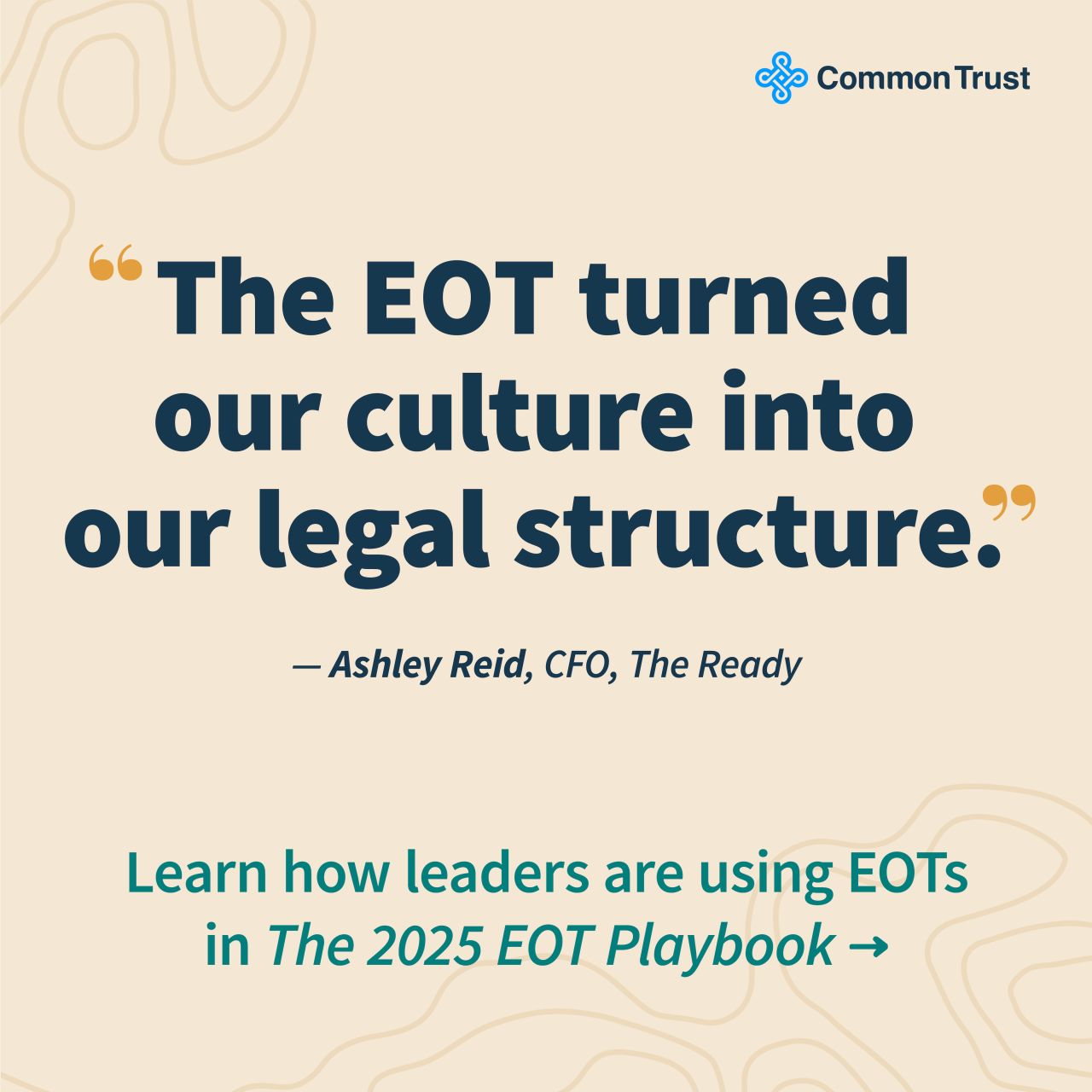
Real owners. Real transitions. In the 2025 EOT Playbook, leaders share how they designed ownership structures that protect culture, strengthen teams, and keep companies thriving.
- LINKEDIN · IMAGERecorded 14 Sept 2026
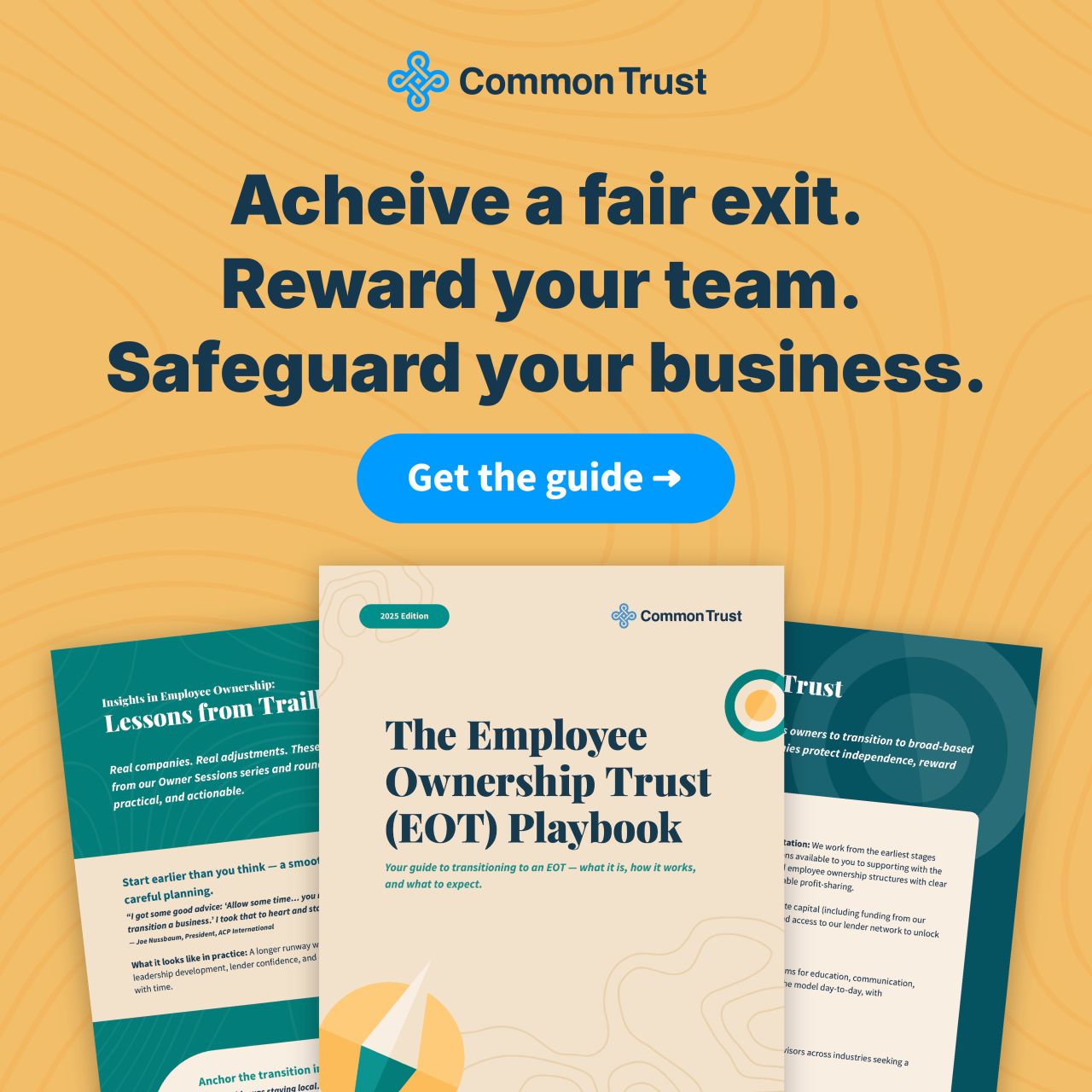
The best exits do more than cash you out. Learn how Employee Ownership Trusts reward your team, protect your legacy, and keep your company independent for the long run.
- Text-onlyOne of the things on my mind recently -- what if one of the best strategies to surviving economic uncertainty isn't cutting costs, but sharing ownership with your workforce? The numbers tell a compelling story: - Employee owned firms were 3.2x more likely to retain staff through the pandemic - Productivity increased by 4-5% at employee owned firms after adoption - Leaders at employee owned firms report voluntary quit rates of their employees at roughly 1/3 of the national average But here's what fascinates me most: it's not just about the financial structure. An older research paper showed that the most participative employee-owned companies grew 8-11% faster than expected, while those without genuine participation showed declining performance. That data is somewhat dated at this point and I haven't found refreshed research on this question (if you know where it is, please point me in the right direction! Mark Hand maybe you know?), but this suggests ownership that is not paired with engagement is just another benefits package. True employee ownership requires legal structuring, financial structuring and cultural adoption— and a transition from employee ownership as an ownership model to employee ownership as an operating model.LINKEDIN · TEXT-ONLYRecorded 14 Sept 2026
- Text-onlyI talk to a lot of business owners who know succession is absolutely critical for them in the next few years, they want to make it a priority, but for one reason or another keep putting it off. Here's what I've learned working with folks in similar situations: there's never a perfect time from a business perspective. You're always going to have some initiative in progress, some customer issue, some operational workflow you want to improve. In these situations, we recommend getting started with small steps, which typically means understanding your options. This is especially true if you are interested in employee ownership, because if you get an offer from a third party buyer next week, you're going to be in a pinch to quickly understand how an employee ownership sale would compare. The way I think about it is this: planning gives you more information and more options, and you're never in a worse position because you have more information about your options.LINKEDIN · TEXT-ONLYRecorded 14 Sept 2026
- Text-onlyI was speaking with a business owner considering an EOT buyout the other week, and one of the questions I got was "How involved do owners stay after the transition?" The answer? This is totally flexible and depends on what you want. This is part of what makes EOT buyouts so attractive to legacy-minded owners who've been in the driver's seat for a decade (or several). Some folks are ready to get out and enjoy a well-earned retirement, whereas others may simply want to establish a clear pathway out, but transition more of the daily responsibilities to their leadership team while staying involved in governance and major decisions. Here are two examples: in one case, we worked with a business owner who'd already promoted a new CEO from within his team, and needed a financial strategy to get liquidity. In another case, we worked with a CEO who wanted to double down on the business, but had other shareholders who were ready to sell, so needed a pathway to get them liquidity without handing over control to a third party. Pursuing an employee ownership buyout gives you a lot of optionality over your transition, so when we work with business owners, we always start with the goals for your transition. There's no predetermined formula here, so we can design the transition timeline and your ongoing role around what works for you, your team and the company.LINKEDIN · TEXT-ONLYRecorded 14 Sept 2026
- Text-onlyI was on a call with a business owner last week who is curious about employee ownership as an exit strategy, but not yet convinced. The reality is that only a small portion of the folks we talk to come to us already all in on employee ownership, whereas most of the folks we work with like the concept of an exit through employee ownership "in theory", but are still uncertain about what that actually means for them and their team, how it stacks up against other sale strategies, and how it actually works. In these cases, the number one thing we recommend is to make sure you understand what an employee ownership exit would look like for you as early as possible. At best, you'll find a more aligned exit strategy that can meet your goals as a seller while setting up your team and company for long term success (and save time and money on the sale process), and at worst, you can head into a competitive process with a "bird in hand" by adding employee ownership as another buyer at the table.LINKEDIN · TEXT-ONLYRecorded 14 Sept 2026
6 of 22 adsSign up to see every Common Trust ad, filter by format and date, and get alerts on new ones.
See all 22 adsWatch the companies you care about.
Filter every ad by industry, country, format and network, and get alerts when a company you watch starts running new ads.