On air · 1 of 3 networks
Cohn, de Vries, Stadler & Co.
- cds-luthi.com
- Professional Services
- IL
- 28 employees
Cohn, de Vries, Stadler & Co.’s ads on LinkedIn, Meta and Google, recorded by adsrunning. Browse the latest here for free. Sign up free to see all 33. Watch Cohn, de Vries, Stadler & Co. with Starter to get each new one in your feed.
Watchlist with Starter · $49/mo
| Network | Status | Live ads | Nov 2025LinkedIn activity · 52 weeksOct 2026 | Checked | Next step |
|---|---|---|---|---|---|
| Running | 24 | Checked 30 Oct 2026 | See all 33 ads → | ||
| Meta | Not checked | — | |||
| None recorded | 0 | No ads found on the Google Ads Transparency Center | Checked 24 Oct 2026 | Collect them with the API → |
Cohn, de Vries, Stadler & Co. has 24 live LinkedIn ads. We recorded no Google ads on 24 Oct 2026.
Latest ads
- LINKEDIN · IMAGESince 1 Oct 2026
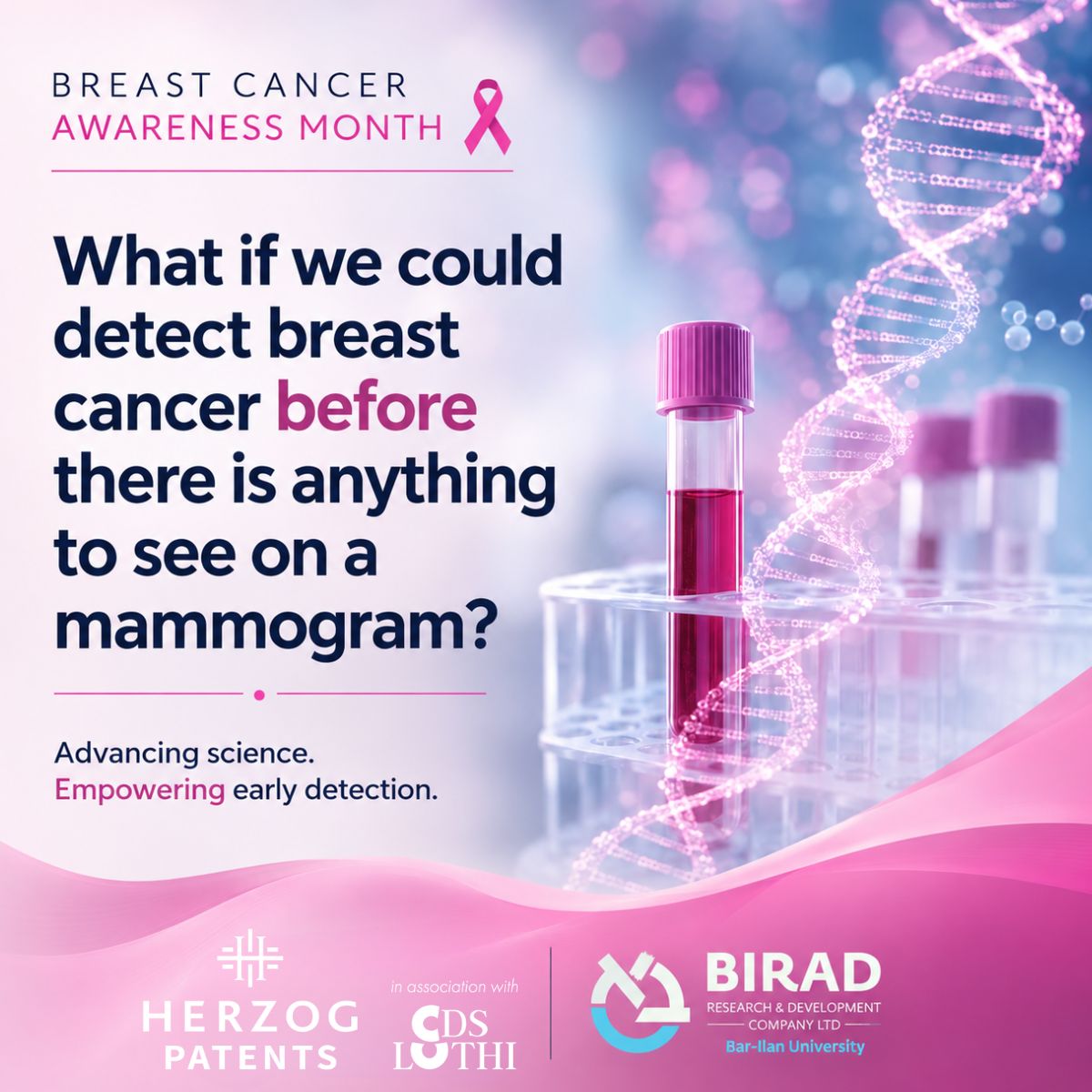
What if we could detect breast cancer before there is anything to see on a mammogram? Mammography is one of the most important tools for breast cancer screening. But in women with dense breast tissue, its performance can be limited: abnormalities can be harder to see, creating a need for additional screening tools such as MRI. Researchers at Bar-Ilan University are developing a fundamentally different approach, one that looks not at the breast, but at the immune system. Prof. Sol Efroni and Dr. Alona Zilberberg of Bar-Ilan University’s Systems Biomedicine Lab have found that breast cancer may leave a detectable signature in T cells circulating in the blood. T cells are part of the immune system’s surveillance mechanism. Each carries a receptor, known as a TCR, and together these receptors create a biological record of the immune system’s responses. Could this immune signature help identify breast cancer and, ultimately, change how we screen for it? The researchers analyzed blood samples from 98 women (breast cancer patients and healthy donors). They sequenced their T-cell receptors and used machine learning to uncover subtle patterns in the data. The model achieved an average AUC of 0.96-a measure of its ability to distinguish between two groups, where 0.5 represents chance and 1.0 represents perfect discrimination. These results demonstrate a strong ability to distinguish breast cancer from healthy groups in this study. The next step is validation at scale. The team aims to analyze approximately 1,000 samples to determine whether this T-cell signature remains stable, reproducible, and clinically meaningful. The first clinical application is designed to complement-not immediately replace-mammography. In the initial phase, the technology could help identify women for whom mammography provides an insufficient or suspicious result, particularly those with dense breasts, and indicate when additional imaging such as MRI should be considered. Over time, the ambition is much greater: to develop a blood-based approach that could ultimately replace mammography as a primary screening technology, while providing a more accessible and biologically informative way to detect breast cancer early. This is not a claim that the technology can already detect cancer before a mammogram can. It is a vision for a new generation of screening-starting by addressing where mammography performs poorly and, if clinical validation succeeds, potentially transforming breast cancer screening altogether. The research is being advanced through BIRAD – Research & Development Company Ltd. supporting its path from research toward commercialization. During Breast Cancer Awareness Month it is especially meaningful to spotlight the science and the people working to move early detection forward. We are proud to support the protection of the intellectual property behind this promising technology and to accompany its journey from the laboratory toward real-world application. @
- LINKEDIN · ARTICLESince 28 Jul 2026
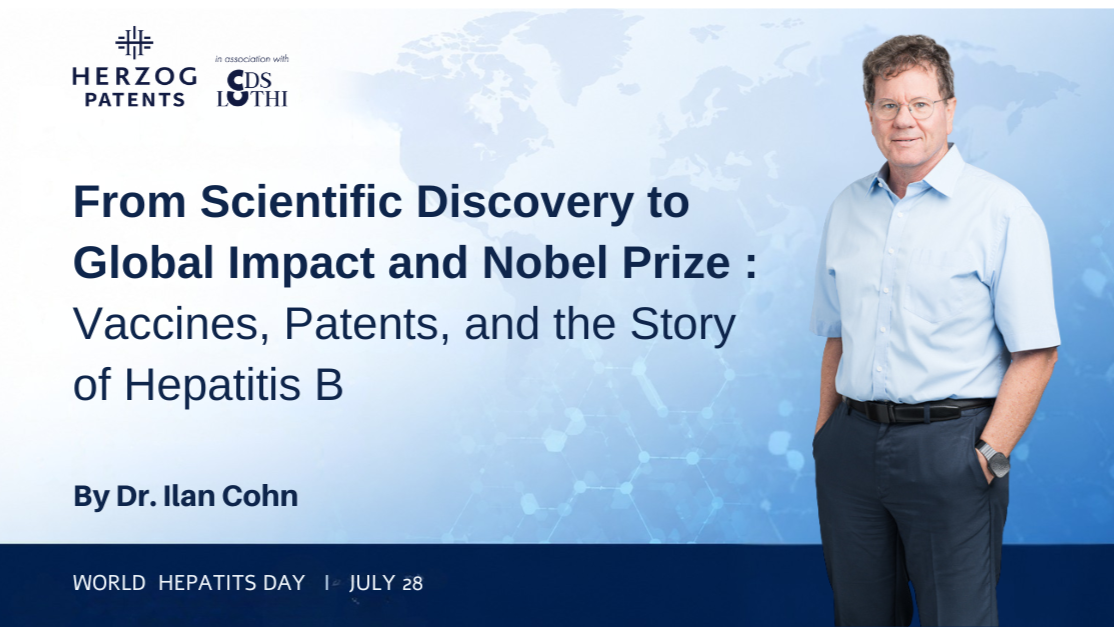
Innovation begins with curiosity. Its impact depends on what we do next. Some scientific discoveries change the course of medicine. But turning a discovery into a product that reaches millions of people requires much more than science alone. It requires years of research, collaboration, investment, perseverance and a framework that enables innovation to move forward. The story of the hepatitis B vaccine is one of those remarkable journeys, not only because it involves a Nobel Prize. In recognition of World Hepatitis Day, I wrote this article reflecting on the scientific breakthrough that made the vaccine possible, the role intellectual property played in bringing it to patients worldwide, and why these lessons remain just as relevant today. I hope you find it interesting. #WorldHepatitisDay #HepatitisB #Vaccines #Patents #IntellectualProperty
- LINKEDIN · ARTICLESince 14 Jul 2026
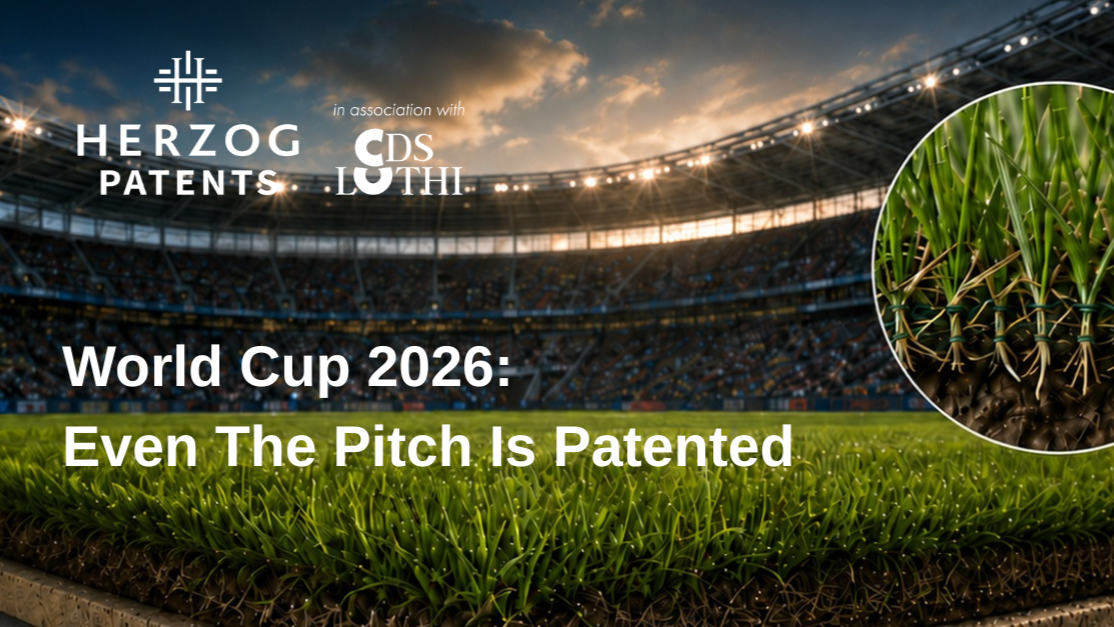
After exploring the match ball, the technologies behind the game, and the intellectual property rights that protect them, we are publishing the third article in our 2026 World Cup series. As the tournament reaches its final stage, and anticipation builds ahead of the match that will determine the new world champions, we turn our attention to what lies beneath the players’ feet: the pitch itself. In his new article, “World Cup 2026: Even the Pitch Is Patent Protected,” Jerome R. Smith, Senior Patent Attorney at our firm, explains how the playing surface is itself built on a combination of advanced, protected technologies, from artificial fibers integrated into natural grass, to support and drainage systems, and testing equipment designed to assess traction and playing conditions. Because at the World Cup, even the grass is far more technologically sophisticated than it appears. Enjoy the article , and best of luck to both teams in the final! #WorldCup2026 #SportsTechnology #IntellectualProperty
- LINKEDIN · ARTICLESince 11 Jun 2026
What does it take to protect the most watched ball in the world? As the 2026 FIFA World Cup gets underway, we are pleased to share the second article in our series on the World Cup match ball, written for those who look at innovation through the lens of intellectual property. In his new article, Jerome R. Smith takes a closer look at the Trionda® 2026 World Cup match ball and the layers of IP behind it: the trademarks, designs, and the utility patents, for the aerodynamics and sensor positioning for the ball, along with connected ball technology and VAR-related data systems. From its four-panel construction to its real-time ball contact sensing and data capabilities, the Trionda® match ball shows that significant innovation can be found in an object we all think we know. For IP professionals, this is a fascinating example of how design, engineering, data and legal protection meet at the very center of the world’s most popular game. #IntellectualProperty #SportsInnovation #WorldCup2026
- LINKEDIN · IMAGESince 3 Jun 2026
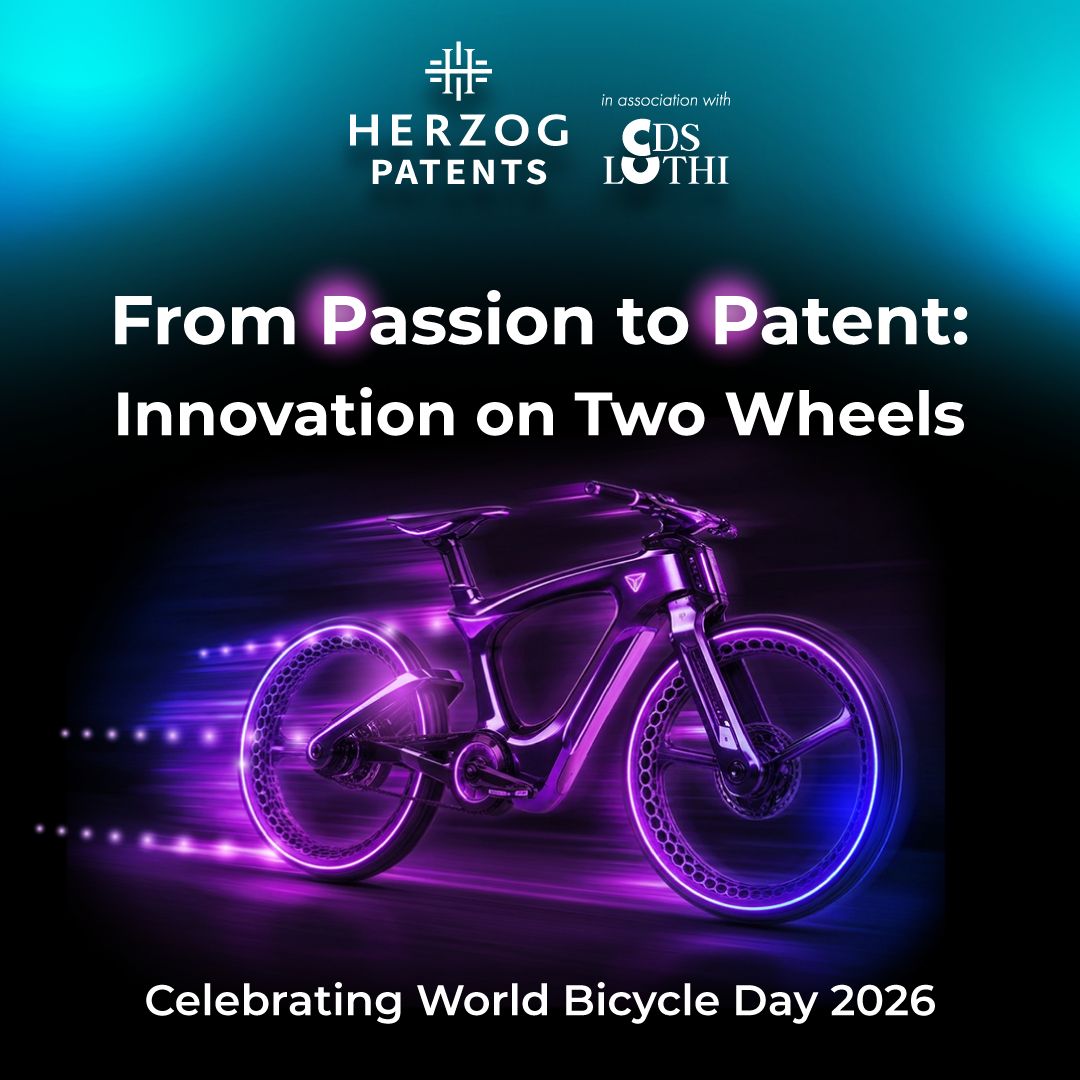
Anyone who knows me knows that bicycles are one of my great passions. One that grows even stronger when it connects with my other passions: physical activity, the outdoors, mechanics, technology, and patents. This year, it also connects to the memory of one very special person, to whom I dedicate these words. A friend, a fellow cycling enthusiast, and a visionary: the late Raz Malchi. The bicycle has come a long and revolutionary way since 1817, when it was invented by German Baron Karl von Drais, who called it the “running machine.” It looked more like a child’s balance bike, propelled by pushing one’s feet against the ground, with no pedals, no chain, and of course, no gears. Originally, designed as a human-powered alternative to horse-based transportation, it marked one of the earliest steps toward modern personal mobility. Today, bicycles are used across an enormous range of outdoor, and even indoor, activities, and their contribution to sustainability, as well as to physical, mental, and emotional well-being, is significant. In recent years, innovation in bicycle technology has advanced far beyond mechanical improvements. It now focuses on electrification, integrated power systems, advanced materials, digital connectivity, drivetrain and control systems, ergonomics, safety, and durability. Two interesting recent developments I came across are Škoda’s DUOBELL and SRAM’s integrated Motor-Gearbox Unit, or MGU. The first was created in response to a modern safety challenge: pedestrians and cyclists using noise-canceling headphones. DUOBELL uses a specific frequency range designed to penetrate the digital algorithms of noise cancellation, helping alert people on the road. The second may redefine the future of drivetrain systems in electric mountain bikes. The invention addresses two familiar challenges in modern e-MTBs: exposed and vulnerable rear derailleurs, and rapid chain wear. SRAM’s development moves the gear system into the motor housing of the bicycle, offering a solution to both issues (US Patent App. 2025388290). The Israeli angle, which is especially close to my heart, is connected to two important and highly deserving innovations by the late Raz Malchi, a true pioneer in the Israeli cycling community, known to many as the driving force behind Twenty Peaks™ The first is an innovative bicycle gear system designed to improve efficiency and durability for serious climbers and off-road riders (U.S. Patent No. 12,054,222). The second transforms a bicycle trainer into a compact, multifunctional training platform by connecting a pull-rope mechanism to the trainer’s resistance unit. This enables both rowing and resistance-based pulling exercises, combining cycling technology, strength training, and smart use of space (WO2026/069309). There is no more fitting occasion than World Bicycle Day to honor Raz’s contribution to the field he loved so deeply, and to celebrate the technology that continues to move us forward. #WorldBicycleDay
- LINKEDIN · IMAGESince 31 May 2026
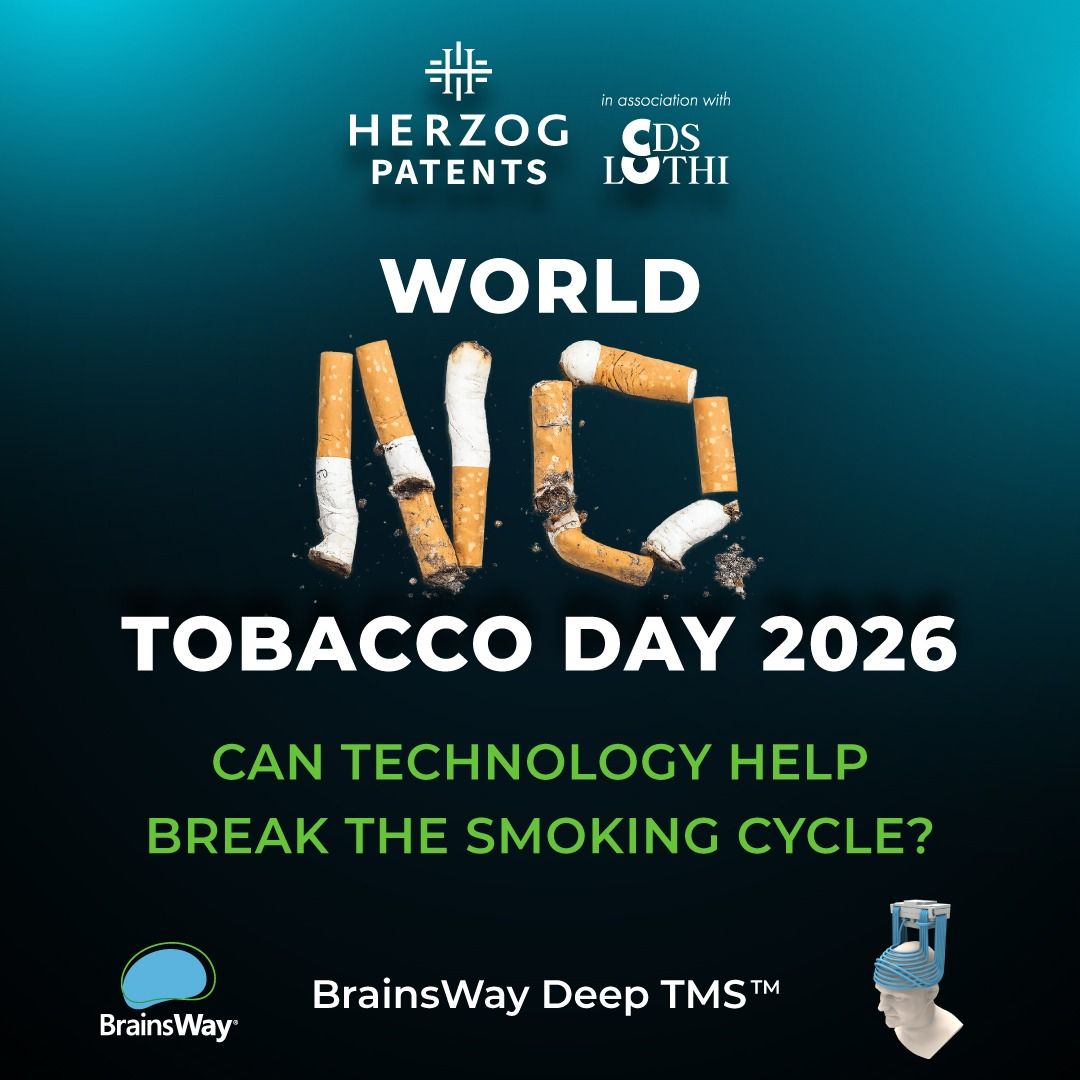
Can technology help the brain break the habit of smoking? Every year on May 31, the world marks World No Tobacco Day, a reminder of one of the most persistent public health challenges of our time. According to the World Health Organization (June 25), tobacco smoking is associated with more than 7 million deaths each year worldwide, including an estimated 1.6 million linked to secondhand smoke. https://lnkd.in/dP5unx6 Quitting is not just about willpower, which is why repeated attempts to quit do not always succeed. Treatments include behavioral support, medication, and nicotine replacement therapies. Some of these techniques can be described as acting on neurobiology associated with addiction. An alternative approach that aims to directly modulate addiction-related brain circuits was developed by our client, BrainsWay https://www.brainsway.com/. Deep Transcranial Magnetic Stimulation, or Deep TMS™ - a patented technology that is FDA approved for the treatment of Major Depressive Disorder (MDD), anxiety associated with MDD, OCD, and of particular relevance in this context, as an aid for short-term smoking cessation. What is Deep TMS™ and how does it work? Deep TMS™ is delivered through specially designed coils, engineered according to patented principles and housed within a helmet, through which brief high-intensity pulses generate magnetic fields that target relevant brain regions. Relative to traditional TMS, BrainsWay’s patented H-Coil technology is designed to reach greater depths and broader brain areas, creating a more extensive electromagnetic field that can stimulate more neurons and help reduce targeting errors compared with more focal stimulation. Unlike medication or nicotine replacement therapies, Deep TMS™ aims to directly stimulate the neural circuits involved in the addictive behavior and consequently to modulate physiology and ultimately behavior. The non-invasive brain stimulation technique is uniquely capable of promoting neuroplasticity - the brain’s ability to adapt and rewire itself by forming and reorganizing neural connections. For the Deep TMS treatment of smoking addiction, brain regions exposed to the electromagnetic field include those associated with reward circuits and addictive behavior, including the bilateral insula and prefrontal cortex. This may help reduce craving and the urge to continue smoking. Deep TMS™ is noninvasive and does not require anesthesia, allowing patients to return to their daily routine after treatment. The acute phase of the smoking cessation protocol typically includes 18 sessions. The treatment to aid smoking cessation is supported by clinical validation, including a sham-controlled pivotal study. It may be especially relevant for people who have tried standard methods without success. BrainsWay Yakir Yekutiely #SmokingCessation #DeepTMS #MedicalInnovation

6 of 33 adsSign up to see every Cohn, de Vries, Stadler & Co. ad, filter by format and date, and get alerts on new ones.
See all 33 adsWatch the companies you care about.
Filter every ad by industry, country, format and network, and get alerts when a company you watch starts running new ads.