On air · 2 of 3 networks
Coaching Systems
- coachingsystems.com
- Education
- US
- 6 employees
Coaching Systems’s ads on LinkedIn, Meta and Google, recorded by adsrunning. Browse the latest here for free. Sign up free to see all 73. Watch Coaching Systems with Starter to get each new one in your feed.
Watchlist with Starter · $49/mo
| Network | Status | Live ads | Nov 2025LinkedIn activity · 52 weeksOct 2026 | Checked | Next step |
|---|---|---|---|---|---|
| Running | 73 | Checked 30 Oct 2026 | See all 73 ads → | ||
| Meta | Not checked | — | |||
| Running | 34 | Ads on the Google Ads Transparency Center | Checked 25 Oct 2026 | Collect them with the API → |
Coaching Systems has 73 live LinkedIn ads. We recorded 34 Google ads on 25 Oct 2026.
Latest ads
- LINKEDIN · IMAGERecorded 13 Sept 2026
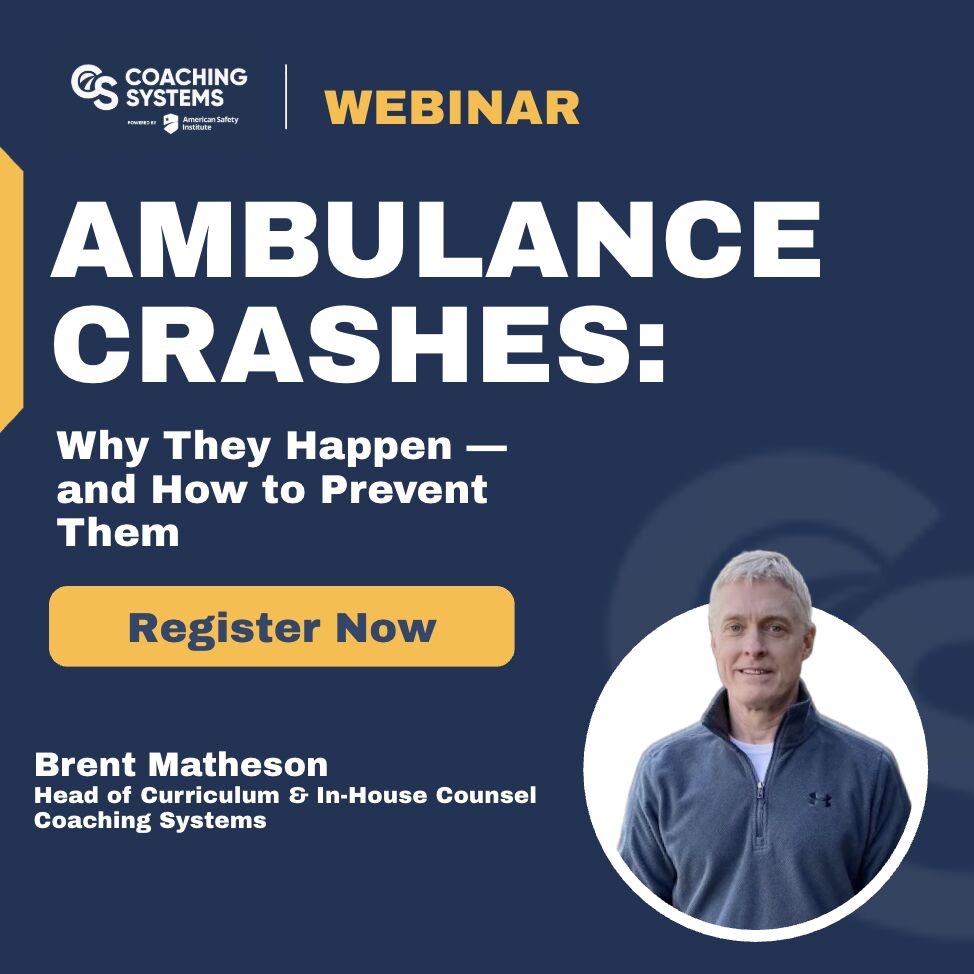
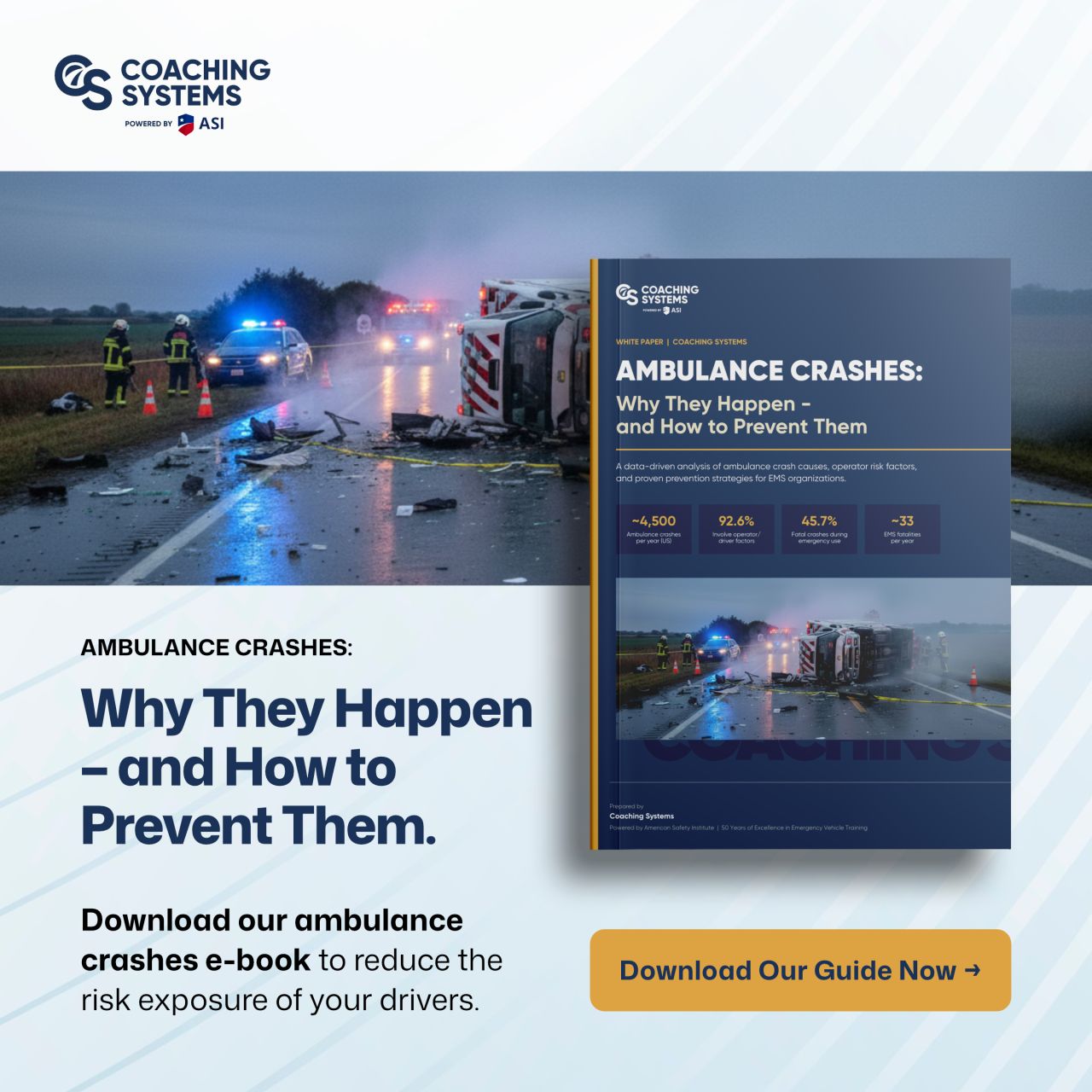
Every crash is preventable. Join Brent Matheson, Head of Curriculum & In-House Counsel at Coaching Systems, for a powerful webinar on the real causes of ambulance crashes and the strategies that stop them.
- LINKEDIN · IMAGERecorded 13 Sept 2026
$340,000. That's what a single 11-mph backing crash could cost an ambulance fleet. No siren. No code. Routine non-emergency transfer at the tail end of a 12-hour shift. Their rear corner clipped an aide stepping around a nursing home porte-cochère. She lived. The fleet didn't — at least not the version that existed before that Tuesday morning. Three years of profit. Gone. From a crash so slow the dashcam barely registered it. Here's the part that should make every fleet director read this twice: → They had a driver safety program. → They renewed it last year. → Their crews signed off on it. And it didn't matter. Because the program they were paying for was built for trucking companies and bolted onto an ambulance fleet. It didn't account for the unique pressures of EMS work. It didn't measure the right behaviors. It didn't change what their operators did at 11 mph at the end of a long shift. 62% of ambulance crashes happen during non-emergency transports. Not Code 1 runs. Not the dramatic ones on the freeway. The boring ones, at 4:30 in the afternoon, in parking lots. Most "EMS driver safety" programs are built around the wrong crash. We just published the FREE 6 -page playbook that addresses the actual failure modes of EMS driving — backing, intersections, fatigue, post-incident protocols, and the culture patterns inside your house that quietly tolerate risk. Download it here → https://lnkd.in/d7rtCam6 P.S. Pull up your incident log for the last 12 months. Count the backing incidents. Count the parking-lot taps. Look at the dollar figure attached to the worst one. That number is the price of doing nothing. The playbook is free. Make the trade. #EMS #FleetSafety #AmbulanceOperations #DriverSafety #RiskManagement
- LINKEDIN · IMAGERecorded 13 Sept 2026
A question worth asking before your next renewal: Why does the safety program your service has been running for years keep delivering similar loss runs? For most ambulance operators, the answer comes down to curriculum. The driver-safety material that most EMS services use today was adapted from long-haul commercial trucking. That made sense at the time — trucking had the data, the standards, and the regulatory pressure to build it first. But the gap between a 65-mph interstate run and the work an EMS operator actually does every shift is wider than most curricula reflect. Your operators work within a few miles of a hospital. They complete dozens of starts and stops a shift. They navigate parking lots, ED bays, nursing-home porte-cochères, and busy intersections — often with a patient in the back, sometimes under code. The risks that drive your loss runs are not the same risks a trucking program was designed to address. Coaching Systems put together a short reference for fleet directors and safety officers who are looking to close that gap. Inside the 6-page playbook: • The most common ambulance crash scenarios — and why they repeat • Key driver-related risk factors contributing to incidents • The role of distraction, fatigue, and decision-making under pressure • What the data shows about preventable crashes • Practical strategies EMS agencies can implement immediately → Download the playbook: https://lnkd.in/d7rtCam6 P.S. The per-crash math at the back of the playbook is a useful conversation to share with your CFO ahead of your next renewal cycle. — Coaching Systems #EMS #FleetSafety #AmbulanceOperations #DriverSafety #InsuranceRenewal
- LINKEDIN · IMAGERecorded 13 Sept 2026
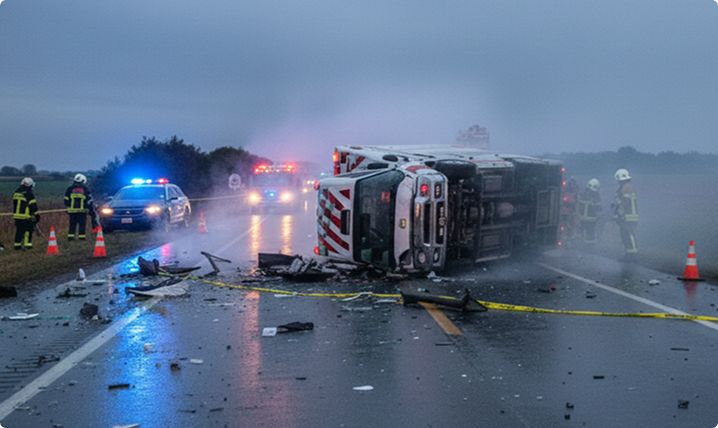
ATTENTION FLEET DIRECTORS: Before you scroll past this, read the next seven sentences. It's 4:47 a.m. Your phone rings. You already know. One of your rigs is on its side. Somebody is hurt. The next nine months of your professional life just got rewritten in the time it took you to reach for the nightstand. This is the call every ambulance fleet director plays out in their head on Sunday nights — and it is the one most "safety programs" will not stop. Consider what just happened to a 38-rig service in the Southeast. Their crash didn't make the news. No siren. No code. Just a Code 3 return at the end of a wet third shift — a routine right-hand turn taken half a beat too fast. The rig went up on two wheels, then came down on its side. Two crew hospitalized. The patient in the box transferred to another service. Settlement opened in the high six figures and still moving fourteen months later. When the director called Coaching Systems, his first sentence was the one our team hears from nearly every fleet director who reaches out: "We had a safety program." They did. They paid for it every year. Their crews signed off on it. Their policy binder was three inches thick. It didn't matter. Here is the part that should make every fleet director read this letter twice: → 62% of ambulance crashes happen during NON-emergency transports. → Discharges, transfers, returns. The work that fills most of your shifts. → The routine ones. At 4:30 in the afternoon. In parking lots. Here is the problem: most "EMS safety programs" aren't EMS safety programs. They are trucking programs with an ambulance logo on the cover. They measure the wrong behaviors, drill the wrong scenarios, and ignore the crashes that actually happen to ambulance fleets. Coaching Systems just published the 6-page playbook that does not. → Download the white paper here: https://lnkd.in/d7rtCam6 P.S. Pull up your incident log for the last twelve months. Count the backing crashes. Count the parking-lot taps. Find the dollar figure attached to the worst one. THAT number is the price of doing nothing. The playbook is free. Make the trade. — Coaching Systems #EMS #FleetSafety #AmbulanceOperations #DriverSafety #RiskManagement
- LINKEDIN · IMAGERecorded 13 Sept 2026
Every crash has a cost - injuries, downtime, liability, and rising insurance premiums. Reducing risk isn’t just about safety, it’s a financial imperative.
- LINKEDIN · IMAGERecorded 13 Sept 2026
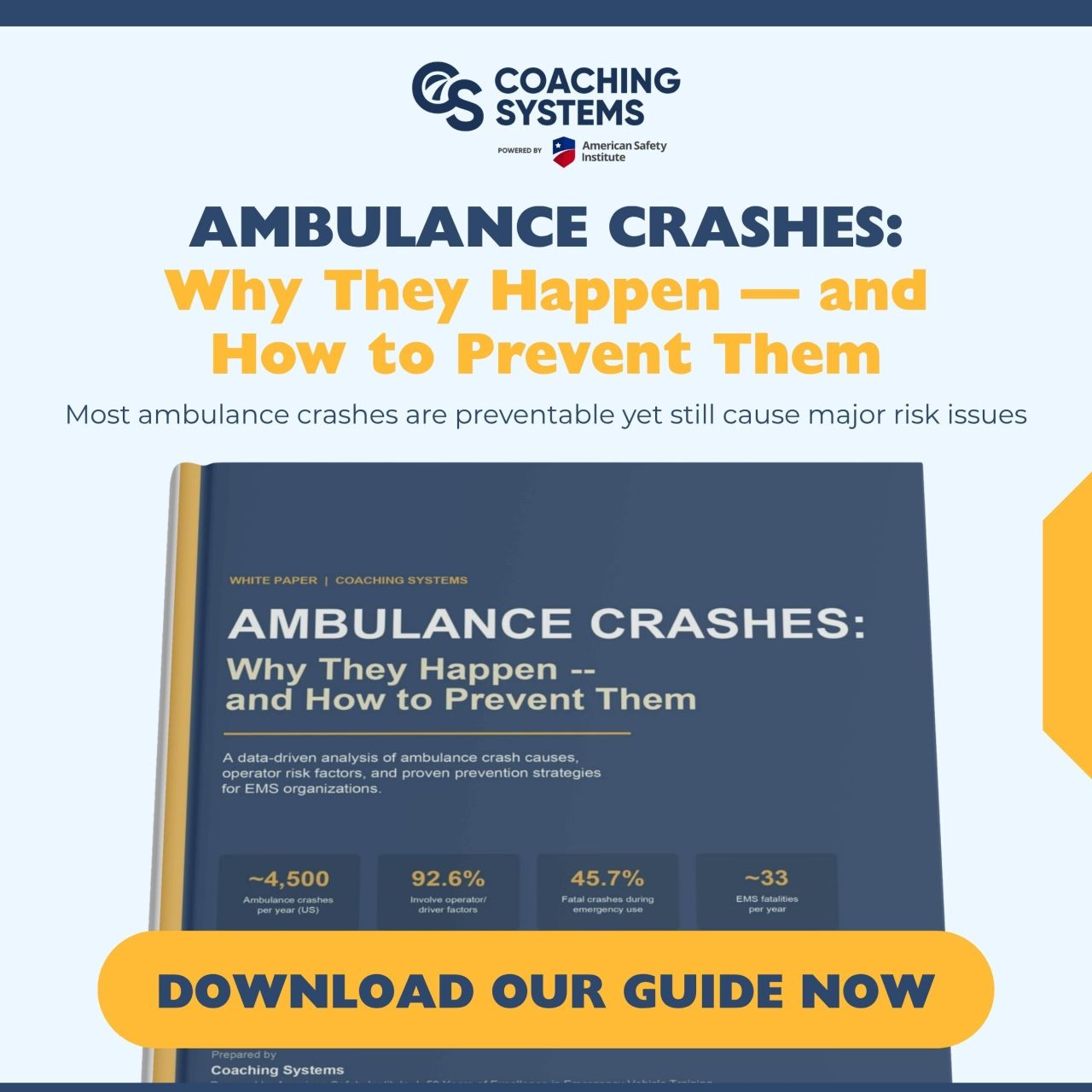
Most ambulance crashes are preventable, yet they continue to put crews, patients, and organizations at risk every day. What’s missing isn’t awareness. It’s execution.
6 of 73 adsSign up to see every Coaching Systems ad, filter by format and date, and get alerts on new ones.
See all 73 adsWatch the companies you care about.
Filter every ad by industry, country, format and network, and get alerts when a company you watch starts running new ads.